“In 2010, statistics came out that 120 female U.S. soldiers stationed in Iraq had died. Half of those deaths were reported to be non-combat related. 30 those non-combat related deaths were ruled suicides, but there is evidence to suggest many of them may have actually been murders. In this episode, we dive into the case of LaVena Johnson and other women of the U.S. military who died very suspicious deaths during Operation Iraqi Freedom.” –Conspiracy: Women in the US Military, Crime Junkie Podcast (10/22/18)
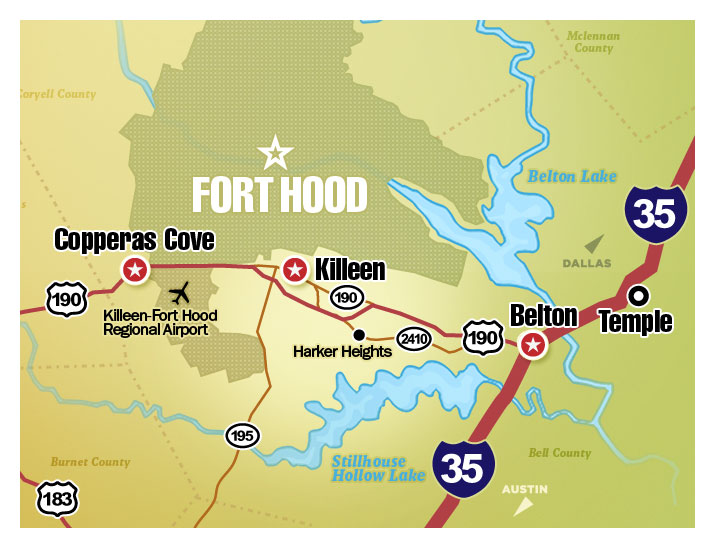
Fort Hood is a U.S. military post located in Killeen, Texas. The post is named after Confederate General John Bell Hood. It is located halfway between Austin and Waco, about 60 miles (100 km) from each, within the U.S. state of Texas. -Wikipedia
*Research not complete and includes combat deaths.
2010
2 Jul 10: Spc Morganne McBeth, U.S. Army (ruled negligent homicide, stabbed by a knife wielding soldier)
8 Mar 10: SSG Lakeshia Bailey, U.S. Army (vehicle rollover, accident)
21 Feb 10: CWO2 Billie Grinder, Tennessee Army National Guard (hard landing, family sued helicopter maker for faulty system that caused crash and settled)
10 Feb 10: Pfc Adriana Alvarez, U.S. Army (gunshot wound, outcome of investigation unknown)
2009
4 Nov 09: SSG Amy (Seyboth) Tirador, U.S. Army (gunshot wound, Army ruled suicide, family believes execution style murder, cold case)
2008
19 Oct 08: LCpl Stacy Dryden, U.S. Marine Corps (fight with fellow soldier, ruled homicide, cold case)
1 Sep 08: SSG Renee Deville, U.S. Army (injured in Iraq, died unexpectedly at Walter Reed Army Medical Center after graduating from NCO course)
14 Aug 08: Pvt Janelle King, U.S. Army (non combat related incident, outcome of investigation unknown)
2 Aug 08: Pfc Jennifer Cole, U.S. Army (gunshot wound to abdomen, ruled negligent homicide)
17 Jul 08: TSgt Jackie Larsen, U.S. Air Force (medical, natural causes)
9 May 08: Spc Mary Jaenichen, U.S. Army (non-combat related injury, outcome of investigation unknown)
22 Feb 08: Spc Keisha Morgan, U.S. Army (death ruled accidental overdose, family suspects rape and murder, cold case)
25 Jan 08: Sgt Tracy Birkman, U.S. Army (non-combat related injury, outcome of investigation unknown)
2007
20 Sep 07: Capt (Dr) Roselle Hoffmaster, U.S. Army (death ruled suicide)
7 Sep 07: Spc Marisol Heredia, U.S. Army (non-combat injuries, medical, severely burned, died in Texas from infection, outcome of investigation unknown)
16 Aug 07: Spc Kamisha J Block, U.S. Army (gunshot wound, ruled homicide, domestic violence and workplace violence)
9 Aug 07: SSG Alicia Birchett, U.S. Army (vehicle ran over her while she was changing tire, outcome of investigation unknown)
7 Feb 07: Capt Jennifer Harris, U.S. Marine Corps (helicopter crash, no sign that it involved hostile fire, outcome of investigation unknown)
28 Jan 07: Spc Carla Stewart, U.S. Army (wounds sustained when convoy vehicle rolled over)
20 Jan 07: CSM Marilyn Gabbard, Iowa Army National Guard (helicopter crash, might have been shot down, outcome of investigation unknown)
2006
12 Dec 06: Major Gloria Davis, U.S. Army (gunshot wound, death ruled suicide)
26 Nov 06: SSG Jeannette Dunn, U.S. Army (non-combat related injury, outcome of investigation unknown)
4 Sep 06: Pfc Hannah McKinney, U.S. Army (struck by vehicle, family believes rape & murder)
8 Apr 06: Lance Cpl. Juana Arellano, U.S. Marine Corps (wounds received supporting combat operations)
11 Mar 06: Pfc Amy Duerksen, U.S. Army (non-combat gunshot injury, parents share in media Amy was raped at Fort Hood prior to deployment)
1 Mar 06: Pfc Tina Priest, U.S. Army (reported rape, died of non-combat gunshot wound to the chest, cold case)
7 Jan 06: 1LT Jaime L. Campbell, Alaska Army National Guard (helicopter crash)
2005
19 Jul 05: Pfc LaVena Johnson, U.S. Army (non-combat gunshot injury, death ruled suicide, family claims rape and murder based on autopsy evidence)
4 Mar 05: Spc Adriana Salem, U.S. Army (accident, military vehicle roll over)
1 Mar 05: Spc Lizbeth Robles, U.S. Army (injuries sustained in a military vehicle accident)
16 Feb 05: Spc Katrina Bell-Johnson, U.S. Army (accident, vehicle rollover)
2004
13 Dec 04: SSG Tina Time, U.S. Army Reserve (supply truck she was driving during a dust storm collided with another military vehicle)
4 Oct 04: SSG Gina Sparks, U.S. Army (died at Fort Polk, Louisiana from injuries sustained from a non-combat gunshot wound in Iraq)
6 Jun 04: Pfc Melissa Hobart, U.S. Army (undetermined cause, died after collapsing while on guard duty)
7 Mar 04: Capt Gussie Jones, U.S. Army (non-combat related cause, outcome of investigation unknown)
14 Jan 04: SSG Keicia Hines, U.S. Army (Army reports accidentally struck by a vehicle)
2003
8 Nov 03: SSG Linda Jimenez, U.S. Army (medical, fell running to keep up with friends, died of complications at Walter Reed after a blood clot formed, caused stroke)
1 Oct 03: Spc Tamarra Ramos, U.S. Army (medical, non-combat related injuries, cancer)
15 Sep 03: Spc Alyssa Peterson, U.S. Army (gunshot wound, death ruled suicide)
9 Jul 03: SSG Melissa Valles, U.S. Army (noncombat gunshot wound to abdomen)
8 May 03: CIVILIAN Elizabeth Neuffer, Boston Globe Journalist (automobile accident)
Pfc. Tina Priest of Smithville died in Iraq on March 1, 2006 and her family is worried that the Army botched its care for her after a rape claim that was followed by her apparent suicide.
Investigations did not find sufficient evidence to continue the rape inquiry, but the family, skeptical of what it sees as holes in the Army’s information, is waiting for a final review by the U.S. Army Criminal Investigation Command.
Family members also say Army officials told them that the investigation was concluded in September, but their requests for the final report are being denied. A recent article in the Hartford Courant newspaper citing that final report has heightened the Priests’ anger.
“I need some closure,” said Joy Priest, Tina Priest’s mother. “I want to know. Why can a newspaper get a copy of that report and we can’t?”
An investigation conducted in Iraq by Fort Hood’s 4th Infantry Division, in which Priest served, was conducted after her death, and its findings — which the family was given — are an accurate portrayal of events, said Lt. Col. Steve Stover, a spokesman for the division. He said the Criminal Investigation Command report will be the last one issued, “and we do still owe that to the family.”
Talk by 22-year Army Veteran Eli Painted Crow as part of the “Voices of Women Veterans” workshop at the Veterans for Peace 2006 National Convention August 11, 2006 in Seattle, WA.
Sara Rich, Mother of Suzanne Swift speaking at the Veterans for Peace 2006 National Convention. Suzanne Swift was sexually assaulted while serving in Iraq by members of her own unit. (August 11, 2006)
Press Conference on Sexual Assault in the U.S. military held August 12, 2006 at the Veterans for Peace National Convention UW HUB, Seattle, WA (1)
Press Conference on Sexual Assault in the U.S. military held August 12, 2006 at the Veterans for Peace National Convention UW HUB, Seattle, WA (2)
Press Conference on Sexual Assault in the U.S. military held August 12, 2006 at the Veterans for Peace National Convention UW HUB, Seattle, WA (3)
Press Conference on Sexual Assault in the U.S. military held August 12, 2006 at the Veterans for Peace National Convention UW HUB, Seattle, WA (4)
Press Conference on Sexual Assault in the U.S. military held August 12, 2006 at the Veterans for Peace National Convention UW HUB, Seattle, WA (5)
“Despite 25 years of Pentagon studies, task force recommendations and congressional hearings, sexual assaults and rape in the military continue unabated. In 2010 the Department of Defense (DoD) conducted a survey of active duty members which revealed that only a small percentage of the more than 19,000 incidents of rapes and sexual assaults involving service members was actually reported. For the record, an estimated 13.5 percent of sexual assaults and rapes saw the light day—and only 8 percent of those reports resulted in prosecution—in the end 465 service members were either administratively discharged or punished through the court-martial process —that’s about 2.5 percent of the total suspected acts of sexual assaults and rape—a good percentage for a direct mail response, but unacceptable for a justice system.” Representative Jackie Speier (D-CA) (November 16, 2011)
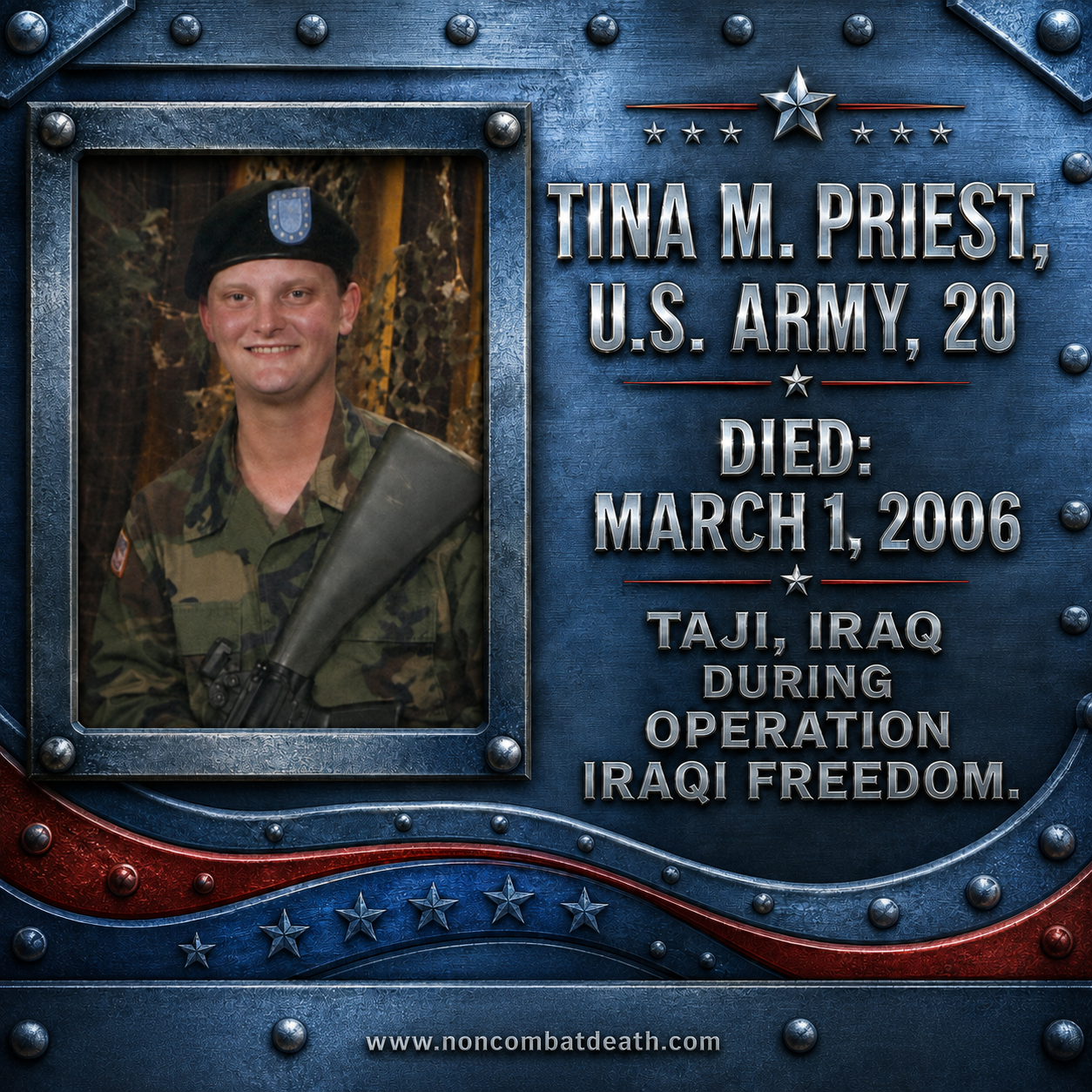
Army Pfc. Tina Priest, 20, died from a non-combat related injury in Taji, Iraq on March 1st, 2006. She was supporting Operation Iraqi Freedom on behalf of the 4th Support Battalion, 1st Brigade Combat Team, 4th Infantry Divison at Fort Hood, Texas. The Army ruled the death an apparent suicide but Tina’s parents dispute that finding based on the evidence and believe that she was raped and murdered; Tina reported a rape two weeks prior to her death.
This case is no longer under investigation by the Army but considered an unsolved cold case because of the concerns the family has with the death investigation and cause of death ruling by the Army. Forty-one (41) female service members died of non combat related injuries while serving in Iraq; and twenty-three (23) were labeled homicide, suicide, or the cause of death is unknown.
Please see the MJFA Investigative Dossier for Tina Priest at the end of the article.
The Silent Truth Documentary:
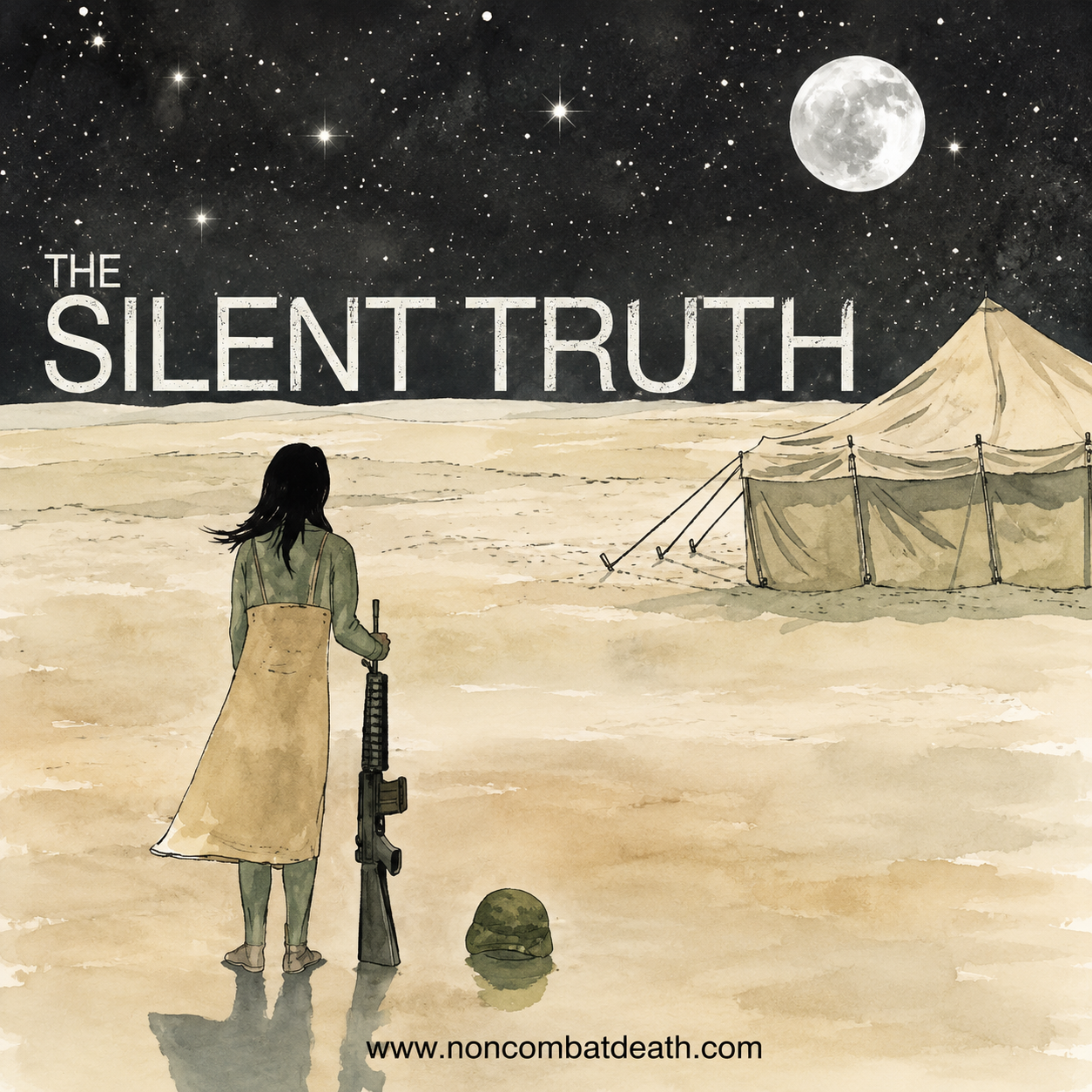
Ninety-four US military women in the military have died in Iraq or during Operation Iraqi Freedom (OIF). ‘The Silent Truth’ tells the story of one of these women, PFC LaVena Lynn Johnson, who was found dead on Balad Air Force Base in Iraq. The army claimed she shot herself with her own M16 rifle, but forensic evidence, obtained by the Johnson family through the Freedom of Information Act, brings the army’s findings into question. The Army refuses to re-open LaVena Johnson’s case, leaving the family in limbo. ‘The Silent Truth’ follows the Johnson’s pursuit of justice and truth for their daughter. -The Silent Truth Documentary (July 1, 2014)
Update: The Silent Truth is no longer available on YouTube but can be accessed at Fandango at Home.
The Silent Truth Documentary aka The LaVena Johnson Murder Cover-Up (Truthout, November 18, 2010):
“What happened to LaVena Lynn Johnson and so many others speaks to a Pentagon culture which more closely resembles a rogue government–than a legitimate branch serving under civilian control. It is highly telling that this family, along with the Tillman family each had to have a documentary film made JUST TO ALERT THE PUBLIC TO THE TRUTH OF PENTAGON COVER-UPS. I urge everyone to view this important documentary – before the local military recruiter mandated under No Child Left Behind –‘friends’ their child at school. God forbid, they could wind up coming home in a body bag – like LaVena.”
PFC Tina M. Priest, U.S. Army • Operation Iraqi Freedom
Executive Summary
On March 1, 2006, 20-year-old Army PFC Tina M. Priest was found dead in her quarters at Camp Taji, Iraq, from a gunshot wound involving her assigned M16 rifle. She served with the 4th Support Battalion, 1st Brigade Combat Team, 4th Infantry Division, based at Fort Hood, Texas.
Approximately two weeks earlier, Priest had reported that she had been sexually assaulted by another soldier. Following an investigation, the Army concluded there was insufficient evidence to prosecute the allegation. After her death, the Army ruled the manner of death was suicide.
Her mother, Joy Priest, has consistently challenged both the sexual assault investigation and the suicide determination, arguing that important evidence and investigative questions were not adequately addressed. Tina’s case later became part of broader reporting on disputed non-combat deaths of women serving during the Iraq War and contributed to public debate about military sexual assault investigations and institutional accountability.
Personal Information
Name: Tina Marie Priest Age: 20 Branch: United States Army Units
4th Support Battalion
1st Brigade Combat Team
4th Infantry Division
Home Station: Fort Hood, Texas Deployment: Camp Taji, Iraq Date of Death: March 1, 2006 Official Classification: Non-combat death
Chronological Timeline
Late 2005
Priest deploys to Iraq with the 4th Infantry Division.
February 15, 2006
According to Army records discussed in subsequent reporting:
Priest reports that she was sexually assaulted by another soldier.
She undergoes a forensic medical examination.
DNA evidence reportedly confirms sexual contact occurred.
The central investigative question becomes whether the encounter was consensual.
Mid-February 2006
Army Criminal Investigation Division (CID):
interviews witnesses,
investigates the assault allegation,
gathers forensic evidence.
Behavioral health providers evaluate Priest.
Army records later cited in media reports indicate she did not meet criteria for immediate suicide intervention despite emotional distress related to the reported assault.
February 27–28
According to Army records discussed publicly:
Priest reportedly returns to duty.
The sexual assault investigation remains open.
March 1, 2006
Priest is discovered dead in her room at Camp Taji.
The death scene includes:
assigned M16 rifle
single gunshot wound
Initial casualty reports classify the death as a non-combat injury pending investigation.
Spring 2006
CID completes the death investigation.
Official conclusion: Suicide
The sexual assault case is closed without criminal charges.
2007–2009
Joy Priest publicly challenges:
the suicide ruling,
the sexual assault investigation,
Army transparency.
National media revisit the case as part of broader reporting on disputed military deaths involving women serving in Iraq.
Official Army Findings
According to the Army investigation:
Cause of Death: Gunshot wound
Manner of Death: Suicide
Sexual Assault Investigation
Army investigators concluded:
sexual intercourse occurred;
however, they determined there was insufficient evidence to establish beyond the applicable legal standard that the encounter was non-consensual.
No rape charges were filed.
Behavioral Health
Army records referenced in reporting indicate:
Priest experienced emotional distress after reporting the alleged assault.
Evaluators did not classify her as presenting an immediate suicide risk shortly before her death.
Family Concerns
Joy Priest has consistently disputed the Army’s conclusions.
Among the concerns she has publicly raised:
1. Timing
The death occurred roughly two weeks after the reported sexual assault.
The family questioned whether sufficient protection and support had been provided.
2. Suicide Determination
The family has stated they did not believe Tina intended to end her life.
They cited:
future plans,
conversations with family,
and what they viewed as inconsistencies with suicide.
3. Firearm Questions
Joy Priest questioned whether the mechanics of firing an M16 were consistent with Tina’s physical stature and the circumstances documented at the scene.
The Army maintained that its reconstruction supported a self-inflicted gunshot.
4. Investigation Transparency
The family has described delays obtaining:
investigative files,
autopsy information,
photographs,
and other records.
These concerns became part of later media reporting.
5. Sexual Assault Investigation
Joy Priest questioned why no charges resulted despite forensic evidence confirming sexual contact, arguing investigators did not adequately resolve whether the encounter was consensual.
Evidence Known Publicly
Public reporting identifies:
✓ Sexual assault report
✓ Medical forensic examination
✓ DNA evidence confirming sexual contact
✓ CID investigation
✓ Behavioral health evaluations
✓ Death scene investigation
The complete investigative file has not been fully released publicly.
Unanswered Questions
Among the questions raised publicly by family members and journalists:
Was every potential witness interviewed?
Were all forensic findings independently reviewed?
Were suicide-risk assessments sufficient following the reported assault?
Could additional victim advocacy or protective measures have altered the outcome?
Should the assault investigation have remained open longer?
These questions remain subjects of public debate; the Army has not changed its official conclusions.
Broader Context
Tina Priest’s death became part of a wider conversation concerning:
military sexual assault,
behavioral health,
non-combat deaths,
investigative transparency,
institutional accountability.
Her case has frequently been discussed alongside other disputed deaths of women who served during the Iraq War, particularly where families challenged official findings.
Congressional hearings on military sexual assault and investigative practices (110th Congress), which referenced broader concerns about military handling of sexual assault cases.
Public statements by Joy Priest in interviews and media coverage.
Recommended Additional Records to Obtain:
Army Criminal Investigation Division (CID) Report of Investigation.
Army Line of Duty (LOD) investigation.
Armed Forces Medical Examiner autopsy report.
Death scene photographs and evidence inventory (where releasable).
Sexual Assault Forensic Examination (SAFE) documentation, subject to privacy restrictions.
Behavioral health evaluations created before March 1, 2006.
Casualty Assistance Office records.
FOIA responses from the Army, CID, and the Department of Defense.
Any Inspector General correspondence related to the case.