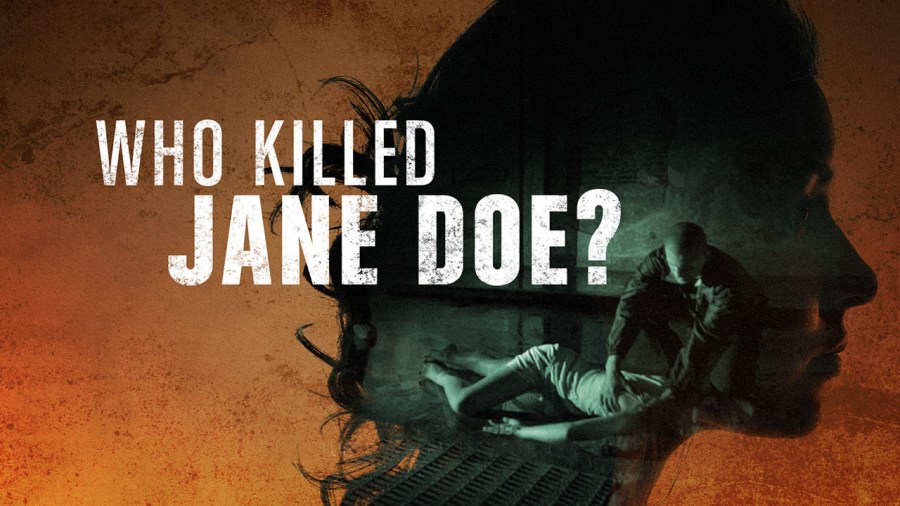
Apple Valley in California’s Mojave Desert is the perfect place to hide a secret. When the body of an unidentified Jane Doe is discovered there in 1994, it takes almost two decades to bring a twisted tale of love, jealousy, and a horrible crime to light. -Who Killed Jane Doe, Investigation Discovery
Editor’s note: With a cable subscription, you can download the free ID Go app and watch all of the Investigation Discovery programming at your convenience. And for those who do not have cable, you can watch “unlocked” episodes on the ID Go app including the latest premieres. Download the ID Go app and binge away. For those who prefer commercial free programming during your binge session, Prime Video has an ID channel: ‘True Crime Files by Investigation Discovery” available for $2.99 a month. It’s a compilation of older seasons but totally worth the cost if you are a true crime addict.
A startling development in the case of Jovita Collazo, the Southern California Filipina who went missing in 1992. -TFCBalitangAmerica
We hear a lot about #weinstein and the latest, but Jennifer Norris, who served in the US Air Force, has been talking about sexual assault for years. And in the military, reporting rape means endangering yourself. Watch this brave woman speak here https://t.co/1ipeI3SWP6pic.twitter.com/TAjiVjmdDS
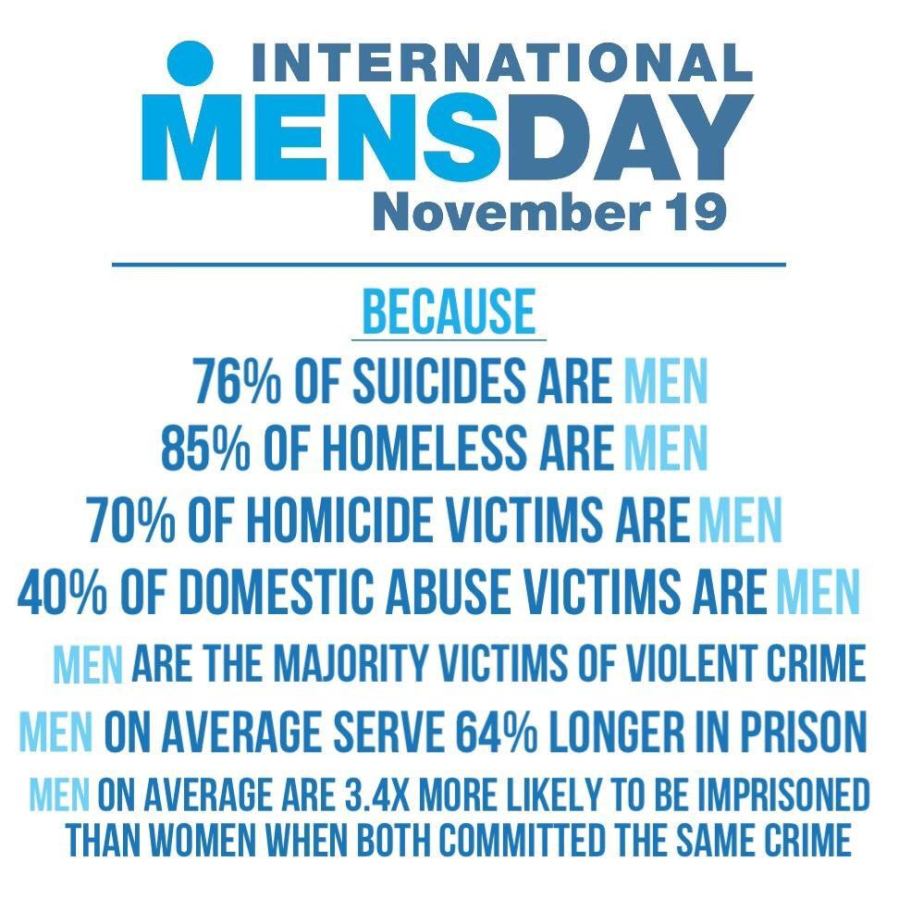
This post was inspired by International Men’s Day and a quest to find the truth on the internet. Are men in the US the majority of the victims of crimes?
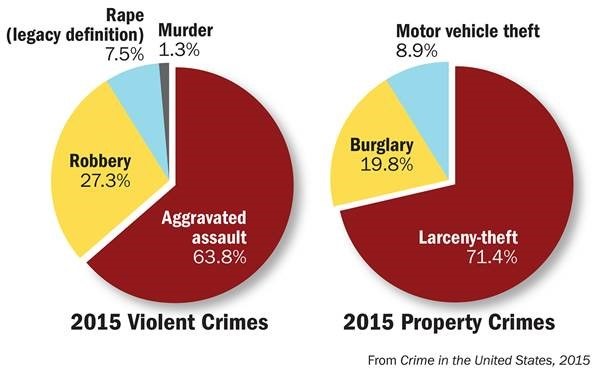
This research was inspired by the above graphic. My initial research so far for the military backs these numbers so I feel that it is fair to say more men in the military are victims of crimes than women. We have more military men than women so that only makes sense. By the numbers we have roughly 85% males and 15% females. We know more military men have died by suicide or “non combat death” while in service than military women. We know male veterans make up the majority of the homeless mostly due to mental health and substance abuse issues. We don’t know the percentage of men in the military who have been murdered versus the number of female service members. But we do know that the research so far reveals more men are murdered than military women while serving. The number that may throw this off is how many military men are murdering their spouses and significant others and/or members of their family. So more research has to be done.
The Department of Defense hasn’t included the military spouses in the data thus far nor have they included civilians who have been victims of crime by military members. But we know they exist because we try to track all victims of crime perpetrated by a military member on this website in an effort to honor them. Today we featured 30 cases of domestic abuse that led to the homicide of a female spouse or soldier. We have concerns about domestic violence in general especially since we learned that upwards of 40% of males are victims of domestic violence in the United States. We believe it. Since the majority of members in the military are males, we have found multiple cases of men getting targeted by mostly female civilians and then abused and murdered for their benefits and life insurance. In some cases they reported the domestic violence but in most cases they don’t. Why are men less likely to report when they are a victim of domestic violence? Are they being threatened? For example, “I will ruin your career” comes to mind. This is something that needs to be explored further.
Our new concern is that military men are being falsely accused of sex crimes in an effort to make divorce go in the spouses favor or they have been exploited by a service member looking for a new assignment, to get out of a financial obligation, to get an early retirement, and also the Department of Veterans Affairs financial monthly benefits, about $3,000 a month for someone who is 100% disabled. Although sexual assault isn’t specifically mentioned in the above graphic, we also know that the majority of military men are victims of sexual assault and rape but are the least likely to report. We’ve also learned that about a 1/3 of female victims of crime in the military report and 60% of those females report they experienced both perceived personal and professional retaliation as a result of that report, in a lot of cases the report eventually ends the career. And this may be why so many victims of sexual harassment, sexual assault, and rape in the military do not report, specifically men. The military career is an investment that most of us don’t want meddled with.
The military career is our retirement plan, it’s a financial asset. We don’t want to risk losing our careers in the long run because we know a report of a crime or a diagnosis of Post Traumatic Stress Disorder will make us “unfit for service.”
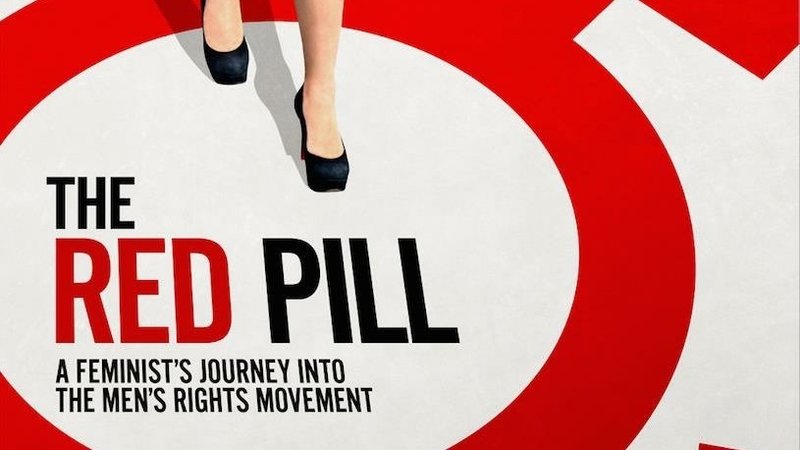
Our number one goal was to find out if more males are victims of violent crime than females, not that it matters because all people are important. But if you try to find the statistics out there, you will find that they are buried by media reports of how many women are murdered by intimate partner violence, pregnant women are especially at risk. Whereas males are more likely to be the victim of a crime perpetrated by a stranger. Make sure and check out The Red Pill trailer below to find out why Men’s Rights Advocates are fighting for their fellow males. Women do it all the time and there’s no reason they can’t either but they are getting judged, villianized, and demonized for their very important and necessary work. It’s time to step it up for men who die by homicide and suicide; and it’s time we teach them it’s okay to reach out for help whether they have combat PTSD or were a victim of crime.
Broad studies have revealed certain trends within crime and victimization patterns. Adolescents are most likely to be victimized. Men become crime victims more often than women do, and blacks experience more crime than other racial groups. –National Institute of Justice
More men are murdered than women, mostly gun violence
Men are more likely to be murdered by a stranger than a women
Women are more likely to be murdered by an intimate partner
Pregnant women are at most risk of homicide by an intimate partner
More men than women are raped and sexually assaulted in the military
More men than women in the US are raped if you include prisons
Men make up 40% of domestic violence cases in the US
Listen to a NYPD sting operation recording of Harvey Weinstein here.
Both “The Invisible War” and “The Hunting Ground” were documentaries produced and directed by Hollywood filmmakers Kirby Dick and Amy Ziering. The Invisible War was an unvetted documentary about sexual assault and rape in the U.S. military. It was lauded by the masses, showcased at the Pentagon, and apparently used to influence Senator Claire McCaskill’s military justice legislation. Before we could wrap our heads around how these filmmakers had silenced veteran’s voices (again), they released The Hunting Ground, another unvetted documentary about sexual assault and rape on our nation’s campuses. And now we are learning that these documentaries were both funded and distributed by “serial predator” and Hollywood movie executive Harvey Weinstein of the Weinstein Company. In the wake of this provable scandal, Amy Ziering came to the defense of the indefensible and admitted in an interview that The Invisible War resulted in thirty five pieces of legislation passed by Congress.
The problem is the only laws passed were Senator Claire McCaskill’s bills. By taking credit for Claire McCaskill’s legislation (that military and veterans did not want), Ziering is admitting to undermining veteran’s efforts to secure due process rights for service members. We wanted them to have due process rights in the military justice system AND with non judicial punishment, retaliation, mental health, security clearance, and discharge. There’s nothing to take credit for unless you back Senator Claire McCaskill’s flawed military sexual assault legislation. Veterans resoundingly wanted the Military Justice Improvement Act sponsored by Senator Kirsten Gillibrand and supported by multiple bi-partisan Senators including conservatives who saw the constitutional issues with the command directed approach. BUT it was railroaded by Senator Claire McCaskill, Senator Carl Levin (now retired), and Senator Kelly Ayotte (now fired). And obviously backed by the filmmakers of a documentary about sexual assault funded and distributed by the very serial predator veterans were trying to hold accountable, especially the leadership tasked with implementing Senator McCaskill’s bills.
The connection has been made. In the wake of the flawed and failed policy in both the military and on college campuses, what these folks felt they knew was best actually created new victims. And it isn’t coincidental that the legislation passed in the military mirrors the unconstitutional use of preponderance of the evidence (50%+) on college campuses. This 2011 guidance came from Obama’s Department of Education Office of Civil Rights and Senator Claire McCaskill and Senator Kirsten Gillibrand are trying to get the policy codified as law with the CASA Act. In a stunning twist, newly appointed Secretary of Education Betsy DeVos reversed the harmful policy and reinstated due process protections for the accused on campus. The days of believe all women OR ELSE and holding institutions of authority hostage if you don’t believe the alleged victim are over on our college campuses. Campuses are able to reverse the harmful policy guidance but veterans have to reverse 35 pieces of sexual assault specific legislation that have had devastating consequences on military members and their families.
For all of its flaws and fabrications, “The Hunting Ground,” Harvey Weinstein’s activist documentary film about sexual assault on college campuses, finally succeeded in helping to actually identify a real predator — the filmmaker himself. And, although some of his apologists like filmmaker Rob Reiner tried to excuse Mr. Weinstein’s predatory behavior by saying that he should be lauded for having funded the film to expose the epidemic of rape on college campuses, “The Hunting Ground” helped to fuel a moral panic about sex abuse that directly led to Mr. Weinstein’s own professional demise…The good news is that as more and more powerful people become swept up in the hysteria surrounding sexual assault and people see themselves as vulnerable to such charges, the panic will end as spontaneously as it began. In some ways, a moral panic can be viewed as a “correction” — not unlike a market correction. We needed to bring attention to the Harvey Weinsteins lurking among us. Perhaps now we can now begin to look at sexual assault more rationally — identifying the “real” predators among us. Prof. Anne Hendershott, Washington Times
Massachusetts School of Law explored violent crime in the military with Jennifer Norris, Military Justice for All, and the impact it has on civilians too. Jennifer talked about her experiences with four different perpetrators within the first two years of her enlisted career, the reporting & adjudication process, and the retaliation that ensued and eventually ended a fifteen year career. Also discussed was the jurisdictional hurdles that arise with a transient population like the military. For example, Jennifer was not able to press charges against one perpetrator because he moved out of state after learning he was getting reported. Another perpetrator was active duty Air Force at Keesler Air Force Base, therefore a state National Guard commander did not have jurisdiction of a federal employee. And finally, although Jennifer was able to move forward with two other cases involving high ranking National Guard members with over eighteen years of service, unlike the civilian world, after the cases were adjudicated, they retired with full military retirement benefits and no public records.
Jennifer also shared that although the Department of Defense downplays violent crime in the military and sexual assault appears to be closely monitored by some female members of Congress, everything is not under control. The crime appears to be escalating. The military doesn’t just have a sexual assault issue, they have a domestic violence and homicide issue as well. They also have a pattern of ruling soldier’s deaths both stateside and overseas as suicides, training accidents, and illness despite families strongly protesting and evidence revealing otherwise. Domestic violence is more likely to lead to homicide and unfortunately the two issues have not been given the attention they deserve because until you do the research yourself and see how many families and communities have been impacted by the crimes, suspicious death, and homicide of a soldier or civilian, you wouldn’t know because Congress and the main stream media do not give it the attention it deserves. Homicide and independent investigations of all suspicious deaths should be given the highest priority not only because people have lost their lives and families deserve answers but because someone needs to be held accountable. We must prevent others from becoming victims of these crimes too.
Jennifer discussed the lasting impacts the crimes and retaliation had on her. Jennifer was empowered after doing all that she could do to protect others from getting harmed by the same people, but her squadron did not see it the same way. After the cases were adjudicated, Jennifer faced hostility from a couple of the perpetrator’s friends and her Chain of Command once she returned back to work. She eventually had to transfer to another squadron. It was the professional and personal retaliation that made her start feeling more intense feelings of anxiety, depression, and even suicidal thoughts. And unfortunately her next squadron wasn’t any more welcoming then the last. She was told shortly after arriving that ‘no female makes it in the satellite communications work center’ and that she was experiencing hostility from her new Chain of Command because the old squadron called and informed them she was a ‘troublemaker.’ The retaliation had a direct impact on her mental health and cemented an already traumatizing experience with further abuse, indifference, and judgement. By the time she got to her third squadron (almost ten years after the first attack), she learned that the Department of Veterans Affairs treated Post Traumatic Stress resulting from military sexual trauma.
After Jennifer informed her third squadron that she was getting help for the PTS at the Department of Veterans Affairs, she was immediately red flagged and asked to leave the squadron until she could produce a note from her doctor giving her permission to be at work. She did this and jumped through the other hoops asked of her in an attempt to save her career but lost confidentiality in the process. Jennifer walked away from her career in the end because she refused to release her VA records for a security clearance investigation. The entire experience not only opened her up to judgement again (simply because she asked for some counseling due to what someone else did) but she had to prove that she was ‘fit for duty’ while the perpetrators were enjoying full military retirement benefits. Jennifer chose a second chance at a civilian career when she refused to release her confidential VA records for her security clearance investigation because she wanted to ensure a future free of a tainted security clearance. It makes zero sense that someone who is a victim of crime be negatively impacted by the crimes of others in yet another way. The hypocrisy of the system is truly revealed when you look at how the perpetrators were let off the hook but the victim of crime loses their military career because they had the strength to first report and then eventually ask for help.
My experiences as a victim of crime in the United States military inspired me to do the work I do today as a military justice policy analyst. Not only did I witness first hand how a predator operates but I witnessed multiple predator types in real time while serving my country. If these people committed these acts of crimes at work in the civilian world, they would have been in jail or I would have been rich after taking my employer to civil court. Well maybe not because the deck is stacked against the accuser but we do in fact have a civilian justice system that allows us to hold others accountable, while it simultaneously protects the due process rights of the accused. This cannot be said of the military justice system. There is no guarantee a military Commander will do anything with a crime report let alone process the felony crime effectively. We do not want a justice system where one man or woman decides whether to do nothing, give a non judicial punishment for a felony crime, or railroad the accused or accuser. We do want a justice system where we can hold our employer accountable without roadblocks from the Pentagon, Congress, and the Feres Doctrine. We cannot effectively tackle the violent crime issue in the military until the victims of crimes, like sexual assault and domestic violence, feel safe enough to report. Crime victims have expressed that they do not want to report crimes to a Commander for fear of retaliation. The Department of Defense admitted that of those of who did report the crime, 62% perceived that they faced retaliation. If service members felt safe enough to report, it could help us prevent homicide, suicide, and non combat death.
If we think about violent crime committed by military personnel compared to violent crime statistics in the United States (reference above graph), at first glance it appears the military has a homicide ‘issue’ among the ranks. Please see the below links for a sample of crime on some of the U.S. military bases. All military bases worldwide will eventually be included in this research. And the research for sexual assault, rape, domestic violence, and physical assault specifically has not been conducted yet either. Because the research is far from being complete, it is too early to make any assumptions so I will put the data in one place and let you come to your own conclusions. But if military crime mirrors civilian crime statistics, one can deduce that if the military has a lot of homicide, there is even more rape. Currently the number one concern in the military is a Commander’s ability to give a non judicial punishment for a felony crime. A Commander can bypass the courts martial process simply by punishing and/or discharging the accused with a preponderance of the evidence. This does nothing to protect our military personnel and the civilians who live near our bases in America and worldwide. Predators do not discriminate. They are just as likely to harm civilians as they are military personnel. They know their rights and they know that jurisdiction issues and lack of communication among law enforcement agencies will help prolong getting caught. We need to be one step ahead.
We can’t get real violent crime numbers for the military bases unless we include those who died of non combat deaths while they were deployed. Veterans Noonie Fortin and Ann Wright inspired me to initially look into the non combat deaths of female soldiers overseas because they observed the unusually high number of female soldiers who died of non combat deaths during the wars in Iraq and Afghanistan. Their chief concern was that although the military labels a non combat death as a suicide, there are suspicions that some female soldiers were murdered, like LaVena Johnson, Amy Tirador, and Ciara Durkin. I did the research on every single female soldier who died from non combat deaths overseas and their concerns are valid. My research on non combat deaths in Iraq alone revealed that roughly 30% of female soldiers died as a result of homicide, suicide, and other unknown causes. I am working on collecting the data for male soldiers who died from non combat related injuries in Iraq, Afghanistan, and other areas. I started with 2010 so we can get the most recent cases but I will go back to September 11, 2001 in the next phase of data collection. The first male soldier non combat death case I found in 2010 was an unsolved homicide. His name was SSG Anton Phillips and he was stabbed to death in Afghanistan. Further research in this area has uncovered that non combat deaths of male soldiers are just as prevalent.
About the Film: When feminist filmmaker Cassie Jaye sets out to document the mysterious and polarizing world of the Men’s Rights Movement, she begins to question her own beliefs. Jaye had only heard about the Men’s Rights Movement as being a misogynist hate-group aiming to turn back the clock on women’s rights, but when she spends a year filming the leaders and followers within the movement, she learns the various ways men are disadvantaged and discriminated against. The Red Pill challenges the audience to pull back the veil, question societal norms, and expose themselves to an alternate perspective on gender equality, power and privilege.
Learn more about Cassie Jaye & The Red Pill Moviehere.









 MILITARY JUSTICE FOR ALL