Enrique Costas comes from four generations of dignified and recognized military service. His grandfather’s name is in the history books as one of the first soldiers to join the Puerto Rico National Guard to serve the United States. His father defended this country for 32 years, earning an Air Medal for heroism in Vietnam; his nephew will be commissioned as an officer in the next week and will be going on active duty.
Costas enlisted in the Puerto Rico National Guard in 1988. In 1999 he volunteered to be assigned as a Recruiter, earning top awards and commendations throughout his almost 14 years as the Senior Non-Commissioned Officer in Charge (NCOIC) of the Puerto Rico Army National Guard Recruiting and Retention (RR) Command office in San Juan. He was also selected and participated for seven years in the Puerto Rico National Guard Honor Guard, the team responsible for carrying our Nation’s and Army Colors in the highest of the Government’s activities and celebrations.
He was responsible for achieving monthly production for the three main tenets of the Guard recruiting office: Recruiting, Retention and Attrition Management • Staff resourcing for two Army battalions covering 13 cities • Supervising and mentoring up to 10 recruiting and retention non-commissioned officers.
Costas was a champion in mission accomplishment with the highest integrity and ethics. His walls are filled awards and photos with the Guard’s top-ranking officers, including General Clyde A. Vaughn, who personally commended Costas for his service and integrity. Costas retired in 2014 after Honorably serving our Nation for over 26 years.
The biggest mistake Costas made in his career was simply being on duty during the Guard Recruiting Assistance Program also known as G-RAP, a cash incentive opportunity for civilian soldiers to bring in new recruits. With no direction from Washington D.C.’s Strength Maintenance Division, General Vaughn’s recruiters were supposed to intuit the 60 changes in the G-RAP rules over a seven-year period, while also working to fill the dwindling ranks of Guard troops.
Just before dawn, on an early October morning in 2015, Costas’s home was stormed by six Federal agents and two State police officers, in full tactical gear. Costas thought his family was under attack, and it was – by the Government he had served. Costas was arrested and taken to a Federal Courthouse where he was charged with “crimes” dating back almost ten years, during the days of G-RAP.
Costas is one of hundreds of General Vaughn’s recruiters who have been held responsible for not knowing the G-RAP rules that were never sent to them. And not just held responsible — charged with criminal intent to commit fraud against the Government. General Vaughn, who created and administered G-RAP, and who was administratively sanctioned for poor management, is enjoying full retirement in Virginia and Arizona.
Costas is going to prison.
The government’s “evidence” against Costas and other recruiters does not even meet the standard of circumstantial. In his case, the government admitted during trial to having no actual evidence, but only a “reasonable inference” that a crime could have been committed.
As a recruiter, Costas could not and did not participate in G-RAP. There were no Army regulations that governed G-RAP because the program was run by a private Alabama-based contractor called Docupak. Docupak was essentially incentivized to run a sloppy program, earning a 17% markup on every new enlistment, on top of their contract fees and administrative expenses. This lack of training stands in sharp contrast to how the Army usually operates, with manuals and rules on almost every action and procedure.
The one rule that the prosecution seized on to brand soldiers and veterans as felons regarded the relationship between the Recruiting Officer and the Docupak civilian contractors known as Recruiting Assistants (RAs). When G-RAP began, those contractors were regarded as assistants to the Recruiting Officers. The Recruiting Officers might use the RAs to give that extra push to a potential applicant considering enlisting. The Recruiting Officers were encouraged to ask the RAs to attend recruiting events and help with the finding of potential candidates. The original program outline stated that the Recruiting Officer would provide specifics for each possible enlistment to the RA, including legal name, birth date and social security number. That information was used by Docupak to verify enlistments and process payments to their RA contractors. In later descriptions of G-RAP, the social security number would go from the new recruit to the RA contractor, bypassing the Recruiting Officer, which not a single RA contractor reports ever seeing or any evidence has ever been produced by Docupak that verifies it.
This procedural change has resulted in hundred of indictments and scores of convictions for identity theft and wire fraud. Soldiers and veterans are in prison. Costas, sadly, is on his way.
After the government filed more than 50 felonies against Costas, his defense team could not overcome the wrath of the United States and he was convicted by a jury who felt that with so many felonies filed, Costas certainly had to have done something wrong.
He did not. G-RAP was a tangle of mismanagement; the soldiers who were on duty during its tenure are paying the price of administrative failures by their command. In an internal investigation done by the Puerto Rico National Guard pertaining to G-RAP in 2012, the Investigating Officer admitted that “Recruiters had no formal training on how G-RAP operated.”
Costas and his family had their hearts broken when the prosecution opened with statements calling him a “cheater, stealer and a liar.” He said these words, “pierced the core of his soul.”
Presumption of Innocence or even the “benefit of the doubt” was never given. In the end the Government spent an estimated $100,000 prosecuting Costas and the jury found Costas guilty on three charges amounting to $3,000. Although never having a criminal record and an impeccable military career, the judge sentenced Costas to prison. In the end “reasonable inference” and circumstantial evidence weighed more than 26 years of honorable service willing to sacrifice life and limb.
Recently the United States Court of Appeals for the 6th District reversed and vacated a conviction of an accused soldier involving G-RAP and determined, that the “Government did not retain a revisionary interest in the funds and that it did not exercise supervision or control over the funds”. This decision cannot be applied to Costas unless the United States Court of Appeals for the 1st District, the Supreme Court, or Congress rules on it.
“Extraordinary claims require extraordinary evidence.”
― Carl Sagan
The claims were extraordinary. The evidence was missing. And yet, a United States military hero and veteran has been sacrificed.
We respectfully request that Congress or the White House appoint a commission to review the G-RAP investigation, to identify Soldiers that have been unjustly stigmatized by it, and to recommend suitable cases for clemency and pardon.
Jennifer Norris, USAF Retired (medical), Onyx, Senator Angus King (Maine), Stephanie Brewer, USMC Retired (medical), and Chinook | December 13, 2017
Military justice policy analyst Jennifer Norris was invited to speak in the Gold Room at the Rayburn House Office Building in Washington D.C. on December 12, 2017. The veterans organization she accompanied provided her with fifteen minutes to present and she chose to speak about the current troubling status of the Fort Hood Army post near Killeen, Texas. She also shared the stories of four Fort Hood soldiers. Marine veteran Stephanie Brewer was in attendance and assisted Jennifer with the presentation of the material. Stephanie created a powerpoint presentation to help the audience see these soldier’s faces and remind them that they matter and their families love them. After the presentation, they visited Senator John McCain’s office (Chair, Senate Armed Services Committee), Representative Mac Thornberry’s Office (Chair, House Armed Services Committee), Senator Ted Cruz’s Office (supports the Military Justice Improvement Act), Senator Susan Collin’s Office (supports the MJIA), and finally Senator Angus King’s Office (who has consistently voted against the MJIA). While attending a constituent’s coffee event at Senator King’s office, these veterans inquired about the status of the retaliation laws promised by Senator Claire McCaskill’s office. The response:
I wanted to follow up on our meeting yesterday by forwarding some information about efforts to prevent retaliation against servicemembers who report crimes.
The first important step is gathering data on retaliation so that leadership can best figure out how to address the issue. The DOD includes statistics on retaliation in its annual reports on sexual assault and reporting. They recently changed the way that they gather the data so that they can get a more accurate picture of which servicemembers experience the type of behavior that qualifies legally as retaliation under the UCMJ. As I mentioned yesterday, the data doesn’t go back very far- the DOD has only been collecting this information for a year. As the database grows, so will the DOD’s understanding of the real scope and nature of the problem. This should help target solutions.
A number of lawmakers are really committed to addressing this problem, as well. Senator McCaskill from Missouri introduced a bill last year that aimed to prevent military retaliation. Senator King cosponsored the bill. A summary is available here.
The bill didn’t move out of committee, so Senator McCaskill or another member might try to reintroduce it later. Another possibility is that next year’s National Defense Authorization Act (NDAA) could include similar language.
-Senator Angus King’s Office
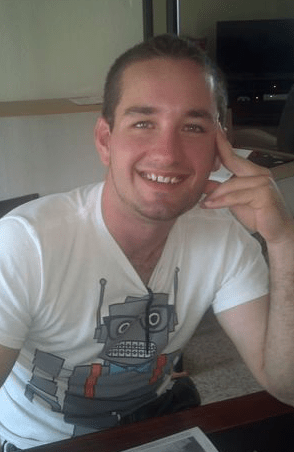
These veterans were successful at setting up times to meet with defense fellows at Thornberry, Collins, and King’s offices. They also stopped into Senator McCain’s office to get the scheduling contact information for him because he consistently does not get back to one. They gave the same Fort Hood presentation to the defense fellows as the one they gave in the Gold Room except this time they had more time to discuss each individual. If it was up to these veterans, they would sit there all day and talk about every single soldier because all their lives matter. Overall, they report the active duty fellows they met with were receptive. They illustrated that the common theme with the four soldiers discussed is involvement in the military justice system in one way or another. The following presentation helps you get an understanding of the issues at bases nationwide by telling you the stories of four Fort Hood soldiers and their experiences in the last couple of years. All had mental health issues and three are dead. The other soldier is in federal prison for eighteen months for a threatening phone call he made to Fort Hood. This incident occurred after he was exonerated of a crime and released from a military prison yet stonewalled and dismissed when he asked about his backpay.
This slideshow requires JavaScript.
Presentation on the Current Status of the Armed Forces at Fort Hood
Last time I was in DC in September 2016, I provided my Senator with military policy recommendations that would benefit families who doubt a cause of death ruling. I highlighted a need for compassionate care for families, independent investigations, and cold case squads in the Army and the Air Force, much like the NCIS Cold Case Squad. Sadly it appears the military has a history of ruling what looks like a homicide as a suicide. One of the most publicized examples is that of Pfc. LaVena Johnson. The Army ruled LaVena’s death a suicide but an independent autopsy revealed she was raped and murdered. To this day, the Army will not cooperate with the family of LaVena Johnson who has begged them to find their daughter’s killer. The alarming stateside death rate at Fort Hood alone only strengthens the resolve to continue asking for mental health and criminal justice reform in the military.
“Simple enough answer, between incompetent leaders, the drugs, the gang bangers, poor units, ghetto neighborhoods, poor quality soldiers, and just being in Texas, this place is where souls go to die… Hood kills you on the inside. The outside follows shortly afterwards..” -Anonymous
Fact: In the last two years, more soldiers at Fort Hood died stateside than overseas. The six non combat deaths that occurred overseas were insider attacks (4) and death ruled suicide by the Army CID (2). The following numbers are the specifics at Fort Hood in Texas since January 2016.
As of August 2017, 9,300 soldiers from Fort Hood were currently deployed across the globe, this is more than a 1/4 of the 35,000 troops stationed there
Average age of death is 28 years old
Average 1.5 suspected suicides per month since January 2016
6 overseas deaths to include 4 insider attacks and 2 suicides
67 stateside deaths to include 34 alleged suicides (13 soldiers had no known deployments; 21 soldiers had deployed to Korea, Iraq, or Afghanistan)
01/05/16: Jonathan ‘Mike’ Gilotti, 33, US Army Veteran (gunshot wound, Alabama; Charleston Wells, 16, Ahmad Johnson, 18, Darrian Bryant, 16, and De’Ron Lucas, 19, charged with murder; Wells found not guilty); 04/17/17: Justin Lewis, 19, US Army (shot & killed near vacant lot in neighborhood near post in Killeen, Texas;unsolved homicide); 05/05/17: Travis Granger, 29, US Army Veteran (gunshot wound, 27 year old Keith Marinnie charged with murder)
A Fort Hood soldier spoke candidly about what they say the reality of living on the Texas military base is like. (2014) –CNN
05/09/16: Ellsworth Raup, 33, US Army (rear ended a van in Killeen, Texas); 06/05/16: Antino Glass, 34, US Army (struck livestock on Fort Hood); 08/01/16: Logan Rainwater, 24, US Army (SUV turned in front of him in Killeen); 09/09/16: Stacy Hardy, 20, US Army (slammed into minivan, eluding Killeen PD); 03/26/17: Jonathan Garcia, 29, US Army (single-vehicle motorcycle crash, for reasons unclear, bike lost control on curve, veered off road, & struck cable barrier); 07/03/17: Anthony Lovell, 40, US Army (single-vehicle motorcycle crash, failed to negotiate a turn, left the roadway, went airborne into creek in Killeen); 07/14/17: James Smith, 24, US Army (single-vehicle motorcycle crash, lost control of bike on I-35 in Temple)
4 died in automobile accidents
03/06/16: Sean Van Der Wal, 25, US Army (fatal auto collision with truck on I-35; driver & Fort Hood soldier Timothy Corder charged with intoxication manslaughter); 06/11/16: Dougal Mitchell, 32, US Army (driving the wrong way on State Highway 195, vehicle collided with another driven by Mikeshia Ruiz, 23, who died at scene); 11/03/16: Dakota Stump, 19, US Army (missing for 3 weeks, fatal auto accident on post that occurred night he went missing, family wants missing ‘Warrior Alert’ law); 01/07/17: Barron Von Reichelt, 24, US Army (died from injuries suffered in an automobile crash on South Range Road at Fort Hood)
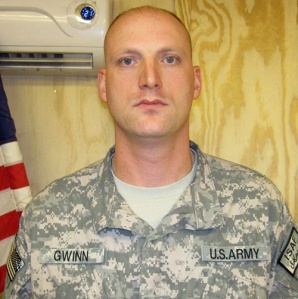
10/12/17: Alva Gwinn, 39, US Army (accused of sex crime; command directed ‘wellness check’ initiated 1 month before trial; shot at by police but died of self inflicted gunshot wound after high speed car chase)
Fort Hood Army Master Sergeant Alva ‘Joe’ Gwinn, 39, died of an apparent self-inflicted gunshot wound on October 12, 2017 near the Williamson-Bell County line in Texas. Although the exact set of circumstances that led to MSG Gwinn taking his own life are unknown, the media reported that MSG Gwinn took his own life during an exchange of gunfire after leading the Killeen Police Department (KPD) on a high speed chase. Prior to the incident, a concerned family member contacted the Fort Hood chain of command to report that Joe was experiencing a mental health breakdown and may be suicidal. The command contacted the military police who then asked the Killeen Police Department to do a ‘welfare check’ on MSG Gwinn. According to the KPD, MSG Gwinn was located in his car but took off when approached; they said MSG Gwinn then led police on a high speed car chase. According to reports, Alva fled on foot after pulling over, there was an exchange of gunfire with the KPD, and MSG Gwinn ended his life with a self-inflicted gunshot wound to the head. An officer involved shooting investigation was launched because gunfire was exchanged. Joe left behind two sons from a previous marriage and a wife and family who loved him very much. He is missed dearly.
On March 21, 2018, the media reported that a “Bell County Grand Jury reviewed the completed investigation done by the Texas Rangers and decided no indictment should be returned to the deputy in connection with the events leading to the death of a Fort Hood soldier.” MSG Gwinn’s home of record was listed as Richwood, West Virginia. MSG Gwinn served in the Army National Guard from 1996-1999 and then enlisted in the active-duty Army in September 1999 as a combat engineer. At the time of his death, MSG Gwinn was assigned to the 20th Engineer Battalion, 36th Engineer Brigade at Fort Hood since April 2012. MSG Gwinn served in the military for over twenty years and was eligible for retirement. When the media reported on the death of MSG Gwinn, they also mentioned a sexual assault accusation lodged against him in June 2016. They reported MSG Gwinn was scheduled to go to court in November 2017 as if they were implying there was a connection between the suicide and the court date scheduled the following month. One media source reported MSG Gwinn was a highly decorated combat veteran who was known for being a perfectionist and respected by his peers. MSG Gwinn deployed to Iraq and Afghanistan a total of five times while he served with the U.S. Army.
Areas of Concern:
On October 12, 2017, family informed the chain of command that MSG Gwinn was experiencing a mental health breakdown & may be suicidal; at the request of the chain of command, the military police asked the Killeen Police Department to do a ‘welfare check’ on MSG Gwinn; according to the KPD, they located MSG Gwinn in his car but he took off when approached and then led them on a high speed car chase that ended with an exchange of gunfire and MSG Gwinn taking his own life
How can we prevent a ‘welfare check’ from turning into an officer involved shooting, suicide by cop or suicide? Why was the high speed car chase necessary?
According to media reports, in June 2016, MSG Gwinn was arrested, indicted and charged by civilian authorities with “aggravated sexual assault” of a 12-year-old girl in 2012; the accusations surfaced in the midst of a child support and child custody case; MSG Gwinn maintained his innocence but a potential trial loomed and his military career and child visitation rights were on hold; Joe loved his family
The accusations negatively impacted MSG Gwinn’s military career and ability to spend time with his two sons; this in turn negatively impacted his mental health; the stress of the child custody case & accusations took their toll; up until this point, MSG Gwinn had a stellar military career and had never been accused of any crimes
According to local media, Alva was facing a trial in November 2017 and they made a loose connection between a pending trial date and MSG Gwinn’s suicide
What prompted the media to mire MSG Gwinn’s memory with an accusation when they reported on his death? Is that fair when the accused can’t defend themselves?
Whether guilty or innocent, this is a tragic end for a man accused of a crime
What does the Army do with the accused who are awaiting criminal trial?
Is Fort Hood responsible for the mental health of those accused of crimes?
What is the military’s policy on child visitation when a military member is accused of a crime against a child other than their own?
Fort Hood Army soldier Thomas Chestnut, 28, was freed from a Kansas military prison on December 23, 2016 after an appellate court overturned a guilty verdict on December 14, 2016. The Army Court of Criminal Appeals overturned the conviction finding evidence in the case as “factually insufficient.” The case stems from an accusation by a third party of a sexual assault of a man in August 2012 at Fort Sam Houston near San Antonio, Texas. Chestnut was charged and found guilty by a military jury on one count of sexual assault and found not guilty of one specification of assault consummated by a battery. Chestnut testified that the encounter with the other soldier was consensual and the third party was trying to deflect attention from himself. Chestnut was sentenced on July 2, 2014 to three years in prison at Fort Leavenworth, a reduction in rank to private, and forfeiture of all pay. After Thomas Chestnut was exonerated, he was entitled to back pay and an honorable discharge from the military when he completed his time in service. Thomas was honorably discharged from the Army in January 2017 but had not yet been able to get his back pay. Thomas shared his thoughts on his wrongful conviction and his two and a half year imprisonment in mostly solitary confinement for a crime he didn’t commit.
“How could I respect the authority of such a corrupt system and such a corrupt institution? Not after what they did to me, to us, as I am not alone in this you see. Hundreds of my fellow veterans have also been falsely accused and forced into prison. Obviously, the military leadership lacks the maturity and ethics to handle sexual assault cases in a balanced adult way. They should not have authority in these matters.” via Save Our Heroes
Thomas Chestnut spent 2 1/2 years in prison where he was placed in solitary confinement and allegedly abused by prison guards. Thomas admits the prejudiced military justice system, corruption, and prison experience traumatized him. He most likely suffers from a form of institutional abuse. In December 2016, the appeals court overturned his conviction, he was cleared of all charges, released from prison, and promised back pay. Thomas stated: “I have nothing. No place of my own, no car, and little money. The Army has no plan for someone with a case overturned, so I’ve been more or less thrown out on the street.” Thomas Chestnut most likely has Post Traumatic Stress Disorder after the betrayal by the military justice system and the abuse he endured in prison marked as a man who rapes other men. In February 2017, Chestnut attempted to get his back pay from the Army as he had nothing, no job, no place to live, no means to take care of himself. The Army didn’t help him or give him the answers he deserved when it came to his backpay.
At this point, Thomas most likely had a post traumatic stress meltdown simply from having to deal with the same institution that wrongfully convicted him of a crime. After he didn’t get the answers he deserved regarding his back pay, he got angry and threatened to harm individuals at Fort Hood. As a result, Chestnut was arrested by FBI agents and charged with making threats to kill individuals at Fort Hood. Thomas has been in federal custody ever since he made the threats and now the life that he may have had a second chance at was taken away from him again. Obviously, Thomas shouldn’t have threatened to kill individuals at Ft Hood but the backpay issue and the fact he has PTSD should have been a mitigating factor in this case. For example, the state of destitution he was in and his legitimate need for money to sustain and take care of himself most likely triggered his post traumatic stress symptoms. He was desperate and the Army’s indifference and stonewalling most likely caused an already emotionally fragile man to disassociate and lash out. If he was within the state’s jurisdiction, chances are he would have access to a veteran’s court that would fight to give him another chance. Instead, Thomas Chestnut is in federal prison for 18 months for one threatening phone call.
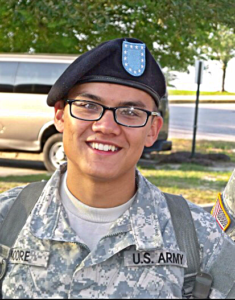
Spc. Zachary Moore, 23, of Virginia Beach, Virginia, was found unresponsive August 1, 2017 in his barracks room at Camp Hovey in South Korea. Spc. Moore was transported to St. Mary’s Hospital and pronounced deceased on August 2, 2017. Spc. Moore entered active-duty military service in March 2014 as a signal support systems specialist. He was assigned to the 9th Cavalry Regiment, 2nd Armored Brigade Combat Team, 1st Cavalry Division at Fort Hood in Texas since July 2016. The circumstances surrounding the incident were investigated by the U.S. Army Criminal Investigation Division (CID) and the cause of death was ruled a suicide.
Was Zachary Moore’s Death Preventable?
In May 2017, Fort Hood announced they were deploying 3,500 troops to South Korea over the summer. Twenty-three (23) year old Zachary Moore was one of the soldiers deployed to South Korea. With full knowledge of Zachary’s recent mental health issues, the Chain of Command gave him a mental health waiver against his will, and most likely against medical advice, so they could deploy him to South Korea.
In October 2016, Zachary had a mental health breakdown and went Absent without Leave (AWOL). After a successful intervention, Zachary was found and returned to the custody of his Chain of Command at Fort Hood. Zachary’s command then sent him to an emergency room where he was hospitalized and prescribed medication. After Zachary was discharged from the hospital, he continued to seek treatment for mental health issues. Six months later, Zachary was given a mental health waiver by his command to deploy to South Korea.
About a month after Zachary arrived at Camp Hovey in South Korea, his depression medication was changed. As a matter of fact, his depression medication was changed the day before he was found unresponsive in his barracks room. Zachary attempted to kill himself on August 1st, less than 24 hours after the medication change. It was Zachary who called his Command for help as there is no 911 on the base in South Korea. He was found unresponsive and finally transported to the hospital about 1 ½ to 2 hours later. He was admitted to the Intensive Care Unit, listed as critical then stable, yet passed away on August 2, 2017.
Why did Zachary Moore go AWOL?
The Chain of Command contacted Jeanette to report Zachary hadn’t been seen since October 18, 2016. They also informed her they were not actively looking for him but would file AWOL status on October 20th. When asked if they filed a missing persons report, Jeanette claims they told her they did but she says she was lead to believe Zachary trashed his room, took his things, and left willingly. She immediately flew to Texas from Florida to find him.
Jeanette contacted the Killeen Police Department as soon as she got to Fort Hood and the local law enforcement found Zachary the same day she arrived. Over the phone, the Command told Jeanette they filed a missing persons report but she learned from the Killeen Police Department that they never did. The Killeen PD noticed recent activity on Facebook so they pinged Zach’s cell phone & found that he was in a remote area of a local state park.
Zachary attempted to flee initially but after negotiations, he surrendered and was returned to the police station where his mom was waiting. Jeanette could tell Zachary was mentally broken and he admitted to her that he wanted to hurt himself. The Killeen PD found Zachary and he had a knife in his possession. Zachary was returned to the custody of his Chain of Command at Fort Hood. Shortly after Zachary informed his mom that his superiors told him to tell her to leave town and stop interfering.
Jeanette reports that Zachary never had any mental health issues prior to this and suspected that Zachary was “singled out by his command and harassed.”
Areas of Concern in Zachary Moore’s Case:
Zachary revealed he was harassed by his Chain of Command. For example, his leave papers to visit family before deploying were denied; he was denied permission to see the Fort Hood Inspector General officer; he was harassed during training exercises; he was given exhausting extra duties; and was accused of taking a radio which was later found on a military officer’s desk. Why was he denied the opportunity to speak to the IG officer?
Zachary was accused of trashing his room and taking his belongings when he went AWOL. Jeanette believes the circumstances surrounding the vandalism of his room and the theft of his property could be evidence of harassment.
During mental health treatment, Zachary was facing the consequences of going AWOL; Zachary was accused of trashing his own room; and Zachary was accused of stealing a secure radio? What are the additional mental health impacts of the way the Chain of Command uses the military justice system?
The circumstances of the mental health waiver and the justifications for sending Zachary to South Korea while he was undergoing treatment for mental health issues and medication management should be investigated.
The effects of the medication change in South Korea should be investigated. Is Command aware that some medications can cause serious negative reactions? (Some depression medication causes suicidal ideation.) Who monitors serious medication changes in deployed locations? Is it safe to deploy soldiers in the early phases of medication management for mental health issues?
Finally, the delay in the Command’s response to Zachary’s call for help in South Korea should be investigated. Why did it take so long to respond to Zachary and why did it take so long to get Zachary to the hospital? Did anyone attempt to administer help while waiting for the ambulance?
If the Command was the cause of the mental health break, where was Zachary supposed to turn? How do we hold the Chain of Command accountable? How do we prevent the Chain of Command from retaliating and using the military justice system or non judicial punishment as a weapon? What was the role of the Commander? What was the role of the Fort Hood Inspector General? How can we prevent a young soldier from feeling like the only way out of their situation is AWOL or suicide? How could we have prevented Zachary’s death?
Soldiers have come forward, given their stories to the family and have offered to testify about what Zachary was put through which may explain why he died. Were these soldiers questioned?
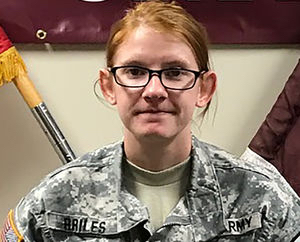
Army Private Paige Fontenot Briles, 21, was found unresponsive in her vehicle at Fort Hood housing in Texas on Christmas eve, December 24, 2016. Private Fontenot Briles is from Kaplin, Louisiana and joined the Army in February 2015. Pvt. Fontenot Briles was assigned to Fort Hood as a wheeled vehicle mechanic. She deployed to Kuwait shortly after completing Advanced Individual Training (AIT). She returned stateside early in December 2015 after she was injured in the line of duty. In November 2016, she was assigned to the Warrior Transition Unit at Carl R. Darnall Army Medical Center. Pvt. Fontenot Briles was going to be discharged from the Army in February 2017 and had plans to attend dental hygienist school. Family report that Pvt. Fontenot Briles cause of death was determined a homicide by the Army but the Bell County coroner’s office made a suicide determination. The Army Criminal Investigation Division (CID) ruled the cause of death as suicide.
Background:
Paige joined the U.S. Army in February 2015 & was permanently assigned to Fort Hood as a wheeled vehicle mechanic after Advanced Individual Training (AIT). Paige shared with her family that she was raped by her recruiter before she went to Fort Jackson for basic training but she did not report the incident. Shortly after arriving to Fort Hood, Paige was deployed to Kuwait in October 2015. Although she returned home early in December 2015 after being found unresponsive under a vehicle. She was injured in the line of duty and the only thing she shared with her family was that she “saw things no one should ever have to see.”
Paige met and married another soldier she hadn’t known that long in January 2016 upon her return home from Kuwait. According to Army CID, they learned that the marriage was contractual and the two did in fact share a home up until recently. When Paige met her husband, she had already experienced multiple traumas from the rape and her experience in Kuwait; she was vulnerable. After a few months of marriage, Paige got pregnant but her “husband” did not want a child and convinced her to get an abortion in August 2016. It was at this point, Paige had a mental health breakdown and was hospitalized for 28 days. She was eventually transferred to the Warrior Transition Unit (WTU) in November 2016.
The WTU allowed Paige to escape the unhealthy arrangement she was trapped in with her contractual husband and she was starting to feel better after being free of him for a couple months. Family reports that Paige decided to get out of the military, move back in with her sister and parents, and pursue an education as a dental hygienist. Paige was expected to discharge in February 2017. Paige put in leave to go home for Christmas in December 2016 but it was denied. Paige took a picture of herself on SnapChat and sent it to her contacts on Christmas Eve. She wrote “here’s to another Christmas alone.” And the Army wants us to believe that 30 minutes later, Paige would be dead by her own hand.
On the night in question, Paige drove to a friend’s house on post. She was house sitting for them while they were out of town. About an hour later, Paige was found unresponsive in the driver’s seat in her vehicle in the parking lot outside her friend’s home. She had been stabbed. Initially the Army investigated the death as a homicide but in December 2017, the family was informed that the cause of death was ruled a suicide. Less than two years in the Army and Paige was gone. She told her parents she was raped, she saw things in Kuwait no one should ever see, and that she was in an unhealthy relationship with a man she was trying to escape. Paige had been through hell in her short time in the Army but she had hope. She knew she was returning to Louisiana to a loving family and a sister who was her best friend. She didn’t feel so trapped that suicide was the only way out.
Paige had a second chance at life in just a couple months when she was going to be discharged. Paige’s parents want their daughter’s case investigated as a homicide. They provided the Army CID with a person of interest. They had interaction and negative experiences with the person of interest. They shared their first hand interactions (witness testimony) and their concerns with CID but felt their experiences and observations were dismissed. They know their daughter was not suicidal because she was due to get out of the Army in February 2017 and she had plans. When questioned if the Army CID ever investigated the person of interest, Paige’s family responded with “the Army CID never investigated any persons of interest.” As a matter of fact, the Army discharged the soldier these parents suspected was the person of interest.
What happens when the Army discharges a soldier who may be a person of interest? They in effect give up jurisdiction of the soldier once they become a civilian unless they are retired. The soldier who was considered a ‘person of interest’ by the family was discharged for disciplinary reasons. Enter across state line jurisdictional issues and the Federal Bureau of Investigation who appears to want to steer clear of cases on military bases. The parents report that initially Paige’s stabbing death was investigated as a homicide yet in the end, despite the autopsy, forensics, suspicious circumstances in her life, and the parents testimony, Paige’s death was ruled a suicide by the Army CID. Once a death is ruled a suicide, the investigation is over and the US Army never has to investigate again.
NOTE: INVOKING CLOTURE REQUIRES A 3/5 MAJORITY OF THE SENATE. IT IS NOT A VOTE ON THE PASSAGE OF THE PIECE OF LEGISLATION, BUT LIMITS FURTHER DEBATE TO 30 HOURS. CLOTURE IS TYPICALLY USED TO END A FILIBUSTER. A FAILED CLOTURE VOTE OFTEN PREVENTS THE LEGISLATION FROM EVER COMING TO A VOTE.
NOTE: THIS LEGISLATION NEEDED A THREE-FIFTHS MAJORITY VOTE TO PASS.
Date: March 6, 2014 Issues: Crime, Military Personnel, Women Bill:Military Justice Improvement Act of 2013 Roll Number: 59 Yea: 55 Nay: 45 Cloture Not Invoked (Senate)
Gillibrand brings victims’ voices to Senate floor in fight for military justice -U.S.Senator Kirsten Gillibrand (March 6, 2014)
Before Senate Vote, Hirono Urges Colleagues To Pass Military Justice Improvement Act -Mazie Hirono (March 6, 2014)
Sen. Paul joined Senate colleagues to urge passage of the Military Justice Improvement Act. This piece of bipartisan legislation will combat sexual assault and other violent crimes in the military by restructuring the way in which they are reported and prosecuted. -Senator Rand Paul (March 6, 2014)
Floor Statement on the Military Justice Improvement Act -Senator Chuck Grassley (March 6, 2014)
U.S. Senator Jeanne Shaheen (D-NH) went to the Senate floor to reiterate her support for the Military Justice Improvement Act of which she is an original co-sponsor and call for its immediate passage. -Senator Jeanne Shaheen (March 6, 2014)
U.S. Senator Susan Collins spoke on the Senate floor today in strong support of legislation coming before the Senate that would address the crisis of sexual assault in the military. -Senator Susan Collins (March 6, 2014)
(Washington, D.C.) — Yesterday on the Senate floor, U.S. Senator Dean Heller (R-NV) spoke in support of Senator Kirsten Gillibrand’s (D-NY) bipartisan Military Justice Improvement Act (S. 1752). -[Former] Senator Dean Heller (March 6, 2014)
The Senate came within five votes of passing a major change to the military’s command structure. An amendment by Sen. Kirsten Gillibrand, D-N.Y., would have stripped commanders of authority over sexual assault cases and put everything in the hands of seasoned military trial lawyers. -CBS Evening News (March 6, 2014)
Senator Ted Cruz speaks out in support of a military sexual assault bill that was blocked in the Senate. -CNN (March 6, 2014)
PBS NewsHour: Hirono Fights For Military Justice Improvement Act -Mazie Hirono (March 7, 2014)
Senator Brian Schatz’s remarks on failure of Military Justice Improvement Act passage -Hawaii247.com (March 7, 2014)
Editors Note: The Senator’s name with a link is a Senator still serving in the U.S. Senate (as of June 24, 2019). You can click on the link and it will take you to their official Senate page. The Senators without a link have been voted out, left, retired, or died. If you click on the Vote link Yea or Nay, it will take you to the Senator’s twitter page. You can thank them for supporting the MJIA or remind those who voted Nay why the MJIA is so important.

 Guest Post by Liz Ullman: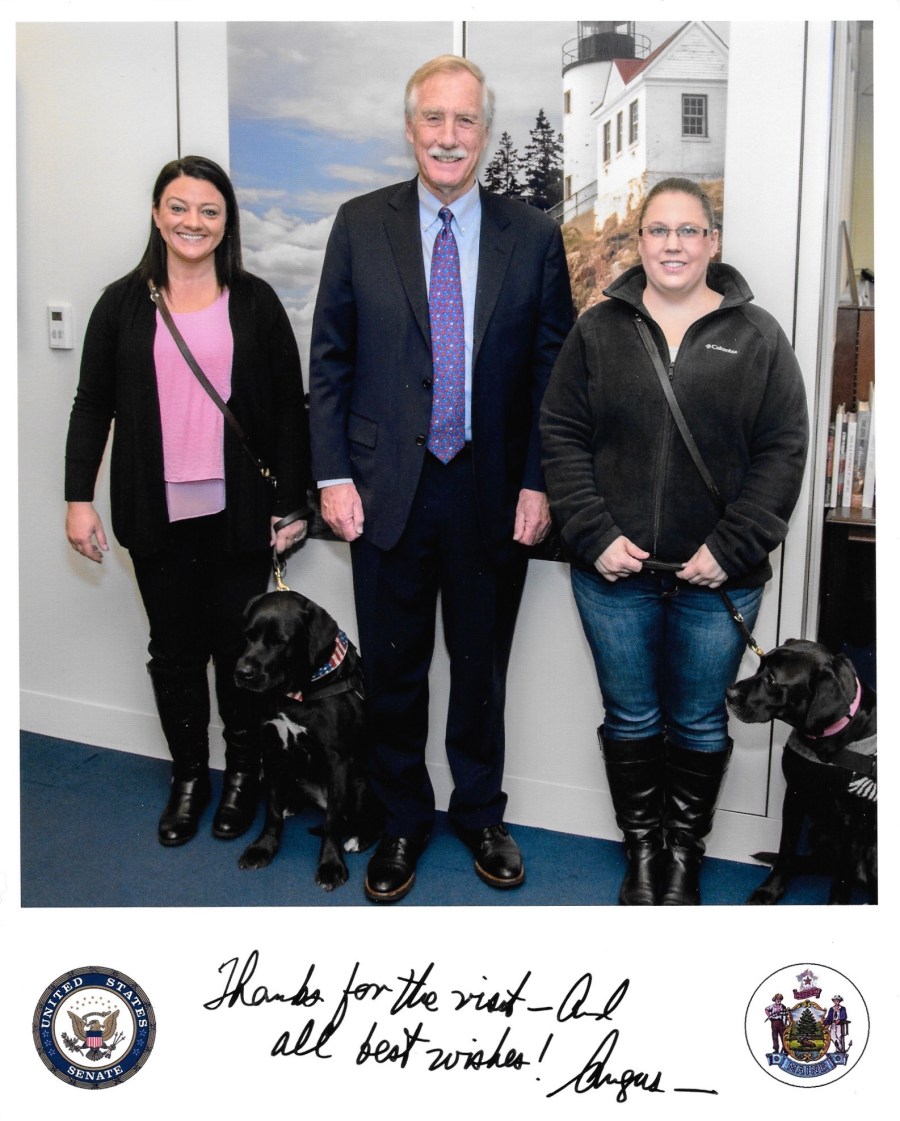
 The WTU allowed Paige to escape the unhealthy arrangement she was trapped in with her contractual husband and she was starting to feel better after being free of him for a couple months. Family reports that Paige decided to get out of the military, move back in with her sister and parents, and pursue an education as a dental hygienist. Paige was expected to discharge in February 2017. Paige put in leave to go home for Christmas in December 2016 but it was denied. Paige took a picture of herself on SnapChat and sent it to her contacts on Christmas Eve. She wrote “here’s to another Christmas alone.” And the Army wants us to believe that 30 minutes later, Paige would be dead by her own hand.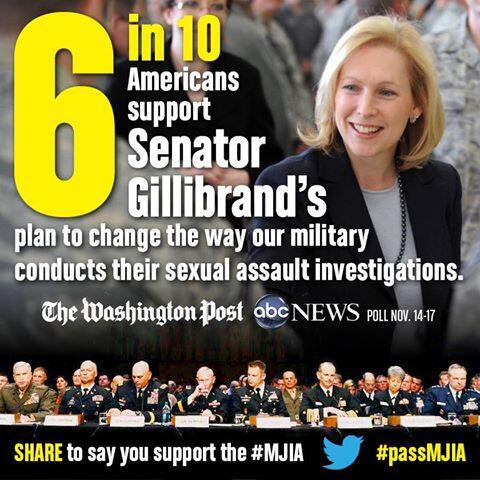
 MILITARY JUSTICE FOR ALL