The Yates family moves to Spokane, WA only to find it besieged by a serial killer who’s targeting young women and confounding the police. Now, the family’s never-before-aired home videos provide a chilling look of one of America’s most notorious killers. -Family Snapshot, American Monster (S2,E2)
Editor’s note: With a cable subscription, you can download the free ID Go app and watch Investigation Discovery programming at your convenience. And for those who do not have cable, you can watch “unlocked” episodes on the ID Go app including the latest premieres. For those who prefer commercial free programming during your binge session, Prime Video has an ID channel: ‘True Crime Files by Investigation Discovery” available for $3.99 a month. It’s a compilation of older seasons but totally worth the cost if you are a true crime addict. Download the ID Go app or purchase ID True Crime Files & binge away.
All new: A young wife shot dead — her soldier husband pulled the trigger. Was it an accident or murder? -48 Hours
A young wife shot dead — her soldier husband pulled the trigger. Was it an accident or was it murder?
On Oct. 16, 2014, Danielle Nemetz, 19, was shot and killed by her husband Skylar Nemetz, 20, in their Lakewood, Wash., apartment. Neighbors placed two 911 calls after hearing a gunshot. Skylar was charged with murder, but his defense says it was an accident and that these 911 calls show a distraught and panicked husband, not a cold-blooded killer. -48 Hours
On Oct. 16 2014, Army soldier Skylar Nemetz was taken into custody after he shot and killed his wife, Danielle. He was recorded on camera just minutes after the shooting. Do his statements sound like the words of a distraught husband who accidentally shot his wife or do they sound like the words of a cold-blooded killer? -48 Hours
Skylar Nemetz is on trial for the shooting death of his wife, Danielle. Prosecutors accuse Skylar of killing Danielle in a jealous rage, but Skylar says it was a tragic accident. During jury deliberations, “48 Hours” correspondent Erin Moriarty talks with Skylar as he waits to hear their verdict. -48 Hours
Army soldier Skylar Nemetz is on trial for the shooting death of his wife Danielle. He says it was an accident; prosecutors say it was murder. Skylar’s mother, Danette Heller, says she spent her life savings to pay for his defense. During jury deliberations, Skylar spoke with “48 Hours”‘ Erin Moriarty about his mother’s sacrifice. -48 Hours
In the News:
When a soldier claims he shot his young wife by accident, his mother gives up everything to support him. A jury must decide whether it was an accident, or an act of rage. -CBS This Morning
A young soldier is charged with murdering his wife in cold blood. He says it was an accident and can explain how it happened. Will the jury beieve him? -CBS Evening News
48 Hours: The Soldier’s Wife -CBS Miami
Skylar Nemetz stood trial in his wife’s fatal shooting. After seven days of deliberation, a jury finds Nemetz guilty of manslaughter, putting him away for slightly over a decade. -Crime Watch Daily
Skylar Nemetz has admitted to shooting his wife to death but he claims it was all an accident. The stunning new development to his story. -Crime Watch Daily
Skylar’s actions speak louder than his words. “The strongest evidence, believe it or not, is what he does immediately after the fact.” Skylar didn’t call 911, a neighbor did. And there wasn’t a single drop of Danielle’s blood on him, a clear sign that he didn’t try to save or even comfort her says Deputy prosecuting attorney Jared Ausserer. “He doesn’t render aid. He never checks on his wife. If it was an accident, he’s going to drop the weapon immediately, run over, grab her, assess her. He doesn’t do that.” He [Skylar’s defense attorney] knows the challenge will be convincing 12 jurors that a highly skilled soldier with years of weapon’s training could make such a fatal mistake. Juror and retired Army soldier: “Never point the weapon in the direction of anybody and pull the trigger like that believing that it’s unloaded.” -48 Hours
“48 Hours” Presents: A stepfather sits in prison for killing his wife. Her daughters vow to keep him there. Does he deserve parole? Correspondent Tracy Smith investigates Saturday, July 1 at 10 p.m. ET/PT on CBS.
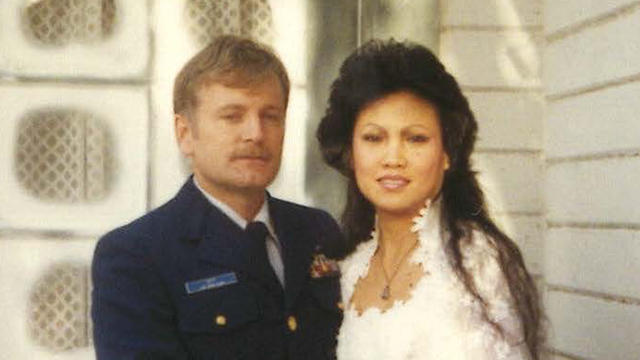
Phonthip (Boonack) Ott, 33, disappeared from her home in California on May 17, 1992. A couple months later, Phonthip Ott’s dead body was discovered in the Sacramento River near Sacramento. Phonthips body was stuffed in a large nylon duffle bag about 5 feet tall. It was held down with H-shaped cement anchors. The day their mother disappeared, Phonthip’s daughters, Tippy Dhaliwal, 14, and Jeanette Marine, 10, spent the day with their grandparents. Upon their return home, the two girls sensed something was wrong when their mother wasn’t home and immediately suspected their stepfather of killing her. Dennis Ott was an active duty petty officer in the U.S. Coast Guard and his relationship with Phonthip was tumultuous. Read more from Military Justice for Allhere.
Penny Brummer, a military vet, is accused of murdering her ex-girlfriend’s best friend in a jealous rage. However, Penny was so drunk that night she was in a blackout state. Can Chris and Melissa help fill in the gaps of her memory to prove her innocence? -Reasonable Doubt, Investigation Discovery
Air Force veteran Penny Brummer was convicted on October 1, 1994 of murdering her ex-girlfriend’s best friend 21-year-old Sarah Gonstead in Madison, Wisconsin. On March 14, 1994, after a night of heavy drinking with Penny, Sarah was shot in the back of the head execution style and found three weeks later in a secluded field. Detectives theorized that Sarah most likely trusted her killer. On this episode of Investigation Discovery’s Reasonable Doubt, Penny’s mother, Nancy Brummer, turned to Detective Chris Anderson and criminal defense attorney Melissa Lewkowicz to help her prove Penny’s innocence. Nancy believes the prosecution had no concrete evidence except for circumstantial evidence and she also believes the the jury was biased and led to believe that lesbians are inherently violent. Detective Anderson and Melissa Lewkowicz worked with Nancy Brummer by taking a second look at Penny Brummer’s case featured in the ninth episode of Reasonable Doubt aptly titled ‘Failure to Remember’. It’s their job to investigate the cases that family members swear are wrongful homicide convictions and in the end the duo share their assessment of guilt or innocence based on meticulous investigative work.
Nancy Brummer has been fighting to free her daughter for twenty-two years. She told Detective Anderson and Melissa that they were her last hope. The two learned that Sarah Gonstead left her mother’s house to go out for a night of drinking to celebrate her 21st birthday with her friend Penny but Sarah never came home. Twenty-five days later, Sarah was found in a secluded field in Madison. Sarah had been shot execution style in the back of the head and Penny was the last known person to see her alive. Eight days later, Penny was arrested and charged with first degree murder. Penny claims she pulled over to clean up some beer that spilled in her vehicle and Sarah exited the vehicle to walk half a block to her best friend Glenda’s house. But prosecutors painted a darker picture. They theorized the two got drunk and Penny drove Sarah out to a empty soy field and murdered her. Prosecutors believed the motive was jealousy because Glenda had just broken up with Penny and Penny blamed Sarah for the break-up. They claimed Penny wanted revenge and the jury bought it. Penny Brummer is currently serving life in prison and her first opportunity for parole is in 2045.
Detective Anderson and Melissa met with the Nancy Brummer first to hear her plea for justice. Nancy stated that she wanted to find the person who committed the crime and free Penny so she can come home. Nancy confirmed that Glenda and Penny were dating and broke up about a month prior to Sarah’s disappearance. Sarah was Glenda’s best friend and the three of them would hang out and party together. Penny was in her early twenties at the time of the homicide so her behavior was typical of most young people at that stage in their life. Nancy Brummer described Penny as very social and happy-go-lucky. She said Penny was really into sports and she was on the softball team and volleyball team in high school. Nancy opined Penny was a typical teenager and started drinking around the age of seventeen. After high school, Penny joined the Air Force and shared with her mom that it was hard being in the military because of the secrecy she had to maintain regarding her sexual orientation. Nancy Brummer believes that the jury was biased and led to believe that a lesbian is more prone to violence. She referenced a questionnaire that Melissa agreed was inflammatory and would need a second look.
The prosecution painted a picture that Penny was jealous of the friendship between Glenda and Sarah. The two were strictly friends and Sarah was straight. Nancy observed that Penny was sad and disappointed about the break-up but not what one would consider obsessive. She reminded Detective Anderson and Melissa that the prosecution had nothing: no physical evidence, no DNA, no blood evidence, nothing that tied Penny to the murder. The prosecution said the gun that was used in the commission of the crime was a 22 handgun that belonged to Penny’s father. Nancy admits that her husband’s gun did go missing and was never recovered. When Sarah’s body was found, Nancy said a witness came forward to the police and said that he had driven by the scene of the crime a day or two after the murder and saw a suspicious vehicle along the side of the road. He saw a man standing behind the vehicle with what looked like a pink and purple duffle bag and as it turns out, Sarah’s jacket was the same pink and purple color. Nancy said this evidence was ignored. Nancy informed both Detective Anderson and Melissa that even if they don’t find Penny innocent, she will keep fighting for her release.
Detective Anderson and Melissa began their investigation. Detective Anderson started with the man who was the eyewitness. This man told Detective Anderson that he did in fact see a vehicle by the side of the road near the location of where Sarah’s body was found in the field. He claims he made eye contact with the man in question but that was about the extent of it. He said after the man made eye contact with him, he put his head down. The eyewitness was concerned that this man was trying to move the body, after all it was only a couple days after she had gone missing. He said the police informed him that they already had a suspect in the case and he felt that his testimony was largely discounted and ignored. Melissa investigated the prosecutors jealousy motive. One of Penny’s close friends described her as a great friend and a someone she went bar-hopping with. Penny’s friend believes that she was a binge drinker and most likely an alcoholic because she would drink until she blacked out. Penny’s friends said she hoped she would get back together with Glenda but certainly didn’t act like a jealous ex-girlfriend. Penny’s friend Mary believes she is innocent.
Detective Anderson met with a forensic expert to go over the physical evidence or lack there of. The two examined the crime scene photos and other evidence available. The forensic expert didn’t see any signs of struggle and it appeared Sarah’s body fell forward after she was shot in the head. There was no sexual assault and no beating. It was an execution style killing and Sarah most likely knew and trusted the person who shot her. Sarah was walking in front of the perpetrator when she was shot in the back of her head. Detective Anderson visited the last known location of both Penny and Sarah, a local bar in Madison. A witness said Sarah and Penny were celebrating Sarah’s birthday because she had just turned twenty-one. The two had been drinking prior to their arrival at the bar but the witness didn’t think either appeared to be drunk. She said they showed up at the bar around 10:30 p.m. and left a couple hours later; they had a couple drinks while they were there. The witness observed they were both in great spirits and having fun and they were both able to carry on a conversation. On the night in question, Sarah was kind of quiet while Penny appeared to be enjoying herself with others at the bar. Neither of them were agitated or upset; they both appeared to be in a really good mood.
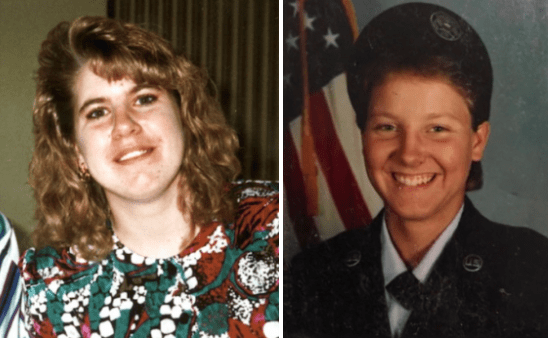
Sarah Gonstead
Penny Brummer
Detective Anderson interviewed Penny via the telephone. Penny said she dated Glenda for 8 or 9 months and admits she fell in love with her. She also claimed to have a nice friendship with Sarah. She shared that Sarah never did anything bad to her and never meddled in her relationship with Glenda. Penny said Glenda just decided one day to end things and told her she was going back on birth control. Penny assumed Glenda wanted to go back to guys. After the break-up, Penny was heartbroken. She admitted she got physical with Glenda one time; they pushed each other during an argument. On March 14, 1994, Penny said she got out of work around 7:30 p.m., got some beer, and went to Sarah’s house. Penny said they stopped at a couple bars and drank more beer. Penny said she doesn’t remember being at Jakes (the bar where the eyewitness last saw both Penny and Sarah at around midnight). Penny admitted she was an alcoholic then and was very intoxicated. Penny and Sarah were on their way to pick up Glenda when Penny spilled some beer in her car and stopped to clean it up. Penny said Sarah wasn’t feeling well so she started walking to Glenda’s house which was about a half a block away. Penny told Detective Anderson she doesn’t know why she didn’t take Sarah to Glenda’s house but she went home after cleaning her car. Penny reminded Detective Anderson that she isn’t the type to kill anyone, she didn’t have a weapon, and she had absolutely no reason to hurt Sarah.
In the meantime, Melissa looked at the questionnaire that was given to the jury asking them about their thoughts about lesbians and violence. Melissa said, as a criminal defense attorney, she would insist that the jury not be subjected to or see the questionnaire because it is inflammatory. Melissa also spoke with Glenda who was the glue that held the case together. Glenda claimed she dated Penny for about a year but wasn’t necessarily in love with her. Glenda claimed Penny drank a lot but could still function; she just wouldn’t remember it. Glenda described Sarah as a shy, soft-hearted, and loyal friend. Glenda believed that Penny was jealous of her friendship with Sarah. Glenda admitted that Penny did in deed find her birth control pills and assumed that she was breaking up with her so she could date men again. Glenda admitted she broke up with Penny because she was way too controlling. Glenda also claimed Penny was pissed that she broke up with her. When Glenda ended it, Penny shoved her and she shoved her back and kicked her out of her house. Glenda said the look in her eyes scared the crap out of her and she began to cry. Glenda believes they have the right person and is still grieving the loss of her friend.
Detective Anderson and Melissa met with Nancy Brummer to share the results of their investigation. Nancy claimed the jury was bias because of Penny’s sexual orientation and Melissa believes she was absolutely right. Melissa said the questions asked of the jury were highly prejudicial. Penny’s close friend felt that the motive of jealousy was crap but Glenda was 100% convinced Penny was the killer. Glenda claimed the motive in this case was vengeance. Glenda declared that if Penny gets out of jail, she is moving to another state because she is scared of her; if Penny did this once, who is to say she won’t do this again? Nancy doesn’t believe Glenda and said she is a good actress. Detective Anderson told Nancy he followed up with the eye witness at the scene of the crime and said this was a problem because each and every lead needs to be taken seriously. He also shared that only one of the detectives was alive and he refused to meet with him. Melissa confirmed that there is no physical evidence tying Penny to the crime. Detective Anderson addressed the gun they believed was used in the commission of the crime and Nancy confirmed the 22 they owned had indeed gone missing. Detective Anderson addressed the autopsy photos and shared that the forensic expert did not observe any signs of struggle. It was a cold night and if someone ran towards Sarah, she definitely would have heard it. Detective Anderson deduced Sarah was shot by someone she knew or was led into the field at gunpoint.
“Circumstantial cases are a series of little things that add up until they point in one direction.” -Detective Chris Anderson, Reasonable Doubt
Nancy Brummer said there was no way her daughter would have shot Sarah in the back of the head. But Detective Anderson had some serious issues with the fact that the only person who claims Penny was in a black out that night is Penny. He spoke with a bartender who claimed that Penny appeared to be functional. Jake’s bar is significant because it is less than two miles from where Sarah’s body was found. Detective Anderson noted that Penny said she couldn’t remember being at Jake’s that night but she remembered very specific things earlier and later that night. Detective Anderson felt it was suspicious that Penny remembered everything really well that night except being at this bar. Is this a form of convenient amnesia? Melissa empathized with why Nancy felt a sense of injustice all these years. The biased questionnaire, the ignored witnesses, and the overall investigation had major problems; the evidence was highly circumstantial. Penny was the last known person to see Sarah alive that night; Penny was last seen at a bar with Sarah which is located less than two miles from where Sarah’s body was found; Penny said she can’t remember being there but does remember a lot of details earlier and after Sarah went missing; Sarah was killed with a 22 and Penny’s father owned a 22 that was now missing; Penny was a military vet who was trained to shoot guns; and Sarah wasn’t trying to run away, she didn’t struggle, and she most likely knew and trusted her killer.
Why would Penny do this? Melissa shared that she read through the police reports and noted that Penny admitted she was heartbroken when things ended with Glenda. Penny also admitted that after the break-up she wondered who Glenda was with, where she was, and what she was doing. Penny also said Glenda was in her head 24 hours a day (obsessed) and that she resented Sarah because she assumed Sarah was trying to drag her back into the straight world. On the night of March 14, 1994, Penny did what she always did. Melissa explained Penny got really drunk, the break-up was fresh, her feelings were raw, and she spent the entire night with the person she believed came between her and the woman she loved. Melissa asked, “did Penny plan to walk Sarah into the woods or was it just a horrific idea fueled by fifteen drinks?Did she remember shooting Sarah, does she remember her falling to the ground, or does she not remember anything at all?” Ironically, Penny admits that prison saved her life. Penny believes she would not have made it to thirty had it not been for prison. Penny said she turned her life around behind bars. Based on the leads Nancy provided and an independent investigation, Detective Anderson and Melissa revealed there was nothing new in the investigation that would bring Penny home. They both suggested Nancy ask her daughter the tough questions and then she will know, even 22 years later.
“The problem is that the things Penny remembers are the things that will help her and the things that she can’t remember are the things that would potentially hurt her.” -Melissa Lewkowicz, Reasonable Doubt
Twenty-one years ago a jury found Penny Brummer guilty in the murder of Sarah Gonstead. The family of Brummer has spent those 21 years working to prove her innocence. Dave Delozier reports. -Channel 3000 | News 3 (December 14, 2015)
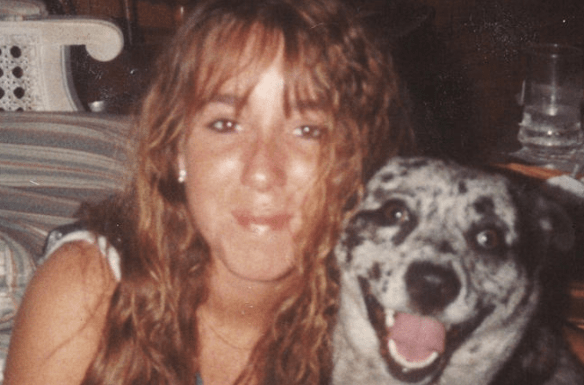
In the more than 20 years since the murder of a 21-year-old woman outside her home in Cocoa Beach, Florida, there have been a number of men investigated in connection with the case — but the crime remains unsolved. Members of the Brevard County Sheriff’s Office share details with “48 Hours”‘ Erin Moriarty.
If you have any information about Amy Gellert‘s murder, please contact the Brevard County Homicide Unit: E-mail: majorcrimes@bcso.us or call Central Florida CrimeLine: 1-800-423-TIPS
“[A tipster] overheard Dominic’s girlfriend [Julie Flounder] saying that he was possibly involved with that homicide.” Investigators then learned Kanuika had stolen a car and left the area the day after Amy’s murder. He later moved back to Pennsylvania where investigators tracked him down. “Dominic puts himself at the scene.” Kanuika claimed that he was coming back from work when he drove pass Amy’s house. “He actually stops, pulls over, and walks up to see what was going on…His story didn’t check out. He didn’t work that night…He was given a polygraph and he failed it…Dominic was in Marine Corps boot camp…and one of the things he had to do was fight with a knife.” Dominic Kanuika was [now] serving time for drug possession and robbery. -48 Hours
A tattooed NCIS agent with a black belt goes undercover to find the killer of a Navy petty officer — can he get what he needs without getting caught? -48 Hours: NCIS
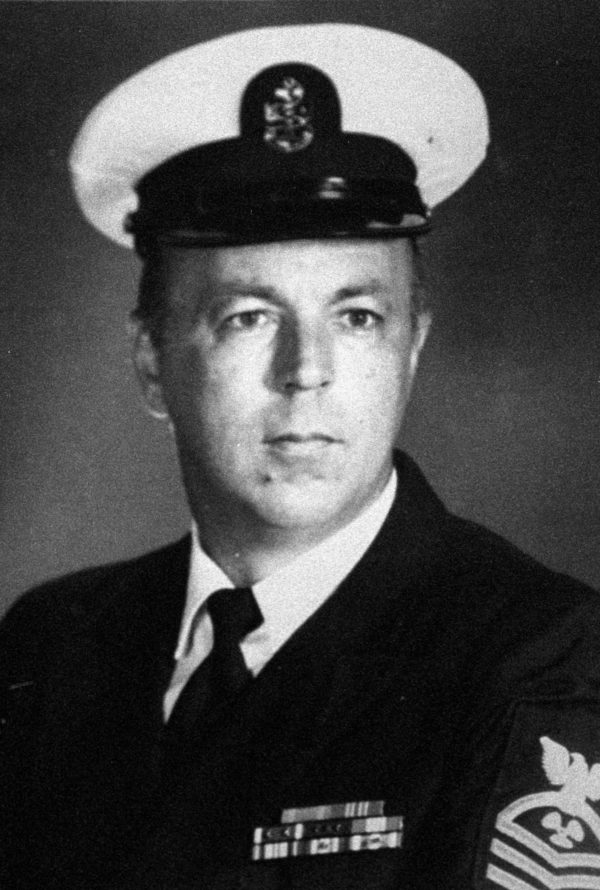
Norma Small was arrested in May 2001 and charged with murder for the death of her husband and Navy sailor Sonny Grotton at his Belfast, Maine home on December 16, 1983. She was accused of hiring someone to murder him, convicted, and sentenced to 60 years in prison. Norma felt Sonny was worth more dead than alive. Investigators believed the crime was financially motivated. If Sonny died, Norma would get a death benefit from the Navy, the real estate that she owned with Sonny, and she received a monthly payment from the VA that over 15 or 17 years had amounted to almost $100,000.
“This thing comes up every 15 years. My dad wasn’t an international superstar or politician. Why this case? I haven’t seen a lot of true crime that really portrays the crime in a true life way. And for people who are trying to move on, it’s unfair in a big way.” [says Michael Grotton]. When asked why CBS was interested in the case all these years later, a producer for “48 Hours,” said the network is creating a series that will feature real cases solved by the Naval Criminal Investigative Service, or NCIS. He told the BDN the production team’s reporting “turned up a twist” that may shed doubt on some of the facts that people have believed for the past 15 years. –Bangor Daily News
There’s a gun lying next to the victim. Is it suicide or murder? -Vegas Bray, Snapped, Oxygen (May 9, 2017)
An attractive woman witnesses her ex-boyfriend’s shooting, but can’t remember what happened, raising questions about suicide, stalking and split personalities. -Vegas Bray, Snapped, Oxygen (May 9, 2017)
Vegas Bray is convicted of murder and sentenced 25 years to life in prison. A friend of Vegas’s, Kevin Oseguera says “the monster inside of her” shot Victor, not his friend. -Vegas Bray, Snapped, Oxygen (May 14, 2017)
Vegas Bray says it’s hard to talk about what happened to her. She shows no remorse. -Vegas Bray, Snapped, Oxygen (May 15, 2017)
An attractive woman witnesses her ex-boyfriend’s shooting, but can’t remember what happened, raising questions about suicide, stalking and split personalities. -Vegas Bray, Snapped, Oxygen (S20,E2)
Investigation Discovery:
A young Navy recruit falls for a fellow officer, but becomes overwhelmed by jealousy when she learns he is friendly with the mother of his child. -Deadly Women, Investigation Discovery
These Deadly Women won’t let their men go… they “Cling Til Death.” -Cling ‘Til Death, Deadly Women (S10,E4)
Editor’s note: With a cable subscription, you can download the free ID Go app and watch Investigation Discovery programming at your convenience. And for those who do not have cable, you can watch “unlocked” episodes on the ID Go app including the latest premieres. For those who prefer commercial free programming during your binge session, Prime Video has an ID channel: ‘True Crime Files by Investigation Discovery” available for $3.99 a month. It’s a compilation of older seasons but totally worth the cost if you are a true crime addict. Download the ID Go app or purchase ID True Crime Files & binge away.
While mourning the death of his wife, Julian falls hard for his much-younger coworker Teresa. For a time, her spunk lifts him out of to his sorrows until a sordid affair plunges him even deeper into the abyss. -Second Chance at Death, Fatal Vows (S5,E1)
Preview: Teresa Michelle Lewis used sex for currency to get what she wanted. -To Love and To Murder, Deadly Women (S5,E5)
Marriage is a lifelong commitment of love, and wedding vows. ‘To have and to hold; for better, for worse; until death do us part’. But for these monstrous wives, it was only the vow of ‘death do us part’ they upheld. -To Love and To Murder, Deadly Women (S5,E5)
Editor’s note: With a cable subscription, you can download the free ID Go app and watch Investigation Discovery programming at your convenience. And for those who do not have cable, you can watch “unlocked” episodes on the ID Go app including the latest premieres. For those who prefer commercial free programming during your binge session, Prime Video has an ID channel: ‘True Crime Files by Investigation Discovery” available for $3.99 a month. It’s a compilation of older seasons but totally worth the cost if you are a true crime addict. Download the ID Go app or purchase ID True Crime Files & binge away.
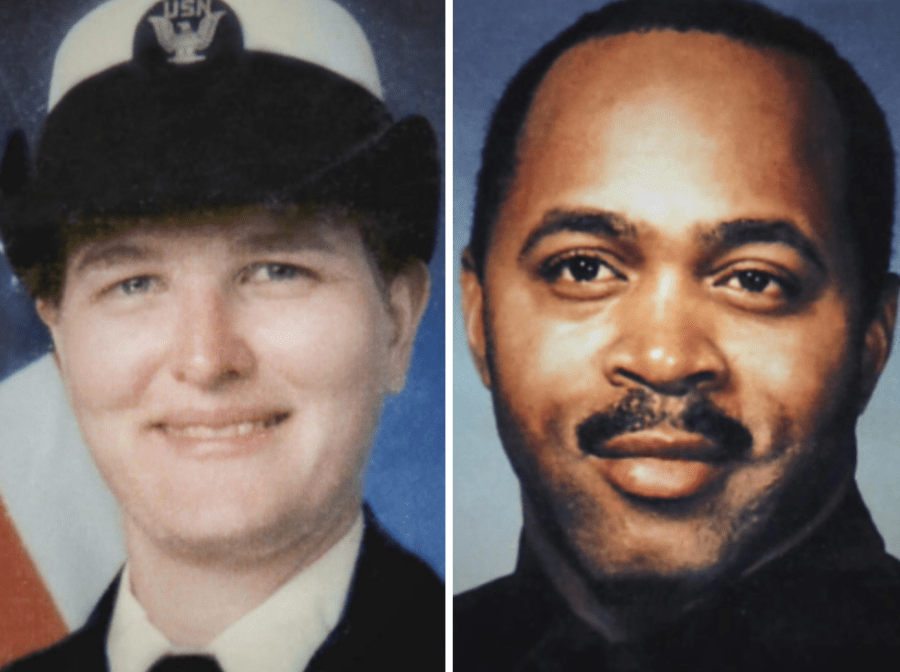
Navy Petty Officer Elise Makdessi worked as an Air Traffic Controller at Naval Air Station Oceana in Virginia. Elise was married to Eddie Makdessi for five years and they lived off base in Virginia Beach. Elise unknowingly helped plan, organize, and carry out her own murder and it is unclear if she was a willing participant in the original plot with Eddie to scam the government out of money or if she was controlled by Eddie. Eddie Makdessi murdered Elise Makdessi and Navy Petty Officer Quincy Brown on May 14, 1996 as part of an elaborate scam. The whole thing was a set up. Elise thought she was part of an arrangement where she would invite Quincy Brown to the house, have sex with him, then accuse him of rape. She also manufactured evidence to make it look like she was documenting sexual abuse in an effort to sue the Navy and make millions. She had journals and created what looked like a rehearsed video outlining what four Navy men, including Quincy Brown, did to her on the job.










 MILITARY JUSTICE FOR ALL