On August 29, 1989, Navy veteran Richard Uffelman and his two sons opened fire from their living room window and shot and killed their neighbors Michael and Florence Phillips in Machiasport, Maine. The Phillips family moved back to Maine so they could be closer to their family and the ocean, and they wanted to escape crime in Indiana. Shortly before they moved to Maine, a murder occurred outside their home and this was it for them; they wanted to raise their son Michael in a safe environment. Richard and Anita Uffelman and their two sons were the new neighbors of the Phillips in Maine. Richard was described as an authoritarian and a believer in good order and discipline. He worked at the local post office and taught his two children to shoot guns. Initially the neighbors were good friends and their boys played together. At some point, family came to visit the Phillips for a week. The happy family reunited outside on the front lawn while they barbecued, drank some beers, and enjoyed one another’s company. Apparently Richard found a broken bottle on his lawn during the event and automatically assumed the Phillips threw the bottle on his lawn. Richard called the police to complain about the incident but there was no proof since the Phillips denied doing it. This was it for Richard; the Phillips home interfered with his view of the ocean and he was going to exact his revenge. Read here.
On April 10, 2008, Navy sailor Chris Shortt discovered his step-daughter Meghan Landowski stabbed to death in their Portsmouth, Virginia home. Meghan was 16 years old and from the looks of the crime scene, there was a struggle; Meghan fought back. Investigators learned the killer used a knife from the family’s kitchen. They found it in a gutter down the street. The police didn’t know who committed the murder but they believed it was personal and Meghan knew her attacker. Chris and Angie Shortt believed Robert Hickey killed Meghan and they called NCIS at Naval Station Norfolk to let them know what happened. NCIS questioned Hickey. Robert Hickey was a military officer who was on his way to the rank of Captain when he was accused of sexual assault by Meghan. Robert was a close friend of the family and NCIS believe he groomed Meghan for a sexual relationship. Meghan said Rob began touching her when she was 14 and by age 15, Meghan was having a sexual relationship with a 30-year-old man. The family supported Meghan as she pressed charges against Robert but they learned from civilian investigators that Hickey’s crimes amounted to a misdemeanor in Virginia; he would spend 12 months maximum in prison. But Robert Hickey was a Navy sailor and subject to the Uniform Code of Military Justice. The Navy was investigating and planning to prosecute the case. Read here.
John Blauvelt and Catherine Blauvelt (photo: PEOPLE)
Press Release from U.S. Marshal’s Service (July 21, 2022):
Washington, D.C. – U.S. Marshals in Oregon have arrested a South Carolina murder suspect, putting an end to the man’s six-year run from the law.
Major Case Fugitive John Tufton Blauvelt, 33, was taken into custody in Medford, Oregon, July 20 by U.S. Marshals and Medford police following a lead provided by a dedicated cold case team of investigators at the agency’s headquarters.
Blauvelt is wanted for the killing of his estranged wife, Catherine “Cati” Blauvelt, who was found stabbed to death in an abandoned home in Simpsonville on Oct. 24, 2016. She was 22. Cati had been reported missing by her family the previous day after failing to meet with her friends after work. She was last seen leaving her place of work, a Greenville pet store, at approximately 2:15 p.m. on Oct. 23, 2016.
On Nov. 18, 2016, Simpsonville Police obtained warrants for Blauvelt’s arrest for murder and possession of a weapon during a violent crime.
Blauvelt, who worked as a U.S. Army recruiter in Greenville County at the time of the murder, but was classified by the Army as a deserter shortly thereafter, fled the area just after the murder with his 17-year-old girlfriend Hannah Thompson, of Fountain Inn. Blauvelt had last been seen in Las Cruces, New Mexico, Nov. 15, 2016, traveling with a female passenger police said they believe was Thompson.
Thompson’s parents reported the teen missing to the Fountain Inn Police Department on Nov. 21, 2016.
After the U.S. Marshals joined the search to find Blauvelt, they learned he and Thompson had traveled through Alabama, Texas and California.
Thompson was found safe in Oregon on Dec. 12, 2016, having been abandoned by Blauvelt. She went to a family friend’s home in Eugene and called her parents, saying she wanted to come home. She and Blauvelt had been homeless while in Oregon.
The case was aired on In Pursuit with John Walsh in 2019.
In early 2022, a U.S. Marshals dedicated cold and complex case investigative team, composed of various USMS components, joined the investigation for Blauvelt. Working closely with investigators from the District of South Carolina, the Carolinas Regional Fugitive Task Force, as well as Simpsonville detectives, the South Carolina Highway Patrol and the U.S. Army Criminal Investigation Division, the team was able to put Blauvelt in Medford, Oregon, and sent a collateral lead to the District of Oregon. The U.S. Marshals Pacific Northwest Violent Offender Task Force in Oregon committed numerous personnel and hours to the investigation. Ultimately, investigators there, working with the Medford Police Department and the Jackson County Sheriff’s Office, located Blauvelt, who had assumed the alias “Ben Klein,” and took him into custody without incident.
Blauvelt is being held in Jackson County Jail pending extradition to South Carolina to face the charges against him.
“This arrest represents a tremendous amount of cooperation among numerous agencies dedicated to seeking justice for a victim of a heinous crime six years ago,” said Heather Walker-Wright, Assistant Director of the USMS Investigative Operations Division. “I want to commend the investigators and Deputy U.S. Marshals in South Carolina, Oregon and here at headquarters, as well as our partner agencies, who worked so tirelessly to get John Blauvelt into custody.”
Acting U.S. Marshal for the District of South Carolina Karen Thomas said, “The U.S. Marshals Service dedication to duty, pursuit of justice, and relentless team effort across the nation led to the capture of a violent fugitive.”
“I hope that the arrest of John Blauvelt brings Cati’s family some relief from the situation that they have had to endure the past few years,” said Simpsonville Police Chief Mike Henshaw. “I want to thank the U.S. Marshals Service and all the various agencies that assisted in making this arrest possible. The team effort by law enforcement is to be commended.”
Established in 1985, the U.S. Marshals Major Case Fugitive Program prioritizes the investigation and apprehension of high-profile offenders considered to be some of the country’s most dangerous. These individuals tend to be career criminals with histories of violence or whose instant offense(s) poses a significant threat to public safety.
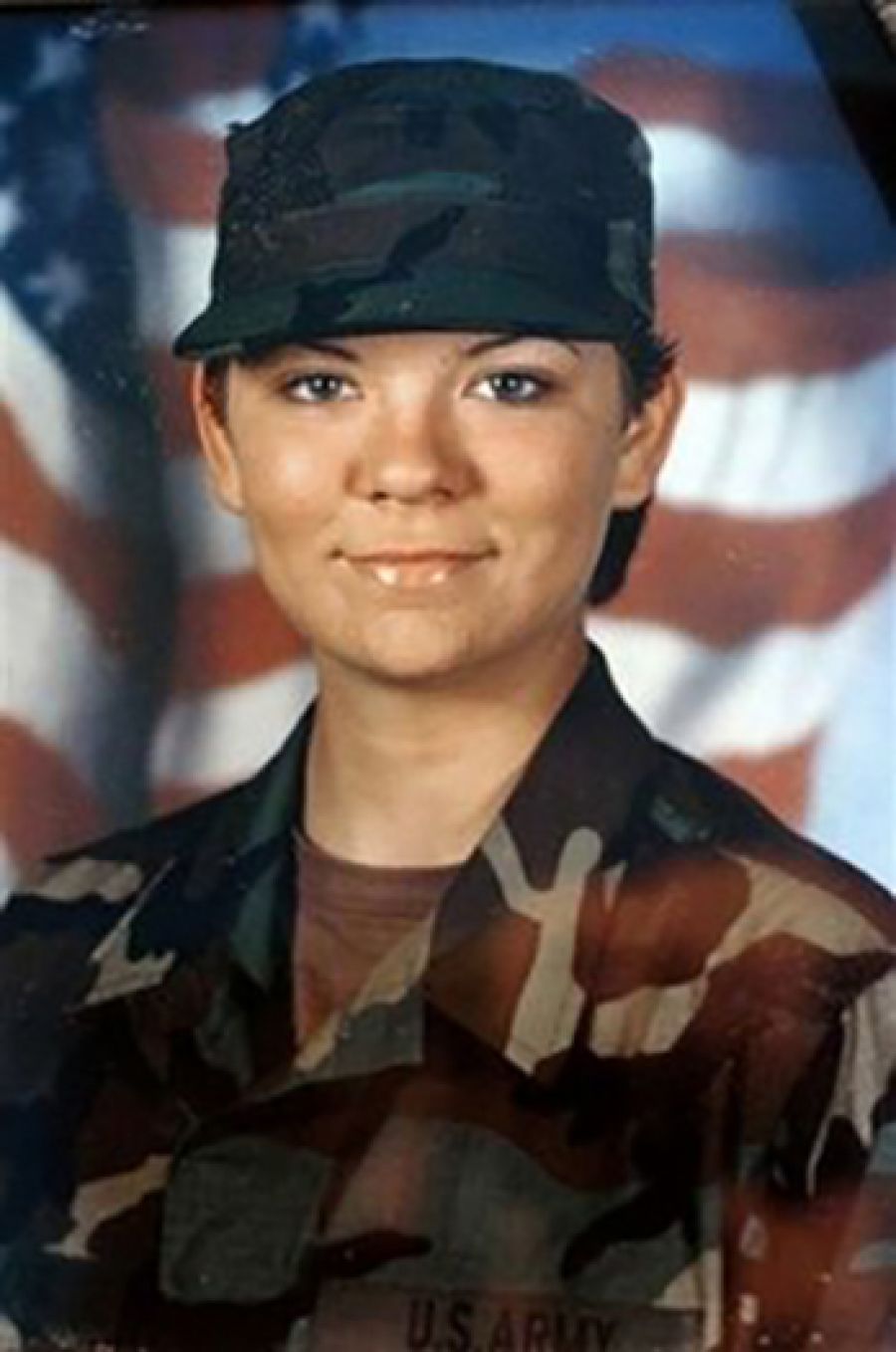
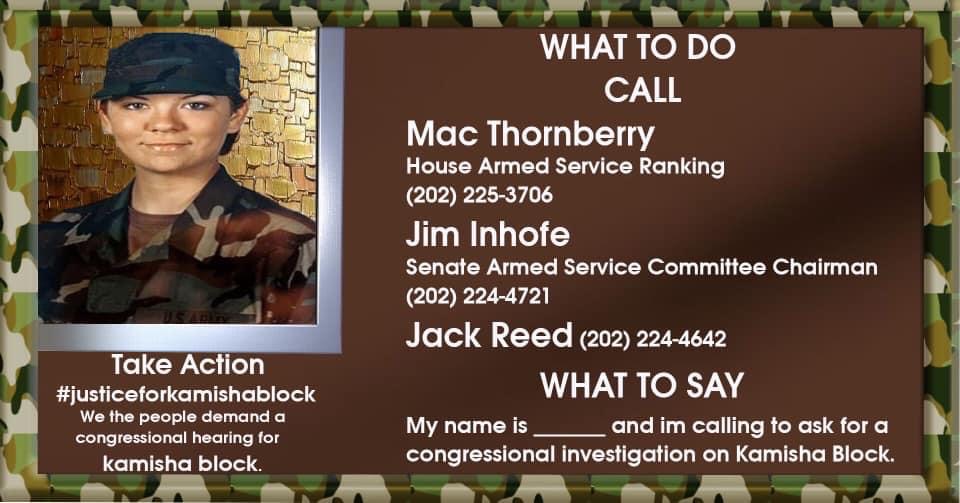
“In August 2007, [Fort Hood Army] Specialist Kamisha Block’s family was told that their 20-year-old daughter had died in Iraq as a result of friendly fire – one shot to the chest. The family was floored. They didn’t quite understand what that meant and they wanted answers. But Kamisha would give them a sign. When Kamisha’s mom, Jane, arrived at the funeral home to see her daughter one last time, she noticed a bullet sized hole on Kamisha’s head that had been covered with makeup. Her knees buckled as she thought – what have they done to my baby girl? And the answer she would get would never quench the Block’s family desire for real answers. Kamisha had been killed intentionally by another soldier – Staff Sergeant Paul Brandon Norris. Norris and Kamisha had been dating on and off for a few months and their relationship was against military regulations.” Listen to Episode 38 on the Military Murder Podcast website here.
If you would like to help the family get a congressional hearing and investigation, please call the ranking members of the HASC and SASC. #JusticeforKamishaBlock
Goals and Questions from Kamisha Block’s Family:
1. Hearings to discuss service wide responses to dangerous situations, negligence, and preventable deaths
2. There’s a break down in continuity of ‘no contact orders.’ For example, may be enforced in US but not in Iraq, may be enforced in civilian jurisdiction but not on base, etc.
3. Discussion of how a victim of crime copes when they report and are ignored or they don’t report for fear of their lives, loss of career, retaliation.
4. Brandon Norris was in Kamisha’s enlisted chain of command and was able to manipulate the situation to keep Kamisha under his control. When the Chain of Command learned about the forbidden relationship, one of them should have been moved to address the situation.
5. When the homicide-suicide occurred in Iraq, military members were told not to talk to Kamisha Block’s family. Out of fear, they remained silent until they watched an Investigation Discovery episode outlining what happened in Iraq. Most are veterans now and as a result of time and conscience, they now are willing to come forward and testify at hearings.
6. The service members who were in Iraq are now suffering with what we would refer to as moral injury. They knew the truth, they were shocked the Army told Kamisha Block’s family she died by friendly fire. They were fearful of coming forward while still serving in the US Army.
7. Brandon Norris was problematic before being deployed to Iraq. His behavior was erratic, he was drinking, he very likely could have had PTSD due to prior deployments, and he should not have been sent back to Iraq. When the command found out about the forbidden relationship, they issued a no contact order, which is virtually useless when both parties are on the same small base. They sent Brandon Norris to Iraq knowing there was a no contact order. There were a number of red flags in Brandon’s history to warrant getting him evaluated and medically retiring him. Although PTSD isn’t an excuse for violence, the mental health breakdown that comes with that diagnosis will send someone into a downward spiral if not addressed. These are co-occuring issues. Prior problems with domestic violence and PTSD are a deadly combination if no intervention.
8. When they sent Brandon Norris back to Iraq, it made Kamisha even more fearful because she could not escape him, there was nowhere to turn and she was isolated. The expedited transfer policy needs to be expanded to include all victims of crime and those who are fearful of their lives and trapped in dangerous situations. Did Brandon manipulate fellow leaders to see things his way? Why didn’t they protect Kamisha from Brandon’s escalating violence?
9. Why was the no contact order ignored, why was Brandon not removed from Kamisha’s Chain of Command, why was Brandon sent to Iraq with Kamisha, why did the Army tell Kamisha’s family she died by friendly fire, why was the Chain of Command not held responsible for negligence, why did Kamisha feel like she had nowhere to turn, why were service members told to remain silent, why did it take this long to get Kamisha’s case reopened? Why was Kamisha Block’s case closed before any of the questions were answered? Why was it closed because there was “no evidence” to support one allegation?
10. Why was Kamisha’s computer wiped clean before it was returned to the family? Why was it returned to the family if it was considered evidence? Why would anyone wipe the computer clean when it was full of potential evidence that would help us understand the victimology of Kamisha and what was going on in her life at the time? Service members informed family they were asked to destroy all paperwork and personnel records before Army CID arrived to investigate. Why would anyone destroy evidence needed to evaluate and investigate a homicide-suicide? How can we prevent the Chain of Command from destroying evidence in the future?
11. The morning of the homicide-suicide, it is alleged that Brandon Norris was experiencing a mental health breakdown. Why was his gun not taken from him immediately if there were already concerns about his behavior, actions, and deteriorating mental health state. This is another example of how this tragedy could have been prevented had the Army intervened and sent him home. Again, he should have never been sent to Iraq on a deployment with Kamisha. The no contact order is impossible to enforce if both are in the same unit on the same base in Iraq. Kamisha clearly expressed fear of Brandon and wanted the no contact order enforced, they ignored it. Why? Did they need warm bodies in Iraq? Did Norris manipulate them? Did the chain of command not care about Kamisha’s safety?
12. Why was Brandon sent to Iraq instead of discharged? Why was he not held responsible for an illegal relationship with a subordinate? Why was his mental health and problematic behavior ignored? Why would the chain of command issue a no contact order that can’t be enforced when two service members are serving together in the same unit on the same base whether in the US or overseas? Had any of these things been addressed and investigated, it could have saved Kamisha’s life.
13. Was Brandon Norris taking any medication for his mental health issues? If so, what were the prescriptions and what are the side effects. It is alleged that Brandon was taking ambien to help with sleep in a war zone. If this is the case, what is the responsibility of the mental health professionals or other military doctors who prescribed this medication to him? What is the responsibility of the chain of command if they have knowledge of medications? Do the health professionals and chain of command discuss whether it is healthy for a service member to deploy while on said medications? Did the medications or the side effects of the medications contribute to a downward spiral? Did he abruptly stop taking the medications at any point? Why was his health and medication management not considered before he was sent to Iraq? This puts everyone in danger if the person is not taking medications as prescribed and/or not well.
14. Discussion of Feres Doctrine. This archaic, unconstitutional Supreme Court decision is preventing us from holding key players accountable. Lawsuits are a form of checks and balances in the system. How do we hold the military accountable if we can’t utilize one of the three forms of government to force positive change for all service members in the future? Wrongful death lawsuits help us find the answers we may not get in an investigation or if something was not investigated. Lawsuits are used to force change and prevent the same tragedies from happening over and over. This is not happening in the military as evidenced by years of failed reforms. Preventable deaths are a common occurrence and until we can hold them accountable, nothing is going to change. How do we begin the process of getting the Feres Doctrine overturned? If congressional members do not do their jobs and help family members learn the truth, where do we turn? How do we get a case reopened without re-traumatizing ourselves over and over. It took years for Kamisha’s family to get her homicide case reopened and one year before the Army closed it again. The family wants the chain of command held criminally responsible for what they know was a preventable death. What do families do if Congress doesn’t help them? What do families do if the media won’t help tell their story? What do families do when they want an independent investigation because they question the outcome of the Chain of Command and CID’s investigation?
15. Does the Chain of Command involved in the wrongful death of a soldier deserve to continue serving in the military? Why are they not held responsible for manslaughter or negligence? If their actions or inaction lead to the death of someone under their command, shouldn’t they be held responsible for that death as well? Shouldn’t they be held responsible for not taking care of Brandon or Kamisha when they had the chance? Why was Brandon’s escalating violence and problematic behavior ignored at Kamisha’s expense? How do we hold them accountable when they destroy evidence? How do we prevent them from destroying evidence and wiping computers and phones clean before giving them back to the family?
16. There are a number of female soldiers who have died under suspicious circumstances while deployed to Iraq, Afghanistan and other overseas locations. There were a cluster of deaths around the time Kamisha died as well. If you study each female service member’s story, it fits a pattern, a pattern recognized in Kamisha’s case as well. It reveals the continued repeated pattern of placing people in dangerous situations with potentially dangerous service members. We need an evaluation of all the non combat deaths overseas to find out what the root causes are in an effort to prevent these suspicious deaths and/or suicides from happening in the first place. Did the service member ask for help, report a crime, etc. before they died. We need to know how and why they died to help us create deployment policy that can be enforced in an effort to prevent a wrongful death. They need the expedited transfer policy expanded to capture all the dangerous situations not related to a sexual assault or rape. This can be used to save the service members life if they chain of command ignores them. The danger increases exponentially in a war-time environment one cannot escape.
17. Lastly what about the impact this has on the loved ones left behind? First off, the families should be compensated for the pain and suffering the military causes them when they question the cause of death ruling or they question what happened to their loved one who died under suspicious circumstances. We must address how the military treats families in these situations. Most don’t even know where to start. They don’t know how the military works. They don’t know the Commander is the central investigator and CID does what is asked of them. They don’t know how to FOIA records. They can’t make sense of records they do obtain because most of it is redacted or blacked out. No family should have to FOIA any records related to their loved ones death. This should be an automatic for them. The system is set up to make the family feel hopeless and give up, and that’s exactly what most do because the current system re-traumatizes them when they learn that no one will take responsibility for what happened under their watch or help them find the answers they deserve to have. They should not be expected to simply accept the military’s outcomes. In the civilian world, they have more access to the case and those involved and it is a proven fact a second set of eyes on a case can be the deciding factor in learning the truth. Military families don’t have this option. They should be assigned a victim advocate and or a special victims counsel like those provided to victims of sexual assault and rape. They should be treated with kindness, not ignored, transferred from person to person, and intimidated. The current system is reinforcing the trauma originally experienced from losing their loved one to a preventable death. This is unacceptable and causes irreversible harm. The truth is all that is wanted and it shouldn’t come at the expense of the family member’s health and wellness.
18. Lastly, what is the role of the FBI? Why is it that they can investigate a case in Nigeria involving folks pretending to be soldiers to scam people of money but they can’t investigate any of the suspicious deaths of female soldiers in Iraq, Afghanistan, etc. If you do the research and look at how many suspicious deaths of service members occurred overseas, you will see the pattern. Every family who loses a loved one to a non combat death overseas deserves answers and a full investigation of the circumstances if they believe they were murdered or pushed to suicide because they had no way out. We lost a lot of female soldiers to non combat death overseas but we also lost a lot of male service members too. Would the expansion of the expedited transfer policy save their life? Or are they still trapped because current policy dictates their commander make that decision. Why can’t we have a bug out plan for the service members who were ignored like Kamisha? Why can’t we provide them with a plan that safely helps them extricate themselves from a dangerous situation if the chain of command chooses to do nothing because they don’t care or don’t understand how violence escalates?
Questions from Retired U.S. Federal Special Agent:
1. Was SSG NORRIS still legally married to his “third” and last wife at the time the relationship between him and SPC BLOCK initiated at Ft. Hood, Texas…or…elsewhere?
2. If SSG NORRIS was still legally married at the time he and SPC BLOCK became sexually involved, the military offense of ADULTERY, as well as other possible military offenses, was applicable…and…that military crime must not have been permitted to occur without subsequent “mutually applicable” ADULTERY military legal action against both SSG NORRIS and SPC BLOCK!
3. At the time of his suicide, was SSG NORRIS divorced or still married to his last wife?
4. According to the U.S. Army, upon his death, who was officially designated as SSG NORRIS’ “immediate legal surviving relative”
5. Was there any company level chain of command knowledge of the SSG NORRIS-SPC BLOCK relationship at Ft. Hood, Texas, prior to their respective departures from that unit to the Basic NCO Course (BNOC) (SSG NORRIS) and Iraq (SPC BLOCK)?
6. Must ID and interview their family, close friends and company level chain of command back at Ft. Hood prior to the SSG NORRIS and SPC BLOCK respective departures, to attempt to determine any possible degree of knowledge about their “pre-departure” existing relationship, which is already somewhat detailed by an unidentified soldier in one of the case’s enclosed CID Sworn Statements.
7. Must clarify, as far back as possible…due to their respective different military ranks…and…probable age difference, where exactly did their relationship commence…at Ft. Hood, Texas…or…elsewhere before that…for example, at the U.S. Army Military Police School (USAMPS), Ft. Leonardwood, Missouri,…or…somewhere in-between…in order to determine for how long their Chains of Command permitted their, most likely UNLAWFUL or at least PROHIBITED, fraternization and personal romantic relationship to exist.
8. When did each of them, SSG NORRIS and SPC BLOCK, first arrive at their MP Company in Ft. Hood, Texas…and…from where?
9. Obtain copies all written U.S. Army Regulations and policies relative to FRATERNIZATION PROHIBITIONS and “SOCIAL DISTANCING” applicable to Non-Commissioned Officers (NCOs) (Rank of Corporal to Sergeant Major) and Enlisted Personnel (Rank of Private to SPC) applicable to both SSG NORRIS and
SPC BLOCK.
10. Obtain any and all possible evidence of where exactly did both SSG NORRIS and SPC BLOCK received official information concerning #9 above.
11. When American military personnel are discharged from any military duty, they are issued a DD Form 214, with extensive official individual military history pertaining to promotions, awards, tours of duty, type of discharge, etc. Need to determine what form is issued by the U.S. Armed Forces to the official legal survivors of dead military personnel, and obtain a copy of the ones issued to SSG NORRIS and SPC BLOCK to see what information they contain.
12. Obtain copies of their respective Death Certificates…what cause and/or manner of death is listed in each?
13. Who, from the U.S. Armed Forces, first officially notified BLOCK’s family of her death…when…where…how?
14. Exactly what was the BLOCK family initially told concerning the cause and/or manner of death of SPC BLOCK?
15. Was SPC BLOCK “posthumously” awarded a “Purple Heart” medal by the U.S. Army?
16. If SPC BLOCK was indeed awarded a “Purple Heart” medal, a copy of the corresponding “Citation” must be obtained, and its obviously FALSE content noted…as it is a medal officially authorized to be awarded ONLY for: “Being wounded or killed in any action against an enemy of the United States or as a result of an act of any such enemy or opposing armed forces…”
17. Did the official legal survivor of SSG NORRIS receive any government “Servicemembers’ Group Life Insurance (SGLI) payment in connection with any claim for his death by suicide?
18. The Chain of Command should have, upon receipt of the initial complaint against SSG NORRIS, made rapid administrative/personnel arrangements for the separation and transfer of SPC BLOCK or SSG NORRIS completely out of the area, to another overseas assignment or back to a base other than Ft. Hood,
Texas, and into a different MP Company, back in the Continental United States (CONUS)…not merely to transfer SPC BLOCK from SSG NORRIS’ squad to another squad…IN THE SAME PLATOON!
*THE FAILURE TO REMOVE SPC BLOCK AND SSG NORRIS FROM EACH OTHER IS THE MOST SERIOUS CHAIN OF COMMAND NEGLIGENT FAILURE WHICH LED TO THE MURDER OF SPC BLOCK! IF NOT FOR “A” THEREFORE NOT “B!”
19. There was also two(2) appearances or perceptions of possible CONFLICT OF INTEREST at the military law enforcement and criminal investigation level which took place at this crime scene:
a. “Off Duty” Military Police personnel, from SSG NORRIS’ and SPC BLOCK’s MP unit and MP platoon became overly involved at the crime scene, acting as if they were the first responding “On-Duty” MPs, which as far as I can tell they were NOT! At this time, I do NOT recall having read anything, in the E-mailed documents I have thus far received, which details anything about when or which “On-Duty” MPs or CID Agents arrived and took over complete and total control of the chaotic crime scene.
*FOR CLARIFICATION PURPOSES: Unless something has changed of which I am not aware, in the U.S. Army, Military Police personnel exist and perform under a “double supervision” system. They have an “OFF-DUTY” unit of assignment…as in their MP company…under the supervision of that company’s Chain of Command. And, as the need arises, they are basically provided to the “Provost Marshal” (Military Chief of Police) to be under his/her OPERATIONAL or “ON-DUTY” control.
b. In one of the Sworn Statements, it is revealed that one of the CID Special Agents at the crime scene was a former Military Police NCO at the same MP Company and possibly assigned to the same platoon as SSG NORRIS and SPC BLOCK, back in Ft. Hood, Texas. In that Sworn Statement, that MP witness also stated he had conversed with that CID Agent while in the vicinity of the SSG NORRIS and SPC BLOCK murder/suicide crime scene…and…that the agent had been one of his MP platoon leaders back at Ft. Hood, Texas…and…he had made a prior courtesy visit to that CID agent at the Camp Liberty CID Office, upon hearing that said NCO was now working there as a CID Agent. Obviously, based on this information, the CID Agent in question applied for the U.S. Army CID Program while he was assigned to that same MP Company back in Ft. Hood, Texas, before the unit was deployed to Iraq. That “SFC” ranked CID Special Agent should have informed his CID supervisor(s) he was formerly an NCO member of the MP Company where the SSG NORRIS and SPC BLOCK murder/suicide crime scene was located…and…should have been recused from any involvement in the case, ESPECIALLY IF HE PREVIOUSLY PERSONALLY KNEW OR SUPERVISED EITHER OR BOTH SSG NORRIS and SPC BLOCK FROM HIS ASSIGNMENT AT THE MP COMPANY BACK AT FT. HOOD!
20. Are MEDICS now organically attached to or assigned to MP units? I sensed some of the individuals involved at the crime scene, subsequent to the murder/suicide, were MP-connected MEDICS.
21. A Staff Sergeant counseling another Staff Sergeant about fraternization or anything else? That is strange to me…and…indicative of Chain of Command NEGLIGENCE in delegating this important preventive measure to an NCO of the same rank as the individual receiving the counseling! In my opinion, any and all counseling involving SSG NORRIS should have been done by a higher ranking NCO or a Commissioned Officer, not by his Platoon Sergeant OF EQUAL RANK. I feel such counseling should have been done by either the First Sergeant, Platoon Leader, Executive Officer or Company Commander.
22. Maybe, just maybe, I am just TOO OLD ARMY, but off-post squad parties at a squad leader’s off-post private home…and…drinking beers and going to off-post clubs with my squad leader?! Unheard of for me in my Army days…never happened! In my time there was strict “social separation” between Enlisted Soldiers, Non-Commissioned Officers (NCOs) and Commissioned Officers! Each rank category had their own SEPARATE on-post clubs…ENLISTED CLUB…NCO CLUB…and…OFFICERS CLUB. I’ve got a feeling that, at least in this particular MP company, there was a bit of too much socializing among the Enlisted soldiers and the NCOs…and this, as it does with Commissioned Officers also, is a pure social seed planting environment which blooms into prohibited FRATERNIZATION situations.
23. I suspect that SSG NORRIS came to a realization that he could get away with his fraternizing relationship with SPC BLOCK because he had gotten away with for so long, everyone was looking the other way and in denial…and…no one was really challenging him to not continue fraternizing with her!
24. My gut also tells me that SSG NORRIS’ anger streak was common knowledge around his MP Company, and most of his immediate supervisors and some in the Chain of Command, preferred NOT to confront him and hold him accountable for anything. THEY ROUTINELY GAVE HIM A PASS! And most soldiers were simply afraid and/or reluctant to report and complain about him.
25. I am in total agreement with all critique and comments previously provided about the CID Crime Lab apparent shortcomings.
*Most importantly…WHAT EXACTLY WAS IN THE CELL PHONES AND LAPTOPS! Must demand the transcripts and photos from each of those devices. What was the final legal disposition of those EVIDENCE ITEMS?!
YouTube Videos:
Spc. Kamisha Block, U.S. Army in Iraq (2007)
Vidor family of soldier Kamisha Block alleges cover-up after 2007 shooting in Iraq -12 News Now (February 12, 2019)
Families from across the U.S. held a rally outside Fort Hood demanding answers about the deaths of their loved ones who died while serving. -KCEN News (July 11, 2020)
Lt. Daniel Kaffee (Tom Cruise) is a military lawyer defending two U.S. Marines charged with killing a fellow Marine at the Guantanamo Bay Naval Base in Cuba. Although Kaffee is known for seeking plea bargains, a fellow lawyer, Lt. Cdr. JoAnne Galloway (Demi Moore), convinces him that the accused marines were most likely carrying out an order from a commanding officer. Kaffee takes a risk by calling Col. Nathan R. Jessep (Jack Nicholson) to the stand in an effort to uncover the conspiracy. -A Few Good Men, Sony Pictures Entertainment (December 9, 1992)
New Army recruit Barry Winchell is assigned to a base in Tennessee. One night out to a local bar hosting a drag show. Calpernia Addams an in-transition transsexual drag queen, fascinates Barry, and they strike up a relationship. -Soldier’s Girl, Showtime (January 20, 2003)
“In the Valley of Elah” tells the story of a war veteran (Tommy Lee Jones), his wife (Susan Sarandon) and the search for their son, a soldier who recently returned from Iraq but has mysteriously gone missing, and the police detective (Charlize Theron) who helps in the investigation. -Warner Bros. (September 14, 2007)
Pat Tillman never thought of himself as a hero. His choice to leave a multimillion-dollar football contract and join the military wasn’t done for any reason other than he felt it was the right thing to do. The fact that the military manipulated his tragic death in the line of duty into a propaganda tool is unfathomable and thoroughly explored in Amir Bar-Lev’s riveting and enraging documentary. -The Tillman Story (August 20, 2010)
Since the Iraq War began, soldier arrests in the city of Colorado Springs have tripled. FRONTLINE tells the dark tale of the men of 3rd Platoon, Charlie Company, 1st battalion of the 506th infantry, and how the war followed them home. It is a story of heroism, grief, vicious combat, depression, drugs, alcohol and brutal murder; an investigation into the Army’s mental health services; and a powerful portrait of what multiple tours and post-traumatic stress are doing to a generation of young American soldiers. –The Wounded Platoon (May 18, 2010)
U.S. Army Ranger John Needham, who was awarded two purple hearts and three medals for heroism, wrote to military authorities in 2007 reporting war crimes that he witnessed being committed by his own command and fellow soldiers in Al Doura, Iraq. His charges were supported by atrocity photos which, in the public interest, are now released in this video. John paid a terrible price for his opposition to these acts. His story is tragic. –On the Dark Side in Al Doura (2011)
The Invisible War is a groundbreaking investigative documentary about one of our country’s most shameful and best kept secrets: the epidemic of rape within our US military. Today, a female soldier in Iraq and Afghanistan is more likely to be raped by a fellow soldier than killed by enemy fire with the number of assaults in the last decade alone in the hundreds of thousands. -The Invisible War (June 22, 2012)
Military Sexual Trauma or M.S.T. has been a fixture in the military for as long as human war has existed, and is still quite prevalent even in today’s modern military. This feature length documentary uncovers the origins and offers solutions to M.S.T. -Women of War Documentary (February 4, 2013)
“The Frozen Ground” is inspired by the incredible true story that follows Alaskan State Trooper Jack Halcombe (Nicolas Cage) as he sets out to end the murderous rampage of Robert Hansen (John Cusack), a serial killer who has gone unnoticed for 13 years. As the bodies of street girls start to pile up in Anchorage, fear strikes a chord with the public. -The Frozen Ground (August 23, 2013)
Ninety-four US military women in the military have died in Iraq or during Operation Iraqi Freedom (OIF). ‘The Silent Truth’ tells the story of one of these women, PFC LaVena Lynn Johnson, who was found dead on Balad Air Force Base in Iraq. The army claimed she shot herself with her own M16 rifle, but forensic evidence, obtained by the Johnson family through the Freedom of Information Act, brings the army’s findings into question. The Army refuses to re-open LaVena Johnson’s case, leaving the family in limbo. ‘The Silent Truth’ follows the Johnson’s pursuit of justice and truth for their daughter. -The Silent Truth Documentary (July 1, 2014)
The Kill Team looks at the devastating moral tensions that tear at soldiers’ psyches through the lens of one highly personal and emotional story. Private Adam Winfield was a 21-year-old soldier in Afghanistan when he attempted with the help of his father to alert the military to heinous war crimes his platoon was committing. But Winfield’s pleas went unheeded. Left on his own and with threats to his life, Private Winfield was himself drawn into the moral abyss, forced to make a split-second decision that would change his life forever. -The Kill Team, (July 25, 2014)
Sworn to protect us from every enemy, foreign and domestic, and every day the majority of soldiers do just that ! yet some units are being compromised and turn into street gangs. An FBI report recently showed an increased gang activity within US soldiers. -Gangs in the U.S. Army Documentary (2017)
When a young US soldier in Afghanistan witnesses other recruits killing civilians under the direction of a sadistic sergeant, he begins to fear that the men he’s serving with might be the ones to kill him. -The Kill Team (October 25, 2019)
Academy Award-winning filmmaker Steven Soderbergh and executive producers Paul Pawlowski and David Check tell the story of First Lieutenant Clint Lorance. Watch the Official Trailer for the upcoming STARZ Original Docuseries, Leavenworth, premiering October 20 on the STARZ App. (August 28, 2019)
Andrew Renzi sheds light on the lives of three of the estimated thousands of immigrants who volunteer for service in the American military, yet find themselves deported from the US once their tours of duty are over. -Ready for War, Showtime (November 22, 2019)
In 2016, 33-year-old Tricia Todd was reported missing after failing to pick up her daughter from a babysitter. As her family hoped and prayed, investigators found her online journal that revealed the true horror of what had happened. -Beauty for Ashes, The Object of Murder (S1,E1)
Editor’s note: With a cable subscription, you can download the free ID Go app and watch Investigation Discovery programming at your convenience. And for those who do not have cable, you can watch “unlocked” episodes on the ID Go app including the latest premieres. For those who prefer commercial free programming during your binge session, Prime Video has an ID channel: ‘True Crime Files by Investigation Discovery” available for $3.99 a month. It’s a compilation of older seasons but totally worth the cost if you are a true crime addict. Download the ID Go app or purchase ID True Crime Files & binge away.
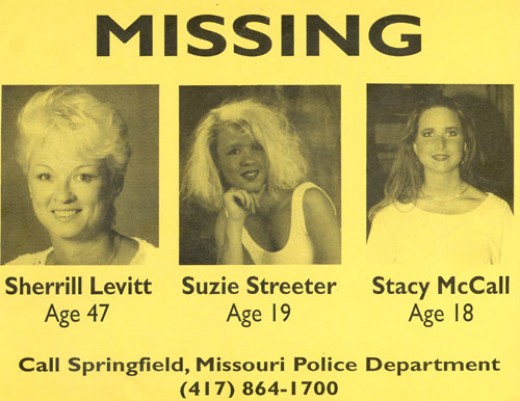
On June 6, 1992, Suzie Streeter and Stacy McCall are out celebrating high school graduation. By morning, the teens are missing, along with Suzie’s mother. The case leads police on a nationwide search as they work to solve this baffling mystery. -The Springfield Three, People Magazine Investigates (S4,E1)
Editor’s note: With a cable subscription, you can download the free ID Go app and watch Investigation Discovery programming at your convenience. And for those who do not have cable, you can watch “unlocked” episodes on the ID Go app including the latest premieres. For those who prefer commercial free programming during your binge session, Prime Video has an ID channel: ‘True Crime Files by Investigation Discovery” available for $3.99 a month. It’s a compilation of older seasons but totally worth the cost if you are a true crime addict. Download the ID Go app or purchase ID True Crime Files & binge away.
When a deadly rumor is stirred up among friends and acquaintances, it sets off an explosion of brutal violence so gruesome that not even a house fire can hide the truth. Who could have wanted Jeffrey Wheatley dead, and what was his roomate hiding? -Valerie Nessler, Snapped (October 31, 2019)
Wendy Fishburn, sister of Jeff Wheatley, says she “absolutely does not believe in closure” in regard to her brother’s murder. In 2010, Wheatley was shot, stabbed and set on fire after a man named Robert Turner became falsely convinced Wheatley had killed his older brother more than a decade prior. -Valerie Nessler, Snapped (November 4, 2019)
Screaming Oaks, Fear Thy Neighbor, Cream Productions (October 11, 2019)
Teaser #2:
Screaming Oaks, Fear Thy Neighbor, Cream Productions (October 11, 2019)
Preview:
Screaming Oaks, Fear Thy Neighbor, Cream Productions (October 11, 2019)
Full Episode:
An army vet goes out of his way to make his neighbors feel welcome, but when a child’s birthday gift goes missing; it only takes 37 days for the friendships to end in a killing spree. -Screaming Oaks, Fear Thy Neighbor, Investigation Discovery (S6,E7)
Editor’s note: With a cable subscription, you can download the free ID Go app and watch Investigation Discovery programming at your convenience. And for those who do not have cable, you can watch “unlocked” episodes on the ID Go app including the latest premieres. For those who prefer commercial free programming during your binge session, Prime Video has an ID channel: ‘True Crime Files by Investigation Discovery” available for $3.99 a month. It’s a compilation of older seasons but totally worth the cost if you are a true crime addict. Download the ID Go app or purchase ID True Crime Files & binge away.
Preview: Not in My Yard, Fear Thy Neighbor, Cream Productions (October 8, 2019)
Teaser:
Teaser: Not in My Yard, Fear Thy Neighbor, Cream Productions (October 8, 2019)
Full Episode:
A rash of break-ins shatters the peace in a tight community. And when residents take sides along the fault lines; good friends turn into deadly enemies. -Not in My Yard, Fear Thy Neighbor (S6,E6)
Editor’s note: With a cable subscription, you can download the free ID Go app and watch Investigation Discovery programming at your convenience. And for those who do not have cable, you can watch “unlocked” episodes on the ID Go app including the latest premieres. For those who prefer commercial free programming during your binge session, Prime Video has an ID channel: ‘True Crime Files by Investigation Discovery” available for $3.99 a month. It’s a compilation of older seasons but totally worth the cost if you are a true crime addict. Download the ID Go app or purchase ID True Crime Files & binge away.