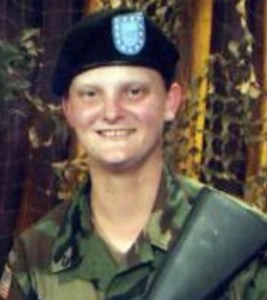
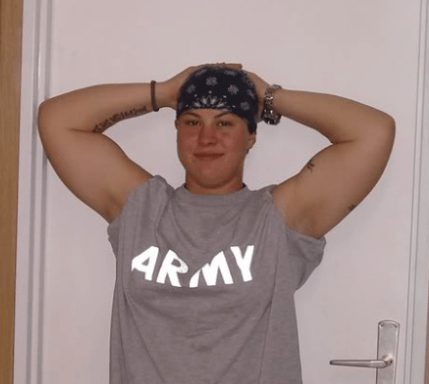
Army Pfc. Tina Priest, 20, died from a non-combat related injury in Taji, Iraq on March 1st, 2006. She was supporting Operation Iraqi Freedom on behalf of the 4th Support Battalion, 1st Brigade Combat Team, 4th Infantry Divison at Fort Hood, Texas. The Army ruled the death an apparent suicide but Tina’s parents dispute that finding based on the evidence and believe that she was raped and murdered; Tina reported a rape two weeks prior to her death. This case is no longer under investigation by the Army but considered an unsolved cold case because of the concerns the family has with the death investigation and cause of death ruling by the Army. Forty-one (41) female service members died of non combat related injuries while serving in Iraq; and twenty-three (23) were labeled homicide, suicide, or the cause of death is unknown. Tina’s suspicious death was discussed in the Silent Truth Documentary and on the Crime Junkie Podcast.
“What happened to LaVena Lynn Johnson and so many others speaks to a Pentagon culture which more closely resembles a rogue government–than a legitimate branch serving under civilian control. It is highly telling that this family, along with the Tillman family each had to have a documentary film made JUST TO ALERT THE PUBLIC TO THE TRUTH OF PENTAGON COVER-UPS. I urge everyone to view this important documentary – before the local military recruiter mandated under No Child Left Behind –‘friends’ their child at school. God forbid, they could wind up coming home in a body bag – like LaVena.” Read more from Truthouthere.
The Silent Truth Documentary:
Ninety-four US military women in the military have died in Iraq or during Operation Iraqi Freedom (OIF). ‘The Silent Truth’ tells the story of one of these women, PFC LaVena Lynn Johnson, who was found dead on Balad Air Force Base in Iraq. The army claimed she shot herself with her own M16 rifle, but forensic evidence, obtained by the Johnson family through the Freedom of Information Act, brings the army’s findings into question. The Army refuses to re-open LaVena Johnson’s case, leaving the family in limbo. ‘The Silent Truth’ follows the Johnson’s pursuit of justice and truth for their daughter. -The Silent Truth Documentary (July 1, 2014)
Under the Sabers: The Unwritten Code of Army Wives or Army Wives by Tanya Biank was an excellent read. I first heard about the book when I was researching the 2002 Fort Bragg murders of Teresa Nieves, Jennifer Wright, Marilyn Griffin, Andrea Floyd and Major David Shannon. I ordered it from Amazon and threw it in a pile with all my other military crime books until I saw a Forbidden: Dying for Loveepisode about the murder of Army spouse Jennifer Wright. The show didn’t mention it but I knew Jennifer’s murder was one of five homicides at Fort Bragg that occurred within a two month period in 2002. I learned more about Jennifer Wright from Investigation Discovery than what’s available on-line. And at the time, the national media was quick to speculate whether war & violence, frequent deployments or anti-malaria drugs were to blame. But after the Army investigated itself, it determined that the high operational tempo after September 11, 2001 placed a great strain on already troubled marriages.
In other words, some form of domestic abuse, financial issues, and adultery in some cases were to blame for stained marriages. I researched the five murders and the motives were similar in four of the cases. Arguments were a pre-cursor to the murders and three out of four of the spouses wanted to leave the relationship. Was rejection the trigger? Domestic violence experts agree leaving the relationship is the most dangerous time. In Major Shannon’s case, it appears that the motive was greed, pure and simple, as greed is one of the most common motives for female killers. Major Shannon’s wife Joan stood to gain a large amount of money from his Serviceman’s Group Life Insurance (SGLI) if he died. This time the Army was most likely correct but unfortunately things haven’t changed to this day. There have been many more victims of domestic violence in the military since 2002 and this book inspired me to honor each and every one of them.
The author Tanya Biank grew up in a military family and covered military issues at Fort Bragg as a reporter for the Fayetteville Observer. Tanya was able to give us a realistic perspective of what was going on at Fort Bragg during the time period right before and after September 11, 2001. Tanya was the one writing about the rash of homicides for the local newspaper during the summer of 2002. As a result of Tanya’s reporting, the main stream media picked up the story and it went national and international. Fort Bragg was forced to answer to a frenzied pack of media outlets and in typical fashion, the Army investigated itself and found themselves not responsible. Although Tanya reported in the book that Congress authorized $5 million for domestic violence programs in the military that year. And on December 2, 2002, President Bush signed into law an act that makes domestic violence protective orders enforceable on military installations.
Tanya was the perfect person to write about Fort Bragg. She had a great understanding of the various perspectives and this was revealed in the book. She talked about how September 11th changed things for both the service member and the families. I found myself feeling thankful for the education about Fort Bragg’s missions and how they fit into the big picture. They train hard for a reason. They are some of the first on the front lines and some of the families have no idea where they are going or how long they will be gone. Unexpectedly, I experienced a myriad of emotions as I read along. Emotions about 9/11, emotions about what was happening at my own squadron, and emotions around the notifications of death. My Commander and a Chaplain informed me of my father’s unexpected death. And my colleagues helped me get home safely. I realized this was standard protocol while reading this book.
I couldn’t put the book down once I started, despite the emotions and memories it triggered. Tanya Biank did a great job of enticing the reader to learn more about the individual and the family, and just when you least expected, the unexpected would happen. It reminded me of my own life and how hard it was to put mission before self year after year when all one was doing was stuffing down the pain. But like those in the book, we don’t seek counseling because it’s considered a career ender. We don’t trust the system so most of us just keep our troubles to ourselves. And for those who want to maintain a security clearance, we know they are going to ask the question about mental health treatment. I understand why the question has to be asked because it’s important to identify someone with suicidal tendencies or anger problems but it prevents the rest of us from asking for the help we need, until it’s too late.
Tanya talked about the unusually high crime rates in Fayetteville and she said its civilians who commit most of the crime. She admitted Fort Bragg was under the shadow of the the murders of Colette, Kimberley & Kristen MacDonald in 1970 because former Captain Jeffrey MacDonald, despite being found guilty, swears he’s innocent. As recently as December 2018, MacDonald was denied a new trial by a federal appeals court and he continues to be the subject of both media and true crime programming. Tanya also talked about the racially motivated murders of Michael James & Jackie Burden in 1995. Army privates James Burmeister and Malcolm Wright were found guilty of the crime. This too made national news and the Army was forced to weed out any perceived Neo-Nazis, white supremacists, and skinheads. The media speculated the Army was full of them; turns out this random attack by Fort Bragg soldiers was an isolated incident.
After researching the five Fort Bragg murders in 2002 on-line, I realized that Tanya’s book was the most comprehensive discussion of the incidents. The book gave us an inside look at the people involved and the way it unfolded real-time. Tanya shared that the military likes to keep their problems under wrap because of the way the media speculates. I can see why they would be annoyed with how scandals are reported. Once the information is out there, it’s hard to fight off the perception. But the bottom line is the acts of a few don’t represent the whole. Unfortunately, I could write book after book about clusters of domestic violence related homicides in the military since 2002. This book made me realize how long the military has known about the problems and that throwing money at the problem doesn’t fix it. We need real solutions that save lives.
Editor’s Note: Tanya Biank’s book Under the Sabers inspired the creation of Army Wives on Lifetime television. After reading the book, I can understand why the series was created in 2007. I included links to the show below if you are interested in watching the series. It was cancelled after seven seasons.
The parents of Army soldier Katherine ‘Kat’ Singleton, 25, confirmed that she died in Iraq on January 18, 2006 but did not wish to comment further. Kat Singleton’s home of record is listed as Pensacola, Florida and she enlisted in the Army’s Delayed Entry Program in 2001. Singleton worked as a 15F10 (MOS) and was assigned to the HHC Training Support Battalion at Fort Bragg, North Carolina. Singleton’s first deployment to Iraq was with the 101st Airborne Division at Fort Campbell, Kentucky from March 2003 to May 2003 (not confirmed). The Department of Defense did not publish a press release notifying the public of Katherine Singleton’s cause of death in Iraq. As a matter of fact, no credible information is available on the web except in an obituary.
HER FRIEND’S LAST WORDS AND REQUEST:
“I just want to let you know that there is no need to yell “cover up” in this case. The death of Kat P. Singleton was kept private for reasons that are no one’s business, but I assure you she is dead and that the government didn’t hide things from the public. She didn’t die overseas and what happened was very tragic but not for the public eye. She was a brave soldier who said on many occasions that she never regretted enrolling in the army and would go back to Iraq to fight for her country to secure our freedoms over and over again. She was a wonderful person and I am glad that our lives touched. I am sending this article that most of you seem to have over looked so that you may see that she is dead and she is buried. I feel that her father said little to the press because he didn’t want the world to know his family business and I believe also that it is time for you to close this thread and let Kat rest in peace. She will be forever loved and missed deeply and never forgotten.” -Anonymous
“I can’t do this, Mom, I can’t go back there.” -Suzanne Swift
Pfc. Suzanne Swift, US Army, was a Military Police Officer stationed at Fort Lewis in Washington. She had already deployed twice to Iraq before getting tasked to go again for the third time in less then four years. In January 2006, Suzanne Swift decided last minute to go Absent without Leave (AWOL) instead of going back to Iraq. According to her mother, Sara Rich, she couldn’t handle another deployment dealing with the daily hour-to-hour sexual harassment that she endured from the majority of her male officers and fellow soldiers. She felt especially isolated in Iraq and feared being attacked, harassed, molested, and raped. She told her mom that most of the other soldiers were sexually harassing her, pressuring her to consent, and making her life miserable for rejecting them. Her mom asked her if she wanted to report the sexual harassment and Suzanne did not. She told her mom that reporting would only make her life even more of a living hell. She says when she did blow the whistle on one of her superiors for sexually harassing her, she was treated like a pariah. Suzanne shared that he was moved to a different unit and promoted. She felt that those who reported were not supported but instead shamed when they brought these matters to the attention of their superiors.
According to Suzanne, Army leadership pressured her into signing a release form waiving her right to the mandatory decompression time of eighteen months between deployments. Suzanne refused to sign the form waiving her rights to decompression time but was told that her life would be ‘hell in a shit hole’ if she refused to sign. She says they screamed in her face and intimidated her. As a result she signed the form and was scheduled to leave for Iraq again in January 2006. The Eugene Police raided her home in March 2006, she was arrested, and she was taken back to Fort Lewis where she would be confined. She was charged with missing movement and AWOL. In December 2006, Suzanne pleaded guilty to both charges and was demoted and sentenced to thirty days in prison. If she met the conditions of the plea agreement, she could remain in the Army and be eligible for a honorable discharge. After she finished her sentence she would be reassigned to a new unit. If she did not agree to the plea, she was facing a year in prison and a dishonorable discharge. Her plea, which came during a summary court martial, helped her avoid a federal conviction. Suzanne chose to leave the Army as soon as she could. She would later be diagnosed with Post Traumatic Stress Disorder (PTSD).
Suzanne and her mother believe that the intimidation and sexual harassment that female soldiers endure is leading to massive stress and in some cases even death for military women in Iraq. So much stress that Suzanne would choose AWOL and prison time over deploying a third time to fight what she felt was a pointless war in Iraq. Sara Rich is confident that Suzanne saved her own life with her courage. And based on what has happened in the Army in Iraq and at Joint Base Lewis-McChord since 2006, we think she’s right.
“Notice to those who report false claims of rape, harassment, assault, and command rape: you make it difficult for those who experience the real thing. You are just as culpable as those who commit the acts.” –Suzanne Swift Petition
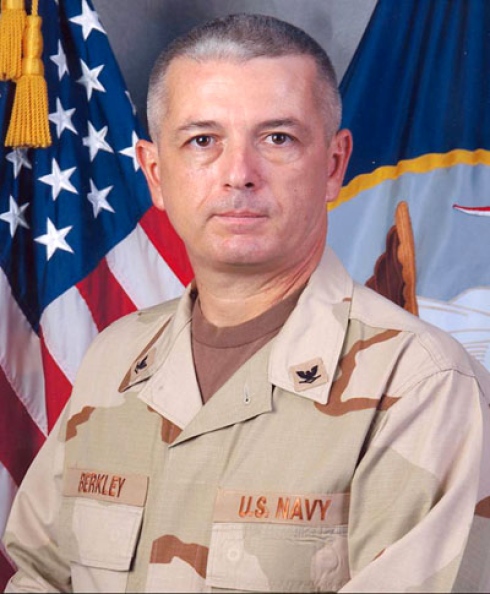
Navy Reservist Paul Berkley was murdered by his wife, Monique Wallace Berkley, her teenage lover, and his friend in Raleigh, North Carolina on December 18, 2005. Paul was home for Christmas on leave from a deployment in the Middle East. Monique, Andrew Deshawn Canty, and Latwon Darrell Johnson were all charged with first degree murder. The motive was the $400,000 Servicemen’s Group Life Insurance payout. Monique pleaded guilty to first degree murder and was sentenced to life without the possibility of parole. The state announced it was going to seek the death penalty if Berkley had gone to trial. Andrew Canty pleaded guilty to first degree murder and was sentenced to life in prison without the possibility of parole. Latwon Darrell Johnson pleaded guilty to second degree murder and conspiracy to commit first degree murder. He was sentenced to 23 years in prison. Johnson appealed his sentence claiming that it was too harsh given his role in the slaying and his cooperation with police and prosecutors.
Paul Berkley survived his deployment in the Middle East without any injury, but he couldn’t survive one week with his wife Monique. -Profiler Candice DeLong
Oxygen:
A military wife is caught in deadly love triangle. -Monique Berkley, Snapped, Oxygen (S8,E8)
Investigation Discovery:
The young and wild Monique Wallace is married to 40-year-old Paul Berkley, a navy reservist and father of two in suburban North Carolina. But with Paul leaving on a mission overseas, temptation and lust will lead them all down a dark path to murder. -Rules of Engagement, Scorned: Love Kills (S2,E7)
Some women like others to do their dirty work. A drama queen brings her love triangle to a permanent end; an intimate betrayal turns friends into deadly foes; and a loose woman will do anything to protect her freedom. -Murder for Me, Deadly Women (S9,E11)
Editor’s note: With a cable subscription, you can download the free ID Go app and watch Investigation Discovery programming at your convenience. And for those who do not have cable, you can watch “unlocked” episodes on the ID Go app including the latest premieres. For those who prefer commercial free programming during your binge session, Prime Video has an ID channel: ‘True Crime Files by Investigation Discovery” available for $3.99 a month. It’s a compilation of older seasons but totally worth the cost if you are a true crime addict. Download the ID Go app or purchase ID True Crime Files & binge away.
Air Force SrA Andrew Witt murdered Airman Andy Schliepsiek and his wife Jamie at Robins Air Force Base in Georgia on July 5, 2004. According to reports, Andrew Witt made a ‘pass’ at Andy’s wife Jamie at a July 4th cookout. When Andy confronted Witt about the inappropriate sexual advance, he informed him that he would not only report the assault to their Commander but also that he was sleeping with an officer on base. This was motive enough for Andrew Witt to drive back on base and stab them to death in the early morning hours of July 5th. Another airman Jason King was also stabbed in the back as he was attempting to flee the scene. On October 5, 2005, Andrew Witt was found guilty of first degree murder and sentenced to the death penalty by a military court on October 13, 2005. After an appeal, the death sentence was overturned in 2013. In early 2016, the death sentence for Andrew Witt was reinstated. On July 19, 2016, the highest military appeals court ruled in favor of a new sentencing hearing for Andrew Witt. In July 2018, a military panel re-sentenced Andrew Witt to life in prison without parole. Witt also received a dishonorable discharge from the Air Force as part of his sentence. At one point, Witt was the only Air Force service member on military death row at Leavenworth in Kansas. He was joined by four other Army soldiers: Timothy Hennis, Ronald Gray, Hasan Akbar, Nidal Hasan. (Army soldier Dwight Loving‘s death sentence was commuted by President Barack Obama in 2017).
Army soldier Shaun Cleland was found guilty of the first degree murder of David Heinricht on October 2, 2005 in Ohio. He was sentenced to life in prison.
Summer Baldwin and Rosendo Rodriguez, U.S. Marine Corps Reserve
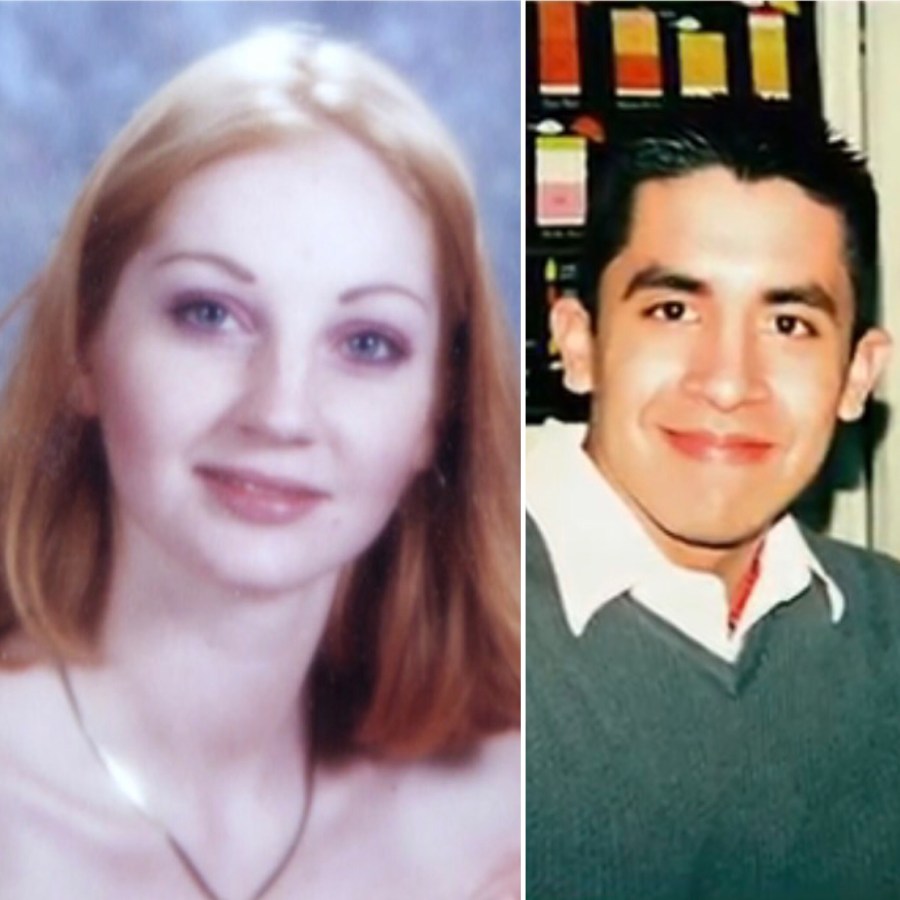
On September 13, 2005, Summer Baldwin, 29, was found in a suitcase in a landfill in Lubbock, Texas. After an extensive investigation, authorities zeroed in on US Marine Corps Reservist Rosendo Rodriguez. In the course of the investigation, Rodriguez also admitted to murdering Joanna Rogers, 16, on May 4, 2004 in Lubbock Texas. Rodriguez was found guilty of two capital murders: Summer Baldwin and her unborn baby. Rosendo Rodriguez was sentenced to death in the State of Texas. Rodriguez appealed his death penalty conviction but a federal court denied the request in May 2017. Rosendo Rodriguez was executed on March 27, 2018. Rodriguez was never prosecuted for the murder of Joanna Rogers.
On September 13, 2005, the Lubbock Texas landfill discovered the dead body of a female in a suitcase. The horrified foreman called the police and they rushed to the scene. The police believed that any human being that can do this to another human being is the lowest form of life. Police were angered by the injuries and pain Summer must have suffered with. She most likely died 48 hours prior to the discovery of her body. Police noted the landfill is not a sanitary place and it makes it difficult to collect forensic evidence. Investigators had to turn to her body to find clues. The medical examiner found a tattoo ‘Summer’ on her wrist and they entered her fingerprints in the system in the hopes they could determine who she was. They learned the deceased individual was Summer Baldwin. The police now had the difficult task of informing her mother 200 miles away in Roswell, New Mexico.
Summer grew up in New Mexico. She studied cosmetology and eventually ended up in Lubbock, Texas near her Aunt Terri to make a life for herself. Aunt Terri shared that Summer was only in Lubbock for 3 or 4 days and that was the last time she saw her. Upon the examination of Summer’s body, it was noted there were very obvious injuries to her body and she fought back against her attacker. She was severely beaten before she died and was thrown out like garbage. It broke her family’s heart to learn that she suffered so much before dying. Anyone could have done it and police needed leads. They began with the garbage collection employees to determine which dumpster she had been found in. The police looked at CCTV but the footage was useless. The medical examiner also determined that Summer was about five weeks pregnant. In Texas, this was a double homicide.
To investigators, an unborn child meant there was a father out there and a potential suspect. The police started reaching out to friends and family to learn more about Summer’s life and the one name that kept surfacing was Margie Estrada. Police would learn the two were inseparable friends. After informing a shocked Margie that Summer was dead, she was quick to offer up a suspect, Laquincy Freeman. Summer and Laquincy were boyfriend/girlfriend and known for stints of verbal altercations. He was definitely someone police needed to question if they could track him down. Finally they obtained an address for him so they picked Laquincy up for questioning. At this point, he was considered the prime suspect. He seemed strangely calm about Summer’s death but he admitted they dated, broke up, and he moved on. He wasn’t anywhere near his ex at the time of her murder. Police ask him to take a lie detector test and he passed with no signs of deception. The police let him go.
After some time passed, Summer’s best friend Margie went back to the police station because she felt she left out an important detail. She said she spotted Summer at a 7-11 convenience store and she was with a man she had never seen before. But she was able to describe him as a light skinned Hispanic who was clean cut. Margie said Summer drove off with him and provided a scant description of the vehicle: a red pick-up. Police chased this lead and headed to the 7-11 convenience store to look at the CCTV video footage. They hoped it would help them determine who was with Summer that night and maybe even what he was driving. The detectives catch a break and spot the red pick-up truck at about 11:30 p.m.; they are able to determine it’s most likely a Dodge Ram but couldn’t see Summer or ID the driver.
Detectives next turned to the suitcase to see if they could find any evidence. They observed the suitcase appeared to be new as if it was recently purchased. They found a UPC code on the inside and hoped it was traceable. They learned Wal-Mart was the only store that carried that suitcase and there were only two Wal-Marts in Lubbock. They headed to the stores and learned that specific suitcase was sold a couple of times, one in the afternoon and one at 3 a.m., a couple hours after Summer was spotted at the 7-11. Detectives combed through the CCTV video footage at Wal-Mart and saw the suitcase being purchased in the afternoon but couldn’t see the person. But they were able to track down the purchaser via a Wal-Mart loyalty card. This person came back clean so they moved on to the suitcase purchased at 3:20 a.m.
When they were viewing the CCTV video footage, all the police could see was a Hispanic male with a military haircut purchasing a suitcase. But when they looked closer, this same person made a second purchase; they would learn via other video footage in the store that the second purchase was a box of latex gloves. This was consistent with someone who didn’t want to get caught. In hindsight, this was a chilling combination. Now they needed to tie this individual to a red truck so they used outside CCTV video footage to track his movements in the parking lot. They observed this man calmly walk out, dragging the suitcase in hand, and he headed towards a dark colored pick-up truck. They couldn’t make out the vehicle on his way out but they were able to determine the make of the pick-up truck on his way into the Wal-Mart parking lot. But the footage was too blurry to give them a license plate number. Police were certain they had their man.
The Lubbock police zeroed in on their new suspect. They had him on camera and observed he used a debit or credit card to make the suitcase purchase. The police had to get a search warrant for the bank so they could determine who owned that card. The card belonged to Rosendo Rodriguez, a 25 year old whose permanent residence was 400 miles away in San Antonio, Texas. The debit card also reveals Rodriguez made another purchase in Lubbock on the day of Summer’s murder. It was a purchase at the same 7-11 Summer had been spotted at prior to her murder. The video footage police collected was crucial because it proved that Rodriguez was in the general vicinity on the day of the murder. After getting a name, police learned Rodriguez was a Reservist with the US Marine Corps and his reserve unit was based in Lubbock, Texas. Police contacted the Marines and learn that Rodriguez did not stay on base because he normally stays at a Holiday Inn.
The Holiday Inn Rodriguez usually stayed at just happened to be across the street from the same 7-11 where he made a purchase the day Summer Baldwin was last seen alive. Investigators raced to the hotel but Rodriguez had already checked out but they were able to search his hotel room. The police called in the forensic’s team for assistance and they found a patch of dry blood, a Wal-Mart bag, and some latex gloves. Now, detectives were ready to arrest Rosendo Rodriguez. And it wasn’t hard because he was at his mother’s house. Once questioned, he talked and told a very self serving story. He admitted to taking Summer back to his room and having consensual sex with her. But then he claims they got into an argument and she pulled a knife out on him. In self-defense, he put her in a choke hold and she still wouldn’t drop the knife. Eventually she stopped fighting and dropped to the floor.
Rosendo’s statement to the police did not match the medical examiner’s findings whatsoever. The police deduced Rodriguez was just a liar. Rodriguez even had an excuse for the blood at the scene; he claimed Summer had a nose bleed. Everything Rodriguez said was inconsistent with the forensic evidence. In March 2008, Rosendo Rodriguez went on trial in Texas for two capital murders: Summer and her unborn child. Shockingly, Rodriguez also admitted to killing Joanna Rogers. She was someone that had been missing since 2004 and it appeared that he murdered Joanna and Summer in the same way. Rodriguez had an excuse for Joanna’s murder too. He claimed she started raising her voice so he put his hands around her throat and choked her. On April 1st, 2008, Rosendo Rodriguez was found guilty of two capital murders in Texas and sentenced to death. Summer’s mom is devastated by the loss and said she was patiently awaiting the execution date. Rosendo Rodriguez III was executed by the State of Texas on March 27, 2018.
When a young woman is found dead in a Texas landfill, detectives race to discover the killer behind the brutal crime. With no leads, police turn to their only witnesses: video cameras that captured the murderer’s chilling attempt to cover his tracks. -Last Look of Summer, See No Evil (S3,E6)
Editor’s note: With a cable subscription, you can download the free ID Go app and watch Investigation Discovery programming at your convenience. And for those who do not have cable, you can watch “unlocked” episodes on the ID Go app including the latest premieres. For those who prefer commercial free programming during your binge session, Prime Video has an ID channel: ‘True Crime Files by Investigation Discovery” available for $3.99 a month. It’s a compilation of older seasons but totally worth the cost if you are a true crime addict. Download the ID Go app or purchase ID True Crime Files & binge away.
Full Episode: The wife of an Air Force officer was found dead in her bed, with a plastic laundry bag near her face. At first glance, it appeared she’d been doing laundry, fell asleep, rolled onto the bag, and suffocated. But further investigation proved that the scene had been staged. Her death wasn’t an accident; it was cold-blooded murder. -Strong Impressions, Forensic Files (S10,E11)
Editor’s Note: Full episodes of Forensic Files are available on a variety of media platforms. Forensic Files Channel features full episodes of Forensic Files on YouTube. You can also find full episodes of Forensic Files on both Netflix and Amazon Prime Video. On Netflix, the seasons are grouped as collection 1-9. On Amazon Prime Video, you can find Season 1-10 here; Season 11; Season 12; Season 13; Season 14; Season 15; Season 16; Season 17; Season 18; Season 19; Season 20; and Season 21. Start bingeing and see for yourself why Forensic Files is such a hit!
When the wife of a serviceman was brutally murdered in the Philippines, the Air Force Office of Special Investigators swung into action. Clues led to the victim’s husband, but he insisted he was innocent. Investigators would have to do something unprecedented: Reassemble a 5 1/4 inch computer disk which had been cut to pieces with pinking shears. -Shear Luck, Forensic Files (S10,E9)
Editor’s Note: Full episodes of Forensic Files are available on a variety of media platforms. Medical Detectives Channel features full episodes of Forensic Files on YouTube. You can also find full episodes of Forensic Files on both Netflix and Amazon Prime Video. On Netflix, the seasons are grouped as collection 1-9. On Amazon Prime Video, you can find Season 1-10 here; Season 11; Season 12; Season 13; Season 14; Season 15; Season 16; Season 17; Season 18; Season 19; Season 20; and Season 21. Start bingeing and see for yourself why Forensic Files is such a hit!










 MILITARY JUSTICE FOR ALL