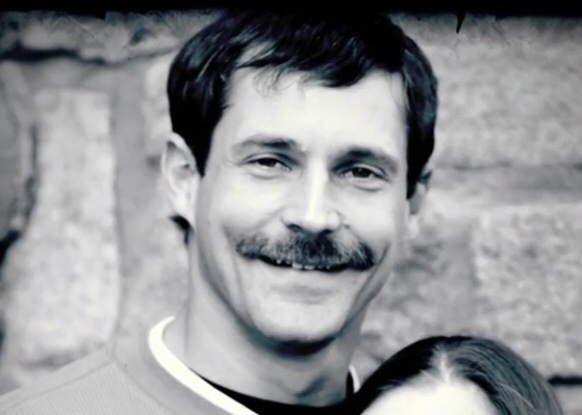
Army SSG Kevin Spann married Gina Lynn Pierce in 1989 and became a step-father to her son. They met in Gina’s hometown in Illinois and moved to Fort Worth, Texas in 1990. About a year after they were married, Kevin was deployed to Kuwait in support of Operation Desert Storm. Gina couldn’t handle being alone so she went back to her hometown in Illinois. After Kevin returned home from Kuwait, he went to Illinois to see if Gina would go to Fort Gordon, Georgia with him. Gina agreed and things were going well until Kevin had to start working long hours. Kevin suggested she get a job to help occupy her time. It would be at this job where Gina would meet three teenagers who quickly became her friends despite the age difference.
Gina became popular with the teenagers when they learned that she could buy them alcohol. They all started partying together at hotels after work and eventually Gina started sleeping with one of them. After awhile Gina just moved the parties to her marital home. Kevin would come home from work and find drunk, passed out kids all over his house. Gina also did not hide the fact that she was sleeping with one of the teens, Larry Kelley. She did not care how Kevin Spann felt about the arrangement. One day, Larry’s step father kicked him out of the house. Because Larry didn’t know where else to turn, he turned to Gina who agreed to let him move in with them. Not only did he move into the house but he moved into the marital bedroom with Gina and Kevin moved out. Kevin slept in another room in the same house.
In the spring of 1997, Kevin had finally had enough and asked Gina for a divorce. But Gina begged Kevin to make the marriage work and she promised him she would change. She knew that if Kevin divorced her she would end up with nothing. Kevin loved her and wanted to make the marriage work so he agreed to try again but he insisted that Larry get out of his house in one week. It would be days later that Gina found her front door open and Kevin lying on the floor in a pool of blood. SSG Kevin Spann was shot twice and killed at his doorstep on Mother’s Day, May 11, 1997. He was shot once in the head and once in the chest, torso area. When the killers left, he was still alive. Kevin bled to death.
Gina and Larry Kelley provided each other with alibis when investigators questioned their whereabouts. Although Larry also told police that he was Gina’s live in boyfriend which peaked investigators interest and made the couple prime suspects. They hauled both Gina and Kevin down to the station. Gina adamantly denied any involvement in the shooting. Larry on the other hand told investigators everything. He told them that Gina asked him to find someone to shoot her husband so he did. He found Matthew Piazzi and Gerald Horne to do the job. Investigators would learn that Gina devised a plan and told the teenagers what to do. After Gina and Larry left the residence, Matthew and Gerald were to knock on the door, wait for Kevin to answer, shoot him, and then get rid of the gun. Matthew was the gunman.
Investigators searched Gina’s car and found a $300,000 life insurance policy for Kevin Spann which gave them the evidence they needed to charge Gina with murder. Gina Spann and Larry Kelley conspired to murder Kevin and were both sentenced to life without parole. Gina finally admitted her role in the murder after learning that Larry Kelley was facing the death sentence. She agreed to tell investigators what her role was in the murder if they took the death penalty off the table for both of them. Gina Spann plead guilty to first degree murder and Larry Kelley was convicted of first degree murder. Matthew Piazzi and Gerald Horne both plead guilty to first degree murder and were sentenced to life in prison. Christopher Bargeron pled guilty to conspiracy and was sentenced to 5 years in prison.
Kevin and Gina Spann know that life in the military is anything but easy. But when Kevin goes away, Gina plays. -Special Delivery, Deadly Affairs (S2, E9)
Some women can’t resist boy toys. But fur flies when these Deadly Women reveal they’re “Killer Cougars.” -Deadly Women (S10, E1)
Editor’s note: With a cable subscription, you can download the free ID Go app and watch Investigation Discovery programming at your convenience. And for those who do not have cable, you can watch “unlocked” episodes on the ID Go app including the latest premieres. For those who prefer commercial free programming during your binge session, Prime Video has an ID channel: ‘True Crime Files by Investigation Discovery” available for $3.99 a month. It’s a compilation of older seasons but totally worth the cost if you are a true crime addict. Download the ID Go app or purchase ID True Crime Files & binge away.
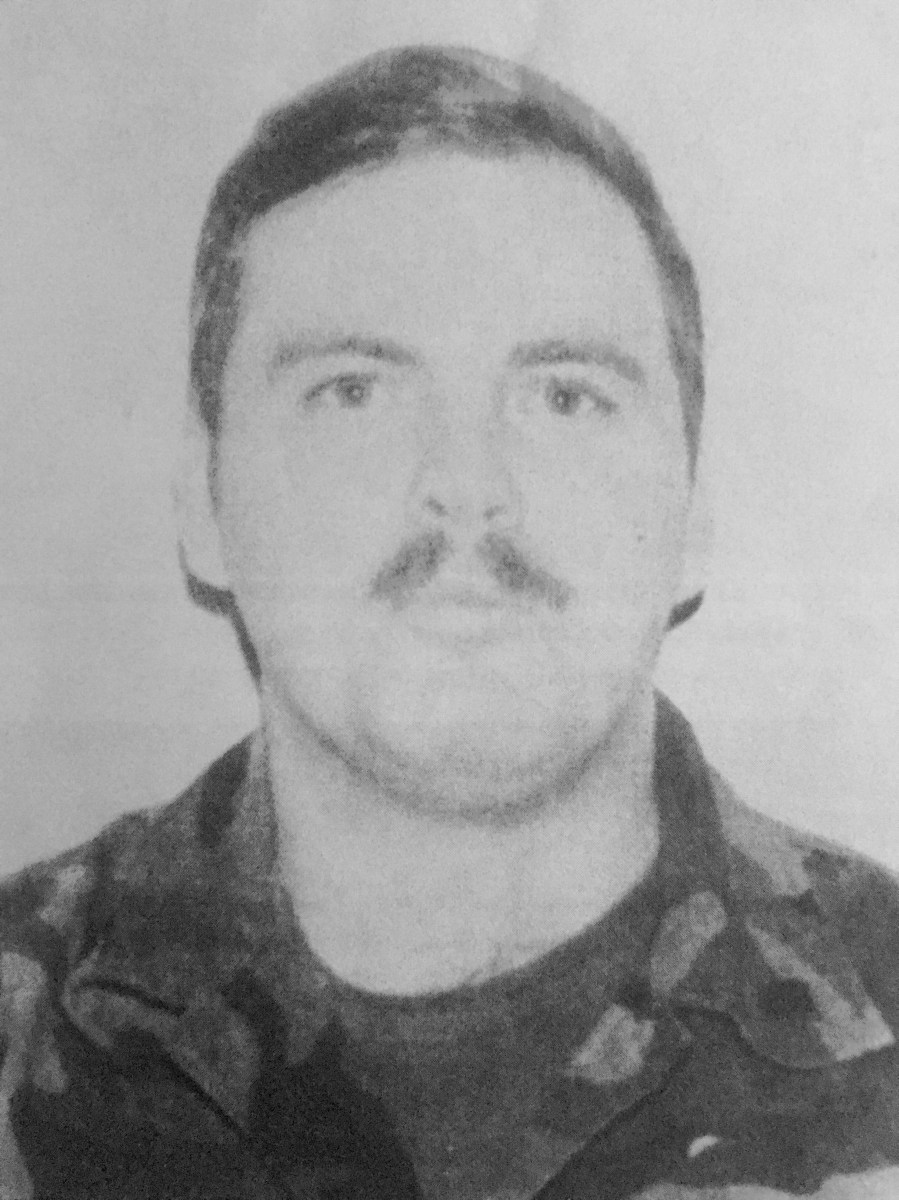
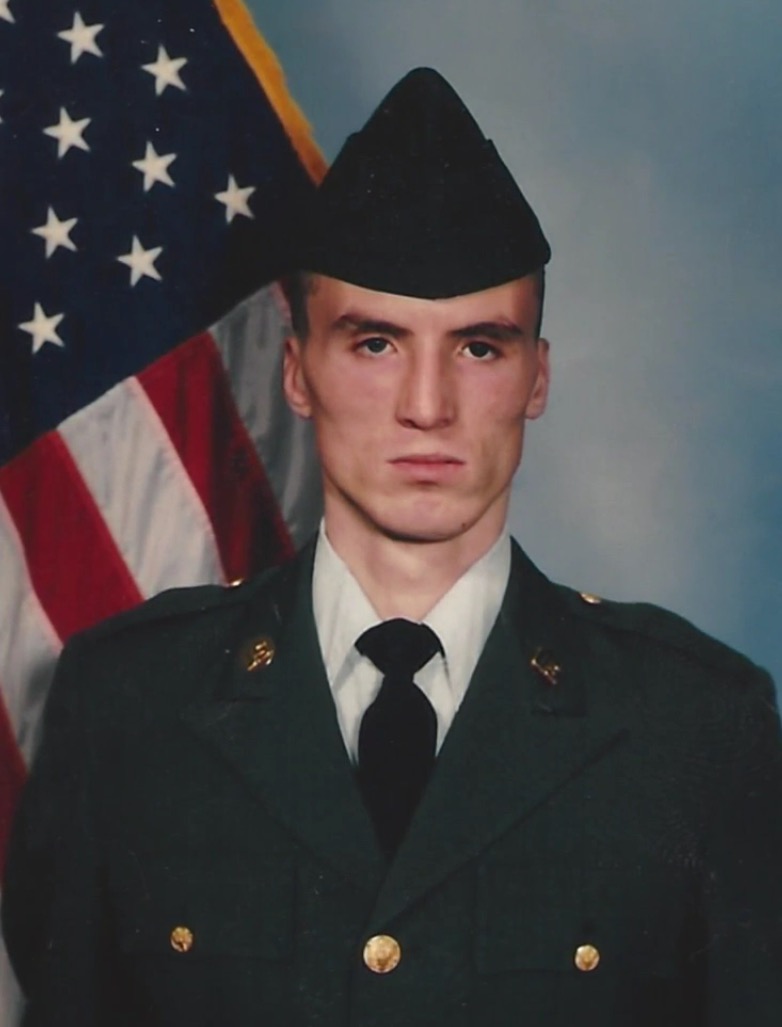
On this day, the bones of AWOL Army soldier Dannie Boy Edwards, 25, were found in a cemetery near his home in Burton, Ohio on April 13, 1997. Hunters discovered the human remains in a field next to the cemetery in Troy Township. Edward W. Edwards, 77, and his wife, Kay Edwards, took Dannie Boy into their Ohio home in the mid-1990s. Ed and Dannie were so close that he legally changed his name from Dannie Law Gloeckner to Dannie Boy Edwards. Authorities confirmed the bones belonged to Dannie Boy and deemed the case a homicide. Ed appeared to be terribly distraught after learning Dannie Boy was murdered and obsessed about solving the case for years.
It wasn’t until years later, Ed Edwards’ daughter came forward after connecting the dots between the cold case homicides dubbed the ‘Sweetheart Murders’ in Wisconsin and her father. Ed Edwards was eventually confronted by authorities and confessed to five murders in an attempt to get the death penalty: William ‘Billy’ Lovaco (1977), Judith Straub (1977), Timothy Hack (1980), Kelly Drew (1980), and Dannie Boy Edwards (1996). Ed Edwards admitted to luring Dannie Boy to a secluded cemetery near their home in June 1996 and shooting him twice in the chest with a 20-gauge shotgun. He buried the body in a shallow grave in a field nearby. His motive was the $250,000 life insurance pay-out.
Ed Edwards persuaded Dannie Boy to join the Army because it would be good for his character. Dannie Boy joined and after training was supposed to get stationed in Korea. But at some point during training, Dannie Boy was injured so the Army was going to medically discharge him instead. Ed Edwards convinced Dannie Boy to sign up for the maximum amount of coverage offered by the Servicemen’s Group Life Insurance (SGLI) benefit. Dannie Boy signed up for $250,000 dollars worth of life insurance coverage and Ed was the sole beneficiary. Ed Edwards knew if Dannie Boy was let out on a medical discharge, he would no longer be eligible for the benefit.
Ed Edwards talked Dannie Boy into going Absent Without Leave (AWOL) two days before his discharge. Ed told investigators that he killed Dannie Boy because he wore out his welcome by stealing credit cards and other belongings from his children. But the truth is he stood to make $250,000 dollars in life insurance benefits if Dannie Boy died and he wanted to collect on it. Ed Edwards set up the insurance fraud scheme and took advantage of an opportunity before it expired. In August 2010, Ed Edwards was sentenced to death. Ed Edwards was already in poor health when arrested and as a result died of natural causes in 2011, one month before his execution date.
If you have information pertaining to additional crimes related to Edward Wayne Edwards, please call 800-FBI-TIPS.
Horror strikes a small Wisconsin town in 1980 after a young couple disappears and is later discovered in a field. Dubbed the Sweetheart Murders, it’s almost 40 years before a woman comes forward saying her family holds the key to unlocking the case. -People Magazine Investigates
April 14, 1996: Laura Uylaki, 25, Hammond, Indiana
Marine veteran Andrew Urdiales is accused of murdering eight women from 1986 to 1996, five in California and three in Illinois, and raping and abducting 19 year old Jennifer Asbenson who escaped and survived. Urdiales was indicted for three murders in Illinois and was sentenced to death but the death sentence was commuted after Governor Pat Quinn of Illinois abolished capital punishment in 2011. Instead he received three life sentences for the murders of Laura Uylaki, Cassandra Corum, and Lynn Huber. A gun confiscated in a separate incident linked the three murders in Illinois together and during an interrogation, Urdiales admitted in detail to five cold case murders in California too.
After years of legal wrangling, Urdiales was eventually extradited to California and indicted in 2009 on five counts of first degree murder. He was accused of killing Robbin Brandley, Julie McGhee, Mary Ann Wells, Tammie Erwin, and Denise Maney while stationed at Camp Pendleton Marine Corps base. On May 23, 2018, Andrew Urdiales was convicted of five murders by a jury that deliberated for about a day before recommending in June 2018 that he be sentenced to death for each of the five murders. On November 2, 2018, corrections officials said they found Urdiales unresponsive during a security check at San Quentin State Prison; former Marine and serial killer Andrew Urdiales died by suicide.
In the News:
The murders occurred when Andrew Urdiales was stationed at various Marine Corps facilities in Southern California. -CBS Los Angeles (October 5, 2018)
Air Force veteran Penny Brummer was convicted on October 1, 1994 of murdering her ex-girlfriend’s best friend 21-year-old Sarah Gonstead in Madison, Wisconsin. On March 14, 1994, after a night of heavy drinking with Penny, Sarah was shot in the back of the head execution style and found three weeks later in a secluded field. Detectives theorized that Sarah most likely trusted her killer. On this episode of Investigation Discovery’s Reasonable Doubt, Penny’s mother, Nancy Brummer, turned to Detective Chris Anderson and criminal defense attorney Melissa Lewkowicz to help her prove Penny’s innocence. Nancy believes the prosecution had no concrete evidence except for circumstantial evidence and she also believes the the jury was biased and led to believe that lesbians are inherently violent. Detective Anderson and Melissa Lewkowicz worked with Nancy Brummer by taking a second look at Penny Brummer’s case featured in the ninth episode of Reasonable Doubt aptly titled ‘Failure to Remember’. It’s their job to investigate the cases that family members swear are wrongful homicide convictions and in the end the duo share their assessment of guilt or innocence based on meticulous investigative work.
Nancy Brummer has been fighting to free her daughter for twenty-two years. She told Detective Anderson and Melissa that they were her last hope. The two learned that Sarah Gonstead left her mother’s house to go out for a night of drinking to celebrate her 21st birthday with her friend Penny but Sarah never came home. Twenty-five days later, Sarah was found in a secluded field in Madison. Sarah had been shot execution style in the back of the head and Penny was the last known person to see her alive. Eight days later, Penny was arrested and charged with first degree murder. Penny claims she pulled over to clean up some beer that spilled in her vehicle and Sarah exited the vehicle to walk half a block to her best friend Glenda’s house. But prosecutors painted a darker picture. They theorized the two got drunk and Penny drove Sarah out to a empty soy field and murdered her. Prosecutors believed the motive was jealousy because Glenda had just broken up with Penny and Penny blamed Sarah for the break-up. They claimed Penny wanted revenge and the jury bought it. Penny Brummer is currently serving life in prison and her first opportunity for parole is in 2045.
Detective Anderson and Melissa met with the Nancy Brummer first to hear her plea for justice. Nancy stated that she wanted to find the person who committed the crime and free Penny so she can come home. Nancy confirmed that Glenda and Penny were dating and broke up about a month prior to Sarah’s disappearance. Sarah was Glenda’s best friend and the three of them would hang out and party together. Penny was in her early twenties at the time of the homicide so her behavior was typical of most young people at that stage in their life. Nancy Brummer described Penny as very social and happy-go-lucky. She said Penny was really into sports and she was on the softball team and volleyball team in high school. Nancy opined Penny was a typical teenager and started drinking around the age of seventeen. After high school, Penny joined the Air Force and shared with her mom that it was hard being in the military because of the secrecy she had to maintain regarding her sexual orientation. Nancy Brummer believes that the jury was biased and led to believe that a lesbian is more prone to violence. She referenced a questionnaire that Melissa agreed was inflammatory and would need a second look.
The prosecution painted a picture that Penny was jealous of the friendship between Glenda and Sarah. The two were strictly friends and Sarah was straight. Nancy observed that Penny was sad and disappointed about the break-up but not what one would consider obsessive. She reminded Detective Anderson and Melissa that the prosecution had nothing: no physical evidence, no DNA, no blood evidence, nothing that tied Penny to the murder. The prosecution said the gun that was used in the commission of the crime was a 22 handgun that belonged to Penny’s father. Nancy admits that her husband’s gun did go missing and was never recovered. When Sarah’s body was found, Nancy said a witness came forward to the police and said that he had driven by the scene of the crime a day or two after the murder and saw a suspicious vehicle along the side of the road. He saw a man standing behind the vehicle with what looked like a pink and purple duffle bag and as it turns out, Sarah’s jacket was the same pink and purple color. Nancy said this evidence was ignored. Nancy informed both Detective Anderson and Melissa that even if they don’t find Penny innocent, she will keep fighting for her release.
Detective Anderson and Melissa began their investigation. Detective Anderson started with the man who was the eyewitness. This man told Detective Anderson that he did in fact see a vehicle by the side of the road near the location of where Sarah’s body was found in the field. He claims he made eye contact with the man in question but that was about the extent of it. He said after the man made eye contact with him, he put his head down. The eyewitness was concerned that this man was trying to move the body, after all it was only a couple days after she had gone missing. He said the police informed him that they already had a suspect in the case and he felt that his testimony was largely discounted and ignored. Melissa investigated the prosecutors jealousy motive. One of Penny’s close friends described her as a great friend and a someone she went bar-hopping with. Penny’s friend believes that she was a binge drinker and most likely an alcoholic because she would drink until she blacked out. Penny’s friends said she hoped she would get back together with Glenda but certainly didn’t act like a jealous ex-girlfriend. Penny’s friend Mary believes she is innocent.
Detective Anderson met with a forensic expert to go over the physical evidence or lack there of. The two examined the crime scene photos and other evidence available. The forensic expert didn’t see any signs of struggle and it appeared Sarah’s body fell forward after she was shot in the head. There was no sexual assault and no beating. It was an execution style killing and Sarah most likely knew and trusted the person who shot her. Sarah was walking in front of the perpetrator when she was shot in the back of her head. Detective Anderson visited the last known location of both Penny and Sarah, a local bar in Madison. A witness said Sarah and Penny were celebrating Sarah’s birthday because she had just turned twenty-one. The two had been drinking prior to their arrival at the bar but the witness didn’t think either appeared to be drunk. She said they showed up at the bar around 10:30 p.m. and left a couple hours later; they had a couple drinks while they were there. The witness observed they were both in great spirits and having fun and they were both able to carry on a conversation. On the night in question, Sarah was kind of quiet while Penny appeared to be enjoying herself with others at the bar. Neither of them were agitated or upset; they both appeared to be in a really good mood.
Detective Anderson interviewed Penny via the telephone. Penny said she dated Glenda for 8 or 9 months and admits she fell in love with her. She also claimed to have a nice friendship with Sarah. She shared that Sarah never did anything bad to her and never meddled in her relationship with Glenda. Penny said Glenda just decided one day to end things and told her she was going back on birth control. Penny assumed Glenda wanted to go back to guys. After the break-up, Penny was heartbroken. She admitted she got physical with Glenda one time; they pushed each other during an argument. On March 14, 1994, Penny said she got out of work around 7:30 p.m., got some beer, and went to Sarah’s house. Penny said they stopped at a couple bars and drank more beer. Penny said she doesn’t remember being at Jakes (the bar where the eyewitness last saw both Penny and Sarah at around midnight). Penny admitted she was an alcoholic then and was very intoxicated. Penny and Sarah were on their way to pick up Glenda when Penny spilled some beer in her car and stopped to clean it up. Penny said Sarah wasn’t feeling well so she started walking to Glenda’s house which was about a half a block away. Penny told Detective Anderson she doesn’t know why she didn’t take Sarah to Glenda’s house but she went home after cleaning her car. Penny reminded Detective Anderson that she isn’t the type to kill anyone, she didn’t have a weapon, and she had absolutely no reason to hurt Sarah.
In the meantime, Melissa looked at the questionnaire that was given to the jury asking them about their thoughts about lesbians and violence. Melissa said, as a criminal defense attorney, she would insist that the jury not be subjected to or see the questionnaire because it is inflammatory. Melissa also spoke with Glenda who was the glue that held the case together. Glenda claimed she dated Penny for about a year but wasn’t necessarily in love with her. Glenda claimed Penny drank a lot but could still function; she just wouldn’t remember it. Glenda described Sarah as a shy, soft-hearted, and loyal friend. Glenda believed that Penny was jealous of her friendship with Sarah. Glenda admitted that Penny did in deed find her birth control pills and assumed that she was breaking up with her so she could date men again. Glenda admitted she broke up with Penny because she was way too controlling. Glenda also claimed Penny was pissed that she broke up with her. When Glenda ended it, Penny shoved her and she shoved her back and kicked her out of her house. Glenda said the look in her eyes scared the crap out of her and she began to cry. Glenda believes they have the right person and is still grieving the loss of her friend.
Detective Anderson and Melissa met with Nancy Brummer to share the results of their investigation. Nancy claimed the jury was bias because of Penny’s sexual orientation and Melissa believes she was absolutely right. Melissa said the questions asked of the jury were highly prejudicial. Penny’s close friend felt that the motive of jealousy was crap but Glenda was 100% convinced Penny was the killer. Glenda claimed the motive in this case was vengeance. Glenda declared that if Penny gets out of jail, she is moving to another state because she is scared of her; if Penny did this once, who is to say she won’t do this again? Nancy doesn’t believe Glenda and said she is a good actress. Detective Anderson told Nancy he followed up with the eye witness at the scene of the crime and said this was a problem because each and every lead needs to be taken seriously. He also shared that only one of the detectives was alive and he refused to meet with him. Melissa confirmed that there is no physical evidence tying Penny to the crime. Detective Anderson addressed the gun they believed was used in the commission of the crime and Nancy confirmed the 22 they owned had indeed gone missing. Detective Anderson addressed the autopsy photos and shared that the forensic expert did not observe any signs of struggle. It was a cold night and if someone ran towards Sarah, she definitely would have heard it. Detective Anderson deduced Sarah was shot by someone she knew or was led into the field at gunpoint.
“Circumstantial cases are a series of little things that add up until they point in one direction.” -Detective Chris Anderson, Reasonable Doubt
Nancy Brummer said there was no way her daughter would have shot Sarah in the back of the head. But Detective Anderson had some serious issues with the fact that the only person who claims Penny was in a black out that night is Penny. He spoke with a bartender who claimed that Penny appeared to be functional. Jake’s bar is significant because it is less than two miles from where Sarah’s body was found. Detective Anderson noted that Penny said she couldn’t remember being at Jake’s that night but she remembered very specific things earlier and later that night. Detective Anderson felt it was suspicious that Penny remembered everything really well that night except being at this bar. Is this a form of convenient amnesia? Melissa empathized with why Nancy felt a sense of injustice all these years. The biased questionnaire, the ignored witnesses, and the overall investigation had major problems; the evidence was highly circumstantial. Penny was the last known person to see Sarah alive that night; Penny was last seen at a bar with Sarah which is located less than two miles from where Sarah’s body was found; Penny said she can’t remember being there but does remember a lot of details earlier and after Sarah went missing; Sarah was killed with a 22 and Penny’s father owned a 22 that was now missing; Penny was a military vet who was trained to shoot guns; and Sarah wasn’t trying to run away, she didn’t struggle, and she most likely knew and trusted her killer.
Why would Penny do this? Melissa shared that she read through the police reports and noted that Penny admitted she was heartbroken when things ended with Glenda. Penny also admitted that after the break-up she wondered who Glenda was with, where she was, and what she was doing. Penny also said Glenda was in her head 24 hours a day (obsessed) and that she resented Sarah because she assumed Sarah was trying to drag her back into the straight world. On the night of March 14, 1994, Penny did what she always did. Melissa explained Penny got really drunk, the break-up was fresh, her feelings were raw, and she spent the entire night with the person she believed came between her and the woman she loved. Melissa asked, “did Penny plan to walk Sarah into the woods or was it just a horrific idea fueled by fifteen drinks? Did she remember shooting Sarah, does she remember her falling to the ground, or does she not remember anything at all?” Ironically, Penny admits that prison saved her life. Penny believes she would not have made it to thirty had it not been for prison. Penny said she turned her life around behind bars. Based on the leads Nancy provided and an independent investigation, Detective Anderson and Melissa revealed there was nothing new in the investigation that would bring Penny home. They both suggested Nancy ask her daughter the tough questions and then she will know, even 22 years later.
“The problem is that the things Penny remembers are the things that will help her and the things that she can’t remember are the things that would potentially hurt her.” -Melissa Lewkowicz, Reasonable Doubt
Source: Failure to Remember, Reasonable Doubt, Investigation Discovery
Investigation Discovery:
Penny Brummer, a military vet, is accused of murdering her ex-girlfriend’s best friend in a jealous rage. However, Penny was so drunk that night she was in a blackout state. Can Chris and Melissa help fill in the gaps of her memory to prove her innocence? -Failure to Remember, Reasonable Doubt (S1,E9)
In The News:
Twenty-one years ago a jury found Penny Brummer guilty in the murder of Sarah Gonstead. The family of Brummer has spent those 21 years working to prove her innocence. Dave Delozier reports. -Channel 3000 / News 3 Now (December 14, 2015)
July 17, 1988: Julie McGhee, 30, Cathedral City, California
Marine veteran Andrew Urdiales is accused of murdering eight women from 1986 to 1996, five in California and three in Illinois, and raping and abducting 19 year old Jennifer Asbenson who escaped and survived. Urdiales was indicted for three murders in Illinois and was sentenced to death but the death sentence was commuted after Governor Pat Quinn of Illinois abolished capital punishment in 2011. Instead he received three life sentences for the murders of Laura Uylaki, Cassandra Corum, and Lynn Huber. A gun confiscated in a separate incident linked the three murders in Illinois together and during an interrogation, Urdiales admitted in detail to five cold case murders in California too.
After years of legal wrangling, Urdiales was eventually extradited to California and indicted in 2009 on five counts of first degree murder. He was accused of killing Robbin Brandley, Julie McGhee, Mary Ann Wells, Tammie Erwin, and Denise Maney while stationed at Camp Pendleton Marine Corps base. On May 23, 2018, Andrew Urdiales was convicted of five murders by a jury that deliberated for about a day before recommending in June 2018 that he be sentenced to death for each of the five murders. On November 2, 2018, corrections officials said they found Urdiales unresponsive during a security check at San Quentin State Prison; former Marine and serial killer Andrew Urdiales died by suicide.
In the News:
The murders occurred when Andrew Urdiales was stationed at various Marine Corps facilities in Southern California. -CBS Los Angeles (October 5, 2018)
On December 15, 1986, Army soldier Ronald Gray abducted, raped, sodomized, and murdered Private Laura Lee Vickery-Clay, 18, of Fort Bragg, North Carolina. According to reports, witnesses saw Laura at a local store with Ronald Gray the night she disappeared and Gray’s finger print evidence was found on the hood of Laura’s vehicle. About a month later on January 17, 1987, a soldier discovered Laura’s half-naked, decomposed body in the woods on Fort Bragg. She had been raped, sodomized, and shot in the neck, forehead, chest, and back of the head. She had also suffered blunt force trauma to various parts of her body. The murder weapon was found in close proximity to the victim’s body. In 1988, Ronald Gray was found guilty by the military courts of the premeditated murders of civilian Kimberly Ann Ruggles and Private Laura Lee Vickery-Clay, and the attempted premeditated murder of Private Mary Ann Lang Nameth. On April 12, 1988, Ronald Gray was sentenced to death, given a dishonorable discharge, total forfeitures, and a reduction to Private E-1. In 2008, President George Bush gave the final approval for the military execution of Ronald Gray. In December 2016, media reports indicated that the military is moving forward with the lethal injection execution of Ronald Gray.
According to CNN, the US military could soon execute someone for the first time since 1961. Ronald Gray, a former Army soldier, has been on military death row at Fort Leavenworth since 1988 when he was convicted of killing five women and raping several others in 1986 and 1987 while stationed at Fort Bragg in North Carolina. A civilian court gave him eight life sentences, but a military court sentenced him to death. Last week, a judge ruled Gray’s stay in prison was no longer in effect and denied any further stays. Following the ruling, an execution date for Gray could be announced as soon as next month. –Wochit News
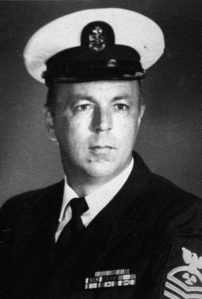
Norma Small was arrested in May 2001 and then charged with murder for the shooting death of her husband US Navy Chief Petty Officer Sonny Grotton, at his home in Belfast, Maine on December 16, 1983. She was accused of hiring someone for $10,000 to murder him, convicted, and sentenced to 60 years in prison. Norma felt Sonny was worth more dead than alive. Investigators believed the crime was financially motivated. If Sonny died, Norma would get a death benefit from the Navy, the real estate that she owned with Sonny, and she received a monthly payment from the VA that over 15 or 17 years had amounted to almost $100,000.
A tattooed NCIS agent with a black belt goes undercover to find the killer of a Navy petty officer — can he get what he needs without getting caught? Watch Tuesday, June 13 at 10 p.m. ET/PT on CBS. -48 Hours
Cassandra Goodwin, 22, Henrietta, Texas (never admitted to homicide)
On June 13, 1980, 11-year-old Doris Oehring went missing from North Pole, Alaska; they found her bike in the ditch. Luckily, a witness saw a blue vehicle near the area where the bicycle was found and helped the police create a composite sketch; but no leads were generated. To make matters worse, this was the second known abduction in less than a year. Eight months earlier, on August 29, 1979, a boy hunting in the woods found the decomposing body of 19-year-old Glinda Sodemann; she had been strangled and shot. Nine months after Doris Oehring mysteriously went missing; 16-year-old Wendy Wilson disappeared; her friend last saw her talking to a man in a white truck. Wendy’s body was found three days later; she had been strangled and shot in the head as well. Police wondered if there was more than one predator. As the police scrambled to find leads, another body of a woman turned up dead near Eielson Air Force Base. The victim was identified as 21-year-old Marlene Peters; Marlene was strangled and shot in the head too.
The police were panicking because of the number of murders in one location, and then a fifth woman vanished. Troopers teamed up with military and civilian search teams to find the missing and then one day while soldiers were out hunting, they found the body of Lori King; she too was strangled and shot in the head. Unable to calculate the next move of the serial killer, state troopers tried another tactic. They staked out the killer’s dumping grounds within a 10 mile radius of Eielson AFB. And then the killings stopped. And then in November 1982, troopers received a call from Henrietta, Texas informing them a woman had been murdered in the same fashion as their suspected serial killer. Police worked with the military to see if they couldn’t narrow down the suspects based on who owned a blue car or white pick-up truck. And finally, the police came up with a name: Thomas Richard Bunday was a TSgt in the Air Force who transferred to Sheppard AFB shortly after the murder of the fifth victim in Alaska.
Alaska investigators learned Bunday owned a blue car and a white truck, and he was on the Air Force’s radar list because there were several complaints made about his inappropriate sexual remarks to women in the workplace. Alaska investigators also learned Bunday served in the military for fifteen years and was a married, father of two. On March 7, 1983, Alaska investigators talked to Bunday for three hours about everything but the murders and they did this for several days hoping he would confess; but he refused to talk. Bunday didn’t deny the crimes; but refused to confess. After a week of interrogation, the troopers obtained a search warrant to search Bunday’s property. They found a lot of incriminating evidence that directly tied him to the crime in Alaska but had to obtain an arrest warrant from Alaska. Alaska Troopers had no power to arrest outside of Alaska. The Governor offered a private leer jet to bring Bunday back to Alaska. The arrest was the next day but he failed to show up as promised.
Unfortunately, Thomas Bunday slipped past surveillance on his motorcycle. Instead of meeting with the Alaska investigators again, Bunday instead killed himself. Police learned Bunday died by suicide after he crossed the center line and slammed into a truck at a 100 mph. Police were really hoping they would get more information from him before he died. They wanted to know where Doris’ body was so they could give the family closure. In August 1986, three years after Bunday died, Doris’ skull was found in a remote section of Eielson Air Force Base. It was later learned that Bunday’s job in the Air Force most likely allowed him to view his dump sites via surveillance cameras and relive his sadistic behavior. Bunday was most likely watching investigators at the crime scene. Alaska state investigators are convinced that Thomas Richard Bunday was responsible for the five murders in Alaska. And they believe Bunday denied the murder in Texas to avoid the death penalty before opting instead to kill himself on March 15, 1983.
“From 1979 to 1981, Thomas Richard Bunday, a technical sergeant who was stationed at the Eilson Air Force Base near Fairbanks, Alaska, murdered four women and an 11-year-old girl. With the help of a psychological profile provided by the FBI and a description from an eyewitness, the authorities were eventually able to close in on Bunday. By the time police identified Bunday as their prime suspect, however, he had already been transferred to another base near Wichita Falls, Texas.
When officials from Alaska traveled to Texas to interview Bunday, he admitted to the killings, but the officers didn’t have the jurisdiction to arrest him. The police from Alaska scrambled to get a warrant, and when they went to apprehend Bunday, his wife informed the officials that he had taken off on his motorcycle. Tragically, the officers learned that on March 16, 1983, just hours after they’d obtained an arrest warrant, Bunday drove his motorcycle into the path of an oncoming truck, ending his life.”
The tiny town of North Pole, Alaska is a quiet, safe haven best known for Santa Claus. But when the bodies of young women begin turning up one by one, investigators slowly piece together the clues and discover the unlikeliest of killers. -North Pole Slay Ride, Ice Cold Killers (S1,E4)
Editor’s note: With a cable subscription, you can download the free ID Go app and watch Investigation Discovery programming at your convenience. And for those who do not have cable, you can watch “unlocked” episodes on the ID Go app including the latest premieres. For those who prefer commercial free programming during your binge session, Prime Video has an ID channel: ‘True Crime Files by Investigation Discovery” available for $3.99 a month. It’s a compilation of older seasons but totally worth the cost if you are a true crime addict. Download the ID Go app or purchase ID True Crime Files & binge away.










 MILITARY JUSTICE FOR ALL