The Military Murder Podcast dropped their first three episodes on Veteran’s Day. The podcasts featured the homicide cases of Army Sgt. Stephen Schap, Canadian RAF Colonel Russell Williams, and Army MSG Timothy Hennis (currently on military death row with three other servicemembers). The Military Murder Podcast is the first of it’s kind and we are pleased that a true crime podcaster chose this particular subject. MJFA tracks homicide committed by active duty service members, their families, and veterans. It’s our belief if they are capable of murder, they are also capable of rape, sexual assault, domestic violence, physical assault, animal abuse, and other felony crimes. It is our hope that the military will track these red flag crimes in a more efficient manner with civilian authorities so we can prevent the homicide from occurring and warn civilians of the dangers that lurk when a service member is discharged instead of prosecuted. Check out the Military Murder Podcast on your favorite podcast app. We love the Stitcher app because we can organize all our favorite podcasts in one place. And the Military Murder Podcast is definitely one of our favorites.
In 2001, Kathleen Peterson’s body was found at the foot of a staircase in her home. The Missing Pieces looks at the nagging questions surrounding her death, dissecting a frantic 911 call, a potentially killer owl, and a blood-soaked stairwell. -The Staircase, Investigation Discovery
“Timothy Hennis was sentenced to death for the murders of Katie Eastburn and her two daughters, Erin and Kara Eastburn. Katie was a military wife who lived on the Fort Bragg base with her husband and three daughters. This case takes a look at how important it is to follow investigatory protocol and how double jeopardy is actually interpreted in the legal system in a case that spans over two decades. Tune in to find out how this case unfolds, and where it stands today.” –The Case of Timothy Hennis, Death’s Door Podcast (September 14, 2017)
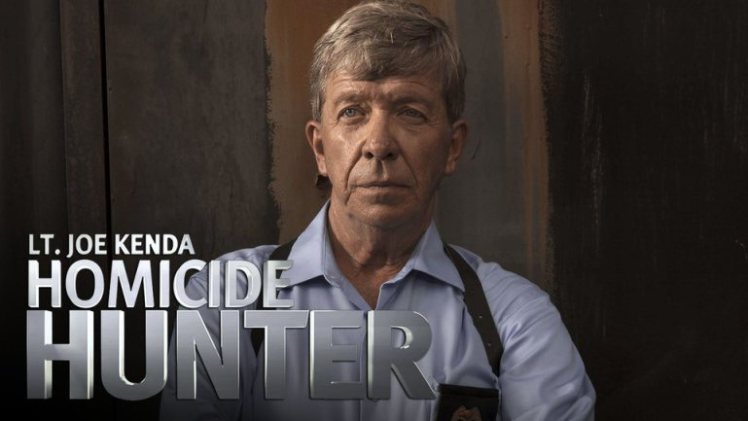
When a mother is killed, Lt Joe Kenda wonders if it’s a robbery gone wrong, until a slew of hateful messages surface. Then, patrols discover a body on a roadway after an evident hit-and-run, but the victim’s true cause of death turns the case on its head. -#1 Suspect, Homicide Hunter (S4,E9)
Editor’s note: With a cable subscription, you can download the free ID Go app and watch Investigation Discovery programming at your convenience. And for those who do not have cable, you can watch “unlocked” episodes on the ID Go app including the latest premieres. For those who prefer commercial free programming during your binge session, Prime Video has an ID channel: ‘True Crime Files by Investigation Discovery” available for $3.99 a month. It’s a compilation of older seasons but totally worth the cost if you are a true crime addict. Download the ID Go app or purchase ID True Crime Files & binge away.
Air Force spouse Kathryn Eastburn was found brutally raped and murdered on May 9, 1985 in her Fayetteville, North Carolina home. Two of her three children, Cara and Erin, were also murdered in the same vicious way. All three were stabbed and their throats were slashed. Kathryn and her three children were home alone while Gary Eastburn was on temporary duty at Maxwell Air Force Base in Alabama. The youngest daughter Jana was found dehydrated but otherwise unharmed. The crime occurred six miles from the location of where Jeffrey MacDonald was accused of killing his wife and two children at Fort Bragg. Army Sergeant Timothy Hennis was a suspect from the beginning because he had visited the Eastburn home a couple days earlier to buy the family dog.
Kathryn placed a dog for sale ad in the local post paper. Investigators sent out a press release looking for the person who bought the dog. In the meantime, a neighbor reported seeing someone leaving the Eastburn residence at the time in question. The neighbor provided details for a composite drawing; the suspect drove a white Chevy Chevette. At the urging of his wife, Hennis contacted the police station and investigators were stunned at how much he looked like the composite drawing. He also drove a white Chevy Chevette. In a background check, they found that Hennis had three convictions for writing bad checks. This was significant because the perpetrator stole Kathryn’s ATM card and used it on one occasion. Another witness identified Hennis as the person who used the ATM at the time in question.
In 1986, the State of North Carolina tried Hennis for the triple murders. Hennis was found guilty and sentenced to death. But he appealed and was found not guilty in the second death penalty trial. After his ‘exoneration’ Hennis was the subject of a book and an ABC made for television movie “Innocent Victims”. Meanwhile, against lawyers advice, Hennis enlisted in the Army again for two more tours, worked his way up to E-8, and retired as a MSG outside of Fort Lewis, Washington. Cold case investigators took a second look at the cold case and because of the advances in DNA technology, they retrieved a vaginal swab from the rape kit test and submitted it to the lab. DNA evidence linked Timothy Hennis to Kathryn Eastburn.The State of North Carolina prosecutors could not charge Hennis a third time because he was found ‘not guilty’ of the triple homicides in the second death penalty trial.
The Double Jeopardy Clause of the Fifth Amendment to the United States Constitution provides: “[N]or shall any person be subject for the same offence to be twice put in jeopardy of life or limb…” [wikipedia]. The civilians couldn’t try him in State court but the Army could because of federal jurisdiction; Hennis was an Army retiree therefore still under their jurisdiction. As a result, Hennis was activated and order to report to Fort Bragg for his third death penalty trial. The defense attempted to justify the DNA match to consensual sex but it contradicted his original testimony. The defense also called into question the ethics of the lab who made the DNA match. A military jury found Timothy Hennis guilty of three counts of murder and sentenced him to death. He awaits his execution date at Fort Leavenworth in Kansas.
Source: Unusual Suspects ‘Mother’s Day Murders’
In 1985, a young military wife and two of her three little girls are viciously murdered in their home. In a twisted case filled with unusual suspects, the man who gets convicted goes free. But nothing is what it seems. -Discovery ID
Date: October 30, 1985 Victims: Recife Cosmen, 2, Ernest Trout, 67, and Augusto Ferrara, 64 (she also injured 7 others in the shooting incident) Location: Springfield Mall, Philadelphia, Pennsylvania Circumstances: Sylvia dressed in fatigues began shooting at people in the Springfield Mall with a 22 caliber rifle; victims were diving behind racks of clothing and hiding in the backs of stores; store owners realized that it was a familiar face; Sylvia would go into the Springfield Mall and complain to store owners that the bright lights bothered her; she would also march up and down the hall in the mall; Sylvia was obsessed with the military and the Army discharged her early; the Army recognized that Sylvia was not right in her mind; she muttered to herself and used obscenities because Sylvia had schizophrenia; she couldn’t perceive reality for what it was; she responded to the negative voices in her head; she was diagnosed 10 years earlier but refused to take her medication; Sylvia’s mother tried to get her to take the medication but she wouldn’t; her delusional system involved military power and control over people; her history revealed the potential for violence; she had been working up to the violence at the mall for a long time; Sylvia was driven by paranoid schizophrenia, the delusions centered around the fact that one is being persecuted and people are after them; she was in and out of mental institutions for years and feared her mother wanted to send her back; she refused to take medication and was suspicious of the medication and anyone who wanted her to take it; she thought her family wanted to hurt her and was out to get her, she was fearful that they wanted to send her back to the hospital; to Sylvia, the shooting was a ticket to a better life in prison; for some reason she decided that the hospital was worse than prison and she would do something to get her to prison instead; thankfully someone in the mall walked up to her and took the gun from her thinking it was a prank; John Loufer was an accidental hero; once medicated again, Sylvia displayed remorse for her actions; she was angry that she was free to buy a gun despite her mental illness; but she checked “no” on the form and was able to purchase a gun with no problems whatsoever; Sylvia criticized her ability to buy a weapon and wrote to Congress, the President, etc telling them she should not have been allowed to buy the gun Motive: Mental Illness (paranoid schizophrenia) Disposition: Sylvia Seegrist, 24, was found guilty but mentally ill of 3 counts of murder and 7 counts of attempted murder; she received 3 life sentences
Date: November 4, 1997 Victims: Justin Thomas, 5, and Shelby Alexis Riggs, 2 Location: Sherwood, Arkansas Circumstances: Single mother Christina Riggs killed her own children; something snapped in her mind because she killed two defenseless children that didn’t know what was coming; Christina was going to kill her children with potassium chloride which she thought would stop their heart; what she didn’t understand is that a diluted form through IV would burn the skin and destroy the vein in the process; the potassium chloride binds and burns all of the blood vessels on the way to the heart; trouble followed Christina through her entire life; Christina was separated from her siblings and raised alone by her mother; in her diary, she wrote of sexual abuse by a neighbor and a family member; by 13, she was desperately unhappy and overweight; it was a psychological barrier for offenders; if I look unattractive, they won’t be interested in me; when she got older, she turned to sex because that’s all she knew; she got pregnant at 20 with her son Justin and his father skipped town; she married John Riggs and had another child Shelby but the marriage didn’t last; she was alone and raising the children by herself; she lost a cousin to suicide, her mother made a suicide attempt when she was growing up, and she had a grandmother who was institutionalized; potassium chloride is often used in prison executions; she thought she would give the children a quick and painless death but Justin was in pain and agony; she reached for another injection and tried to give him morphine; he was in so much pain and wiggling about that it was impossible for Christina to get the needle in the vein; Christina was a nurse known for always helping people; her sister wanted to know why she did this (filicide); her sister said she was great with her kids and worked long hours at the hospital to provide for her kids; after her divorce, she started another relationship but this guy broke her heart and stole her credit card; he left her broke and destitute; she told a doctor she was depressed and was prescribed Prozac; it was unclear if she was taking meds at the time of the homicide; the combination of mood swings, irritability and depression was the perfect storm; her plan to poison her two children failed so she resorted to suffocation and smothered both the children; she carefully laid their bodies on her bed and then tried to take her own life; she took 28 anti-depressants and injected herself with potassium chloride but it burned a hole and collapsed the vein; she decided to kill her children 2 days before she did it; she was afraid if she died, the children would be separated and go with their respective fathers, she thought she would prevent future sadness; 19 hours after the suicide attempt, Christina’s mom found her shortly before she died; Christina was demonized once the community learned what she had done; if she had died, nobody would have cared and would have wrote this off as another horrible tragedy; her sister hopes to shed light on the issue to help others learn from their experience; at trial, many discounted Christina’s state of mind and thought she wanted to rid herself of the children; in the end, the State of Arkansas finished what she started; Christina was obsessed with a black depression and didn’t want her children to live the same way Motive: Mental Illness (depression) Disposition: Christina Riggs, 26, was found guilty of two counts of first degree murder and sentenced to death by the State of Arkansas; she was executed by lethal injection (potassium chloride) on May 2, 2000
“There is no way words can express how sorry I am for taking the lives of my babies. Now I can be with my babies, as I always intended.” -Christina Marie Riggs (last words before execution)
Date: November 1984 Victims: Aggie Marsh, 97, Stella Bradham, 85, Leathy McKnight, 85, and Mary Rae Carter, 79 (Anna Larsen, 94, was injected with insulin but rushed to the hospital and saved) Location: North Horizon, St. Petersburg, Florida Circumstances: In a 50 bed nursing facility, 12 people died in 13 days; Bobbie was an angel of death and killed her patients; she had an intense compulsion to murder because of what it did for her; Bobbie Sue had deep rooted psychological issues that surfaced after the investigation began; she used to mutilate herself to attract attention; she had Munchausen Syndrome by Proxy; she had a long history of self-harm; she had her ovaries removed, stomach tumors, a broken arm that wouldn’t heal, hysterectomy, gall bladder problems, ulcers and pneumonia; it brought her the attention she craved; she would faint in between surgeries; she craved attention so she hurt herself to get it; her mind was twisted at an early age because four of her siblings had muscular dystrophy so she didn’t get the attention she wanted; at a young age, she learned the way to get love and attention was to be sick; her life revolved around sickness; it lead her to a career in nursing; she saw the power her mother had taking care of sick children and she wanted that; her desire switched from harming herself to harming others; detectives found a common thread with each death; Bobbie Sue was working when they died; they learned she had a long history of harming herself for attention; somehow she got a license in nursing in 1975 despite being in and out of institutions for years in Illinois prior to her move to Florida; the victims in the nursing facility showed no signs of injury; the cops needed to substantiate their gut feelings; one of the individuals who died had several injection points and there seemed to be a trace of zync, maybe possible use of insulin; it’s used to help diabetic patients from becoming hypoglycemic; the use of insulin overdose would cause blood sugars to drop, stop the heart, and cause insulin death; Anna Larsen was sent to the hospital with insulin shock but she wasn’t a diabetic; someone injected the insulin and staffing records revealed Bobbie Sue was the common theme; cops investigated records and exhumed the bodies; they finally had enough to charge Bobbie Sue; they not only proved that she committed murder but they got a conviction; detectives believe that she probably has more victims that we don’t know about; Bobbie Sue died of an infection in prison on August 27, 2007 Motive: Mental Illness (Munchausen syndrome by proxy) Disposition: Prosecutors wanted first degree murder charges for Bobbie Sue Dudley, 35, but she plead guilty to second degree murder in a plea bargain and was sentenced to 65 years in prison for 4 homicides; she also received 30 years for the attempted murder of Anna Larsen to be served concurrently with the 65 year sentence; the plea bargain locked her away for the rest of her life; she died of an infection in 2007
HISTORY – Twisted Philly – Episode 14: PART 1 – Ms. Rambo
To recap part one, Sylvia Seegrist was a resident of Springfield, Pennsylvania, a suburb about 10 miles outside the city… -Ms. Rambo, Twisted Philly
Editor’s note: With a cable subscription, you can download the free ID Go app and watch Investigation Discovery programming at your convenience. And for those who do not have cable, you can watch “unlocked” episodes on the ID Go app including the latest premieres. For those who prefer commercial free programming during your binge session, Prime Video has an ID channel: ‘True Crime Files by Investigation Discovery” available for $3.99 a month. It’s a compilation of older seasons but totally worth the cost if you are a true crime addict. Download the ID Go app or purchase ID True Crime Files & binge away.
Full Episode: Emergency Dispatch in Durham, North Carolina received a frantic call from a man who said his wife had fallen down the stairs; she was unconscious but still breathing. When paramedics arrived, they could do little more than pronounce the woman dead. The number and volume of bloodstains at the scene was greater than usual. It was up to forensic scientists to find out why. -A Novel Idea, Forensic Files (S11,E22)
Editor’s Note: Full episodes of Forensic Files are available on a variety of media platforms. FilmRise Channel and Forensic Files Channel both feature full episodes of Forensic Files on YouTube. You can also find full episodes of Forensic Files on both Netflix and Amazon Prime Video. On Netflix, the seasons are grouped as collection 1-9. On Amazon Prime Video, you can find Season 1-10 here; Season 11; Season 12; Season 13; Season 14; Season 15; Season 16; Season 17; Season 18; Season 19; Season 20; and Season 21. Start bingeing and see for yourself why Forensic Files is such a hit!
Fort Bragg, North Carolina, had seen it all before – when Dr. Jeffrey MacDonald was convicted of savagely slaying his wife and children. Now another officer’s wife had been raped and murdered, another pari of children viciously butchered. And another member of the military was brought to trial. This time the state had no trouble winning a conviction. Tim Hennis was found guilty and sentenced to death. Only Hennis’ parents, wife, and dedicated defense team refused to give up. Piece by piece they ripped the state’s case to shreds, revealing a stunning story of perversion of justice, false witnesses, hidden evidence, and, incredibly, a baby-sitter who had a fascination with Dr. Jeffrey MacDonald. With the brutal truth and chilling suspense of Fatal Vision, this riveting account recreates a vicious crime, the behind-the-scenes story of its investigation, the compelling drama of one of the very few men ever released from Death Row, and an unsolved mystery that still casts a spell of terror. (Innocent Victims by Scott Whisnant)
Book Review:
I read the Innocent Victims book while I was camping and honestly I could not put it down. I was reminded of it while listening to the Military Murder Podcast and inspired to read it because of the level of detail available in the book. It was a great read because there were so many twists and turns in the case. If I didn’t know about the fact that a DNA match to Timothy Hennis helped prove his guilt in a 2010 military trial, I would have been convinced Timothy Hennis was wrongfully convicted. Timothy Hennis was luckier than most because he had the staunch support of his adopted family and wife Angela, who all believed wholeheartedly in his innocence. This case is one for the history books because it’s not every day someone is found guilty in a civilian trial, then found not guilty in a civilian trial on appeal, and then tried again by the military in a third trial and found guilty. Timothy Hennis was sentenced to death and is one of four service members languishing on military death row. The military hasn’t executed anyone since they hanged Army Pvt. John Bennett on April 13, 1961.
Journalists and scholars have questioned the military’s ability to try someone found not guilty in a civilian court because of the double jeopardy concerns. Due to the fact that Timothy Hennis was found not guilty in a second civilian trial, he was allowed to resume his career in the U.S. Army and retired as a MSG in 2004. As far as we know, Timothy Hennis committed no other crimes and was well respected by those he served with. It would be because of his retirement from the military, the Army was able to bring him back on active duty status and try him in a third trial for the murders of the Eastburn family. This practice is also controversial. On appeal Timothy Hennis challenged the military’s jurisdiction to recall him to active duty status to prosecute him and questioned the double jeopardy concerns. In January 2020, an Appeals Court decided military retirees can be recalled to active duty status and court-martialed. In February 2020, the U.S. Court of Military Appeals rejected Hennis’ constitutional rights challenges to the military court’s jurisdiction to try him.




















 MILITARY JUSTICE FOR ALL