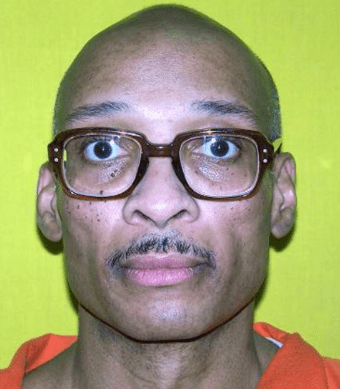
On January 6, 1987, Army soldier Ronald Gray raped, sodomized, robbed, and murdered civilian Kimberly Ann Ruggles, 23, in Fayetteville, North Carolina. Kimberly, who was a taxi driver, was dispatched to pick up Ronald Gray at his residence. In the early morning hours of January 7th, Fort Bragg military police officers discovered Ruggles’ empty cab parked at the edge of the woods on post. They discovered Kimberly’s nude body a short distance away. She had been raped, sodomized, beaten, and stabbed seven times. Kimberly’s mouth was gagged with a cloth belt that matched pants found in Gray’s possession only hours earlier. Ronald Gray’s fingerprints were also on the interior door handle of Ruggles’ taxi and Ruggles’ fingerprints were found on money in Gray’s possession. In addition, Gray’s footprints were found at the scene of the crime. In 1988, Ronald Gray was found guilty by the military courts of the premeditated murders of Kimberly and Private Laura Lee Vickery-Clay, and the attempted premeditated murder of Private Mary Ann Lang Nameth. On April 12, 1988, Ronald Gray was sentenced to death, given a dishonorable discharge, total forfeitures, and a reduction to Private E-1. In 2008, President George Bush gave the final approval for the military execution of Ronald Gray. In December 2016, media reports indicated that the military is moving forward with the lethal injection execution of Ronald Gray.
According to CNN, the US military could soon execute someone for the first time since 1961. Ronald Gray, a former Army soldier, has been on military death row at Fort Leavenworth since 1988 when he was convicted of killing five women and raping several others in 1986 and 1987 while stationed at Fort Bragg in North Carolina. A civilian court gave him eight life sentences, but a military court sentenced him to death. Last week, a judge ruled Gray’s stay in prison was no longer in effect and denied any further stays. Following the ruling, an execution date for Gray could be announced as soon as next month. –Wochit News
When 22 year-old Micki Filmore is found raped and murder in her apartment, detective Kenda focuses his investigation on her activities the previous night. Micki was seen dancing with a man who then paid a late night call to her door. -A Killer Always Rings Twice, Homicide Hunter (S1, E3)
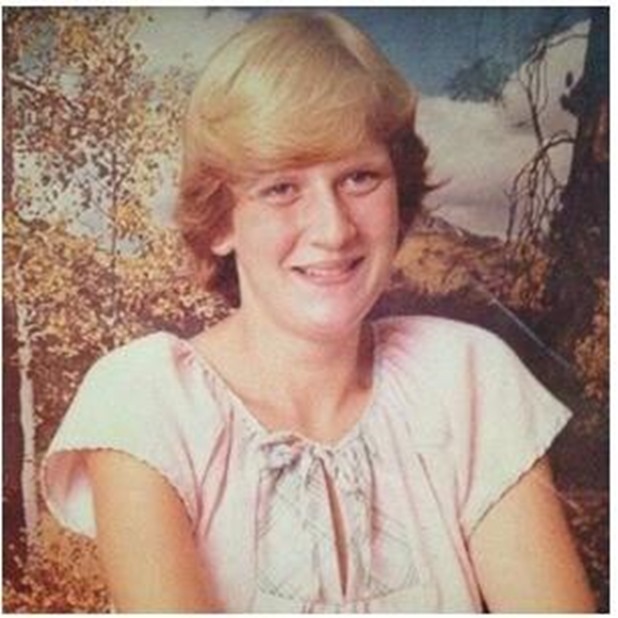
Colorado Springs is the home of five military bases made up of about 40,000 personnel. A lot of them live off-base in local apartment units. On July 19, 1986, as Army Spc. Tracy Spencer was walking by, he noticed his neighbor Micki Filmore was laying lifeless on the floor in her apartment. He was alarmed and ran to his wife Lisa to seek help. She claims she went through the window of the apartment because of her own concern for Micki and discovered that she was in fact dead. They called the police. Lt. Joe Kenda of the Homicide Unit at the Colorado Springs Police Department was assigned to investigate the case. Kenda deduced from the observation of the crime scene that there did not appear to be any struggle, the victim’s wallet and cash were present, and she was naked with her legs open and bruising around her neck. He suspected Micki Filmore was raped and strangled in a quick and brutal attack.
Joe talked about the crimes of rape and murder for a bit. He talked about how rape is unfortunately a very common crime but he also noted that rape and murder is not that common. Lt. Kenda educated the public about the fact that rape and sexual assault is mostly a punishment of women. And in this particular case, the perpetrator surprised Micki Filmore while she was in bed. His only purpose was to rape and kill her. While Joe waited on the results of the autopsy, he tried to figure out the modus operandi of this particular offender because he would strike again. Joe wondered why it was so important for this person to get in and out of the apartment quickly. Was he a local and making sure that nobody saw and recognized him? Neighbors Lisa and Tracy Spencer reported they saw Micki the night before; she was happy, eating pizza, and nothing appeared out of the ordinary.
Joe canvassed the neighbors in the apartment complex and learned that Micki was having troubles: he heard from neighbors that her fiancé left her, she was pregnant, and broke but nobody knew who the father of the child was. One neighbor told Lt. Kenda that he went to a night club with her the night before. He claimed that while they were there, she saw someone she knew. She left the club with her neighbor around 2 a.m. but she did give a piece of paper to the friend she ran into at the club. The neighbor claimed they talked for a little bit and then went their separate ways. After lying down, the neighbor heard knocking on her door. He looked out briefly and saw the same man from the club standing there. Another neighbor said she was awoken by a loud scream and then a thumping noise around 3:45 a.m. She assumed whoever it was they were fighting. Joe still had little evidence to go on but the autopsy helps tell a story.
The autopsy revealed that Micki Filmore’s last moments were met with violence, anger, and rage. And she had engaged in sexual relations within the last twelve hours. Despite what her neighbors said, she was not pregnant and there were no drugs or alcohol in her system. Lt. Kenda learned Micki was twenty-two years old and originally from a rural community in North Carolina. She joined the Army straight out of high school, did a three year tour of duty, traveled the world, and her service ended in December 1985. She was looking forward to leaving to be with her fiancé in a few weeks. Lt. Kenda contacted the fiance and learned that he had not abandoned Micki. The fiance was finalizing a divorce so he could marry Micki and he could verify his whereabouts at the time of the murder. The fiance shared he asked his friend Frank Lynch to look out for Micki while he was gone; but now he had concerns that maybe he was involved. This gave Kenda a new lead and potentially a new suspect.
Kenda met with Frank Lynch who denied any involvement in the murder and could account for himself on the night in question. As a result, Kenda closed out Lynch and in the meantime got a phone call from DiCarlo Dowden. DiCarlo was the man at the club that Micki gave a piece of paper to and the same man suspected of showing up at her apartment the night of the murder. DiCarlo admitted that he ran into Micki at the club, they chatted, they danced, she told him she was not ‘with’ her neighbor (he was an escort), and then gave him her number. She also gave him her address which to him was an invitation so DiCarlo dropped by her apartment but no one answered the door so he left. DiCarlo noticed that a neighbor did see him after looking out their window, which also matched the neighbor’s story. DiCarlo denied any involvement in the crime and there was no probable cause to arrest him, he did volunteer to provide biological evidence for testing.
It takes several weeks for the comparative analysis testing to be completed at the labs. Joe reiterated that DiCarlo was not off the hook yet. On August 12, 1986, another body was discovered in the same apartment complex. Lt. Joe Kenda knew this was not a coincidence. The victim was twenty-four year old Barbara Kramer who was a nurse at Eisenhower Hospital in Colorado Springs. She didn’t show up to work so her sister and a friend went over to her apartment to check in on her. They discovered the newspaper outside her door, signs of a struggle in the apartment, and the friend found Barbara Kramer dead in her bedroom. The family was devastated because they were already worried about her safety after the first murder in that apartment complex but they reported that Barbara was cautious and playing it safe. Kenda was horrified by what he saw at the crime scene because he immediately knew it was the same guy.
The modus operandi of both crimes was exactly the same aside from one woman was black and one woman was white. Both were displayed with their legs open after they were murdered; both were attacked in the middle of the night between the hours of 4 and 7 a.m.; both were single females living alone; both were strangled; and both were living in the same apartment complex. Lt. Kenda was feeling an even more heightened sense of urgency because this guy was a serial killer and was not going to stop; he wanted to prevent a third victim. He also deduced that the killer probably lived in the area and he was carrying on as if nothing mattered. He questioned DiCarlo about his whereabouts and DiCarlo was cleared as a suspect because his girlfriend could alibi him. Kenda knew DiCarlo wasn’t his man because the person he was looking for killed Micki Filmore and Barbara Kramer.
Lt. Kenda knew these murders were similar offenses; they were the same crime, different targets. He wondered how many more had to die before the Colorado Springs Police Department could stop him. Kenda theorized that the perpetrator most likely stalked his victims before the attacks. He did not feel that these crimes were random and he believed that the perpetrator surveilled his victims. This offender simply waited for the right place and right time. Kenda noted that these guys are not as intelligent as one would think but they are cunning. He knew the guy made mistakes and he had to be the one to find them. After interviewing more neighbors about the night before, Kenda learned that one neighbor was awakened to screams around 6 a.m. and another neighbor saw Tracy Spencer banging on Barbara’s door with a piece of paper in his hand around 6:25 a.m. She saw the door open, Spencer enter the apartment, and then the door slam.
This new information intrigued Lt. Kenda because now Tracy Spencer not only found Micki Filmore’s body but a witness saw him knocking on Barbara Kramer’s door around the time that she died. Kenda looked into his criminal history and found only minor offenses, nothing to indicate a propensity for violence. But Kenda was going to apply for a warrant regardless and arrest Tracy Spencer based on the evidence he had. But first he wanted to talk to Tracy’s wife. Lisa was still claiming that Tracy was with her the night of the murders so Kenda told her that a witness saw him and she began to cry. Kenda did not understand why she would protect him and told her she could be arrested next. She told him she did lie and that Tracy was not with her all night. As a matter of a fact, she admitted that he left the apartment in the middle of the night often and went for walks. She claimed Tracy told her he kept finding Barbara’s mail on the ground and wanted to return it to her, despite locked mailboxes at the apartment complex.
Lisa Spencer also admitted to finding an empty envelope with Barbara’s name on it so she threw it away. She observed Tracy get angry when he couldn’t find it but she never told him she threw it away. She also confessed that she did not go through the Micki’s apartment window like she originally shared with the police; she went into the apartment to help Tracy cover up the crime. When Kenda asked her why, her response was that she loved him. Kenda learned that Tracy was on the move so he made a decision to arrest and take him to the station before he hurt someone else. Kenda got a search warrant for his apartment and found the letter he couldn’t find right in the trash where his wife said she put it. And it did in deed have Barbara Kramer’s name on it. Kenda questioned Tracy at the station and even after he was told there were witnesses, Spencer stuck to his story. Eventually he folded some and admitted to taking mail to Barbara but said he didn’t go inside her apartment.
Kenda realized Tracy Spencer was a prolific liar. He denied everything. Kenda confronted him with the semen he said matched him (which was a lie) and then Tracy admitted that he was lying to him because he was having an affair with Micki and did have consensual sex with her that night. He had an explanation for everything. The bottom line was that he was going to commit the crimes regardless of the consequences and then lie about it. That’s what they do. The lab results came back and showed that both Tracy’s blood and hair samples matched those at the crime scenes. Tracy Spencer was arrested for the first degree murders of Micki Filmore and Barbara Kramer. On December 31, 1986, Tracy Spencer was found guilty and sentenced to life in prison plus twenty-four years. He is eligible for parole in 2032. Lt. Kenda ended the show with the fact that Spencer overpowered, raped, and killed two girls he didn’t even know for no real reason. Two women paid the price for his crimes and there could have been more, and that scared him.
Editor’s note: With a cable subscription, you can download the free ID Go app and watch Investigation Discovery programming at your convenience. And for those who do not have cable, you can watch “unlocked” episodes on the ID Go app including the latest premieres. For those who prefer commercial free programming during your binge session, Prime Video has an ID channel: ‘True Crime Files by Investigation Discovery” available for $3.99 a month. It’s a compilation of older seasons but totally worth the cost if you are a true crime addict. Download the ID Go app or purchase ID True Crime Files & binge away.
Ronald Gray, US Army, was sentenced to death in 1988 by a military court for the rape and premeditated murders of Army Private Laura Lee Vickery-Clay in December 1986 and civilian Kimberly Ann Ruggles in January 1987. He was also convicted of raping Army Private Mary Ann Lang Nameth and leaving her for dead in January 1987. Ronald Gray’s scheduled execution is one of two scheduled in the military since 1961. Army Private John Bennett was the last soldier to be executed by the US military. Bennett was convicted of rape and the attempted murder of an 11 year old Austrian girl. He was hanged in 1961 at Fort Leavenworth prison in Kansas. Ronald Gray joined Timothy Hennis, another Fort Bragg soldier convicted of rape and the murders of Air Force spouse Kathryn Eastburn and two of her three daughters in 1985. In 2008, President George Bush granted the final approval necessary for the military to execute Ronald Gray. After Gray’s execution was delayed for eight years, media reports indicated in December 2016 that the Armed Forces courts will no longer grant stays of execution and the federal government made an announcement that they plan to move forward with the lethal injection execution of Ronald Gray. Gray is one of six service members on death row at Fort Leavenworth. He joins Timothy Hennis, Dwight Loving, Andrew Witt, Hasan Akbar, and Nidal Hasan.
On December 15, 1986, Army soldier Ronald Gray abducted, raped, sodomized, and murdered Private Laura Lee Vickery-Clay, 18, of Fort Bragg, North Carolina. According to reports, witnesses saw Laura at a local store with Ronald Gray the night she disappeared and Gray’s finger print evidence was found on the hood of Laura’s vehicle. About a month later on January 17, 1987, a soldier discovered Laura’s half-naked, decomposed body in the woods on Fort Bragg. She had been raped, sodomized, and shot in the neck, forehead, chest, and back of the head. She had also suffered blunt force trauma to various parts of her body. The murder weapon was found in close proximity to the victim’s body. In 1988, Ronald Gray was found guilty by the military courts of the premeditated murders of civilian Kimberly Ann Ruggles and Private Laura Lee Vickery-Clay, and the attempted premeditated murder of Private Mary Ann Lang Nameth. On April 12, 1988, Ronald Gray was sentenced to death, given a dishonorable discharge, total forfeitures, and a reduction to Private E-1. In 2008, President George Bush gave the final approval for the military execution of Ronald Gray. In December 2016, media reports indicated that the military is moving forward with the lethal injection execution of Ronald Gray.
According to CNN, the US military could soon execute someone for the first time since 1961. Ronald Gray, a former Army soldier, has been on military death row at Fort Leavenworth since 1988 when he was convicted of killing five women and raping several others in 1986 and 1987 while stationed at Fort Bragg in North Carolina. A civilian court gave him eight life sentences, but a military court sentenced him to death. Last week, a judge ruled Gray’s stay in prison was no longer in effect and denied any further stays. Following the ruling, an execution date for Gray could be announced as soon as next month. –Wochit News
Sgt Sandra Jones, US Army, Fort Dix, New Jersey was murdered by her son Joel Jones on October 6, 1986. She was stabbed multiple times. Joel was held for a psychiatric evaluation by the courts.
“Sgt. Sandra Jones, 37 years old, was murdered and her 19-year-old son, Joel E. Jones, was charged in the slaying.” -Bill Libby (April 14, 1987)
On October 30, 1985, Sylvia Seegrist, 25, dressed in Army fatigues and black boots, parked her car in front of the Springfield Mall in a suburb of Philadelphia, Pennsylvania, stepped out, and started shooting. She killed three people and injured seven more in the mass shooting before she was stopped by an on-looker in the mall who didn’t realize she was not in a Halloween costume. Killed in the incident was a young child and two men: Recife Cosmen, 2, Dr. Ernest Trout, 67, and Augusto Ferrara, 64. As a result, Seegrist was arrested and indicted for three first degree murders. Investigators would learn that Sylvia Seegrist was discharged from the military after a year of serving because she wasn’t “right in the head” according to Army officials. Sylvia’s mother shared that she tried to get help for her daughter and tried to get her to take medication, but no one would hear her pleas for help. Prior to and after her trial in 1986, Seegrist was held at a Pennsylvania State Hospital.
Sylvia downward spiraled after her discharge from the Army and used the military training she learned to kill innocent civilians. After Sylvia was found guilty of three first degree murders and given three life sentences, she was transferred to the women’s Pennsylvania State Correctional Institution where she still resides. The 1985 incident highlighted the fine line between an individual’s rights and the state’s authority to commit potentially dangerous people. Seegrist interviewed in 1991 said, “daily doses of anti-psychotic medication had curtailed her delusions, paranoia and explosive anger.” Why wasn’t the mental illness picked up by recruiting and instead only recognized after she joined the military? Sylvia Seegrist had paranoid schizophrenia which is a serious mental illness that requires the use of medication to manage symptomology. Sylvia Seegrist needed follow on treatment after her discharge from the Army in an effort to prevent a predictable downward spiral.
The murder of a military wife and two of her young daughters in Fayetteville, North Carolina in 1985 was still making headlines twenty-five years later. The loss of his children and his wife Kathryn would forever haunt former Air Force Captain Gary Eastburn. Katie captivated him from the moment they met and the two got married shortly before Gary joined the United States Air Force. Eleven years later, Captain Eastburn was stationed at Pope Air Force Base in North Carolina as an Air Traffic Control supervisor. By then, the couple had three daughters: five year old Cara, three year old Erin, and Jana who was just under the age of two. They lived on Summerhill Road near the Fort Bragg Army post.
In the spring of 1985, Gary Eastburn was nearing the end of a training program at Maxwell Air Force Base in Alabama. Every Thursday night, Gary called Kathryn from the barrack’s payphone. One week, he couldn’t reached Kathryn and after frantically calling her for a couple days unable to reach her, Gary asked a neighbor to check in on his wife. The neighbors had grown concerned as well when they noticed that the newspaper had not been picked up for a couple days and they heard a child crying. They called the police who went into the Eastburn’s home and discovered Kathryn, Cara, and Erin had been murdered and the youngest toddler, Jana, was crying and severely dehydrated. They would learn that the baby was only hours from death.
The Fayetteville Police Department investigators discovered that Kathryn Eastburn had been raped and murdered. Her underwear had been cut off her, her blouse and bra were ripped opened, her throat was slit, and she had multiple stab wounds. Erin was found in her mother’s room stabbed to death and her throat slashed. And Cara was found in her own bed as if she was hiding underneath a blanket. She too had been stabbed multiple times and her throat was cut. Police believe the surviving toddler was in her crib for nearly three days before neighbors found her. Gary Eastburn received the dreadful call that there had been a death in the family while he was still at Maxwell. Investigators asked him to return home immediately because detectives wanted to give him the news in person.
Desperate police turned to the only living witness, Jana, to see if she remembered anything. The police took Jana to a child psychologist to determine what, if anything, she might know. The police deduced that the child heard the killer but could not identify him; she was just too young. An older Jana admits that she doesn’t remember anything now either. Police theorized that the baby was young and couldn’t identify the intruder which is probably why she was spared. In the meantime, a neighbor came forward claiming he saw a man leaving the Eastburn residence around 3 a.m. and was able to give a description of a suspect who drove a white Chevrolet Chevette. Kathryn also told Gary about a man who came and looked at the family dog they were trying to find a home for. His name was Timothy Hennis and the composite drawing inspired by the neighbor looked just like him.
Timothy Hennis was questioned and asked to give hair, blood, and fingerprint samples. When the detectives escorted Hennis back to his car, they discovered he drove a white Chevrolet Chevette. Later that night, Timothy Hennis was arrested. Hennis was an Army Sergeant stationed at Fort Bragg. Someone had used Kathryn’s stolen ATM card and a witness identified Hennis as the person who used the ATM right before she did at the time of the transaction. At every turn, the evidence overwhelmingly brought them back to Hennis. The prosecutors were puzzled why Hennis would commit such a heinous crime given he had no history of violence. They learned that he had approached a woman for sex that same night and theorized that when he was rejected, he decided to target Kathryn Eastburn.
A trial began roughly a year after the murders in 1986. Hennis’ attorney was quick to point out that the prosecution didn’t have any physical evidence linking Hennis to the murders to include fingerprints, hair, and foot prints. This was at a time before there was any routine DNA testing, therefore even semen found in Kathryn’s body led police nowhere. There was a significant amount of physical evidence showing that a male suspect was in the Summerhill Road house and it wasn’t Gary Eastburn or Timothy Hennis. Hennis’ attorney also pointed out that there was no possible way someone could leave that house without transferring evidence to their personal belongings. On July 4, 1986, the jury returned it’s verdict and Timothy Hennis was found guilty on all counts. Four days later, Hennis was sentenced to death.
While Timothy Hennis was sitting on death row, he received a letter from someone claiming to have committed the crimes. This person appeared to show remorse because Hennis was serving time for his crimes. In spite of the verdict, Hennis’ attorney and wife Angela continued to claim that Hennis was not the killer. As a result, Hennis’ attorney fought to have the murder conviction overturned and filed an appeal. The attorney felt he did not provide adequate representation in the first case and admitted that it was a heavy burden to carry. In a precedent setting decision, the Supreme Court overturned the guilty verdict. It found the prosecutors used information to inflame the jury, a graphic parade of disturbing images taken at the crime scene. After two years on death row, Hennis was awarded a new trial.
The second trial began in 1989, four years after the murders. The prosecution’s case was still strong and the star witness was back to swear that he saw Hennis leaving the Eastburn home on the night in question. In this new trial, the defense delivered compelling theories of their own. They produced a witness who claimed to have seen another man (not matching the description of Timothy Hennis) near the Eastburn home. The defense also reminded the jury there was no physical evidence connecting Hennis to the murders. Additionally, they opined there were others who could have committed the crimes including the person who wrote to Hennis while he was in prison. And in this case, Hennis took the witness stand and denied having anything to do with the murders. On April 19, 1989, a jury found Timothy Hennis not guilty on the triple murder charges and set him free.
Gary Eastburn wasn’t convinced of Hennis’ innocence because he never once apologized to the family for their loss. The verdict just didn’t sit right with Gary and he strongly believed that Hennis was guilty despite the jury’s decision. Gary admits he was angry after the verdict but he knew he had to let it go for his health. A month after Hennis was released from prison, ‘A Current Affair’ paid Hennis and his wife to appear on the program. Hennis suggested the prosecution wanted to pin the murder on anyone so they could get it out of the news; he also denied committing the murders. Timothy Hennis was free and for over twenty years no new suspects emerged. Whoever committed the murders in Fayetteville had gotten away with murder until one day a cold case detective took another look at the case.
After the murders, Gary Eastburn was transferred to a military base north of London, England where he met an English nurse and married her in 1991. Jana was 8 years old and now had a step-mother. Timothy Hennis returned to his family and resumed a career in the Army which often took him away from home. He served in the first Desert Storm war, he served in the war in Somalia, he got promoted multiple times, and had nothing but good marks from military leadership. Journalist Scott Whisnant wrote a book called ‘Innocent Victims’ which was later featured as a television movie. The point of view of the book was that Timothy Hennis was not guilty of these crimes. Investigators never read the book or saw the show. They claimed they were not interested in fiction; instead they were annoyed and pissed.
Twenty years later, new detectives were working on cold cases and decided to take a second look at the Eastburn murders. A cold case investigator found the one clue that could lead them to the killer, a vaginal swab from Kathryn Eastburn. In the 1980s, DNA testing was not available but now it was and they sent it to the lab. The lab testing revealed that the vaginal swab from Kathryn was a match to Timothy Hennis’ DNA. Still, Hennis’ attorney wasn’t convinced because he didn’t understand how someone could commit such a heinous crime then go twenty five years without committing another one and also lead an exemplary life. Billy Richardson believed the sample may have been contaminated and he pointed out that the lab that conducted the testing had been called into question on numerous occasions.
Author Scott Whisnant also believed that something was wrong and Hennis couldn’t have committed these crimes. He asked: “How could he be guilty of this? How could he fool everyone all these years?” Meanwhile, investigators contacted Gary Eastburn to inform him they got a match to Timothy Hennis. Eastburn admitted he had given up hope and the new information was overwhelming. But one thing stood in the way of justice: the Constitution. Hennis had been found not guilty by the State of North Carolina and they were prohibited from trying him a second time because of the double jeopardy clause. But the State found a loophole and because Timothy Hennis was a retired Army soldier, the Army could try him. They ordered Hennis out of retirement and back into uniform to stand trial in the military justice system.
Hennis retired in Washington state in a community near Seattle which was a shock to Gary Eastburn because that’s where he and his wife had settled and Jana and her boyfriend had settled. They learned that Hennis lived 30 minutes away from them. Jana was shocked he lived so closely to them because he was walking free in a community near her. But the Army would soon move Hennis; he was ordered back to Fort Bragg to face triple murder charges. After two decades of freedom, Hennis was being tried for the murders of Kathryn, Cara and Erin Eastburn, a third time for the same crime, except this time in a military court martial. If convicted, Hennis could again face the death penalty again. Hennis’ attorney was stunned that in America, Hennis could be charged for a third time for the same crime.
Billy Richardson referred to the double jeopardy clause in the US Constitution and reminded the public it doesn’t say anything about jurisdiction. He tried to get a federal court to intervene on the issue but failed. And in this third Hennis trial, there would be a new witness, Jana, the only survivor that night. She wanted the jury to know how this crime impacted her life. The trial began in the spring of 2010 and Timothy Hennis’ wife and grown daughter continued to stand by his side. They believed he was innocent. Hennis’ new attorney, Frank Spinner, argued at trial that the facts of Hennis’ life do not paint the portrait of a man who could commit such a heinous crime. He questioned how a man who led such an exemplary life could be the same person who would commit three murders in one night.
Timothy Hennis served his country with distinction, raised his family, and never committed another crime in the twenty five years after the Eastburn murders. And yet on one single night, Hennis slaughtered a family? The prosecutors said the motive didn’t matter because there was DNA linking Hennis to the murders. Spinner reminded jurors that DNA does not mean a case is open and shut. He argued that the DNA does not mean Hennis raped and murdered Kathryn Eastburn because Hennis admitted to consensual sex with her. Hennis suggested Kathryn was lonely while her husband was away at training. Gary Eastburn was angry the defense would have the audacity to suggest that Kathryn was a ‘whore’. Hennis’ old attorney Billy Richardson shared that Hennis denied having sex with Kathryn twenty years ago.
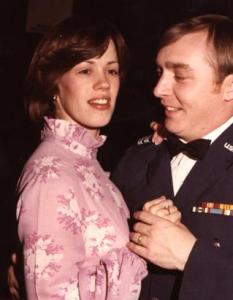
Kathryn and Gary Eastburn
The military panel didn’t believe Timothy Hennis and they found him guilty of the murders of Kathryn, Cara and Erin Eastburn. Hennis was lead away in handcuffs and for the second time in his life, he was sentenced to death. Timothy Hennis maintains his innocence, filed an appeal, and is fighting for a reversal of his conviction. Gary and his daughter Jana spoke to the press minutes after the verdict and expressed empathy for Timothy’s family despite their belief that justice was finally served. Jana Eastburn admitted she feels more at peace knowing that Hennis is behind bars. As of 2011, Timothy Hennis appealed his conviction and challenged the federal ruling regarding the double jeopardy clause. Timothy Hennis remains on military death row at Fort Leavenworth in Kansas.
Source: 20/20 on ID ‘Witness’
In 1985, a young military wife and two of her three little girls are viciously murdered in their home. In a twisted case filled with unusual suspects, the man who gets convicted goes free. But nothing is what it seems. -20/20 on ID
ID Go: After Lourdes Riddle in found strangled to death in the trunk of her car, homicide detective Joe Kenda follows the trail through a twisting maze of military and cultural secrets. Just what was Lourdes doing behind her husband’s back? -Secret Life, Homicide Hunter (S1, E5)
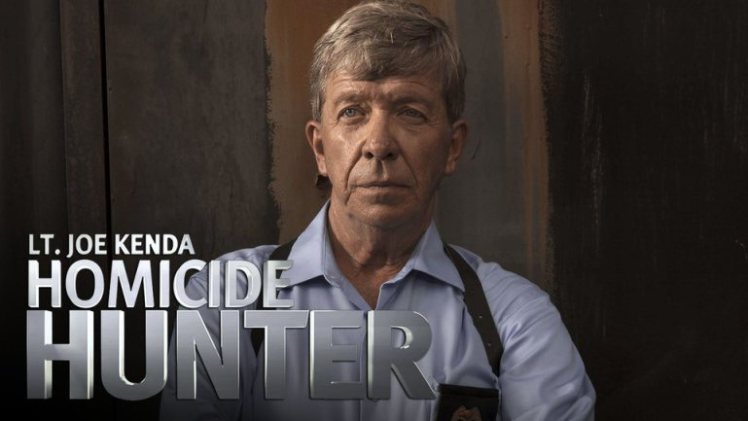
Investigation Discovery featured back to back episodes of Homicide Hunter with Lt. Joe Kenda. Kenda is a retired detective from the Colorado Springs Police Department. Colorado Springs is also the home of US Army base Fort Carson and Peterson Air Force Base. As a result, Lt. Kenda worked closely with investigating authorities at both bases throughout the years when one of his murder cases involved a member of the military or their dependents. If a crime against a military member or their dependents occurred off-base within the jurisdiction of Colorado Springs, Lt. Joe Kenda had the legal authority to investigate the strangling death of an Air Force wife found in the jurisdiction of Colorado Springs.
Construction workers found an abandoned car that had been set on fire on their property on March 26, 1985. The scene looked suspicious so they contacted the police to investigate the situation. The police found Air Force spouse Lourdes Riddle strangled to death in the trunk of her own car. Lt. Joe Kenda was called to the scene to investigate the crime further and determined that whoever killed Lourdes also tried to cover up their crime. They found that an accelerant (gasoline) was used to burn the car and a brick was on the driver’s side floor of the car (as if it was used to hold down the gas pedal). As Kenda was processing the crime scene, two Air Force Office of Special Investigations (AFOSI) personnel showed up and claimed they were taking charge of the investigation. They informed Kenda they had the husband, TSgt Mark Riddle, who worked at NORAD, Cheyenne Mountain, in custody on Peterson AFB.
Kenda’s response to the Air Force Office of Special Investigations personnel was priceless and proves that he truly is a fierce detective that all law enforcement should emulate. He was not intimidated by the feds in the least bit when the crime occurred in his jurisdiction. He shared that even it was their house, how dare they walk into his crime scene. Kenda was absolutely shocked when they shared they had enlisted soldier, Mark Riddle, in their office at Peterson AFB. Their attitude was that it was obvious who did it because in most cases it was the husband or boyfriend. When in fact, Kenda was disappointed that they may have tainted the case by initiating an ‘immediate arrest’. He was afraid that this outside agency, who had no jurisdiction, had advised Mark Riddle of his rights and he would want a lawyer now. His guilt was not obvious to Kenda who did not automatically assume that the husband committed the crime. He simply wanted to talk to him, not accuse him. Kenda felt that their actions may prevent him from doing an interview which could really damage the case. Kenda admitted to making mistakes in his lifetime but he also shared that he gets really upset when someone else makes them for him. If all investigators operated like Kenda and made assumptions based on fact finding, we could better protect the due process rights of individuals.
Kenda gains access to Mark Riddle and learns that Lourdes is a 31 year old from the Philliphines who has been married to him for nine years. There was in fact trouble in paradise and Mark admitted that his wife had been spending time with and maybe even sleeping with other men. They were not happily married. He claimed he was home the night of the murder and had no alibi. Mark asked for a polygraph test to prove his innocence and passed it, then let the investigators search his home. Although adultery is a motive for murder, Kenda determined that Mark Riddle was honest, credible, and was no longer considered a suspect. This case was not a sex crime but it was a personal and angry crime as evidenced by the ligature strangulation. Kenda felt that this person wanted to punish her and wanted to feel her die. This person was deemed the “Pantyhose Strangler” in the media. After talking to Lourdes family, Kenda learned that Lourdes was threatened by more then one person. Kenda wasn’t sure if she was a target because of Mark’s work at a secret military base or if it was because of her own secret life.
The Air Force couple lived on Peterson AFB. Kenda learned that Lourdes went to night clubs that soldiers frequented. She was into the nightlife, partying, and dancing. Her neighbors reported that she was in and out of the house all the time, usually dressed up with high heels, short skirts and make-up. During Kenda’s investigation into the circumstances of Lourdes secret life, rumors began to circulate at the enlisted men’s club on Fort Carson that she was extorting Army soldiers. In the meantime because of media coverage, an eye witness came forward with a description of a suspect that was found near the scene of the crime that night. He was a black male about 6’8. Kenda asked those who frequented the enlisted club on base if she was dating anyone matching the description. He learned that she only dated Phillipino men and wouldn’t give any other guy the time of day. The rumor was that she draws soldiers in like a Venis flytrap. She specifically sought out Phillipino soldiers. She would have a relationship with them, claim that she was pregnant, and threaten to go to their military Commander if they did not give her money for an abortion.
Lt. Kenda learned of blackmail accusations involving Nolly Depadua, a Phillipino soldier stationed at Fort Carson. Nolly had a friend named Brian Hawkins, also a Fort Carson soldier, who matched the description of the suspect described near the scene of the crime the night Lourdes was murdered. Kenda spoke to Brian with the approach that the facts would give him a theory. Initially Hawkins denied any involvement but Kenda believed that he was lying based on his body language during the interview. He requested he undergo a polygraph test and Hawkins failed miserably. When confronted with the results, Hawkins begins to cry. Hawkins told Kenda that Lourdes wanted money from Nolly Depadua. She claimed she was pregnant and was going to contact the Commander if he didn’t give her money. Nolly was concerned that his family would be ashamed of him if he got kicked out of the military. Nolly strangled Lourdes with the pantyhose.
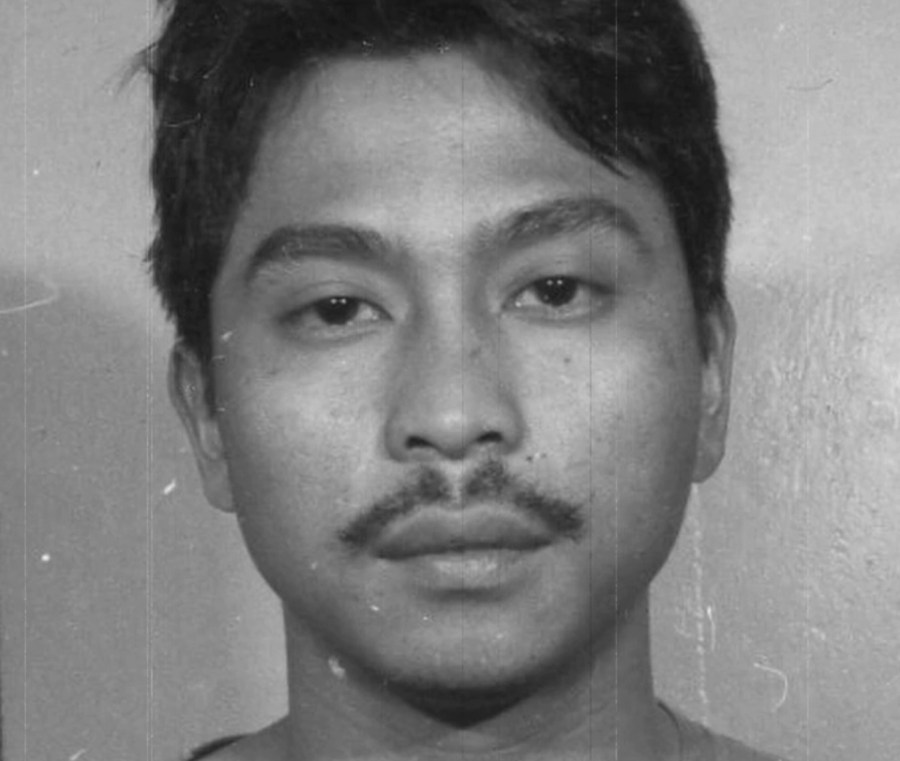
Nolly Depadua, U.S. Army
Kenda arrested Nolly and learned from him that they had sex, and she wanted $1000 for an abortion. According to Nolly, Lourdes took his Army dress uniform, used it as ransom, and threatened to burn it if he didn’t give her the money. His career and that uniform meant everything to him. The night of the murder, Nolly asked Lourdes to meet him and give him back his uniform. Lourdes showed up without the uniform. He snapped and strangled her to death in an effort to solve his extortion problems and save his career. Nolly elicits the help of Brian to help him get rid of the body. Unlike in the movies, the car did not explode in a ball of flames like the pair was expecting. The evidence at the scene of the crime was mostly unharmed. According to Kenda, both of the soldiers appeared to show remorse for the crime. Although Lourdes Riddle was a participant in her own death and her behavior caused this reaction, she did not deserve to die. Nolly Depadua made a decision to take a life and you can’t do that. Due to the circumstances surrounding the homicide, he was found guilty of second degree murder and sentenced to fourteen years in prison. He was released after seven. Lt. Kenda ended the show with: “saying she got what she deserved is not fair.”
A couple issues come to mind when it comes to the way the military handles investigations of felony crimes. Why did the Air Force Office of Special Investigations want to take jurisdiction of this case? Why did they do an ‘immediate arrest’ instead of investigating the circumstances and basing their decisions on fact finding? Why don’t they realize that their actions actually hinder the thorough investigations of cases. Research does in fact support that most spouses are murdered by their significant others but we have this thing called due process in the civilian world. The way Kenda felt about OSI interfering and possibly damaging the case was legitimate. And Kenda approached the investigation of the case in the way that detectives should move forward. He simply wanted to talk to the spouse, not accuse of him of the crime. So far there was no evidence to prove that Mark Lourdes had committed the crime. The way the Air Force OSI handled this case is part of the reason that the military justice system is under fire. They have been accused of overreach to include not affording due process rights to both victims of crime and those accused of a crime. They have been accused of railroading military members with an iron fist and as Joe Kenda would say ‘draconian and ruthless’ tactics. They have been accused of making a victim fearful of coming forward if they were involved in a military crime, like adultery or drinking underage. Nolly Depadua is yet another example of a crime involving the motive of fear when someone threatens to go to a military commander.
This is the heart of the military justice system debate. A commander hears each person’s story and determines who is guilty and who is not guilty based on that evidence alone usually. Commanders make the decision whether to prosecute someone in the military. If felony cases were handled by prosecutors who understood the modus operandi of sociopaths, psychopaths, and predators, would our soldiers feel more comfortable reporting a crime without the fear of damaging or losing their own career. It’s a theme that comes up over and over in military cases and needs to be examined. Are soldiers hesitant to report crimes perpetrated against them to their Commander if they have engaged in illegal behavior of any kind to include drinking under age and adultery? If this is the case, we must remove this barrier so that our soldiers feel safe to report felony crimes perpetrated against them without fear of losing their careers because they committed a misdemeanor.
If Nolly had a safe place to report that Lourdes was extorting him despite the adultery issue, could we have prevented this murder? We don’t want our soldiers to feel like they have nowhere to turn if they are targeted by those who know how to manipulate unsuspecting Commanders. It’s important to recognize that both male and female soldiers can be targeted by male or female sociopaths and predators. Reporting crimes to your commander is currently a battle of whose story is more believable and what they feel or don’t feel like dealing with. Commanders hold the key to moving forward with a case or not in our current military justice system. Do they have the skills necessary to investigate and determine who should be prosecuted for crimes? Commanders may not realize that they could tip people off who need to be questioned simply by prematurely inquiring into something which creates an opportunity for collusion.
In the civilian world, you most likely will not lose your career for adultery. Yet in the military, adultery is treated like any other crime in the courts martial process and soldiers can and do lose their careers. It’s not worth a life when people feel that they have to take matters into their own hands to protect what should never been taken from them to begin with. This is why the reporting of felony crimes needs to be moved away from the Commander and to a trained investigator who can help the prosecution determine whether a crime has been committed or not. Prosecutors cannot win cases if the defendants are not afforded due process rights. And this is what gives civilian law enforcement the advantage because they are forced to work within a justice system that protects the constitutional rights of the accused. We want to respect those rights in our pursuit of justice because that is how we will get justice. We should ensure our soldiers that if a felony offense is committed against them that they can safely report the crime without the fear of losing their career.
Editor’s note: With a cable subscription, you can download the free ID Go app and watch Investigation Discovery programming at your convenience. And for those who do not have cable, you can watch “unlocked” episodes on the ID Go app including the latest premieres. For those who prefer commercial free programming during your binge session, Prime Video has an ID channel: ‘True Crime Files by Investigation Discovery” available for $3.99 a month. It’s a compilation of older seasons but totally worth the cost if you are a true crime addict. Download the ID Go app or purchase ID True Crime Files & binge away.
On November 30, 1984, student Deborah Wilson was found strangled to death in a stairwell outside a computer lab at Drexel University in Philadelphia, Pennsylvania. There was no sign of rape and her purse wasn’t taken but her socks and shoes were missing. For eight years Philadelphia police detectives were stumped because no circumstantial or forensic evidence matched any of the prime suspects including a campus security guard who had done a stint in prison for robbery. The convicted felon conveniently left that important detail off his university employment application but apparently the university didn’t do a background check. Eight years later, Philadelphia cold case investigators began looking at the case. They reinterviewed campus employees and recognized a discrepancy in testimony. In the first homicide investigation, campus security guard David Dickson told detectives that he heard the printer working in the computer lab at 1:30 a.m. so he decided not to disturb the busy student. When he came back a couple hours later, she was gone. But in the second investigation they learned from a university employee that the printers stop working at 10 p.m.
Detectives zeroed in on Sgt. David Dickson, who was a Army Reserves Sergeant heading up a recruiting station. According to investigators, Dickson left his campus security guard position shortly after the crime and entered the active duty Army again. When they dug into his military record, they learned that his first active duty stint ended with a courts martial and a discharge from the Army in 1979 for burglary. He was accused of breaking into a female Army soldier’s home in Korea and stealing her sneakers. He was also suspected of a string of shoe thefts at the Philadelphia Naval Base where he lived. Multiple spouses reported that their white sneakers and gym socks where stolen from their homes but it was revealed that military leadership disregarded them. Apparently, the military thought the spouses were ‘crazy’ and ‘acting up’ while their husbands were away. In addition, a local newspaper noted that Dickson was fired from a pharmaceutical company for sending a co-worker a sexually explicit letter and whispering over the phone that he was going to rape her.
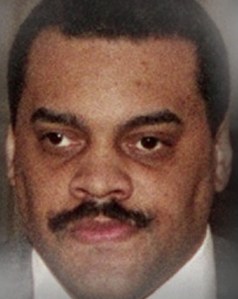
David Dickson, U.S. Army Reserve
When police searched Dickson’s home, they found multiple videotapes containing ‘foot pornography’ and more then twenty pairs of individually wrapped white sneakers in a storage unit. Cold case investigators theorized that Deborah Wilson stayed late in a computer room in Randell Hall to work on a project due the next day. Dickson worked the midnight to 8 a.m. shift at Randell Hall. One of the outgoing security guards asked Dickson to escort Deborah to her car but instead Dickson’s ego was bruised and he decided that he was going to take Deborah’s sneakers. He used a few karate chops on her head and neck area, lunged at her, and then hit her on the forehead with a security clock. After he realized what he did, he decided he had to kill her to cover up his actions so he strangled her to death, dragged her body to the stairwell, and took her socks and sneakers. In September 1993, Dickson was arrested for killing Deborah Wilson but he remained stubbornly silent. Dickson’s first trial ended in a deadlocked hung jury but the second trial’s outcome would be the result of Dickson’s own actions. Dickson proclaimed his innocence throughout the entire first trial but prosecutors learned from a snitch that he bragged about killing the ‘rich bitch’ while he was in jail. The investigators also learned more about the details of the crime and the information provided corroborated the evidence found at the autopsy including the bruises on her feet.
David Dickson was found guilty of second degree murder in December 1995 and was sentenced to life in prison. A psychiatrist testified that Dickson’s obsession with white sneakers ‘crossed a sick sociopathic line.’ It’s important to note that Dickson’s criminal behavior is what prompted him to move between the active duty Army and the Army Reserves. Dickson was able to escape each location without detection but the behavior followed him from base to base. This case is an excellent argument for the use of the FBI national database in the use of documenting crime in the U.S. military that can be easily accessed by military law enforcement officials in the world. Burglary is considered a felony therefore it would be an appropriate action to enter the crime into the world wide system whether you know who did it or not. The FBI national database would help us track the clues to solve the crimes perpetrated by transient military personnel.
Investigation Discovery:
After an all-night study session in a university lab, math student Deborah Wilson is found strangled, missing her shoes and socks. Years later, Philadelphia investigators unearth the shocking obsession that drove a killer to take her life. -Barefoot Homicide, Unusual Suspects (S7,E13)
Editor’s note: With a cable subscription, you can download the free ID Go app and watch Investigation Discovery programming at your convenience. And for those who do not have cable, you can watch “unlocked” episodes on the ID Go app including the latest premieres. For those who prefer commercial free programming during your binge session, Prime Video has an ID channel: ‘True Crime Files by Investigation Discovery” available for $3.99 a month. It’s a compilation of older seasons but totally worth the cost if you are a true crime addict. Download the ID Go app or purchase ID True Crime Files & binge away.











 MILITARY JUSTICE FOR ALL