Simple Kindness: Easy Ways to Repay Our Veterans for Their Service (July 31, 2019)

DeployOrg.com.png
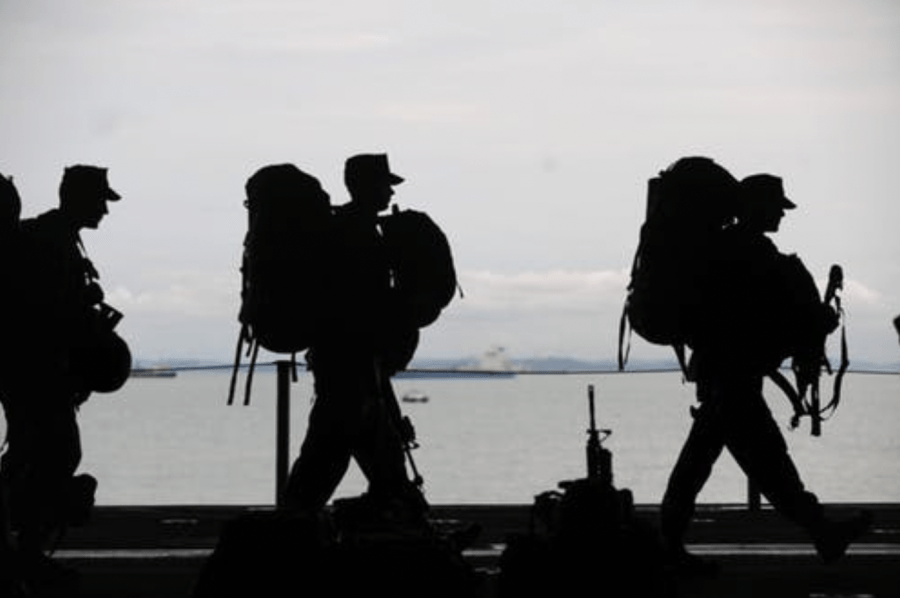
(Image courtesy of Pexels)

Guest post by Kelli Brewer, DeployCare.org

Simple Kindness: Easy Ways to Repay Our Veterans for Their Service 

It can be very difficult for the average American, especially those with no military experience, to appreciate the mental, physical, and financial impact that years of military service can have. The situation comes into focus when you consider that there are more than 1.3 million men and women on active duty, with more than 800,000 in the country’s reserve forces.

Post-traumatic stress disorder, family problems, and lack of employment opportunities can place a huge obstacle in the way of returning service members who just want things to return to normal. Unfortunately, it’s often not that easy, especially for those who return with debilitating injuries. If you’re looking for a way to help out, here are a few ideas.

Say ‘Thank You’

The Vietnam War experience taught Americans that returning service members can be seriously affected by the nature of their return. If it’s critical or indifferent, veterans may feel unsupported and unappreciated. And while today’s military personnel typically don’t face the kind of harsh criticism that confronted Vietnam-era servicemen and servicewomen, they can still be powerfully impacted by a lack of support and understanding. If you want to help a veteran, acknowledge their service by shaking their hand or offering a sincere “Thank you.”

The Health Care They Need

Veterans, particularly seniors, need to understand how their health insurance works. For those enrolled in Medicare Part A or B, there are several out-of-pocket costs, and to complicate matters further, plans often change from year to year. Fortunately, you can enroll in a Medigap plan, which may provide more of the benefits you need. For example, Plan F covers the deductible that comes with Medicare Part B, though certain changes to this particular benefit will go into effect beginning in 2020. Knowing your coverage and understanding how Medicare functions is essential for getting the most out of your coverage.

Help Veterans Reintegrate Socially

A soldier who returns home without a job or without access to social services may feel lost and alone. Consider organizing an event for returning service members, perhaps schedule an evening at the movies, an informal dinner setting, or get together every week at a nearby coffee shop. Make it a venue where everyone can talk about their experiences, hopes, and frustrations.

If you have a relationship with a veteran, offer to help out in specific ways. For example, if your friend has trouble scheduling a medical or therapy appointment, reach out by offering to babysit or offer to give them a ride if they lack transportation. There are many ways to volunteer, just by making efforts of simple goodwill.

Finding Work

Veterans often find that the skills they learned in the military don’t translate well into steady employment once they’re discharged. That can be especially true of veterans who lack a degree or some form of higher education. If you’re a business owner or have access to human resources personnel at work, why not put in a good word for a veteran who’s having trouble latching on somewhere? Your company will earn tax credits for hiring veterans. Sometimes, a foot in the door is all a veteran needs to impress a prospective employer.

Be a Willing Listener

You don’t have to be close friends with a service member who just needs a sympathetic ear. Give a veteran an opportunity to share their experiences. You really don’t need to say much, just be present in the moment and listen without judging or criticizing. It’s a simple but important gesture because many have no one to talk to, no outlet for their frustrations and anxieties.

Simple gestures are sometimes the best way to help veterans, service members, and their families. Be willing to provide the kind of support and assistance you’d offer to anyone. It’ll make you feel great and it’s a great way to thank our military heroes for their service. 

Murder for Insurance: Highlighting Military Risks

In a recent episode of Deadly Women, profiler Candice DeLong highlighted the case of Paul Berkley, a US Navy reservist living in Raleigh, North Carolina. After returning from a deployment overseas to the Middle East in 2005 without injury, he returned home to his wife, Monique, who had him murdered by her teenage lover less then a week later. The motive was a common one I see in both murders and murder for hire cases in the military: Servicemen’s Group Life Insurance (SGLI) policy. The SGLI insurance plan offers increments of $50,000 up to $400,000. This case emphasizes the fact that military men and women are at risk of becoming victims of murder by their abusive, manipulative spouses or those who benefit from the large financial payout that comes with the death of a service member.

I recognized the motive to kill for the insurance money because I had studied other cases in the military involving this motive. It’s a pattern. Civilians are targeting our military members for the benefits and insurance money. So I googled “murder insurance military” today and found more examples to bolster this theory. Based on the research, it is mostly civilian women who murder their military husbands for the SGLI. Other cases involved military members who killed their spouse for the insurance payout. Although most of the cases are female civilians targeting military men, I did find two examples of male civilians targeting female soldiers for the insurance money.

In Their Name:
James Goodyear, US Air Force (Orlando, Florida, 1971)*
Kenneth Barnes, US Army (Fort Gordon, Georgia, 1972)*
Chester Garrett, US Army (Fort Bliss, Texas, 1977)*
Lee Hartley, US Navy (Jacksonville, Florida, 1982)*
Bill Lipscomb, US Air Force (Lackland AFB, Texas, 1986)
Anthony Riggs, US Army (Fort Bliss, Texas, 1991)*
Joseph Snodgrass, US Air Force (Clark AFB, Philippines, 1991)
David Russo, US Navy (Lemoore Naval Air Station, California, 1994)*
Elise Makdessi, US Navy (NAS Oceana, Virginia, 1996)*
Doug Gissendaner, US Army Veteran (Auburn, Georgia, 1997)*
Kevin Spann, US Army (Fort Gordon, Georgia, 1997)*
Marty Theer, US Air Force (Fayetteville, North Carolina, 2000)*
Lynn Reister, US Army (Fort Bliss, Texas, 2002)*
David Shannon, US Army (Fort Bragg, North Carolina, 2002)*
Jeremy Meyers, US Army (Fort Lewis, Washington, 2003)
Gary Prokop, US Army (Fort Hood, Texas, 2003)*
Philip Shue, US Air Force (Lackland AFB, Texas, 2003)*
Paul Berkley, US Navy Reserve (Raleigh, North Carolina, 2005)*
Michael Severance, US Air Force (Dyess AFB, Texas, 2005)*
Donald Gower, US Army (Fort Hood, Texas, 2007)
Gilbert Hart, US Army Retired (Clarksville, Tennessee, 2009)*
Travis McGraw, US Air Force Reserve (Saluda, North Carolina, 2011)
Patricia MacCallum, US Army Veteran (Medford, Oregon, 2012)
Isaac Aguigui, US Army (Fort Stewart, Georgia, 2014)*
Alphonso Doss, US Navy (Orange Park, Florida, 2014)*
John Eubanks, US Army (Fort Stewart, Georgia, 2014)*
Brandon Horst, US Army (Minnesota National Guard, 2014)*
Michael Walker, US Army (Aliamanu Military Reservation, Hawaii, 2014)
Michael Andrews, US Army (Fort Benning, Georgia, 2015)*
Dmitry Chepusov, US Navy (Armed Forces Network, Germany, 2015)*
Jonathan & Lenin Otero, US Army (Florida National Guard, 2015)
Nathan Paet, US Air Force (Nellis AFB, Nevada, 2015)*
Elizabeth Shelton, US Navy (Naval Station Norfolk, Virginia, 2015)**
David Wi, US Army (Fort Campbell, Kentucky, 2015)

The asterisk (*) denotes that the soldier was a victim of alleged homicide, homicide or attempted homicide for the insurance money. **Elizabeth Shelton and unborn baby survived the murder-for-hire plot.

Indeed the Servicemen’s Group Life Insurance has been a motive for murder as recently as 2015. As military members, we have the option to decline this insurance plan but most of us want to make sure our loved ones are cared for in the event something does happen.  If at any point, you choose your spouse as the beneficiary and then remove them as a beneficiary from the insurance policy, they are informed. It’s sad that a program created to ensure our families are taken care of in the event we die in combat has turned out to be a motive for sociopathic spouses to murder the insured. In this research, most of the cases involved civilian women targeting men serving in the Army.

In an effort to always look out for our troops and present information in a way that educates them, it is my hope that those serving in the military realize that they are in fact a target because of the benefits they have including the Servicemen’s Group Life Insurance policy. It’s unimaginable to most, that a person, let alone a woman, would be capable of these heinous crimes but it’s happening as evidenced by the Paul Berkley case on Deadly Women and the above listed cases.

As with most things, it is important to have a large data set to work with so the next part of this research could include a more in-depth look at cases on the internet and an analysis of the spousal relationship prior to the homicide. If there were red flags such as abuse, financial difficulties, etc., was there a place the soldier could turn to in an effort to help escape what could be a dangerous situation. There are lots of variables to consider and this helps open up the dialogue.

Both males and females are abusers, rapists, and murderers. Although most crimes are committed by men according to the research, we must have empathy for the situation male soldiers may find themselves in when they become victims of crimes. It’s also important to note that according to the Department of Defense over half the victims of sexual assault in the military are men and very little report the crime.

How many are victims of domestic abuse?
Where do they turn to for help if they are being abused by their spouse?
Do they go to the Commander and risk tarnishing their career in any way?
Do they turn to resources on base and risk them informing the Commander that they reached out for services?
Are they fearful they will risk the very career that provides for their children and families?
Are men not reporting being abused by their spouses because they are afraid the Chain of Command won’t believe them?
Are they afraid the Chain of Command will believe their spouse instead?
Are soldier’s being exploited and/or extorted by their spouses?

We need to make it clear to both our male and female soldiers that they have a safe place to turn to in the event they find themselves a hostage of a domestic violence relationship or a sexual assault by one of their own.  We most certainly do not want our male soldiers to feel isolated and end up dead simply because people can’t fathom that they can be victims and women can be wicked too.

Related Link:
Paul Berkley, US Navy Reserve, Murdered by Wife & Friends in North Carolina while Home on Leave from Middle East, SGLI was the Motive (2005)