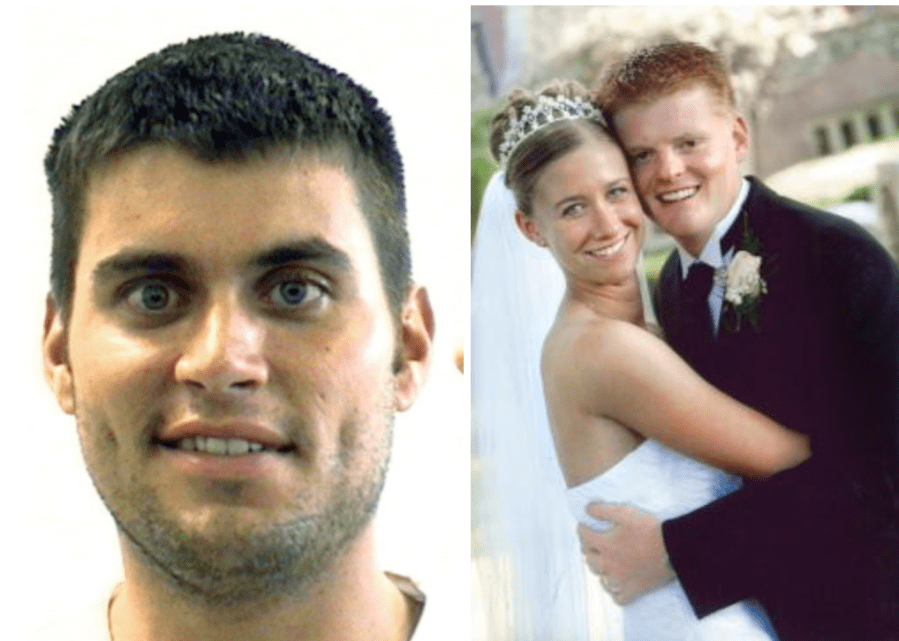
Air Force SrA Andrew Witt murdered Airman Andy Schliepsiek and his wife Jamie at Robins Air Force Base in Georgia on July 5, 2004. According to reports, Andrew Witt made a ‘pass’ at Andy’s wife Jamie at a July 4th cookout. When Andy confronted Witt about the inappropriate sexual advance, he informed him that he would not only report the assault to their Commander but also that he was sleeping with an officer on base. This was motive enough for Andrew Witt to drive back on base and stab them to death in the early morning hours of July 5th. Another airman Jason King was also stabbed in the back as he was attempting to flee the scene. On October 5, 2005, Andrew Witt was found guilty of first degree murder and sentenced to the death penalty by a military court on October 13, 2005. After an appeal, the death sentence was overturned in 2013. In early 2016, the death sentence for Andrew Witt was reinstated. On July 19, 2016, the highest military appeals court ruled in favor of a new sentencing hearing for Andrew Witt. In July 2018, a military panel re-sentenced Andrew Witt to life in prison without parole. Witt also received a dishonorable discharge from the Air Force as part of his sentence. At one point, Witt was the only Air Force service member on military death row at Leavenworth in Kansas. He was joined by four other Army soldiers: Timothy Hennis, Ronald Gray, Hasan Akbar, Nidal Hasan. (Army soldier Dwight Loving‘s death sentence was commuted by President Barack Obama in 2017).
Summer Baldwin and Rosendo Rodriguez, U.S. Marine Corps Reserve
On September 13, 2005, Summer Baldwin, 29, was found in a suitcase in a landfill in Lubbock, Texas. After an extensive investigation, authorities zeroed in on US Marine Corps Reservist Rosendo Rodriguez. In the course of the investigation, Rodriguez also admitted to murdering Joanna Rogers, 16, on May 4, 2004 in Lubbock Texas. Rodriguez was found guilty of two capital murders: Summer Baldwin and her unborn baby. Rosendo Rodriguez was sentenced to death in the State of Texas. Rodriguez appealed his death penalty conviction but a federal court denied the request in May 2017. Rosendo Rodriguez was executed on March 27, 2018. Rodriguez was never prosecuted for the murder of Joanna Rogers.
On September 13, 2005, the Lubbock Texas landfill discovered the dead body of a female in a suitcase. The horrified foreman called the police and they rushed to the scene. The police believed that any human being that can do this to another human being is the lowest form of life. Police were angered by the injuries and pain Summer must have suffered with. She most likely died 48 hours prior to the discovery of her body. Police noted the landfill is not a sanitary place and it makes it difficult to collect forensic evidence. Investigators had to turn to her body to find clues. The medical examiner found a tattoo ‘Summer’ on her wrist and they entered her fingerprints in the system in the hopes they could determine who she was. They learned the deceased individual was Summer Baldwin. The police now had the difficult task of informing her mother 200 miles away in Roswell, New Mexico.
Summer grew up in New Mexico. She studied cosmetology and eventually ended up in Lubbock, Texas near her Aunt Terri to make a life for herself. Aunt Terri shared that Summer was only in Lubbock for 3 or 4 days and that was the last time she saw her. Upon the examination of Summer’s body, it was noted there were very obvious injuries to her body and she fought back against her attacker. She was severely beaten before she died and was thrown out like garbage. It broke her family’s heart to learn that she suffered so much before dying. Anyone could have done it and police needed leads. They began with the garbage collection employees to determine which dumpster she had been found in. The police looked at CCTV but the footage was useless. The medical examiner also determined that Summer was about five weeks pregnant. In Texas, this was a double homicide.
To investigators, an unborn child meant there was a father out there and a potential suspect. The police started reaching out to friends and family to learn more about Summer’s life and the one name that kept surfacing was Margie Estrada. Police would learn the two were inseparable friends. After informing a shocked Margie that Summer was dead, she was quick to offer up a suspect, Laquincy Freeman. Summer and Laquincy were boyfriend/girlfriend and known for stints of verbal altercations. He was definitely someone police needed to question if they could track him down. Finally they obtained an address for him so they picked Laquincy up for questioning. At this point, he was considered the prime suspect. He seemed strangely calm about Summer’s death but he admitted they dated, broke up, and he moved on. He wasn’t anywhere near his ex at the time of her murder. Police ask him to take a lie detector test and he passed with no signs of deception. The police let him go.
After some time passed, Summer’s best friend Margie went back to the police station because she felt she left out an important detail. She said she spotted Summer at a 7-11 convenience store and she was with a man she had never seen before. But she was able to describe him as a light skinned Hispanic who was clean cut. Margie said Summer drove off with him and provided a scant description of the vehicle: a red pick-up. Police chased this lead and headed to the 7-11 convenience store to look at the CCTV video footage. They hoped it would help them determine who was with Summer that night and maybe even what he was driving. The detectives catch a break and spot the red pick-up truck at about 11:30 p.m.; they are able to determine it’s most likely a Dodge Ram but couldn’t see Summer or ID the driver.
Detectives next turned to the suitcase to see if they could find any evidence. They observed the suitcase appeared to be new as if it was recently purchased. They found a UPC code on the inside and hoped it was traceable. They learned Wal-Mart was the only store that carried that suitcase and there were only two Wal-Marts in Lubbock. They headed to the stores and learned that specific suitcase was sold a couple of times, one in the afternoon and one at 3 a.m., a couple hours after Summer was spotted at the 7-11. Detectives combed through the CCTV video footage at Wal-Mart and saw the suitcase being purchased in the afternoon but couldn’t see the person. But they were able to track down the purchaser via a Wal-Mart loyalty card. This person came back clean so they moved on to the suitcase purchased at 3:20 a.m.
When they were viewing the CCTV video footage, all the police could see was a Hispanic male with a military haircut purchasing a suitcase. But when they looked closer, this same person made a second purchase; they would learn via other video footage in the store that the second purchase was a box of latex gloves. This was consistent with someone who didn’t want to get caught. In hindsight, this was a chilling combination. Now they needed to tie this individual to a red truck so they used outside CCTV video footage to track his movements in the parking lot. They observed this man calmly walk out, dragging the suitcase in hand, and he headed towards a dark colored pick-up truck. They couldn’t make out the vehicle on his way out but they were able to determine the make of the pick-up truck on his way into the Wal-Mart parking lot. But the footage was too blurry to give them a license plate number. Police were certain they had their man.
The Lubbock police zeroed in on their new suspect. They had him on camera and observed he used a debit or credit card to make the suitcase purchase. The police had to get a search warrant for the bank so they could determine who owned that card. The card belonged to Rosendo Rodriguez, a 25 year old whose permanent residence was 400 miles away in San Antonio, Texas. The debit card also reveals Rodriguez made another purchase in Lubbock on the day of Summer’s murder. It was a purchase at the same 7-11 Summer had been spotted at prior to her murder. The video footage police collected was crucial because it proved that Rodriguez was in the general vicinity on the day of the murder. After getting a name, police learned Rodriguez was a Reservist with the US Marine Corps and his reserve unit was based in Lubbock, Texas. Police contacted the Marines and learn that Rodriguez did not stay on base because he normally stays at a Holiday Inn.
The Holiday Inn Rodriguez usually stayed at just happened to be across the street from the same 7-11 where he made a purchase the day Summer Baldwin was last seen alive. Investigators raced to the hotel but Rodriguez had already checked out but they were able to search his hotel room. The police called in the forensic’s team for assistance and they found a patch of dry blood, a Wal-Mart bag, and some latex gloves. Now, detectives were ready to arrest Rosendo Rodriguez. And it wasn’t hard because he was at his mother’s house. Once questioned, he talked and told a very self serving story. He admitted to taking Summer back to his room and having consensual sex with her. But then he claims they got into an argument and she pulled a knife out on him. In self-defense, he put her in a choke hold and she still wouldn’t drop the knife. Eventually she stopped fighting and dropped to the floor.
Rosendo’s statement to the police did not match the medical examiner’s findings whatsoever. The police deduced Rodriguez was just a liar. Rodriguez even had an excuse for the blood at the scene; he claimed Summer had a nose bleed. Everything Rodriguez said was inconsistent with the forensic evidence. In March 2008, Rosendo Rodriguez went on trial in Texas for two capital murders: Summer and her unborn child. Shockingly, Rodriguez also admitted to killing Joanna Rogers. She was someone that had been missing since 2004 and it appeared that he murdered Joanna and Summer in the same way. Rodriguez had an excuse for Joanna’s murder too. He claimed she started raising her voice so he put his hands around her throat and choked her. On April 1st, 2008, Rosendo Rodriguez was found guilty of two capital murders in Texas and sentenced to death. Summer’s mom is devastated by the loss and said she was patiently awaiting the execution date. Rosendo Rodriguez III was executed by the State of Texas on March 27, 2018.
When a young woman is found dead in a Texas landfill, detectives race to discover the killer behind the brutal crime. With no leads, police turn to their only witnesses: video cameras that captured the murderer’s chilling attempt to cover his tracks. -Last Look of Summer, See No Evil (S3,E6)
Editor’s note: With a cable subscription, you can download the free ID Go app and watch Investigation Discovery programming at your convenience. And for those who do not have cable, you can watch “unlocked” episodes on the ID Go app including the latest premieres. For those who prefer commercial free programming during your binge session, Prime Video has an ID channel: ‘True Crime Files by Investigation Discovery” available for $3.99 a month. It’s a compilation of older seasons but totally worth the cost if you are a true crime addict. Download the ID Go app or purchase ID True Crime Files & binge away.
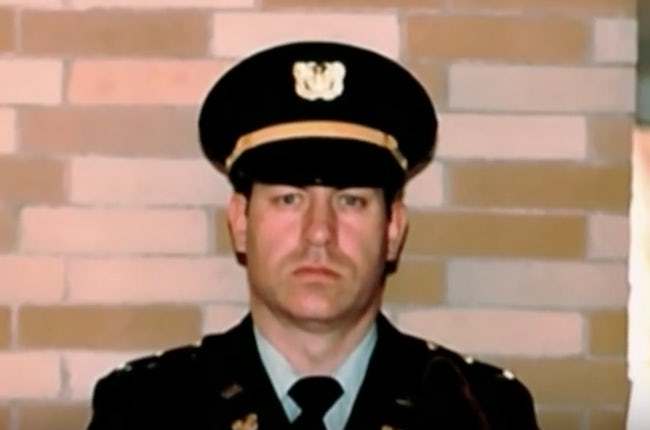
“James E. Sementelli was a Private in the United States Army during World War II. He grew up in Lock Haven and was stationed at the Army’s Fort Weaver on Oahu when the Japanese attacked Pearl Harbor on December 7, 1941. After the war, he returned to Lock Haven, Pennsylvania where he worked as a taxi driver, in the post office, and at a paper mill. Unfortunately, Mr. Sementelli was a murder victim as part of a gang initiation and robbery” on March 25, 2003. [Neighbor Shonda Walter was found guilty of homicide and sentenced to death in 2005 but the death sentence was commuted to life in prison without the possibility of parole due to ineffective counsel in 2016.] –Find A Grave
Investigation Discovery:
Neighbors can be a source of friendship and community comfort. But what happens when a neighbor stops watching out for you, and starts watching you. The sinister minds of these women begin to turn sour and they begin to torment their neighbors. -Loathe Thy Neighbor, Deadly Women (S5, E2)
Editor’s note: With a cable subscription, you can download the free ID Go app and watch Investigation Discovery programming at your convenience. And for those who do not have cable, you can watch “unlocked” episodes on the ID Go app including the latest premieres. For those who prefer commercial free programming during your binge session, Prime Video has an ID channel: ‘True Crime Files by Investigation Discovery” available for $3.99 a month. It’s a compilation of older seasons but totally worth the cost if you are a true crime addict. Download the ID Go app or purchase ID True Crime Files & binge away.
Sergeant Hasan Akbar, US Army, was sentenced to death by the military courts in 2005 for the March 23, 2003 grenade and rifle attacks on his fellow soldiers at Camp Pennsylvania in Kuwait. Akbar was accused of rolling hand grenades inside tents at a military command center and then opening fire. Army Captain Christopher Scott Seifert and Air Force Major Gregory L. Stone died in the attacks and fourteen others were wounded in the chaotic grenade and rifle attack. According to testimony, Akbar had been repeatedly disciplined by Army leadership for insubordination and it was also learned from his own diary entries that he carefully planned the attacks to result in maximum carnage. It appeared that Akbar targeted senior command staff and his motive was to stop US soldiers from harming his fellow Muslims. He was convicted of premeditated first degree murder. Akbar continues to appeal his death sentence and as of 2016 he has requested that the US Supreme Court hear his case in an attempt to reverse the death sentence imposed by the UCMJ. Hasan Akbar currently sits on death row at Fort Leavenworth prison in Kansas with three other service members: Timothy Hennis, Ronald Gray, and Nidal Hasan.
“According to the Spokane Spokesman-Review, the German federal police are looking into the deaths of 26 prostitutes with assistance from U.S. Army Criminal Investigative Command.Yates, a former Navy helicopter pilot, was stationed in Goeppingen, Germany, from 1988 to 1991. The FBI has found the black van he allegedly owned in Germany and has searched it for evidence.” –Whidbey News-Times (October 18, 2000)
Number of confirmed victims: At least 15 Years and location: 1970s-1990s, Washington state Characteristics: A married father of five who flew helicopters in the Army and the National Guard, Yates predominantly preyed on prostitutes. One of the victims was buried in Yates’ yard. Arrest, conviction and sentence: Arrested on April 18, 2000. Yates was arrested after police matched fibers found on the body of a dead prostitute to Yates’ car, which also had blood on the seatbelt and seat. DNA testing and other evidence linked Yates to at least 12 murders. He later pleaded guilty to 13 killings in exchange for a life sentence (408 years) in lieu of the death penalty. In 2002, he was convicted of two additional murders in a different county and sentenced to death. Yates’ attorneys have repeatedly appealed the ruling but he remains on death row awaiting execution at the Washington State Penitentiary.
Melissa speaks with the daughters of Robert Lee Yates Jr, who murdered at least 13 people in Washington State. (2015)
Robert Lee Yates Jr’s family members share their memories of the serial killer. (2015)
Spokane Serial Killer Robert Yates will be learning Thursday whether or not his death penalty conviction for the murders of two women near Tacoma will be overturned by the Washington State Supreme Court. KXLY4’s Jeff Humphrey reports. (2007)
In a majority opinion the Washington State Supreme Court has rejected an appeal from Spokane Serial Killer Robert Yates and upheld his death sentence for the murders of two women in Pierce County in the late 1990s. (2007)
Attorneys for convicted Spokane Serial Killer Robert Yates have filed their application for a stay of his execution which is scheduled for later this month. (2008)
Spokane Serial Killer Robert Yates has been transferred from death row in Walla Walla to Pierce County where he will be in court Friday as Judge John McCarthy signs his death warrant. KXLY4’s Jeff Humphrey reports. (2008)
Kathy Lloyd feared that Robert Yates would live longer than her. He killed her sister, Shawn McLenahan. Now a Tacoma judge will sign Yates’ death warrant, and Lloyd is hoping Yates will die soon. KXLY4’s Sally Showman reports. (2008)
Back in the mid 1990’s when Robert Yates was stalking Spokane prostitutes another serial killer was making regular visits to the city. A new book reveals the “Happy Face Killer” often traveled to Spokane where the long haul trucker would spend time with his children. KXLY4’s Jeff Humphrey reports. (2010)
Spokane Serial Killer Robert Yates is claiming he had ineffective legal counsel in his latest appeal of his death sentence for the killings of two women in Pierce County in the late 1990s. KXLY4’s Melissa Luck reports. (2013)
On August 26, 1997, the half-naked body of prostitute Heather Hernandez, 20 was found in an empty lot in Spokane Washington. The same day, the decomposed corpse of prostitute Jennifer Joseph, 16, was discovered in an alfalfa field. Both women had been shot in the head. The day after Christmas, four more women were found with plastic bags tied over their heads, the gruesome signature of a killer who had sexually violated each one of them, after they had died. When the killer is finally arrested he turns out to be a devoted husband, a father of five, a National Guard helicopter pilot and a Desert Storm veteran. Robert Lee Yates Jr. is charged for 13 murders. (2013)
Investigation Discovery:
A serial killer plagues Spokane, Washington, claiming the lives of more than a dozen victims. The reexamination of an old clue finally helps investigators zero in on the murderer. -Monster in Spokane, Unusual Suspects (S1,E6)
ID Go: The Yates family moves to Spokane, WA only to find it besieged by a serial killer who’s targeting young women and confounding the police. Now, the family’s never-before-aired home videos provide a chilling look of one of America’s most notorious killers. -Family Snapshot, American Monster (S2, E2)
ID Go: Tony Harris pieces together the 1990 case of three prostitutes killed in Spokane, Washington, and discovers a pattern of murders connected by twenty-two caliber bullets, a killing spree that shocked a city and a suspect with a stunning new identity. -Down by the River, Scene of the Crime with Tony Harris (S2, E1)
Editor’s note: With a cable subscription, you can download the free ID Go app and watch Investigation Discovery programming at your convenience. And for those who do not have cable, you can watch “unlocked” episodes on the ID Go app including the latest premieres. For those who prefer commercial free programming during your binge session, Prime Video has an ID channel: ‘True Crime Files by Investigation Discovery” available for $3.99 a month. It’s a compilation of older seasons but totally worth the cost if you are a true crime addict. Download the ID Go app or purchase ID True Crime Files & binge away.
Judy Buenoano was executed by the State of Florida on March 30, 1998.
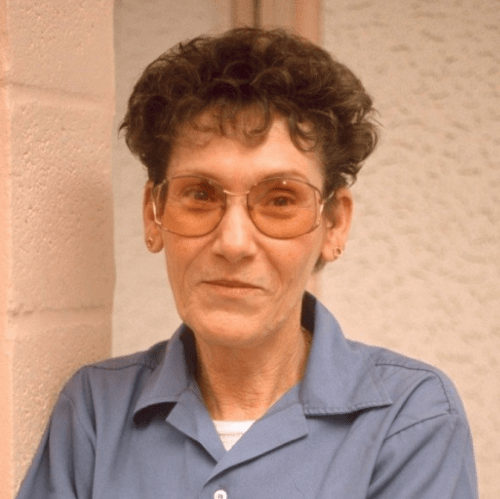
Air Force Sergeant James Goodyear, 37, died on September 16, 1971 in Orlando, Florida. Sergeant Goodyear died just three months after completing a year long tour of duty in Vietnam. He left behind his wife Judy Buenoano Goodyear and her son Michael Buenoano. Judy received $28,000 in military life insurance benefits and military death benefits to help support the family. When her son Michael turned eighteen, he joined the US Army. On his way to his post in Georgia, he stopped in to visit his mother Judy, she fed him, and afterwards he became ill. The illness led to a crippling condition that left him paralyzed in his lower extremities and he was subsequently discharged from the Army as a Private. Michael was disabled and Judy was taking care of him. On May 13, 1980 Judy took Michael for a canoe ride. Judy reported to local authorities that her canoe capsized and her son Michael had drowned. She collected $125,000 in military life insurance benefits for her son’s death.
In June 1983, Judy was suspected in the car bombing of her fiancé John Gentry of Pensacola, Florida. She stood to gain $500,000 in life insurance money for this death. Judy Buenoano was first convicted of the attempted murder of John Gentry. As a result of her involvement in the attempted murder of John, investigators looked into the ‘accidental deaths’ of her husband James Goodyear and her son Michael. They exhumed John’s body a decade later and an autopsy revealed he had been poisoned with arsenic. Testimony revealed long-term arsenic poisoning had actually caused her son Michael’s disability. And when Judy drowned him, he was wearing an extra 15 pounds of weighted braces. Judy reportedly admitted to being involved in the 1978 death of her boyfriend Bobby Joe Morris as well. She received $50,000 in life insurance benefits for his death. Judy Buenoano was found guilty of first degree murder and sentenced to death. She was executed by the electric chair in Florida on March 30, 1998. Judy Buenoano was motivated by money, profit, and greed.
Fort Bragg, North Carolina, had seen it all before – when Dr. Jeffrey MacDonald was convicted of savagely slaying his wife and children. Now another officer’s wife had been raped and murdered, another pari of children viciously butchered. And another member of the military was brought to trial. This time the state had no trouble winning a conviction. Tim Hennis was found guilty and sentenced to death. Only Hennis’ parents, wife, and dedicated defense team refused to give up. Piece by piece they ripped the state’s case to shreds, revealing a stunning story of perversion of justice, false witnesses, hidden evidence, and, incredibly, a baby-sitter who had a fascination with Dr. Jeffrey MacDonald. With the brutal truth and chilling suspense of Fatal Vision, this riveting account recreates a vicious crime, the behind-the-scenes story of its investigation, the compelling drama of one of the very few men ever released from Death Row, and an unsolved mystery that still casts a spell of terror. (Innocent Victims by Scott Whisnant)
Book Review:
I read the Innocent Victims book while I was camping and honestly I could not put it down. I was reminded of it while listening to the Military Murder Podcast and inspired to read it because of the level of detail available in the book. It was a great read because there were so many twists and turns in the case. If I didn’t know about the fact that a DNA match to Timothy Hennis helped prove his guilt in a 2010 military trial, I would have been convinced Timothy Hennis was wrongfully convicted. Timothy Hennis was luckier than most because he had the staunch support of his adopted family and wife Angela, who all believed wholeheartedly in his innocence. This case is one for the history books because it’s not every day someone is found guilty in a civilian trial, then found not guilty in a civilian trial on appeal, and then tried again by the military in a third trial and found guilty. Timothy Hennis was sentenced to death and is one of four service members languishing on military death row. The military hasn’t executed anyone since they hanged Army Pvt. John Bennett on April 13, 1961.
Journalists and scholars have questioned the military’s ability to try someone found not guilty in a civilian court because of the double jeopardy concerns. Due to the fact that Timothy Hennis was found not guilty in a second civilian trial, he was allowed to resume his career in the U.S. Army and retired as a MSG in 2004. As far as we know, Timothy Hennis committed no other crimes and was well respected by those he served with. It would be because of his retirement from the military, the Army was able to bring him back on active duty status and try him in a third trial for the murders of the Eastburn family. This practice is also controversial. On appeal Timothy Hennis challenged the military’s jurisdiction to recall him to active duty status to prosecute him and questioned the double jeopardy concerns. In January 2020, an Appeals Court decided military retirees can be recalled to active duty status and court-martialed. In February 2020, the U.S. Court of Military Appeals rejected Hennis’ constitutional rights challenges to the military court’s jurisdiction to try him.
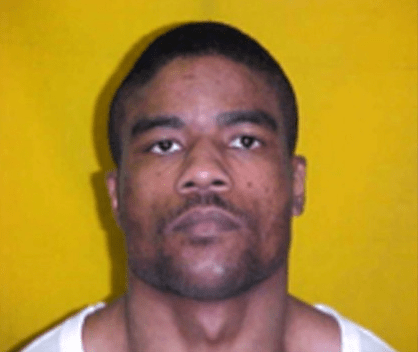
A military judge sentenced Army soldier Dwight Loving, 20, to death for the murders of two Killeen, Texas cab drivers and the attempted murder of a third. Loving was found guilty April 3, 1989 of two counts of felony murder in the deaths of Army Private Christopher Fay, 20, a 13th Corps Support Command soldier and part-time Killeen cab driver, and retired Master Sgt. Bobby Sharbino, 44. The two men were found dead in their taxis on December 12 and December 13, 1988, both victims of gunshot wounds. Howard Harrison, 28, another cab driver, was injured when he struggled with Loving in his cab. Harrison managed to escape after knocking the gun from Lovings hand. The court also found Loving guilty of robbing two 7-Eleven convenience stores on December 11, 1988. In 2016, Dwight Loving was one of six service members on military death row at Fort Leavenworth in Kansas; he was joined by Andrew Witt, Ronald Gray, Timothy Hennis, Hasan Akbar, and Nidal Hasan. In 2017, President Barack Obama commuted Dwight Loving’s death sentence before he left Office. Loving was re-sentenced to life in prison without parole. According to the terms of the commutation agreement, Loving will be unable to appeal his conviction and is ineligible in any way for release in the future. Andrew Witt was granted a new sentencing trial on appeal, and in July 2018, the military courts re-sentenced Witt from the death penalty to life in prison without parole.
Ronald Gray, US Army, was sentenced to death in 1988 by a military court for the rape and premeditated murders of Army Private Laura Lee Vickery-Clay in December 1986 and civilian Kimberly Ann Ruggles in January 1987. He was also convicted of raping Army Private Mary Ann Lang Nameth and leaving her for dead in January 1987. Ronald Gray’s scheduled execution is one of two scheduled in the military since 1961. Army Private John Bennett was the last soldier to be executed by the US military. Bennett was convicted of rape and the attempted murder of an 11 year old Austrian girl. He was hanged in 1961 at Fort Leavenworth prison in Kansas. Ronald Gray joined Timothy Hennis, another Fort Bragg soldier convicted of rape and the murders of Air Force spouse Kathryn Eastburn and two of her three daughters in 1985. In 2008, President George Bush granted the final approval necessary for the military to execute Ronald Gray. After Gray’s execution was delayed for eight years, media reports indicated in December 2016 that the Armed Forces courts will no longer grant stays of execution and the federal government made an announcement that they plan to move forward with the lethal injection execution of Ronald Gray. Gray is one of six service members on death row at Fort Leavenworth. He joins Timothy Hennis, Dwight Loving, Andrew Witt, Hasan Akbar, and Nidal Hasan.












 MILITARY JUSTICE FOR ALL