While on death row, Tim Hennis received an anonymous letter confessing to the murders. The note didn’t produce any leads. -CNN (July 17, 2014)
The star witness in Tim Hennis’ trial had doubts about whether Hennis committed the murders. -CNN (July 17, 2014)
A man tried three times for his life but is he a killer? Find out! Death Row Stories. -CNN (September 5, 2014)
The brutal murder of a U.S. Army wife and her two young daughters. One year later, a mountain of circumstantial evidence sent U.S. Army sergeant Timothy Hennis to death row for the crime, but the case later took a unique turn in legal history. -Timothy Hennis, Death Row Stories (S1,E7)
Victims:
Kathryn Eastburn, Cara Eastburn, and Erin Eastburn
Editor’s note: With a cable subscription, you can download the free ID Go app and watch Investigation Discovery programming at your convenience. And for those who do not have cable, you can watch “unlocked” episodes on the ID Go app including the latest premieres. For those who prefer commercial free programming during your binge session, Prime Video has an ID channel: ‘True Crime Files by Investigation Discovery” available for $3.99 a month. It’s a compilation of older seasons but totally worth the cost if you are a true crime addict. Download the ID Go app or purchase ID True Crime Files & binge away.
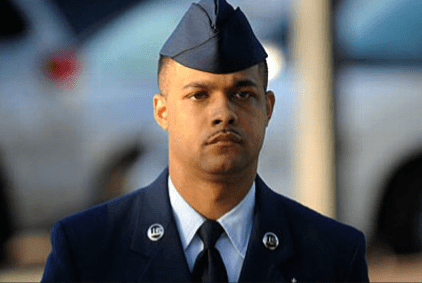
SSgt Luis Walker, U.S. Air Force (Photo: Billy Calzada/San Antonio Express-News via AP)
Air Force SSgt. Luis Walker was a basic training instructor at Lackland Air Force Base in Texas. After an investigation into allegations of improper relationships and abuse of power at the training facility in 2011, SSgt Walker was charged with sexual assault. One of his victims stated under sworn testimony that he had raped her. As a result of the court martial, he was found guilty and sentenced to 20 years in prison as opposed to the original life sentence he was faced with. Shortly after the conviction, his wife spoke out publicly claiming that her husband was innocent and that he did not get a fair trial. SSgt Walker also echoed those sentiments when asked for a statement from the Air Force Times (see quote below). A few months later, one of the victims in the trial went public with her story. Virginia Messick shared that she was raped by SSgt Walker and that it was a harrowing experience. She also later reported that she was facing battles trying to get disability benefits for Post Traumatic Stress Disorder (PTSD) from the Department of Veterans Affairs. SSgt Walker’s attempt to overturn the sexual assault conviction on appeal were eventually denied. It was only a few months later that he would be found dead in his cell at Fort Leavenworth from an apparent suicide.
“These setbacks have discouraged me and at times I have wanted to give up, but because of my family, I can not. I am a human being and an American, I deserve the right to a fair trial. There has been a lot of focus on the number of alleged victims in my case, instead of the charges against me, when in fact each charge should stand on its own.” -SSgt Luis Walker (USA Today, September 3, 2014)
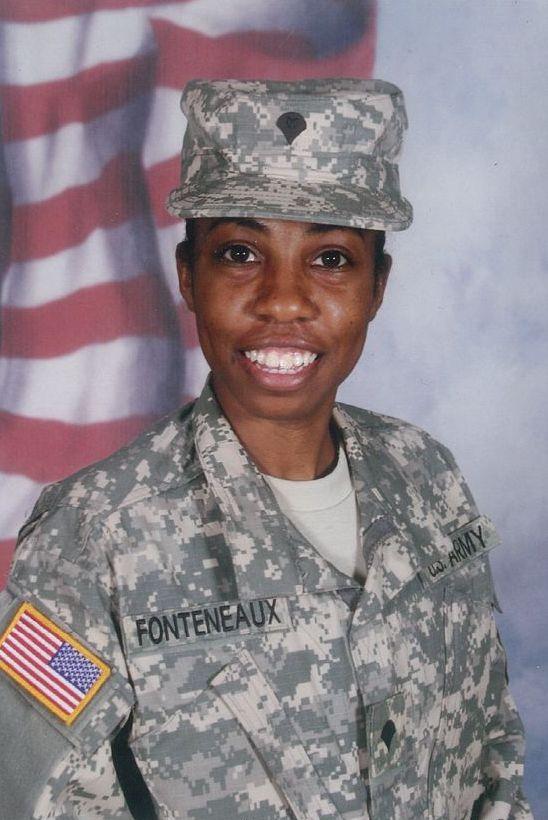
Army soldier Sgt. Brandy Fonteneaux was found stabbed to death in her barracks room at Fort Carson in Colorado on January 9, 2012. An autopsy revealed that she was stabbed 74 times and choked to death. After an investigation, co-worker and Army Sgt. Vincinte Jackson was charged with her murder. Both Sgt. Jackson and Brandy were assigned to the 4th Engineer Battalion at Fort Carson but they were not close. According to Brandy’s family, she knew him but they were not friends and didn’t hang out. Brandy shared with family that Sgt. Jackson would often talk about his crumbling marriage.
Sgt. Jackson was accused of going to the barracks, looking for a door that was unlocked, entering, and killing Brandy Fonteneaux. The prosecution argued that Jackson made a conscience decision to leave his home, go to the barracks, enter Brandy’s room, and murder her. The defense argued that Jackson was not aware of his actions due to a combination of heavy alcohol use and anti-depressants. Sgt. Jackson was found guilty of murder on December 13, 2012 and a military jury sentenced him to life without parole. Jackson was acquitted of premeditated murder.
Air Force spouse Kathryn Eastburn was found brutally raped and murdered on May 9, 1985 in her Fayetteville, North Carolina home. Two of her three children, Cara and Erin, were also murdered in the same vicious way. All three were stabbed and their throats were slashed. Kathryn and her three children were home alone while Gary Eastburn was on temporary duty at Maxwell Air Force Base in Alabama. The youngest daughter Jana was found dehydrated but otherwise unharmed. The crime occurred six miles from the location of where Jeffrey MacDonald was accused of killing his wife and two children at Fort Bragg. Army Sergeant Timothy Hennis was a suspect from the beginning because he had visited the Eastburn home a couple days earlier to buy the family dog.
Kathryn placed a dog for sale ad in the local post paper. Investigators sent out a press release looking for the person who bought the dog. In the meantime, a neighbor reported seeing someone leaving the Eastburn residence at the time in question. The neighbor provided details for a composite drawing; the suspect drove a white Chevy Chevette. At the urging of his wife, Hennis contacted the police station and investigators were stunned at how much he looked like the composite drawing. He also drove a white Chevy Chevette. In a background check, they found that Hennis had three convictions for writing bad checks. This was significant because the perpetrator stole Kathryn’s ATM card and used it on one occasion. Another witness identified Hennis as the person who used the ATM at the time in question.
In 1986, the State of North Carolina tried Hennis for the triple murders. Hennis was found guilty and sentenced to death. But he appealed and was found not guilty in the second death penalty trial. After his ‘exoneration’ Hennis was the subject of a book and an ABC made for television movie “Innocent Victims”. Meanwhile, against lawyers advice, Hennis enlisted in the Army again for two more tours, worked his way up to E-8, and retired as a MSG outside of Fort Lewis, Washington. Cold case investigators took a second look at the cold case and because of the advances in DNA technology, they retrieved a vaginal swab from the rape kit test and submitted it to the lab. DNA evidence linked Timothy Hennis to Kathryn Eastburn.The State of North Carolina prosecutors could not charge Hennis a third time because he was found ‘not guilty’ of the triple homicides in the second death penalty trial.
The Double Jeopardy Clause of the Fifth Amendment to the United States Constitution provides: “[N]or shall any person be subject for the same offence to be twice put in jeopardy of life or limb…” [wikipedia]. The civilians couldn’t try him in State court but the Army could because of federal jurisdiction; Hennis was an Army retiree therefore still under their jurisdiction. As a result, Hennis was activated and order to report to Fort Bragg for his third death penalty trial. The defense attempted to justify the DNA match to consensual sex but it contradicted his original testimony. The defense also called into question the ethics of the lab who made the DNA match. A military jury found Timothy Hennis guilty of three counts of murder and sentenced him to death. He awaits his execution date at Fort Leavenworth in Kansas.
Source: Unusual Suspects ‘Mother’s Day Murders’
In 1985, a young military wife and two of her three little girls are viciously murdered in their home. In a twisted case filled with unusual suspects, the man who gets convicted goes free. But nothing is what it seems. -Discovery ID
Sergeant Brent Burke earned his stripes at Fort Campbell, Kentucky — home base for his division, the legendary 101st Airborne. Once under the command of former General David Petraeus, the soldiers of the 101st have seen more action than most soldiers in the U.S. Army. It is also where Sgt. Burke will learn if he will continue to serve in the Army, or if he will serve out his life in prison, because military prosecutors in the Army’s Judge Advocate General’s Corps, known as JAG, will court martial Sgt. Brent Burke for double homicide.
“I would say that the tough part of any case like this is the fact that it was four years old … and it was mostly circumstantial evidence and when you put all that together it certainly makes for a difficult case,” JAG prosecutor Lt. Col Matthew Calarco told “48 Hours” correspondent Richard Schlesinger. Lieutenant Colonel Matt Calarco’s mission, after four civilian trials failed to get a verdict, is to finally prove Sgt. Burke shot and killed his wife, Tracy, and her ex-husband’s mother, Karen Comer, on Sept. 11, 2007.
“I can’t do this, Mom, I can’t go back there.” -Suzanne Swift
Pfc. Suzanne Swift, US Army, was a Military Police Officer stationed at Fort Lewis in Washington. She had already deployed twice to Iraq before getting tasked to go again for the third time in less then four years. In January 2006, Suzanne Swift decided last minute to go Absent without Leave (AWOL) instead of going back to Iraq. According to her mother, Sara Rich, she couldn’t handle another deployment dealing with the daily hour-to-hour sexual harassment that she endured from the majority of her male officers and fellow soldiers. She felt especially isolated in Iraq and feared being attacked, harassed, molested, and raped. She told her mom that most of the other soldiers were sexually harassing her, pressuring her to consent, and making her life miserable for rejecting them. Her mom asked her if she wanted to report the sexual harassment and Suzanne did not. She told her mom that reporting would only make her life even more of a living hell. She says when she did blow the whistle on one of her superiors for sexually harassing her, she was treated like a pariah. Suzanne shared that he was moved to a different unit and promoted. She felt that those who reported were not supported but instead shamed when they brought these matters to the attention of their superiors.
According to Suzanne, Army leadership pressured her into signing a release form waiving her right to the mandatory decompression time of eighteen months between deployments. Suzanne refused to sign the form waiving her rights to decompression time but was told that her life would be ‘hell in a shit hole’ if she refused to sign. She says they screamed in her face and intimidated her. As a result she signed the form and was scheduled to leave for Iraq again in January 2006. The Eugene Police raided her home in March 2006, she was arrested, and she was taken back to Fort Lewis where she would be confined. She was charged with missing movement and AWOL. In December 2006, Suzanne pleaded guilty to both charges and was demoted and sentenced to thirty days in prison. If she met the conditions of the plea agreement, she could remain in the Army and be eligible for a honorable discharge. After she finished her sentence she would be reassigned to a new unit. If she did not agree to the plea, she was facing a year in prison and a dishonorable discharge. Her plea, which came during a summary court martial, helped her avoid a federal conviction. Suzanne chose to leave the Army as soon as she could. She would later be diagnosed with Post Traumatic Stress Disorder (PTSD).
Suzanne and her mother believe that the intimidation and sexual harassment that female soldiers endure is leading to massive stress and in some cases even death for military women in Iraq. So much stress that Suzanne would choose AWOL and prison time over deploying a third time to fight what she felt was a pointless war in Iraq. Sara Rich is confident that Suzanne saved her own life with her courage. And based on what has happened in the Army in Iraq and at Joint Base Lewis-McChord since 2006, we think she’s right.
“Notice to those who report false claims of rape, harassment, assault, and command rape: you make it difficult for those who experience the real thing. You are just as culpable as those who commit the acts.” –Suzanne Swift Petition
Vanity Fair Confidential featured an episode called Don’t Ask Don’t Kill on Investigation Discovery highlighting the case of Army Pfc. Barry Winchell at Fort Campbell, Kentucky in 1999. Winchell was bludgeoned to death by a fellow soldier while he lay asleep in his cot on July 5 in the barracks. Winchell was described by his friends as someone who would give the shirt off his back for you. He was a model soldier and had dreams of becoming a Warrant Officer. He was a member of the elite Screaming Eagles, 101st Airborne and was considered a perfect fit for the military. He was described by fellow soldiers as a 50 caliber expert.
After Barry Winchell died, the military immediately began downplaying what had occurred on base at Fort Campbell. They initially claimed it was a fight that had gone too far. They told the family that Barry Winchell had been kicked in the head with a boot but his injuries did not match that theory. As a result, the family and media outlets were convinced the military was hiding the real story and believed they were trying to cover up the crime. Why? The military concluded that this was a rare soldier on soldier attack in their barracks but the claim that he was kicked in the head did not match the crime scene either. Although the military was tasked with the investigation of the murder, they declined to speculate on a motive.
The Army was not cooperating with anyone. ~Vanity Fair Confidential
When Barry’s girlfriend Calpernia Addams learned about what happened to Barry, he was on life support and considered brain dead. He died twelve hours after the attack and she didn’t get an opportunity to see him. Calpernia learned that he had been murdered on base and believed that there was more to this story then what the Army was sharing. As a result, she set out to make sure both Barry’s parents and the media knew what she knew and suspected had happened. Calpernia was born a boy. She served in the US Navy as a transsexual and then once she got out of the military, she began her transition from man to woman. When Calpernia and Barry met, they hit it off immediately and started dating. When she met Barry, she was halfway to becoming a woman. She lovingly shared that Barry accepted her for who she was and supported her in her transition from man to woman.
Calpernia strongly believed that people were blurring the lines between whether Barry was gay or straight. She wanted people to know that he was straight and he liked women. Calpernia believed that Barry’s troubles began with an anonymous accusation that Barry was gay. She claimed that a fellow soldier said he saw Barry giving oral sex to a man in a Nashville gay bar. But no one believed it and his military comrades didn’t think he was gay. Calpernia believed that it was Barry’s roommate, Justin Fisher, who started spreading the rumors in an effort to cause harm to Barry. In 1999 the Don’t Ask Don’t Tell policy was in effect and a soldier could in fact lose their career if they were found out. Justin Fisher didn’t have the best reputation. He was described as someone who thought he was a gangster even though he was from Nebraska. And some believed that Justin never should have been allowed to join the military.
According to Calpernia, Justin Fisher and Barry Winchell had a love/hate relationship. Fisher tormented him, joked about his sexuality, about him being a homosexual, and kept calling him a faggot. He told others that he didn’t trust him and eventually openly spread rumors that Barry was gay. Fisher also blackmailed Barry with his alleged homosexuality. He told their Non Commissioned Officers (NCOs) about him being gay knowing that Barry could lose his career under the Don’t Ask Don’t Tell (DADT) policy. Back in those days, once accused of being gay, you were dead in the water in a military setting. Some believe this case reveals that if gone unchecked the military can become an incubator for hate. At the time of DADT, it was virtually impossible to report anti-gay harassment and Barry’s family and friends were not quite sure how he dealt with the regular doses of harassment. As evidenced in this case and many others, he had nowhere to turn without fear of losing his cherished career.
At the time of DADT, it was virtually impossible to report anti-gay harassment without fear of losing your career. ~Vanity Fair Confidential
The military was in charge of the investigation because the crime occurred on a federal base. As with many cases, family, friends, and the media forced the Army to be accountable for what happened on their base on their watch. So as the investigation into Barry’s Winchell’s death continued, we learned what actually happened. Calvin Glover, an eighteen year old new recruit, was ultimately charged with the murder of Barry Winchell. Observers felt that he did it because of a combination of too many men, too much alcohol, and too little to do. The day before the murder, Calvin and Winchell got into a fight. Apparently Winchell dealt him one punch in the face and he went down. Calvin who was highly intoxicated swore he would get him back but Winchell apologized to him the next day and it appeared that everything was fine. Unfortunately, Justin Fisher (Winchell’s roommate) was provoking Calvin all day long asking him if he was going to take Winchell’s abuse.
That same night after Calvin Glover had consumed seventeen beers, he decided he was going to bed. Fisher went to his room and told him that Barry was telling everyone that he beat him up and they were all laughing about it. Fisher handed Calvin a wooden bat, suggested he hit Barry with it, and Calvin said he felt compelled to use it. In a drunken, peer pressured stupor, Calvin hit Barry Winchell multiple times in the head with the wooden bat. Barry Winchell was asleep and couldn’t defend himself. After Calvin was done hitting Barry, Fisher was laughing, jumping up and down, and told Calvin that they would keep it in the family. Then Calvin immediately began to destroy evidence. Fisher acted like he stumbled upon Winchell on the cot and was trying to help him. The soldiers tried calling 911 but they were not able to get through to emergency services on a base phone. Barry was taken to the hospital and twelve hours later, he was dead. Everyone in the barracks was wondering who would come in the barracks and kill them.
The soldiers tried calling 911 but they were not able to get through to emergency services on a base phone. ~Vanity Fair Confidential
In the course of the investigation, Justin Fisher eventually identified Calvin Glover as the culprit. As a result of Calpernia Addams and others that stepped forward, we learned that there was more to the story underneath the surface. We learned that Justin Fisher had a much larger role in the crime then he was willing to admit. Justin Fisher introduced Calpernia Addams to Barry Winchell. Apparently Justin Fisher was interested in Calpernia Addams and after she chose Barry, he asked her if she would hook him up with one of her drag queen friends. Justin ended up hooking up with Kimmie Mayfield, who was a man. Everyone suspected that Justin was interested in guys because of his relationship with Kimmie. They hooked up several times in the course of a few months. We also learned this wasn’t Justin’s first walk on the wild side. He had a history of experimentation. Barry shared with Calpernia that one time he woke up to Justin playing with his feet. Calpernia deduced that Justin may have been jealous of Calpernia being with Barry or vice versa. It was noted that people tend to hate those who remind them of something they don’t want to face.
In the end about 90% of the soldiers who served with Barry Winchell, Calvin Glover, and Justin Fisher didn’t think this was a hate crime but instead a crime of passion. They did not witness any anti-gay rage; but they did witness too much alcohol. One of the soldiers believed that Justin Fisher also hit Barry Winchell with the bat because of the blood spatter evidence left at the crime scene. It matched someone who was left handed and Fisher was left handed. One of the soldiers mentioned this to Fisher and Fisher told him he was in the wrong career and should be a detective instead. The soldiers who served with them believed that Justin Fisher was the murderer and Calvin Glover was the murder weapon. Calvin felt pressured by Justin Fisher to hit Winchell while he was intoxicated. It is suspected that Fisher hit Winchell with the bat as well and may have been the one that dealt the fatal blows. Calvin participated in the Vanity Fair programming by phone from prison and did in fact express remorse for his role in Barry Winchell’s death.
Both Calvin Glover and Justin Fisher were court martialed. In the end, Calvin Glover was convicted of pre-meditated murder and was sentenced to life in prison with an opportunity for parole. Justin Fisher was charged as an accessory and restricted to his barracks while he was going through trial. Observers felt that it was ridiculous that Fisher was restricted to his barracks when in fact he was the mastermind of the murder. He too was convicted and sentenced to twelve and half years but was released early in 2006 after only serving seven years. Observers felt that Justin Fisher’s sentence was a miscarriage of justice considering it never would have happened if it wasn’t for him pushing Calvin Glover to hit Barry Winchell with the baseball bat that night. Justin Fisher now lives in the Mid-West and declined to comment on this Vanity Fair episode. He walks as a free man. In retrospect, Calvin Glover shared that he feels like this was a love triangle gone wrong and he wishes that he could take it all back.
At the end of the programming, Pat and Wally Kutteles (Barry’s parents) shared that they sent their son off to serve in the military, they did not send him off to be beaten to death with a bat while he was sleeping. Dixon Osborn from the Servicemen’s Legal Defense Network (SLDN) believed that the military simply wanted to sweep it under the rug with no connection to the gay reference. The military hoped the general public, the media, and Barry’s parents would just accept that it was a drunken brawl. All those involved felt like the military investigation was a joke. Calpernia Addams, Barry’s parents and friends, and the SLDN wanted to honor Barry’s memory by exposing the truth about Barry’s untimely death. They used Barry Winchell’s case as a catalyst to lift the dangerous Don’t Ask Don’t Tell policy. According to those involved, President Bill Clinton’s DADT policy was the biggest mistake ever for the military because it taught people to lie. At the peak of DADT, there were 3-4 soldiers discharged per day for their sexual orientation. DADT was a failure of the Clinton administration.
All those involved felt like the military investigation was a joke. ~Vanity Fair Confidential
In an interesting twist, the Commander who was in charge at the time of the death of Barry Winchell sparked protest in Washington DC in 2000 when he was reassigned to the Joint Chiefs of Staff at the Pentagon. In response, Eric Shinseki, the Army’s Chief of Staff, stated that General Clark’s command at Fort Campbell had been “distinguished by great competence and compassionate leadership. The Army has placed its trust and confidence in Major General Clark and I am confident he will continue to excel in service to our nation.” The military concluded in a public statement that this was the first gay bashing murder in over ten years and that soldier on soldier violence was rare. In October 1999, President Clinton signed an executive order increasing penalties for hate crimes in the military justice code and allowed a sentencing authority to hear evidence that a violent crime was based on race, color or sexual orientation. However, the order only applied to crimes committed after Nov. 30, 1999.
Barry Winchell’s parents lobbied with the SLDN to help change the DADT policy after losing their son. Even though their son was not gay, he was accused of being gay which eventually led to his death. Roughly ten years later in 2010, President Barack Obama signed a historic bill ending the DADT policy, a policy that compelled gay and lesbian service members to hide their sexual orientation. The ending of the policy made it official for gays and lesbians to serve openly in the Armed Forces. President Obama said he “hopes all those who left the service because of the policy will seek to re-enlist. And he encouraged all gays to consider service.” Although, gays and lesbians were cautioned to keep their identity to themselves until the law was official in 2011. This comes as one of the first major actions by Secretary Defense Leon Panetta, who had been on the job for three weeks. SecDef Panetta also lifted the ban on women in combat in 2013. Our military is now officially equal in all respects.
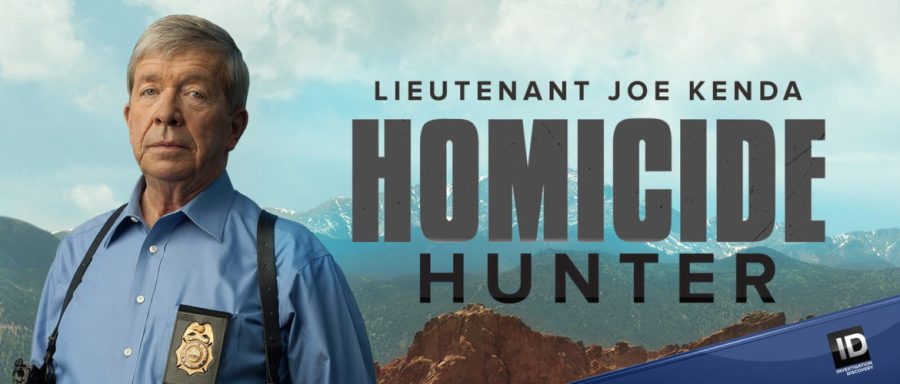
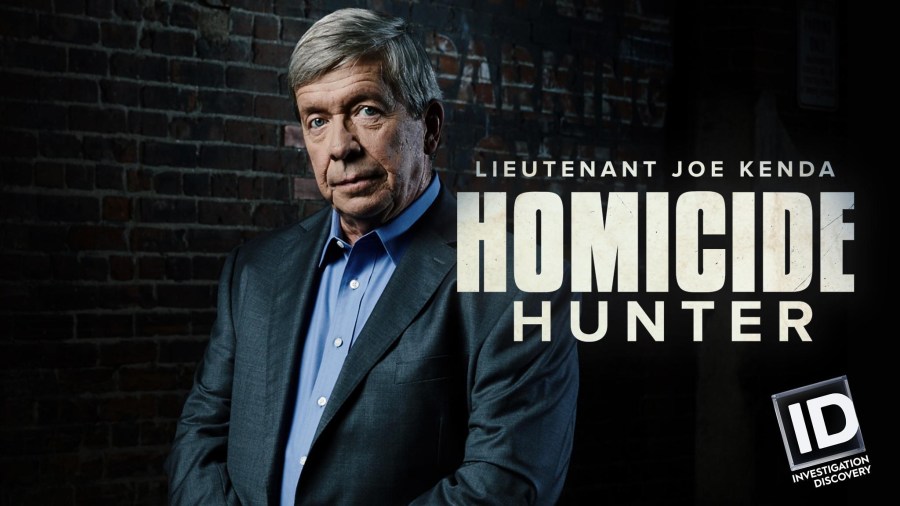
When the severed head of a wife and mother is found, Lt. Joe Kenda uses forensics and interrogation to find both her body and her killer. Then… a young man’s murder looks like a robbery gone wrong until Kenda learns the odd reason he’s living there. -The Line Goes Dead, Homicide Hunter (S6,E13)
On October 16, 1993, a mother was home with her son cooking supper. She went outside to call her dog Shadow to return home. When the dog returned, he had something large in his mouth. Danielle and her son realized that the dog had a human skull in it’s mouth. Lt. Joe Kenda of the Colorado Spring Police Department was grocery shopping when he got the call. He left his grocery shopping cart as is and headed to the scene. When Kenda arrived on the scene, the medical examiner was observing the skull. The medical examiner observed another animal got to the skull before the dog did and the time of death was within the last couple of weeks. The skull appeared to be a female with no obvious signs of bullet wounds or trauma. But they didn’t have the rest of the body to determine the official cause of death. Lt. Joe Kenda decided to start with the missing persons reports first.
Kenda also wanted to find the rest of the remains. Unfortunately, it was dark outside so they decided to resume the search the next day in during the daylight hours. The police used cadaver dogs to find the rest of the body. Cadaver dogs are trained to notify their handler when they make a hit. Kenda knew this would be a daunting task because El Paso County is the size of Rhode Island. An hour into the search, the K9 officer got a hit. They found a few more human bones; some still had flesh attached and some had teeth marks on them. Kenda theorized maybe she was a hiker out for a walk one day and got attacked by a bear. Now Joe Kenda needed to identify the dead female. They used dental records to determine if the dead woman’s teeth matched any dental records on file. On the third missing woman’s dental records, they finally found a match. Diane Pelkey, 36, was reported missing one week prior by her husband Michael Pelkey.
Michael Pelkey paid for a full page ad in the newspaper looking for Diane Pelkey. Police learned Michael was a 16 year veteran in the US Army and lived off post in Colorado Springs with his wife. Kenda now had the unfortunate task of informing Michael Pelkey of his wife’s death. He told him positive identification was made through dental records. Michael Pelkey was overcome with grief. They had been together for over 15 years. They had a son and she was four months pregnant. Michael claims the last time he saw Diane they were out at dinner and then got in an argument. He said she walked away from him and he had not seen her since. Kenda deduced she would have had to walk ten miles to get home. Kenda decided she was not killed by a bear, she was killed by a human. They didn’t know if maybe someone picked her up hitchhiking and killed her. Michael Pelkey claimed he didn’t look for his wife because he had to go home and take care of their five year old son.
As Kenda was reviewing the missing persons report for Diane Pelkey, he noticed one of the officers put JDLR (Just Doesn’t Look Right) on the bottom of the report. This is usually done when an officer feels something isn’t right or the person making the report was suspicious. Kenda spoke with the officer who took the report. They both decided the missing persons report was suspicious because Michael didn’t say anything about their child, Diane’s pregnancy, or that they got in an argument that same night. Kenda explained that usually if someone thinks something happen to a loved one, they won’t leave him alone. Kenda ran Michael Pelkey’s name through the data base and found there was a history of domestic violence, restraining orders in the past, and the couple had filed for a divorce. Kenda believed Michael Pelkey may have killed his wife but he wasn’t sure he had the authority to pursue the case.
Diane Pelkey’s remains were found in El Paso County, Colorado so the case may be out of Kenda’s jurisdiction. He pressed the sheriff’s office to put the squeeze on Michael Pelkey. They brought him into the sheriff’s department and started questioning him. They presented all the evidence they had to Pelkey and he became overwhelmed. Michael broke during the interrogation and admitted to killing his wife on October 8, 1993. He claimed they were in the car and he wanted to do some fishing. They started arguing; he accused her of being unfaithful, she accused him of being unfaithful. He said she wanted out of the vehicle to get some space from him and that didn’t sit well with him. Michael claims he snapped and started strangling Diane. Michael tried to claim that it was an accident. Kenda thought this was not an accident because it takes two to three minutes to strangle someone to death.
Michael Pelkey then told detectives he panicked after strangling Diane and decided to drive to a rural area in the Rocky Mountain foothills to dispose of her body. He put a seatbelt on her and drove as if she was simply a passenger in his car. He drove to a ravine near the highway and left her in an area where he didn’t think anyone would find her. Afterwards, he filed a missing persons report and took out an ad in the local paper to deflect suspicion from himself. Michael Pelkey probably thought he would get away with murdering her wife. But his plan unraveled and he was arrested for murder. The District Attorney allowed the Fort Carson Army leadership to court martial him despite the fact that the crime occurred in El Paso County. Michael Pelkey was convicted of second degree murder and sentenced to life. He is serving his sentence at Fort Leavenworth, a military penitentiary in Kansas.
You are held to a higher standard in the United States military. You will not behave in this way and if you do, you will be one sorry son of a bitch. Sgt. Pelkey found that out the hard way. -Lt. Joe Kenda
Editor’s note: With a cable subscription, you can download the free ID Go app and watch Investigation Discovery programming at your convenience. And for those who do not have cable, you can watch “unlocked” episodes on the ID Go app including the latest premieres. For those who prefer commercial free programming during your binge session, Prime Video has an ID channel: ‘True Crime Files by Investigation Discovery” available for $3.99 a month. It’s a compilation of older seasons but totally worth the cost if you are a true crime addict. Download the ID Go app or purchase ID True Crime Files & binge away.
All Hell Breaks Loose In Club Brawl Leaving A Young Solider Dead -Victim Zero, Homicide Hunter (Preview)
Lt. Joe Kenda of the Homicide Hunter series on Investigation Discovery discussed the murder of Fort Carson Army soldier Christopher Walton, 21, outside a night club in Colorado Springs, Colorado on November 21, 1991. What started out as a good night out on the town turned deadly after two rival units started a brawl at a local bar in Colorado Springs. The fight spilled outside of the bar and that’s when Christopher Walton was shot with a gun in the neck. Christopher Walton was getting ready to get out of the Army and move back to North Carolina. He was a described by his friends as a really good guy who took care of people.
As Kenda investigates the case, which is in his jurisdiction, he learns that a few months earlier a couple of soldiers got in a fight over a girl and that’s when everyone chose sides and the rival began. The rival was between the artillery unit and the maintenance unit at Fort Carson. An informant told Kenda that she thought Chris Smith may have committed the murder. Kenda pays Chris Smith a visit and in deed finds a gun similar to the gun they were looking for in his possession. It was later determined by ballistics that this gun matched the bullet recovered from Christopher Walton’s body.
Chris Smith was arrested for the murder of Christopher Walton. He never admitted to the murder and told Kenda that he had given the gun to someone else that night but would not give up the name. While Smith was in custody, the Army’s Criminal Investigation Division (CID) called Lt Joe Kenda to tell them they had a witness to the event and they thought he might have the wrong guy. The witness, Eric Walker, identified Leroy Davis as the actual shooter. Leroy was a member of the artillery unit at Fort Carson which was the rival unit to Christopher Walton’s maintenance unit.
As it turns out, Chris Smith was telling the truth. He did give the gun to someone that night outside the bar after shooting it in the air because he didn’t want it on his person. Eric Walker told Kenda that Chris Smith gave the gun to Leroy Davis who eventually returned the gun back to Smith. Chris Smith refused to implicate his Army brother, even after he was arrested and jailed. According to Walker, Christopher Walton pushed one of the artillery unit members and Leroy Davis acted on emotional impulse, pulled the gun out of his jacket, and shot Walton in the neck causing his fatal injuries.
For some unknown reason, Leroy Davis faced a court martial as opposed to a being tried by the civilian courts in Colorado Springs. Lt Joe Kenda described military discipline as a whole different game, sharing that they are “draconian and ruthless.” The military has its own internal justice system and has been at the center of a controversial debate in Congress for the past few years over the way it handles violent crimes. In this case, Davis was sentenced to twenty years at Fort Leavenworth where he will be expected to do hard, physical labor the entire time. We learned from one of the soldiers present at the scene that fifteen military members from Fort Carson got discharged as a result of their involvement in this incident.
Investigation Discovery:
A massive brawl erupts at a local bar ends with the shooting death of a young army soldier. To unravel the murder, Lt. Joe Kenda must infiltrate a revered military institution, and expose a dangerous vendetta. -Victim Zero, Homicide Hunter (S5,E9)
Editor’s note: With a cable subscription, you can download the free ID Go app and watch Investigation Discovery programming at your convenience. And for those who do not have cable, you can watch “unlocked” episodes on the ID Go app including the latest premieres. For those who prefer commercial free programming during your binge session, Prime Video has an ID channel: ‘True Crime Files by Investigation Discovery” available for $3.99 a month. It’s a compilation of older seasons but totally worth the cost if you are a true crime addict. Download the ID Go app or purchase ID True Crime Files & binge away.
“Capt. Howard Levy, 30, a dermatologist from Brooklyn, is convicted by a general court-martial in Fort Jackson, South Carolina, of willfully disobeying orders and making disloyal statements about U.S. policy in Vietnam. Levy had refused to provide elementary instruction in skin disease to Green Beret medics on the grounds that the Green Berets would use medicine as ‘another tool of political persuasion’ in Vietnam.” Read more from This Day in Historyhere.









 MILITARY JUSTICE FOR ALL