“In 2007, Kamisha Block was one of a nearly 900 soldiers killed in Iraq. But Kamisha was not killed in combat. Her family was told Kamisha’s death was an accident; she was a casualty of friendly fire. But Kamisha’s death was much darker than that and has forced us to ask: could it have been prevented?” –Kamisha Block, Crimelines True Crime Podcast (October 20, 2019)
The House debates the Joshua Omvig Veterans Suicide Prevention Act, which directs the VA to develop and implement a comprehensive program to reduce the incidence of suicide among veterans. The bill is named for an Iraq veteran who took his own life, and recognizes the special needs of veterans suffering from PTSD and elderly veterans who are at high risk for depression and experience high rates of suicide. -Rep Leonard Boswell (October 23, 2007)
The Number One Problem Combat Vets Will Face is Mental Health (2007):
Paul Sullivan of Veterans for Common Sense tells Armen Keteyian that the No. 1 problem facing vets of Afghanistan and Iraq will be mental health. -CBS News (November 13, 2007)
Veterans Who Get Help at VA Are Still at Risk of Suicide (2008):
CBS News first reported on the staggering number of veteran suicides in a report last year. Now, newly-released data shows that vets who get help from the VA are still at risk. -CBS (March 20, 2008)
Seven Vets Under VA’s Care Died by Suicide in Washington (2008):
They served their country honorably but after risking their life in combat abroad, coping with coming home was too much. In the last three months seven servicemen being treated by Spokane’s VA Hospital have committed suicide. -4 News Now (April 29, 2008)
Senator Patty Murray Alleges VA Cover-up of Veteran Suicide (2008):
Despite recent efforts by the Veterans Administration to prevent veteran suicide, seven have committed suicide in the Inland Northwest in the last four months and US Senator Patty Murray is calling the situation unacceptable. -4 News Now (May 1, 2008)
Katie Couric investigates an alarming trend in the U.S. military, as more and more female soldiers have come forward with tales of sexual abuse at the hands of male soldiers and superior officers. -CBS (March 17, 2009)
1LT Katie Blanchard, Fort Leavenworth, U.S. Army (2016)
On Tuesday, the man responsible for setting a U.S. Army lieutenant on fire last year was found guilty in federal court.The scars on Army Lt. Katie Blanchards face, neck, and hands are still visible. -41 Action News (August 8, 2017)
Spc. Kamisha Block, Fort Hood, Iraq, U.S. Army (2007)
The family learned Kamisha Block was shot and killed while serving in Iraq. The Department of Defense told the Block family Kamisha was shot in the chest by friendly fire. -12 News Now (February 12, 2019)
AEAN Brandon Caserta, Naval Station Norfolk, U.S. Navy (2018)
As Teri Caserta entered her son’s bedroom in their Peoria home, she broke down. It’s an emotion that Teri and her husband Patrick Caserta will always carry with them. Their son Brandon was in the United States Navy from 2015 to 2018. However, at just 21, Brandon would take his own life. -ABC15 Arizona (June 14, 2019)
Major Christian Martin, Fort Campbell, U.S. Army Veteran (2019)
Attorney General Andy Beshear on American Airlines pilot arrested in Louisville for 2015 triple murder in Christian County. -WLKY News Louisville (May 11, 2019)
From my heart to yours. One of the most difficult situations I have ever faced in my life. Please share this video with everyone and anyone you can. -Devin Schuette (February 16, 2015)
LCpl Riley Schultz, Camp Pendleton, U.S. Marine Corps (2019)
The Marine from Colorado found dead at a Southern California base earlier this month died by suicide, according to 1st Lt. Cameron Edinburgh, a Marine Corps spokesperson. -FOX31 Denver (March 27, 2019)
Col. Michael Stahlman, Twentynine Palms, Iraq, U.S. Marine Corps (2008)
A Marine colonel is found shot in his bunk. Authorities say it was a suicide, his wife says it was murder — and she is determined to prove it. -48 Hours (March 28, 2019)
ID Go: A Filipino woman falls for a married US Navy Officer who will do anything to keep his mistress and his money. -An Officer, Not a Gentleman, Forbidden: Dying for Love (S1,E4)
ID Go: When high school senior Michelle Miller joins the Future Soldiers program, she sees it as the first step to realizing her dream of enlisting in the Army. But a forbidden affair with her recruiter risks her career in the Army, and her future itself. -The Sergeant and the Schoolgirl, Forbidden: Dying for Love (S2,E1)
ID Go: A young mom falls for a married military man after a chance meeting at his naval base. -The Girl with the Gold Earring, Forbidden: Dying for Love (S2,E8)
ID Go: A young Army recruit enlists with dreams of serving her country. What she doesn’t expect is to find love with a commanding officer in her platoon. The two battle to keep their forbidden affair secret but can they defeat the enemy within? -Love is a Battlefield, Forbidden: Dying for Love (S3, E1)
ID Go: While her husband serves in the army, a lonely married mother of three finds comfort in the arms of her church’s charismatic new minister. But danger looms in the form of a jealous love-rival that will stop at nothing to scare her away. -Onward, Christian Soldier, Forbidden: Dying for Love (S4,E4)
ID Go: A decorated marine faces war at home when he falls for a married woman. Suspicion and jealousy plague their affair as they battle to keep their secret from their spouses but with the stakes so high it’s a truth they’ll stop at nothing to hide. -Love is War, Forbidden: Dying for Love (S4,E8)
Editor’s note: With a cable subscription, you can download the free ID Go app and watch Investigation Discovery programming at your convenience. And for those who do not have cable, you can watch “unlocked” episodes on the ID Go app including the latest premieres. For those who prefer commercial free programming during your binge session, Prime Video has an ID channel: ‘True Crime Files by Investigation Discovery” available for $3.99 a month. It’s a compilation of older seasons but totally worth the cost if you are a true crime addict. Download the ID Go app or purchase ID True Crime Files & binge away.
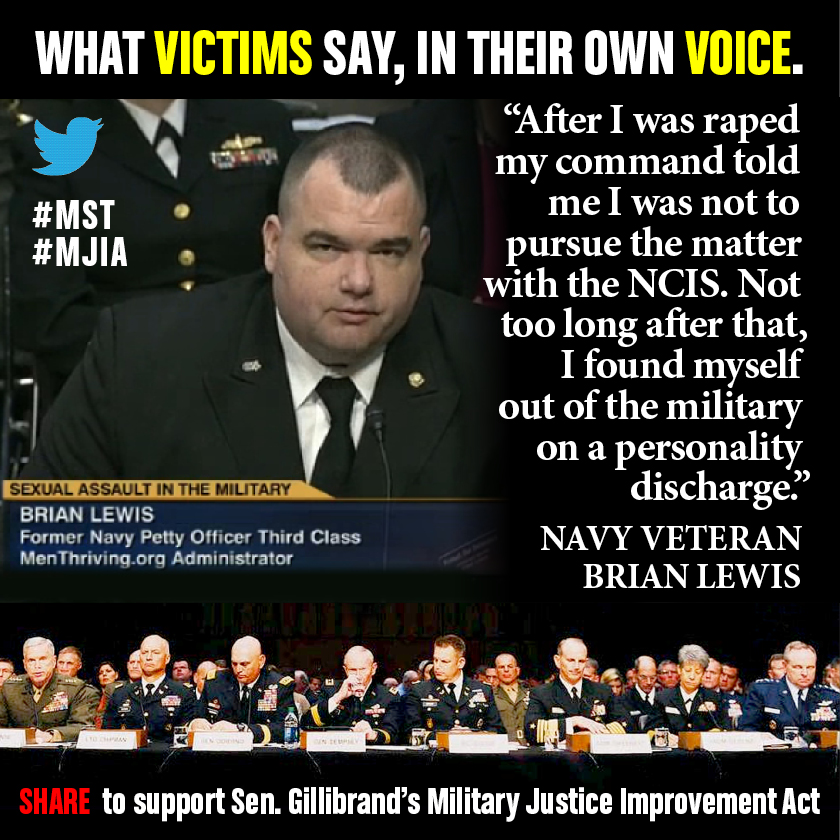
You can listen to U.S. Navy veteran Brian Lewis’ March 13, 2013 testimony to the Senate Armed Services Subcommittee on Personnel here.
“Nearly 30 years ago, when George H. W. Bush was president and Dick Cheney was the secretary of defense, the Pentagon made a promise to our service members. Dozens of Navy and Marine Corps aviation officers had just been investigated for the infamous Tailhook sexual assault scandal, and America’s military leadership affirmed a “zero tolerance” policy toward sexual assault within their ranks. The military had a sexual assault problem, and pledged to solve it.
It’s painfully clear that the military has now failed at this mission by almost any metric. For years, survivor after survivor has told us the change in the system we needed to make to end this scourge — the same change that a number of our allies around the world have already made: take the adjudication of these crimes outside of the chain of command and allow trained military prosecutors to prosecute them.” Read more opinion at Military Timeshere.
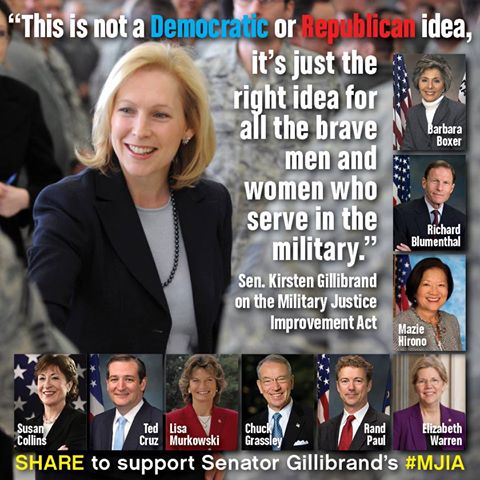
“The Military Justice Improvement Act would take the prosecution of sexual assault and other serious crimes, such as murder, out of the chain of command. It would keep those crimes in the military justice system, but put the decision to prosecute them into the hands of actual military prosecutors who are trained to deal with complex legal issues.” –Senator Kirsten Gillbrand (Military Times, July 1, 2019)
Gillibrand Leads Bipartisan Coalition to Reform Military Justice System -Senator Kirsten Gillibrand (May 16, 2013)
“U.S. Senator Kirsten Gillibrand (D-N.Y.) and I today led a bipartisan group of senators to reintroduce the Military Justice Improvement Act, which would professionalize how the military prosecutes serious crimes by moving the decision over whether to prosecute them to independent, trained, professional military prosecutors.” –Sen. Ted Cruz (R-TX)
Editor’s Note: The below U.S. Senate list was compiled from the S. 967: MJIA of 2013 Senate Voting Record. The last time the Senate voted on the MJIA was March 6, 2014. Senator Gillibrand has reintroduced the MJIA every year since. Since 2014, the make-up of the Senate has changed. The still seated Senators who voted Yea and Nay in 2014 are listed as Yes and No in this list. The new senators who cosponsored the MJIA in 2019 have been added to the Yes list; the new Senators who stand with military brass (McSally & Ernst) have been added to the No list; and the rest of new Senators have been listed as unknown (Unk) because we don’t know how they will vote on this bill. Please contact your two Senators, these Senators, and both the SASC Members & HASC Members. Click on the Senator’s name and submit your support for the MJIA via the web or click on the Yes, Unk, or No to send them a message via Twitter. We provided an example tweet you can feel free to copy and paste or you can submit your own personalized message.
“A bill that would remove the prosecution of military sexual assaults out of the chain of command faced defeat in the Senate on Thursday, falling just short of the 60-vote threshold needed to advance the legislation. The Military Justice Improvement Act fell five votes short, with the Senate voting 55 to 45 to invoke cloture on the bill Thursday.
The measure was the brainchild of Sen. Kirsten Gillibrand, D-N.Y., who spent months lobbying senators to sign onto her bill. The legislation had the support of many groups representing survivors of rape and sexual assault in the military, but it was vehemently opposed by military brass. Gillibrand even drew the support of two unlikely allies – Sens. Ted Cruz, R-Texas, and Rand Paul, R-Ky.” Read more from ABC Newshere.
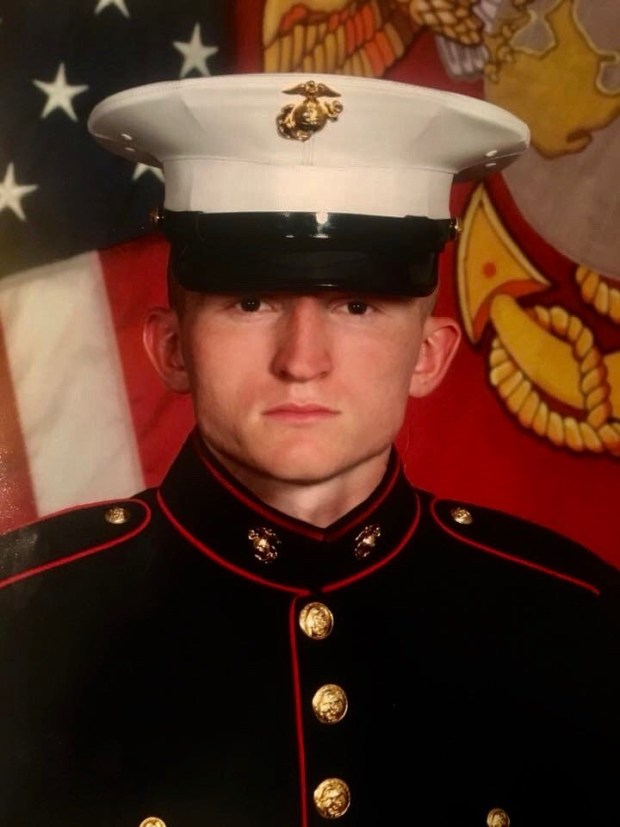
In the early morning hours of March 15, 2019, Marine Corps Lance Corporal Riley Schultz was found dead near a guard shack with a gunshot wound in his head. Nineteen-year-old Lance Corporal Schultz was on guard duty at Camp Pendleton in California when this tragic incident occurred. Riley was discovered by a Marine who was assigned to replace him at this entry control point. The Naval Criminal Investigative Services (NCIS) were assigned to investigate Riley’s suspicious death but their investigation appeared to conclude when the medical examiner ruled that Lance Corporal Riley Schultz died by suicide via a self-inflicted gunshot wound. Riley’s family isn’t going to simply accept the outcome of the investigation. His family knows him better than anyone and his brother said Riley was the happiest he had ever been. Riley’s mom told the press that becoming a Marine was his dream and he worked hard and prepared for his enlistment before joining the USMC at the age of 17. Riley’s mom said he loved being a Marine and things were going well in his personal life when he died. Although this investigation appears to be an open and closed case with the Marine Corps, Riley’s family disputes the cause of death and plans to continue to fight for justice for Riley.
In the News:
The Marine from Colorado found dead at a Southern California base earlier this month died by suicide, according to 1st Lt. Cameron Edinburgh, a Marine Corps spokesperson. Rob Low reports. -FOX31 Denver (March 27, 2019)
The Navy is investigating after a Marine from Colorado was shot to death while on guard duty at Southern California’s Camp Pendleton. -CBS Denver (March 27, 2019)
Lance Cpl. Riley Schultz was discovered dead around 4 a.m. March 15 with a gunshot wound to the head. -Denver7 – The Denver Channel (March 27, 2019)
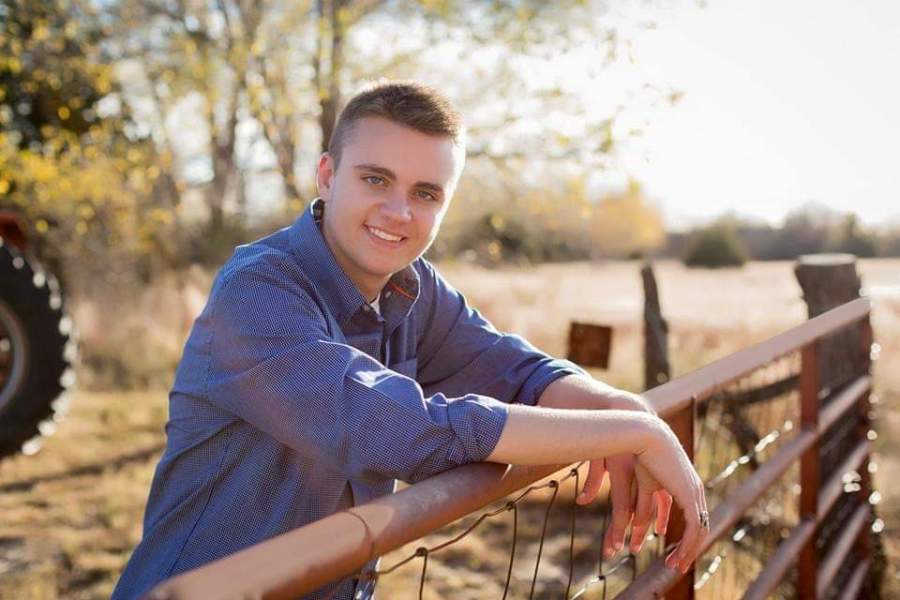
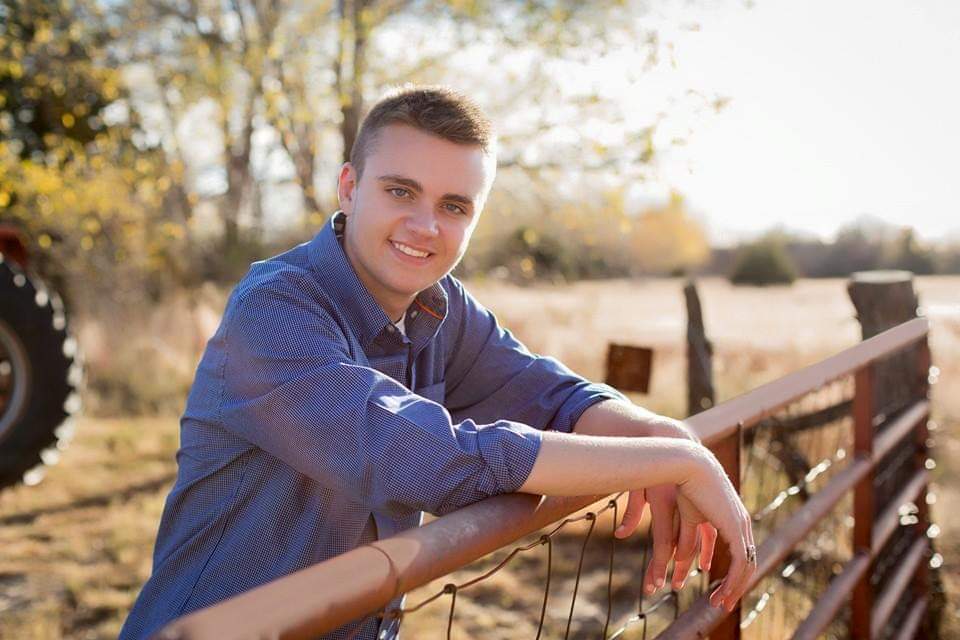
Kansas Army National Guard veteran Zachary Schaffer, 21, was found unresponsive in his Kansas City, Kansas home on January 23, 2019. According to theDodge City Daily Globe, Zachary fatally overdosed only a few days after he was punished and discharged from the Kansas Army National Guard. According to his mother, Wendy Mottas, Zachary, or Zach, as he was known to most, was accused of failing to show up for multiple weekend drills and discharged with an “other than honorable.” In the midst of losing his military career and eventually his security clearance, Zach was flagged by his command for the prescribed use of Adderall to treat ADHD, even after he was reassured it was okay for him to take the prescription. Wendy doesn’t know if her son’s death was intentional, but stated Zach began suffering with depression and substance abuse during his time in service with the Kansas Army National Guard. Zach went from being a stellar soldier at the age of 19 to being hired as a full time military technician to losing that same position less than one year later for reasons undisclosed. Six months after being fired by the Kansas Army National Guard, he was also passed over for deployment to Afghanistan, having been told he was ‘red flagged’ for the use of Adderall. Six months later, Zach would also experience sadness and grief after losing his friend, 24 year-old Kansas Army National GuardsmanKhamis Naser, who died by suicide on July 31, 2018.
Zach grew up in the Hutchinson, Kansas area and joined the Kansas Army National Guard in May 2014. Zach’s mother, also an Army veteran, said he was born in Germany when she was in the military. Zach came from a military family and it was a natural fit for him too. Wendy shared Zach was always intelligent and she knew he would be successful because he was very skilled in anything related to computers and coding. After Zach completed Army basic training and specialty training, he progressed quickly as a soldier and eventually got a full-time job with the Kansas Army National Guard at age 19. Zach was a federal military technician (Personnel Security Technician: GS-7) during the week and on Guard weekends, he was an Intelligence Analyst (E-4). Zach’s downward spiral began when he lost his full-time job as a federal technician and was made to feel incompetent by those who also originally built him up to be a great soldier with a bright future in the military. Zach’s mother does not know why Zach was fired during the probationary period, but she does suspect that Zach had information about other National Guard members whose misconduct were overlooked during routine background checks so they could maintain their security clearances.
Once Zach lost his full-time position, he went from being a professional soldier to not caring about anything anymore. He moved from his home in Topeka, Kansas to Lawrence, Kansas and became somewhat estranged from the family. Zach became secretive, fell in with the wrong crowd, stopped going to therapy and became reliant on self-medicating to take care of the pain of depression he was feeling. Realizing this lifestyle was not healthy, Zach moved back home to Junction City and tried to get his life together in early January 2018. After about three months of living at home, he discovered the Kansas Army National Guard unit in Junction City, Kansas was tasked with a deployment to Afghanistan, to which he inquired and expressed interest to the unit’s leadership. The leadership put him through mobilization procedures for nearly a month and then his deployment orders to Afghanistan were cancelled citing he had been flagged during the pre-deployment process for Adderall use. Zach was prescribed Adderall for the diagnosis ADHD and his mother states he was prescribed the drug due to a struggle with concentration and focus. Once Zach was flagged, someone made the decision to prevent him from deploying to Afghanistan and his mother does not know if his National Guard unit influenced the decision at that time or not.
Zach was looking forward to the deployment. Instead his orders to Afghanistan were cancelled and it was then Zach started meeting regularly with mental health personnel for depression. It is unknown what Zach may have shared with health care professionals, but his family realized something changed in Zach’s life. Shortly after, Zach moved from Junction City to Kansas City with a friend with which his family was not familiar. He remained distant from his family and friends. Worse yet, the same military officer (O-4) who made the decision to fire Zachary from his full-time military technician position also influenced National Guard unit leadership to end Zach’s military career in its entirety. Leadership observed the changes in Zach’s attendance and behavior. Instead of helping him, they used it to revoke his security clearance knowing he needed a security clearance for his job as an intelligence specialist in the National Guard and his full-time job with the Marine Corps. During this time, the only thing done to assist Zach or try to get to the root of the issues he was having was to refer him to the unit’s social work office. At some point, this social worker was told to ‘stand down’ and allow the unit’s part-time civilian social worker to take care of his issues. To his mother’s knowledge, this individual never contacted Zach to offer support and he was never offered any type of assistance including participation in the Army Substance Abuse Program.
In early July 2018, Zach contacted his mom and stated he wanted to go to an inpatient rehabilitation program. He self-admitted to the substance abuse program to help him stop his drug dependency and get his life back on track. The day after Zach left the rehabilitation program and returned to Kansas City, he learned his best friend and fellow National Guardsman, Khamis Naser, had died by suicide. Zach told his mother he had talked to Khamis only five hours before he was found dead in his apartment. Zach attended the August 2018 drill weekend and his mother said he told her he was met with disdain from his leadership. Zach’s mother states she has text messages from her son indicating the NCOs in his unit were bullying him. Zach told her they said his best friend would still be alive if he ‘wouldn’t have been high’ and ‘would’ve been there for him’ (Khamis). After Zach was blamed for the death of his friend, he got in a physical confrontation with one of his NCOs. During another drill weekend, word got around the unit that leadership wanted to ‘get rid of that “shitbag”’ (referring to Zach) because he made the unit ‘look bad.’ Despite the ill treatment by the Kansas Army National Guard, Zach picked himself up and got a new job as a civilian contractor for the Marine Corps in Kansas City at age 21. Unfortunately, a short time after he got the job, he was terminated when he learned the National Guard had suspended his security clearance. At this point, Zach had no income, including from his drill weekends, due to a status discrepancy. Zach was still considered in ‘active duty’ status because of the deployment orders to Afghanistan and no one in his military leadership would assist him to get transferred back to his original unit. His mother states he discussed this with someone at his unit who agreed with him — why bother going to weekend drill if he was getting bullied and not receiving any pay? He stopped attending drill after September of 2018 and once again became estranged from his family. He would never return to the National Guard.
According to the Kansas Adjutant General’s Department, the Kansas Army National Guardsuicide prevention programis “based on the premise that suicide prevention will be accomplished through the positive action of unit leaders and implementation of command policy. The key to the prevention of suicide is positive leadership and honest concern by supervisors for military personnel who are at risk of suicide and appropriate intervention for all such personnel.” Khamis Naser died by suicide in July 2018 and six months later in January 2019, Zach Schaffer died of a fatal drug overdose. How did the Kansas Army National Guard’s suicide prevention program help Khamis and Zach? Although we don’t know why Khamis Naser chose to die by suicide, we do know he was a current member of the Kansas Army National Guard. One would think losing a fellow comrade would initiate a more proactive suicide prevention approach yet instead we learn the very people tasked with a “positive and honest concern by supervisors” for military personnel at risk of suicide and appropriate intervention was not implemented in the last couple of years. Zach was a soldier dealing with the loss of his full-time job, grief from the loss of his friend, the loss of his military career, and the loss of his security clearance. Military leadership knew Zach was not well and they knew he was a risk to himself.
Thetop 10 most stressfullife events include death of a loved one, separation, starting a new job, workplace stressors, financial problems, and chronic illness/injury. Zach’s mom shares he was dealing with six out of ten of those stressful life events at the age of 21. Wendy wonders why the military wouldn’t be especially cognizant of the fact they are molding young kids into warriors at a very impressionable time in life. At a time when young adults need guidance most, instead in the military environment, they are forced to deal with additional stressors, caused by military leadership in Zach’s case. Why would the same organization at the root of the cause of the downward spiral of young lives be interested in also pretending to care about suicide prevention of those same personnel? The moment Zach was let go from his full-time job was the moment he started to struggle. Why did he get let go? Why did it contribute to a need to use drugs to self-medicate? And one can only imagine the kind of grief Zach experienced after losing a close friend in such a tragic way. Did anyone refer Khamis or Zachary to mental health programs or theDepartment of Veterans Affairs?
It appears Zach’s source of pain or original stressor began when he lost his full-time federal military technician position as a Personnel Security Technician. After Zach lost Khamis, another high-paying job and his military career, his downward spiraled accelerated. Zach was dead less than six months after his friend passed. How can the National Guard implement a suicide prevention program when they are the suspected cause of the unit members’ downward spiral? Why did the National Guard choose to characterize ADHD treatment as a ‘mental health risk’? The prescription was used to assist with concentration and focus. Why would Adderall negatively impact a deployment when it is a fact the active duty deploy personnel on all kinds of prescribed medications? Why not help Zach transfer from Active Duty status back to his National Guard unit so he would be paid for drill weekends? How did Zach go from successfully holding great positions of responsibility within the unit to losing his entire military career? Why did they give Zach an ‘other than honorable’ discharge knowing it will negatively impact the rest of one’s working life, never mind the impact losing a security clearance has on anyone’s future financial security. Why did Zach have to lose everything? How does that help his mental health?
Wendy Mottas told theDodge City Daily Globethat there is a stigma to be tough in the military. And this was confirmed the day the National Guard decided Zach was a “mental health risk” because he had a prescription for ADHD he wasn’t even currently taking. Each Commander has the ultimate say on whether or not an individual can still perform despite taking medication. The prescription was for concentration and focus and not something that had to be a military career ender. Wendy said her son could have used extra support following Khamis’s death and that she would like to see mental health be taken more seriously by the Kansas Army National Guard. While she realizes there were many factor’s influencing Zach’s death, she doesn’t understand why the National Guard wouldn’t offer to help him like so many soldiers with substance abuse are assisted. In Zachary’s case it appears leadership actively contributed to the decline of Zach’s mental health. Who at the Kansas Army National Guard would offer help to Zach after the chain of command (supervisors and leadership) decides a soldier is a “shitbag”? How does the Kansas Army National Guard implement a command driven suicide prevention program when they are the same leadership contributing to a downward spiral? How can the same people tasked with punishing their personnel with a heavy hand simultaneously help prevent a suicide or untimely death of young soldiers? At the very least, in this situation, the National Guard needs to upgrade this soldier’s other than honorable discharge to honorable to make this right for Zach and his family. It’s one thing to let someone go, it’s an entirely different thing when a person’s life and future is destroyed.
“The military still has to take some responsibility for this, I think, and I think more could have been done to be preventative and be proactive instead of reactive. They have a responsibility to these young men and women. It’s not to live their lives for them or to be mommy or daddy or anything like that, but the soldiers still have to live by the army creed, and in order to do that, they have a role in that.” -Wendy Mottas (quote in Dodge City Daily Globe)







 MILITARY JUSTICE FOR ALL