


“Soto faced as much as life without parole for the rape, one of six charges and eight specifications of misconduct.” -My SA
SSgt Eddy Soto was a basic military training instructor at Lackland Air Force Base in Texas. Soto was one of the 35 instructors courts martialed in what is referred to as the Lackland Sex Scandal. SSgt Soto was accused of unprofessional relationships, adultery, and the rape of one airman whom it appeared he had a relationship with. Investigators learned of the relationship Soto had with the airman who accused him of rape as part of a widespread probe into MTI misconduct. Soto faced life without parole but prosecutors asked for 12-15 years. Soto pleaded guilty to five charges and admitted that he had unprofessional relationships with a trainee and a civilian who had come to the base to see her husband graduate from basic training. He also admitted to adultery charges but he denied the rape accusation. He was convicted and sentenced to four years in prison in March 2013. After his confinement ended, he would be dishonorably discharged from the Air Force. Soto was the second instructor convicted of rape in the scandal. SSgt Luis Walker was the first conviction and he received 20 years for the rape of one airman and sexual assault of several others.
In an exceptional ruling by the Air Force Criminal Court of Appeals, Soto’s conviction for rape was overturned in Sept 2014. The military appeals court ruled the evidence was “factually insufficient” to support the conviction. In other words, there wasn’t enough evidence to find him guilty in the first place. The appeals court upheld the lesser charges of unprofessional relationships, adultery, and false official statement. The judge ruled the four year sentence and dishonorable discharge should be set aside and the case was referred back to the convening authority who had the authority to hold a new sentencing hearing. Soto remained jailed at the Naval Consolidated Brig Miramar in California while the government decided whether to ask the appeals court to reconsider their ruling. SSgt Eddy Soto served over a year and a half for a rape conviction that lacked evidence beyond a reasonable doubt. Media reports stated Soto would be re-sentenced by a lower court for unprofessional relationships, adultery, and false official statement. Further on-line research did not find evidence of the final disposition of SSgt Soto’s case. We do not know if he was re-sentenced, released from prison and when, or if he was discharged from the military.
The findings of guilty for Charge III, Specification 1 are set aside and dismissed. The remaining findings of guilty are affirmed. The sentence is set aside. The record of trial is returned to The Judge Advocate General for remand to an appropriate convening authority who may order a rehearing to determine an appropriate sentence for the affirmed findings of guilty. If the convening authority determines that a rehearing on the sentence is impracticable, the convening authority may approve a sentence of “no punishment” or dismiss the remaining charges and specifications. –USAF Court of Criminal Appeals
Related Links:
General admits failure in Lackland sex scandal; 32 alleged culprits
Cross-Cultural Expert Brought In For Lackland Court-Martial
Lackland trainer handed 4 years in rape
Lackland sergeant found guilty in rape case
Air Force instructor gets 4 years for raping trainee
Air Force trainer convicted of raping ex-trainee
Air Force trainer found guilty of raping cadet in Lackland base abuse scandal
US v. SSgt EDDY C. SOTO, US Air Force, ACM 38422, 16 September 2014
Court throws out Lackland trainer’s rape conviction (San Antonio Express)
Court throws out Lackland trainer’s rape conviction (Stars & Stripes)
Air Force appeals court tosses MTI rape conviction
Military overturns Lackland Air Force Base rape conviction
SSgt Eddy Soto Court-Martial Conviction for Rape Set Aside by Air Force Appellate Court
The Lackland Air Force Base Sex Scandal, Texas (2011)
A Complete List of the 35 Basic Military Training Instructors Court Martialed in the Lackland Air Force Base Sex Scandal

UPI: Sexual assault in U.S. military reflects culture of bullying (2014)
ALEXANDRIA, Va., March 19 (UPI) — The acceptance of bullying in U.S. culture contributes to sexual assault in the armed forces, experts say.
Mary Ellen O’Toole, editor-in-chief of Violence and Gender and retired FBI profiler and criminal investigator analyst led a roundtable discussion with Christopher Kilmartin of the U.S. Air Force Academy and Col. Jeffery Peterson of Center for Naval Analyses in Alexandria, Va., discussed specific factors that likely contribute to the sexual assault problem.
“The evidence is that the population of people who come into the U.S. military have more experience with sexual assault than the general population, both as offenders and as survivors. Survivors are at statistically increased risk of being revictimized, and offenders are at an increased risk for reoffending,” Kilmartin said at the roundtable.
Read more here.
The Real News: Senate Unanimously Passes Sexual Assault Bill, But What Will it Change? (2014)
Jennifer Norris: Senate bill will still keep military sexual abuse cases within the chain of command of the military, leaving victims vulnerable to retaliation

New Hampshire Air National Guardsman MSgt. David Poirier Died of Non-Combat Related Incident in Southwest Asia; Death Ruled Heart Attack (2014)

Air National Guard Master Sgt. David Poirier, 52, died from a non-combat related incident on February 28, 2014. There was no location noted in the DoD press release but MSgt. Poirier was assigned to the Al Udeid Air Base in Qatar at the time of his passing. According to Sea Coast Online, MSgt. Poirier was deployed to Southwest Asia when his death occurred but the Air National Guard was not able to release the country due to host nation sensitivities. MSgt. Poirier was a post master from North Smithfield, Rhode Island. MSgt. Poirier was supporting Operation Enduring Freedom on behalf of the 157th Operations Support Squadron at Pease Air National Guard Base in New Hampshire. On March 5, 2014, news reports indicated that MSgt. Poirier died of a heart attack while serving overseas.
Related Links:
DOD Identifies Air Force Casualty
Honor the Fallen: Air Force Master Sgt. David L. Poirier
Air Guardsman dies overseas serving with Pease squadron
Airman assigned to Pease dies in non-combat-related incident
Pease airman from R.I dies in non-combat incident
Atkinson postmaster dies while serving overseas
North Smithfield man serving in Air Force dies in non-combat related incident
Calling Hours Sunday for Pease Airman Who Died Overseas
Poirier remembered as consummate guardsman
Death Of Air National Guardsman Under Investigation
Congressional Record: Remembering MSgt. David Poirier
Heart attack claimed life of Atkinson, NH postmaster serving in Qatar
Run for the Fallen: Air National Guard Master Sergeant David L Poirier
I Salute You; Air Force Master Sergeant David L. Poirier
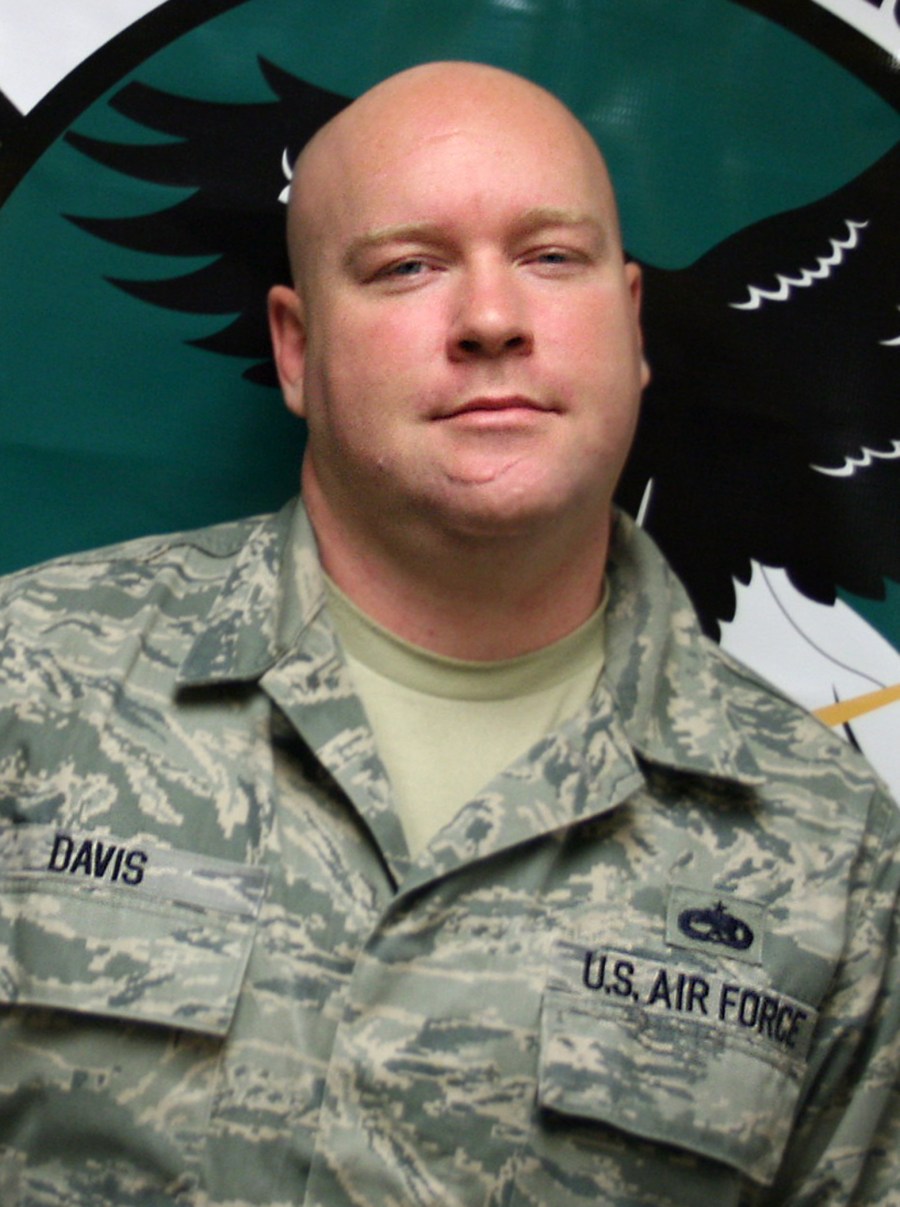
Air Force SSgt. Samuel Davis Died at Off-Base Home in Alaska; Parents Report Complications After Back Surgery (2014)
Air Force SSgt. Samuel Davis, 33, died at his off base home in Alaska on February 23, 2014. According to his family, he died from complications after a back surgery. SSgt. Davis was assigned to Joint Base Elmendorf-Richardson (JBER) in 2011 where he worked as an aerospace maintenance craftsman with the 703rd Aircraft Maintenance Squadron. Media reports indicate that SSgt. Davis was the fourth serviceman from JBER found dead this month: Army Sgt. Okan Cetinbag, February 11; SrA Katrina Jackson on February 15; and SSgt. Darian Miller on February 18.
Related Links:
JBER airman found dead
Air Force sergeant dies at Alaska off-base home (Military Times)
Airman to be buried in Spencer
Funeral Set for Former Roane Resident SSgt. Sam Davis
Air Force investigates JBER death
Investigators probe death of JBER sergeant at off-base residence
Soldier’s death marks fourth JBER fatality in a month
JBER airman’s passing marks fourth death in February
Soldiers/Veterans Dead of Probable Sudden Cardiac Death (PROB SCD)
Violent Crime, Suicide, and Non Combat Death at Joint Base Elmendorf-Richardson, Alaska (Army & Air Force)

Air Force SSgt. Darian Miller Found Dead at Joint Base Elmendorf-Richardson in Alaska; Cause of Death Unknown (2014)

SSgt. Darian Miller, 38, of Marion, South Carolina was pronounced dead at Joint Base Elmendorf-Richardson (JBER) in Alaska on February 18, 2014. SSgt. Miller joined the Air Force in 1994 and was assigned to JBER in 2011 where he worked in operations management for the 3rd Air Support Operations Squadron. The Air Force Office of Special Investigations (AFOSI) was assigned to investigate the circumstances surrounding his death. The final determination of cause of death was not indicated in media reports. SSgt. Miller was one of four servicemen from JBER found dead this month: Army Sgt. Okan Cetinbag on February 11; SrA Katrina Jackson on February 15; and SSgt. Samuel Davis on February 23.
Related Links:
Airman dies at Alaska base
SC airman dies at Alaska base
Airman from Marion dies at Alaska base
Soldier’s death marks fourth JBER fatality in a month
JBER airman’s passing marks fourth death in February
Violent Crime, Suicide, and Non Combat Death at Joint Base Elmendorf-Richardson, Alaska (Army & Air Force)

Air Force SrA Katrina Jackson Died of Apparent Self-Inflicted Gunshot Wound at Joint-Base Elmendorf-Richardson (2014)

Air Force SrA Katrina Jackson, 22, of Universal City, Texas died from injuries sustained from an apparent self-inflicted gunshot wound in Alaska on February 15, 2014. SrA Jackson joined the Air Force in 2010 and was stationed at Joint Base Elmendorf-Richardson (JBER) in 2011 where she was assigned as a patrolman with the 673rd Security Forces Squadron. Media reports indicate that the circumstances surrounding her death were investigated by the Air Force Office of Special Investigations (OSI). SrA Jackson was one of four servicemen from JBER found dead this month: Army Sgt. Okan Cetinbag on February 11; and SSgt. Darian Miller on February 18; and SSgt. Samuel Davis on February 23.
Related Links:
Senior Airman Katrina Jackson
Airman dies on JBER
Soldier’s death marks fourth JBER fatality in a month
JBER airman’s passing marks fourth death in February
Violent Crime, Suicide, and Non Combat Death at Joint Base Elmendorf-Richardson, Alaska (Army & Air Force)

Navy PO 2nd Class Dmitry Chepusov Found Strangled to Death in Germany; Air Force SSgt Sean Oliver Found Guilty, Sentenced to Life (2013)


SSgt Sean Oliver, US Air Force, was found guilty of strangling Navy Petty Officer Dmitry Chepusov after a night of drinking on December 14th , 2013 in Kaiserslautern, Germany. The two were colleagues at the American Forces Network (AFN) at Ramstein Air Force Base. SSgt Oliver was charged with pre-meditated murder. The military prosecutors were considering the death penalty but the German authorities withheld evidence in an effort to get the death penalty off the table in this case. SSgt Oliver was found guilty of the murder of Dmitry Chepusov by the military courts and sentenced to life with parole. Military prosecutors believed the motive for the murder was to silence Dmitry Chepusov who found out about an affair that SSgt Oliver was having with his wife.
Related Links:
Air Force staff sgt. stands trial Monday on murder charge
More charges in sailor’s death in Germany
Germans withholding evidence in AFN murder case pending death penalty decision
For Germans, death penalty is concern in U.S. airman’s murder trial
Article 32 begins Friday for airman charged in strangling death of sailor
Airman pleads not guilty to premeditated murder in Chepusov’s death
Chilling New Details Emerge In Killing Of Navy Broadcaster
Soldier Gets 6 Months for False Testimony in AFN Murder
Air Force Staff Sergeant Found Guilty in AFN Murder
Air Force Staff Sgt. found guilty of murder
Oliver sentenced to life with parole for killing of AFN broadcaster
Air Force Staff Sergeant Sentenced to Life With Parole in AFN Murder
Life with possibility of parole in AFN Europe murder
Love Triangle Results in Murder on Air Base
US Air Force Court of Criminal Appeals, SSgt Sean Oliver (2014)

Cody Hooks, US Air Force, Murdered his Wife Kaylla Rihn & Then Killed Himself in San Antonio, Texas (2013)

Senior Airman Cody Hooks and Kaylla Brooke Rihn were found dead in their apartment from an apparent murder-suicide on October 17, 2013 in San Antonio, Texas. Their friends reported this was two days after they heard them having a late night argument. Although family were not aware of any previous issues with the couple. Senior Airman Cody Hooks, 21, was considered a suspect and Kaylla Brooke Rihn, 22, was listed as a homicide victim in the shooting. They found Rihn dead with a bullet wound to one eye and Hooks with a .40-caliber wound to his temple. A Beretta handgun was found near his body. SrA Hooks was a member of the 802nd Security Forces Squadron at Joint Base San Antonio. Hooks and Rihn were married only two weeks before the murder-suicide yet family didn’t learn she was married until after she was found dead. This was SrA Hooks first tour of duty with the Air Force and it is unknown if he deployed in support of the war efforts.
“Suicides have plagued the armed forces for years, with self-inflicted deaths rising after the U.S. went to war in Afghanistan and Iraq. A record was set last year (2012), with the Army, Navy, Air Force and Marine Corps logging 514 suicides.” -My SA
Related Links:
Murder-suicide suspected in pair’s deaths

The Real News Network: With Military Failing To Prosecute Rapists, Calls Grow for Civilian Prosecutor (August 8, 2013)
Jennifer Norris: Even with 1 out of 3 women facing sexual assault in the military, the Defense Department refuses to hold sexual predators accountable within the military justice system. -The Real News Network (August 8, 2013)
NOOR: One in three–that’s the astounding number of women who have been sexually assaulted in the military, a rate twice as high as civilian numbers. Those are astonishing, especially in light of the fact that only 10 percent of reported incidents go to trial. This harsh reality has put the Defense Department in the hot seat with Congress, pressuring them to make substantive changes. Now Defense Secretary Chuck Hagel is planning a new round of sexual assault policies that include expanding an advocacy program for victims to all military branches and recurring inspector-general audits of all closed investigations. Now joining us to unpack this and respond to this latest news is Jennifer Norris. She has served 15 years in the U.S. Air Force and retired for PTSD due to military sexual trauma. She started working for the Military Rape Crisis Center as a national victim advocate for active duty and veterans in 2011, and she’s testified before Congress to support the passage of the Military Justice Improvement Act and STOP Act. So, Jennifer, you know firsthand what it’s like to deal with being sexually assaulted in the military. Can you share some of your stories? You were drugged and raped by your recruiter and also sexually assaulted by an instructor. Can you describe, as much as, of course, you feel comfortable, what happened in these incidents and the challenges you faced in getting accountability for what happened to you?
NORRIS: Well, I guess you can start out by saying that I was completely naive to what rape or assault or harassment or violence of any kind was. I was a small town girl. I just didn’t get–I didn’t grow up with that kind of stuff. So when I joined the military, it came as quite a surprise to me that I was being randomly targeted by predators who were basically not going to take no for an answer, no matter what. And I was trapped in the situation. And the only way to get out of it was to report. And, of course, we’re too scared to report, because we see what happens to other people that report. And just this past year, it’s been confirmed once again that 62 percent of those folks in the military that don’t report don’t report due to a fear of retaliation, whether it includes losing your career, getting treated like crap, getting isolated from others, whatever it might be. And the reason I’m telling you this is this is what happened to me. I had four different perpetrators approach me within my first two years of service, but I didn’t dare say anything, because I was afraid it would have negative repercussions on my career. But by the fourth predator, who was escalating and becoming more and more abusive–of which I could not escape, because when you’re in the military, you can’t just quit your job; you’ve got to go back to work with these folks the next day, even if he did attempt to rape you the night before, which is exactly what happened to me. And I just got to a point where I said, I can’t do this anymore. I’m either getting out of the military or, you know, something’s got to give. And this whole time, I wasn’t thinking about reporting at all, because I knew if I did that, my career would be over. But in the end I ended up reporting all four of them. And sure enough, I got retaliated against so badly by those in my squadron that I ended up having to transfer to another duty station that was four hours away.
NOOR: One rule under consideration by Secretary of Defense Chuck Hagel would be to expand the role that victims have throughout the court-martial process, including the sentencing phase. In a handful of cases that have come under congressional focus, senior commanders have actually overturned convictions of their subordinates. What do you make of this proposal?
NORRIS: At this point, they’ve had since Tailhook to deal with this situation. All this stuff should have been done back in 1992, when they told the American public it would be done by then. And instead we’ve got 2013, and now it’s become an epidemic that’s not only impacted our soldiers, both males and females, but also civilians, children, wives. They’re all–nobody’s immune. Predators do not discriminate. And if you don’t stop them, they only escalate and progress. And there’s been basically no accountability for these predators. As you stated earlier, a 10 percent conviction rate, a lot of that for charges lesser than what they were originally accused for. And where do they go when they leave the military? Your neighborhood. That’s why we’re at where we’re at today. We don’t want to hear what the Department of Defense has to say anymore. I don’t want to hear zero-tolerance one more time. I can’t take it. As a survivor, I cannot take it, based on what I do every day with my clients and see how badly they’re being treated by their command simply because they reported a sexual assault or harassment. There is a hardcore retaliation happening now. There was in the past. Part of the retaliation that I experienced was I got beat by one of the predator’s friends for reporting. These people are scared to come forward. So the DOD has lost their chance. They’ve lost the trust. Now it’s time for someone else to come in, which is why we’re pushing the Military Justice Improvement Act. We no longer want those commanders to be gatekeepers of justice. They’re not professionals. They don’t know how to investigate. Therefore they should not be involved in any of the process, aside from maybe knowing that there’s a predator within their ranks. We want to give the victim confidentiality. We want them to be able to have an impartial person that’s going to decide whether or not they’re going to push forward with a case and how they can do that without beating up the victim in the process. The only way we’re going to be able to clean this mess up is to move forward with prosecutions and get these people jailed. We certainly don’t want to just start kicking them out and tossing them out, ’cause then they’re moving to your neighborhood. The DOD has got to deal with this. And we don’t trust them at this point, hence the reason we want the STOP Act, which would provide the civilian oversight to hold them accountable on every single move they make when it comes to trying to discharge a soldier or punish one, because we’ve basically been dealing with (A) you’re all of a sudden a bad person if you reported a sexual assault, and then the retaliation begins, and eventually you can lose your career. They’re going to use, like, some mental diagnosis to get rid of you with, right, saying it’s a pre-existing condition, when in fact it wasn’t; it’s PTSD from getting gang raped. Right? We want them to be held accountable to someone when they make these decisions, just decide for themselves that, oh, well, I’ll just get rid of her ’cause I don’t feel like dealing with this, or I’ll just get rid of him because, you know, if I have a rape under my command it’s going to make me look bad. We want to yank these commanders out of this situation and give real justice to the victims and caring.
NOOR: And as you stated, changes to this policy action has been promised for a very long time now. What do you account for these delays? And talk–and so far the White House has been silent. Can you respond to the White House and just the delays that have been going on for years now?
NORRIS: Well, first of all, it’s pretty upsetting as a survivor to know that they knew about this in ’92. And don’t tell me they didn’t have enough money to be able to get experts to tell them that predators, there’s few and far between, but they can do lots and lots of damage if not stopped. Well, now, because they haven’t stopped them, they’re now in our higher-ranking positions like Colonels, like commanders, like SARC coordinators, because they never were held accountable. And so they’ve let it spin out of control like this now. And we’re saying, you’ve had your chance. It’s too late. We need to take care of this, because it’s basically at a point where if these guys just decide, oh, well, we’ll just toss them out as we find out about this stuff, they’re just basically pushing it off to the civilian sector. So Obama not standing up right now, it’s upsetting, because him of all people should know that, you know, if you just toss people out of the military because you don’t want to deal with them, it just becomes someone else’s problem. And so we’re basically–everywhere this predator goes, they’re causing a path of destruction. That’s costing everybody more money, because the people to begin with that should have dealt with it didn’t. We need to go back. We need to find out who was raped, when, by who. And we’ll probably find that these same predators have multiple victims across branches. And then we could possibly move forward with one case against one predator with, you know, ten victims, for example. And I don’t understand why people aren’t talking about this, why they’re not saying, why Obama isn’t saying, I want you to go back and determine who these people are that are being accused. It doesn’t mean they’re automatically guilty. But why can’t we start tracking who’s doing what and when it was done and what the patterns are and start getting these guys so we can move forward with an awesome military?
NOOR: This issue has gained a lot of traction recently, a lot more than it had in the past. You had the documentary The Invisible War that came out. You’ve had hearings in Congress. What more pressure–like, how much more pressure is it going to take to get these changes put in place?
NORRIS: Well, I mean, what it’s going to take is the American people, which is what our country’s all about anyways. So while these guys, while the Department of Defense and Congress are dragging their feet on making these changes, they’re hurting people. Whether they want to admit it or not, they are. And we feel, as survivors, it needs to be dealt with immediately. It needs to be a national emergency where we make sure that everybody is good to go and they’re not trapped under some predator that they can’t escape from, and if they are, that they’re not going to get retaliated against for turning them in. Right? We take it that seriously, that in order–’cause they haven’t done anything since Tailhook. So you go back 25 years and imagine the destruction and amount of damage that’s been done by not holding anyone accountable. They have gotten better and better and better at what they do. And we often see them using alcohol and drugs as their weapons. But then we hear the military saying, oh, well, don’t drink, ’cause you might get raped, or be careful no one puts anything your drink, like it’s somehow the victim’s responsibility to make sure they don’t get raped. We still haven’t even gotten there yet. So the DOD has had their chance. We’ve had it. And, of course, they’re in good with Congress. Some people in Congress, this is how it works. It’s all about the power. And we got shut down by Senator Carl Levin, who has recently promoted three other senators to fight keeping things in the chain of command, which is–basically what they’re saying is, we’re going to keep it in the chain of command even though we know that 62 percent won’t report to this commander because they’re afraid of retaliation. That’s what they’re telling us survivors. And that’s what the American public needs to know. The only way we can get this now is the support of the American public. That’s why we’re out here right now pushing it, trying to get it, and asking people to contact their senators and representatives and ask them to pass the Military Justice Improvement Act, which would remove all violent crimes from the chain of command. And then, once we get that barrier broken down, we’ll start pushing for the civilian oversight that the STOP Act would call for.
NOOR: Jennifer Norris, thank you so much for joining us and sharing that very powerful story.

