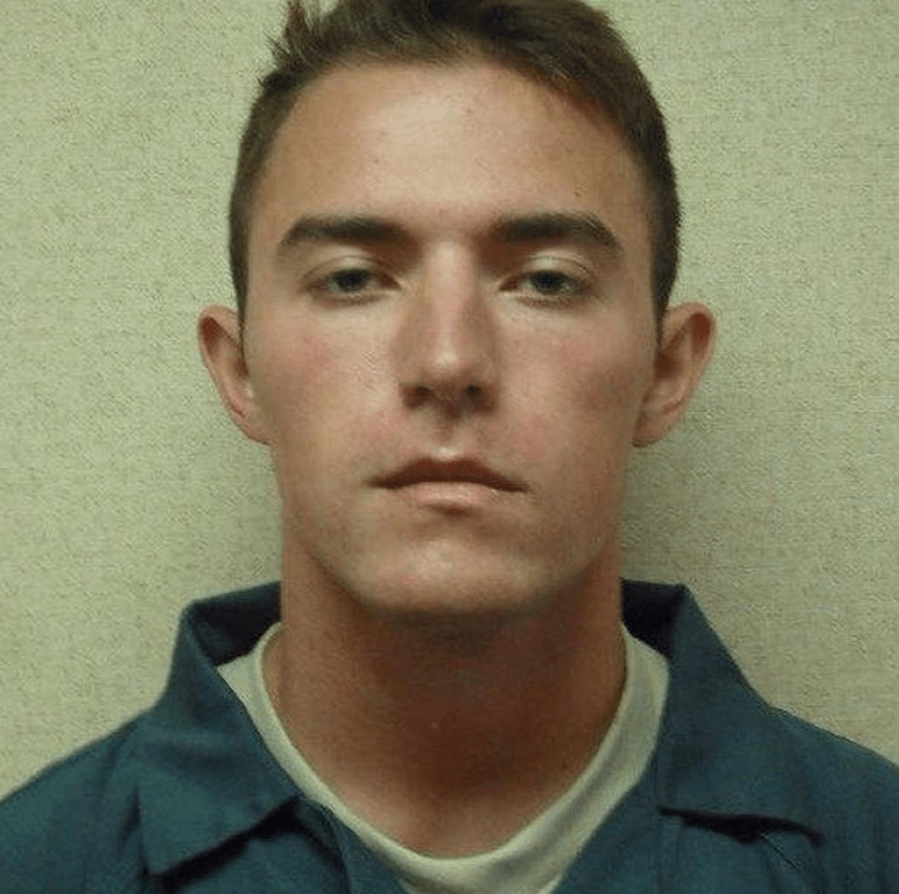
Military Judge Sentenced Air Force A1C Timothy Wilsey to Life in Prison, Possibility of Parole for the Strangulation Death of Colleague A1C Rhianda Dillard (April 11, 2018)

Air Force A1C Rhianda Dillard, 20, was found dead in her dorm room at Offutt Air Force Base in Nebraska on August 1, 2016. A1C Timothy Wilsey, 21, disappeared after the murder and was arrested eleven days later in Emporia, Virginia on desertion and murder charges. Timothy Wilsey was charged with pre-meditated murder under the Uniform Code of Military Justice (UCMJ). A1C Dillard was from Biloxi, Mississippi and had only been in the Air Force for five months before she was murdered. She was a cyber systems operation specialist assigned to the 55th Strategic Communications Squadron. On August 4, 2018, AP reported that Wilsey’s court martial was scheduled for trial at Omaha’s federal courthouse. If found guilty of the federal charges, Wilsey risked a life sentence without parole. “Court-martial proceedings were moved off the base to a federal courthouse to make room for the public.” Wilsey pleaded guilty to a single count of premeditated murder and one count of deserting his unit. On April 11, 2018, a military judge sentenced Timothy Wilsey to life in prison with no possibility of parole but because of a pretrial agreement with his command (26th Air Force) Wilsey will be eligible for parole in the future. “Wilsey also received a reprimand and reduction to the lowest enlisted rank, forfeits all future pay and allowances, and is to be dishonorably discharged.”

“I killed Airman Dillard by putting my arm around her neck. Then I switched arms,” he said as he entered his guilty plea. “I sat on top of her and strangled her with both my hands.” -Timothy Wilsey (Clarion Ledger, April 6, 2018)

Airman 1st Class Timothy M. Wilsey of the 55th Intelligence Support Squadron has been charged with premeditated murder and desertion in connection with the death of Airman 1st Class Rhianda N. Dillard at Offutt Air Force Base, a news release from the 55th Wing said. -KETV (December 13, 2016)

Related Links:
Offutt airman charged with murder in connection with fellow airman’s death
Offutt airman charged in murder case
Air Force airman charged in death of fellow airman
Air Force airman charged in August death of fellow airman
She died, he disappeared. Now he’s charged with murder.
Airman faces premeditated murder, desertion charges in death at Offutt Air Force Base
Offutt airman charged with murder, desertion in death of fellow airman
Airman accused of murdering fellow airman at Offutt AFB officially charged
Airman from Valdosta charged with murder
‘He’s not talking’: Offutt airman charged with murder in connection with fellow airman’s death
Airman at Offutt Charged With Murder Appears in Court
Journal details Offutt airman’s slaying
Prosecutors: Journal details Offutt airman’s slaying
Airman at Offutt detailed killing of fellow service member in journal, agent testifies at hearing
‘My bad’: Chilling diary entries and texts of ‘murder-obsessed’ soldier ‘who strangled female classmate for fun and to steal a pack of Oreos’
Court martial for airman charged with murder moved downtown
Airman pleads guilty to murder
Airman pleads guilty to murder at Air Force base near Omaha
Mississippi airman’s killer pleads guilty to her Nebraska murder
While on the run, Offutt airman wrote that he had thoughts of killing again
‘I just enjoy killing. Simple as that.’ Quotes from airman’s journal shared at sentencing in Offutt slaying
‘I just enjoy killing’: Nebraska airman’s journal reveals ‘a thirst’ for murder
‘What went wrong?’ Friends, family are baffled as to how Offutt airman became killer
Airman from Valdosta gets life in prison
Former airman sentenced to life in prison
Airman who described himself as ‘homicidal’ is sentenced to life with possibility of parole for Offutt slaying
Airman who killed colleague at Offutt gets life with chance at parole
Airman Who Killed Colleague Gets Life with Chance at Parole
‘I Just Enjoy Killing’: Airman Gets Life in Prison for Strangling Another Air Force Member
Airman Gets Life In Prison For Murdering Colleague, Wrote In Journal ‘I Just Like Killing’
Air Force A1C Rhianda Dillard Found Murdered in Offutt AFB Dorm Room; Military Judge Sentenced A1C Timothy Wilsey to Life in Prison, Possibility of Parole (August 1, 2016)

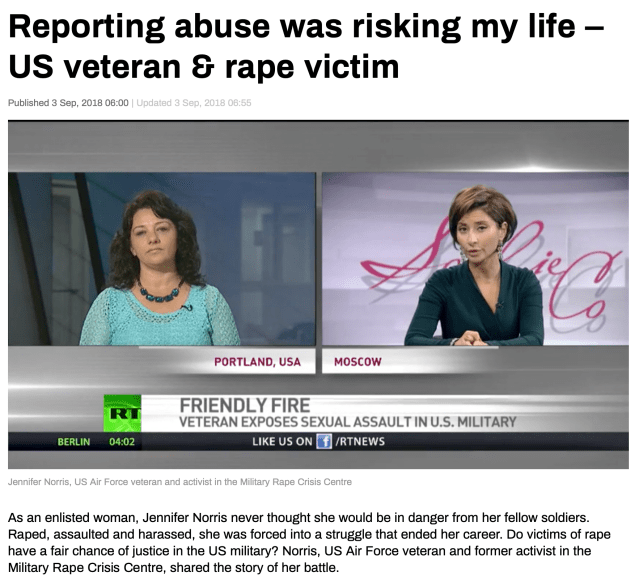
Reporting abuse was risking my life – US veteran & rape victim | Sophie and Co | RT (January 12, 2018)

Reporting abuse was risking my life – US veteran & rape victim

Correction: Jennifer Norris is not an advocate for MRCC. She left the organization in March 2014.

We hear a lot about #weinstein and the latest, but Jennifer Norris, who served in the US Air Force, has been talking about sexual assault for years. And in the military, reporting rape means endangering yourself. Watch this brave woman speak here https://t.co/1ipeI3SWP6 pic.twitter.com/TAjiVjmdDS — SophieCo (@SophieCo_RT) January 12, 2018

As an enlisted woman, Jennifer Norris never thought she would be in danger from her fellow soldiers. Raped, assaulted and harassed, she was forced into a struggle that ended her career. Do victims of rape have a fair chance of justice in the US military? Norris, US Air Force veteran and former activist in the Military Rape Crisis Centre, shared the story of her battle.

Sophie Shevardnadze: Jennifer Norris, retired U.S. Air Force veteran, former activist in the Military Rape Crisis Centre, who herself had firsthand experience of sexual assault in the military, thank you for joining us on this programme. I want to start right away, the first time this happened, you were drugged by your recruiter – did he trick you into having sex with him? Do you have any recollections of how the incident happened?

Jennifer Norris: When I look back on this incident I realise that I was actually tricked by this man into going to the party to begin with. He had told me that there was a new recruit party for other recruits. I was excited to go and meet them because they would understand exactly how I felt. So he had ill intentions from the gitgo. When I got there there were no new recruits, I was the only one.

SS: How many times were you subjected to sexual assault or abuse? Was it just one case?

JN: It started with that one case and I thought that maybe it would be over after that, that I was just unlucky at the wrong place at the wrong time, so I pushed forward. But, unfortunately, as I entered the military service it happened again and again, and again within the first two years of service. 

SS: Tell me this – why didn’t you report it straight away, after that first time?

JN: I didn’t report the first time because I hadn’t even gone to basic training yet and I didn’t really know what to say. I didn’t even know where to go: if I was supposed to go to a commander in the military, if I was supposed to go to the police department. I was completely clueless as to what sexual assault, rape and harassment were at that time. So I just tried to soldier on, move on with the career that I was looking for doing for at least twenty years.     

SS: So what happened after you were assaulted? What did you feel? Was it guilt? Was it shame, uncertainty? 

JN: It used to be shame because I used to feel like an idiot for going to this person’s party. But after years of counseling and working with rape victims’ advocates I learnt that predators operate in much the same way: they are very manipulative and they will set you up for an attack or they will take advantage of an opportunity. So now I realise it was a calculated crime but it took me years to realise that.  

SS: So for those who haven’t faced this kind of ordeal, but danger is always there, tell us how these manipulators actually trick their victims into it? How do they lure you in?  

JN: I think, they do what you would call ‘grooming’, they make you believe that they are trustworthy and that they are going to take care of you, and it almost seems that it is too good to be true. When you are naive, you don’t necessarily realise that not everybody is speaking at face value. So as an 18-year-old or even a 24-year-old it’s easy to fall prey to the niceties because you don’t know that there’s evil lurking behind it. And I think that’s the real danger of this kind of people and how they operate is that they are able to get to us based on the trust that’s been established. In the military we are depending on each other in every way, especially in trust.   

SS: So how old were you when that happened? Like, eighteen?

JN: No, I was actually 24. I had already graduated from college, as a social worker I worked in the field for a couple of years. As a case manager I worked on a suicide crisis hotline, then I decided I wanted to go and get my master’s degree and the military offered the GI Bill that could help me accomplish those goals. So that’s the No.1 reason why I joined aside from being patriotic and wanting to give back and being involved in something that was bigger than myself. I was completely clueless as to what was in store.    

SS: Ok. One woman who went through a similar ordeal – Air Force Sergeant Marti Ribeiro said, “The military has a way of making females believe they brought this upon themselves.” Did you feel that as well? 

JN: Yes.

SS: Did you blame yourself for what happened?

JN: I did for the longest time especially with the recruiters incident. If I knew as soon as I walked through that door that there was danger but it was too late to turn back… That particular incident taught me a lot of how to take care of myself in the future. Unfortunately, if you are working for someone who’s assaulting you you can’t escape them. So now I don’t have shame or blame or any of that stuff any more as far as what I did. All I did is go to work in uniform and these people took advantage of their power and opportunity. That’s what we’re trying to change, it’s taking more seriously if someone does in fact abuse their power in that kind of setting.

SS: I’m trying to figure out the psychological aspect of it – how did the military structure make you feel guilty about what had happened and not the other way round? 

JN: I understand. So, given the way that you report currently in the military is not that you go to a police office to report a crime. You are supposed to report it to your commander. In my particular case and in a lot of soldiers’ cases the commander also has a relationship with the perpetrator and he may have known the perpetrator way longer than he knows you. So what it does it creates an atmosphere of intimidation that when you see your commander hanging out with the guy who assaulted you, then you feel like “Oh, wow, he’s not going to take me seriously, it looks like they both are really good friends”. And then when you do go ahead and do a report the first thing the defense attorney start looking into is whether or not you did this, you did that, how did you conduct yourself. They immediately go into that you shouldn’t have been in this place, if you hadn’t that wouldn’t have happened. They could have done that to me too. But it’s not our fault that we thought we were attending what we were supposed to be.        

SS: Jennifer, I’m thinking, there are also other women in the military, they are compassionate  creatures, you could have shared your story with them, they certainly would have understand what you went through, especially if this happens all the time. Maybe there were other women alongside you who were actually subjected to sexual assaults – did you share your story with any of your female peers?

JN: What I’ve learnt is that, first of all, I was one of very few women in my squadron. There may have been, if we were lucky, three of them and one of them is administration personnel, and maybe there was another one in another shop. But I was the only female working for satellite communications in combat communications. So, no, I didn’t have other females that I could turn to and say “hey, this has happened to me”. As the matter of fact, I didn’t want anyone to know that this had happened to me because I didn’t want to be judged. Unfortunately, it appears that once people learn that you’ve reported a sexual assault or may have been involved in an incident they become scared of you instead of being scared of the perpetrator. They think that you are going to be hypersensitive too if they swear or if they say something, you know, offensive when in fact it’s not going to be that way at all. So there’s a culture of fear built up in the military. And I think that’s why they want to automatically blame it on a woman because if she goes away the problem goes away and they can get back to work as normal. 

SS: Human Rights Watch reports a very dire picture of what happens to the victims of sexual assault. They say that these people are being “spat on, deprived of food, assailed with obscenities, threatened with ‘friendly fire’ during deployment…discharged for misconduct”. Is it true? Is it really that dangerous to come forward?

JN: It is. In some cases it just depends on your situation. If you are isolated you are in a way more danger than, say, other people would be on some big base that has security forces in a JAG office. But if you are in some place like the Azores or some other random location across the world all you have is the people that are with you. Then yes, you could be in grave danger if in fact someone harms you and threatens you and says that if you say anything they will kill you. It happens, I’ve researched this. We have had non-combats deaths occur overseas that include homicide and unsolved cases that nobody is talking about. That’s what we are trying to tell people is…

SS: Did you get any threats? Were you threatened?

JN: Yes, not only was I threatened, but I was physically beaten after I reported by one of the perpetrators’ friends. The entire squadron turned on me. I was automatically the liar. Even though they didn’t know the circumstances and even though we did have proof and we were able to move forward with two of the four cases the other people in the squadron didn’t know what happened and they believed the perpetrator who was able to tell them the story while I was at some other squadron waiting for the case to go through.

Reporting abuse was risking my life – US veteran & rape victim

SS: But see, for me it’s just mind-bogglingthat you were standing there harassed, assaulted in the open with other people standing by and not interfering. How come no one interfered? Why didn’t troops come forward for a fellow soldier? 

JN: Well, I did have a couple of people that had my back along the way. But it felt more like it was a culture of fear, like, nobody dared to stand up to those who were higher-ranking if they were the ones that were doing the harm because they were afraid it would have backlash on their career. Now I don’t have respect for those people who didn’t stand by and take a stand and support the ones who were actually being harmed. But along the way there were some silent people that came up to me and said that this person had done this to them, that that person had done that to them etc. So people would open up along the way but they wouldn’t take it as far as I did and actually report. Although I must say it was because of the senior master sergeant that I finally confided in. He’s the one that finally convinced me to report the four individuals to the commander. 

SS: Iraq veteran Chantelle Henneberry says she was less scared of enemy fire than the men she served with. She recalls she would drink less water to avoid going to the bathroom in the night, she was so terrified of being harassed – why do women even join the army despite hearing all these horrific stories?

JN: I think that it boils down to that people don’t think it would happen to them. And that’s just typical of society, you don’t think that bad things are going to happen to you. I had the same mentality before I joined too. So they want to follow their dreams and they want to do what they want to do and some of us dream of being in the military, retire, do great things and move women forward. So I think that’s normal, that’s ok.

SS: The United Nations is speaking out about the problem of sexual assault in the U.S military, saying it needs to ‘ensure effective prosecution of offenders’. Is this going to make any difference?

JN: Absolutely. Right now, the prosecution rate for sexual assault is less than 10% compared to the civilian world which is at least 40%. That’s what we are trying to say – if people are raped or assaulted and then report we would like these cases to be taken seriously. Right now, like I spoke to you earlier, you have to report the crime to your commander. They are not legal professionals, they are no Special Victims Unit. They do not understand how these things work. And what we want is to be able to report to a police department or a law enforcement professional, someone who understands how these people are working and cannot be manipulated by them. 

SS: For years, activists and lawmakers in the United States have tried to change this protocol – but leaders in the military are against bringing civilians into bases to investigate alleged assaults – why are they against it? And why are they winning this debate?

JN: Because they are able to protect their institutions if they are able to keep everything in house, and that’s exactly what they do. They want to stamp it out before it gets out to the public whereas we want this out in the public so that people know who these offenders are and can be on alert. They don’t just offend people in the military, they offend people in our communities as well – their wives, their children… So it’s not just a military issue, it’s a societal issue and I think, it would be way more effective if everyone reported to a police department where all the crime data was kept in one place.

SS: Do you think completely removing sexual assault cases from the military chain of command would actually solve the problem?

JN: I think standardizing the justice process in general to have it synced with the civilian society, meaning data basis connected, whether it’s the civilians that try the perpetrator or it’s the military that tries the perpetrator… Everyone should be talking so that we can connect the dots on who’s doing what where because it makes it a little bit more complicated with the military personnel who can transfer all over the country and to different parts of the world. We need all the data collection to be put into a system so we can actually track what these people have done through the course of time and be able to move forward with cases that may win as opposed to he-said, she-said incident. 

SS: So, Jennifer, I’m thinking, maybe there should be more women in the U.S. military? If there were more women in high-ranking positions being able to kick butt especially to the men who are potential assaulters? What do you think? Should there be more women in the U.S. military?

JN: That would be ideal. Although we have to take into account that over a half of victims in the military, actually 53% of them are males. So this is not a female issue necessarily. We are at higher risk because we’re seen as a weaker sex. But predators do not discriminate: they are harming both men and women in the military. A lot of media have been trying to cover the issue but we have just not been able to get the footing with it, but people need to know that over half of the victims are men in the military. 

SS: There are crazy numbers: according to HRW, only 5 percent of sexual assault cases in the U.S. military lead to convictions of the perpetrators. What happened to the man who assaulted you? Was he punished?

JN: Yes. The recruiter skipped town after I threatened to report him to the commander, unfortunately. So we couldn’t do anything with that case. The technical instructor that assaulted me in Keesler, Mississippi – we had no jurisdiction over because he was active-duty and I was considered National Guard. And the other two were both National Guard members who worked with me, and we were able to move forward with cases. But by the time it went up the chain of command it got minimized from sexual assault to sexual harassment they both retired with full benefits after 20 years of service. 

SS: The Pentagon keeps saying that programs are implemented, changes are being made, and the problem is being solved – is it all a lie?

JN: I don’t think it’s all a lie, but I definitely think they sway the media to see things in a certain way. For example, although the numbers may have gone down from 26 thousand to roughly 19 thousand in the last couple of years and they’re bragging about a 30% increase in the reporting it means nothing. And what the civilian world doesn’t understand is that in the military you can report a crime under two different guises: either restricted or unrestricted. If it’s restricted that means that nobody is supposed to know about it including your commander so you can go forward and get some help. If it’s unrestricted then it turns into a full-blown investigation if, in fact, your commander agrees to move forward with the case which is another sticking point. So people need to realise that although the reporting has gone up it’s been restricted reporting which is not helping us catch these criminals. They are still not being reported. You might get some help but they are still moving along in their careers assaulting other people while the latest victim is just getting help. 

SS: You now work with those who went through the same as you did – are you seeing more cases of women speaking out, has the situation gotten better?

JN: I think awareness has definitely gotten better around the issue. There’s way more talk within the military and outside in the veteran community to address getting help after someone has been traumatized by an incident like this. So that has definitely improved. I actually benefited greatly from programmes that have come up as a result of our advocacy with military sexual assaults. So for that I’m thankful. As far as the military justice system and policy goes it’s the same thing it has always been – nothing has changed whatsoever. As far as the court issue we’ve been trying to address which is taking the commander out of the decision-making process as far as you can move forward with the case. We just want law enforcement professionals, detectives and investigators to deal with these cases, not a commander who’s great at war but has absolutely no idea how the legal process works and what sexual assault is. I shouldn’t have reported it to my boss.

SS: What do you do for the victims, how are you helping them?

JN: What I do is I empower them. When I did worked as an advocate I actually would help them deal with their cases as they were moving along in the process and I noticed the same patterns over and over. What I do now (and it was actually hard to do it before we could change things) is focus on helping them to heal despite not being able to get justice, trying to find a place of faith and comfort in yourself to know that you didn’t do anything wrong. It’s just the system that isn’t working well and it needs to be changed, and there’s nothing we can do about it right now except to take care of ourselves and hope for the best in the future. 

SS: You mentioned earlier that it’s not just men-women problem and that 51% percent of those assaulted being men. I’ve read a recent survey by the American Psychological Association that says the number of men facing sexual assault in the military is 15 times higher than reported by the Pentagon. That would mean up to 210 thousand men are assaulted in one year. Is that number correct? Is it a right calculation? And do you help men as well? 

JN: Yes, whoever needs help and comes to me – I will assist them as best as I can. That actual study from the American Psychological Association was retracted. They used not a very good way to determine those numbers. It wasn’t correct so it was retracted. It’s not actually that high. But it doesn’t really matter. It’s still high enough that it should be a concern. The actual number that I shared with you is that roughly 53% of victims of military sexual assault are males. It’s not a female soldier issue, it’s a predator issue and that’s what we’re trying to tell people. 

SS: Jennifer, thank you so much for sharing this story with us. Thank you so much for empowering women who want to do the same thing that you did. Thank you so much for being so brave and outspoken. And I hope that you’ll win over Pentagon. 

JN: Thank you.

Related Links:

Military Rape Documentary Funded and Distributed by “Serial Predator” and Hollywood Movie Executive Harvey Weinstein

Listen to a NYPD sting operation recording of Harvey Weinstein here.

Both “The Invisible War” and “The Hunting Ground” were documentaries produced and directed by Hollywood filmmakers Kirby Dick and Amy Ziering. The Invisible War was an unvetted documentary about sexual assault and rape in the U.S. military. It was lauded by the masses, showcased at the Pentagon, and apparently used to influence Senator Claire McCaskill’s military justice legislation. Before we could wrap our heads around how these filmmakers had silenced veteran’s voices (again), they released The Hunting Ground, another unvetted documentary about sexual assault and rape on our nation’s campuses. And now we are learning that these documentaries were both funded and distributed by “serial predator” and Hollywood movie executive Harvey Weinstein of the Weinstein Company. In the wake of this provable scandal, Amy Ziering came to the defense of the indefensible and admitted in an interview that The Invisible War resulted in thirty five pieces of legislation passed by Congress.

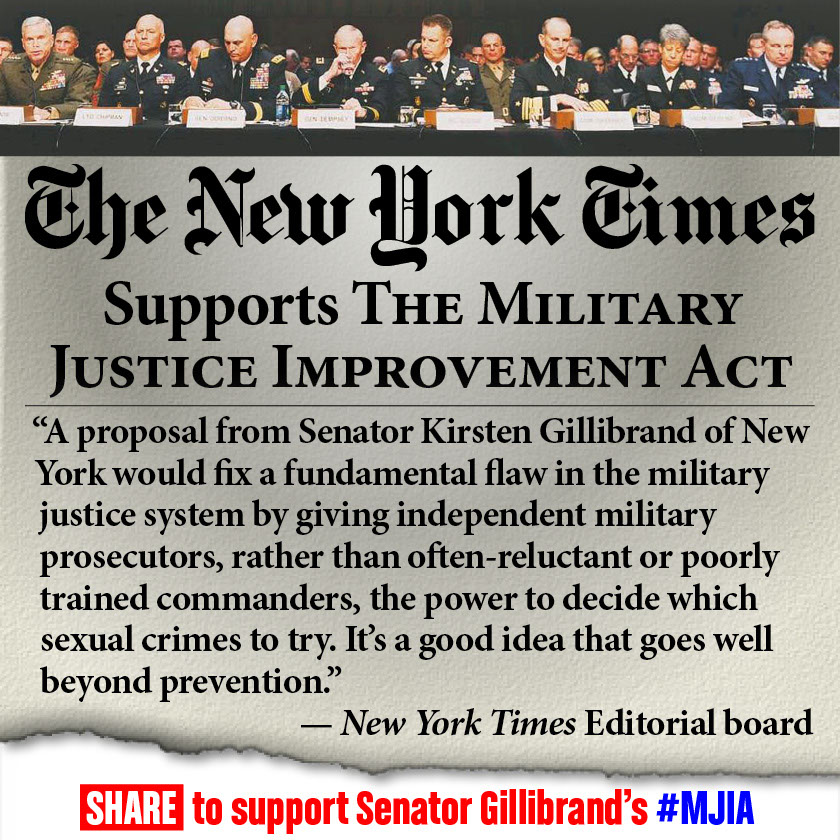
The problem is the only laws passed were Senator Claire McCaskill’s bills. By taking credit for Claire McCaskill’s legislation (that military and veterans did not want), Ziering is admitting to undermining veteran’s efforts to secure due process rights for service members. We wanted them to have due process rights in the military justice system AND with non judicial punishment, retaliation, mental health, security clearance, and discharge. There’s nothing to take credit for unless you back Senator Claire McCaskill’s flawed military sexual assault legislation. Veterans resoundingly wanted the Military Justice Improvement Act sponsored by Senator Kirsten Gillibrand and supported by multiple bi-partisan Senators including conservatives who saw the constitutional issues with the command directed approach. BUT it was railroaded by Senator Claire McCaskill, Senator Carl Levin (now retired), and Senator Kelly Ayotte (now fired). And obviously backed by the filmmakers of a documentary about sexual assault funded and distributed by the very serial predator veterans were trying to hold accountable, especially the leadership tasked with implementing Senator McCaskill’s bills.

The connection has been made. In the wake of the flawed and failed policy in both the military and on college campuses, what these folks felt they knew was best actually created new victims. And it isn’t coincidental that the legislation passed in the military mirrors the unconstitutional use of preponderance of the evidence (50%+) on college campuses. This 2011 guidance came from Obama’s Department of Education Office of Civil Rights and Senator Claire McCaskill and Senator Kirsten Gillibrand are trying to get the policy codified as law with the CASA Act. In a stunning twist, newly appointed Secretary of Education Betsy DeVos reversed the harmful policy and reinstated due process protections for the accused on campus. The days of believe all women OR ELSE and holding institutions of authority hostage if you don’t believe the alleged victim are over on our college campuses. Campuses are able to reverse the harmful policy guidance but veterans have to reverse 35 pieces of sexual assault specific legislation that have had devastating consequences on military members and their families.

For all of its flaws and fabrications, “The Hunting Ground,” Harvey Weinstein’s activist documentary film about sexual assault on college campuses, finally succeeded in helping to actually identify a real predator — the filmmaker himself. And, although some of his apologists like filmmaker Rob Reiner tried to excuse Mr. Weinstein’s predatory behavior by saying that he should be lauded for having funded the film to expose the epidemic of rape on college campuses, “The Hunting Ground” helped to fuel a moral panic about sex abuse that directly led to Mr. Weinstein’s own professional demise…The good news is that as more and more powerful people become swept up in the hysteria surrounding sexual assault and people see themselves as vulnerable to such charges, the panic will end as spontaneously as it began. In some ways, a moral panic can be viewed as a “correction” — not unlike a market correction. We needed to bring attention to the Harvey Weinsteins lurking among us. Perhaps now we can now begin to look at sexual assault more rationally — identifying the “real” predators among us. Prof. Anne Hendershott, Washington Times

Related Links:
Claire McCaskill’s ‘lonely’ sex-assault stand
The war in Congress over rape in the military, explained
How The Hunting Ground Blurs the Truth
The big lie behind the campus-rape crusade
Major Study On Campus Sex Assault Debunked
19 Harvard Law Professors Defend Law Student Brandon Winston, Denouncing His Portrayal in “The Hunting Ground”
Professors Dispute Depiction of Harvard Case in Rape Documentary
How The Hunting Ground Spreads Myths About Campus Rape
The continuing collapse of ‘The Hunting Ground,’ a campus sexual assault propaganda film
Betsy DeVos’s full speech on Title IX and campus sex assault
Harvey Weinstein: Secret recording of undercover sting
Wendy Williams: Harvey Weinstein Speaks Out
Harvey Weinstein, Hollywood and hypocrisy
Actress Heather Graham Confirms EVERYONE Knew About Weinstein
Harvey Weinstein Proves Money Matter to Democrats, Not Women’s Lives
Hillary Clinton falsely claims Donald Trump is an ‘admitted sex assaulter’ as she compares him to Harvey Weinstein – but claims allegations against Bill are ‘clearly in the past’
Here’s A Live Look At The Women’s March Group Protesting Hollywood’s Rampant Sexual Abuse
Harvey Weinstein Paid Off Sexual Harassment Accusers for Decades
Jane Fonda Feels ‘Ashamed’ for Not Speaking Out About Harvey Weinstein Earlier
Hollywood’s dishonest campus rape panic
An Interview with the Producer of the Harvey Weinstein-Distributed Rape Documentary
Harvey Weinstein’s history begs for a documentary about Hollywood abuses. But can it be made?
California’s Attempt To Reject Betsy DeVos’s Campus Rape Policies Just Failed

Air Force SSgt Mario Manago Alleges Commander Bias with Non-Judicial Punishment; Referred to Court Martial Instead & Booted with Federal Crime (2017)

Screen Shot 2018-03-02 at 1.13.46 PM
SSgt. Mario Manago, US Air Force

Air Force Court-Martial Summaries (March 2017): At JB McGuire-Dix-Lakehurst, NJ, Senior Airman Mario A. Manago was found guilty by military judge alone of failure to go to place of duty. He was sentenced to a reprimand.

“I wanted to retire from the Air Force.” -SSgt. Mario Manago

Related Links:
NJ Airman Convicted of the Federal Crime of Being 6 Minutes Late for a Meeting
‘I am a felon for being 6 minutes late to a meeting,’ court-martialed airman says
Former Airman Considers Options After Discharge
Advocacy group accuses military justice system of racial bias
Report finds racial disparities in military justice system
The Military Justice System Has A Race Problem, According To DoD Data
Black soldiers face US military justice more often than whites, study finds
Black Troops More Likely to Face Military Punishment Than Whites, New Report Says
In Every Service Branch, Black Troops More Likely to Be Punished by Commanders, Courts: Report
CAAFlog: Racial bias in military justice
Corruption in the Ranks: McGuire IG Wrongly Dismisses NCO’s Reprisal Complaint
Former Airman Accuses Commander Of Vindictive Mistreatment
Airman Mario Manago fired and convicted of federal crime after being 6 minutes late to meeting
Air Force Fires Man, Slams Him With Felony For Being 6 Minutes Late
Air Force Court-Martial Summaries (March 2017)


A U.S. Air Force veteran airman says he was recently let go from his job because was six minutes late to a meeting with his commander. Mario Manago, 33, has been with the Air Force for 12 years and stationed at Joint Base McGuire-Dix-Lakehurst for seven of them. Last August, Manago asked to speak with his commander about mistreatment at the base. Manago said he was late to that meeting because things became busy at work. Months later, Manago was convicted at court-martial months later in March for failing to go to his “appointed place of duty.” A week prior, Manago was demoted from staff sergeant to airman. The U.S. Air Force said Manago was honorably discharged because of tenure rules. -Chasing News

People Magazine Investigates Premiered ‘Jeffrey MacDonald: The Accused’ on ID; Who Murdered the MacDonald Family? (January 9, 2017)

An army surgeon, Jeffrey MacDonald, is the lone survivor of a brutal 1970 home invasion that claims the lives of his wife and daughters. But authorities doubt his story of murderous hippies and believe MacDonald is the culprit. -Jeffrey MacDonald: The Accused, People Magazine Investigates (S1,E11)

Editor’s note: With a cable subscription, you can download the free ID Go app and watch Investigation Discovery programming at your convenience. And for those who do not have cable, you can watch “unlocked” episodes on the ID Go app including the latest premieres. For those who prefer commercial free programming during your binge session, Prime Video has an ID channel: ‘True Crime Files by Investigation Discovery” available for $3.99 a month. It’s a compilation of older seasons but totally worth the cost if you are a true crime addict. Download the ID Go app or purchase ID True Crime Files & binge away.

Related Links:
5 Things to Know About the Case of Green Beret Surgeon Jeffrey MacDonald, Convicted of Killing His Family
Green Beret Convicted of Killing His Family Could Walk Free If He Admits Guilt – But Wants to Be ‘Vindicated’
Who Were the Suspects that Jeffrey MacDonald Says Murdered His Family?
Who Is the Real Jeffrey MacDonald? Exclusive Interviews with His Friends and Family
People Magazine Investigates: Are There Similarities Between Jeffrey MacDonald Case and Charles Manson Murders?
Colette, Kimberley & Kristen MacDonald Murdered in NC Home; Former Army Captain Jeffrey MacDonald Convicted of Homicide, Sentenced to Life (February 17, 1970)
Former Army Doctor Capt. Jeffrey MacDonald Convicted of Homicide of Wife Colette & Two Daughters; Sentenced to Life in Prison (August 29, 1979)
Investigation Discovery Premiered ‘Final Vision’: The True Crime Story of Former Army Captain Jeffrey MacDonald (December 10, 2017)
15 Movies & Documentaries That Expose the Broken Military Justice System
Jeffrey MacDonald: The Accused | People Magazine Investigates | ID (S1,E11)
Jeffrey MacDonald: The Accused | People Magazine Investigates | ID (website)
Jeffrey MacDonald: The Accused | People Magazine Investigates | ID (Prime Video)

Vox: The War in Congress Over Rape in the Military, Explained (June 8, 2016)

By Emily Crockett

“Sexual assault is a huge problem in the US military. And for many victims, the process of reporting their crime and seeking justice can be as traumatic as their assault.

Most members of Congress and military officials agree that these basic facts are true, and that more reforms to the military justice system could help. But there’s a profound disagreement on how, and how much, the system needs to change.

The US Senate is expected to vote this week on the Military Justice Improvement Act (MJIA). Advocates, who have been pushing for the MJIA since 2013, say the reform would make the process of prosecuting sex crimes a lot easier and smoother for victims and help victims feel more empowered to come forward and report the crimes against them.

An unusual bipartisan cadre of senators support the MJIA, from Elizabeth Warren to Ted Cruz. But the Pentagon adamantly opposes it, and many senators listen to the Pentagon when it says the MJIA would undermine “good order and discipline.” So there’s still no filibuster-proof, 60-vote majority for the measure, and it’s been defeated every year it’s come up.”

Read more here: The war in Congress over rape in the military, explained

Related Links:
Fort Hood Army Staff Sgt. Paul Norris Fatally Shot Spc. Kamisha Block in Murder-Suicide in Iraq; Family Calls for Congressional Hearings & Independent Investigations (August 16, 2007)
Camp Lejeune Marine Maria Lauterbach & Unborn Child Murdered, Remains Discovered in Marine’s Backyard; Cesar Laurean Sentenced to Life in Prison, No Parole (December 15, 2007)
HOR Oversight Subcommittee on National Security & Foreign Affairs Held a Hearing on Sexual Assault in the Military (July 31, 2008)
Former Representative Bruce Braley (D-IA) Introduced the Holley Lynn James Act (April 12, 2011)
Lauterbach Case Prompts Policy Reforms for Victims of Sexual Assault in the Military (December 25, 2011)
Air Force TSgt. Jennifer Norris Testified Before the House Armed Services Committee in Washington DC (January 23, 2013)
Stars and Stripes: ‘White House, Congress bear down on military sexual assault’ (May 16, 2013)
S. 967: Military Justice Improvement Act of 2013 – U.S. Senate Voting Record (March 6, 2014)
Army Pfc. Shadow McClaine Reported Missing at Fort Campbell; Ex-Husband Sgt. Jamal Williams-McCray & Spc. Charles Robinson Pleaded Guilty to Murder (September 2, 2016)
Army Pvt. Nicole Burnham Found Unresponsive in Fort Carson Barracks; Death Ruled Suicide After Sexual Assault, Retaliation & a Three Month Expedited Transfer Delay (January 26, 2018)
Rep. Mike Turner Says New Military Legislation Closes a Loophole & Includes Domestic Violence Victims in the Expedited Transfer Policy Law (May 1, 2018)
Gillibrand: The Military Justice Improvement Act Would Give Service Members a Justice System That Works (July 1, 2019)
House Armed Services Subcommittee on Military Personnel: Hearings on Domestic Violence in the Military (September 18, 2019)
Rep. Seth Moulton Introduces The Brandon Act to Change DoD Mental Health Policy, Pay Tribute to Fallen Navy Sailor Brandon Caserta (June 25, 2020)
Open Letter to House of Representatives in Support of an Independent Investigation of the Murder of Vanessa Guillen at Fort Hood (July 7, 2020)

Fort Hood Army Sgt. Marcus Nelson Sr. Died While in Custody at Bell County Jail in Belton, Texas; Nelson Held on Charges Stemming from 1st Cavalry Division (May 23, 2016)

Marcus Nelson
Sgt. Marcus Nelson Sr., U.S. Army

Fort Hood Army Sgt. Marcus Nelson Sr., 45, died May 23, 2016 while in custody at the Bell County Jail in Belton, Texas. Nelson was being held in pretrial confinement on behalf of the 1st Cavalry Division. According to Army Times, Nelso was charged under the Uniform Code of Military Justice with departing his appointed place of duty, disobeying a lawful order from a noncommissioned officer, dereliction of duty and disobeying lawful regulation, and communicating a threat. Sgt. Nelson was from Detroit, Michigan and joined the Army in April 2005 as a petroleum supply specialist. In June 2015, Nelson was assigned to the 1st Battalion, 227th Aviation Regiment, 1st Air Cavalry Brigade, 1st Cavalry Division. Sgt. Nelson deployed to Iraq twice and his awards and decorations include three Army Commendation Medals, two Army Achievement Medals, three Army Good Conduct Medals, and the Iraq Campaign Medal with four campaign stars.

Related Links:
Soldier who died in Bell County Jail identified
Iraq war veteran found dead in local jail cell identified
Fort Hood Releases Name of a Soldier Who Recently Died in the Bell County Jail
Fort Hood soldier dies while in pretrial confinement
Fort Hood soldier dies while confined in Texas jail
Soldiers remember sergeant who died in Bell County Jail
Army Soldiers at Fort Hood in Texas Are Dying at Alarming Rates Stateside
Violent Crime, Suicide, and Non Combat Death at Fort Hood, Texas (US Army)
Army Soldiers at Fort Hood in Texas Are Dying at Alarming Rates Stateside (January 1, 2016 to Present)

Homicide Hunter Premiered ‘Pop Goes the Witness’ on ID: Fort Carson Army Officer Convicted of Attempted Murder of Wife (November 3, 2015)

When the lifeless body of Willie McCarty is found at the base of a staircase, neighbors direct Kenda to a mysterious truck spotted fleeing the scene. Then… Kenda must solve a bizarre case of poisoning at a busy downtown hospital. -Pop Goes the Witness, Homicide Hunter (S5,E10)

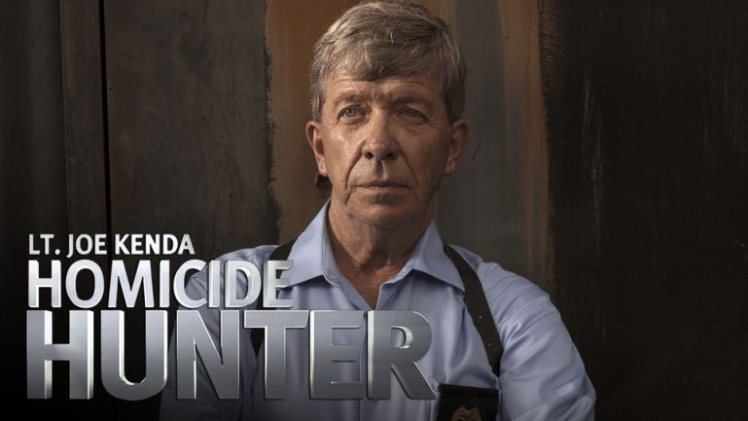
Lt Joe Kenda of Homicide Hunter featured another case where he was tasked with investigating what hospital officials suspected was an attempted murder. Upon arrival at the hospital, he was bombarded by the press because they heard the call for service over the scanner. The hospital was secure and police officers were on the scene. Upon an initial briefing, Lt Kenda discovered that a nurse suspected that someone had tampered with one of their patient’s IVs. Lt Kenda then interviewed Carol Taylor, the wife of an Army officer also present at the hospital with their two children.

Lt Kenda learned that Carol had broken her leg and had developed some blood clots. She was simply visiting with her husband and children when all of a sudden the alarm on the IV infusion machine went off. And somehow the IV had been pulled from her arm. Lt Kenda immediately began to suspect that someone was trying to kill her because it looked like someone had either tampered with or inserted something into the IV line. Because the crime lab was not proficient in the hospital’s medical equipment, they called in a hospital employee who was considered an expert. This person determined that someone had injected something into the line. The only other people in the room were her husband and children.

Lt Kenda started his next line of questioning with the husband. He learned that Lt Col Dennis Taylor served in the US Army for 27 years and was currently working as the Chief of Oral Surgery at the Fitzsimmons Army Medical Center in Aurora, Colorado. Lt Kenda observed that the doctor was unusually calm and appeared to be minimizing the event and brushing it off as a mistake. So then Lt Kenda went back to the wife and asked her if she thought that maybe her husband did this. The wife claimed she was fine and that everyone was making a big deal out of it and she just wanted it to go away. She claimed that they had a great marriage and life. Lt Joe Kenda had a hard time believing that her marriage was as perfect as she made it out to be and moved forward with the investigation because there was in fact liquid in the IV pump that was not supposed to be there.

Kenda reached out to a family friend who worked alongside the doctor over the years. He learned from Stan that the doctor had confided in him that Carol was verbally abusive, demeaning him, telling him he is pathetic, and even punched him. She also was upset about his drinking and knew that he had been having extra-marital affairs. Stan told Kenda that the doctor wanted to leave Carol but she had threatened to go to his commander and report him for the drinking and adultery (both considered UCMJ infractions and punishable under military law) if he left her. Carol enjoyed the privileges of being a military wife too much to lose them to divorce. He felt trapped in his current abusive marriage and was drinking more and having affairs as a way to cope with his current situation. In the civilian world, Carol would not be able to get away with threatening her husband because it is not illegal to drink and have affairs.

As it turns out, the results of the pump came back and they found Diazinon, which is a poison used to kill ants, spiders, cockroaches, etc. She would have been dead in a matter of minutes and would have been in excruciating pain, as the poison would have burned her from the inside out. As a result, Kenda arrested the doctor for attempted murder. During the arrest he found a plunged hypodermic in his pocket. The doctor told him he didn’t need an attorney and admitted his guilt. He told Kenda that earlier that morning while he was out shopping, the idea came to him that this was the only way out. Because he is a doctor, he knew how to do it. He inserted the poison and the alarm went off so he pulled the IV out of her arm for fear of arrest.

Instead of the civilians pressing forward with a case, the Army decided that they were going to court martial the doctor. They claimed they wanted to make an example of the disgraced colonel in front of a jury of his peers. He was sentenced to 18 months hard labor and he and his family were stripped of all Army privileges. And this may be why Carol Taylor protected her husband despite the fact that he just tried to kill her. Why would the Army doctor rather kill his wife then report the domestic violence to the commander? Why would the doctor feel that going to the commander was not an option and his only way out of this abusive situation was to murder his wife? Why was the doctor so intimidated by the threat of his wife reporting what would be considered minor infractions, even under UCMJ standards?

We need to evaluate why the doctor felt that he was not able to report the abuse and threatening to the Commander. Would he automatically be in trouble with military leadership if he admitted that he had been drinking and having affairs? Was he concerned about losing his career, his retirement, or facing disciplinary action? Why did he feel that he had to choose murder over reporting the threats and abuse to his commander? These are all things that we must ponder. We are seeing a pattern over and over. Our military men do not feel that reporting to the commander is an option when they are the victim of a crime. If that is the case, how can we help our military men, who find themselves the victim of threats, domestic violence, or sexual assault, report to a safe place? Right now, some would rather resort to murder then report the crimes to their commander. There must be a better way.

Source: Pop Goes the Witness, Homicide Hunter, Investigation Discovery

Editor’s note: With a cable subscription, you can download the free ID Go app and watch Investigation Discovery programming at your convenience. And for those who do not have cable, you can watch “unlocked” episodes on the ID Go app including the latest premieres. For those who prefer commercial free programming during your binge session, Prime Video has an ID channel: ‘True Crime Files by Investigation Discovery” available for $3.99 a month. It’s a compilation of older seasons but totally worth the cost if you are a true crime addict. Download the ID Go app or purchase ID True Crime Files & binge away.

Related Links:
Pop Goes the Witness | Homicide Hunter | Investigation Discovery (S5,E10)
Pop Goes the Witness | Homicide Hunter | Investigation Discovery (website)
Pop Goes the Witness | Homicide Hunter | Investigation Discovery (Amazon)
Pop Goes the Witness | Homicide Hunter | Investigation Discovery (Hulu)
Violent Crime, Suicide & Non Combat Death at Fort Carson, Colorado
Only Way Out: Army Wife Threatens to Report Doctor to Commander if He Leaves Her
Homicide Hunter: 20 Active Duty Military and Veteran Murder Cases Featured on Investigation Discovery

Homicide Hunter Premiered ‘Victim Zero’ on ID: Fort Carson Soldier Christopher Walton Fatally Shot Outside Colorado Springs Night Club (October 20, 2015)

All Hell Breaks Loose In Club Brawl Leaving A Young Solider Dead -Victim Zero, Homicide Hunter (Preview)

A massive brawl erupts at a local bar ends with the shooting death of a young army soldier. To unravel the murder, Lt. Joe Kenda must infiltrate a revered military institution, and expose a dangerous vendetta. -Victim Zero, Homicide Hunter (S5,E9)

Editor’s note: With a cable subscription, you can download the free ID Go app and watch Investigation Discovery programming at your convenience. And for those who do not have cable, you can watch “unlocked” episodes on the ID Go app including the latest premieres. For those who prefer commercial free programming during your binge session, Prime Video has an ID channel: ‘True Crime Files by Investigation Discovery” available for $3.99 a month. It’s a compilation of older seasons but totally worth the cost if you are a true crime addict. Download the ID Go app or purchase ID True Crime Files & binge away.

Related Links:
Victim Zero | Homicide Hunter | Investigation Discovery (preview)
Victim Zero | Homicide Hunter | Investigation Discovery (S5,E9)
Victim Zero | Homicide Hunter | Investigation Discovery (website)
Victim Zero | Homicide Hunter | Investigation Discovery (Amazon)
Victim Zero | Homicide Hunter | Investigation Discovery (Hulu)
Lt Joe Kenda of Homicide Hunter Outlines Murder of Army Soldier Christopher Walton
Fort Carson Soldier Christopher Walton Fatally Shot Outside Night Club; Leroy Davis Sentenced to 20 Years in Prison by Military Court (November 21, 1991)
Violent Crime, Suicide & Non Combat Death at Fort Carson, Colorado (US Army)