The House debates the Joshua Omvig Veterans Suicide Prevention Act, which directs the VA to develop and implement a comprehensive program to reduce the incidence of suicide among veterans. The bill is named for an Iraq veteran who took his own life, and recognizes the special needs of veterans suffering from PTSD and elderly veterans who are at high risk for depression and experience high rates of suicide. -Rep Leonard Boswell (October 23, 2007)
The Number One Problem Combat Vets Will Face is Mental Health (2007):
Paul Sullivan of Veterans for Common Sense tells Armen Keteyian that the No. 1 problem facing vets of Afghanistan and Iraq will be mental health. -CBS News (November 13, 2007)
Veterans Who Get Help at VA Are Still at Risk of Suicide (2008):
CBS News first reported on the staggering number of veteran suicides in a report last year. Now, newly-released data shows that vets who get help from the VA are still at risk. -CBS (March 20, 2008)
Seven Vets Under VA’s Care Died by Suicide in Washington (2008):
They served their country honorably but after risking their life in combat abroad, coping with coming home was too much. In the last three months seven servicemen being treated by Spokane’s VA Hospital have committed suicide. -4 News Now (April 29, 2008)
Senator Patty Murray Alleges VA Cover-up of Veteran Suicide (2008):
Despite recent efforts by the Veterans Administration to prevent veteran suicide, seven have committed suicide in the Inland Northwest in the last four months and US Senator Patty Murray is calling the situation unacceptable. -4 News Now (May 1, 2008)
Katie Couric investigates an alarming trend in the U.S. military, as more and more female soldiers have come forward with tales of sexual abuse at the hands of male soldiers and superior officers. -CBS (March 17, 2009)
Simple Kindness: Easy Ways to Repay Our Veterans for Their Service
It can be very difficult for the average American, especially those with no military experience, to appreciate the mental, physical, and financial impact that years of military service can have. The situation comes into focus when you consider that there are more than 1.3 million men and women on active duty, with more than 800,000 in the country’s reserve forces.
Post-traumatic stress disorder, family problems, and lack of employment opportunities can place a huge obstacle in the way of returning service members who just want things to return to normal. Unfortunately, it’s often not that easy, especially for those who return with debilitating injuries. If you’re looking for a way to help out, here are a few ideas.
Say ‘Thank You’
The Vietnam War experience taught Americans that returning service members can be seriously affectedby the nature of their return. If it’s critical or indifferent, veterans may feel unsupported and unappreciated. And while today’s military personnel typically don’t face the kind of harsh criticism that confronted Vietnam-era servicemen and servicewomen, they can still be powerfully impacted by a lack of support and understanding. If you want to help a veteran, acknowledge their service by shaking their hand or offering a sincere “Thank you.”
The Health Care They Need
Veterans, particularly seniors, need to understand how their health insurance works. For those enrolled in Medicare Part A or B, there are several out-of-pocket costs, and to complicate matters further, plans often change from year to year. Fortunately, you can enroll in a Medigap plan, which may provide more of the benefits you need. For example, Plan F covers the deductible that comes with Medicare Part B, though certain changes to this particular benefit will go into effect beginning in 2020. Knowing your coverage and understanding how Medicare functions is essential for getting the most out of your coverage.
Help Veterans Reintegrate Socially
A soldier who returns home without a job or without access to social services may feel lost and alone. Consider organizing an event for returning service members, perhaps schedule an evening at the movies, an informal dinner setting, or get together every week at a nearby coffee shop. Make it a venue where everyone can talk about their experiences, hopes, and frustrations.
If you have a relationship with a veteran, offer to help out in specific ways. For example, if your friend has trouble scheduling a medical or therapy appointment, reach out by offering to babysit or offer to give them a ride if they lack transportation. There are many ways to volunteer, just by making efforts of simple goodwill.
Finding Work
Veterans often find that the skills they learned in the military don’t translate well into steady employment once they’re discharged. That can be especially true of veterans who lack a degree or some form of higher education. If you’re a business owner or have access to human resources personnel at work, why not put in a good word for a veteran who’s having trouble latching on somewhere? Your company will earn tax credits for hiring veterans. Sometimes, a foot in the door is all a veteran needs to impress a prospective employer.
Be a Willing Listener
You don’t have to be close friends with a service member who just needs a sympathetic ear. Give a veteran an opportunity to share their experiences. You really don’t need to say much, just be present in the moment and listen without judging or criticizing. It’s a simple but important gesture because many have no one to talk to, no outlet for their frustrations and anxieties.
Simple gestures are sometimes the best way to help veterans, service members, and their families. Be willing to provide the kind of support and assistance you’d offer to anyone. It’ll make you feel great and it’s a great way to thank our military heroes for their service.
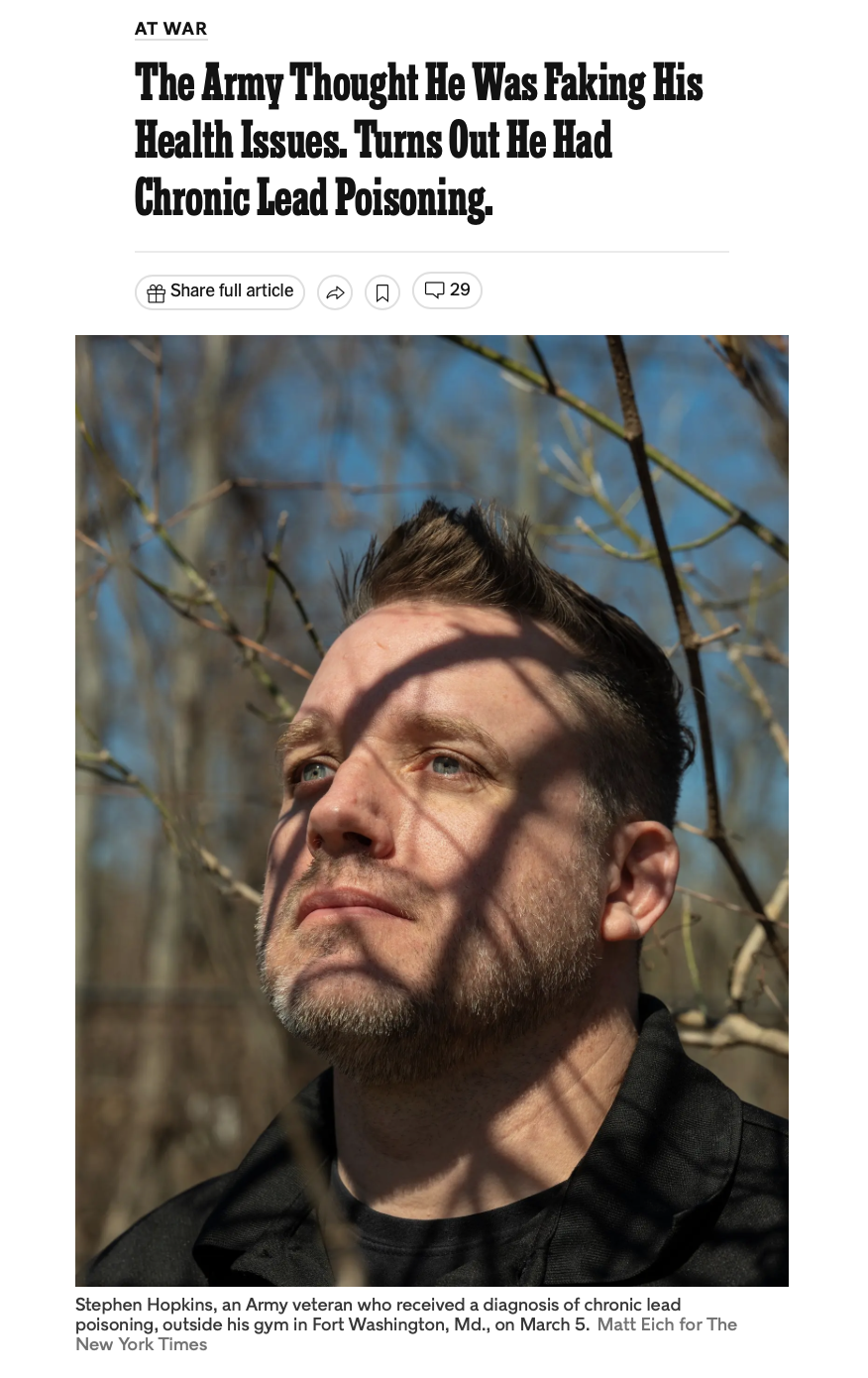
“…In 2005, Hopkins began experiencing wild swings in blood pressure. And he had other symptoms: crippling nausea, constant dizziness, a skyrocketing heart rate. He was given a diagnosis of common high blood pressure, and for a while he felt better by keeping himself on a high dose of a medication for that condition. He was on deployment in Afghanistan when the nausea returned, with migraine symptoms, abnormal thirst and muddled thinking. Medical tests were inconclusive, leading military doctors and commanders to suspect depression, post-traumatic stress disorder or, worse, “malingering” — the medical term for soldiers who feign sickness to shirk duty.”
“While the number of affected soldiers is small, the diagnosis can be life-changing to these troops, who for years have wrestled with unexplained symptoms that mimic traumatic brain injury or PTSD, including impaired concentration, anger, anxiety and impulsivity, as well as physical manifestations like tremors, high blood pressure, low sperm count and peripheral neuropathy.”
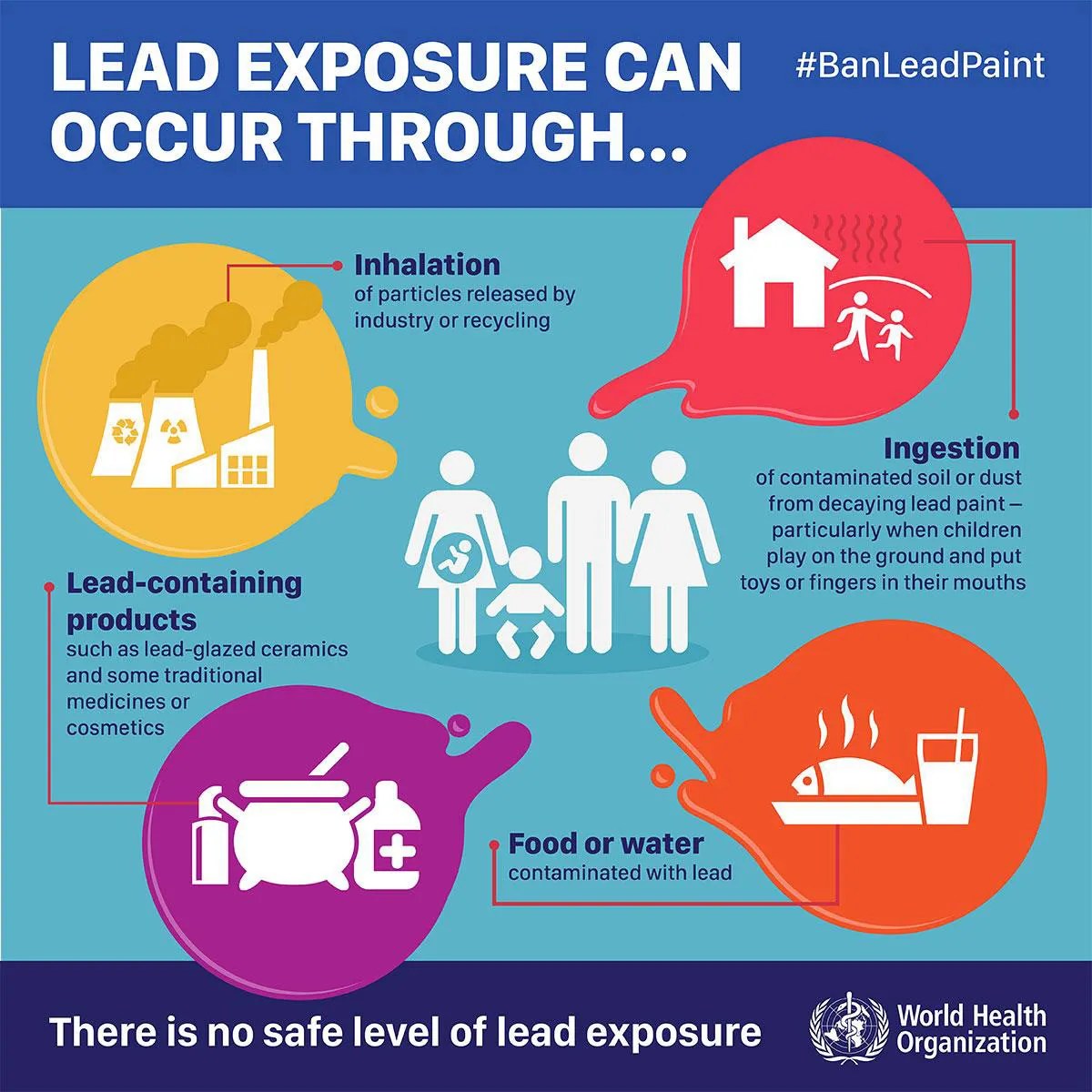
“Lead exposure is a known hazard of military service: The United States armed forces have fired billions of rounds of ammunition containing the toxic material since entering Afghanistan in October 2001. Troops are exposed to the metal while shooting indoors and outside; gathering shell casings; smoking, chewing tobacco or eating on ranges; cleaning their weapons; and living and fighting in polluted environments. But lead monitoring and testing programs at the Defense Department have focused primarily on service members who work on firing ranges and on the civilian staff at ranges, who are regulated by Occupational Safety and Health Administration guidelines. Defense Department policy requires service members who may be exposed to high levels of airborne lead for 30 or more days a year to get a blood test for lead, with follow-up tests at least annually.”
“After he diagnosed Hopkins and another service member with chronic lead poisoning, Dorrance contacted the office of the surgeon at Special Operations Command, the Environmental Health unit at Fort Bragg and officials at Navy and Marine Corps Public Health Command to request that more troops be tested and the problem be researched. But six years after the issue was first raised, little progress has been made. The Department of Defense, which until last year annually tested blood lead levels in just 1,200 out of almost three million troops and civilian employees, has found very few cases of lead poisoning, leading Army officials to believe that there isn’t a widespread problem.”
“Dorrance and Dr. Mark Hyman, director of the Center for Functional Medicine at the Cleveland Clinic, argue that this theory is wrong — and that they have the patients to prove it. Pointing to a growing body of research that suggests that lead in the bones may be more toxic than once thought, they say physicians should be considering lead poisoning as a possible cause for many unexplained symptoms in service members, especially uncontrolled hypertension, fatigue and brain fog. ‘These soldiers are breaking down, and they go to doctor after doctor after doctor, and every single one of them misses what is going on,’ Hyman said. ‘These soldiers aren’t getting the proper care. It’s a huge blind spot.'”
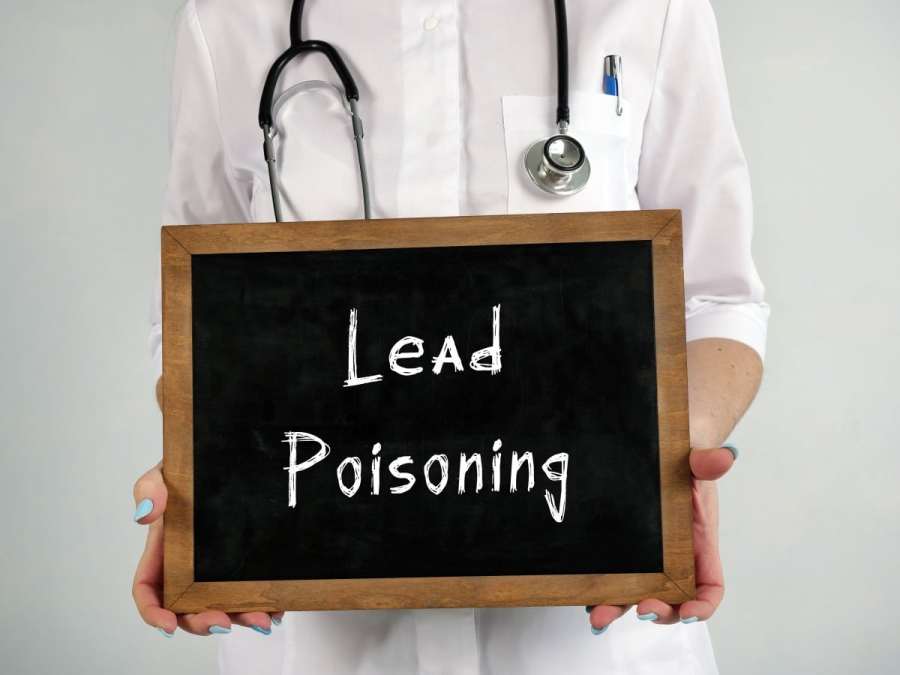
1. Decreased cognitive abilities, especially reduced ability to focus on, learn, and remember new things 2. Fatigue 3. Irritability 4. Abdominal pain or “stomach aches” 5. Headache 6. Constipation 7. Loss of appetite 8. Tingling in the hands or feet
ID Go: In a small Tennessee town, Jenelle Potter has few friends. When her attraction to one of them isn’t mutual, she is ostracized and feels threatened. Then a shadowy figure guides her family into a dark plot with a twisted ending no one saw coming. -Catfish Killer, Primal Instinct (S1, E4)
Date: January 31, 2012 Victims: Billie Jean Hayworth and Billy Payne Offenders: Jenelle Potter, Barbara Potter, Marvin Potter, Marine Corp veteran Location: Mountain City, Tennessee Circumstances: Jenelle Potter catfished her parents Barbara and Marvin and led them to believe she was in danger, she posed as a CIA agent and manipulated Marvin Potter to kill Billie Jean Hayworth and Billy Payne after they unfriended her on Facebook Disposition: Jenelle and Barbara Potter were convicted of conspiracy to commit murder and given two life sentences; Marvin Potter plead guilty to murder and was given two life sentences
Editor’s note: With a cable subscription, you can download the free ID Go app and watch all of the Investigation Discovery programming at your convenience. And for those who do not have cable, you can watch “unlocked” episodes on the ID Go app including the latest premieres. Download the ID Go app and binge away. For those who prefer commercial free programming during your binge session, Prime Video has an ID channel: ‘True Crime Files by Investigation Discovery” available for $2.99 a month. It’s a compilation of older seasons but totally worth the cost if you are a true crime addict.
In the News:
Part 1: Living at home with her parents, Jenelle Potter spent most of her adult life on social media. -ABC News
Part 2: A friend found Bille Jean Hayworth and Billy Payne dead with single gunshot wounds to their faces. -ABC News
5 Dark & Twisted Catfish Stories. -FactFaction
Investigation Discovery:
ID Go: A young couple is found murdered, execution style, their infant still alive in the mother’s arms. As police investigate, the story takes a shocking turn when the admitted shooter claims this was a sanctioned hit ordered by a rogue CIA agent. -To Pretty to Live, Investigation Discovery (S1, E1)
USA Network:
In Tennessee, a family is driven to despair when their daughter Jenelle becomes the target of social media bullying. When two of Jenelle’s tormentors are found dead, the police uncover a bizarre web of assumed identities and mental manipulation. -The Sinner
Oxygen:
Jenelle Potter’s attorney, her sister, and others discuss the case after the verdict. -Killer Post, Oxygen
Jenelle Potter claimed that her Facebook account was hacked. -Criminal Confessions, Oxygen
Podcasts:
A young mother is shot to death while she clutches her 7-month old baby. Her husband lies executed in the next room. This isn’t the story of a Hollywood drama, but the tragic end to an average Tennessee working class family. Billie Jean Hayworth and her husband Billy Payne were going about their normal weekday morning routine when they were senselessly and violently murdered. The events that led to that morning are inexplicable, fueled by the petty ignorance of a woman who used social media to manipulate and hurt people. We’re taking a look at the catfishing murders of East Tennessee in this episode of True Crime Brewery: Unfriended. Settle in for a twisted tale of senseless murder, jealousy, and cruelty beyond what most of us could ever imagine. -True Crime Brewery
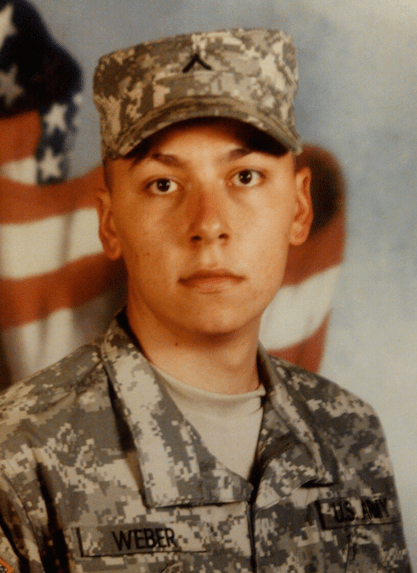
Joseph Weber IV, US Army Veteran (photo credit: Missing Veterans)
Disabled Army veteran Joseph Weber IV, 28, disappeared near the Golden Gate Bridge in San Francisco, California on November 24, 2014. Joseph is an Iraq war veteran who struggled with both Post Traumatic Stress Disorder (PTSD) and Traumatic Brain Injury (TBI). If you have any information, please contact the Sunnyvale Police Department at (408) 730-7100.
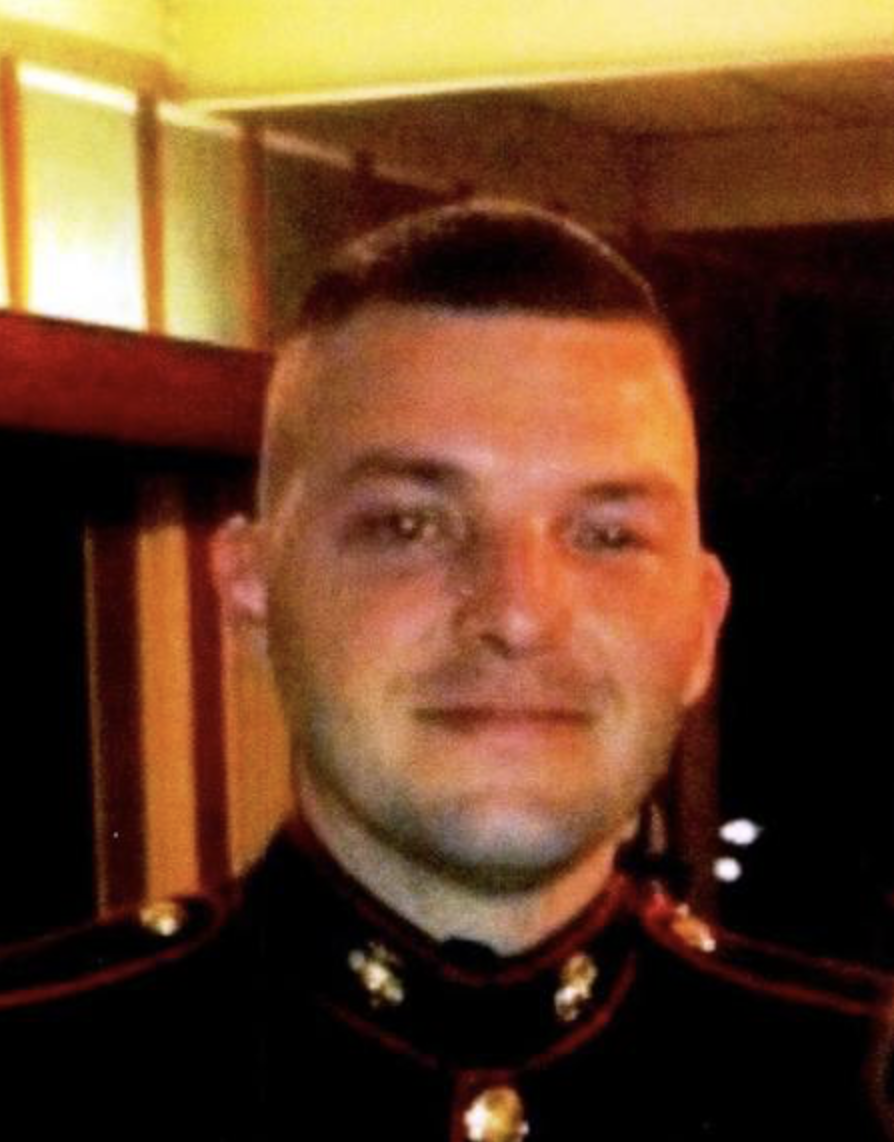
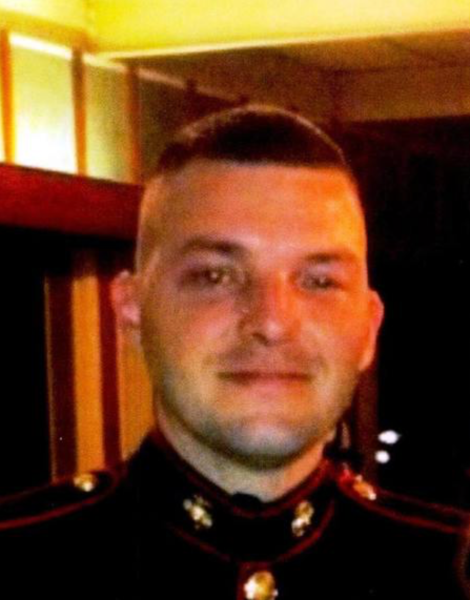
Justin Eldridge, U.S. Marine Corps Veteran (Photo: Obituary)
Marine Corps veteran Justin Eldridge was found dead of an apparent self-inflicted gunshot wound in his Waterford, Connecticut home on October 29, 2013. Justin served in the Marine Corps for 8 1/2 years. After a deployment to Afghanistan he battled with both Post Traumatic Stress Disorder and Traumatic Brain Injury. As a result he was medically retired from the Marine Corps in 2008. Justin was married with four children at the time of his death. Justin’s wife Joanna has continued the fight for our soldiers and veterans. Senator Richard Blumenthal (D-CT) honored Justin Eldridge on the Senate Floor and co-sponsored a veteran suicide prevention bill in his name. Joanna attended the 2015 State of the Union and a bipartisan suicide prevention bill was signed into law in March 2015.
His final message, posted on his Facebook Page at about 9 p.m., “theres only so much bashing someone can take before they react………” –Waterford Patch (October 29, 2013)
Senator Richard Blumenthal Honors US Marine Justin Eldridge:
In a Senator Floor speech today, Connecticut Senator Richard Blumenthal honors the heroism of United States Marine Justin Eldridge of Waterford, tragic victim of Post Traumatic Stress Disorder who took his own life two days ago. (October 30, 2013)
U.S. Army Ranger John Needham, who was awarded two purple hearts and three medals for heroism, wrote to military authorities in 2007 reporting war crimes that he witnessed being committed by his own command and fellow soldiers in Al Doura, Iraq. His charges were supported by atrocity photos which, in the public interest, are now released in this video. John paid a terrible price for his opposition to these acts. His story is tragic. –On the Dark Side in Al Doura (December 17, 2011)
After watching the 2011 documentary ‘On the Dark Side in Al Doura’ which profiles the case of Army Private John Needham, one can clearly observe the similarities to ‘The Kill Team’ PBS documentary released in 2014. On the Dark Side in Al Doura interviewed Michael Needham, the father of John Needham, who was an Army whistleblower from Fort Carson, Colorado and reported witnessing war crimes and atrocities in Iraq; The Kill Team profiled Adam Winfield, an Army whistleblower from Fort Lewis, Washington who witnessed and tried to report the same war crimes and atrocities in Afghanistan. For the sake of preservation, both John Needham and Adam Winfield admitted feeling pressured to conform or risk their own lives if they didn’t. They both felt like they were being set up to die or participate in the war crimes. Both soldiers at times felt like suicide was their only way out because there was no safe place for them to report overseas nor could they escape the situation. If they made it out of the war zone alive, the return home didn’t fair well for them. The PBS documentary ‘The Wounded Platoon’ released in 2010 reveals the impacts the wars overseas had on Fort Carson soldiers. After watching these three documentaries, it’s clear why our soldier’s combat experiences traumatized and changed some of them. They not only had to fight a credible threat on the battlefields but some were betrayed by the very team they depended on for their lives.
Michael Needham takes us through the series of events that occurred in the course of John’s short Army career. He shared how John was the fifth generation in the family to fight in a war. John volunteered to join the Army in the spring of 2006, went to Fort Benning, Georgia for training, and then got stationed at Fort Carson. John was an Army Ranger assigned to the 212th, 2nd Combat Team, 12th Regiment, 2nd Infantry Division. He was part of the infamous team known as the ‘Lethal Warriors’ which now appears to be disbanded. Part of his initiation into his new band of brothers was fighting other soldiers to determine where one fell in the pecking order. John held his own in the fights and was respected for his wins. According to John, the soldiers that didn’t fair so well in the fights were ‘smoked’ by leadership and peers, which ultimately forced them to leave, quit, or commit suicide. In October of 2006 John was deployed with his Fort Carson team to Al Doura, Iraq. His team was assigned to the Quarter Cav which was known for having some of the deadliest fights in the Iraq war.
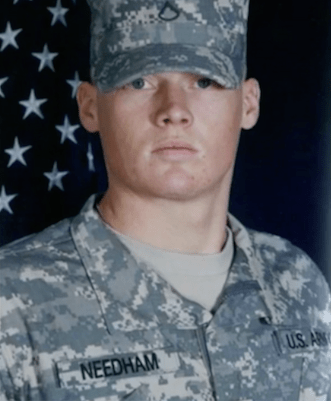
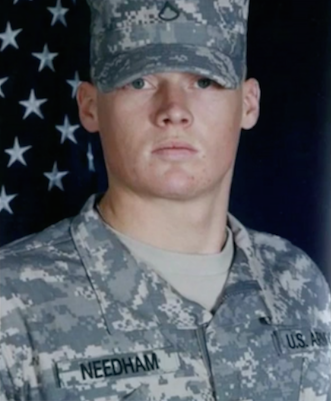
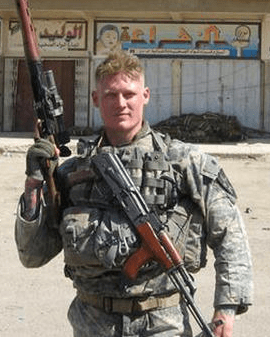
Private John Needham, U.S. Army
John was a good soldier. He worked hard, saved lives in Iraq, and was awarded three medals for heroism and two Purple Hearts. John excelled as part of team, was brave, and his resilience was admirable. But during the course of John’s deployment, he witnessed war crimes and other atrocities committed by leadership and his fellow soldiers that affected his morale. John would also admit that initially he wasn’t quiet about it and when he did question superiors, he was told he didn’t have the right to question leadership. He didn’t dare report the war crimes via e-mail or telephone because he knew leadership could monitor everything. So for the sake of preservation and life’s sake, he did what he had to do to get by and stay alive. John would share that the Army was short of personnel so most of the soldiers got driven into the ground and deprived of sleep. After awhile John felt that he was forced into committing war atrocities that were illegal but feared if he didn’t do it, he would become a liability to the team and ultimately a casualty of his own people.
One night John was sent out on a mission with a Lieutenant (who did not commit war crimes yet remained silent). John thought this was unusual because they didn’t usually get sent out in pairs. They were ambushed by three shooters in the middle of the night who were determined to see them dead. When the shooting began, John pushed the Lieutenant to safety and kept the shooters at bay. He shot every round he had and when he was almost out of ammunition, he called the 212th for back-up on the radio but nobody answered him. Luckily another team was nearby who did answer him and was able to extract the soldiers from the situation and save their lives. It would be this incident that would break John’s spirit. He immediately suspected that he and the other soldier were sent on this mission to be killed. When he got back to the base, he began yelling “Why did you set us up?” And “If you want to kill me, kill me to my face!” But nobody acknowledged him so he went back to his tent where he decided that he would commit suicide. John was exhausted, irate, and he saw no way out. He didn’t want to live anymore. He felt that committing suicide was his only way out. John put a handgun to his head but just as he got ready to pull the trigger, his roommate dove and pushed the gun away from his head. The gun discharged and put a hole in the wall. Soldiers immediately began ascending upon the area. According to John, once leadership learned what happened, they held him down and beat him then locked him in captivity in a small room. The Battalion Commander was the one who kept John captive yet he didn’t press any formal charges.
John’s father Michael learned through John’s friends in Afghanistan that John was being held captive by the Battalion Commander. They were concerned about him. John’s family was already concerned about John’s earlier e-mails and posts on MySpace because it sounded like he had given up, which was not like him. With this information Michael Needham contacted Army commands, Fort Carson, Congressional leaders and the Army Inspector General (IG). He reports that the only office that took him seriously at the time was the IG. Michael was trying to save his son’s life. He told the IG that he didn’t want him to die. The IG’s office shared a list of rights for both John and Michael. And it was at this time Michael learned that he had third party rights and could intervene and act on John’s behalf. Michael was finally able to get in touch with the Battalion Commander only to learn that John was being treated like a criminal. The Battalion Commander informed Michael that John committed crimes and was being sent to prison in Kuwait. But Michael was able to intervene and get the Command to send him to medical instead. Medical determined that John was severely injured both physically and mentally. He had significant back injuries from the multiple explosions and blasts, shrapnel in his body, Traumatic Brain Injury, and Post Traumatic Stress Disorder. Army medical in Iraq referred John to medical in Germany and from there he would be sent to Walter Reed Army Medical Center in the states. But not before the Battalion Commander would put up one more roadblock. Instead, Michael Needham won this battle and John was flown to Germany.
Eventually, John was sent to Ward 54 which is the psychiatric ward at Walter Reed. Michael shared that John appeared to like the psychiatric help he was getting. A month into John’s stay at Walter Reed, he was informed that the Iraq Battalion Commander contacted the 212th Command in Colorado and requested that John be sent back to Fort Carson where he was facing criminal charges including unlawful discharge of a weapon. They were making him go and sent armed guards to accompany him back to Fort Carson. Michael Needham tried to intervene with the 212th at Fort Carson but they said they couldn’t do anything because they had orders from the Battalion Commander. John was sent back to Fort Carson and the harassment he endured in Iraq continued with the 212th in Colorado. John shared that they mentally tortured him, banged on his barracks door, stole his things, and isolated him. It was at this time Michael elicited the help of a veteran advocate Andrew Pogany who went to the command in Colorado and held these people personally accountable. Andrew helps soldiers in John’s situation because he understands how important it is to intervene. John could not get the kind of help that he needed at Fort Carson. Michael shared that the soldiers could see a professional once a week if they were suicidal and once a month if they were not. John’s father wanted him transferred to a Naval Medical Center in San Diego for intensive treatment and so he could be closer to home. Andrew helped make that happen.
Michael began to understand the impacts the war had on his son after John got back to California. John couldn’t handle driving above 35 mph, was suspicious of trash on the side of the road, and was easily startled by loud noises. He could not function in public and suffered with what is known as flashbacks. The Naval Medical Center in San Diego recommended that John get surgery on his back right away. They warned him that he could become paralyzed if he didn’t get the surgery. In the meantime Johns father spoke candidly with one of the Navy doctors about the treatment John received both in Iraq and at Fort Carson. He reiterated that he was concerned about his well being and asked him to help him find a way to prevent John from being sent back to Fort Carson, Colorado. Michael Needham feared that if John got sent back to Fort Carson that he would not return. This doctor agreed to help John. And Andrew Pogany recommended that John report the war crimes to the Army in an effort to protect John from being complicit and implicated in the future. John reported to the Army that he witnessed both leadership and peers killing innocent Iraqi civilians during the October 2006 to October 2007 timeframe in and around Al Doura. It wasn’t long after John made the report that all the charges against him were dropped and Fort Carson gave the necessary approval to transfer him to Balboa Naval Command. John went in front of the medical board and was medically retired for Post Traumatic Stress Disorder, Traumatic Brain Injury, and back injuries. He was discharged honorably from the Army. The Army investigated John’s claims but concluded that no war crimes were committed.
Michael and John won a lot of battles with the US Army but soon they would lose the war. Just days after John was discharged from the Army, he would be accused of beating his new girlfriend to death with his bare hands. John Needham was charged with the murder of Jacqwelyn Villagomez and jailed for ten months until his family raised enough money to get him out on bail. John was not given treatment while jailed so the family was motivated to get him out so he could get the treatment he needed. John did in fact follow through with getting treatment and he learned a lot about himself in the process. He spent some time on camera talking about how the combat stress and the betrayal from his team impacted him. He talked about how he didn’t realize the significant impacts from Post Traumatic Stress Disorder and Traumatic Brain Injury. John recognized how PTSD and TBI did in fact play a role in his fight or flight response mechanisms and that it may be because these conditions went untreated that he disocciated, snapped and beat his girlfriend to death. The two were in a heated argument after Jacqwelyn attacked one of John’s female friends. Both of them were volatile but unfortunately there were no witnesses to the event as John’s friend was outside the home calling the police to report Jacqwelyn. While John was awaiting trial, he went to Arizona to get another surgery and visit with his mom. On February 19, 2010 following treatment at the Department of Veterans Affairs, John would be found dead in his room from an overdose on painkillers. The cause of death at autopsy was considered undetermined and it is unclear if John accidentally overdosed or committed suicide.
Brig. Gen. Stephen Xenakis, M.D. (Ret.), a former top military psychiatrist who until recently was a consultant to the Joint Chiefs of Staff, told us: “[TBI ]most sensitively affects executive functioning, that part of the brain that we use for judgment and we use for decision making … when we are in situations of intense emotion. So if a person is affected neurologically … they don’t have the controls that they had before. … They can’t think as clearly. …They are really vulnerable to just reacting, overreacting, particularly maybe doing something that they had done when they’d been in combat.” –The Wounded Platoon
As a parent, Michael Needham has questions for the Army. Why don’t they even recognize the problem? Why don’t they take care of the soldiers? And why did they leave his son John Needham behind? The documentary ‘On the Dark Side in Al Doura’ concludes with the reminder that since the Patriot Act was passed and Dick Cheney declared that we needed to go into the shadows, the definition of torture has been blurred. The Abu Ghraib prisoner torture and abuse scandal erupted under the Bush administration in 2003 but no war crimes have been investigated under President Barack Obama’s administration. If the rule of law has been lost, what do we have? Our military personnel have a responsibility to abide by the rules established by the Geneva Conventions. John Needham and Adam Winfield both reported witnessing innocent civilians murdered by their fellow leadership and peers in Iraq and Afghanistan. They both also shared the impact the crimes had on their mental health and morale. They wished they could have reported the crimes to someone who would have listened and understood that their lives were in danger. We can learn a lot from John Needham and Adam Winfield; they have experienced what it’s like to be a whistleblower in the US Army. They have clearly illustrated what toxic leadership in the Army looks like and how whistleblowers in the US military have nowhere to turn.
In March 2006, John Needham joined the Army making him the fifth generation in his family to serve in the Armed Forces. In the fall of 2006, John deployed with his team from Fort Carson, Colorado to fight the war in Iraq during some of the most intense combat in the war. Army private John Needham began to downward spiral about eleven months into a deployment to Iraq after surviving multiple IED and grenade attacks. He was injured both mentally and physically. John claims that when he reached out for help his Army command told him to tell the medical personnel that he was fine so he wouldn’t be sent home. John did what he was asked to do. Soon thereafter John began sending alarming e-mails to his family and learned that his deployment was going to be extended beyond the twelve months he was originally tasked with. In September 2007, John contemplated suicide and one of his fellow comrades stopped him but in the struggle the gun discharged. It was at this time that John’s leadership began to shame him and isolate him. They also assigned two soldiers to watch over him twenty-four seven. John felt that eventually his team turned on him as did his command, who recommended him for courts martial because of the incident with the gun.
John’s father became concerned about John’s health and after making numerous phone calls was able to get him sent to Walter Reed Army Medical Center. John spent one month in psychiatric treatment before the Army pulled him from Walter Reed and sent him back to Fort Carson, Colorado where he was facing punishment. John continued to abuse pills, drugs, and alcohol and as a result was getting in trouble. John’s parents were concerned about his health again and fought for him to get transferred to San Diego for help and to be closer to them. John was prescribed a myriad of drugs to help him cope with the diagnosis of Post Traumatic Stress Disorder. During this time, John sent a letter to the Army command at Fort Carson to report that he witnessed war atrocities while fighting in Iraq. An investigation was launched into the allegations yet the Army would determine that war crimes did not occur. Although John’s courts martial quietly went away and John was medically retired and discharged from the US Army. It would only be a few days later on September 1, 2008 that he would be accused of beating his girlfriend Jacqwelyn Villagomez to death with his bare hands. He was arrested for her murder, let out on bail, and awaiting trial for her murder when he learned that PTSD and Traumatic Brain Injury may be what led him to overreact and snap during the argument with Jacqwelyn.
In July 2009, ten months after Jacqwelyn’s death, John learned from the Department of Veterans Affairs that he did in fact have a Traumatic Brain Injury. John learned that the TBI can impact brain functioning including memory, speech, and hearing. He came to realize that combat changes who you are and that he may have suffered from a flashback when he attacked his girlfriend. According to witnesses Jacqwelyn became upset after she was asked to leave John’s home. As she was leaving one of John’s female friends stopped by which enraged Jacqwelyn. Jacqwelyn began beating the female friend who was able to escape and flee from the situation. While the friend was on the phone with the police reporting the incident, John was inside arguing and fighting with Jacqwelyn who herself was volatile. It was at this time that John snapped and beat Jacqwelyn to death with his own hands. He was discovered with swollen hands and bloodied after the vicious attack. The prosecution hoped to prove that John got drunk and killed Jacqwelyn in a drunken rage but John and his defense team hoped to prove that he suffered from a flashback, therefore he blamed both the Post Traumatic Stress Disorder and the Traumatic Brain Injury for the frenzied, animalistic attack. John was facing twenty-five years to life in prison for the murder.
In early 2010, as John’s trial got closer, John had another surgery to repair his back injuries from an IED explosion in Iraq. It failed and John continued to suffer with a high intensity of pain. According to his family, John could barely walk. John moved to Arizona for another surgery and to spend some time with his mom. He appeared happy to be back in the desert again. John’s brother drove from California to Arizona to spend some time with John. The next day, February 19, 2010, John’s brother discovered him clinging to life in his room. John’s brother attempted to save his life but John took his last breath in his brother’s arms and died at the age of 26. They would later learn that John died of an apparent overdose on painkillers. The autopsy was considered undetermined yet medical experts believe that the unusually high dosage of painkillers in John’s system could lead one to believe that John committed suicide. To this day it is unclear if John’s death was accidental or a suicide. John’s brother noted that it was ironic that he would make it through months of intense, deadly combat yet die once he gets home. There was no military funeral held for John but he was remembered for both the lives he saved in Iraq and the life he took when he got back home.
On this edition of DTRH Popeye covers the eleven year anniversary of the illegal, and immoral invasion of Iraq. He starts off by getting into the story of PFC John Needham, who witnessed war crimes being committed, and was locked up and tortured by his own command for not partaking in them himself. His story is an example of what happens when we “embrace the dark-side” as Dick Cheney put it in the push for the invasion. -DTHR




 MILITARY JUSTICE FOR ALL