Lance Cpl. Jesse Carson & Private Jason Blad, US Marine Corps
Marines Lance Cpl. Jason Blad, 21, and Jesse Carson, 20, pleaded guilty to the attempted murder of a 20 year old woman on the Pacific Grove Recreation Trail in California on November 11th, 2000. The two men stabbed the woman 12 times and slashed her throat twice before leaving her for dead on the trail. Both Marines were students at the Defense Language Institute at the time of the attack. Blad and Carson were arrested on March 15, 2001 after allegedly admitting that they were responsible for the attack. Pacific Grove police said shortly after the arrest, they found a journal near the barracks bunk of the young Marines and apparently they just wanted to kill someone, anyone, and had their sights on other targets as well. At the trial, the victim told jurors she pleaded for her life and tried to get away but the two pinned her to the ground and began stabbing her on each side. Jason Blad and Jesse Carson were convicted of attempted premeditated murder and sentenced to life in prison.
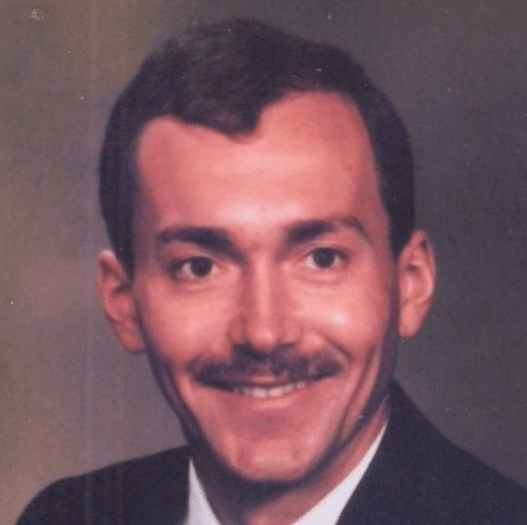
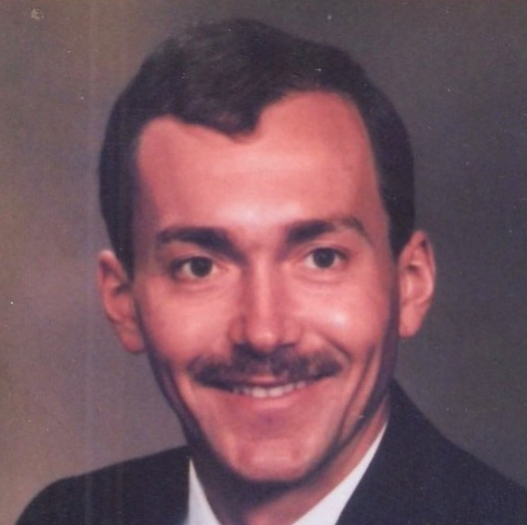
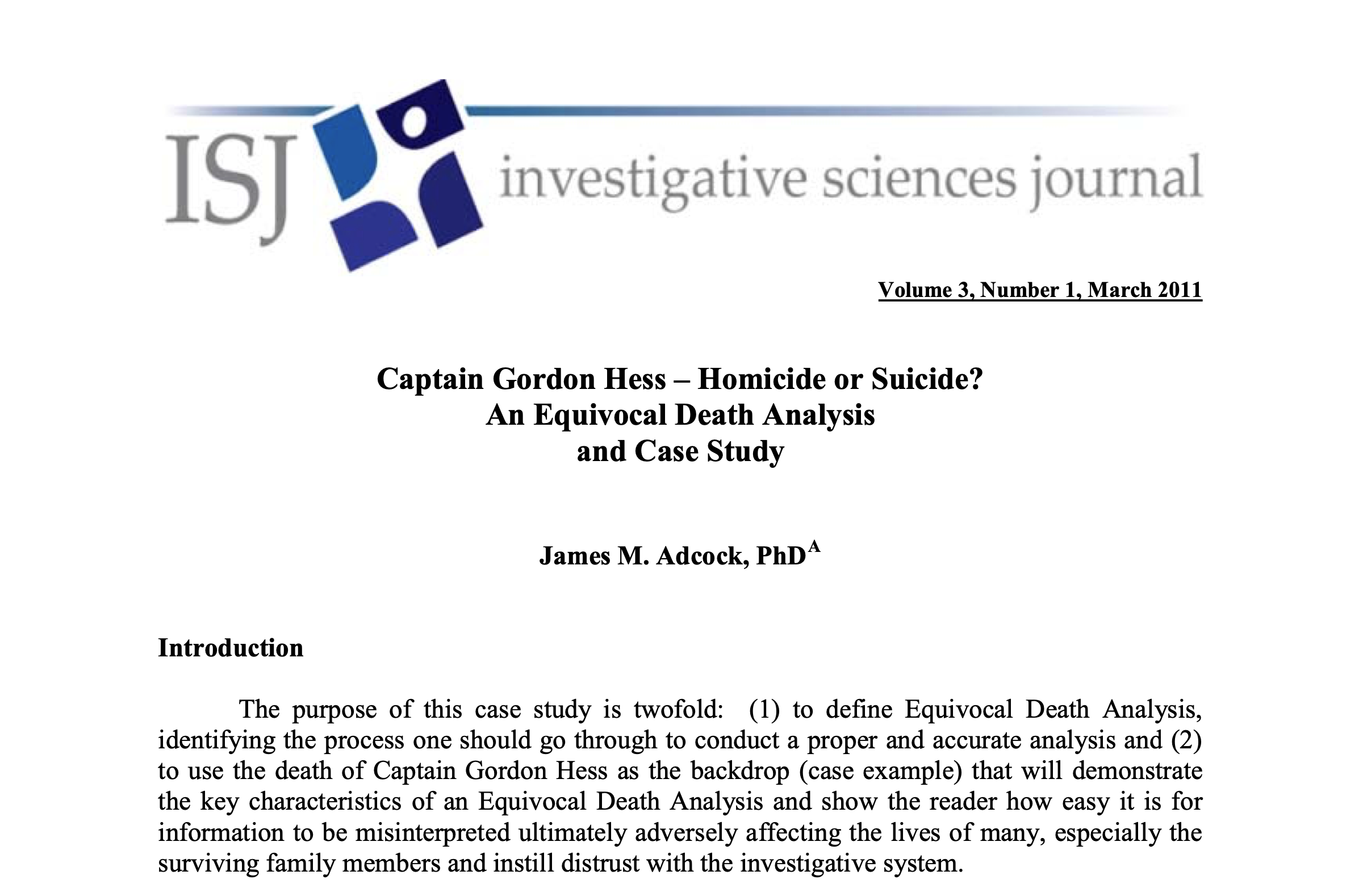
Army Captain Gordon Hess was found dead in a creek bed at Fort Knox, Kentucky on March 4, 1998 while there on temporary duty with the New York Army National Guard. Army investigators ruled the cause of death was ‘suicide’ but the family and an outside forensic pathologist dispute those findings given the autopsy revealed that Captain Hess had twenty-six stab wounds to the neck and chest area.
Doreen Hess shared with the LA Times: “Even as we attempted to bury his mutilated body, the Army stabbed him again with a suicide ruling.” The Army claims that it fully investigates all undetermined deaths as a homicide initially but after a thorough investigation of this case, including hundreds of interviews, they determined that Captain Hess died by suicide.
The family vehemently disagrees with the Army investigator’s findings based on the forensic evidence and a history of the Army ruling a soldier’s death a suicide when in fact it was most likely a homicide. An important fact to remember is that if an Army investigation determines the cause of death is suicide, they never have to investigate it again despite the impact on the families left behind.
“Absolutely no way did this man commit suicide. This gentleman was murdered.” -Charles DeAngelo, Esq.
“In time the historic aspects or victimology relating to Hess began to unveil itself to the investigators. That, coupled with the Psychological Autopsy, provided much needed data. Gordon Hess was dedicated and devoted to his family, friends and community. He loved his family and children and was a dedicated father and husband. Hess had been described by many as a ‘Perfectionist.’ He consistently strived to be the best and to do things better. “He was competitive and struggled to be number one while he begrudgingly tolerated second best.” According to the report his career path was erratic and frustrating. For a competitive and dedicated man he struggled early in his career after leaving the Army, working at several jobs.”
“Although he was personally successful, this all led to financial strain due to the failures of several employers. He always wanted to be on a winning team which finally seemed to have happened when he became a fireman. Hess appeared at this time to excel at all his endeavors and likely expected nothing less from himself. It was indicated that earlier in his life Hess loved the Army and initially did not want to get out but family issues and concerns made it happen. Therefore, his affiliation and participation with the National Guard was probably one of the most cherished endeavors in his life. He enjoyed status and achievement in a structured environment that was team oriented and was a respected leader.”
“It also reflected that becoming a company commander was viewed by him as a significant achievement. The Army and this status was a big part of his identity; one that he did not just turn off after a training cycle because he continued to be involved by being at the Armory frequently well beyond the expectations of his supervisors and his stated responsibilities. The Army was a part of him. Yet he was not depressive and did not appear to suffer from any psychiatric disorder or medical problem. While he had conquered much adversity in the past, Hess was a man who struggled with feelings of inferiority that ‘fueled his drive to prove to others and to himself that he was competent and worthy of his achievements.’ He strongly identified with his roles as a fireman and an Army Captain. However, he had difficulty tolerating self perceived failure in the audience of those he sought and received affirmation.”
Army veteran Doug Gissendaner was murdered by his wife Kelly and her lover Gregory Owen in Auburn, Georgia on February 7, 1997. Doug met his wife Kelly in 1989 in Georgia. Kelly was a party girl and had already been married for six months and divorced when she met Doug. She had a child from her previous marriage and Doug welcomed the child with open arms. Within two months, they were married and then Kelly got pregnant. Doug loved being a father, husband, and family man. Then Doug joined the Army and got stationed overseas in Germany. While Doug was away, Kelly resorted to her old ways and started partying at the clubs on base. Kelly loved being on base with soldiers since the military base was a ready supply of men. It was reported that Kelly was so promiscuous on base that eventually she was asked to leave and her and the children were sent back to the United States.
In 1991, Doug returned home from his enlistment in the Army. He decided to forgive his wife and they reunited. Shortly after the reunification, Doug learned that Kelly was pregnant with someone else’s child. He was disappointed to say the least as he wanted to keep his family together. Divorce was inevitable. But after three years of being alone, Doug was desperate to be with his family again. The couple remarried and moved in together. Doug put up with Kelly so he could be a family man and provider to the children. Kelly wanted a house so Doug bought her one. What Doug didn’t realize is that Kelly was having an affair with 25 year old Gregory Owen. Kelly approached Owen about three months prior to the murder and asked him to get rid of Doug. Owen didn’t take her seriously initially and suggested she simply divorce him.
On the day of the murder, Kelly drove Owen to her residence in Auburn where he would wait for Doug with a knife and a nightstick that she provided to him. Kelly went out drinking with her friends to establish an alibi. Owen ambushed Doug when he got home and forced him into his own vehicle. He then took him to a remote wooded area where he forced him on his knees, hit him on the head from behind with the nightstick, and stabbed him in the neck ten times. Owen paged Kelly after he was done. Kelly showed up to the crime scene, demanded to see the body, and used gasoline, an accelerant, to set Doug’s car on fire. Kelly Gissendaner reported Doug missing to the police the following day. Investigators suspected Kelly immediately because they believed she was not being truthful. They found Doug’s body eleven days later.
Kelly eventually admitted to police that she was having an affair with Gregory Owen and this tip led investigators to the man who would eventually confess to the murder of Doug Gissendaner. Owen was tormented with guilt and felt manipulated and used. As a result, Owen testified at Kelly’s trial that she wanted to cash in on an insurance policy and become the outright owner of the marital home. In exchange for his testimony, Gregory Owen was sentenced to life in prison with the possibility of parole in twenty-five years. Kelly Gissendaner maintained her innocence but was found guilty of malice murder and sentenced to death in 1998. She lived her prison life in solitary confinement and was executed by the State of Georgia on September 30th, 2015. Kelly Gissendaner wanted things her way no matter the cost and conveniently had her husband killed after he bought her a house.
Investigation Discovery:
For these women, one good man wasn’t enough. A middle-aged woman used looks to prey on elderly gentleman; an army wife didn’t want a soldier but a squad; and a serial wife cooks up meals to die for. These Deadly Women married for the money, honey. -Deadly Women (S8, E11)
Editor’s note: With a cable subscription, you can download the free ID Go app and watch Investigation Discovery programming at your convenience. And for those who do not have cable, you can watch “unlocked” episodes on the ID Go app including the latest premieres. For those who prefer commercial free programming during your binge session, Prime Video has an ID channel: ‘True Crime Files by Investigation Discovery” available for $3.99 a month. It’s a compilation of older seasons but totally worth the cost if you are a true crime addict. Download the ID Go app or purchase ID True Crime Files & binge away.
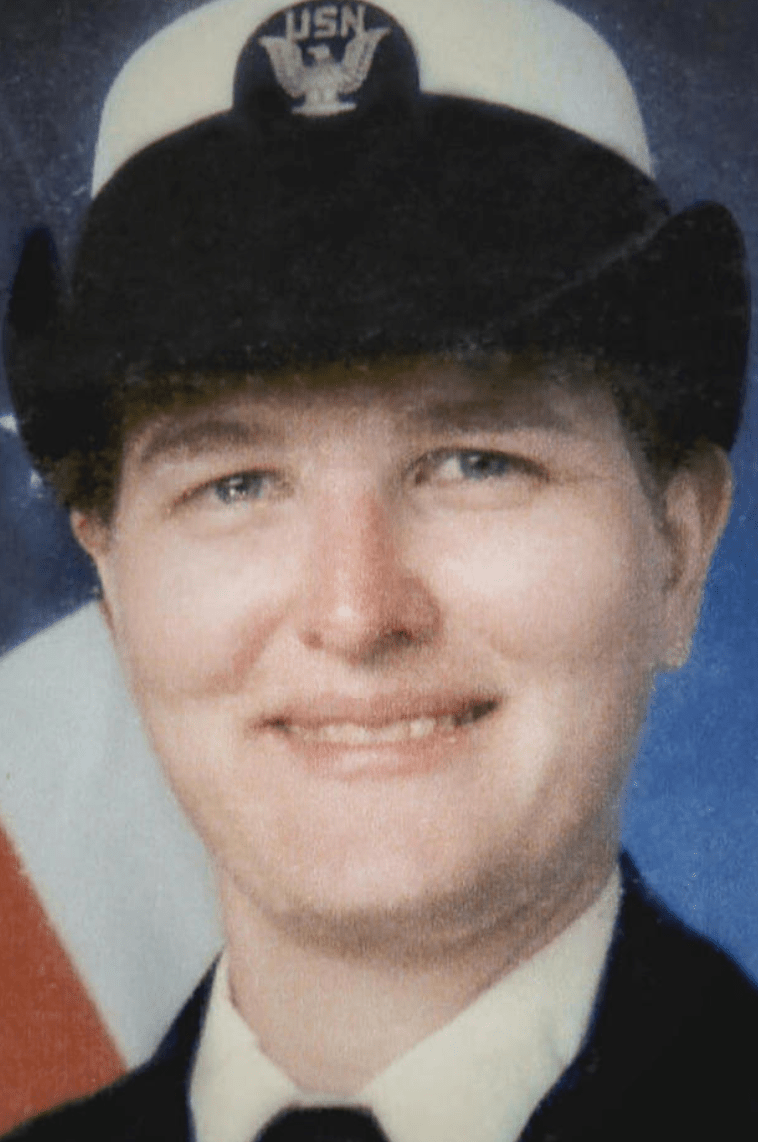
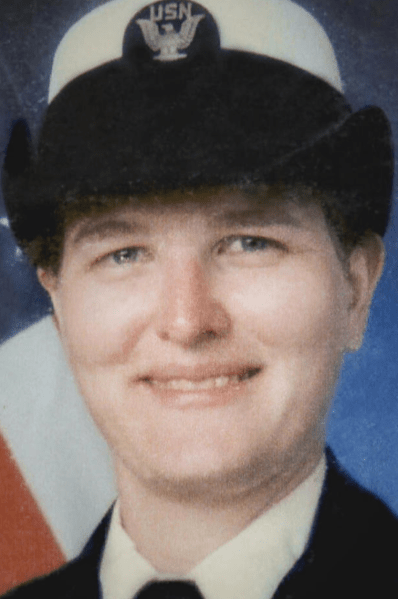
Navy Petty Officer Elise Makdessi worked as an Air Traffic Controller at Naval Air Station Oceana in Virginia. Elise was married to Eddie Makdessi for five years and they lived off base in Virginia Beach. Elise unknowingly helped plan, organize, and carry out her own murder and it is unclear if she was a willing participant in the original plot with Eddie to scam the government out of money or if she was controlled by Eddie. Eddie Makdessi murdered Elise Makdessi and Navy Petty Officer Quincy Brown on May 14, 1996 as part of an elaborate scam. The whole thing was a set up. Elise thought she was part of an arrangement where she would invite Quincy Brown to the house, have sex with him, then accuse him of rape. She also manufactured evidence to make it look like she was documenting sexual abuse in an effort to sue the Navy and make millions. She had journals and created what looked like a rehearsed video outlining what four Navy men, including Quincy Brown, did to her on the job.
Five years earlier in 1991 the Navy Tailhook scandal in Nevada made national headlines. Navy Lieutenant Paula Coughlin was one of the alleged victims who went public with her story. Two years before Elise and Quincy were murdered, Paula Coughlin won 1.7 million after suing the Las Vegas Hilton hotel where the Tailhook Association convention was held. Eddie must have convinced Elise that they too could make millions if they alleged that Elise was sexually assaulted on the job. What they didn’t realize is that you can’t sue the Navy; Coughlin won a lawsuit against the Hilton hotel. The Feres Doctrine prevents any soldier or their family from suing the Department of Defense for compensatory damages. Investigators believe that knowledge of this information gave Eddie and Elise Makdessi the motive to come up with the false accusation scheme to sue the Navy. Eddie was a scammer and always looking for new ways to make quick money. Elise didn’t know she was double crossed until Eddie was plunging the knife. A month before the murders, Eddie purchased $700,000 worth of life insurance on Elise.
Eddie and Elise Makdessi invited Petty Officer Quincy Brown over to the house under the guise of having a threesome. DNA evidence revealed that Elise and Quincy Brown had sex. Investigators would learn that Eddie shot Quincy first, then stabbed Elise. He hurt himself to make it appear that Quincy invaded the house, knocked him out, raped and killed Elise, and then he awoke from unconsciousness and shot the intruder. Eddie staged the crime scene and he almost got away with it. But investigators figured out this was a ‘set up’ based on the crime scene evidence, interviews with Elise’s co-workers, the video tape, and the large insurance policy. They were also savvy enough to recognize that this was a copycat case. Elise’s sexual harassment and sexual assault claims were in fact fabricated. All the men she accused of sex crimes in the video passed a polygraph examination and her supervisors testified that Elise never reported sexual harassment or sexual assault like she claimed in her video testimony. Unfortunately Quincy Brown was the pawn they used in their game and he never got the chance to see that the allegations were proven false.
Eddie was indicted in 2001. But by the time investigators were ready to arrest Eddie Makdessi for the murder of Elise Makdessi and Quincy Brown, Eddie had fled the country. They eventually caught up with him in Russia. Unfortunately, Russia did not have an extradition treaty with the United States so police could not force Eddie to come back to the states. Mike Mather, an investigative reporter, went to Russia to interview Makdessi and learned that he was remarried with a child yet things weren’t going so well for Eddie financially in Russia. After that interview, Eddie decided to leave his wife and child in Russia and go back to America to face the charges. He was going to prove his innocence and clear his name. He was sure he would beat the charges. It would be ten years after he committed the first degree murders of Elise and Quincy Brown before he went to trial. On March 16, 2006, Eddie Makdessi was convicted of two counts of murder, sentenced to life in prison, and ordered to pay a $202,500 fine. The motive was the life insurance money. He used the $700,000 payout to travel the world before settling in Russia. Eddie continues to deny committing the crimes.
Elise Makdessi’s sister, Dawn Crosby, asked the jury to “show Eddie Makdessi that my sister’s life was worth more than $700,000.” –The Virginia-Pilot (March 17, 2006)
Forensic Files:
Full Episode: Virginia Beach police arrive at the Makdessi apartment to find Elise Makdessi and her lover, Quincy Brown, dead. Elise’s husband Eddie had reported that he killed Quincy Brown in self-defense after Brown had murdered Elise. Eddie gave the police a videotape Elise had made a week before, alleging that she had been the victim of sexual harassment. -Double Cross, Forensic Files (S13,E5)
Investigation Discovery:
Paramedics respond to a horrific crime scene – a woman is found tied to a bed with slashes across her body. Next to her on the floor, a man with three gunshot wounds. Detectives spend the next several years unraveling this bizarre mystery. -Last Man Standing, Solved (S2,E10)
When a Naval Officer is apparently raped and stabbed by a coworker, a mysterious VHS tape suggests the victim may have been silenced to prevent a scandal. Dogged investigation and cutting edge forensic science reveals a shocking murder plot. -Deadly Accusations, Unusual Suspects (S7,E4)
Editor’s note: With a cable subscription, you can download the free ID Go app and watch Investigation Discovery programming at your convenience. And for those who do not have cable, you can watch “unlocked” episodes on the ID Go app including the latest premieres. For those who prefer commercial free programming during your binge session, Prime Video has an ID channel: ‘True Crime Files by Investigation Discovery” available for $3.99 a month. It’s a compilation of older seasons but totally worth the cost if you are a true crime addict. Download the ID Go app or purchase ID True Crime Files & binge away.
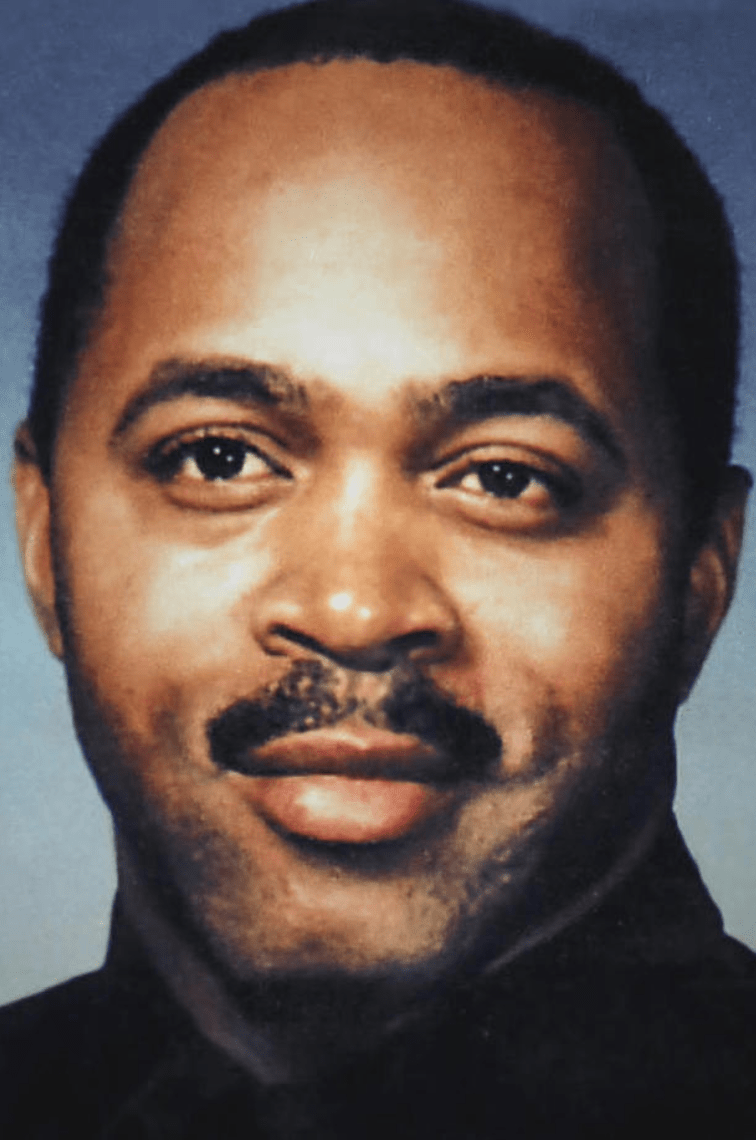
Honoring Navy Petty Officer Quincy Brown who died on May 14, 1996 in Virginia Beach, Virginia. Petty Officer Brown and Petty Officer Elise Makdessi were murdered by Elise’s husband Eddie Makdessi in the Makdessi home. Quincy Brown was lured to the residence under false pretenses, not aware that he was part of a plot that ended with murder. Eddie shot Quincy Brown and then stabbed Elise Makdessi. He told the police that Quincy Brown broke into his home, knocked him out, raped and murdered Elise, and when he awoke he shot the intruder. Forensic science proved that Eddie’s version of events were not supported by the evidence. Investigators concluded that Eddie was most likely motivated to kill by his wife’s $700,000 life insurance policy he had purchased a month earlier. Eddie Makdessi was indicted in 2001 but wouldn’t go to trial for his crimes until 2006 as he fled the country with his life insurance money. Unfortunately, the United States didn’t have an extradition treaty with Russia. After Eddie Makdessi finally returned to the US, he was charged with two counts of first degree murder, found guilty, and sentenced to life in prison. He continues to deny that he committed the crimes.
Investigation Discovery:
Paramedics respond to a horrific crime scene – a woman is found tied to a bed with slashes across her body. Next to her on the floor, a man with three gunshot wounds. Detectives spend the next several years unraveling this bizarre mystery. -Last Man Standing, Solved (S2,E10)
When a Naval Officer is apparently raped and stabbed by a coworker, a mysterious VHS tape suggests the victim may have been silenced to prevent a scandal. Dogged investigation and cutting edge forensic science reveals a shocking murder plot. -Deadly Accusations, Unusual Suspects (S7,E4)
March 11, 1995: Denise Maney, 32, Palm Springs, California
Marine veteran Andrew Urdiales is accused of murdering eight women from 1986 to 1996, five in California and three in Illinois, and raping and abducting 19 year old Jennifer Asbenson who escaped and survived. Urdiales was indicted for three murders in Illinois and was sentenced to death but the death sentence was commuted after Governor Pat Quinn of Illinois abolished capital punishment in 2011. Instead he received three life sentences for the murders of Laura Uylaki, Cassandra Corum, and Lynn Huber. A gun confiscated in a separate incident linked the three murders in Illinois together and during an interrogation, Urdiales admitted in detail to five cold case murders in California too.
After years of legal wrangling, Urdiales was eventually extradited to California and indicted in 2009 on five counts of first degree murder. He was accused of killing Robbin Brandley, Julie McGhee, Mary Ann Wells, Tammie Erwin, and Denise Maney while stationed at Camp Pendleton Marine Corps base. On May 23, 2018, Andrew Urdiales was convicted of five murders by a jury that deliberated for about a day before recommending in June 2018 that he be sentenced to death for each of the five murders. On November 2, 2018, corrections officials said they found Urdiales unresponsive during a security check at San Quentin State Prison; former Marine and serial killer Andrew Urdiales died by suicide.
In the News:
The murders occurred when Andrew Urdiales was stationed at various Marine Corps facilities in Southern California. -CBS Los Angeles (October 5, 2018)
Preview | Every Body Tells Its Own Story | Homicide Hunter | Investigation Discovery
Recently discharged Army veteran Brandin Penza was found stabbed to death in a Colorado Springs, Colorado parking lot on September 23, 1994. Apparently Brandin was on his way home when he was attacked. Detective Lt. Joe Kenda of the Colorado Springs Police Department was assigned to investigate the homicide. Lt. Kenda turned to Brandin’s friends first to learn more about him. He learned from his roommates that he had got out of the Army two weeks earlier and was only staying with friends temporarily until he moved back to Kansas to be with his girlfriend. Brandin was figuring out what he wanted to do next. He had a large group of friends in the military that he considered his family. They spent a lot of time together barbecuing and having fun. He was described as a happy-go-lucky guy who would give anyone the shirt off his back. They couldn’t think of anyone who had a motive to hurt him. His roommates informed Lt. Kenda that Brandin told them he was going out to the Rodeo Night Club. Lt. Kenda had very little evidence to work with so he turned to Brandin because his body tells a story.
Lt. Kenda discovered that Brandin Penza was stabbed 74 times. Kenda also deduced, based on where the stab wounds were located, that the killer was probably left handed. Only 10% of the world is left-handed. Kenda then ordered a K-9 unit to the scene of the crime to see if they could get a scent on their killer. Dogs can track the existence of a subject and where they may have gone. The K-9 and handler proceed about one hundred yards and then stop. It was a dead end. Kenda continues the investigation into the daylight which offers up more evidence. They found a tear drop of blood which helped them determine which way the person was going. Kenda and the team follow the trail of blood all the way to the door of one of the nearby apartments. Blood smears were present outside and inside the building and on the door where the apartment was located. They knocked on the door to find out who was behind it and they got no response. As they were about to kick the door, it opened and a scared kid in his underwear was standing there with his hands up. His name was Kevin Gooley, 21, and he was covered in blood and had injuries consistent with a knife attack. Kevin Gooley’s injuries suggested to Lt. Kenda that he was Brandin Penza’s killer.
Kevin Gooley
Lt. Kenda asked for his signature and discovered he was left handed as well. They searched his apartment and found blood soaked cowboy boots under his bed. Lt. Kenda opened the dresser drawers and discovered they were not drawers, they were cabinets with an arsenal of weapons. Lt. Kenda arrested Kevin Gooley for the murder of Brandin Penza. Lt. Kenda interrogated Gooley to find out why he killed him. This type of stabbing usually accompanies a very close, personal relationship. Gooley claimed he didn’t even know him but ran into him on the way home after having a few drinks at the bar. He claimed he was approached by an individual (Brandin) who asked him for money and it caused him alarm. He claimed Brandin put his arm around him as if to suggest that he was hitting on him. Kenda was suspicious of his reasoning for the crime. Regardless of the reason, Gooley admitted to killing Brandin Penza. He claimed he freaked out but his claims of self defense were hallow. Most likely, Kevin Gooley had no reason why he stabbed Brandin. Lt. Kenda suspected that Gooley most likely had a psychotic episode. Facing a death sentence if convicted of murder, Kevin Gooley took a plea deal in exchange for a 32 year prison sentence.
Investigation Discovery:
A popular army vet is found bleeding to death on the cold asphalt of a shadowy parking lot -his chest littered with too many knife wounds to count. A gruesome clue leads Kenda’s team to an unlikely killer whose motive for murder is as heartless. -Bad Blood, Homicide Hunter (S5,E1)
Editor’s note: With a cable subscription, you can download the free ID Go app and watch Investigation Discovery programming at your convenience. And for those who do not have cable, you can watch “unlocked” episodes on the ID Go app including the latest premieres. For those who prefer commercial free programming during your binge session, Prime Video has an ID channel: ‘True Crime Files by Investigation Discovery” available for $3.99 a month. It’s a compilation of older seasons but totally worth the cost if you are a true crime addict. Download the ID Go app or purchase ID True Crime Files & binge away.
When an Air Force veteran dies unexpectedly, Kenda and his team must determine if it was a tragic accident or premeditated murder. But before long, they discover that their clean-cut victim had a secret life. -Rest in Peace, Homicide Hunter (S9,E5)
Air Force Retiree Willy Jackson, 65, was found dead on the bedroom floor of his Colorado Springs home on June 24, 1994. At initial observation, there were no ligature marks, no bullet wounds, and no trauma observed at all. Willy’s wife Tony suggested he died of alcohol poisoning. Nonetheless, this was a suspicious death and detectives began their investigation. After the medical examiner arrived on scene, he turned the body over and observed a small puncture wound in Willy’s thigh. Investigators also found blood on the mattress and it was concealed with new sheets. Lt. Joe Kenda suspected either Tony or her son had something to do with this incident. After the autopsy was conducted, investigators learned Willy was stabbed with a steak knife and bled to death. Kenda got a warrant to search Willy’s home. The police sprayed luminal and discovered the stabbing occurred in the kitchen. There were blood stains all over the house.
Kenda wanted Tony to take a polygraph test. Before the polygraph was conducted, Willy’s wife Tony Jackson stopped the process and admitted she stabbed Willy. She claimed she did it in self-defense because he was drunk and annoyed that Tony was on the phone with her son’s dad. She said he began choking her and she grabbed a knife from the kitchen and poked him in the leg. Willy went to bed and she never suspected his wound would kill him. She cleaned up the house. After reviewing the case, the District Attorney concluded that Tony Jackson was acting in self-defense and declined to press murder charges. The investigators believed her too. Her crime was cleaning up blood and she was charged with that. She was sentenced to three years of supervised probation. If Willy wasn’t so drunk and passed out, he may have been able to save his own life.
Editor’s note: With a cable subscription, you can download the free ID Go app and watch Investigation Discovery programming at your convenience. And for those who do not have cable, you can watch “unlocked” episodes on the ID Go app including the latest premieres. For those who prefer commercial free programming during your binge session, Prime Video has an ID channel: ‘True Crime Files by Investigation Discovery” available for $3.99 a month. It’s a compilation of older seasons but totally worth the cost if you are a true crime addict. Download the ID Go app or purchase ID True Crime Files & binge away.
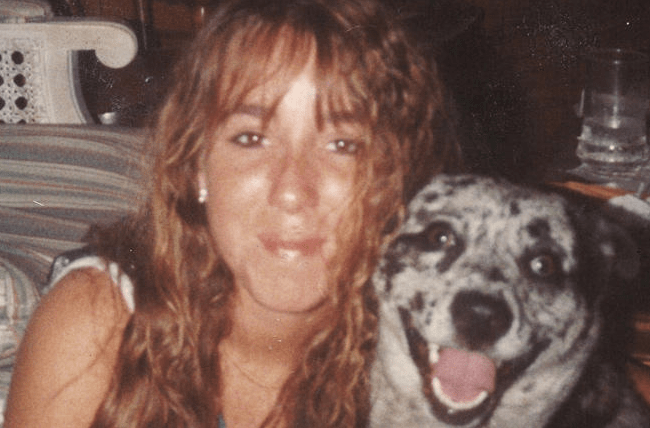
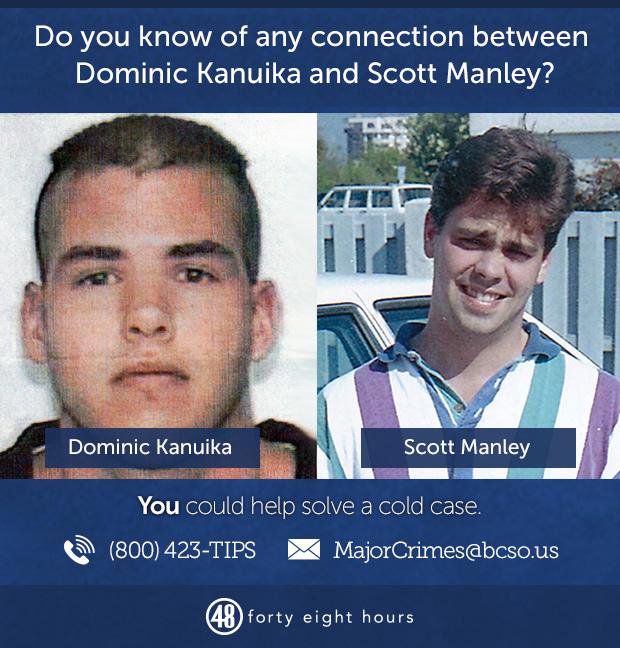
In the more than 20 years since the murder of a 21-year-old woman outside her home in Cocoa Beach, Florida, there have been a number of men investigated in connection with the case — but the crime remains unsolved. Members of the Brevard County Sheriff’s Office share details with “48 Hours”‘ Erin Moriarty.
On the evening of Sunday, March 20, 1994, Charlotte “Amy” Gellert was attacked by an intruder outside her residence in Cocoa Beach. She died as a result of her injuries. The intruder was described as a white male, early twenties, 5’07″ – 5’10″ tall, weighing between 165 to 185 pounds. Any persons providing information in reference to this case may be eligible for a reward up to $5,000.00. –Brevard County Sheriff’s Office
Preview: What would you do if you found your spouse sleeping with your best friend? When Stephen Schap found out his wife was pregnant with his best friend’s baby, he couldn’t control his anger. He was charged with premeditated murder and 45 years in jail. -Crazy Love, True Nightmares, Discovery Canada (January 26, 2016)
Editors Note: Love podcasts? Do you want to get up to speed quick with the Stephen Schap murder case, check out Episode 2 on the Military Murder Podcast.
Army Sgt. Stephen Schap and his wife Diane Schap were stationed at Sickles Army Airfield in Fulda, Germany. While living there, Diane began an affair with Sgt. Schap’s best friend. Sgt. Schap suspected Diane was cheating on him and confronted her. Diane admitted to Stephen she cheated on him with another man, she was pregnant, and she wanted a divorce. Sgt. Schap knew the child wasn’t his because he had a vasectomy at a young age. Sgt. Schap immediately suspected his best friend Spc. Gregory Glover and set off to confront him. On December 7, 1993, Sgt. Stephen Schap stabbed Spc. Gregory Glover up to fifteen (15) times before decapitating him on the Army post in front of witnesses. Sgt. Schap then delivered Spc. Glover’s head to his wife Diane while she was at the hospital. Sgt. Schap was charged with premeditated murder and found guilty of premeditated murder by a military jury in April 1994. Premeditated murder usually comes with a life sentence but according to the Military Murder Podcast, the convening authority reduced the sentence to 45 years in prison. Sgt. Schap was motivated to kill because his wife Diane Schap was having an affair with his best friend (betrayal), she was pregnant with Spc. Glover’s child (evidence of betrayal), and she wanted a divorce (took marriage vows seriously). During the trial, there were differences of opinion as to whether this was a case of premeditated murder or a crime committed in the heat of passion, hence the reason the convening authority gave Sgt. Schap a reduced sentence.
The death of a farm owner leads to a murder mystery with a shocking outcome; a random twist of fate raises questions for the parents of a thrill seeking teenager; a women betrays her husband and it leads to an unthinkable, horrifying scenario. -Crazy Love, True Nightmares (S1,E1)
Editor’s note: With a cable subscription, you can download the free ID Go app and watch Investigation Discovery programming at your convenience. And for those who do not have cable, you can watch “unlocked” episodes on the ID Go app including the latest premieres. For those who prefer commercial free programming during your binge session, Prime Video has an ID channel: ‘True Crime Files by Investigation Discovery” available for $3.99 a month. It’s a compilation of older seasons but totally worth the cost if you are a true crime addict. Download the ID Go app or purchase ID True Crime Files & binge away.










 MILITARY JUSTICE FOR ALL