“The Pentagon has announced new steps to deter assaults and make it easier to prosecute offenders, a move that follows President Obama’s recent remark that sexual assault “has no place” in the U.S. military.
Still, many victims believe it will be difficult to change a military culture that makes it tough for the victims to report these crimes. For victims, the nightmare starts with the attack. Many say that things get worse when they try to do something about it.”
“We anticipate maybe about 14 or 15 percent of people who have been sexually assaulted come forward to report.” -Air Force Maj. Gen. Mary Kay Hertog
Myah Bilton-Smith is a USAF veteran who was sexually assaulted twice in 2012 at Goodfellow Air Force Base in Texas. She reported the attacks to her Command but according to reports the case is still under investigation by the Air Force Office of Special Investigations (AFOSI) and no meaningful legal action has been taken as of yet. After the second attack, she requested an expedited transfer (a military sexual assault policy passed in December 2011) but it was denied. Instead she was forced to work alongside her attackers in a training environment where you do not have freedom of movement. She experienced retaliation from her peers and leaders, punishment for minor infractions, and was eventually forced out of the military. She was finally granted an expedited transfer to Joint Base Lewis McChord, one of the most problematic bases in the country.
The family of slain Marine Lance Cpl. Maria Lauterbach is hailing recent provisions in the National Defense Authorization Act that profoundly change the way the Department of Defense will handle sexual assault charges.
The Defense STRONG Act has cleared both the House and the Senate and is awaiting President Barack Obama’s signature. Provisions include access to legal counsel for victims and the right to request a base transfer.
Lauterbach’s mother, Mary Lauterbach of Vandalia, said the new law would have made the difference in the case of her daughter, who was denied a base transfer after accusing fellow Marine Cesar Laurean of sexual assault. “Maria would be alive today if the base transfer had been available to her,” she said.
Turner concurred, “In civilian life you have complete control of your movements, and if you’re in an unsafe situation you can remove yourself. In military life, the victim needs permission to take even basic self-preservation actions.”
In the News:
New provisions handed down from the Department of Defense are giving sexual assault victims in the military rights they never had before. It’s all thanks to the fight from Congressman Mike Turner and a local mother Mary Lauterbach. The provisions make certain that a victim has legal counsel throughout the whole process so they understand what their legal rights are and how to protect themselves. The provisions also remove the accused from the situation and not the victim. -WKEF/WRGT (August 15, 2013)
A major hurdle cleared for sexual assault victims in the military. Congress passed a bill that would give victims rights and protection they never had before. The push came after the tragic murder of local marine Maria Lauterbach and her unborn son. Congress approved a bill that would give military sexual assault victims legal counsel and criminalize retaliation against any victim. “If Maria had had this, she would be alive today, it’s very important.” The bill now heads to President Barack Obama for his signature. -WKEF/WRGT (December 20, 2013)
Law protecting military victims of sexual assault discussed. -WDTN-TV (May 1, 2018)
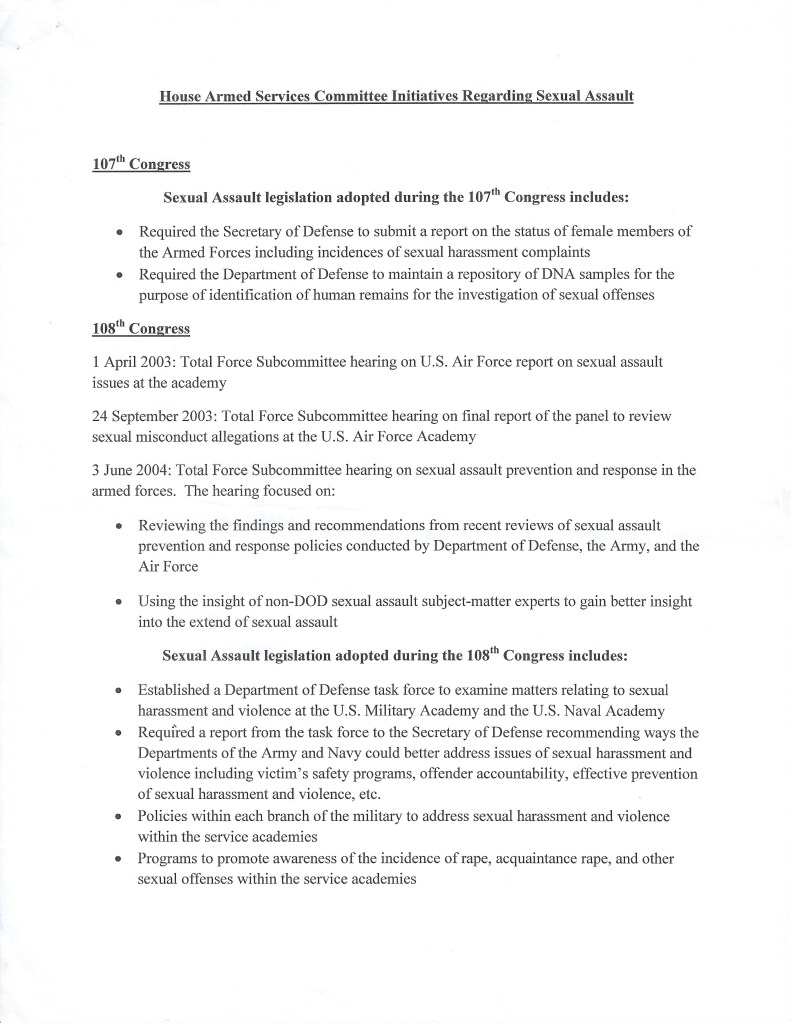
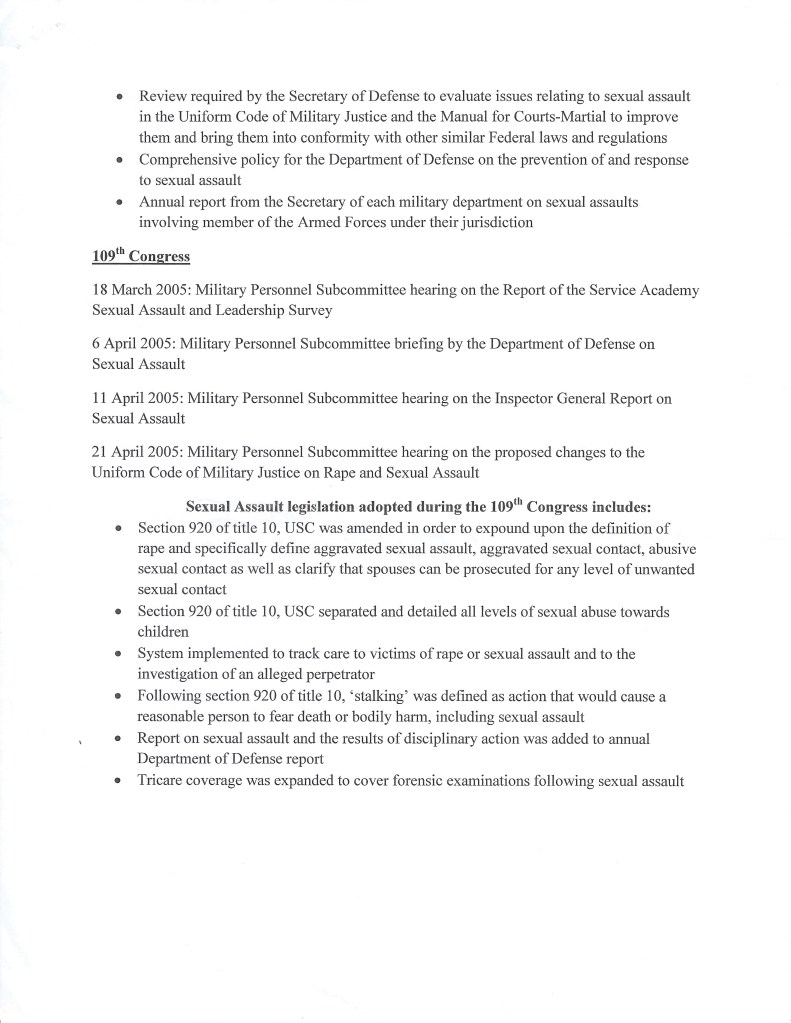
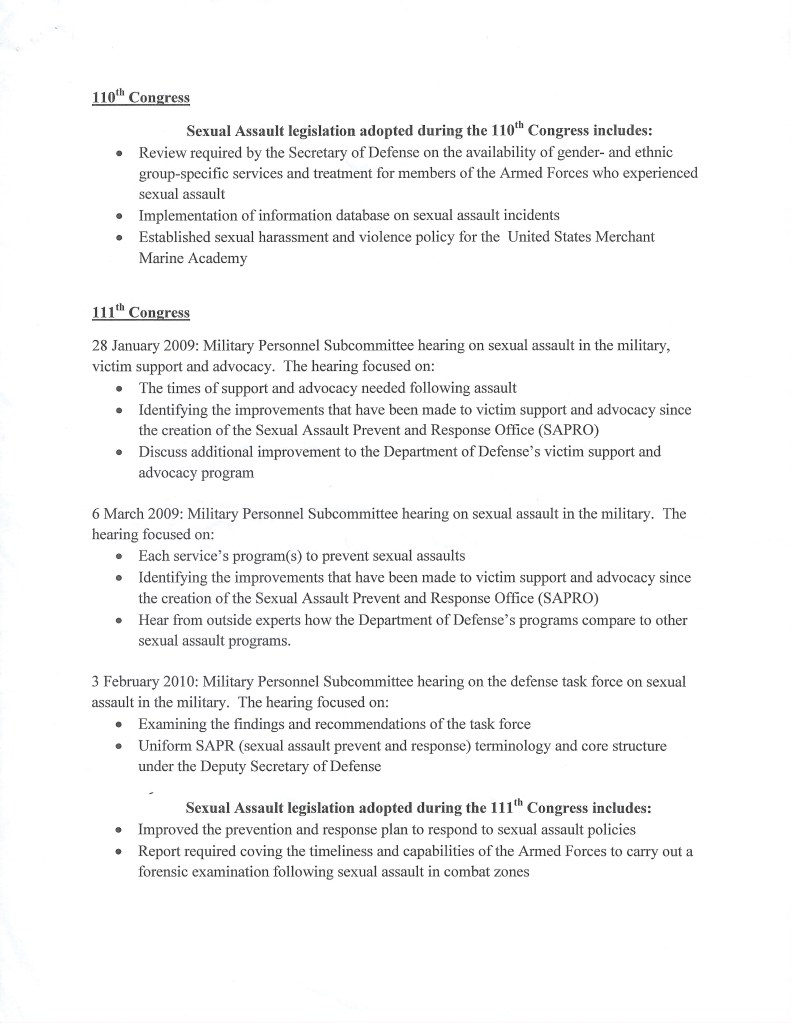
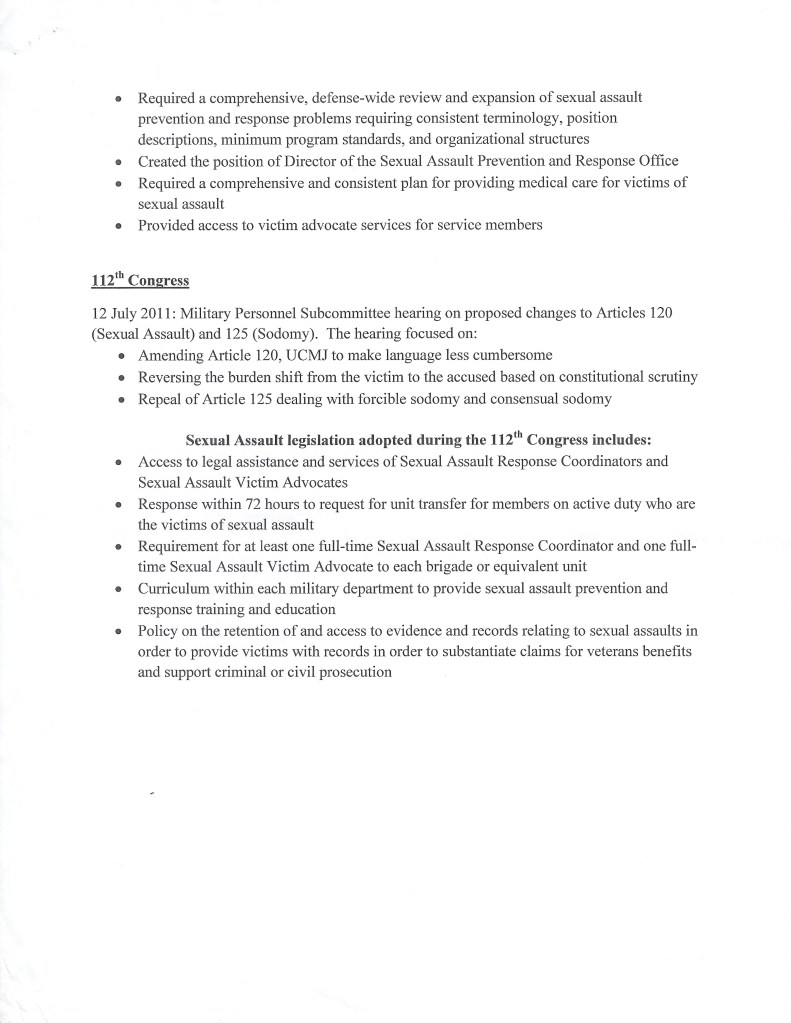
Key changes in military policy
By executive order, communication between victims and victim advocates will now be privileged. Previously conversations between victim and victim advocates can be subpoenaed in court, making victims reluctant to come forward. Pending legislation HR 1540, passed by both the House and Senate, provides for:
Legal assistance for victims of sexual assault. Previously, only defendants in the military have been guaranteed access to a lawyer.
Stricter training guidelines and greater oversight for Sexual Assault Response Coordinators and Sexual Assault Victim Advocates.
Retention of sexual assault records with lifetime access for service members.
The victim’s right to a base transfer or unit transfer. Under the new law, these requests will be expedited, with decisions being made within 72 hours and the bias should be in favor of the victim.
Air Force officials say 21-year-old Airman 1st Class Nico Cruz Santos was taken into custody at Schriever Air Force Base at about 8 p.m. Monday. They’re still investigating how he managed to get his personal handgun into the base before barricading himself in a building for ten hours.
[Former] Rep. Bruce Braley introduces the Holley Lynn James Act — a bill to help victims of sexual assault and domestic violence in the military get justice. The bill is named after Holley Lynn James, a constituent of [former] Rep. Braley who was killed by her husband while both were in the service. -[Former] Rep. Bruce Braley (April 12, 2011)
“The U.S. military could crack down on internal cases of sexual and domestic abuse. That’s if a bill that [former] Congressman Bruce Braley has written becomes law. The bill is named after this former Dubuque [Iowa] woman. In 2008, Holley Lynn James’ husband killed her at their home at a military base in North Carolina. Both James and her husband John Wimunc were in the military. [KCRG spoke with James’ father] Call it a gut feeling or a father’s intuition, during the spring of 2008 Jesse James knew something wasn’t right with his daughter’s marriage. ‘We were constantly calling the unit, calling the unit and they would do something but it didn’t last very long’ (Jesse James) Two months before her death, Army 2nd Lt. Holley James filed a domestic violence complaint with police against her estranged husband Marine Corporal John Wimunc.
[Wimunc] later killed Holley, dismembered her body, then set her apartment on fire. ‘The military has never had a system of investigating and prosecuting these cases’(Jesse James). But [former] Congressman Braley’s new bill aims to change all that. It would create an Inspector General’s office to handle abuse cases. There would be a resource department for victims and would include a neutral third party investigator. ‘This isn’t an indictment on military leaders, it’s just that people who are more qualified with the life experiences to investigate and prosecute these things need to be doing it’ (Jesse James). James says he’ll never know but a department like this may have saved his daughter’s life…John Wimunc pleaded guilty to Holley James murder and a judge sentenced him to life in prison without parole. James had two children from a previous relationship. Jesse James says the children are doing well and living with their father…”
“Last year the Department of Defense reported more than 3000 instances of sexual assault in the military. Now [former] Iowa Congressman Bruce Braley has introduced legislation that aims to bring that number down. ‘When it has to do with woman serving their country in the military, I can’t think of a better reason for people to come together and come up with a solution to an alarming problem’ (Rep. Bruce Braley). In Dubuque today, Braley spoke about the Holley Lynn James Act. It would help victims of sexual and domestic abuse in the military. The bill is named after the Dubuque native and Army 2nd Lt. [Holley Lynn James] who was killed by her husband [John Wimunc] in 2008. The bill would enlist the office of Inspector General to provide independent oversight in reported cases.” –KCRG-TV (April 12, 2011)
The family of Sgt. Amanda Sheldon hopes her death may spark change. The 2004 Belding graduate’s body will return to West Michigan on Thursday night, about one week after Sheldon took her own life while serving at a Fort Bragg, N.C., military base. -WOOD TV8 (October 14, 2010)
“Just like any other soldier, whether she died in combat or some other way, she’s still a fallen soldier. She served her country and she served it well.” -Renee Orcatt (Amanda Sheldon’s mom)
Army Sgt. Amanda Sheldon, 24, took her own life while stationed with the 82nd Airborne Division at Fort Bragg in North Carolina. Sgt. Sheldon was found unresponsive at her off-post home in Fayetteville and was pronounced dead at the local hospital on October 7, 2010. Sgt. Sheldon was attached to the 18th Fires Brigade, 82nd Airborne Division at Fort Bragg. She joined the Army in October 2005 and was assigned to Fort Bragg in February 2010. The family of Sgt. Amanda Sheldon hopes the circumstances surrounding her untimely death will spark military-wide change. In 2010, the Department of Defense was concerned about the increase in active duty suicides and since then the numbers have only increased. CNN reported the suicide rates among active-duty Marines and the Navy are at a 10-year high on January 28, 2019. Task and Purpose reported Army suicides reached a five-year high on January 31, 2019. Military.com reported Active-Duty military suicides are at Record Highs in 2018.
Army Sgt. Amanda Sheldon, 24, took her own life while stationed with the 82nd Airborne Division at Fort Bragg in North Carolina. Sgt. Sheldon was found unresponsive at her off-post home in Fayetteville and was pronounced dead at the local hospital on October 7, 2010. Sgt. Sheldon’s mom, Renee Orcatt, went public with Amanda’s story in an effort to raise awareness, change policy, and save lives. Renee told the local media that Amanda was a victim of rape in the military at the hands of a superior officer. Amanda reported the crime to the Army and informed them she had been drugged and raped. As a result, the suspect was criminally convicted and discharged from the Army. Initially, Amanda sought help from military counselors and the family reported that she was getting better, yet still struggled with depression. Amanda wanted to deal with it and move on to serve her country as she had originally intended to do.
Unfortunately, according to Renee, this wasn’t the last time Amanda would have to confront her past while serving in the Army. When Amanda was up for promotion, she was asked why she was going to counseling. She would go on to get her promotion, but this line of questioning was something she never wanted to experience again. After making the realization that her past and seeking help was not confidential, counseling was out of the question in her future if she wanted to preserve her career. Sgt. Sheldon felt judged for seeking treatment for military sexual trauma. Her mom reported that Amanda recognized she needed counseling again and was planning on getting out of the military. When she died, she was serving out her final year of enlistment, had plans to go to college, and wanted to start a new life outside the military, with her new love. But her unit got tasked with a deployment to Afghanistan and she set about making plans to go to Afghanistan with her unit before she was discharged from the Army.
Amanda would learn that in order to accomplish this, she would need to re-enlist for two more years. Amanda didn’t want to stay in for two more years and made the devastating decision to stay back. She felt like no matter what decision she made, she was letting someone down. Renee observed that Amanda never came to grips with this decision and entered into depression. Amanda’s mom begged her to get counseling but to Amanda that was no longer an option. Sgt. Sheldon was attached to the 18th Fires Brigade, 82nd Airborne Division at Fort Bragg. She joined the Army in October 2005 and was assigned to Fort Bragg in February 2010. The family of Sgt. Amanda Sheldon hopes the circumstances surrounding her untimely death will spark military-wide change. In 2010, the Department of Defense was concerned about the increase in active duty suicides and since then the number of suicides in the military has increased.
Editor’s Note: CNN reported the suicide rates among active-duty Marines and the Navy are at a 10-year high on January 28, 2019. Task and Purpose reported Army suicides reached a five-year high on January 31, 2019. Military.com reported Active-Duty military suicides are at Record Highs in 2018.
“Just like any other soldier, whether she died in combat or some other way, she’s still a fallen soldier. She served her country and she served it well.” -Renee Orcatt (Amanda Sheldon’s mom)
Source: Soldier’s Mom speaks out on suicide, WOOD TV8 (October 14, 2010)
The family of Sgt. Amanda Sheldon hopes her death may spark change. The 2004 Belding graduate’s body will return to West Michigan on Thursday night, about one week after Sheldon took her own life while serving at a Fort Bragg, N.C., military base. -WOOD TV8 (October 14, 2010)
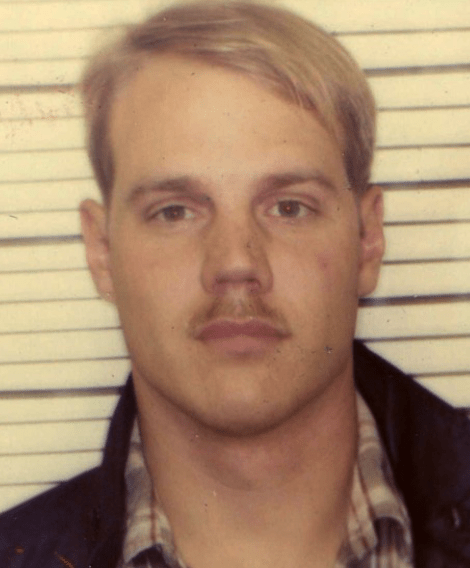
In 1985, a young military officer’s wife and two of her three little girls were viciously murdered in their Fayetteville, North Carolina home. Kathryn Eastburn was also raped. The crime occurred six miles from the location of where Jeffrey MacDonald was accused of killing his wife and two children on the base at Fort Bragg. Army sergeant Timothy Hennis became a suspect from the beginning because a day or so earlier, he bought the Eastburn’s family dog. In a background check, they found that he had 3 convictions for writing bad checks and a witness identified him as the same person leaving the Eastburn home during the time in question. Eventually he was charged and found guilty of the murders of Kathryn, Cara, and Erin Eastburn; he was sentenced to death by the civilian authorities in North Carolina. But he appealed, was granted a new trial and at his second death penalty trial, he was found not guilty.
After his acquittal, he joined the Army again for two more tours, worked his way up to E-8, and retired as a MSG from Fort Lewis, Washington. Twenty years later, DNA evidence from a vaginal swab taken from Kathryn Eastburn linked Hennis to the crimes. Civilian prosecutors could not charge Hennis due to double jeopardy; but the US military did claiming they have federal jurisdiction because Hennis is a retiree. As a result, he was ordered back into service due to his retirement status. Hennis tried to claim consensual sex which contradicted original testimony. In 2010, a military jury found him guilty of three counts of murder and he was sentenced to death again. Hennis sits on death row at Fort Leavenworth with three other service members: Ronald Gray, Hasan Akbar, and Nidal Hasan.
In 1985, a young military wife and two of her three little girls are viciously murdered in their home. In a twisted case filled with unusual suspects, the man who gets convicted goes free. But nothing is what it seems. -Discovery ID
3 People on Death Row Who May Be Innocent | Criminally Listed
A man tried three times for his life but is he a killer? Find out! Death Row Stories.
While on death row, Tim Hennis received an anonymous letter confessing to the murders. The note didn’t produce any leads. -Death Row Stories
The star witness in Tim Hennis’ trial had doubts about whether Hennis committed the murders. -Death Row Stories
Timothy Hennis Double Jeopardy | Death Row Stories | CNN
Air Force spouse Kathryn Eastburn was found brutally raped and murdered on May 9, 1985 in her Fayetteville, North Carolina home. Two of her three children, Cara and Erin, were also murdered in the same vicious way. All three were stabbed and their throats were slashed. Kathryn and her three children were home alone while Gary Eastburn was on temporary duty at Maxwell Air Force Base in Alabama. The youngest daughter Jana was found dehydrated but otherwise unharmed. The crime occurred six miles from the location of where Jeffrey MacDonald was accused of killing his wife and two children at Fort Bragg. Army Sergeant Timothy Hennis was a suspect from the beginning because he had visited the Eastburn home a couple days earlier to buy the family dog.
Kathryn placed a dog for sale ad in the local post paper. Investigators sent out a press release looking for the person who bought the dog. In the meantime, a neighbor reported seeing someone leaving the Eastburn residence at the time in question. The neighbor provided details for a composite drawing; the suspect drove a white Chevy Chevette. At the urging of his wife, Hennis contacted the police station and investigators were stunned at how much he looked like the composite drawing. He also drove a white Chevy Chevette. In a background check, they found that Hennis had three convictions for writing bad checks. This was significant because the perpetrator stole Kathryn’s ATM card and used it on one occasion. Another witness identified Hennis as the person who used the ATM at the time in question.
In 1986, the State of North Carolina tried Hennis for the triple murders. Hennis was found guilty and sentenced to death. But he appealed and was found not guilty in the second death penalty trial. After his ‘exoneration’ Hennis was the subject of a book and an ABC made for television movie “Innocent Victims”. Meanwhile, against lawyers advice, Hennis enlisted in the Army again for two more tours, worked his way up to E-8, and retired as a MSG outside of Fort Lewis, Washington. Cold case investigators took a second look at the cold case and because of the advances in DNA technology, they retrieved a vaginal swab from the rape kit test and submitted it to the lab. DNA evidence linked Timothy Hennis to Kathryn Eastburn.The State of North Carolina prosecutors could not charge Hennis a third time because he was found ‘not guilty’ of the triple homicides in the second death penalty trial.
The Double Jeopardy Clause of the Fifth Amendment to the United States Constitution provides: “[N]or shall any person be subject for the same offence to be twice put in jeopardy of life or limb…” [wikipedia]. The civilians couldn’t try him in State court but the Army could because of federal jurisdiction; Hennis was an Army retiree therefore still under their jurisdiction. As a result, Hennis was activated and order to report to Fort Bragg for his third death penalty trial. The defense attempted to justify the DNA match to consensual sex but it contradicted his original testimony. The defense also called into question the ethics of the lab who made the DNA match. A military jury found Timothy Hennis guilty of three counts of murder and sentenced him to death. He awaits his execution date at Fort Leavenworth in Kansas.
Source: Unusual Suspects ‘Mother’s Day Murders’
In 1985, a young military wife and two of her three little girls are viciously murdered in their home. In a twisted case filled with unusual suspects, the man who gets convicted goes free. But nothing is what it seems. -Discovery ID


 NPR: Pentagon Revamps Rules On Reporting Sex Crimes










 MILITARY JUSTICE FOR ALL
