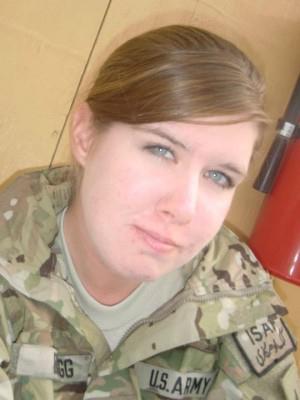
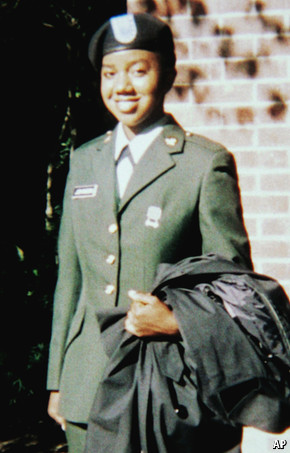
Army Specialist Mikayla Bragg died of a non combat death in Khowst province, Afghanistan on December 21, 2011. Spc. Bragg was supporting Operation Enduring Freedom on behalf of the 201st Brigade Support Battalion, 3rd Brigade Combat Team, 1st Infantry Division in Fort Knox, Kentucky. The Army ruled that Spc. Bragg’s cause of death was suicide. After an investigation it was revealed that commanders at Fort Knox failed to properly track Spc. Bragg as a “high-risk” soldier who could potentially hurt herself or others before she was cleared to deploy to Afghanistan. The Army investigators also made three recommendations in the report.
Mental-health providers stateside should share more information about high-risk soldiers with mental-health providers in war zones. Camp Salerno’s behavioral-health officer said she had been unable to get mental-health records for Bragg because of privacy laws.
Commanders should develop better procedures to ensure personnel data is not lost while transferring soldiers between units.
No soldier, regardless of gender, should be stationed in a guard tower alone.
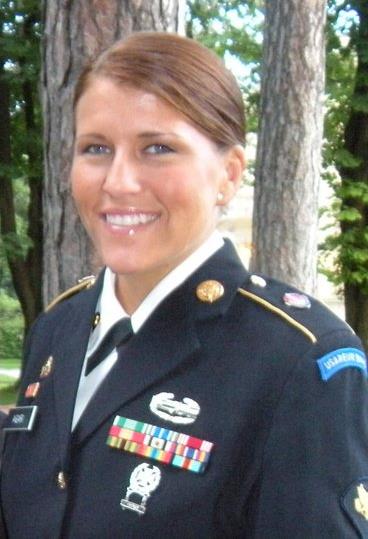
According to the U.S. Army Europe Public Affairs, unit officials conducted a health and welfare inspection of Sgt. Kimberly D. Agar’s barracks room after Agar missed a medical appointment. The corporal was found unresponsive and German emergency medical personnel were contacted. A German doctor pronounced Kimberly dead at the scene on October 3, 2011. An investigation into the cause of death determined Kimberly died by suicide. Kimberly’s mother has since dedicated her life to raising awareness of active-duty suicide rates in an effort to prevent suicide within the active-duty ranks.
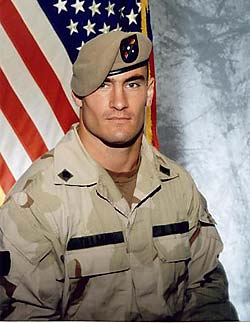
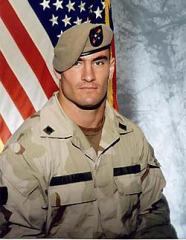
When NFL player-turned-Army Ranger Pat Tillman died at the hands of US troops in a case of “friendly fire,” the spin machine at the Pentagon went into overdrive. Rumsfeld and company couldn’t have their most high-profile soldier dying in such an inelegant fashion, especially with the release of those pesky photos from Abu Ghraib hitting the airwaves. So an obscene lie was told to Tillman’s family, his friends and the American public. The chickenhawks in charge, whose only exposure to war was watching John Wayne movies, claimed that he died charging a hill and was cut down by the radical Islamic enemies of freedom. In the weeks preceding his death, Tillman was beginning to question what exactly he was fighting for, telling friends that he believed the war in Iraq was ” [expletive] illegal.” He may not have known what he was fighting for, but it’s now clear what he died for: public relations. Today, after five years, six investigations and two Congressional hearings, questions still linger about how Tillman died and why it was covered up.
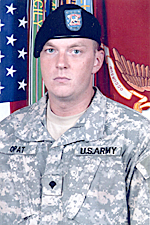
Army Spc. Christopher W. Opat, 29, died of a non combat related incident on June 15, 2010 in Baquah, Iraq. Spc. Opat was supporting Operation Iraqi Freedom on behalf of the 1st Squadron, 14th Cavalry Regiment, 3rd Stryker Brigade Combat Team, 2nd Infantry Division at Joint Base Lewis-McChord in Washington. According to the Department of Defense, at the time of the press release the circumstances surrounding the incident were under investigation.
Army Private Janelle King, 23, died of injuries suffered in a non-combat related incident in Baghdad, Iraq on August 14, 2008. Private King was working as a combat medic stationed at Camp Cropper, a military detainee center near Baghdad International Airport, on her first tour of duty at the time of her death. Pvt. King was supporting Operation Iraqi Freedom on behalf of the 115th Combat Support Hospital at Fort Polk, Louisiana. At the time of the Department of Defense press release, the incident was under investigation. The outcome of the investigation and the official cause of death is unknown. Janelle was from Merced, California, she graduated from Rancocas Valley Regional High School in Mount Holly, New Jersey in 2003, and attended a culinary arts school in San Francisco, California before joining the Army in May 2007. Janelle’s father served in the active duty Air Force and she grew up as a military dependent.
“The eldest daughter of an Air Force official, King was born in Altus, Okla., and lived in California, Panama and Hawaii before graduating from Rancocas Valley Regional High School in Mt. Holly, N.J., in 2003. Brian King said his daughter’s death makes his own work in the Air Force harder at times.” –Los Angeles Times (October 26, 2008)
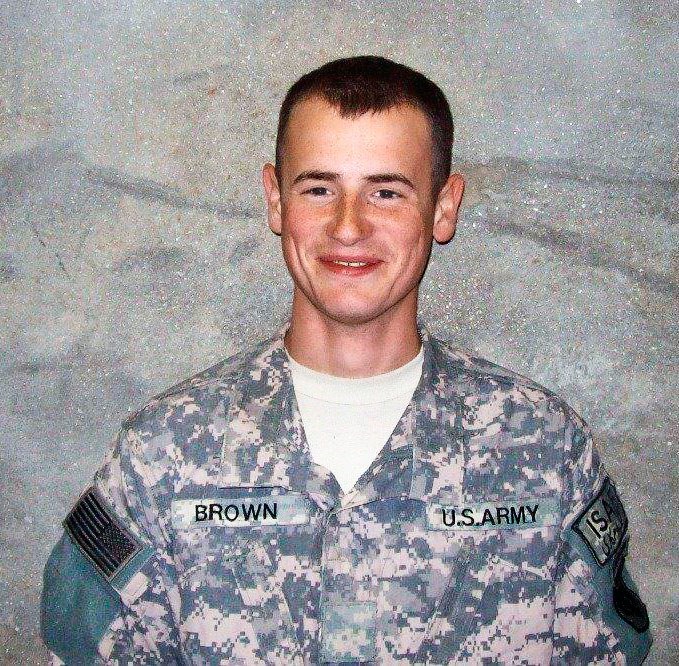
Pvt. Matthew Brown, U.S. Army (photo: Vanity Fair)
Army Pvt. Matthew W. Brown, 20, of Zelienople, Pennsylvania, died May 11, 2008 in Asadabad, Afghanistan from injuries suffered in a non-combat related incident. Pvt. Brown was supporting Operation Enduring Freedom on behalf of the 3rd Battalion, 321st Field Artillery Regiment, 18th Fires Brigade (Airborne) at Fort Bragg, North Carolina. At the time of the incident, the Department of Defense announced Pvt. Brown’s death was under investigation. On January 8, 2019, the family alleged Matthew was murdered in a Vanity Fair publication titled “Leave No Soldier Behind”: The Unsolved Mystery of the Soldier Who Died in the Watchtower.
Paul Sullivan of Veterans for Common Sense tells Armen Keteyian that the No. 1 problem facing vets of Afghanistan and Iraq will be mental health. -CBS News (November 13, 2007)
When the wife of a serviceman was brutally murdered in the Philippines, the Air Force Office of Special Investigators swung into action. Clues led to the victim’s husband, but he insisted he was innocent. Investigators would have to do something unprecedented: Reassemble a 5 1/4 inch computer disk which had been cut to pieces with pinking shears. -Shear Luck, Forensic Files (S10,E9)
Editor’s Note: Full episodes of Forensic Files are available on a variety of media platforms. Medical Detectives Channel features full episodes of Forensic Files on YouTube. You can also find full episodes of Forensic Files on both Netflix and Amazon Prime Video. On Netflix, the seasons are grouped as collection 1-9. On Amazon Prime Video, you can find Season 1-10 here; Season 11; Season 12; Season 13; Season 14; Season 15; Season 16; Season 17; Season 18; Season 19; Season 20; and Season 21. Start bingeing and see for yourself why Forensic Files is such a hit!
Editors Note: Need to get up to speed quick with the unsolved case of Fort Campbell Army Pfc. Lavena Johnson, please check out Episode 40 on the Military Murder Podcast.
Army Pfc. LaVena Johnson, 19, died of non combat related injuries in Balad, Iraq on July 19, 2005. Pfc. Johnson was supporting Operation Iraqi Freedom on behalf of the Army’s 129th Corps Support Battalion in Fort Campbell, Kentucky. Unlike most, the Department of Defense did not announce that LaVena’s death was under investigation in their press release. The Army Criminal Investigation Division later determined that Pfc. Johnson’s cause of death was suicide by self inflicted gunshot wound. The Army tried telling the family that LaVena used her own M-16 to commit the suicide. The family immediately suspected foul play and ordered an independent autopsy for LaVena. LaVena was not depressed and showed no signs of suicidal ideation. As a matter of fact, she was happy and bubbly and looking forward to going home for Christmas. After the family saw LaVena’s body and obtained investigative documents from the Army, they quickly realized that LaVena did not die by suicide, she was raped and murdered.
According to the family, the Army never investigated LaVena’s death as a homicide nor did they do a rape kit test or autopsy. The family gleaned from the paperwork that Army investigators first considered LaVena’s death a homicide and recorded that in their paperwork, but within a short window of opportunity were suddenly ordered to cease their investigation and reclassify her death as a suicide. Ten years later, LaVena’s father, Dr. John Johnson, continues to fight for justice for his daughter. And, although he has had struggles getting media coverage, he has forged out on his own to speak the truth for LaVena. Dr. Johnson is featured in a documentary called The Silent Truth which presents the heartbreaking story of his daughter LaVena. Pfc. LaVena Johnson was betrayed by the very people she depended on for her life, and the military industrial complex who would rather silence the truth then harm their reputation.
Nineteen year-old Army PFC LaVena Johnson, was found dead on a military base in Balad, Iraq in 2005. The U.S. Army ruled Lavena’s death a suicide, but an autopsy report and photographs revealed Johnson had a broken nose, black eye, loose teeth, burns from a corrosive chemical on her genitals, and a gunshot wound that seemed inconsistent with suicide. LaVena’s father, John Johnson, shares his family’s fight to get answers from the military about his daughter’s death. -Protect Our Defenders (July 14, 2012)
Pfc. LaVena Johnson died in Iraq on July 19th, 2005 and her family needs your help. -Unsolved Mysteries (September 26, 2014)
Many have heard about the efforts for justice in the case of Army PFC LaVena Johnson. In 2005 after only 6 weeks of her deployment in Iraq, PFC LaVena Johnson was found dead. The Army says suicide, but after close evaluation and discovering a plethora of discrepancies in the Army’s report, LaVena’s father Dr. John H. Johnson began the fight for justice for his daughter. On this episode of The Rock Newman Show our special guest are LaVena’s father, Dr. John H. Johnson and attorney Donald V. Watkins. We warn our viewers that this episode of The Rock Newman Show goes into deep detail concerning the evidence and death of PFC LaVena Johnson. Dr. John H. Johnson and Donald V. Watkins contend that by no means is this case a suicide, and say they even know the name of the culprit. -The Rock Newman Show (February 11, 2016)
Army Pfc. Melissa Hobart, 22, died after collapsing on guard duty in Baghdad, Iraq on June 6, 2004. Pfc. Hobart was supporting Operation Iraqi Freedom (OIF) on behalf of the Company E, 215th Forward Support Battalion, 1st Cavalry Division in Fort Hood, Texas. At the time of the Department of Defense press release, the incident was under investigation. Pfc. Hobart left behind a three-year-old daughter. According to Melissa’s memorial site, military officials believe Melissa suffered from a heart attack. Melissa’s mom Connie Hobart told the Hartford Courant that she was put on an anti-depressant shortly before deploying to Iraq and was still feeling depressed. Connie reported in 2006 that the official word from the military, two years later, was that she died of an undetermined cause.
Connie Hobart’s 22-year-old daughter, Army Pfc. Melissa Hobart, was put on an anti-depressant shortly before deploying and had told her mother that she remained depressed while in Baghdad. Three months into her tour, in June 2004, the East Haven native collapsed and died of a still-undetermined cause. Told of the policy changes Monday, Connie Hobart said, “I’m happy to hear about it. That’s good news.” Sobbing, she said her daughter might be alive today if the policy had been different at the time. –Hartford Courant