Kansas Army National Guard Veteran Zachary Schaffer Found Unresponsive in Kansas City Home; Death Ruled Fatal Drug Overdose (January 23, 2019)

Zachary Schaffer
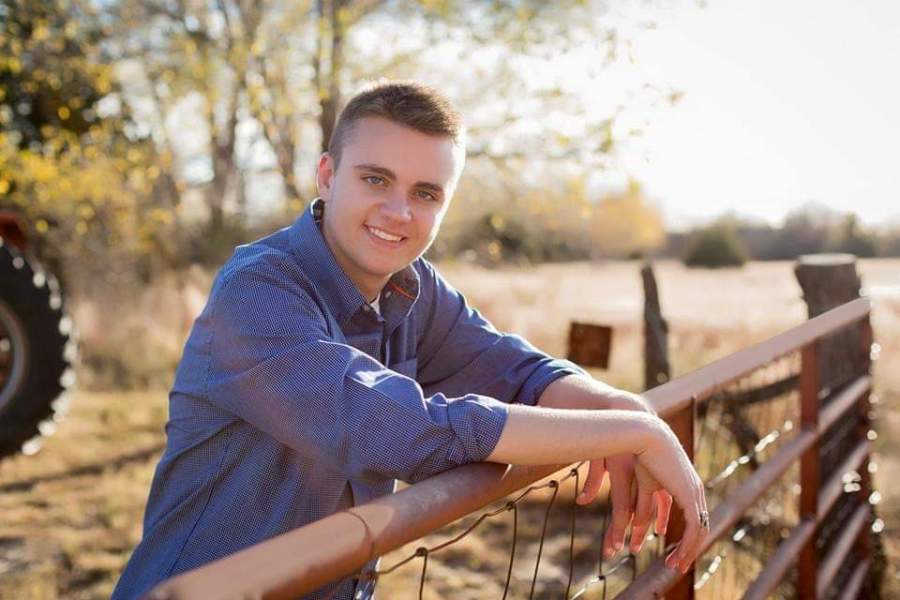
Spc. Zachary Schaffer, Kansas Army National Guard

Kansas Army National Guard veteran Zachary Schaffer, 21, was found unresponsive in his Kansas City, Kansas home on January 23, 2019. According to the Dodge City Daily Globe, Zachary fatally overdosed only a few days after he was punished and discharged from the Kansas Army National Guard. According to his mother, Wendy Mottas, Zachary, or Zach, as he was known to most, was accused of failing to show up for multiple weekend drills and discharged with an “other than honorable.” In the midst of losing his military career and eventually his security clearance, Zach was flagged by his command for the prescribed use of Adderall to treat ADHD, even after he was reassured it was okay for him to take the prescription. Wendy doesn’t know if her son’s death was intentional, but stated Zach began suffering with depression and substance abuse during his time in service with the Kansas Army National Guard. Zach went from being a stellar soldier at the age of 19 to being hired as a full time military technician to losing that same position less than one year later for reasons undisclosed. Six months after being fired by the Kansas Army National Guard, he was also passed over for deployment to Afghanistan, having been told he was ‘red flagged’ for the use of Adderall. Six months later, Zach would also experience sadness and grief after losing his friend, 24 year-old Kansas Army National Guardsman Khamis Naser, who died by suicide on July 31, 2018.

Zach grew up in the Hutchinson, Kansas area and joined the Kansas Army National Guard in May 2014. Zach’s mother, also an Army veteran, said he was born in Germany when she was in the military. Zach came from a military family and it was a natural fit for him too. Wendy shared Zach was always intelligent and she knew he would be successful because he was very skilled in anything related to computers and coding. After Zach completed Army basic training and specialty training, he progressed quickly as a soldier and eventually got a full-time job with the Kansas Army National Guard at age 19. Zach was a federal military technician (Personnel Security Technician: GS-7) during the week and on Guard weekends, he was an Intelligence Analyst (E-4). Zach’s downward spiral began when he lost his full-time job as a federal technician and was made to feel incompetent by those who also originally built him up to be a great soldier with a bright future in the military. Zach’s mother does not know why Zach was fired during the probationary period, but she does suspect that Zach had information about other National Guard members whose misconduct were overlooked during routine background checks so they could maintain their security clearances.

Once Zach lost his full-time position, he went from being a professional soldier to not caring about anything anymore. He moved from his home in Topeka, Kansas to Lawrence, Kansas and became somewhat estranged from the family. Zach became secretive, fell in with the wrong crowd, stopped going to therapy and became reliant on self-medicating to take care of the pain of depression he was feeling.  Realizing this lifestyle was not healthy, Zach moved back home to Junction City and tried to get his life together in early January 2018. After about three months of living at home, he discovered the Kansas Army National Guard unit in Junction City, Kansas was tasked with a deployment to Afghanistan, to which he inquired and expressed interest to the unit’s leadership. The leadership put him through mobilization procedures for nearly a month and then his deployment orders to Afghanistan were cancelled citing he had been flagged during the pre-deployment process for Adderall use. Zach was prescribed Adderall for the diagnosis ADHD and his mother states he was prescribed the drug due to a struggle with concentration and focus. Once Zach was flagged, someone made the decision to prevent him from deploying to Afghanistan and his mother does not know if his National Guard unit influenced the decision at that time or not.

Zach was looking forward to the deployment. Instead his orders to Afghanistan were cancelled and it was then Zach started meeting regularly with mental health personnel for depression. It is unknown what Zach may have shared with health care professionals, but his family realized something changed in Zach’s life. Shortly after, Zach moved from Junction City to Kansas City with a friend with which his family was not familiar. He remained distant from his family and friends. Worse yet, the same military officer (O-4) who made the decision to fire Zachary from his full-time military technician position also influenced National Guard unit leadership to end Zach’s military career in its entirety. Leadership observed the changes in Zach’s attendance and behavior. Instead of helping him, they used it to revoke his security clearance knowing he needed a security clearance for his job as an intelligence specialist in the National Guard and his full-time job with the Marine Corps. During this time, the only thing done to assist Zach or try to get to the root of the issues he was having was to refer him to the unit’s social work office. At some point, this social worker was told to ‘stand down’ and allow the unit’s part-time civilian social worker to take care of his issues. To his mother’s knowledge, this individual never contacted Zach to offer support and he was never offered any type of assistance including participation in the Army Substance Abuse Program.

In early July 2018, Zach contacted his mom and stated he wanted to go to an inpatient rehabilitation program. He self-admitted to the substance abuse program to help him stop his drug dependency and get his life back on track. The day after Zach left the rehabilitation program and returned to Kansas City, he learned his best friend and fellow National Guardsman, Khamis Naser, had died by suicide. Zach told his mother he had talked to Khamis only five hours before he was found dead in his apartment. Zach attended the August 2018 drill weekend and his mother said he told her he was met with disdain from his leadership. Zach’s mother states she has text messages from her son indicating the NCOs in his unit were bullying him. Zach told her they said his best friend would still be alive if he ‘wouldn’t have been high’ and ‘would’ve been there for him’ (Khamis). After Zach was blamed for the death of his friend, he got in a physical confrontation with one of his NCOs. During another drill weekend, word got around the unit that leadership wanted to ‘get rid of that “shitbag”’ (referring to Zach) because he made the unit ‘look bad.’ Despite the ill treatment by the Kansas Army National Guard, Zach picked himself up and got a new job as a civilian contractor for the Marine Corps in Kansas City at age 21. Unfortunately, a short time after he got the job, he was terminated when he learned the National Guard had suspended his security clearance. At this point, Zach had no income, including from his drill weekends, due to a status discrepancy. Zach was still considered in ‘active duty’ status because of the deployment orders to Afghanistan and no one in his military leadership would assist him to get transferred back to his original unit. His mother states he discussed this with someone at his unit who agreed with him — why bother going to weekend drill if he was getting bullied and not receiving any pay? He stopped attending drill after September of 2018 and once again became estranged from his family. He would never return to the National Guard.

According to the Kansas Adjutant General’s Department, the Kansas Army National Guard suicide prevention program is “based on the premise that suicide prevention will be accomplished through the positive action of unit leaders and implementation of command policy. The key to the prevention of suicide is positive leadership and honest concern by supervisors for military personnel who are at risk of suicide and appropriate intervention for all such personnel.” Khamis Naser died by suicide in July 2018 and six months later in January 2019, Zach Schaffer died of a fatal drug overdose. How did the Kansas Army National Guard’s suicide prevention program help Khamis and Zach? Although we don’t know why Khamis Naser chose to die by suicide, we do know he was a current member of the Kansas Army National Guard. One would think losing a fellow comrade would initiate a more proactive suicide prevention approach yet instead we learn the very people tasked with a “positive and honest concern by supervisors” for military personnel at risk of suicide and appropriate intervention was not implemented in the last couple of years. Zach was a soldier dealing with the loss of his full-time job, grief from the loss of his friend, the loss of his military career, and the loss of his security clearance. Military leadership knew Zach was not well and they knew he was a risk to himself.

The top 10 most stressful life events include death of a loved one, separation, starting a new job, workplace stressors, financial problems, and chronic illness/injury. Zach’s mom shares he was dealing with six out of ten of those stressful life events at the age of 21. Wendy wonders why the military wouldn’t be especially cognizant of the fact they are molding young kids into warriors at a very impressionable time in life. At a time when young adults need guidance most, instead in the military environment, they are forced to deal with additional stressors, caused by military leadership in Zach’s case. Why would the same organization at the root of the cause of the downward spiral of young lives be interested in also pretending to care about suicide prevention of those same personnel? The moment Zach was let go from his full-time job was the moment he started to struggle. Why did he get let go? Why did it contribute to a need to use drugs to self-medicate? And one can only imagine the kind of grief Zach experienced after losing a close friend in such a tragic way. Did anyone refer Khamis or Zachary to mental health programs or the Department of Veterans Affairs?

It appears Zach’s source of pain or original stressor began when he lost his full-time federal military technician position as a Personnel Security Technician. After Zach lost Khamis, another high-paying job and his military career, his downward spiraled accelerated. Zach was dead less than six months after his friend passed. How can the National Guard implement a suicide prevention program when they are the suspected cause of the unit members’ downward spiral? Why did the National Guard choose to characterize ADHD treatment as a ‘mental health risk’? The prescription was used to assist with concentration and focus. Why would Adderall negatively impact a deployment when it is a fact the active duty deploy personnel on all kinds of prescribed medications? Why not help Zach transfer from Active Duty status back to his National Guard unit so he would be paid for drill weekends? How did Zach go from successfully holding great positions of responsibility within the unit to losing his entire military career? Why did they give Zach an ‘other than honorable’ discharge knowing it will negatively impact the rest of one’s working life, never mind the impact losing a security clearance has on anyone’s future financial security. Why did Zach have to lose everything? How does that help his mental health?

Wendy Mottas told the Dodge City Daily Globe that there is a stigma to be tough in the military. And this was confirmed the day the National Guard decided Zach was a “mental health risk” because he had a prescription for ADHD he wasn’t even currently taking. Each Commander has the ultimate say on whether or not an individual can still perform despite taking medication. The prescription was for concentration and focus and not something that had to be a military career ender. Wendy said her son could have used extra support following Khamis’s death and that she would like to see mental health be taken more seriously by the Kansas Army National Guard. While she realizes there were many factor’s influencing Zach’s death, she doesn’t understand why the National Guard wouldn’t offer to help him like so many soldiers with substance abuse are assisted. In Zachary’s case it appears leadership actively contributed to the decline of Zach’s mental health. Who at the Kansas Army National Guard would offer help to Zach after the chain of command (supervisors and leadership) decides a soldier is a “shitbag”? How does the Kansas Army National Guard implement a command driven suicide prevention program when they are the same leadership contributing to a downward spiral? How can the same people tasked with punishing their personnel with a heavy hand simultaneously help prevent a suicide or untimely death of young soldiers? At the very least, in this situation, the National Guard needs to upgrade this soldier’s other than honorable discharge to honorable to make this right for Zach and his family.  It’s one thing to let someone go, it’s an entirely different thing when a person’s life and future is destroyed.

“The military still has to take some responsibility for this, I think, and I think more could have been done to be preventative and be proactive instead of reactive. They have a responsibility to these young men and women. It’s not to live their lives for them or to be mommy or daddy or anything like that, but the soldiers still have to live by the army creed, and in order to do that, they have a role in that.” -Wendy Mottas (quote in Dodge City Daily Globe)

Source: Wendy Mottas (Zachary Schaffer’s mother)

Related Links:
Obituary: Zachary L. Schaffer, Kansas Army National Guard
Obituary: Khamis A. Naser, Kansas Army National Guard
Kansas National Guard captain submits resignation in wake of suicides
Kansas National Guard Captain Submits Resignation in Wake of Suicides
Kansas National Guard captain submits resignation over handling of suicides
Kansas National Guard captain submits resignation over concerns of soldier suicide
Kansas Guard captain resigns over concern about suicides
Kansas Guard brigade captain resigns over suicide concerns
Governor Kelly to sign bill aimed at preventing National Guard suicide
Sen. Moran, Bipartisan Colleagues Raise Concerns Over Alarming Increase in National Guard Suicides
Moran requests DOD review of rising National Guard suicide rate
Sen. Moran joins bi-partisan group of senators addressing national guard suicides
Bi-Partisan Senate Group Calls Attention to National Guard Suicide Rate
Department of Veterans Affairs: National Guard and Reserve
10 Most Stressful Life Events


A Month in Review: In the News on Military Justice for All (June 2018)

June 2018

Missing:
Disappeared: Stacy McCall, Suzie Streeter, and Sherrill Levitt are ‘The Springfield Three’ who Vanished from Levitt’s Missouri Home on June 7, 1992
Friends, family of missing UMass nursing student Maura Murray hope funds will lead to answers

Cold Cases:
Family wants justice for Army vet found shot to death in driveway
Authorities Have Cracked a Bizarre Cold Case That Could Have Ties to the Zodiac Killer
48 Hours Premiered ’48 Hours Cold Case: Who Killed Amy Gellert?’ on CBS (June 17, 2017)

Fugitives:
Reward Offered for Armed & Dangerous Fugitive: Army Recruiter John Blauvelt Wanted for Allegedly Murdering Estranged Wife in South Carolina (2017)

Continue reading “A Month in Review: In the News on Military Justice for All (June 2018)”

Extraordinary Claims Should Require Extraordinary Evidence (June 26, 2018)

National GuardGuest Post by Liz Ullman:

Enrique Costas comes from four generations of dignified and recognized military service. His grandfather’s name is in the history books as one of the first soldiers to join the Puerto Rico National Guard to serve the United States. His father defended this country for 32 years, earning an Air Medal for heroism in Vietnam; his nephew will be commissioned as an officer in the next week and will be going on active duty.

Costas enlisted in the Puerto Rico National Guard in 1988. In 1999 he volunteered to be assigned as a Recruiter, earning top awards and commendations throughout his almost 14 years as the Senior Non-Commissioned Officer in Charge (NCOIC) of the Puerto Rico Army National Guard Recruiting and Retention (RR) Command office in San Juan. He was also selected and participated for seven years in the Puerto Rico National Guard Honor Guard, the team responsible for carrying our Nation’s and Army Colors in the highest of the Government’s activities and celebrations.

He was responsible for achieving monthly production for the three main tenets of the Guard recruiting office: Recruiting, Retention and Attrition Management • Staff resourcing for two Army battalions covering 13 cities • Supervising and mentoring up to 10 recruiting and retention non-commissioned officers.

Costas was a champion in mission accomplishment with the highest integrity and ethics. His walls are filled awards and photos with the Guard’s top-ranking officers, including General Clyde A. Vaughn, who personally commended Costas for his service and integrity. Costas retired in 2014 after Honorably serving our Nation for over 26 years.

The biggest mistake Costas made in his career was simply being on duty during the Guard Recruiting Assistance Program also known as G-RAP, a cash incentive opportunity for civilian soldiers to bring in new recruits. With no direction from Washington D.C.’s Strength Maintenance Division, General Vaughn’s recruiters were supposed to intuit the 60 changes in the G-RAP rules over a seven-year period, while also working to fill the dwindling ranks of Guard troops.

Just before dawn, on an early October morning in 2015, Costas’s home was stormed by six Federal agents and two State police officers, in full tactical gear. Costas thought his family was under attack, and it was – by the Government he had served. Costas was arrested and taken to a Federal Courthouse where he was charged with “crimes” dating back almost ten years, during the days of G-RAP.

Costas is one of hundreds of General Vaughn’s recruiters who have been held responsible for not knowing the G-RAP rules that were never sent to them. And not just held responsible — charged with criminal intent to commit fraud against the Government. General Vaughn, who created and administered G-RAP, and who was administratively sanctioned for poor management, is enjoying full retirement in Virginia and Arizona.

Costas is going to prison.

The government’s “evidence” against Costas and other recruiters does not even meet the standard of circumstantial. In his case, the government admitted during trial to having no actual evidence, but only a “reasonable inference” that a crime could have been committed.

As a recruiter, Costas could not and did not participate in G-RAP. There were no Army regulations that governed G-RAP because the program was run by a private Alabama-based contractor called Docupak. Docupak was essentially incentivized to run a sloppy program, earning a 17% markup on every new enlistment, on top of their contract fees and administrative expenses. This lack of training stands in sharp contrast to how the Army usually operates, with manuals and rules on almost every action and procedure.

The one rule that the prosecution seized on to brand soldiers and veterans as felons regarded the relationship between the Recruiting Officer and the Docupak civilian contractors known as Recruiting Assistants (RAs). When G-RAP began, those contractors were regarded as assistants to the Recruiting Officers. The Recruiting Officers might use the RAs to give that extra push to a potential applicant considering enlisting. The Recruiting Officers were encouraged to ask the RAs to attend recruiting events and help with the finding of potential candidates. The original program outline stated that the Recruiting Officer would provide specifics for each possible enlistment to the RA, including legal name, birth date and social security number. That information was used by Docupak to verify enlistments and process payments to their RA contractors. In later descriptions of G-RAP, the social security number would go from the new recruit to the RA contractor, bypassing the Recruiting Officer, which not a single RA contractor reports ever seeing or any evidence has ever been produced by Docupak that verifies it.

This procedural change has resulted in hundred of indictments and scores of convictions for identity theft and wire fraud. Soldiers and veterans are in prison. Costas, sadly, is on his way.

After the government filed more than 50 felonies against Costas, his defense team could not overcome the wrath of the United States and he was convicted by a jury who felt that with so many felonies filed, Costas certainly had to have done something wrong.

He did not. G-RAP was a tangle of mismanagement; the soldiers who were on duty during its tenure are paying the price of administrative failures by their command. In an internal investigation done by the Puerto Rico National Guard pertaining to G-RAP in 2012, the Investigating Officer admitted that “Recruiters had no formal training on how G-RAP operated.”

Costas and his family had their hearts broken when the prosecution opened with statements calling him a “cheater, stealer and a liar.” He said these words, “pierced the core of his soul.”

Presumption of Innocence or even the “benefit of the doubt” was never given. In the end the Government spent an estimated $100,000 prosecuting Costas and the jury found Costas guilty on three charges amounting to $3,000. Although never having a criminal record and an impeccable military career, the judge sentenced Costas to prison. In the end “reasonable inference” and circumstantial evidence weighed more than 26 years of honorable service willing to sacrifice life and limb.

Recently the United States Court of Appeals for the 6th District reversed and vacated a conviction of an accused soldier involving G-RAP and determined, that the “Government did not retain a revisionary interest in the funds and that it did not exercise supervision or control over the funds”. This decision cannot be applied to Costas unless the United States Court of Appeals for the 1st District, the Supreme Court, or Congress rules on it.

“Extraordinary claims require extraordinary evidence.”
― Carl Sagan

The claims were extraordinary. The evidence was missing. And yet, a United States military hero and veteran has been sacrificed.

We respectfully request that Congress or the White House appoint a commission to review the G-RAP investigation, to identify Soldiers that have been unjustly stigmatized by it, and to recommend suitable cases for clemency and pardon.

Related Links:
Stop G-RAP Injustice | Facebook
The Conspiracy Behind the G-RAP War on American Soldiers (March 30, 2016)
If You Look at the Dollars, Guard Recruiting Assistance Program Investigations Make No Sense (July 12, 2016)
Top Ten Problems with the National Guard Recruiting Assistance Program (G-RAP) Investigations (December 15, 2016)
An Open Letter to Congress Regarding the Investigations of the National Guard Recruiting Assistance Program (June 5, 2017)

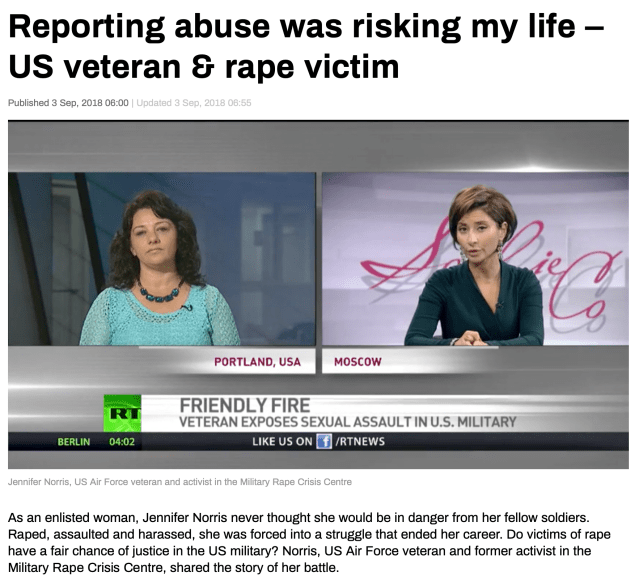
Reporting abuse was risking my life – US veteran & rape victim | Sophie and Co | RT (January 12, 2018)

Reporting abuse was risking my life – US veteran & rape victim

Correction: Jennifer Norris is not an advocate for MRCC. She left the organization in March 2014.

We hear a lot about #weinstein and the latest, but Jennifer Norris, who served in the US Air Force, has been talking about sexual assault for years. And in the military, reporting rape means endangering yourself. Watch this brave woman speak here https://t.co/1ipeI3SWP6 pic.twitter.com/TAjiVjmdDS — SophieCo (@SophieCo_RT) January 12, 2018

As an enlisted woman, Jennifer Norris never thought she would be in danger from her fellow soldiers. Raped, assaulted and harassed, she was forced into a struggle that ended her career. Do victims of rape have a fair chance of justice in the US military? Norris, US Air Force veteran and former activist in the Military Rape Crisis Centre, shared the story of her battle.

Sophie Shevardnadze: Jennifer Norris, retired U.S. Air Force veteran, former activist in the Military Rape Crisis Centre, who herself had firsthand experience of sexual assault in the military, thank you for joining us on this programme. I want to start right away, the first time this happened, you were drugged by your recruiter – did he trick you into having sex with him? Do you have any recollections of how the incident happened?

Jennifer Norris: When I look back on this incident I realise that I was actually tricked by this man into going to the party to begin with. He had told me that there was a new recruit party for other recruits. I was excited to go and meet them because they would understand exactly how I felt. So he had ill intentions from the gitgo. When I got there there were no new recruits, I was the only one.

SS: How many times were you subjected to sexual assault or abuse? Was it just one case?

JN: It started with that one case and I thought that maybe it would be over after that, that I was just unlucky at the wrong place at the wrong time, so I pushed forward. But, unfortunately, as I entered the military service it happened again and again, and again within the first two years of service. 

SS: Tell me this – why didn’t you report it straight away, after that first time?

JN: I didn’t report the first time because I hadn’t even gone to basic training yet and I didn’t really know what to say. I didn’t even know where to go: if I was supposed to go to a commander in the military, if I was supposed to go to the police department. I was completely clueless as to what sexual assault, rape and harassment were at that time. So I just tried to soldier on, move on with the career that I was looking for doing for at least twenty years.     

SS: So what happened after you were assaulted? What did you feel? Was it guilt? Was it shame, uncertainty? 

JN: It used to be shame because I used to feel like an idiot for going to this person’s party. But after years of counseling and working with rape victims’ advocates I learnt that predators operate in much the same way: they are very manipulative and they will set you up for an attack or they will take advantage of an opportunity. So now I realise it was a calculated crime but it took me years to realise that.  

SS: So for those who haven’t faced this kind of ordeal, but danger is always there, tell us how these manipulators actually trick their victims into it? How do they lure you in?  

JN: I think, they do what you would call ‘grooming’, they make you believe that they are trustworthy and that they are going to take care of you, and it almost seems that it is too good to be true. When you are naive, you don’t necessarily realise that not everybody is speaking at face value. So as an 18-year-old or even a 24-year-old it’s easy to fall prey to the niceties because you don’t know that there’s evil lurking behind it. And I think that’s the real danger of this kind of people and how they operate is that they are able to get to us based on the trust that’s been established. In the military we are depending on each other in every way, especially in trust.   

SS: So how old were you when that happened? Like, eighteen?

JN: No, I was actually 24. I had already graduated from college, as a social worker I worked in the field for a couple of years. As a case manager I worked on a suicide crisis hotline, then I decided I wanted to go and get my master’s degree and the military offered the GI Bill that could help me accomplish those goals. So that’s the No.1 reason why I joined aside from being patriotic and wanting to give back and being involved in something that was bigger than myself. I was completely clueless as to what was in store.    

SS: Ok. One woman who went through a similar ordeal – Air Force Sergeant Marti Ribeiro said, “The military has a way of making females believe they brought this upon themselves.” Did you feel that as well? 

JN: Yes.

SS: Did you blame yourself for what happened?

JN: I did for the longest time especially with the recruiters incident. If I knew as soon as I walked through that door that there was danger but it was too late to turn back… That particular incident taught me a lot of how to take care of myself in the future. Unfortunately, if you are working for someone who’s assaulting you you can’t escape them. So now I don’t have shame or blame or any of that stuff any more as far as what I did. All I did is go to work in uniform and these people took advantage of their power and opportunity. That’s what we’re trying to change, it’s taking more seriously if someone does in fact abuse their power in that kind of setting.

SS: I’m trying to figure out the psychological aspect of it – how did the military structure make you feel guilty about what had happened and not the other way round? 

JN: I understand. So, given the way that you report currently in the military is not that you go to a police office to report a crime. You are supposed to report it to your commander. In my particular case and in a lot of soldiers’ cases the commander also has a relationship with the perpetrator and he may have known the perpetrator way longer than he knows you. So what it does it creates an atmosphere of intimidation that when you see your commander hanging out with the guy who assaulted you, then you feel like “Oh, wow, he’s not going to take me seriously, it looks like they both are really good friends”. And then when you do go ahead and do a report the first thing the defense attorney start looking into is whether or not you did this, you did that, how did you conduct yourself. They immediately go into that you shouldn’t have been in this place, if you hadn’t that wouldn’t have happened. They could have done that to me too. But it’s not our fault that we thought we were attending what we were supposed to be.        

SS: Jennifer, I’m thinking, there are also other women in the military, they are compassionate  creatures, you could have shared your story with them, they certainly would have understand what you went through, especially if this happens all the time. Maybe there were other women alongside you who were actually subjected to sexual assaults – did you share your story with any of your female peers?

JN: What I’ve learnt is that, first of all, I was one of very few women in my squadron. There may have been, if we were lucky, three of them and one of them is administration personnel, and maybe there was another one in another shop. But I was the only female working for satellite communications in combat communications. So, no, I didn’t have other females that I could turn to and say “hey, this has happened to me”. As the matter of fact, I didn’t want anyone to know that this had happened to me because I didn’t want to be judged. Unfortunately, it appears that once people learn that you’ve reported a sexual assault or may have been involved in an incident they become scared of you instead of being scared of the perpetrator. They think that you are going to be hypersensitive too if they swear or if they say something, you know, offensive when in fact it’s not going to be that way at all. So there’s a culture of fear built up in the military. And I think that’s why they want to automatically blame it on a woman because if she goes away the problem goes away and they can get back to work as normal. 

SS: Human Rights Watch reports a very dire picture of what happens to the victims of sexual assault. They say that these people are being “spat on, deprived of food, assailed with obscenities, threatened with ‘friendly fire’ during deployment…discharged for misconduct”. Is it true? Is it really that dangerous to come forward?

JN: It is. In some cases it just depends on your situation. If you are isolated you are in a way more danger than, say, other people would be on some big base that has security forces in a JAG office. But if you are in some place like the Azores or some other random location across the world all you have is the people that are with you. Then yes, you could be in grave danger if in fact someone harms you and threatens you and says that if you say anything they will kill you. It happens, I’ve researched this. We have had non-combats deaths occur overseas that include homicide and unsolved cases that nobody is talking about. That’s what we are trying to tell people is…

SS: Did you get any threats? Were you threatened?

JN: Yes, not only was I threatened, but I was physically beaten after I reported by one of the perpetrators’ friends. The entire squadron turned on me. I was automatically the liar. Even though they didn’t know the circumstances and even though we did have proof and we were able to move forward with two of the four cases the other people in the squadron didn’t know what happened and they believed the perpetrator who was able to tell them the story while I was at some other squadron waiting for the case to go through.

Reporting abuse was risking my life – US veteran & rape victim

SS: But see, for me it’s just mind-bogglingthat you were standing there harassed, assaulted in the open with other people standing by and not interfering. How come no one interfered? Why didn’t troops come forward for a fellow soldier? 

JN: Well, I did have a couple of people that had my back along the way. But it felt more like it was a culture of fear, like, nobody dared to stand up to those who were higher-ranking if they were the ones that were doing the harm because they were afraid it would have backlash on their career. Now I don’t have respect for those people who didn’t stand by and take a stand and support the ones who were actually being harmed. But along the way there were some silent people that came up to me and said that this person had done this to them, that that person had done that to them etc. So people would open up along the way but they wouldn’t take it as far as I did and actually report. Although I must say it was because of the senior master sergeant that I finally confided in. He’s the one that finally convinced me to report the four individuals to the commander. 

SS: Iraq veteran Chantelle Henneberry says she was less scared of enemy fire than the men she served with. She recalls she would drink less water to avoid going to the bathroom in the night, she was so terrified of being harassed – why do women even join the army despite hearing all these horrific stories?

JN: I think that it boils down to that people don’t think it would happen to them. And that’s just typical of society, you don’t think that bad things are going to happen to you. I had the same mentality before I joined too. So they want to follow their dreams and they want to do what they want to do and some of us dream of being in the military, retire, do great things and move women forward. So I think that’s normal, that’s ok.

SS: The United Nations is speaking out about the problem of sexual assault in the U.S military, saying it needs to ‘ensure effective prosecution of offenders’. Is this going to make any difference?

JN: Absolutely. Right now, the prosecution rate for sexual assault is less than 10% compared to the civilian world which is at least 40%. That’s what we are trying to say – if people are raped or assaulted and then report we would like these cases to be taken seriously. Right now, like I spoke to you earlier, you have to report the crime to your commander. They are not legal professionals, they are no Special Victims Unit. They do not understand how these things work. And what we want is to be able to report to a police department or a law enforcement professional, someone who understands how these people are working and cannot be manipulated by them. 

SS: For years, activists and lawmakers in the United States have tried to change this protocol – but leaders in the military are against bringing civilians into bases to investigate alleged assaults – why are they against it? And why are they winning this debate?

JN: Because they are able to protect their institutions if they are able to keep everything in house, and that’s exactly what they do. They want to stamp it out before it gets out to the public whereas we want this out in the public so that people know who these offenders are and can be on alert. They don’t just offend people in the military, they offend people in our communities as well – their wives, their children… So it’s not just a military issue, it’s a societal issue and I think, it would be way more effective if everyone reported to a police department where all the crime data was kept in one place.

SS: Do you think completely removing sexual assault cases from the military chain of command would actually solve the problem?

JN: I think standardizing the justice process in general to have it synced with the civilian society, meaning data basis connected, whether it’s the civilians that try the perpetrator or it’s the military that tries the perpetrator… Everyone should be talking so that we can connect the dots on who’s doing what where because it makes it a little bit more complicated with the military personnel who can transfer all over the country and to different parts of the world. We need all the data collection to be put into a system so we can actually track what these people have done through the course of time and be able to move forward with cases that may win as opposed to he-said, she-said incident. 

SS: So, Jennifer, I’m thinking, maybe there should be more women in the U.S. military? If there were more women in high-ranking positions being able to kick butt especially to the men who are potential assaulters? What do you think? Should there be more women in the U.S. military?

JN: That would be ideal. Although we have to take into account that over a half of victims in the military, actually 53% of them are males. So this is not a female issue necessarily. We are at higher risk because we’re seen as a weaker sex. But predators do not discriminate: they are harming both men and women in the military. A lot of media have been trying to cover the issue but we have just not been able to get the footing with it, but people need to know that over half of the victims are men in the military. 

SS: There are crazy numbers: according to HRW, only 5 percent of sexual assault cases in the U.S. military lead to convictions of the perpetrators. What happened to the man who assaulted you? Was he punished?

JN: Yes. The recruiter skipped town after I threatened to report him to the commander, unfortunately. So we couldn’t do anything with that case. The technical instructor that assaulted me in Keesler, Mississippi – we had no jurisdiction over because he was active-duty and I was considered National Guard. And the other two were both National Guard members who worked with me, and we were able to move forward with cases. But by the time it went up the chain of command it got minimized from sexual assault to sexual harassment they both retired with full benefits after 20 years of service. 

SS: The Pentagon keeps saying that programs are implemented, changes are being made, and the problem is being solved – is it all a lie?

JN: I don’t think it’s all a lie, but I definitely think they sway the media to see things in a certain way. For example, although the numbers may have gone down from 26 thousand to roughly 19 thousand in the last couple of years and they’re bragging about a 30% increase in the reporting it means nothing. And what the civilian world doesn’t understand is that in the military you can report a crime under two different guises: either restricted or unrestricted. If it’s restricted that means that nobody is supposed to know about it including your commander so you can go forward and get some help. If it’s unrestricted then it turns into a full-blown investigation if, in fact, your commander agrees to move forward with the case which is another sticking point. So people need to realise that although the reporting has gone up it’s been restricted reporting which is not helping us catch these criminals. They are still not being reported. You might get some help but they are still moving along in their careers assaulting other people while the latest victim is just getting help. 

SS: You now work with those who went through the same as you did – are you seeing more cases of women speaking out, has the situation gotten better?

JN: I think awareness has definitely gotten better around the issue. There’s way more talk within the military and outside in the veteran community to address getting help after someone has been traumatized by an incident like this. So that has definitely improved. I actually benefited greatly from programmes that have come up as a result of our advocacy with military sexual assaults. So for that I’m thankful. As far as the military justice system and policy goes it’s the same thing it has always been – nothing has changed whatsoever. As far as the court issue we’ve been trying to address which is taking the commander out of the decision-making process as far as you can move forward with the case. We just want law enforcement professionals, detectives and investigators to deal with these cases, not a commander who’s great at war but has absolutely no idea how the legal process works and what sexual assault is. I shouldn’t have reported it to my boss.

SS: What do you do for the victims, how are you helping them?

JN: What I do is I empower them. When I did worked as an advocate I actually would help them deal with their cases as they were moving along in the process and I noticed the same patterns over and over. What I do now (and it was actually hard to do it before we could change things) is focus on helping them to heal despite not being able to get justice, trying to find a place of faith and comfort in yourself to know that you didn’t do anything wrong. It’s just the system that isn’t working well and it needs to be changed, and there’s nothing we can do about it right now except to take care of ourselves and hope for the best in the future. 

SS: You mentioned earlier that it’s not just men-women problem and that 51% percent of those assaulted being men. I’ve read a recent survey by the American Psychological Association that says the number of men facing sexual assault in the military is 15 times higher than reported by the Pentagon. That would mean up to 210 thousand men are assaulted in one year. Is that number correct? Is it a right calculation? And do you help men as well? 

JN: Yes, whoever needs help and comes to me – I will assist them as best as I can. That actual study from the American Psychological Association was retracted. They used not a very good way to determine those numbers. It wasn’t correct so it was retracted. It’s not actually that high. But it doesn’t really matter. It’s still high enough that it should be a concern. The actual number that I shared with you is that roughly 53% of victims of military sexual assault are males. It’s not a female soldier issue, it’s a predator issue and that’s what we’re trying to tell people. 

SS: Jennifer, thank you so much for sharing this story with us. Thank you so much for empowering women who want to do the same thing that you did. Thank you so much for being so brave and outspoken. And I hope that you’ll win over Pentagon. 

JN: Thank you.

Related Links:

Top Ten Problems with the National Guard Recruiting Assistance Program (G-RAP) Investigations

the-constitution-was-written-very-precisely-to-restrain-the-power-and-force-of-government-and-to-protect-the-liberties-of-each-and-every-one-of-us-ron-paul-2

Guest post submitted by:

Doug O’Connell
O’Connell & Associates, PLLC Doug@DougOConnell.com

Attorney Doug O’Connell has represented former Recruiting Assistants for the past two years in both criminal and civil matters. A former state and federal prosecutor, Doug is also a Special Forces Colonel in the Texas Army National Guard. In addition to his own practice, Doug is Of Counsel to Fluet, Huber + Hoang law firm.

The G-RAP accusations and investigations have now lingered for over five years. At least 90,430 (1) National Guard Soldiers (88% of all G-RAP participants) have been subjected to investigations as part of a massive dragnet to recover bonuses (2). 125 Soldiers have been prosecuted in Federal or State Courts; at least 2633 Soldiers remain under investigation (3). While a handful of unscrupulous participants took advantage of the ever-changing rules of this contractor-run program, those cases were adjudicated years ago. What the Army CID is now doing is nothing more than pursuing anyone whose G-RAP tenure spanned the years with the most rules’ changes in an effort to prove up the Army’s exaggerated fraud estimate.

It’s hard to pick the Top 10 issues with G-RAP. The items below represent issues apparent in almost every case. This list omits, but hardly overlooks, such things as inappropriate command pressure to participate in G-RAP, forcing accused Soldiers to undergo DNA collection (4), active surveillance of National Guard Soldiers by Army CID (5), coercion to make reimbursements to the Army (6) in lieu of punishment and other notable violations of Soldier’s rights.

1 Letter to Representative Mike Coffman from Daniel M. Quinn, Chief of Staff, USACIC.
2 The U.S. Army and U.S. Department of Justice consistently refers to G-RAP payments as bonuses in sworn testimony, official documents and court filings. The payments were paid by a contractor directly to the Soldier and IRS form 1099 was issued to every participant. Payments were not processed by DFAS and did not appear on a LES. Finally, Congress did not authorize a bonus related to this program. Nevertheless, Government officials consistently refer to G-RAP payments as bonuses, perhaps wishing it were true so that legal recoupment would be possible.
3 Per letter to Rep Coffman.
4 Collected by a cheek swab without a warrant in violation of the 4th Amendment.
5 Related to an allegation of fraud which if true occurred years prior.
6 Possibly an illegal augmentation of appropriations in violation of the Miscellaneous Receipts statute, 31 USC §3302.

1. GUILT BY ALGORITHM.

Auditors, instead of seasoned law enforcement professionals, launched the G-RAP investigations. Rather than using any type of proper legal standard like probable cause, the Army Audit Agency assembled lists of Soldiers branded “high risk” by the auditors. The definition for “High Risk” was listed as “an inability to follow the rules.” Because the rules changed 60 times in seven years, almost everyone who successfully participated in G-RAP became a target. Soldiers connected to the “high risk” Soldiers were in turn investigated. This self-perpetuating, system of guilt by association crushes any notion of justice and the rule of law. Years later, many of these Soldiers still are under the cloud of a CID investigation and are being forced to defend (at great financial and emotional cost) their names and careers.

2. COMPULSORY INTERROGATIONS.

Federal CID agents lack any authority to compel National Guard Soldiers (or veterans) to submit to interrogations. Unfortunately, neither CID nor most Guard Soldiers and veterans understand that they cannot be forced to appear or answer questions from Army-dispatched agents. CID agents repeatedly violate this bright line legal standard. Worse yet, some Guard Commanders aren’t sufficiently knowledgeable about the law to protect their Soldiers. Once confronted with apparent military authority, many individuals, honestly believing they did nothing wrong, provide answers, later cherry picked and twisted to supposedly show guilt. The unfortunate individual is left having to prove he or she didn’t say something or that the statement was taken out of context.

3. INVESTIGATORS WITH A PERSONAL FINANCIAL INCENTIVE.

The CID Investigators pursuing G-RAP allegations include Army Reserve CID Agents voluntarily on active duty orders. At a minimum, the perception exists that the Reserve Agents have a financial incentive to perpetuate the investigations. The longer the investigations continue, the longer these agents remain employed. Further compounding this problem is the very logical assumption that few agents would volunteer for active duty if it meant a pay cut from their civilian employment.

4. VIOLATIONS OF THE POSSE COMITATUS ACT.

National Guard Soldiers not mobilized into federal service, are like any other civilian citizen under the law. The Posse Comitatus Act prohibits federal military personnel from investigating and enforcing the law. Yet, that is exactly what is happening. The PCA is a federal criminal offense punishable by a term in prison. In the G-RAP investigations, federal military agents are investigating allegations of criminal violations by Guard Soldiers, who are the same as civilians under the law (7). This is a clear violation of the PCA. Unfortunately, this flawed law requires the same prosecutors who are prosecuting Soldiers to levy charges against the same agents investigating the cases they prosecute.

7 See Perprich vs. Department of Defense, 496 U.S. 334 (1990).

5. TRAMPLING THE STATUTE OF LIMITATIONS.

In our system of justice, a statue of limitations exists to limit the Government’s ability to bring charges so remote that the defendant can’t reasonably mount an effective defense. In G-RAP cases, the Government is circumventing the statue of limitations with a World War II era tolling statute. Most applicable criminal offenses have a 5 year statute of limitations. Since G-RAP ended in 2012 the statute of limitations has long expired in most cases. However, in G-RAP investigations and prosecutions the Government is relying on the Wartime Suspension of Limitations Act (8) to continue to bring criminal cases. First enacted in 1948, the WSLA is designed to protect the Country from fraud during times of war. This law likely made sense during World War II, the Korea and Vietnam conflicts. However, the nature of warfare has changed. The current war against terrorism and global extremist groups will continue indefinitely. Relying on the outdated WSLA during today’s conflicts effectively terminates the deeply rooted equitable concept of a statue of limitations.

8 18 USC §3287

6. SPENDING $40 MILLION -TO COLLECT $3 MILLION.

Our Government has spent at least an estimated $40 million dollars (9) to investigate Soldiers. The ensuing recoupment actions and prosecutions have recovered, at most $3 million dollars (10). Army CID agents have repeatedly conducted full field investigations to determine if a Soldier’s single $2,000.00 bonus was righteous (11). In an era of constrained defense spending with persistent and emerging global terrorist threats, this massive boondoggle sets a new record for fraud, waste and abuse. The CID agents’ limited time and resources would be much better spent working to prevent the next Fort Hood terrorist attack.

9 This is a conservative estimate which includes the personnel cost associated with bringing the USAR agents onto duty status.
10 This figure is also an estimate based on all federal cases reported in the Pacer.gov system and media reports from around the country.
11 At least one National Guard officer is currently under indictment for a single G-RAP recruitment.

7. INACCURATE TESTIMONY TO CONGRESS & POLITICAL PRESSURE

The entire G-RAP controversy is based on inaccurate and irresponsible testimony to Congress. During Senate hearings chaired by Senator Claire McCaskill (12), Army General Officers testified that the total G-RAP fraud could be as high as $99 million (13). This estimate was wildly inaccurate (14). To date, the Government has only collected $3 million in fraudulent payments. Senator McCaskill immediately branded these Soldiers as criminals despite their Constitutional right to be presumed innocent (15). Many have speculated that the hearings and estimates of widespread fraud were designed to embarrass the National Guard during budget battles. Others suggest that it was an attempt to appease this powerful member of the Senate Armed Services Committee and self styled “accountability advocate.” Still others contend that the hearings were an attempt to shift focus from sexual assaults in the military. Whatever the reason, the McCaskill hearing set off a chain of events abrogating the presumption of innocence justice toward service members and veterans.

12 United States Senate Hearing: Fraud and Abuse in Army Recruiting Contracts, February 4, 2014.
13 Id.
14 It appears that this testimony has never been revised, amended or updated to correct the record.
15 Id.

8. AT LEAST 60 CHANGES TO THE “RULES.”

In the eyes of CID, violations of the program “rules,” indicates intentional fraud worthy of criminal investigation. However, the G-RAP “rules” changed at least 60 times during the life of the program (16). Understanding the “rules” of G-RAP at any given point in time requires a detailed analysis based on a significant review of multiple documents (17). In the vast majority of cases, if the Soldier violated the “rules,” it is more likely due to confusion rather than a deliberate desire to cheat the system. With unrelenting intensity, CID doesn’t investigate an alleged crime; they gather slanted “evidence” to prove that a crime was committed. CID, in fact, has been responsible for elevating an inability to follow the rules of a program run by a private contractor to the level of a crime. One example: at various times full time members of the National Guard were authorized to participate in G-RAP, at other times they were ineligible. If a Soldier entered G-RAP when full time members were allowed, but submitted data for payment months later when full time members were not allowed, that Soldier is investigated for fraud.

16 See Agent’s Investigation Report, CID Special Agent Julie Thurlow, November 22, 2013.
17 National Guard Bureau changed the rules via a contract change order sent to Docupak.

9. “SPHERE OF INFLUENCE” AND OTHER VAGUE GUIDANCE.

Soldiers participating in G-RAP received instruction to recruit from their “sphere of influence.” This term was never defined. It’s unclear if the intent of this language was to limit recruitment to pre-existing relationships. Regardless of NGB’s intent, the Soldiers received a very different message. For example, once hired by Docupak, Soldiers were provided marketing items such as t-shirts with the message “ask me about the National Guard.” None of the marketing items provided would have been necessary to recruit people already known to the Soldier. Now, these same Soldiers are investigated and some prosecuted for recruiting outside their sphere of influence. Likewise, Soldiers were told that they “shouldn’t” wear their uniform when conducting recruiting activities. If this were truly a prohibited action worthy of investigation, the “rule” would have been written as “you are prohibited from wearing your uniform.”

10. “I DON’T REMEMBER = GUILTY.”

When CID agents track down and contact recruits many years after their enlistment into the National Guard, most don’t remember the details of their interaction with the recruiting assistant. To the CID agents, this means the RA committed misconduct. The alternative explanation is unfathomable to the agents: the recruit, 7 years later, just doesn’t remember. This is especially problematic since Government prosecutors use this lack of memory to charge the Soldier with Aggravated Identity Theft (18), a charge that carries a mandatory minimum term of prison sentence of two years.

18 18 USC § 1028A.

“EXTRA CREDIT:” CID KNEW ABOUT ALLEGED FRAUD FOR FIVE YEARS BEFORE TAKING ACTION.

On May 22, 2007, five years before G-RAP was shut down, Agents from Army CID, Air Force OSI, and Defense Criminal Investigative Service (DCIS) met with Docupak to discuss potential fraud in the program (19). A representative of the United States Department of Justice (20) was also in attendance. The agents specifically instructed Docupak not to notify the State Adjutant Generals, National Guard Bureau, or the contracting officer regarding alleged fraud. This effectively cut off any ability to clarify confusing rules and or enhance fraud prevention measures. Importantly, it also prevented Governors and Adjutants General to execute their Constitutional duty of regulating their National Guard force and apply appropriate discipline (21). Likewise, notification the responsible contracting officer at NGB would have triggered remedial action. Instead, the CID sat on this information for five years, causing a relatively minor amount of confusion to escalate into what we have now – another major bonus scandal ensnaring thousands of junior Soldiers facing accusations.

19 2014 Inspector General Report, page 40, paragraph g, and footnote 142.
20 Presumably a licensed attorney.
21 The Governor’s and TAG’s Constitutional authority to regulate and discipline Guard members included the full time recruiting force in each state, some of whom were suspected of misconduct. These Soldiers operate under the exclusive military jurisdiction of the relevant State Military Code of Justice.

CONCLUSION

Few Soldiers have the financial resources to mount a proper defense to federal criminal charges. Faced with the possibility of prison time, many take a plea bargain to avoid the risk of prison, financial ruin or deepening emotional trauma to themselves and their families. Even if the accused Soldiers are not prosecuted, the collateral consequences seem never ending. The investigation will continue to haunt them for years to come. Security clearances will be revoked or suspended, and the Government will initiate proceedings to “debar” the Soldier from future employment as a government contractor. Eventually, the case file will be forwarded to the State National Guard headquarters for military justice or administrative action. The range of administrative sanctions includes separation boards, official reprimands and being required to rebut CID’s flawed conclusions to a promotion review board. The administrative flag on their personnel file will continue until all military administrative actions are complete (22). Finally, many of these same Soldiers, never prosecuted in a court of law will have a federal criminal history created as a result of being investigated, “titled” and “founded” by CID.

22 A “flag” prevents any favorable action including re-enlisting, awards, and promotions. The flag does not prevent orders to deploy overseas (again). Flags as a result of G-RAP investigations have been in place for four or more years at this point.

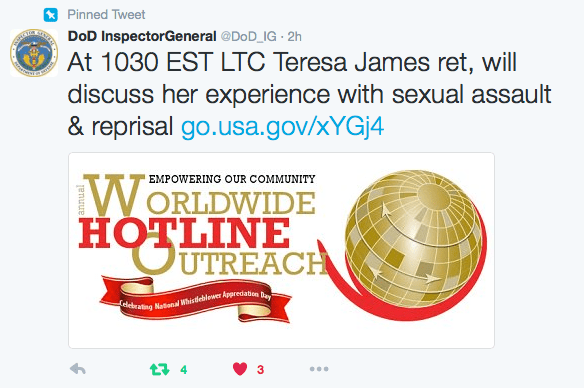
Lt. Col. Teresa James Shares Experience with Sexual Assault & Reprisal at DoD IG Worldwide Hotline Outreach Conference (July 28, 2016)

Screen Shot 2016-07-28 at 12.35.17 PM

The Department of Defense Inspector General’s office held a Worldwide Hotline Outreach Conference today July 28, 2016. One of their keynote speakers was Lt Col Teresa James, US Army, Retired, highlighted before on this site. The DoD IG twitter feed shared excerpts from her presentation summarized below. As she spoke, I tweeted with them to bring awareness to the specifics that Lt Col James noted and why they are so important. For a complete listing of the tweets by the DoD IG, please visit their Twitter feed here.

Continue reading “Lt. Col. Teresa James Shares Experience with Sexual Assault & Reprisal at DoD IG Worldwide Hotline Outreach Conference (July 28, 2016)”

If You Look at the Dollars, the National Guard Recruiting Assistance Program Investigations Make No Sense (July 12, 2016)

Guest Post Submitted By Liz Ullman

“We are looking at spending over $600,000 of tax payer dollars for $2,000 that was allegedly stolen, most likely over 3-6 years ago, under a program that was deemed to be flawed, mismanaged and inherently opaque by the US Army’s own leadership.”

10456822-Cash-dollar-signs-Texture--Stock-Photo-bill It is true, that our forefathers set out to create a judicial system that blindly judged the accused in a manner that afforded them the opportunity to receive a fair trial, regardless of race, sex, beliefs, political stature or societal standings. However, as shown in the Guard Recruiting Assistance Program (G-RAP) scandal, it appears today’s judicial system is more about your ability to secure good lawyers and your civil status than it is about determining guilt versus innocence.

Most soldiers charged for their participation in G-RAP cannot afford an attorney. They are bullied by Army Criminal Investigative Command (CID) Agents to take polygraphs, provide incomplete statements (which are then used as evidence against them) and to accept a plea for criminal acts they did not commit. Without adequate counsel these service members are given ultimatums or forced to accept deals that leave them powerless. At best they are issued overworked public defenders who place them in a pool of other criminals including rapist, murderers and thieves. Soldiers are pushed to take plea bargains by the prosecution in an effort to give CID a quick victory and take the case off the public defender’s plate. However, this system puts a hefty burden on the soldier regardless of what road they take.

Continue reading “If You Look at the Dollars, the National Guard Recruiting Assistance Program Investigations Make No Sense (July 12, 2016)”

The Conspiracy Behind the G-RAP War on American Soldiers

Screen Shot 2016-03-30 at 7.59.19 AM
Guard Recruiting Assistance Program

Guest Post Submitted by Darron Smith

In a complicated, twisted tale of alleged corruption and betrayal over budgetary wars, a presumed cover-up simmers at a colossal scale between the Army and the National Guard. Soldiers are the exploited pawns in the largest politically motivated fraud investigation ever conducted by a military component against its own forces. This may sound like suspenseful fiction, but as many National Guardsmen and women can attest, this is all too real. An estimated 24,000 National Guard soldiers have been caught in the dragnet, which all stems from a successful military-enlistment recruiting program that financially compensated citizen-soldiers who aided in efforts to boost military strength. Documents and public records obtained through the Freedom of Information Act along with credible sources points to a disturbing persecution of soldiers and veterans as well as the batch processing of mass indictments.

At a time when US forces were scattered among Iraq, Kuwait and Afghanistan, the overall end strength numbers were low. Army National Guard Director, Lt. General Clyde A. Vaughn (ret), and his staff had an idea to resupply the branches with fresh bodies—make anyone a potential recruiter by offering a financial incentive of $2,000.00 for each successful enlistment. Vaughn deeply felt that a peer-enlistment program might ease the hemorrhaging of a nationwide manpower shortage. And he was correct. The program, dubbed G-RAP (Guard Recruiting Assistance Program), ran from 2005-2012 and was an enormous success, as it replenished the ranks. Other branches of the military ultimately mirrored that recruiting program, but none to the magnitude of the NGB (National Guard Bureau). And none of them received the amount of government money that the Guard received to achieve this success.

Though G-RAP stood as a great achievement in strengthening the reserve forces, by 2012, all RAPs (Recruiting Assistance Programs) were suspended indefinitely, primarily due to media publicity of widespread fraud. NGB took the most heat, consistently projected as having lost upwards of $100 million. The truth, however, has been largely obscured. After four years of costly investigations, only $2 to 3 million “has been successfully prosecuted in civil courts.” But what is more disconcerting is that NGB, routinely criticized for its lack of oversight, no longer had the supervision in their control. Based on a previously unpublished Army Inspector General Report, a closed door meeting took place in May 2007 where it was decided by an ad hoc committee comprised of representatives from Army Criminal Investigation Division (CID), Defense Criminal Investigation Service (DCIS) and the Air Force Office of Special Bureau (AFSOI) “that Docupak would turn over any suspected occurrences of fraud directly to CID,” and that NGB, specifically the State Adjutants General (TAG), would be deliberately left out of the information loop. The rationale given at the time was that the DCIS did not want interference from high-ranking Guard officials.

There is evidence, however, that some TAGs were successfully handling all reported incidents of fraud internally in their own states up until that point with detection and prevention controls. It was not until these controls were halted in the May 2007 meeting that the Guard lost the ability to monitor, discipline and correct such incidents of fraud. Perplexingly, all of this was done without the Guard’s knowledge. In a recent interview in the Washington Times, General Vaughn reported that “he was kept in the dark” about the occurrence of fraud in the field and that CID purposely did not inform him about fraud cases. “No one can correct a problem if you do not know it exists,” stated Vaughn.

The CID did not have any prerogative to make such changes to regulation, as it would require a Congressional act; yet, in 2009 (and again in 2014), changes were made to the CID Manual that removed the language to report crimes through the TAG. But simply changing the manual did not mean it was constitutional to do so under the sovereign rights of each state and US territories. What’s more, there has been discussion in legal circles as to whether or not CID is operating outside its jurisdiction in the investigation of National Guard members. According to the Constitution as well as Department of Defense Directives (DoDD) 5105.77, the NGB is under the direct command of the state TAG and ultimately the governor unless a battalion has been mobilized for federal duty, at which point they then fall under Title 10 (active duty status) and the command of the President. The majority of those indicted are known as “M-day soldiers.” In other words, they are “weekend warriors” working for the Guard once a month and two weeks a year in official drill status (aka, Title 32). If an individual under Title 32 were to come under some criminal deed, it is the role of the TAG to take action. In fact, the TAGs have guidance on enforcing discipline and protecting soldier’s rights as it is articulated in the 2015 Commander’s Legal Handbook. The CID, as a faction of the big Army, only has command over Title 10 soldiers; it does not, to this day, have any authority over most members of the National Guard in these investigations, save a select few individuals who were deployed on active duty while participating in G-RAP.

This then raises the question, why is the regular Army harassing National Guard soldiers and violating their constitutional rights in the first place? Most of the soldiers under suspicion for theft of government property are not subject to regular Army discipline. Before that question can be answered, there is another piece of the puzzle to be scrutinized—the alarming results of CID’s investigations.

The U.S. Army Audit Agency had concern regarding the potential of individual fraud within RAPs. After reviewing over 150,000 enlistments ($339 million in payments), the June 2012 Audit identified 3,200 soldiers in the fraud-risk assessment. They found 1,256 recruiters suspicious of medium to high risk for fraud. Additionally, there were 2,022 RAs that “potentially violated program rules.” Of those RAs, only a quarter of them were found to be intentional acts. The remaining 1,400 recruiting assistants appeared to have unknowingly and unintentionally violated the rules of G-RAP, which is entirely plausible considering there were 60 changes to G-RAP rules during its seven years in existence .

This report fueled an investigation of another style from the Senate Subcommittee on Financial and Contracting Oversight. Despite the Audit’s fraud findings, the Army CID quickly dispatched approximately 200 field investigators under “Task Force Raptor” to scrutinize all 106,364 individuals who participated in G-RAP for any possibility of fraud. Senator Claire M. McCaskill (D, MO) set a directive that CID should flood the nation’s landscape and courageously return ill-gotten dollars to the American taxpayers. CID agents were encouraged to flash badges, obtain DNA swabs, issue polygraph tests and secure fingerprints in an effort to scare soldiers into revealing any useful material that could be later used against them. One former CID agent admitted that they were urged to lie to potential witnesses and persons-of-interest if usable information could be extracted. They were then instructed to report the numbers of potential indictments back to Senator McCaskill’s office on a quarterly basis, ostensibly to ensure they were meeting her demands of accountability. But a federal indictment of fraud is a crime requiring specific intent. In other words, conviction relies on the government’s ability prove the individual knew of the specific rules and guidelines and intentionally broke them for monetary enrichment.

Nevertheless, CID’s report prepared for the February 2014 Senate Subcommittee hearing led by Senator McCaskill found over 22,000 soldiers associated with payments that were at risk for fraud. This number is over seven times greater than the original Army Audit estimation at a rate of 1.7-3%. The FBI estimates that insurance fraud—one of the highest areas of civilian fraud—is at a rate of 3-10% of all insurance cases. Conversely, CID is now suggesting that those who proudly wear the uniform are felons at a rate of over 20%. Put differently, 1 in 5 soldiers are alleged criminals, 2 to 7 times more likely to commit fraud than the civilian population. This is clear evidence that these claims are audacious.

How is it possible that so many service members are accused of fraud? How is it that the CID investigations found an additional 18,000-20,000 offenders from the Audit’s estimation? Is it possible that this is a witch-hunt? This fishing expedition turned into a conspiracy theory as Sen. McCaskill stated, “I mean, it is almost like word got out and nobody was paying attention, and all of a sudden everybody was, okay, the bank is open. Let us go for it.” The moderate democrat further opined, “I mean there is no way that there was not a culture of people saying, hey, here is the deal. There is a bounty and we know these people are signing up.” But rather than a vast number of soldiers intentionally scamming the government they swore to protect, a much more plausible answer would be that most all were following a set of murky rules as they understood them.

Senator McCaskill’s supposed effort directed to bring about justice for the American people instead turned into a catastrophe where the wrath eventually rolled downhill to the most vulnerable of peoples, our service members. Let off the hook were Docupak and military Brass who were responsible for the proper administration and oversight of G-RAP. One possible explanation for the morass is a skirmish over federal defense dollars when the Guard received the lion share of contract monies to operate G-RAP. Or perhaps it is something as simple as an attempt to justify the military drawdown of troops currently underway. This time, the scapegoat would be the American soldier, more specifically National Guardsman, as McCaskill’s goons sought to manufacture felons. Unfortunately, those are the casualties of politics, but these service members deserve more. They deserve answers and accountability from our leaders.

[1] Unpublished U.S. Army Inspector General Agency Report of Investigation (ROI) (Recruiting Assistance Program) 2014.
[2] Memorandum from U.S. Army Audit Agency to Recruiting Assistance Program Task Force Regarding Audit of Recruiting Assistance Programs – Reserve Components (June 4, 2012) (Report A 2012 0115 IEF), Enclosure 1.
[3] CID Investigators report (G-RAP Training) Nov, 2013.

Learn more at Stop G-RAP Injustice on Facebook.

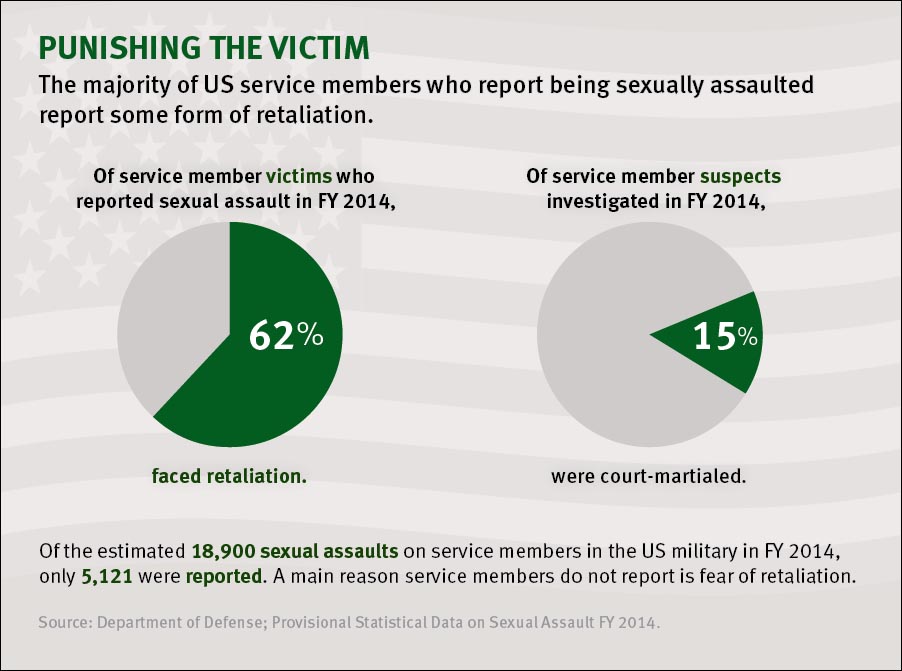
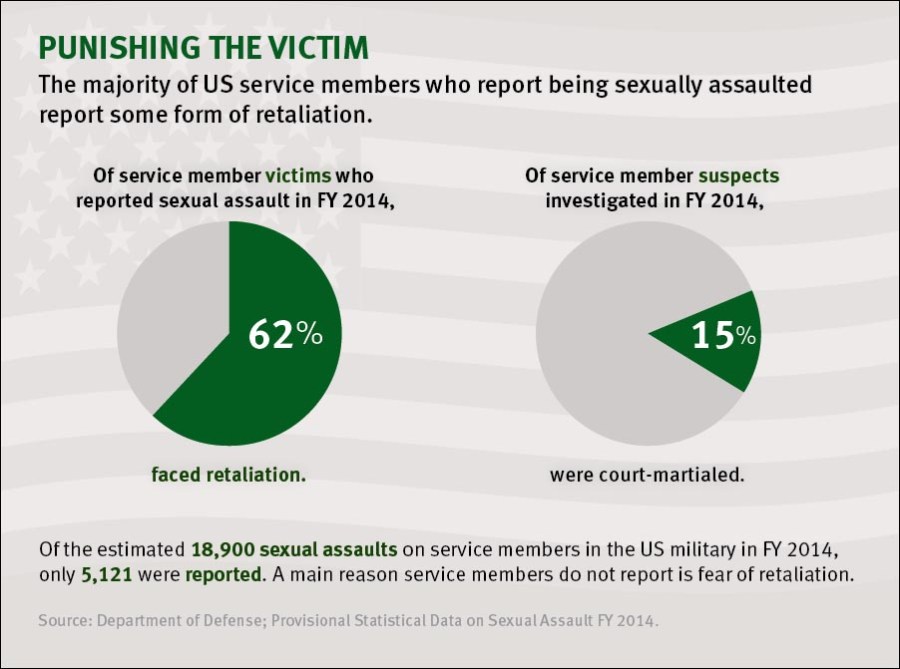
NBC Washington: 62 Percent of Military Sex Assault Reports Result in Retaliation (May 18, 2015)

Punishing the Victim Retaliation NBC Washington.jpg

“One of the women interviewed was Lt. Col. Teresa James, the highest ranking officer to come forward with a rape claim in the National Guard, according to a recent report by the Guard. The News4 I-Team first brought you her story when she said she believes her 34-year military career with the West Virginia National Guard was destroyed after she reported her rape. Lt. Col. James attended the news conference and told the I-Team, ‘There’s nothing else they can do to hurt me. They did everything they could possibly do. It’s effecting change. That’s why I’m out today. It’s effecting change, and if I have to speak it, shout it from the rooftops, that’s what I’m going to do.’ Read more from NBC Washington here.

Related Links:
Serving in Silence: Sex Assault Retaliation Complaints Investigated
62 Percent of Military Sex Assault Reports Result in Retaliation
Troops who report sexual assault face retaliation
Highlights of Army National Guard Lt. Col. Teresa James’ Military Sexual Assault and DoD IG Substantiated Retaliation Case
DoD Retaliation Prevention and Response Strategy: Regarding Sexual Assault and Harassment Reports
DoD Retaliation Prevention and Response Strategy Implementation Plan
Military Sex Assault Reports Edge Up; Retaliation Persists
DoD Releases Annual Report on Sexual Assault in Military
Department of Defense Annual Report on Sexual Assault in the Military
Military Sexual Assault Reports Are Up for the Seventh Year in a Row
Pentagon: Claims of Retaliation for Sexual Offense Complaints on Rise
Reports of Military Sexual Assault, Retaliation Increase
The Biggest Obstacle to the Pentagon’s War on Sexual Assault: The Military Justice System
Military sexual assault reports rise in 2017 but fewer servicemembers faced courts-martial
Sexual assault, harassment spikes at military academies, strategies fail to stem crisis
Reports of sexual assault in the military soar
Pentagon report shows sharp rise in military sexual assaults
Sexual assaults in military rise to more than 20,000, Pentagon survey says
“A cultural rot”: Sex assaults spike at U.S. service academies
Defense Department to make sexual harassment a crime
‘It was rape:’ Wisconsin Army National Guard officer Megan Plunkett says she was retaliated against, disciplined for reporting sexual assaults
Gabbard says ‘there is still a fear of retaliation’ in the military about reporting sexual assault
Senators Hirono, Gillibrand Reintroduce Legislation to Bring Justice to Survivors of Sexual Assault in the Military
Sexual assaults in the military are on the rise. This bill would authorize Congress to intervene
Sexual Assault in the Military | C-SPAN.org

NBC Bay Area: California National Guard Military Sexual Assault Bill Becomes Law (August 21, 2014)

Air National Guard SealA new law passed today removes sexual assault investigations and prosecutions from the military chain of command.

California has just made a major change in the way sexual assault allegations are investigated in the state military department. On Thursday, Gov. Jerry Brown signed a bill that requires sexual assault cases to be investigated by outside civilian law enforcement, not by military commanders.

See NBC Bay Area video here.

Related Links:
NBC Bay Area: California National Guard Culture Questioned (November 14, 2012)
NBC Bay Area: California Guard Tries to Serve Firing Papers to Member After Suicide Attempt (June 25, 2013)
NBC Bay Area | Military Women: We Got Fired for Being Raped (August 21, 2014)