(CNN) — U.S. military leaders are “angry” and “ashamed” over sexual assaults plaguing the armed forces, President Barack Obama said Thursday after ordering top Pentagon officials to “leave no stone unturned” in the effort to stop the abuse.
The president’s comments came the same day legislation was introduced in Congress to ease the victims’ quest for justice, a move that followed news this month of two high-profile cases involving sexual assault in the military — allegedly by the very service members tasked with preventing such crimes.
Obama summoned Defense Secretary Chuck Hagel and Army Gen. Martin Dempsey, chairman of the Joint Chiefs of Staff. He told the two that it was imperative they find a solution to the abuse that is undermining trust in the military.
As lawmakers on Thursday railed against the epidemic of sexual assault in the military, President Barack Obama summoned top Pentagon leaders to an emergency White House meeting to deal with the latest scandals and the perceived culture of indifference among service leaders.
“It’s time to change a system that is clearly not working,” said Gillibrand, who argued that rape victims too often see their legal cases ignored or undermined by commanders more interested in protecting their subordinates than fixing problems. “We need to give victims the basic confidence that justice will be had.”
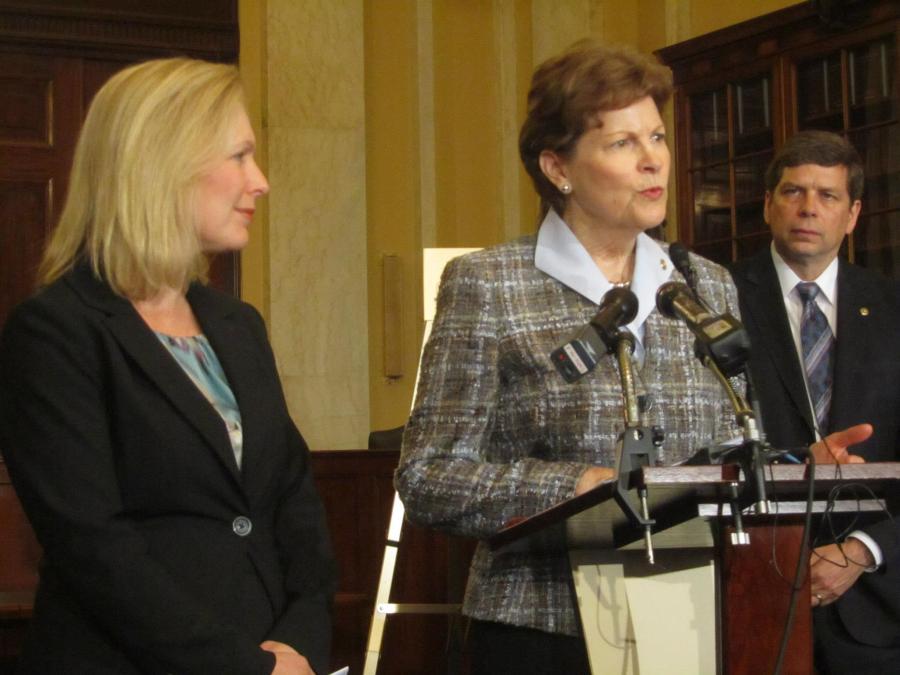
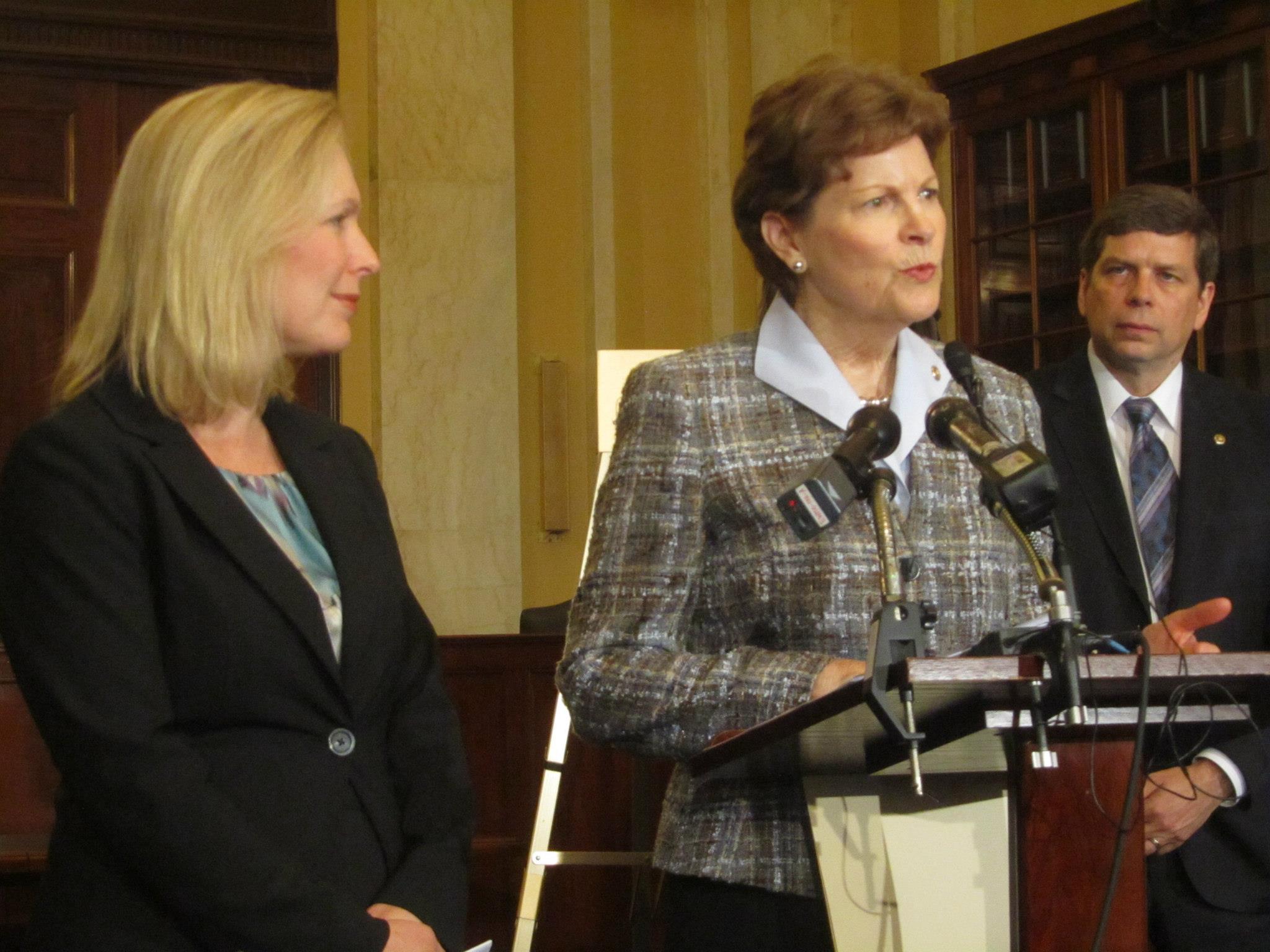
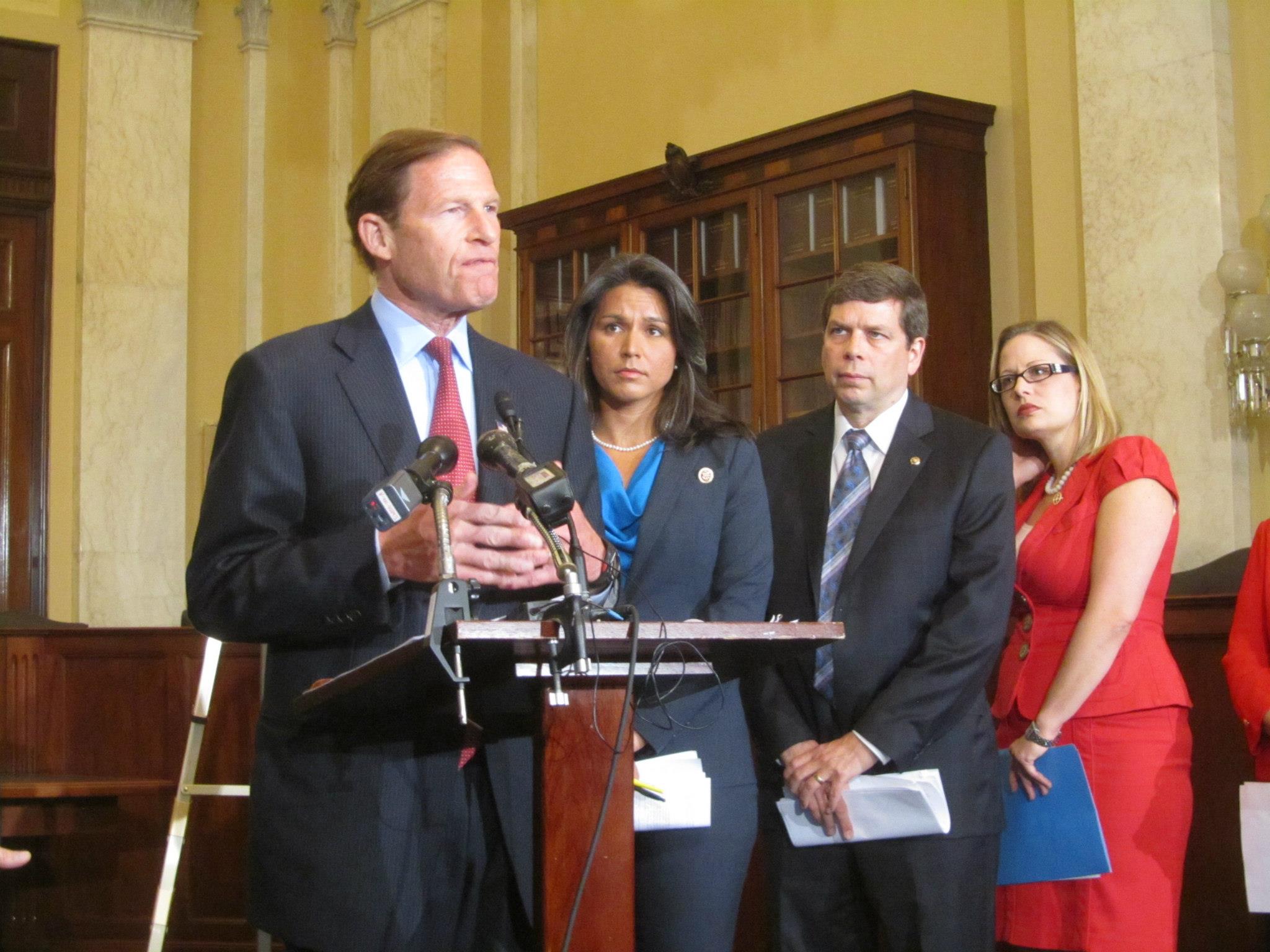
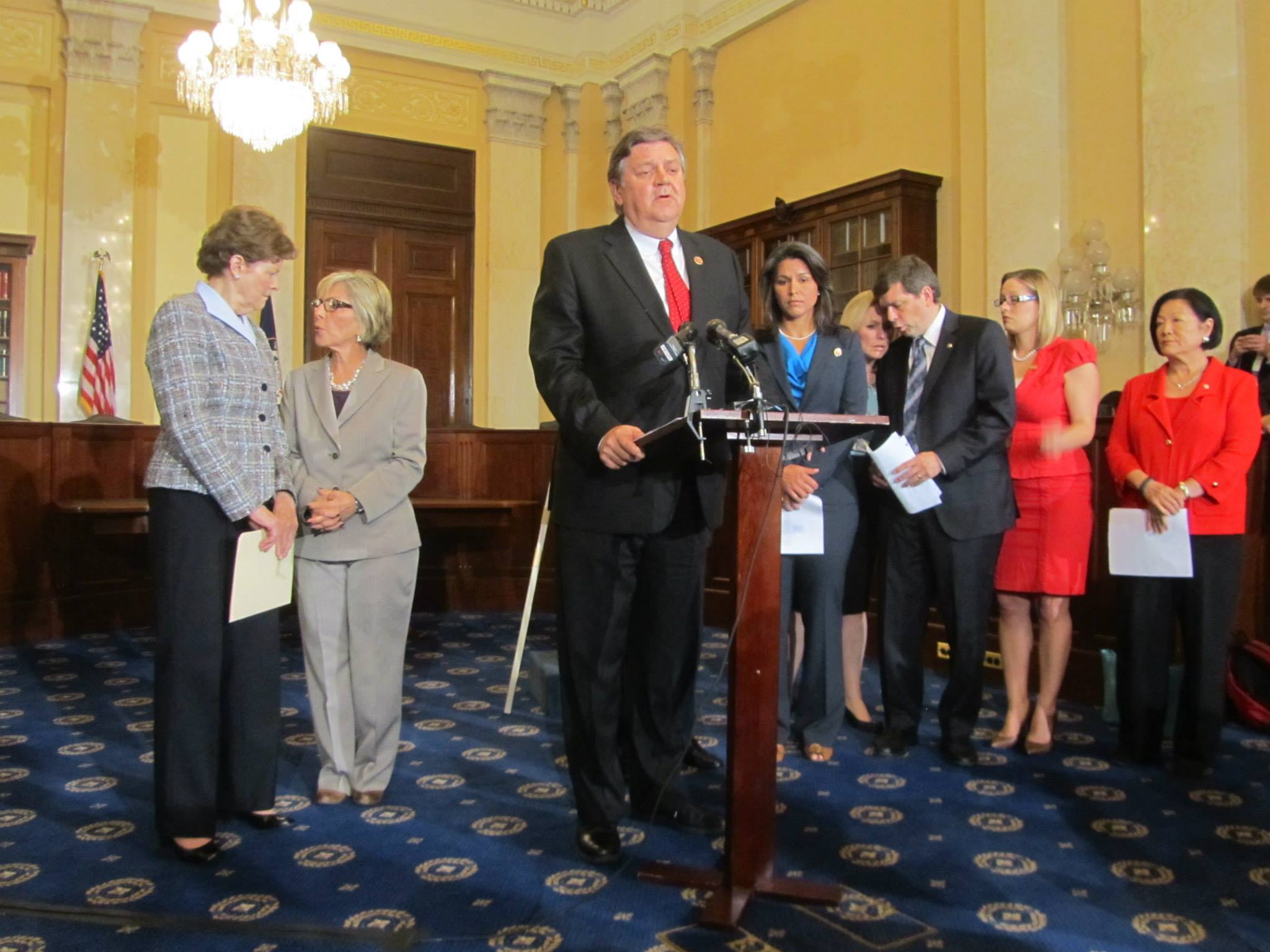
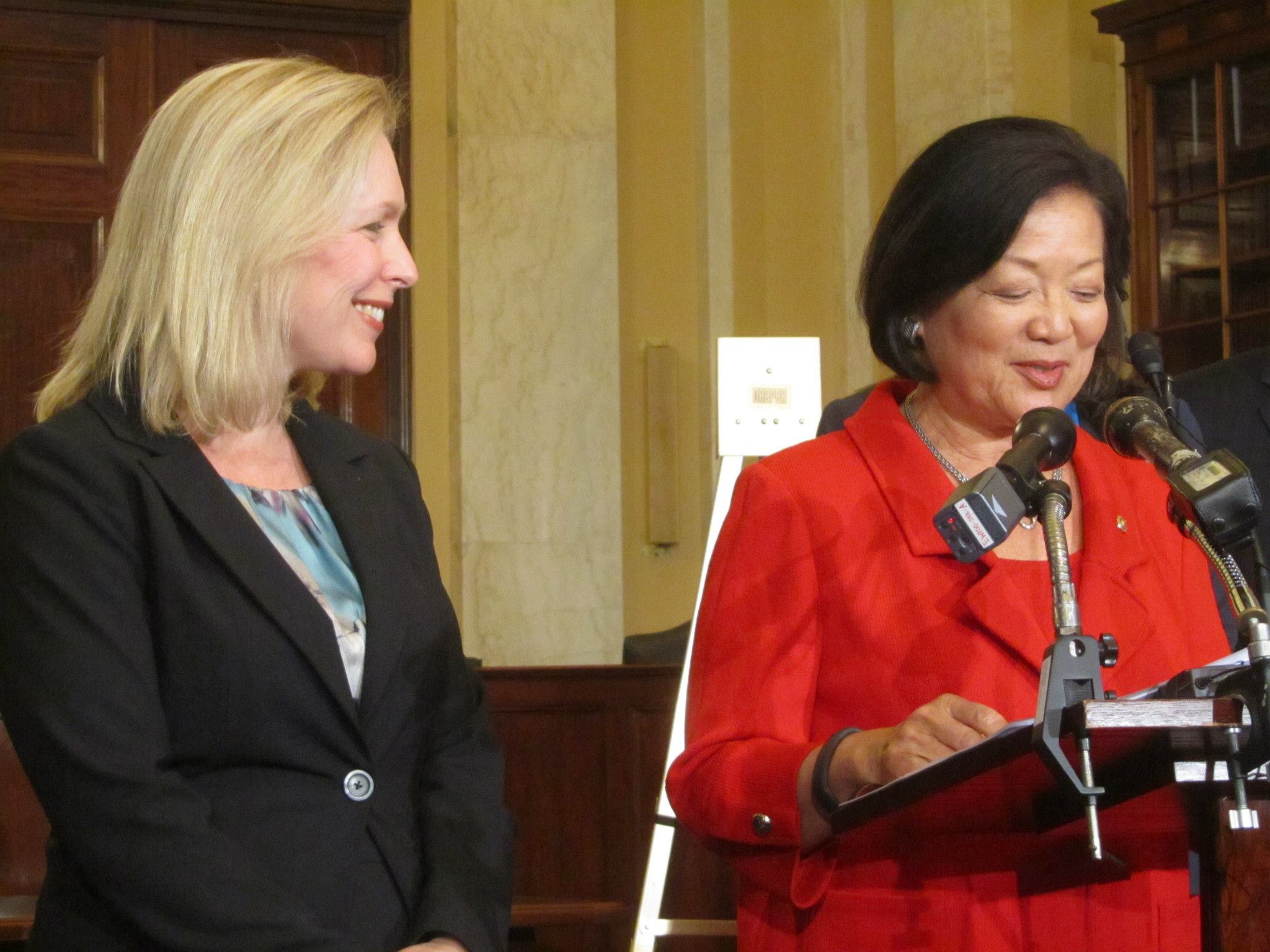
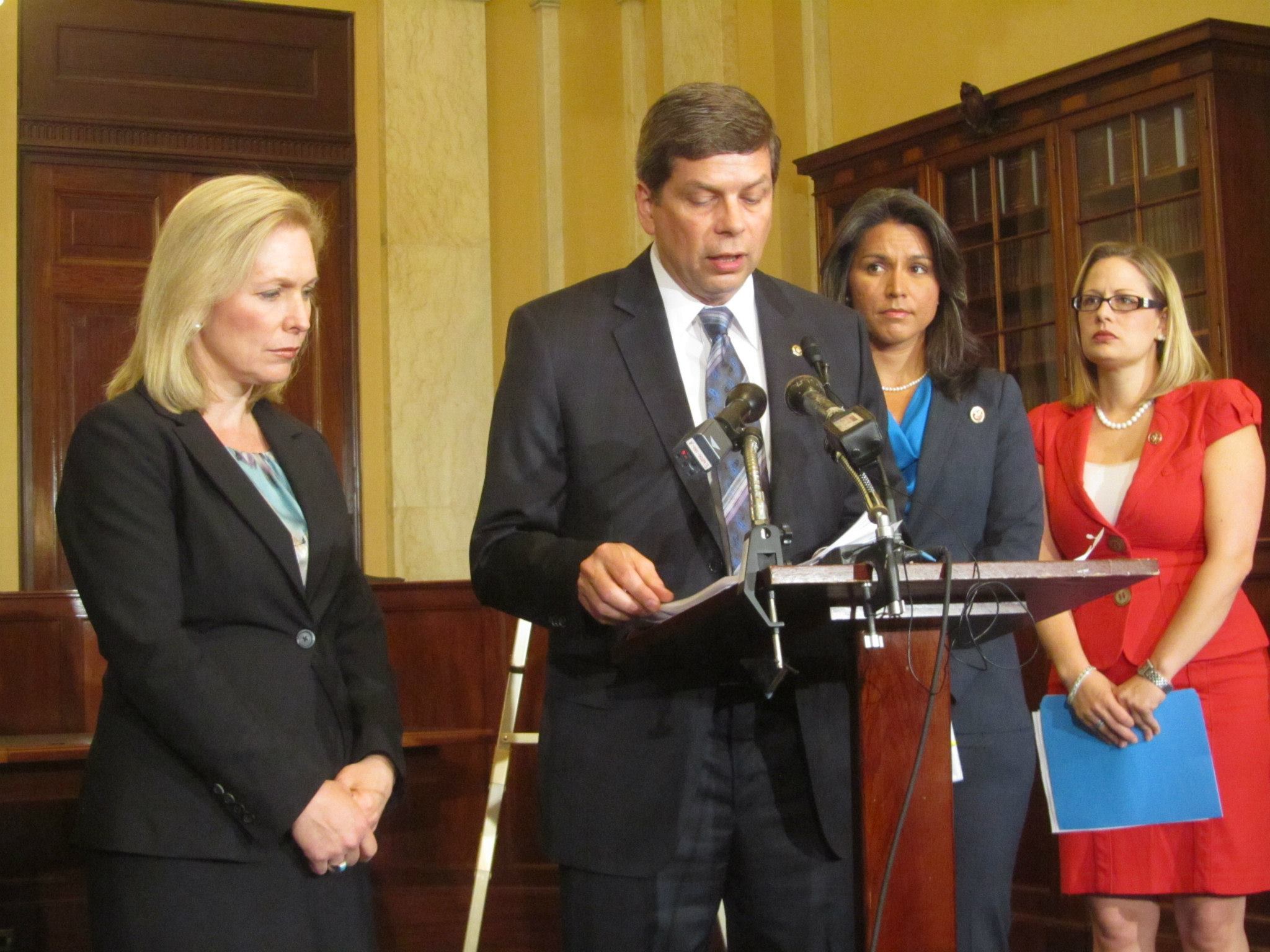
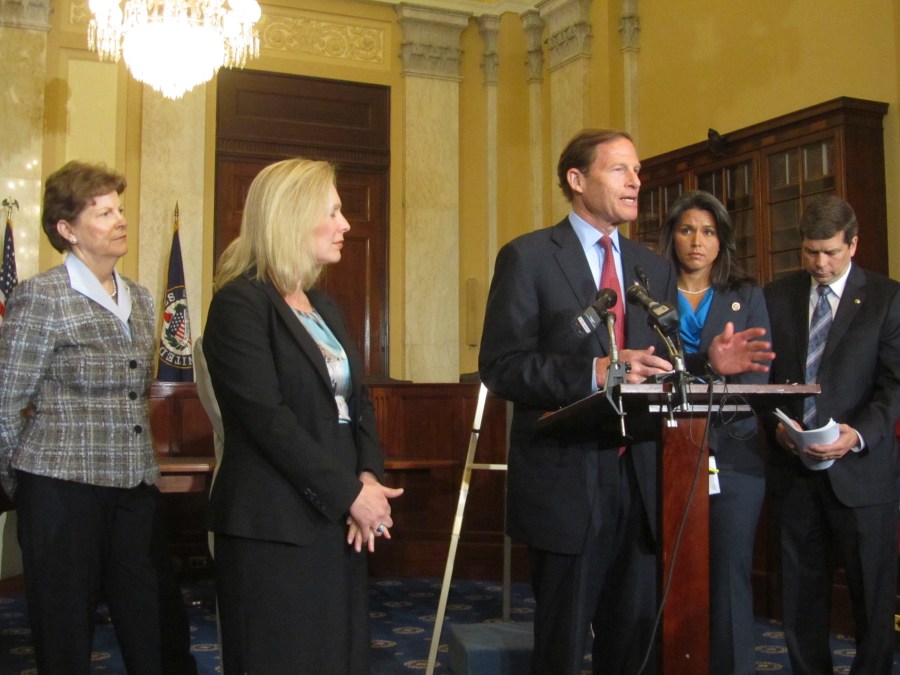
Washington D.C. – During a news conference today, U.S. Senators Susan Collins and Kirsten Gillibrand (D-NY), along with a bipartisan group of their colleagues in the Senate and House, announced new legislation that would reform the military justice system by removing the prosecution of all crimes punishable by one year or more in confinement from the chain of command, except crimes that are uniquely military in nature, such as disobeying orders or going Absent Without Leave.
Senators Collins and Gillibrand were joined by survivors of sexual assault in the military, including Jennifer Norris of Maine, and by representatives from organizations who assist victims of Military Sexual Trauma. The Military Justice Improvement Act would for the first time remove the decision whether to take a case to special or general court-martial completely out of the chain of command and give that discretion to experienced military prosecutors for all crimes punishable by one year or more in confinement, except crimes that are uniquely military in nature, such as disobeying orders or going AWOL.
“To be sure, the vast, overwhelming majority of our military personnel are honorable, conscientious, and respectful individuals, not rapists or harassers. It is for their sake that the pattern of covering up, blaming the victim, and failing to provide even the most basic protections that has been all too common for far too long must end,” said Senator Collins. “What does it say about us as a people, as the nation, as the foremost military in the world when some of our service members have more to fear from their fellow soldiers than from the enemy? This epidemic of sexual abuse cannot stand. We must ensure that justice is swift and certain to the criminals who have perpetuated these crimes.”
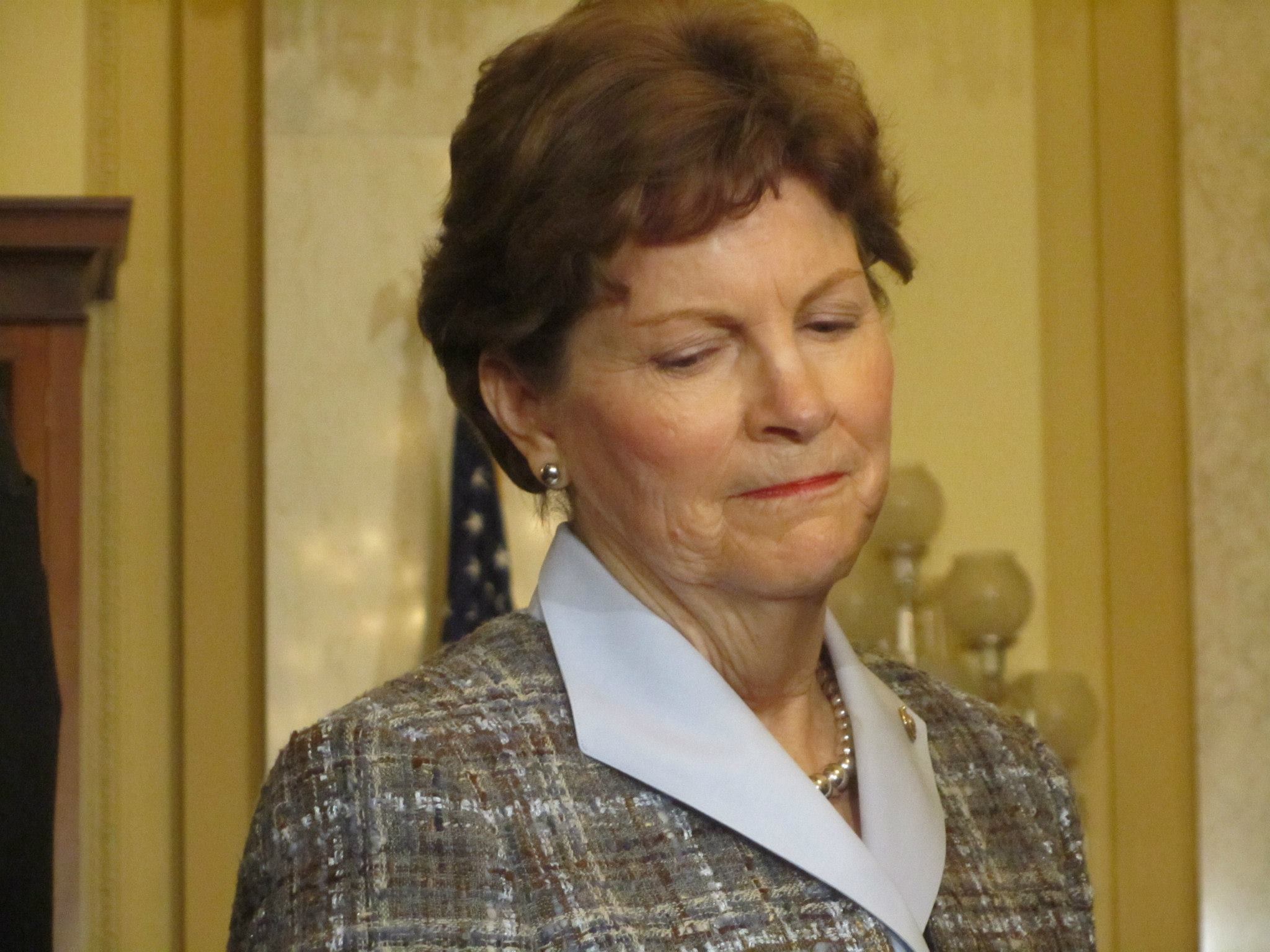
With tears streaming down her face, Jennifer Norris, a former Technical Sergeant in the Air Force, describes her harrowing experience with sexual assault and the difficulty she had in seeking justice within the military chain of command, saying, “The system is rigged against the victims” and in favor of the “often higher-ranking perpetrators.” [VIDEO]
Norris, who did not serve in Hawaii, said she’d been reluctant to report the rape because, “in the Air Force, I witnessed first hand what happens to those who stepped forward to report their assaults. I did not want to be stigmatized for reporting my assault — as I tried to move forward with my career. Instead, the best option for me was to try and endure it, to suck it up and try and make it until I could get transferred somewhere else — only to have it happen over and over again, like a recurring nightmare.”
She never did get justice, she said, even when she did come forward. “My perpetrators were allowed to resign in lieu of Administrative Hearings, which would have become a matter of public record. My command never offered the chance to proceed with a court martial.”
She said, “If the chain of command had been removed from handling sexual assault cases before I was attacked I believe justice would have been served or perhaps it would have been prevented in the first place.”
“At first I was too afraid to report my assault to my chain of command, but two years later I was forced to report due to the escalation of the behavior and the fear that I would be raped again.” -Jennifer Norris (Civil Beat, May 16, 2013)
Gillibrand: “I’m Distressed That The Victims’ Voices Aren’t Being Heard In This Debate
With tears streaming down her face, Jennifer Norris, a former Technical Sergeant in the Air Force, describes her harrowing experience with sexual assault and the difficulty she had in seeking justice within the military chain of command, saying, “The system is rigged against the victims” and in favor of the “often higher-ranking perpetrators.” [VIDEO]
New legislation would make it easier for victims of sexual assaults in the military to come forward.
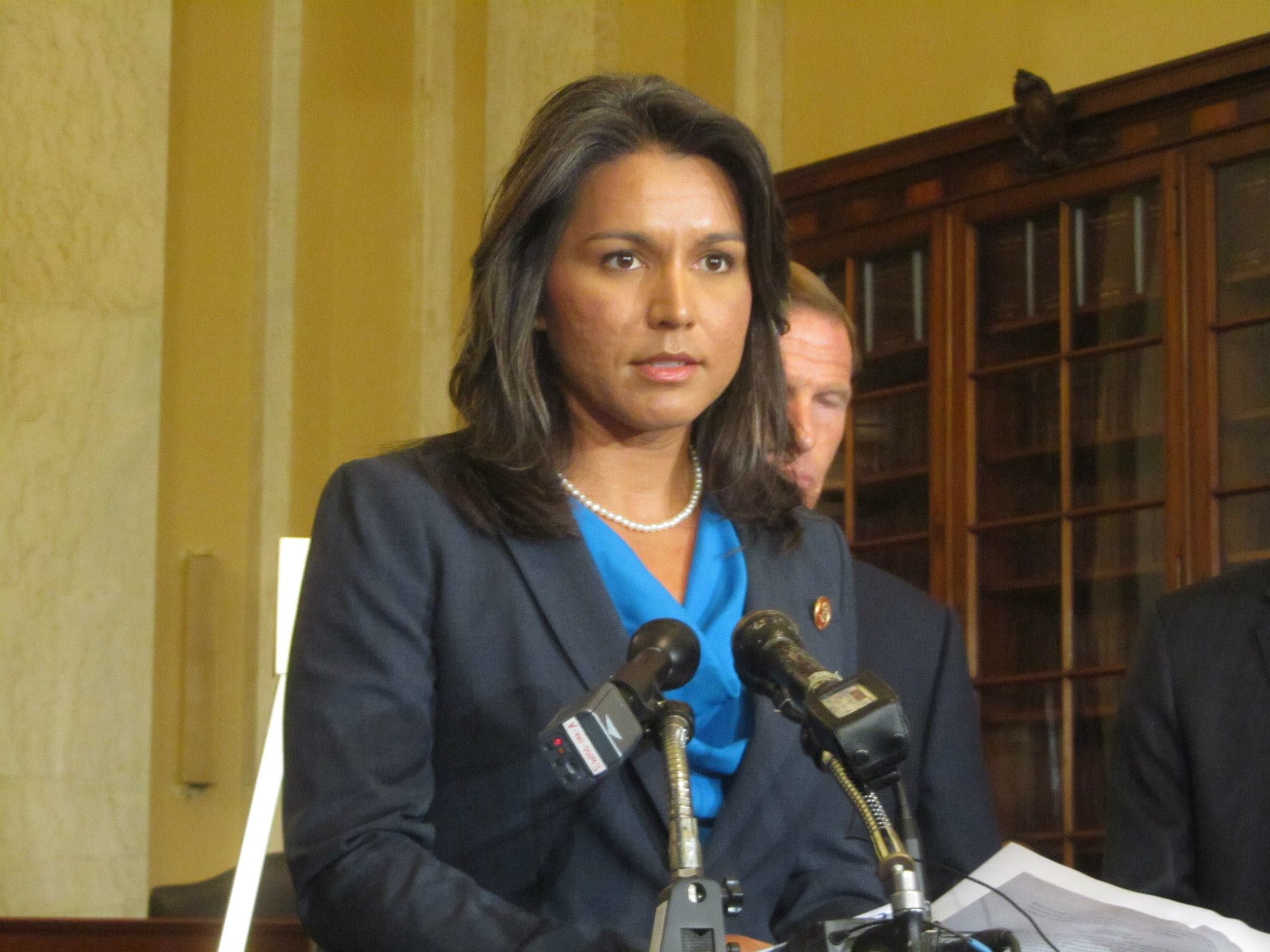
“WASHINGTON, D.C. — A burgeoning scandal over sexual assaults in the military is fueling calls from congressional lawmakers on both sides of the aisle to support a bill that gives victims greater confidence that they’ll get justice. At an emotional press conference on Thursday where former service members spoke of being sexually assaulted while in the military, Sen. Mazie Hirono and Rep. Tulsi Gabbard joined a bipartisan group in both chambers in pushing for reform. The issue was a personal one for Gabbard, who served two tours of duty in the Middle East with the National Guard. Though she was not available for comment Thursday, she told CNN earlier this month that rape culture was prevalent during her first deployment to Iraq, to the point where soldiers were trained on protecting themselves from other soldiers.”
At [the] press conference, Jennifer Norris said she was raped while serving in the U.S. Air Force. “At first I was too afraid to report my assault to my chain of command, but two years later I was forced to report due to the escalation of the behavior and the fear that I would be raped again,” she said. Norris…said she’d been reluctant to report the rape because, “in the Air Force, I witnessed first hand what happens to those who stepped forward to report their assaults. I did not want to be stigmatized for reporting my assault — as I tried to move forward with my career. Instead, the best option for me was to try and endure it, to suck it up and try and make it until I could get transferred somewhere else — only to have it happen over and over again, like a recurring nightmare.” –Honolulu Civil Beat (May 16, 2013)
U.S. Senator Mazie K. Hirono was joined today by victims of sexual assault in the military and organizations who assist victims of Military Sexual Trauma (MST) to announce new bipartisan, bicameral legislation that would reform the military justice system by removing the prosecution of all crimes punishable by one year or more in confinement from the chain of command, except crimes that are uniquely military in nature, such as disobeying orders or going Absent Without Leave. -Mazie Hirono (September 25, 2013)
Senator Mazie K. Hirono joined a diverse coalition, led by Senator Kirsten Gillibrand (D-NY), to call for the creation of a fair military justice system to reverse the systemic obstacles that sexual assault victims face. The Military Justice Improvement Act would remove the military’s chain of command’s sole decision-making power over whether cases move forward to trial. -Mazie Hirono (November 6, 2013)
Hirono Speaks In Support Of The Military Justice Improvement Act. -Mazie Hirono (November 14, 2013)
With Vote Looming, Hirono Urges Support For Military Justice Improvement Act -Mazie Hirono (November 20, 2013)
Before Senate Vote, Hirono Urges Colleagues To Pass Military Justice Improvement Act -Mazie Hirono (March 6, 2014)
PBS NewsHour: Hirono Fights For Military Justice Improvement Act -Mazie Hirono (March 7, 2014)
Senator Hirono Calls to Address Military Sexual Assault -Mazie Hirono (May 24, 2016)
Senator Hirono Presses Marine Corps Commandant for Commitment to Address Military Sexual Assualt -Mazie Hirono (March 14, 2017)
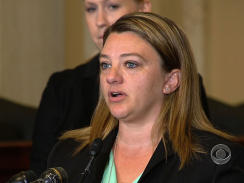
CBS News: Former Air Force Sgt. Jennifer Norris, a rape victim, said, “Blaming a civilian hook-up culture for the epidemic does nothing but contribute to victim blaming, excusing perpetrators, and it belittles the serious nature of these crimes.”
She said the system is rigged against low-ranking service members. “Commanders who are responsible for the resolution of these cases are far too often biased in favor of the often higher-ranking perpetrators,” she said.
Norris spoke at a press conference at which Sen. Kirsten Gillibrand and other members of Congress pushed legislation that would allow victims to bypass their commanders.
As far as how to make that happen, the senator said, “Allow them to report directly to a military lawyer, a trained prosecutor, someone who understands sexual assault, and is the one who will do the investigation and then decide whether or not to bring it to trial.”
It is with a heavy heart that I sit here today. Because, I am not only speaking for myself but I am speaking for thousands and thousands of male and female survivors, both military and civilian, whose lives have been forever altered by the military’s sexual assault epidemic, a culture that punishes the victim, and a broken military justice system.
Core issues must be addressed. The military justice system elevates an individual’s discretion over the rule of law. The system is encumbered with personal bias, conflicts of interest and abuse of authority. The cycle of repeated scandals, self‐investigations, and ineffective reforms must be broken. Click here for full House Armed Services Committee testimony.
I want to recognize the service members who have not survived due to non‐combat deaths, murder, and suicide and their families who are still waiting for answers. -Jennifer Norris, USAF Retired
Please note the same day of the military sexual assault hearings before the House Armed Services Committee on January 23, 2013, Secretary of Defense Leon Panetta announced the Pentagon was lifting the women in combat ban.
Technical Sergeant Jennifer Norris Testifies Before Congress
Personal Story:
I am older now and I have had a lot of time to reflect back on what happened to me. And it is now evident to me that I am one of many who have experienced the same kind of treatment simply because I reported sexual assault by a fellow, higher-ranking soldier.
I was raised by a father who worked hard as a logger his entire life. He taught me early in my childhood that I was equal with my brothers. I was expected to help prepare the firewood every season, I was expected to help mow the fields, and I was included in any and all activities. I grew up in a small town and never once experienced someone trying to harm me in a violent way or discrimination based solely on my gender. I grew up with a sense of confidence and determination that I could do anything I wanted to with my life. That is the American dream, right?
I learned quickly after joining the USAF that I had stepped into a whole new world, one that eventually made me feel like I was dealing with an underground mob. Shortly after I enlisted, I was invited to a “new recruit” party. I was really excited to attend so that I could meet others who were also going through the excitement and fear of becoming a soldier. Instead I became the victim of a calculating predator who used the “party” as a way to set up his attack. And, as I commonly see in many of the cases in my work as a victim advocate, he used alcohol as his weapon. When he was unable to pressure me to drink, he used whatever means necessary to incapacitate his victim. When I was raped, I was chemically restrained and could not move; yet I knew what was happening to me. In my work as a victim advocate, I frequently saw this same modus operandi.
I didn’t report that crime and here is why. I could not face that it happened. I didn’t want to start out my military career like that and so I determined that I would never talk about it to anyone. From that day forward, I avoided the recruiter at all costs and soldiered on. I have never seen him since.
I had an amazing basic training experience at Lackland. My military training instructor was SSgt Knight and this professional NCO taught me how to be a good follower and he also believed in my leadership skills.
The majority of the people that I served with were amazing, inspiring individuals who truly were dedicated to the mission. But just like me, there are far too many who fall victim to manipulation and abuse of authority by perpetrators who are higher ranking and have more credibility with those who are in charge. We have no choice but to acquiesce when under the leadership of a heavy fisted Chain of Command.
I was assaulted a second time at Keesler Air Force Base after Basic Training by my instructor. I was attending Satellite and Wideband Communications technical school. I was there for 6 months. While there, I learned very quickly that if you reported sexual harassment, assault, or were offended by someone’s lewd and crude remarks that you will be quickly turned out of the Air Force. So, I planned to get through it, go back home and serve with the Maine Air National Guard, where I thought I would be safe. I just sucked it up and kept my mouth shut so I could graduate. I watched an Active Duty Air Force female, who to this day is one of my best friends, get swiftly booted from the military, after she reported that one of her instructor’s made derogatory remarks to her during class. This girl was 19 years old. The military training managers engaged in what appeared to be a witch-hunt and looked for anything and everything to kick her out. In the end, they were successful. Today she suffers severe PTSD from this experience.
A few very significant things happened while I was at Keesler. One of the female airman that I was going to school with admitted that she had sex with her recruiter. This conversation was in the presence of another Maine Air National Guardsman who shared that the same recruiter who raped me had also sexually assaulted his cousin, who as a result did not join the military. When he explained to me how it occurred, my blood began to boil with rage because I recognized the pattern immediately. The recruiter had done the same thing to me and I determined I was going to press charges against him, when I returned home, to stop him from harming anyone else.
The Post Traumatic Stress, which I didn’t realize I had, kicked in to overdrive after learning this information. I wanted to take action. I did an impulsive thing. I called up the recruiter who raped me and told him I was going to press charges against him and that I knew what he had done to another girl as well. He quickly hung up on me. My thinking was maybe just maybe he would be too scared to try this again.
About two weeks before graduation from Keesler, I was performing a maintenance loop on a mobile satellite communications van as part of the testing to move on to the next block. I had it down. I loved my job and everything stuck. For this test, we needed to step inside the enclosed satellite communications maintenance van. The instructor shut the door and stood there with his clipboard behind me while I configured the van. Shortly after starting the task, he came up from behind me, attacked me, pushed me into the wall of the van, rubbed his groin area on my body and whispered in my ear, “let me help you, let me help you.” Those words trigger me to this day.
I got angry, I flipped out and pushed him away and told him not to touch me ever again. He was surprised and didn’t say a word. My fight or flight response had kicked into overdrive and my anxiety was so high that I was shaking while I finished configuring that van and waited for him to give me permission to leave the enclosed van. But, I did it. I passed the test.
Unfortunately, it did not end there. This TSgt told me to stay behind after class. Because I could not disobey a direct order without consequences, I stayed only for him to tell me that he was going to fail me for attitude even though I passed the final test. I immediately broke down and started crying. All I could say is why are you doing this to me? Why? I begged him to reconsider. He told me to report the next morning an hour before the rest of the class and he would reconsider. I did not do as ordered.
Instead of going to school the next morning, I went to the Air National Guard liaison, who I had established a nice relationship with, and I informed her that my instructor wanted to fail me for attitude, despite passing my test. The Guard gave the TSgt. a call. He acquiesced and I was told to report to my next class. While at technical school training at Keesler, I never saw him again. I did not report this crime for a number of reasons. First I witnessed first hand what happens when you report that type of behavior. Second, I was only two weeks away from graduation, and, third, I did not want an investigation launched and risk being stuck on that base with that predator. Lastly, I did not want to be stigmatized as a female who alleges sexual assault before I had even entered the operational Air Force. These fears and attitudes exist to this very day.
When I got back to the Maine Air National Guard, the recruiter was gone. He had quit his full time AGR position, which rarely happens in the National Guard. He was a MSgt and he effectively gave up his career and his retirement. He moved to North Carolina. I was so relieved that he was gone. Again, I did not report because I knew I could potentially lose my career. I let myself become excited about starting my new career. I planned on staying in for 20 plus years and despite being raped and assaulted in the first year of my career, I loved being in the military, I loved my job, and I loved being a part of a family and a team.
I thought I would be safe at the Maine Air National Guard. The Commander put me to work as soon as I got back from Technical School to help me transition back into civilian life and I totally excelled and became a superior performer. As a result, unbeknownst to me my Commander asked my NCOIC to coordinate hiring me as temporary federal technician. My NCOIC notified me and began the hiring process. I was ecstatic beyond belief and made the most money I had ever made for doing a job I loved!
Shortly after beginning my job, I noticed that the Maintenance Superintendent, also my NCOIC, and boss began treating me differently than the guys. It made me feel uncomfortable, because I didn’t want the guys I worked with to be resentful. But, I also knew that I was a great troop, so I ate up all the extra responsibility that was assigned thinking he must recognize that I am a true leader. No, that was not the case at all. Eerily similar to the recruiter, my NCOIC was beginning to set up his attacks. He began assigning me jobs that would isolate me so that he could make his move. He would give me the assignment, then show up unexpectedly to “check in on me,” but instead forced himself on me every chance he got. I could not escape. The abuse escalated over time and he became more abusive the more I resisted and told him NO. His attitude was that I should be flattered that he wanted me. I was in pain. I was there to do a job, to serve my country, why must I deal with this?
The more I fought him off and begged him to stop, the more he would escalate. He regularly forced himself on me, but when I fought back, he called me names and belittled me. He would tell me that my breasts were too small and tell me that it would be in my best interest. I was too scared to report this behavior because he was the Commander’s right hand man. And in the military, rank does come with its privileges including the higher rank you are the more credibility you have with the Commander. After what happened with the recruiter and the technical school instructor, I was already fearful of rank and abuse of authority.
Meanwhile, while my NCOIC was sexually assaulting me and abusing me during the week, there was another National Guardsman, who was considered a weekend warrior, doing the same exact thing to me. I did my best to stay clear of both but they would sneak up on me when I was least expecting it. It was like it became a sick game for them. To this day, I cannot handle anyone coming up behind me or hovering near me. I watched both of them escalate while I felt powerless to do anything about it, if I wanted to save my career. After a while, they did it in front of people as well and nobody said or did anything. Why would bystanders put their career at risk for me? I felt totally isolated.
One night when my NCOIC attempted to rape me in a drunken rage, I started screaming and someone heard me. I escaped but I fell apart. I turned into an emotionless robot. I continued to do a good job but I was dying inside. My attitude began to suffer. I was looking for a way out. One day, one of the professional NCOs in our squadron approached me and said he was concerned about me. I had just received an award for Superior Performer during an Operational Readiness Exercise, but I wanted to get out and he wanted to know why. All it took was that one person showing genuine concern and care for the floodgates to open.
I immediately started crying and opened up to him forgetting that by military law, he was supposed to report any crimes that he became aware of. I begged him not to report because I was afraid that it would end my career. He told me if I did not report that he would. I then reported all four of the perpetrators to my Commander.
The Commander initially doubted me. It was not until after I provided him with proof that he raised from a seated position in anger and screamed with powerful emotion, “he betrayed me.” The Commander then told me he had instructed my NCOIC to hire me because of my excellent work performance. We discussed the recruiter and he admitted he was confused why the recruiter suddenly gave up his career and retirement, but it all made sense to him now. All of these predators appeared to be stellar troops. All of them had histories of sexually assaulting others.
In many ways, I am one of the lucky ones, which is sad to say. My Commander believed me. He did the best he could to handle the case against my NCOIC and the National Guardsman given the complexities involved. He strove to be fair, neutral, and impartial. I was forced to leave the Squadron if I wanted to be safe, while he conducted the investigation. Because he could only investigate on Guard weekends, the case got dragged out for months. While I was isolated at Headquarters, the two predators were able to stay and inject their version of how things went down. They had all that time to convince many in the squadron that I was the bad guy. After they admitted guilt the day prior to the administrative hearing, they were both forced to leave my squadron and I was allowed to return.
Sounds like a success story right? Wrong. My Commander deemed the crimes sexual assault. When the crimes were reported to the Adjutant General for the state, it somehow became sexual harassment. Our only recourse was to file an EEO complaint. I filed the complaints against two of the four perpetrators, because we didn’t have jurisdiction over the Active Duty Air Force Technical School Instructor and the Recruiter had skipped town. I had no one assisting me.
I was contacted by one of the perpetrator’s lawyers both on the phone and in writing. I never responded. While waiting for the investigation to conclude, I was physically attacked by a friend of one of the perpetrator’s. I pressed charges but unfortunately the civilian authorities did not pursue the case. I told my Commander and he said there was nothing he could do because it happened off base. The day before I was to go to the Administrative Hearings for the “trial” of my NCOIC and the National Guardsman both of them copped a plea. They agreed to the punishments that the Commander recommended. The Commander told me they were willing to plead guilty. He asked if I was okay with it so he could proceed with removing them from the Squadron. I was so tired and beat down by this point that I just wanted it to be over. I wanted to go back to work and resume the career that I loved. When I agreed to the terms of the punishment it caused the EEO complaint to be withdrawn. Therefore, the Maine Air National Guard either didn’t have to report the crimes at all to the Pentagon or they could report the crimes as sexual harassment.
The punishment imposed by the Commander was that both perpetrators were permitted to agree to resign in lieu of Administrative Hearings, which would have become a matter of public record. I wasn’t offered the chance to proceed with a court martial. I was glad they were gone, but the reason I pressed charges was to prevent any other woman from having to go through this. My efforts were futile. I was told that because my NCOIC had over 18 years of service that he was allowed to stay in the military until he reached his twenty years. When he reached his twenty, he would be forced out. No sex offender record, nothing. Because we didn’t have as much evidence against the other perpetrator, the National Guardsman, he was kicked out of the Maine Air National Guard and given a Letter of Reprimand (LOR). He was discharged honorably; he joined the New Hampshire Air National Guard. Ironically, the last time I saw him he was in charge of a training conference I was attending and he was a MSgt working at the Pentagon. Both of these perpetrators retired with full military benefits. Meanwhile, I was retaliated against by the enlisted Chain of Command.
In 2006, the NCO in the Maine Air National Guard, who had me physically beat, was found guilty of manslaughter and leaving the scene of an accident in another case. But because he had a top-secret security clearance he somehow got off. And as I went back to my squadron, I had to work with this man. I tried to pull myself together and continue with my career, but instead I was met with resistance from almost everyone I encountered. I was the bad guy, because I made the predators lose their jobs. As a cruel joke, men literally hugged the wall as I passed by pretending I might falsely accuse them of assault. I was treated like a leper. I was pulled from leadership positions. I was denied training I needed to become eligible for my SSgt stripe. I continually asked to complete my training and was called a spoiled brat, by the Officer in Charge. And I was assigned menial tasks that isolated me. By this time, the Commander who investigated the case had been promoted to Headquarters and a new Commander was in charge. He depended heavily on the enlisted chain of command and was willing to sell me out for the mission.
I felt like an outcast and people did not hide their disdain for me. I had no more fight left in me. I didn’t want to give up my career, so I transferred to the Massachusetts Air National Guard, which was a four-hour drive one way. It was the only way to continue my career progression and promotions. I needed to remain in the same career field, at least until I was a TSgt.
I went from one snake pit to another. My old squadron called up my new squadron and informed them that I was a “troublemaker.” A person, in my enlisted chain of command, shared this with me when I asked why everyone in my Chain of Command was treating me so badly. I was met with resistance from the get go, despite the fact that I was a super troop and worked very hard at my job. While serving at the Massachusetts Air National Guard, I experienced gender discrimination. I was held to double standards. If others came in late, it was no big deal. If I came in one minute late, I was getting hauled into an office for a big meeting with 3 or 4 people. My new Commander recognized my skills and considered me a subject matter expert. He even hired me during the week to help keep things running smoothly because of the multiple deployments the squadron endured after 9/11. I helped keep things running smoothly back home and continued to train all the new airmen that came into the squadron. We had a lot of folks leave after their first deployment and the only ones left were the ones who wanted to be there. As a result, we got a lot of new airman.
My new squadron Commander recognized that I was a superior performer and promoted me to SSgt shortly after transferring to that base. The Maine Air National Guard would not give me my SSgt stripe claiming that I lacked leadership skills, despite the fact that I was an Airman Leadership School instructor, not only met the standards but exceeded them, including going to Airman Leadership School in person, unlike a lot of National Guardsman. And, I had to fight the Massachusetts Air National Guard for my TSgt stripe despite the fact that I had not only met the standards but also far exceeded them. I had become a very effective satellite communications trainer and had a record set up time. The straw that broke the camel’s back was the day that my NCOIC told me that he was going to make one of the Airman that I trained the Team Chief. I had 8 years in the field, while this airman had only two. I demanded to see the First Shirt regarding this issue because I didn’t want to turn this into an EEO issue.
My Chain of Command eventually acquiesced and gave me my TSgt stripe and the Team Chief position. I was the most qualified to do the job. But, this job came with big consequences. Instead of supporting me in my position, I was overworked, blamed for things out of my control, and not respected. I was left with no support or direction so I had to come in during the week and teach myself. After teaching myself, I would then create standard operating procedures to help train my troops. I always trained myself out of a job because I took serving seriously. If anything was to happen to me, I needed to have people that could seamlessly pick up where I left off.
After months of setting me up to fail they threatened to pull my TSgt stripe from me as a punishment for “substandard performance.” They had been planning it for quite some time because by this time, they had the Commander on their side and I didn’t stand a chance. As a result, I filed an EEO complaint against my NCOIC for gender discrimination. I chose to report informally because I had been through a formal reporting process before. I did not have the energy.
My Commander conducted his investigation and determined that my allegations could not be substantiated, but in the same breath told me that I could have anything I wanted. All I wanted was to go to my planned NCO Academy School and be transferred out of that squadron. I also no longer wanted to work for my abusive and belittling boss and refused to return back to satellite communications. Again, not a huge victory but at least I was able to escape that horribly oppressive environment. By this time in my career, I was beginning to unravel and feel completely ready to break. I decided to transfer back to the Maine Air National Guard and this time I chose a critical career field where women might be treated a little better than in the maintenance field. My boss was promoted to SMSgt shortly after.
I met my husband at Keesler while attending another training school in 2001. We finally made the commitment to one another in 2005 even though I realized I was severely damaged by the rape, sexual harassment, sexual assault, abuse, retaliation, and gender discrimination. Love is the only thing that pulled me through this relationship, because I was literally incapable of having interpersonal relationships. I was hardened, damaged, hyper vigilant, and defensive.
Because of him, I reached out to the VA when I found out that they finally were treating Military Sexual Trauma. I have been getting counseling and treatment at the VA since 2006. As a result of getting that help, I was forced to list on my security clearance form that I was receiving counseling for military sexual trauma. The security clearance folks wanted a release of information signed so they could gain access to my medical records from the VA. I signed them, out of fear. But, then called the VA and revoked it, essentially ending my career. I did not want to jeopardize my future career opportunities because I had been labeled and diagnosed with PTSD from military sexual assault.
After being medically retired from the Air Force for PTSD due to MST, I felt like a fish out of water. I had no purpose in life. I was taking a ton of prescription medications, to help me feel less angry, depressed, and help me live without constant anxiety and fear. I felt like I had lost my life’s dream and there was no reason to live anymore. I came very close to ending my own life, because I felt broken, damaged, and unsure of myself. I literally felt like I was invisible and what I thought or felt did not matter. I wanted to die because I basically got fired for being raped.
Working with veterans and active duty personnel who are victims of military sexual assault, I came to recognize that I had been shamed into silence. My fellow veterans helped me find my voice again.
If anyone ever tells you that women are the weaker sex, don’t you believe it.
In 1999, the television program 60 Minutes reported on the hidden War at Home in the U.S. military. They reported that at the time of airing, Pentagon records showed that 58,000 military spouses were victims of domestic violence and that rate was three times higher than the civilian population rate. The overall concerns were that the military justice system was a system that routinely failed to punish even the most violent and abusive servicemen. As a result, it often left an abused spouse alone without protection to fight a secret war. 60 Minutes highlighted the cases of three Fort Campbell soldiers who were charged with killing their wives or girlfriends (Bill Coffin, Dane Zafari, Tracy Leonard) and one Navy spouse who was a victim of domestic violence.
One of the cases singled out was that of Fort Campbell Sergeant Bill Coffin who murdered his ex-fiance Ronnie Spence after a civilian judge granted her an emergency protection order. In December 1997, Sgt. Coffin murdered Ronnie in front of their baby daughter in a shared home near Fort Campbell, Kentucky. Sgt. Coffin shot her twice through the trailer, entered the home and then shot her in the face and through the heart. While Ronnie was lying dead on the floor, Sgt. Coffin emptied the gun into her. Several weeks before the shooting, court records showed that Sgt. Coffin had repeatedly threatened to kill Ronnie and his superior officers at Fort Campbell knew about the threats.
I think they should have confined him to that army base. They should have gotten him some help. They should have stopped him, they should have intervened. They did nothing. -Kathy Spence (mother)
60 Minutes interviewed Kentucky Judge Peter MacDonald who stated that domestic violence cases involving Fort Campbell soldiers routinely showed up in his courtroom. He said that Army commanders regularly ignored court orders issued to protect the abused spouses. Judge MacDonald issued the emergency protective order requiring Sgt. Bill Coffin to stay away from Ronnie Spence. Sgt. Coffin instead shot and killed her. According to 60 Minutes, Sgt. Coffin pleaded guilty to domestic violence and other charges, and was sentenced. Judge MacDonald felt the readiness of the troops was more important than the protection of the battered and abused spouses.
In an in depth investigation, 60 Minutes learned that the Army’s domestic violence guide for commanders listed a number of things that could have been done in Sgt. Bill Coffin’s case but were not. The guide included restricting an abuser to the barracks or assigning them to the quarters of a superior. They also learned that the military spends millions yearly on a Family Advocacy program designed to treat and prevent domestic violence. But Sherry Arnold, a licensed clinical social worker, who helped run the program for the Marines in Camp Pendleton in California, said the Commanders have preconceived notions. She often witnessed victim blaming, minimization, a hands off approach, an ‘it’s a family matter’ attitude, and indifference to the seriousness of the situation and escalating violence.
Robert Clark, the commanding general of Fort Campbell, Ky., where several particularly violent incidents have occurred, said the military does a good job handling domestic violence cases. But Peter MacDonald, chief district court judge in Kentucky with jurisdiction over Fort Campbell, said the Army routinely ignores his court orders designed to protect abused spouses. “They have no conception of what’s going on in domestic violence.” –Deseret News
After the public learned of the scandalous way the U.S. military handles felony crimes like domestic violence, rape, and stalking, the Pentagon was ordered by Congress to investigate domestic violence in the armed forces. Congress recommended stronger protections for battered spouses and stiffer penalties for the servicemen who abuse them. In 2000, Major Joanne P.T. Eldridge suggested a proposal to add anti-stalking provisions to Article 134 in the Uniform Code of Military Justice. Since 1999 and long before this, domestic violence has continued to be an on-going serious invisible issue in the military. Both military spouses and service members are victims of domestic abuse. The year 60 Minutes aired the ‘The War at Home’ programming, Fort Campbell soldier Barry Winchell was murdered because a couple soldiers suspected he might be gay. Barry’s murder prompted the lift of the controversial Don’t Ask Don’t Tell policy.
The year after 60 minutes aired, civilian spouse Michelle Theer conspired with her lover, Army Ranger John Diamond, to kill her husband Air Force Captain Frank Theer for the life insurance money. In 2002, four wives were slain in six weeks at Fort Bragg in North Carolina. They were Teresa Nieves, Jennifer Wright, Andrea Floyd, and Marilyn Griffin. In 2008, Army Lt. Holley Wimunc was abused, stalked, and murdered by her Marine husband. In 2011, Holley’s father advocated for H.R. 1517 sponsored by Representative Bruce Braley. This law was aimed at protecting both domestic violence and sexual assault victims. This law would have required the removal of Commanders from the investigation and prosecution of felony crimes. The Holley Lynn James Act and any subsequent legislation, like the Military Justice Improvement Act, suggesting the removal of the Commander from the processing of felony crimes have been unsuccessful.
Rep. Bruce Braley introduces the Holley Lynn James Act — a bill to help victims of sexual assault and domestic violence in the military get justice. The bill is named after Holley Lynn James, a constituent of Rep. Braley who was killed by her husband while both were in the service.

 Obama: Pentagon leaders ‘ashamed’ over sexual assaults plaguing military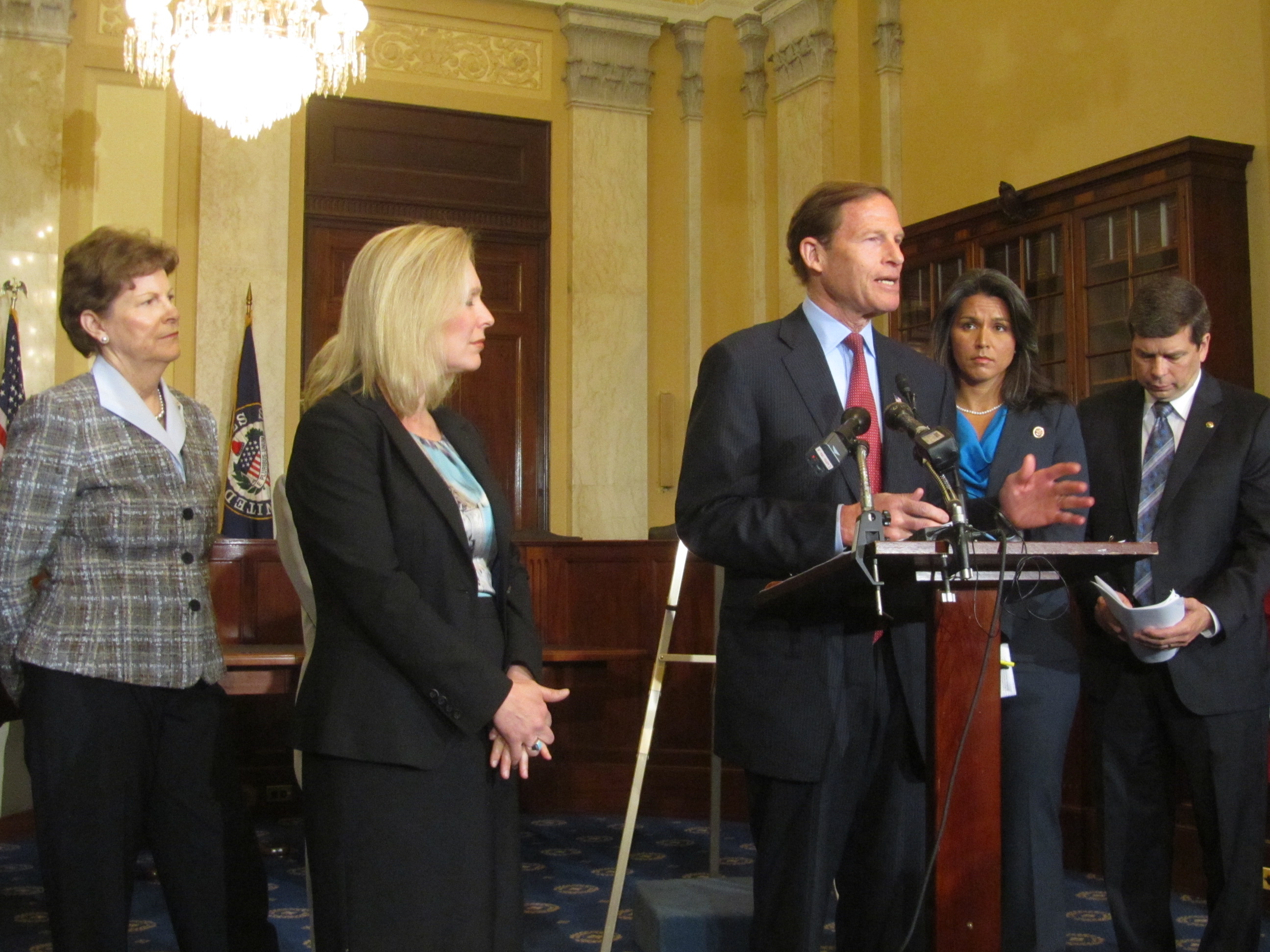
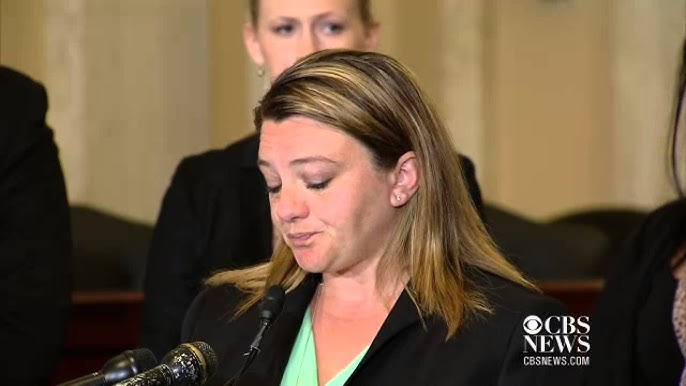







 With tears streaming down her face, Jennifer Norris, a former Technical Sergeant in the Air Force, describes her harrowing experience with sexual assault and the difficulty she had in seeking justice within the military chain of command, saying, “The system is rigged against the victims” and in favor of the “often higher-ranking perpetrators.” [

 CBS News: Former Air Force Sgt. Jennifer Norris, a rape victim, said, “Blaming a civilian hook-up culture for the epidemic does nothing but contribute to victim blaming, excusing perpetrators, and it belittles the serious nature of these crimes.”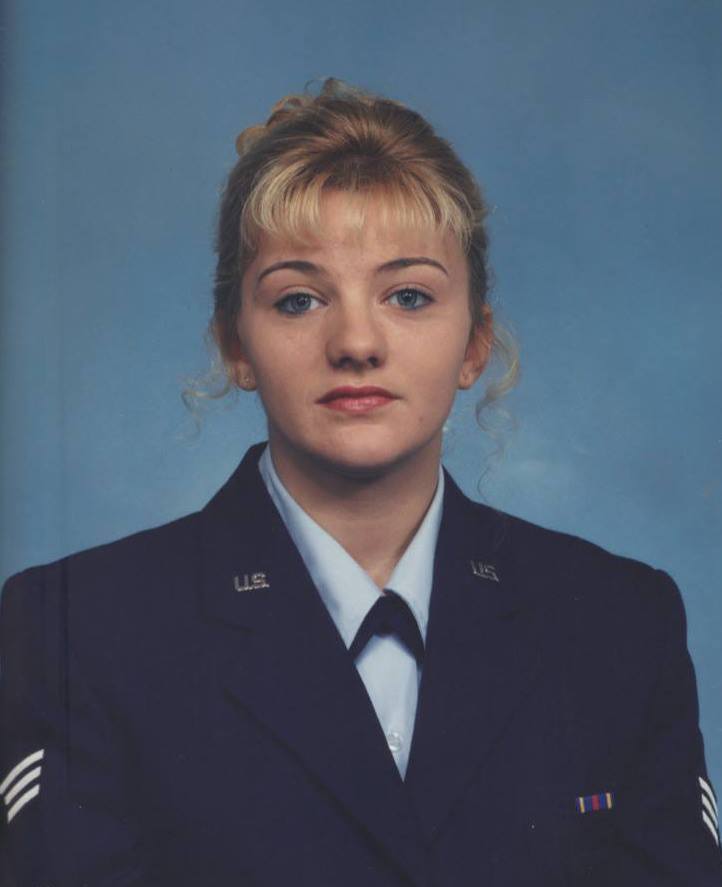


 MILITARY JUSTICE FOR ALL