We both have brain injuries and the lack of healthcare in Maine would render us helpless and dependent on the VA healthcare system until we found out what was wrong with us. The fact that we couldn’t get any treatment no matter how many times we begged for it created mental health issues out of our control until we got the treatment we needed to lower inflammation levels in the brain.
As a result of these disabilities, we were vulnerable to those who abused their power and treated someone with mental health struggles more like a drain on society as opposed to a person with traumatic experiences and mental health issues who needs help. Jennifer and Lee are two years into treatment in California where the brain inflammation was discovered by a rare disorder doctor specializing in autoimmune dysfunction.
The healthcare in California far surpasses the low quality healthcare in Maine.
“John Novotnak knew he needed help. The U.S. Army serviceman whose eight-year career included a tour of duty in Iraq, struggled after he was discharged from the military in 2008. Novotnak, 43, of North Huntingdon was charged in 2022 for the second time with drunken driving when he finally concluded he needed to make a lifestyle change.”
“That change came after he pleaded guilty last year and was enrolled in Westmoreland County’s Veterans Court program for former military members charged with crimes. The diversionary program allows veterans charged with what officials described as minor crimes a chance to avoid jail, receive shorter sentences or have their cases dismissed upon successful completion of the six-to-24-month program.”
“Veterans returning to civilian life can experience trauma related to their service that sometimes results in drug and alcohol addiction and criminal behavior. Nico Rogers, 35, of Greensburg said he needed the diversionary program, that includes intensive supervision, counseling and drug and alcohol treatment when necessary, to turn his life around.”
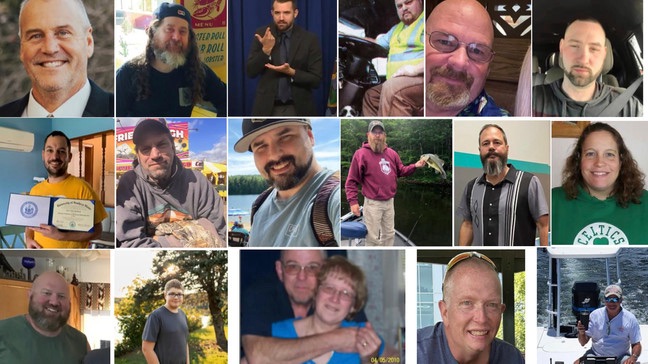
Attorneys say the notices summarize some of the key facts uncovered to date that support their negligence claims, including:
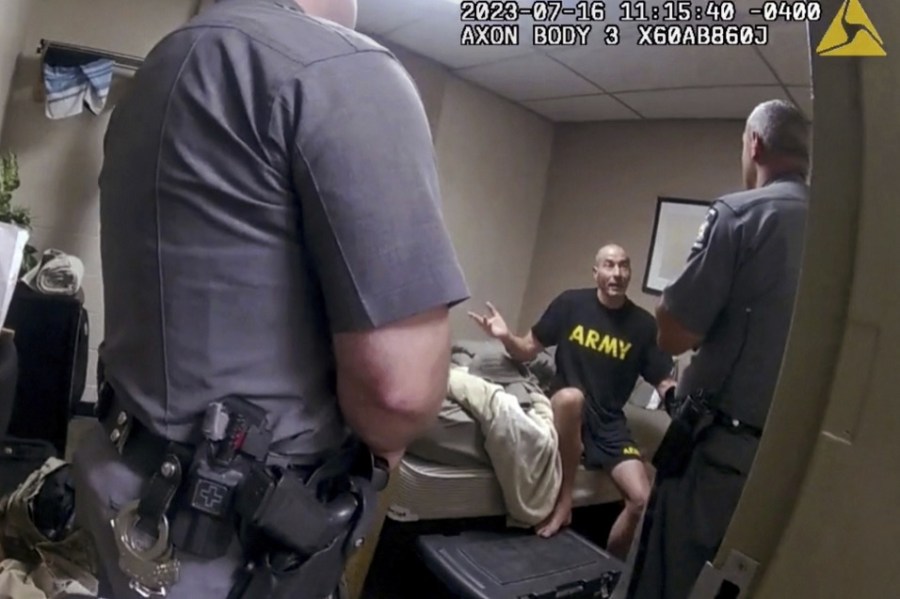
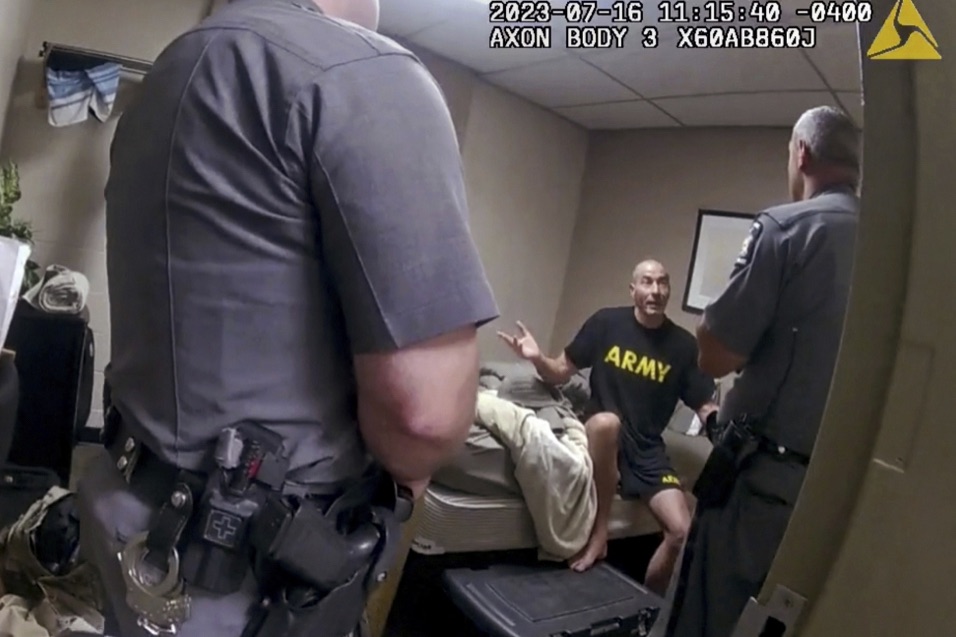
Between March and July 2023, the Army became aware that Card had suffered a severe and precipitous decline in his mental health, resulting in erratic and combative behaviors, and promised to take steps to address Card’s condition. The Army failed to act.
The Army, KACH and DoD knew that Card had been exposed to thousands of blast events from his work as a firearms and grenade instructor but did not investigate whether physiological damage to Card’s brain from such blast exposure was a root cause of Card’s sudden and inexplicable onset of mental illness, or otherwise determine whether Card’s illness was caused or exacerbated in the “line of duty,” as required by Army regulations.
In July and August 2023, the Army and KACH determined that Card’s mental illness—including paranoia, delusions, and homicidal ideations with development of a “hit list”—posed a serious risk to himself and others, but nevertheless allowed Card to return to the community without the cause of his mental illness determined or a plan for treatment, and without reporting Card under New York’s SAFE Act or Red Flag laws.
Although Card’s doctors released him from the hospital on the condition that he no longer have access to firearms, and the Army and KACH assured his doctors that they would remove Card’s firearms, they did not do so and left Card in possession of numerous weapons, including the AR-10 assault rifle he used to carry out the mass shooting.
Following Card’s release from the hospital and return to Maine, the Army and KACH failed to notify local Maine law enforcement, provide them with Card’s recent history or inform them that Card’s doctors had directed that Card be separated from his firearms.
In September 2023, when the Army learned that Card had threated to shoot up the military base in Saco and commit a mass shooting, the Army downplayed and minimized the threat (despite later acknowledging that it was serious and credible), and actively discouraged local law enforcement from taking decisive action.
Chelation Therapy (EDTA) infusions (this stopped after 8 infusions because the California Board of Pharmacy banned it from the State of California despite the fact that it’s the only recommended form of treatment by the CDC in the United States)
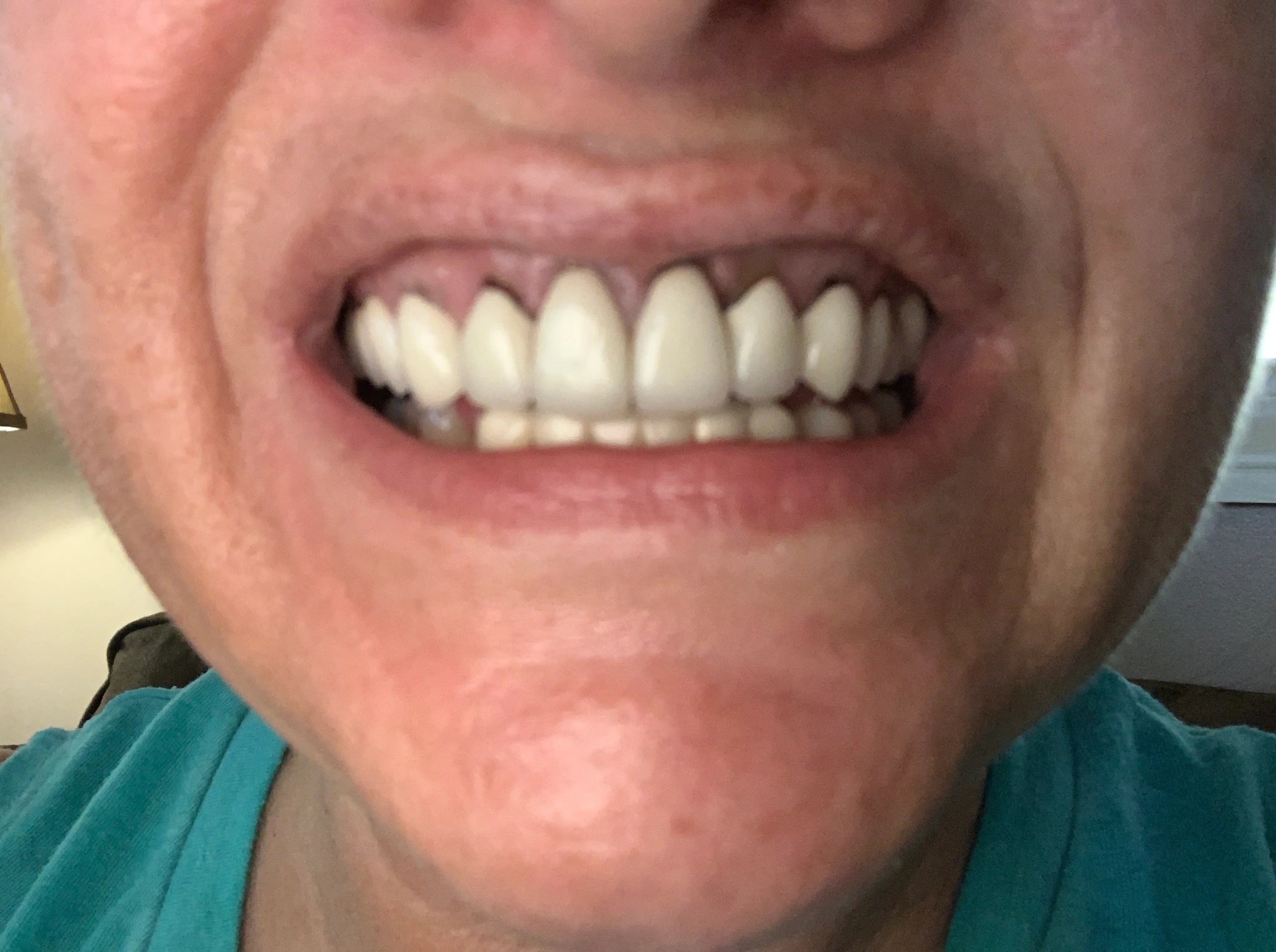
Replaced all teeth after chronic lead poisoning went untested and untreated for over 20 years and created Burton’s line
This is the Burton’s Line that showed up in 2019 around 15 years after leaving a toxic military base. Jennifer’s lead levels were 12x higher than what’s acceptable in the body. Jennifer experienced long term exposure to lead contaminated water and soil while stop lossed for four years at Joint Base Cape Cod in Massachusetts, also an EPA superfund site still under the supervision of multiple agencies.
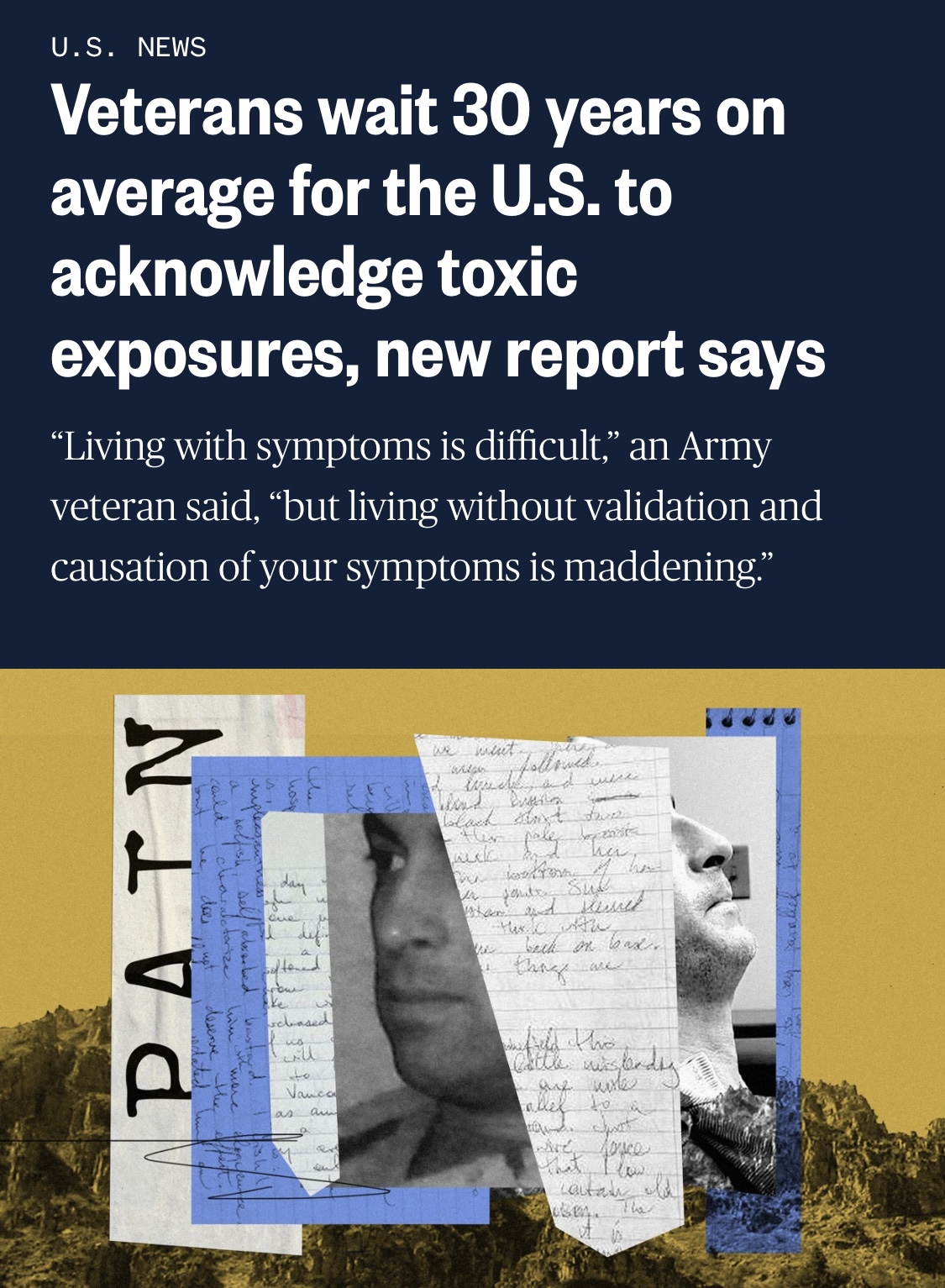
“…The symptoms emerged one by one throughout the pages: stomach cramps, incessant headaches and extreme exhaustion. By the time [Mark] Jackson made it back to Melbourne, Florida, in April 2004, the former marathoner said he could barely walk up a flight of stairs.”
“Jackson filed for disability compensation for all his ailments but said he only got approved for the thyroid disease. He is among many veterans who say they are waiting for the government to recognize that their illnesses are related to military toxic exposure, advocates say.”
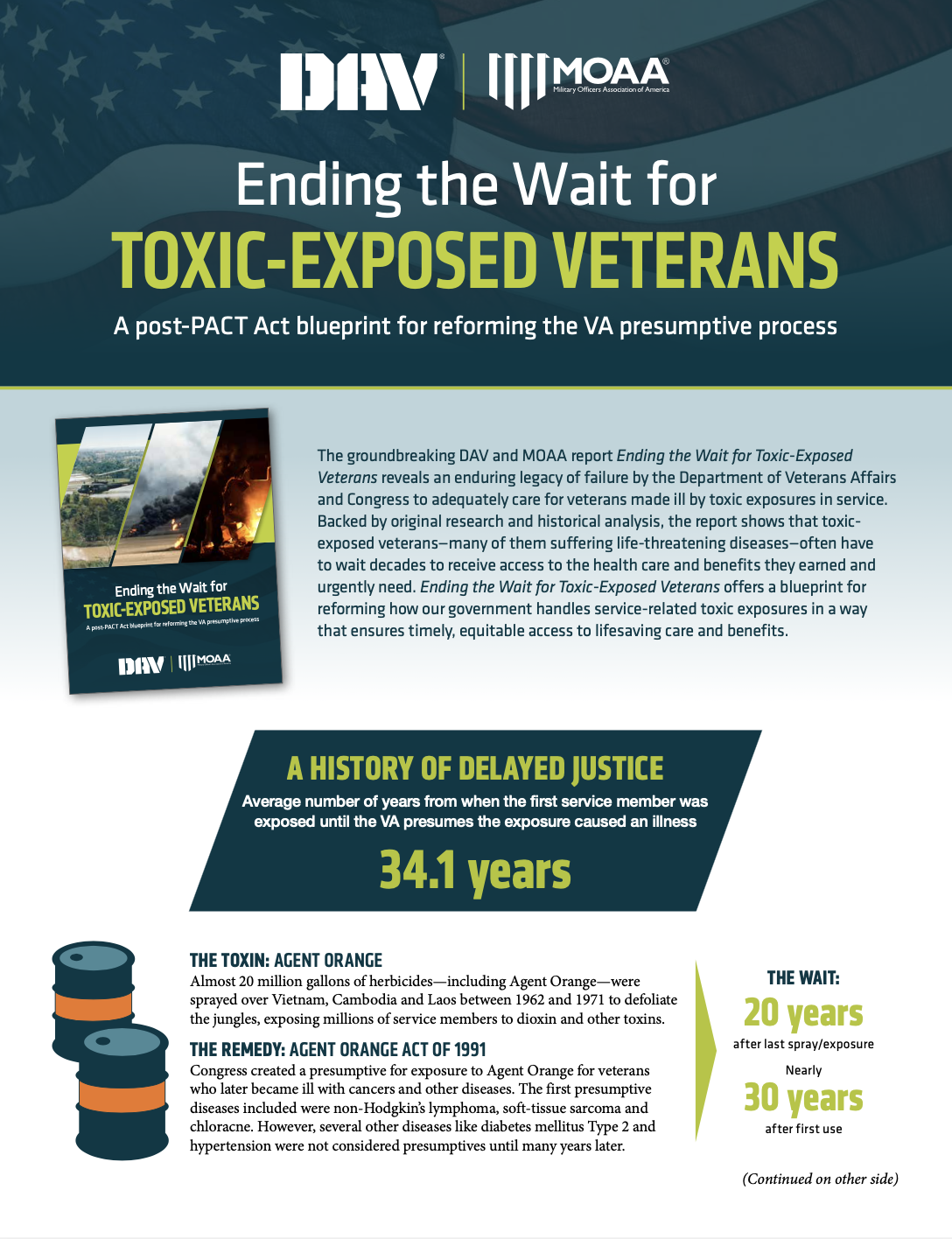
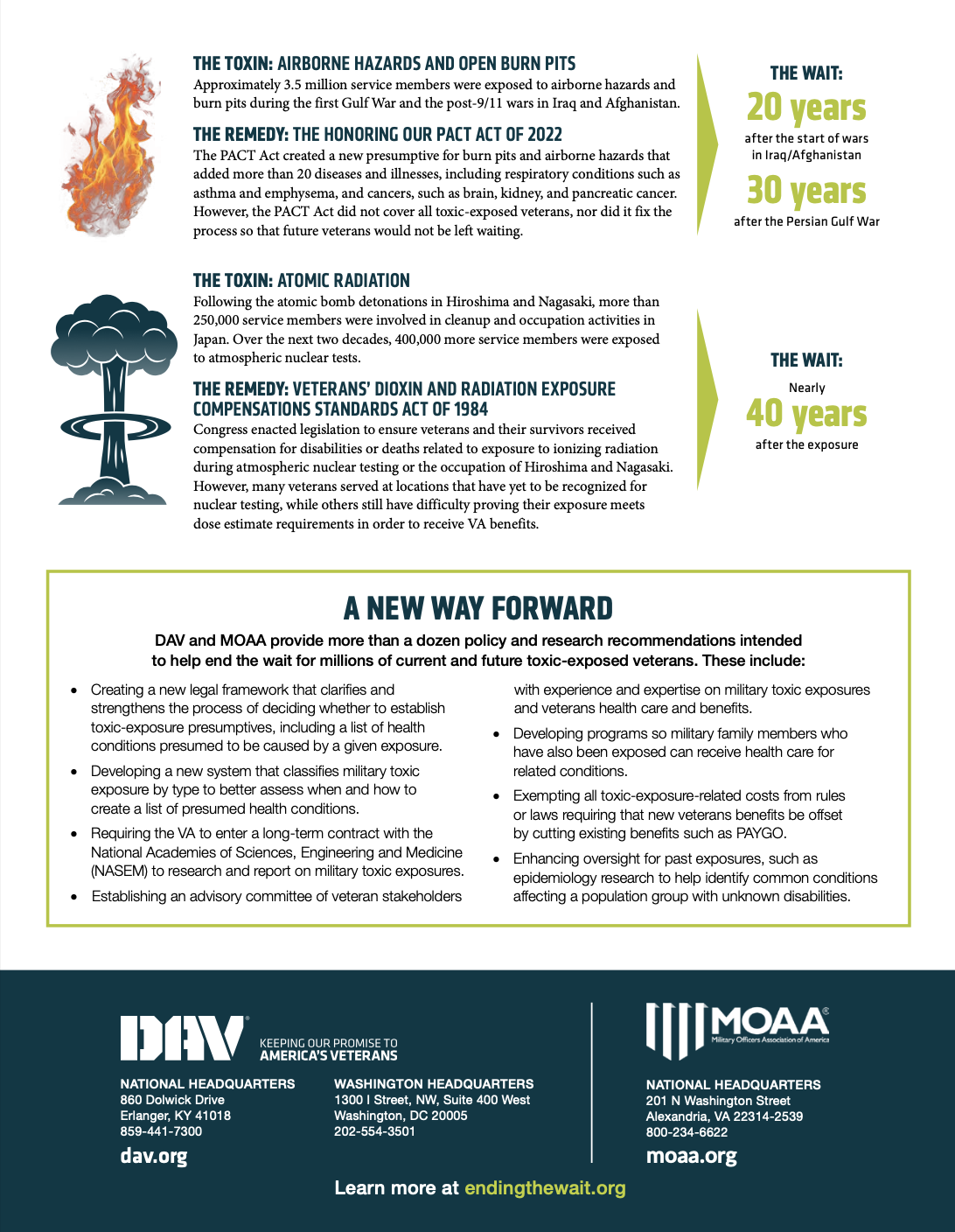
“A report released Wednesday found that sick veterans have waited an average of 31.4 years from when they first made contact with dangerous toxins on duty to when the government acknowledged they were exposed.”
“Most recently, in August 2022, lawmakers passed the PACT Act, which expanded benefits to millions of veterans exposed to burn pits in Iraq and Afghanistan and other toxic substances. Before then, advocates said it was challenging for veterans to prove their sickness was related to their service in order to receive disability compensation. ‘In both those instances, and for many other military toxic exposures, it took decades for the VA and Congress to finally act,’ Wednesday’s report said. ‘Some died before achieving justice.'”
“Veterans exposed on U.S. soil have had to wait even longer.”
“In one of the largest water contamination cases in U.S. history, up to 1 million people who lived or worked at Camp Lejeune from 1953 to 1987 may have been exposed to a drinking water supply contaminated with chemicals that have been linked to severe health problems, including cancers and birth defects, federal health officials said.”
“The agency [VA] said it is conducting a scientific review to determine whether there is a relationship between toxic exposures and three conditions — acute leukemias, chronic leukemias, and multiple myeloma outside of the head and neck — for service members who deployed to Uzbekistan and other locations.”
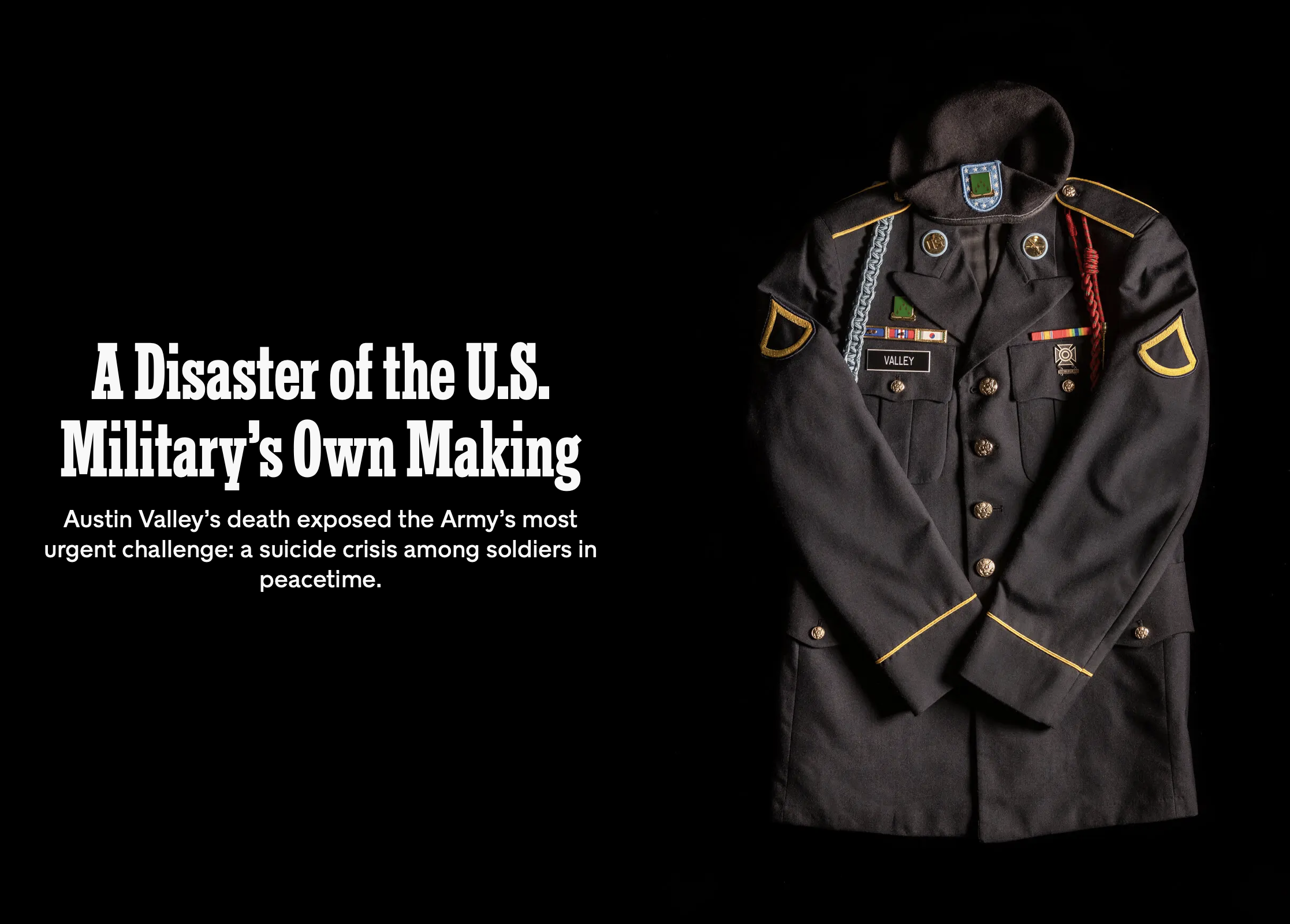
“Austin Valley had just arrived at his Army base in Poland, last March, when he knocked on his buddy Adrian Sly’s door to borrow a knife. The base plate of his helmet was loose and needed fixing, he told Sly. The soldiers had spent most of their day on a bus, traveling from their former base to this new outpost in Nowa Deba, near the border with Ukraine. It had been a monotonous 12-hour journey with no stops and nothing to eat but military rations. Sly thought his friend looked exhausted, but then so did everyone else. He handed Valley an old hunting knife, and Valley offered an earnest smile. “Really appreciate it, man,” he said. Then he disappeared.”
“Word of a soldier’s disappearance spread quickly across the Polish base. Sly recalled sergeants pounding on doors and shining their flashlights. “Where’s Valley?” one asked him. Sly and several others from Valley’s unit took off into the woods. Seeing fresh tracks in the snow, one soldier followed them until he heard a faint gurgling sound. Drawing closer, he saw Valley, hanging from a tree. He was alive, but barely conscious. The soldier cut Valley down, while another called for the medics, who sped off with him into the night. His friends would never see him again. The following morning, Valley was taken to the U.S. Army hospital in Landstuhl, Germany, and then returned to Fort Riley. Four weeks later, he was dead.”
“Soldiers are more likely than their civilian peers to die by suicide. Many people wrongly believe this is because of combat trauma, but in fact the most vulnerable group are soldiers who have never deployed. The Army’s suicide rate has risen steadily even in peacetime, and the numbers now exceed total combat deaths in the Iraq and Afghanistan wars. A Times investigation into the death of Specialist Austin Valley, stationed at Fort Riley in Kansas, found that mental-health care providers in the Army are beholden to brigade leadership and often fail to act in the best interest of soldiers.”
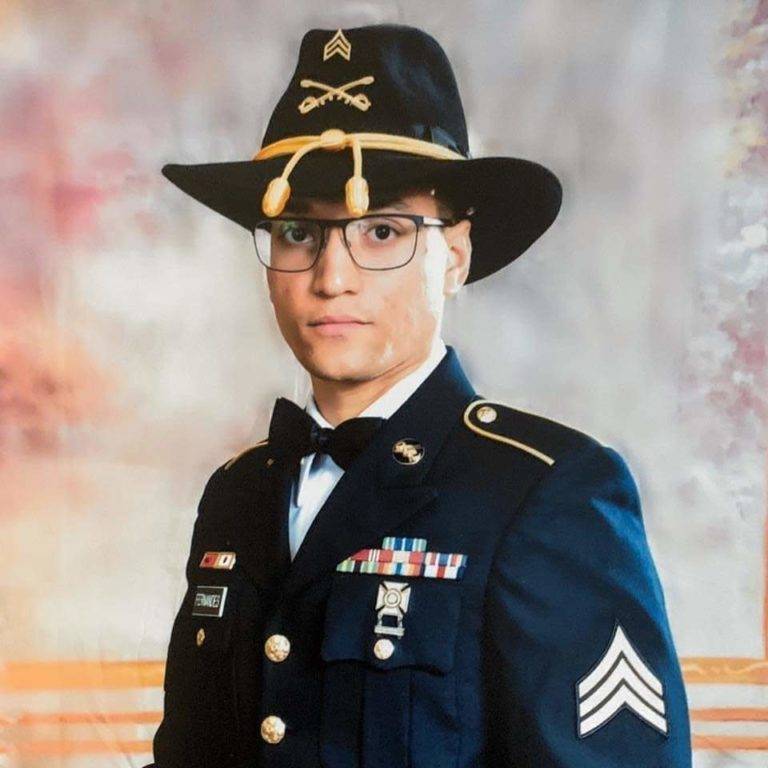
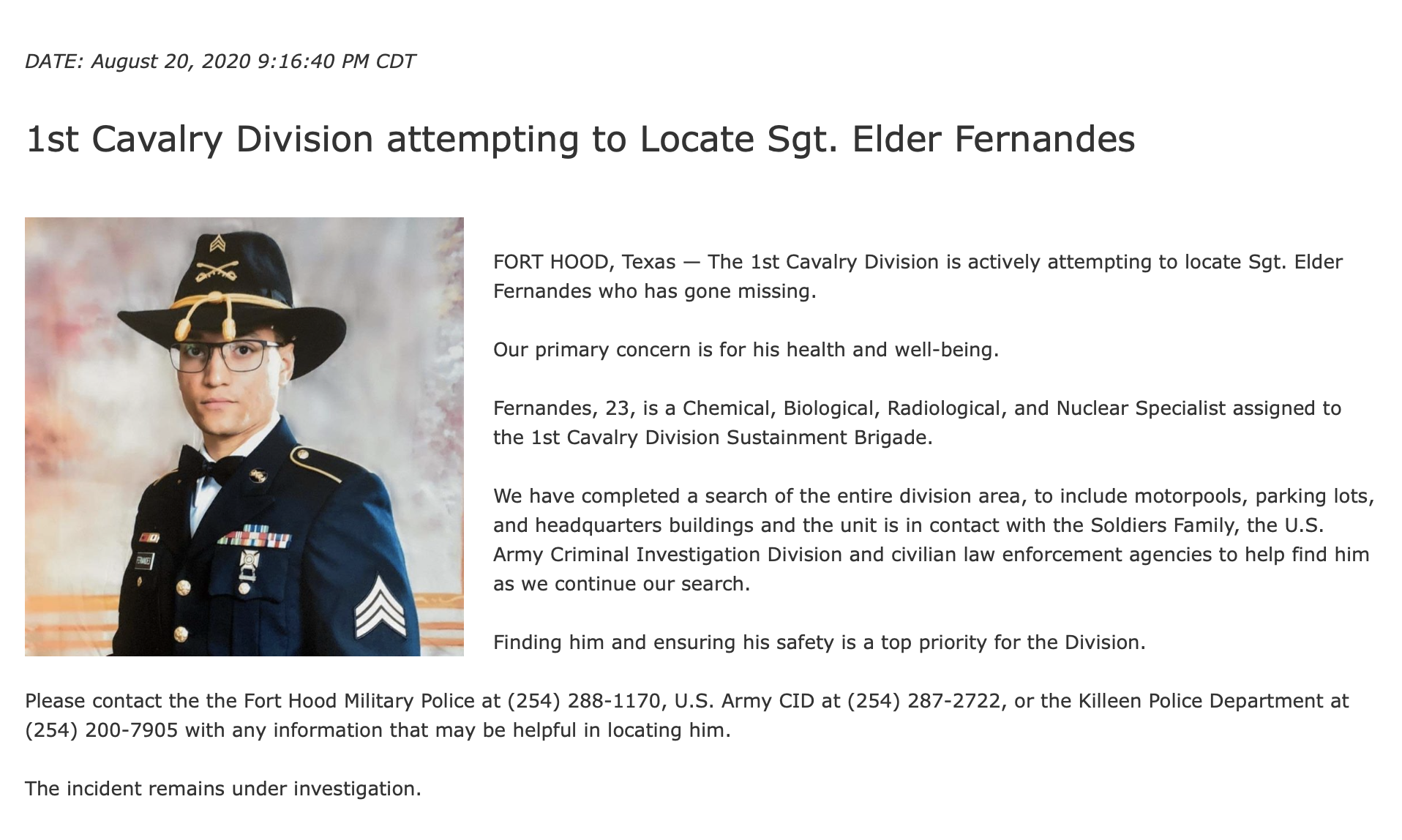
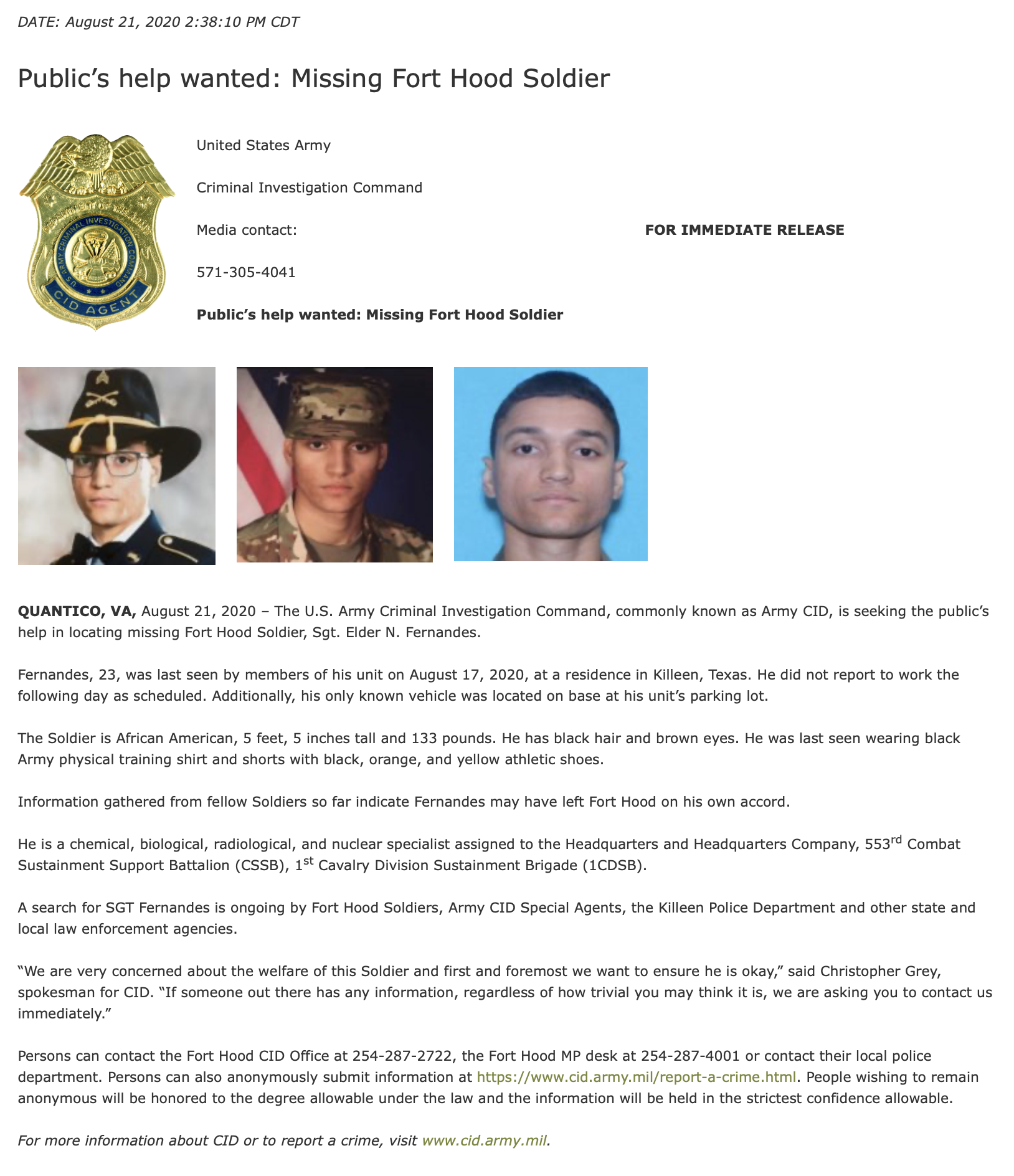
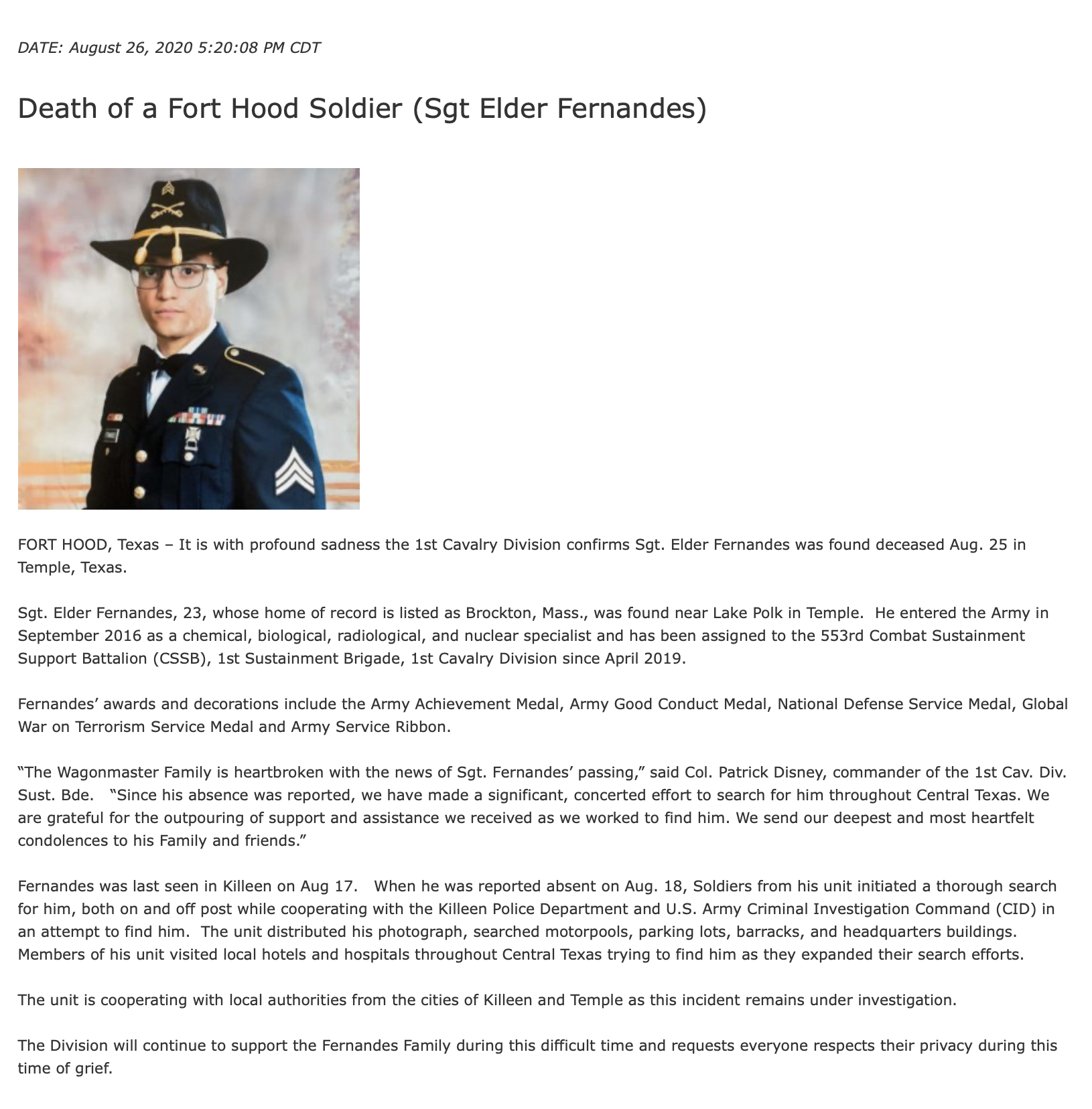
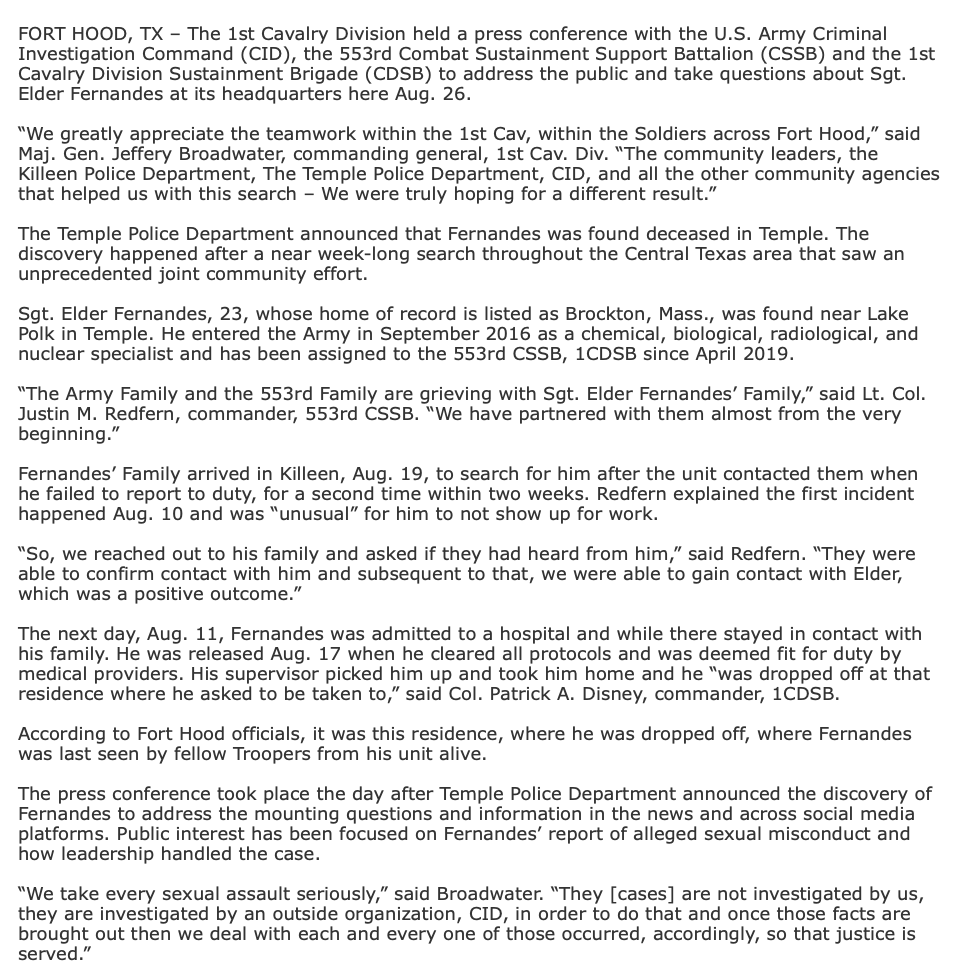
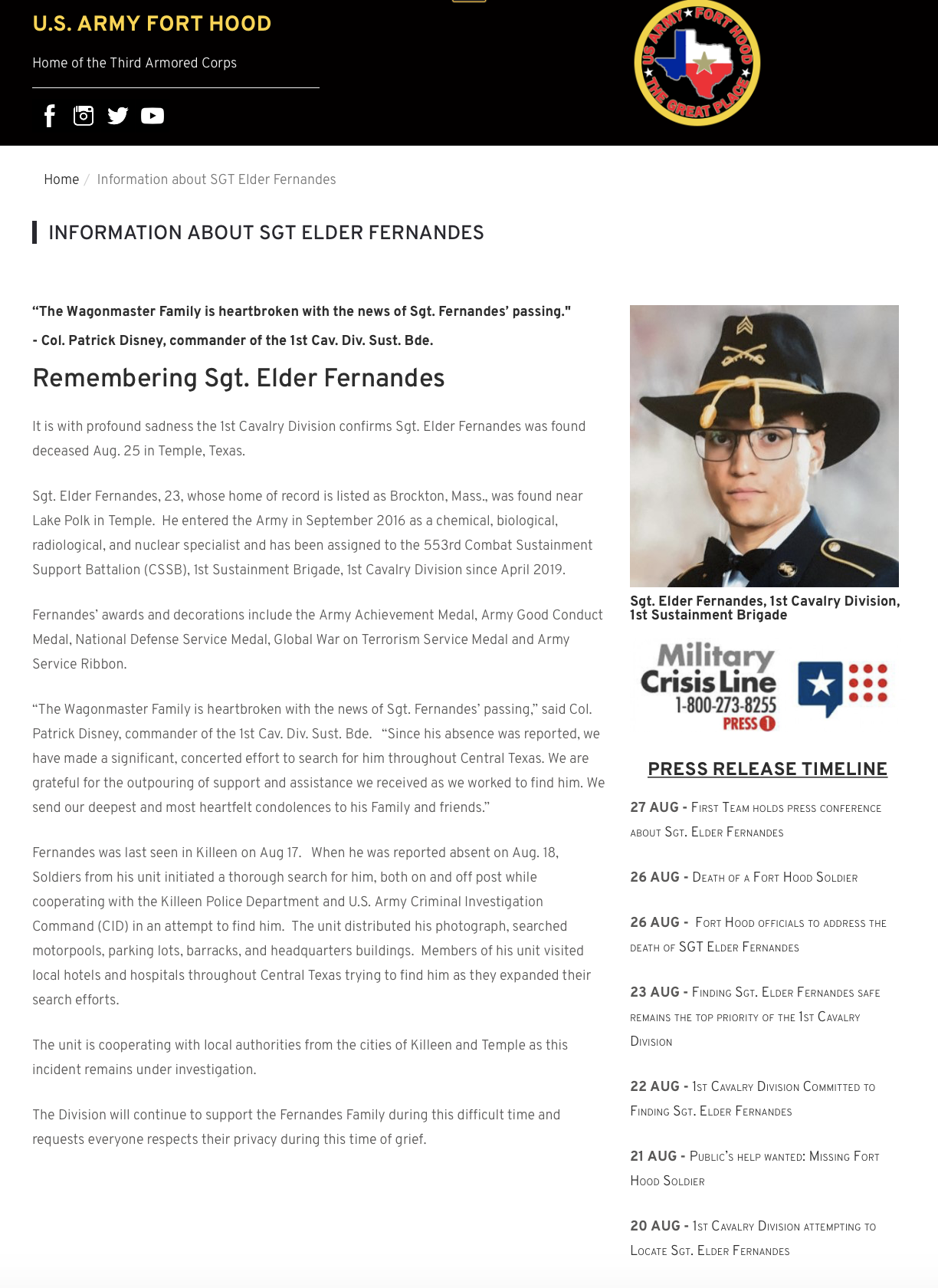
Sgt. Elder Fernandes, 23, whose home of record is listed as Brockton, Mass., was found [deceased] near Lake Polk in Temple. He entered the Army in September 2016 as a chemical, biological, radiological, and nuclear specialist and has been assigned to the 553rd Combat Sustainment Support Battalion (CSSB), 1st Sustainment Brigade, 1st Cavalry Division since April 2019. Fernandes’ awards and decorations include the Army Achievement Medal, Army Good Conduct Medal, National Defense Service Medal, Global War on Terrorism Service Medal and Army Service Ribbon.
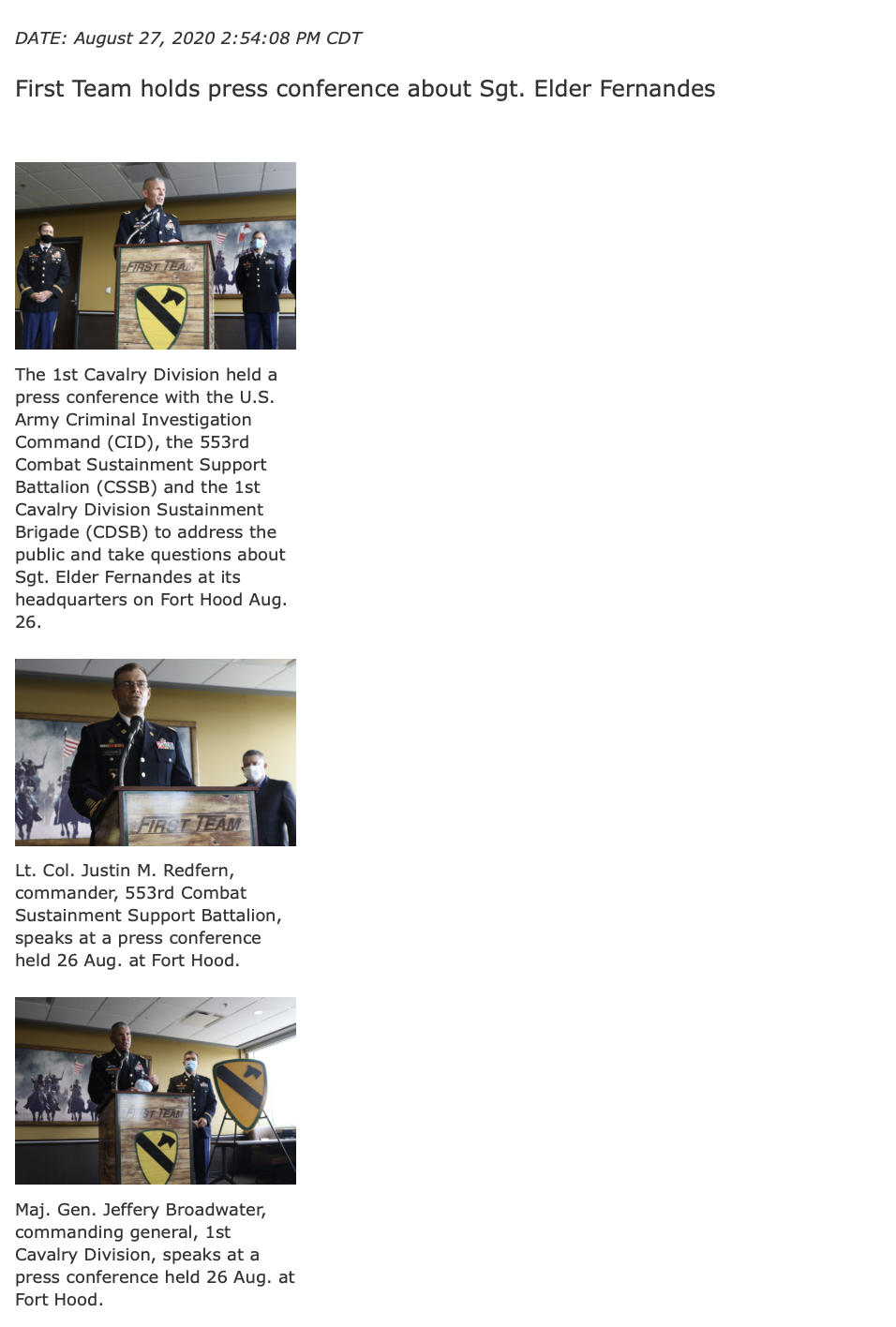
Fernandes was last seen in Killeen on Aug 17. When he was reported absent on Aug. 18, Soldiers from his unit initiated a thorough search for him, both on and off post while cooperating with the Killeen Police Department and U.S. Army Criminal Investigation Command (CID) in an attempt to find him. The unit distributed his photograph, searched motorpools, parking lots, barracks, and headquarters buildings. Members of his unit visited local hotels and hospitals throughout Central Texas trying to find him as they expanded their search efforts.
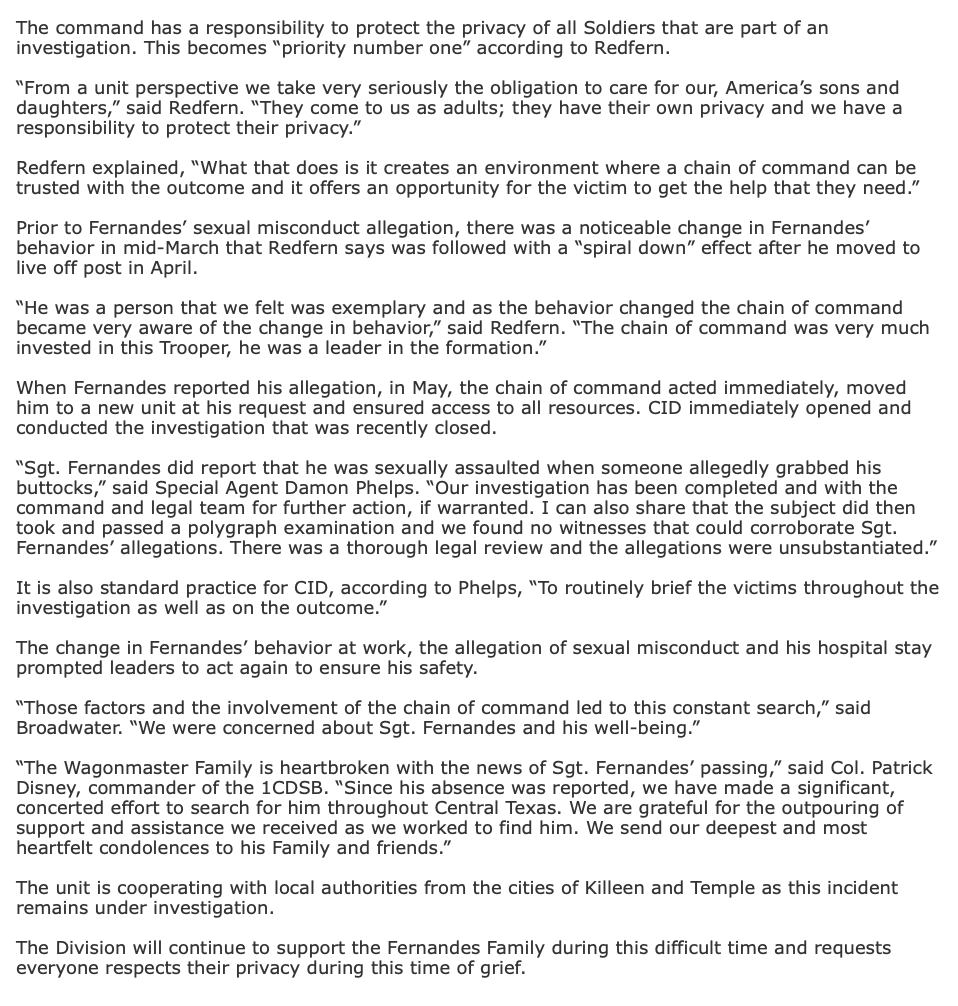
The unit is cooperating with local authorities from the cities of Killeen and Temple as this incident remains under investigation. The Division will continue to support the Fernandes Family during this difficult time and requests everyone respects their privacy during this time of grief.
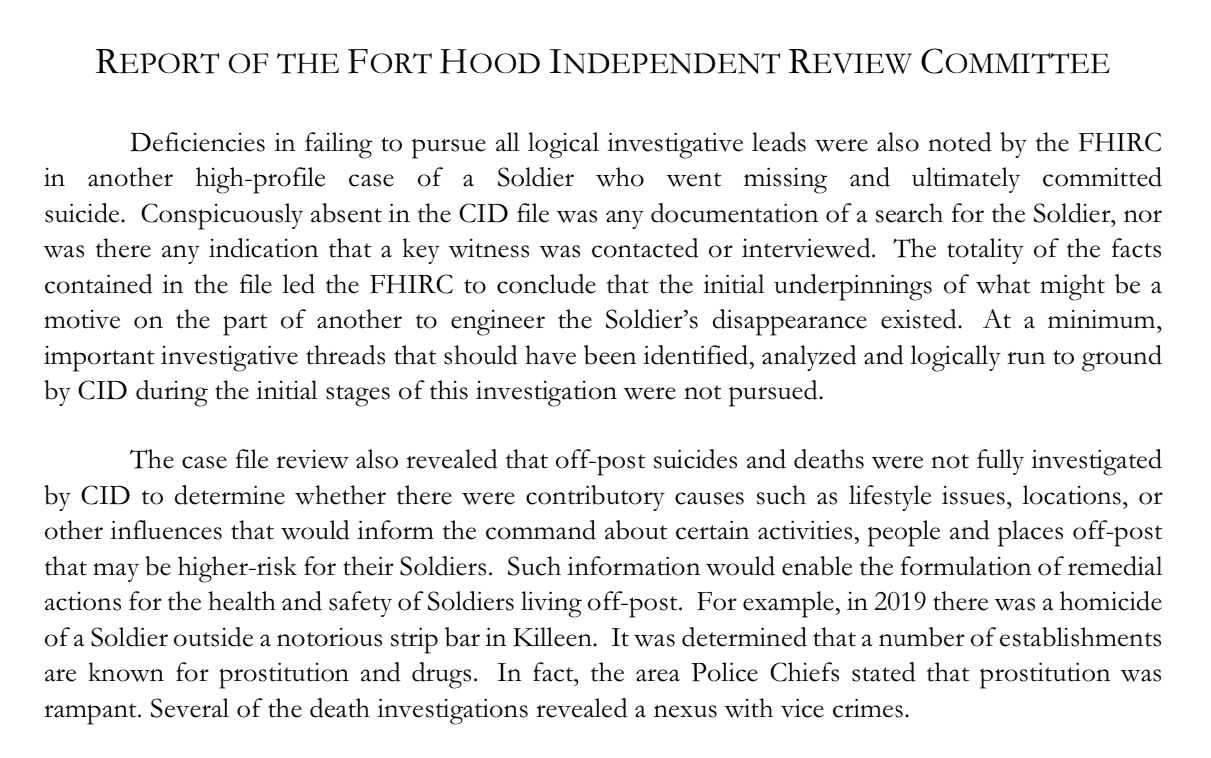
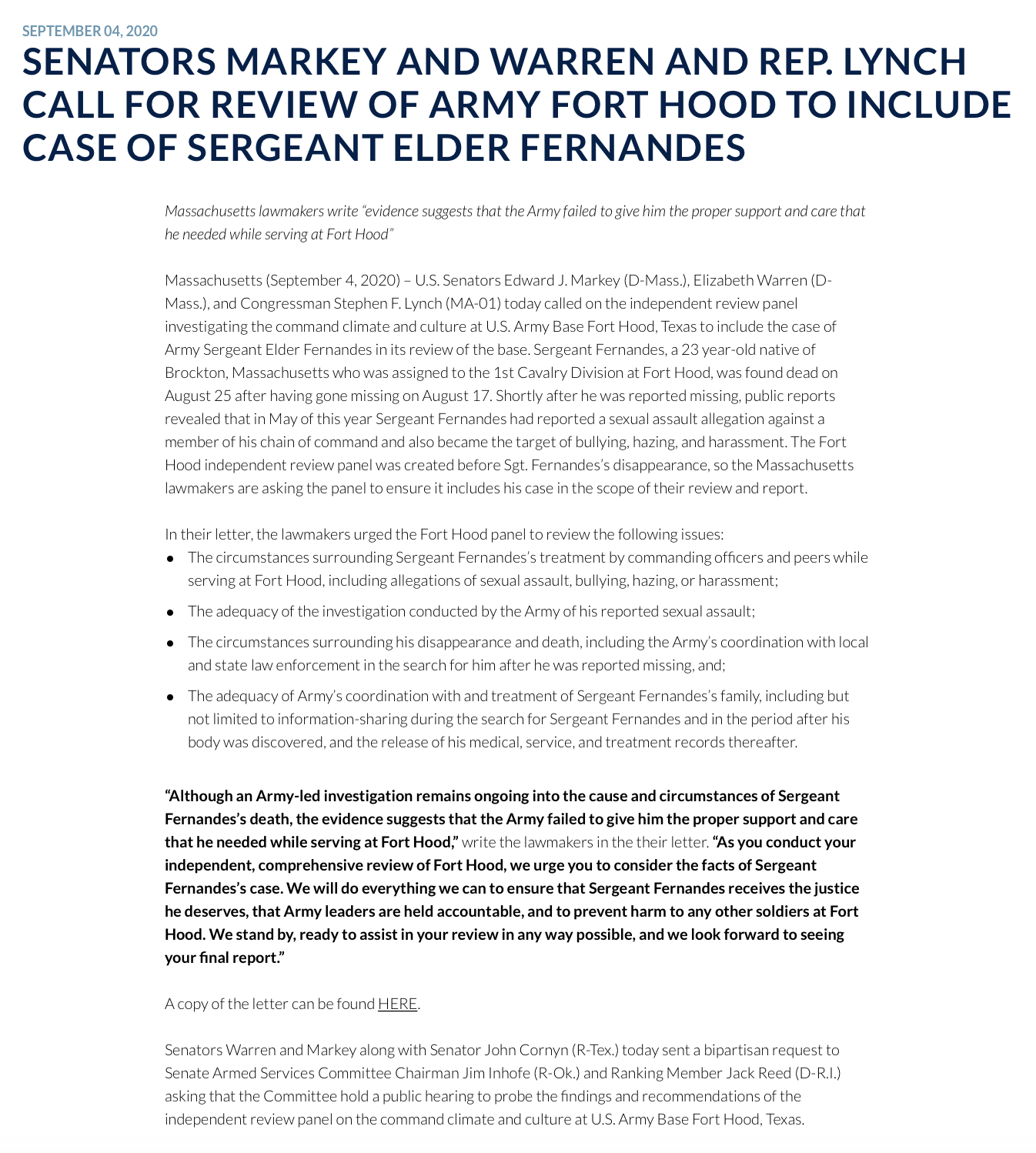
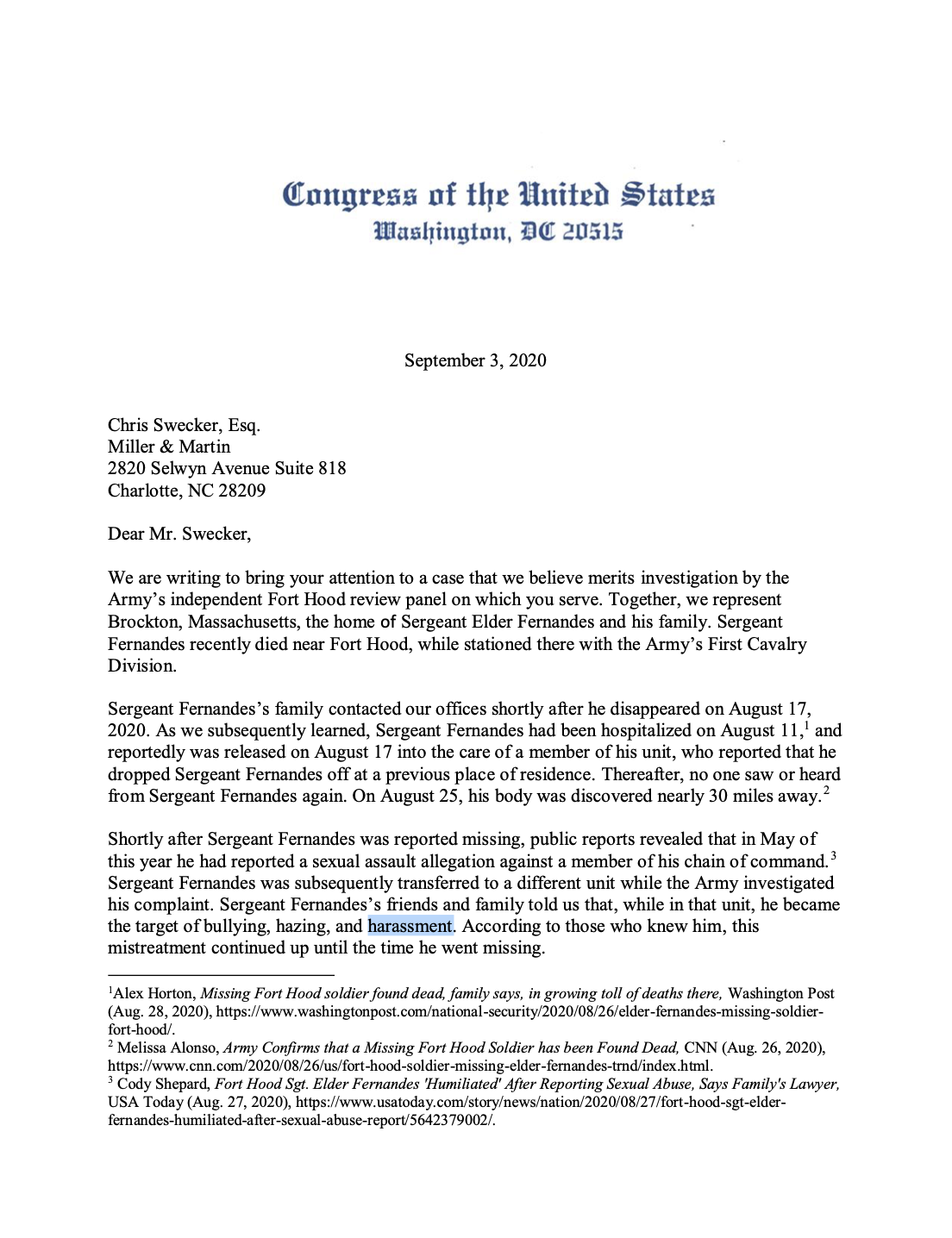
Massachusetts lawmakers write “evidence suggests that the Army failed to give him the proper support and care that he needed while serving at Fort Hood” Massachusetts (September 4, 2020) – U.S. Senators Edward J. Markey (D-Mass.), Elizabeth Warren (D-Mass.), and Congressman Stephen F. Lynch (MA-01) today called on the independent review panel investigating the command climate and culture at U.S. Army Base Fort Hood, Texas to include the case of Army Sergeant Elder Fernandes in its review of the base. Sergeant Fernandes, a 23 year-old native of Brockton, Massachusetts who was assigned to the 1st Cavalry Division at Fort Hood, was found dead on August 25 after having gone missing on August 17. Shortly after he was reported missing, public reports revealed that in May of this year Sergeant Fernandes had reported a sexual assault allegation against a member of his chain of command and also became the target of bullying, hazing, and harassment. The Fort Hood independent review panel was created before Sgt. Fernandes’s disappearance, so the Massachusetts lawmakers are asking the panel to ensure it includes his case in the scope of their review and report.
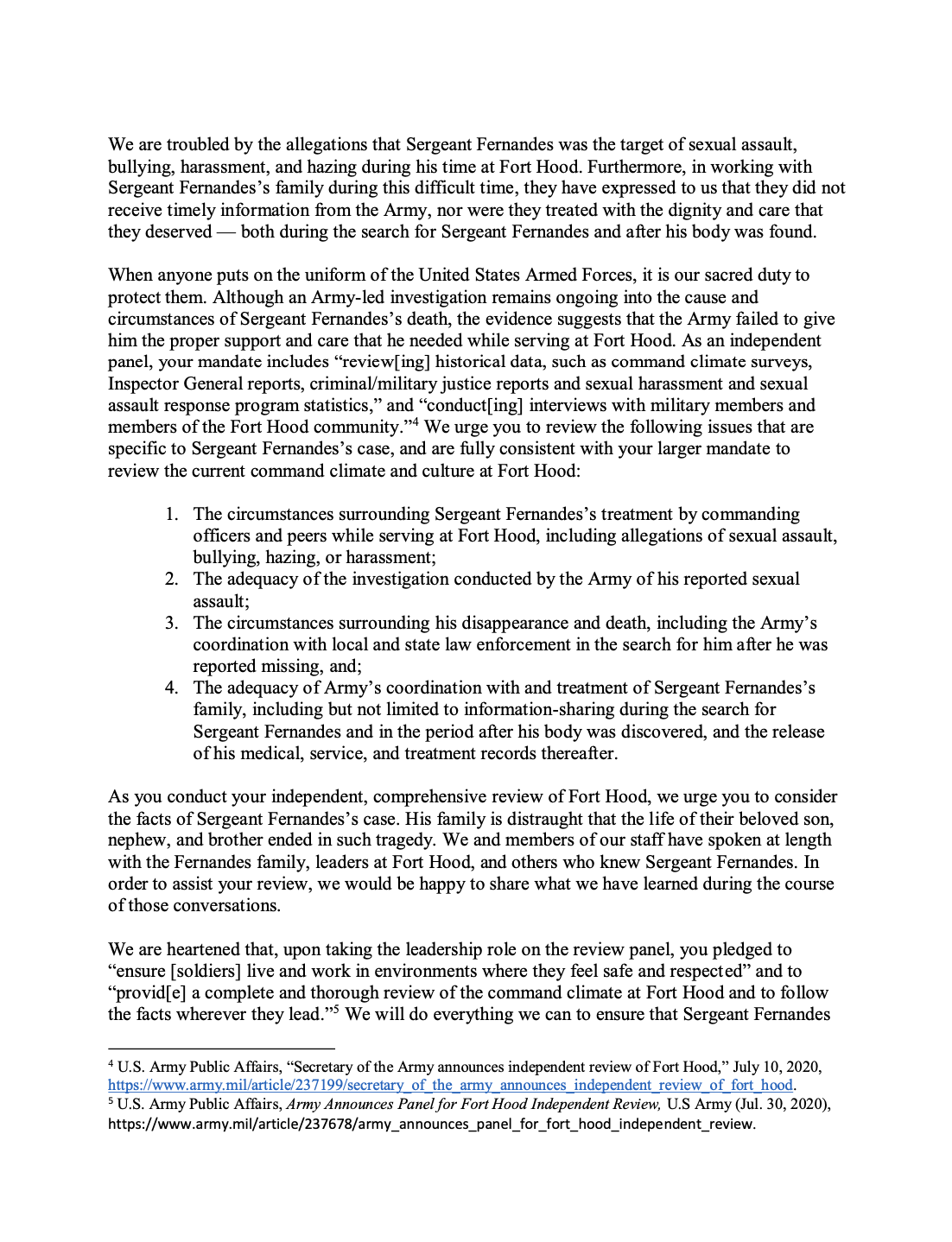
In their letter, the lawmakers urged the Fort Hood panel to review the following issues:
The circumstances surrounding Sergeant Fernandes’s treatment by commanding officers and peers while serving at Fort Hood, including allegations of sexual assault, bullying, hazing, or harassment;
The adequacy of the investigation conducted by the Army of his reported sexual assault;
The circumstances surrounding his disappearance and death, including the Army’s coordination with local and state law enforcement in the search for him after he was reported missing, and;
The adequacy of Army’s coordination with and treatment of Sergeant Fernandes’s family, including but not limited to information-sharing during the search for Sergeant Fernandes and in the period after his body was discovered, and the release of his medical, service, and treatment records thereafter.
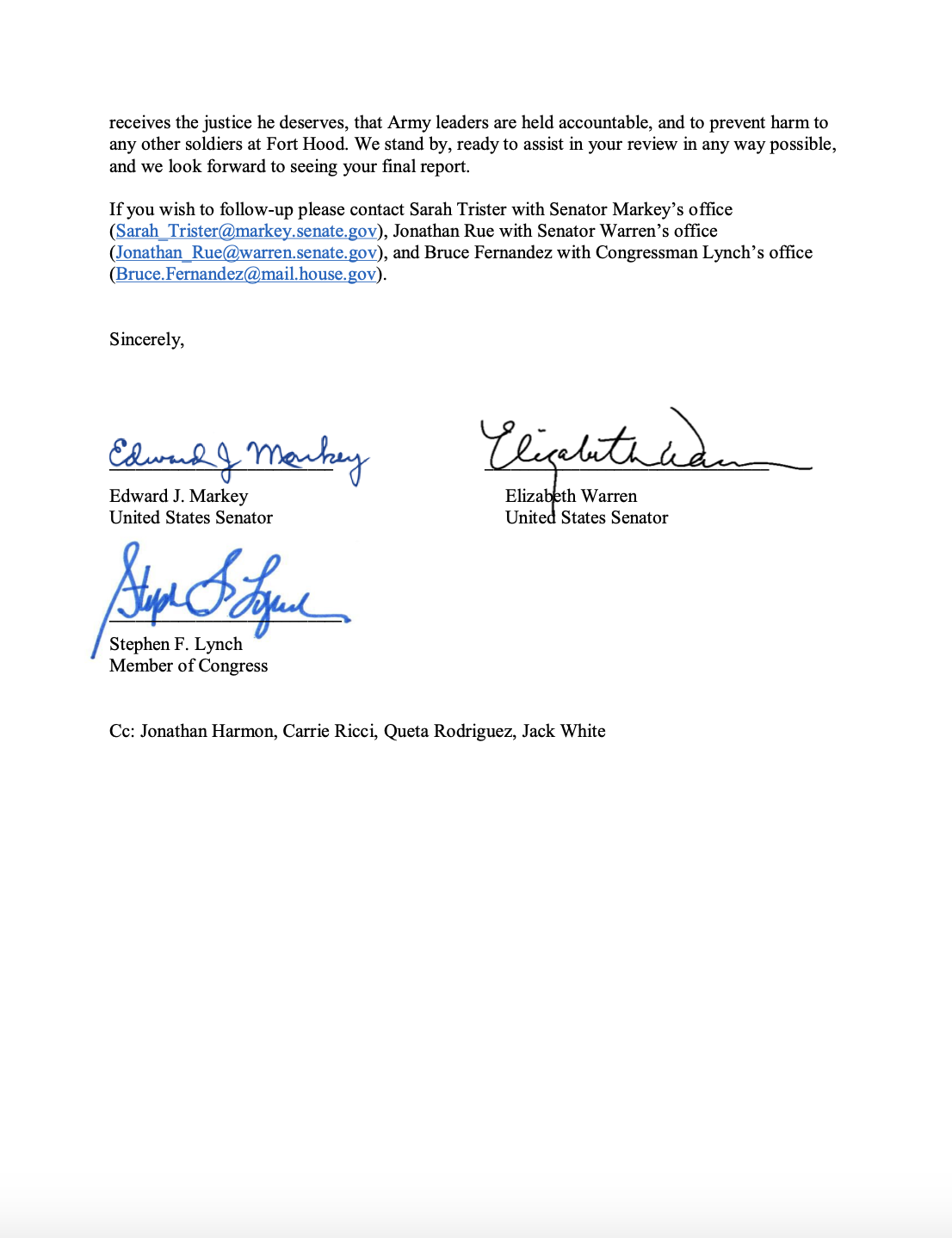
“Although an Army-led investigation remains ongoing into the cause and circumstances of Sergeant Fernandes’s death, the evidence suggests that the Army failed to give him the proper support and care that he needed while serving at Fort Hood,” write the lawmakers in the their letter. “As you conduct your independent, comprehensive review of Fort Hood, we urge you to consider the facts of Sergeant Fernandes’s case. We will do everything we can to ensure that Sergeant Fernandes receives the justice he deserves, that Army leaders are held accountable, and to prevent harm to any other soldiers at Fort Hood. We stand by, ready to assist in your review in any way possible, and we look forward to seeing your final report.”
Senators Warren and Markey along with Senator John Cornyn (R-Tex.) today sent a bipartisan request to Senate Armed Services Committee Chairman Jim Inhofe (R-Ok.) and Ranking Member Jack Reed (D-R.I.) asking that the Committee hold a public hearing to probe the findings and recommendations of the independent review panel on the command climate and culture at U.S. Army Base Fort Hood, Texas.
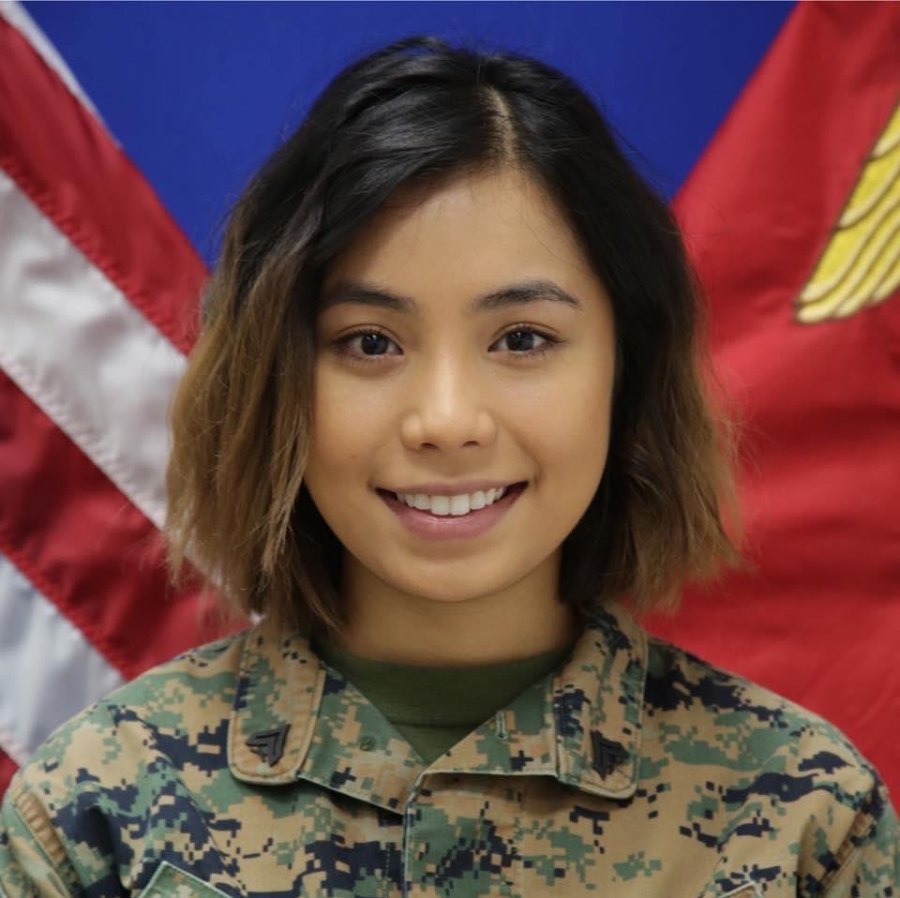
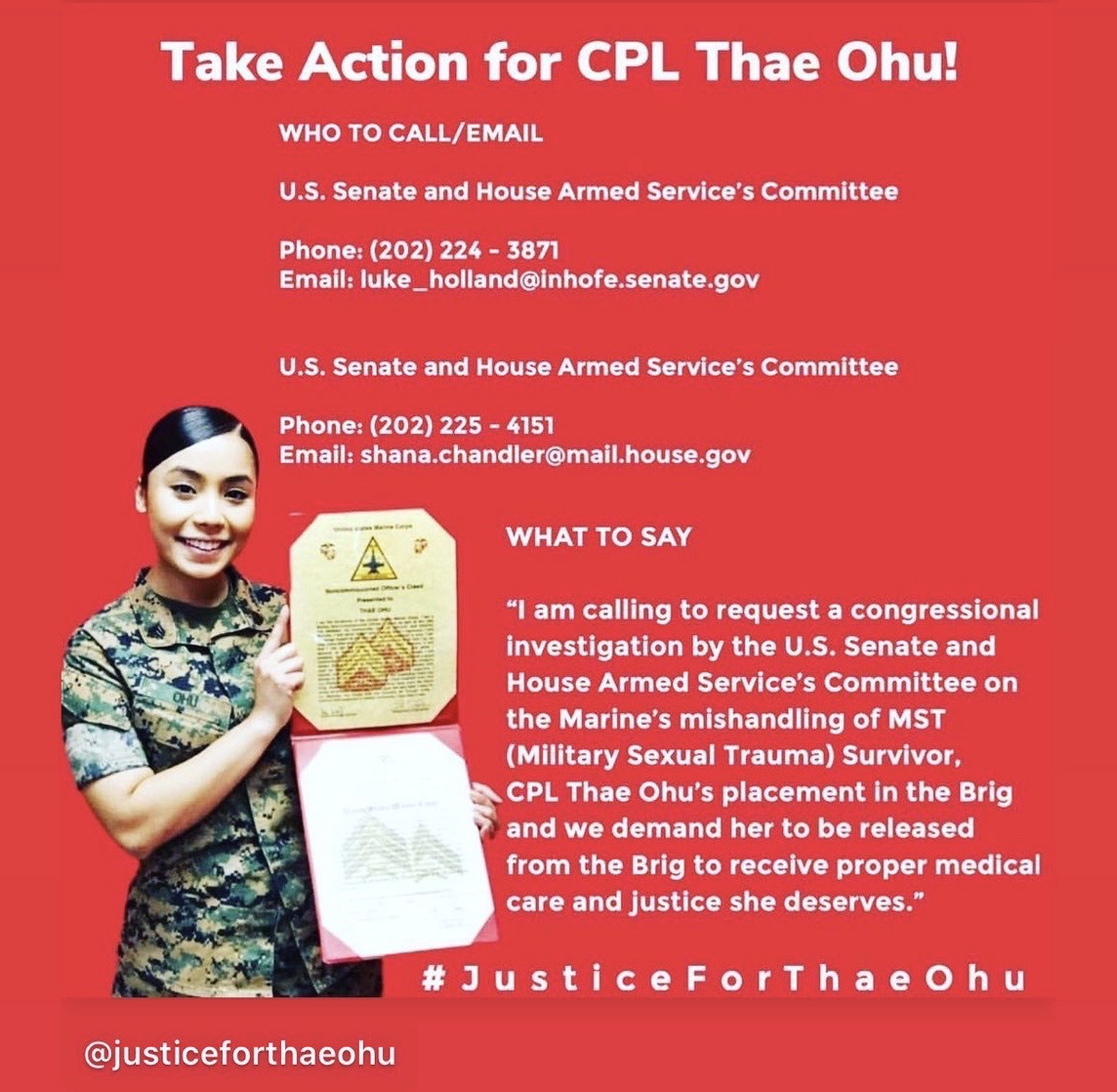
“In a letter to a U.S. senator in Arizona, [Thae] Ohu — a 26-year-old administrative specialist with the Marine Corps Intelligence Schools aboard Dam Neck Naval Base — said she’d been arrested for assault with a deadly weapon following a psychological break in April. In a separate letter, her boyfriend said he was the victim of the incident and that he believed the case should be dropped.”
“Ohu was seeking medical retirement earlier this year to get help for PTSD, but the Marines were seeking administrative separation, according to a memo from her defense attorney. That would cause her to lose medical benefits, the lawyer said.”
American Grit: “Thae is a proud Marine and courageous survivor of military sexual assault. For five years she has struggled with being a victim of sexual assault. Our family is devastated that the Marine Corps has chosen to place Thae in a military prison instead of giving her the medical treatment she so desperately needs. We are asking the Marine Corps simply to do the right thing: to immediately release Thae from jail, stop the unjust prosecution against her, and provide her with adequate mental health services. What she needs, and deserves, is treatment and support from a loving community of family and friends. We hope that the Marine Corps will honor its promise to protect victims of military sexual assault, like Thae, by standing by her when it matters the most. Questions related to the case should be directed to Thae’s civilian attorney, Mr. Gerald Healy, at gerry@mja.law.”
The bill named in Caserta’s honor would create “Brandon Act” reporting, making it easier for service members to seek mental health care anonymously
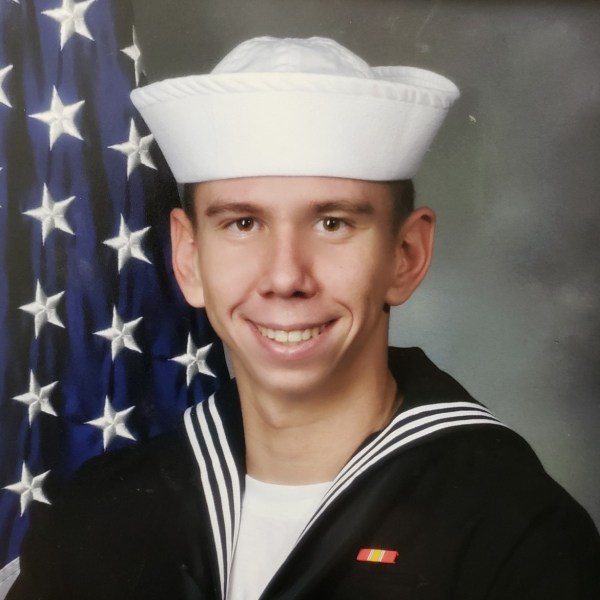
PO3 Brandon Caserta, U.S. Navy
WASHINGTON — Today, Representative Seth Moulton (D-MA) and Teri and Patrick Caserta, parents of fallen United States Navy Petty Officer Third Class Brandon Caserta, announced the introduction of The Brandon Act.
The bill would allow service members to anonymously report and seek mental health treatment by using a safe word like “Brandon Act.” It is designed to protect service members who experience mental health emergencies that result from hazing, bullying, or any other issue. It would allow them to seek help anonymously and, if necessary, outside of the chain of command. The bill’s introduction comes on the second anniversary of Brandon Caserta’s death from suicide, which he said was prompted by bullying and hazing within his unit.
“Brandon had a smile that made everyone want to smile. He was a very charismatic and upbeat young man. He made everyone’s day better no matter what they were going through. Brandon has always helped everyone he could. The Brandon Act would do this for his fellow service members in his death,” Teri and Patrick Caserta said, “Brandon did not die in vain and his legacy for helping others will continue long after his death when The Brandon Act is passed.”
Rep. Seth Moulton said: “Brandon tragically lost his life because he wasn’t able to get support for his mental health—something we should provide every American, especially every American hero in uniform. This bill will ensure our service members can get help and have no fear of retaliation for doing so, as it’s the right thing to do. Although we’ll never get Brandon back, his legacy will be the lives of many more great Americans he saves through this bill, and I’m proud of his parents who have fought so hard to tell his story and make this change.”
Brandon Caserta died by suicide on June 25, 2018 on the flight line at Naval Air Station Norfolk, Virginia. After his death, his parents and friends discovered six notes in which Brandon attributed his suicide to persistent hazing and bullying from some members and leaders of his Navy helicopter squadron.
The Brandon Act expands the existing law that regulates how service members are referred for mental health evaluations, in order to provide a confidential channel for service members to self-report mental health issues. The process would protect the anonymity of service members, similar to the restricted reporting option that protects victims of sexual assault.
Moulton made expanding mental health care and breaking the stigma around seeking help a top priority since disclosing last year that he is managing post traumatic stress from his service in Iraq as a United States Marine. In addition to The Brandon Act, Moulton has secured mandatory mental health check ups for service members who saw combat within 21 days of leaving the battlefield in the FY20 National Defense Authorization Act.
He also co-introduced, with fellow veteran Rep. Chris Stewart (R-UT), the National Suicide Hotline Designation Act, which would make 9-8-8 the national number for mental health emergencies. The bill has passed in the Senate, and is one step away from a vote on the House floor. Yesterday, the FCC announced that it would issue a final rule on the designation of 9-8-8 as the national suicide prevention hotline in mid-July.
A copy of The Brandon Act is available for download here.
A legislative summary for The Brandon Act is available for download here.
Read more from the original source on Rep. Seth Moulton’s website here.
The House debates the Joshua Omvig Veterans Suicide Prevention Act, which directs the VA to develop and implement a comprehensive program to reduce the incidence of suicide among veterans. The bill is named for an Iraq veteran who took his own life, and recognizes the special needs of veterans suffering from PTSD and elderly veterans who are at high risk for depression and experience high rates of suicide. -Rep Leonard Boswell (October 23, 2007)
The Number One Problem Combat Vets Will Face is Mental Health (2007):
Paul Sullivan of Veterans for Common Sense tells Armen Keteyian that the No. 1 problem facing vets of Afghanistan and Iraq will be mental health. -CBS News (November 13, 2007)
Veterans Who Get Help at VA Are Still at Risk of Suicide (2008):
CBS News first reported on the staggering number of veteran suicides in a report last year. Now, newly-released data shows that vets who get help from the VA are still at risk. -CBS (March 20, 2008)
Seven Vets Under VA’s Care Died by Suicide in Washington (2008):
They served their country honorably but after risking their life in combat abroad, coping with coming home was too much. In the last three months seven servicemen being treated by Spokane’s VA Hospital have committed suicide. -4 News Now (April 29, 2008)
Senator Patty Murray Alleges VA Cover-up of Veteran Suicide (2008):
Despite recent efforts by the Veterans Administration to prevent veteran suicide, seven have committed suicide in the Inland Northwest in the last four months and US Senator Patty Murray is calling the situation unacceptable. -4 News Now (May 1, 2008)
Katie Couric investigates an alarming trend in the U.S. military, as more and more female soldiers have come forward with tales of sexual abuse at the hands of male soldiers and superior officers. -CBS (March 17, 2009)









 MILITARY JUSTICE FOR ALL