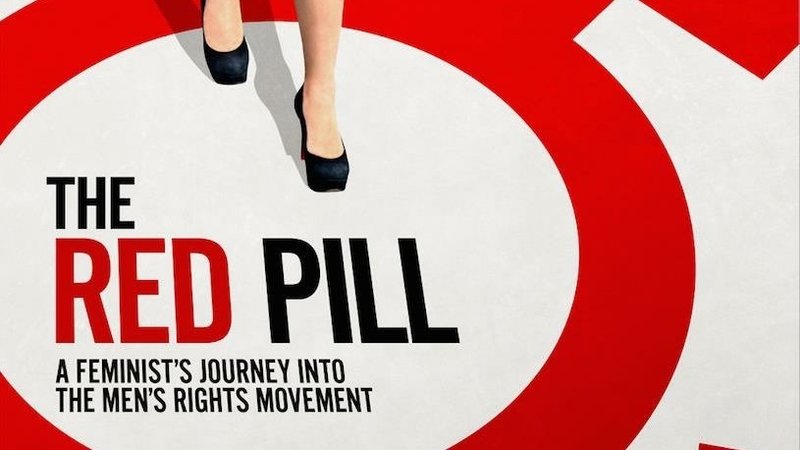
About the Film: When feminist filmmaker Cassie Jaye sets out to document the mysterious and polarizing world of the Men’s Rights Movement, she begins to question her own beliefs. Jaye had only heard about the Men’s Rights Movement as being a misogynist hate-group aiming to turn back the clock on women’s rights, but when she spends a year filming the leaders and followers within the movement, she learns the various ways men are disadvantaged and discriminated against. The Red Pill challenges the audience to pull back the veil, question societal norms, and expose themselves to an alternate perspective on gender equality, power and privilege.
Learn more about Cassie Jaye & The Red Pill Moviehere.
Males are victims of crimes and perpetrators of crimes
Males are victims of exploitation, sexual abuse, domestic violence, attempted homicide, homicide, physical assault, hazing and bullying
Males are the perpetrators of most crimes committed in the military
What percentage of males has post traumatic stress?
What percentage of males is considered a domestic abuser?
Need to differentiate between disassociation/abuse & escalation in violence
More then half of victims of sexual assault are male, they are not reporting.
1 Active Duty suicide a day, most cases not attributed to serving in combat zone.
High rates of domestic abuse, alcohol use, assault, & getting into trouble.
Males guilty of domestic violence, child abuse, physical assault, sexual assault
Majority of perpetrators are males, although women are perpetrators too
Both male & female perpetrators exhibit signs of narcissism, sociopathy
Perpetrators do not discriminate, they target the most vulnerable male or female
Perpetrators are targeting males because male dominated career, opportunist
Male on male crime tends to be more violent, victim may have been threatened
The stereotype that perpetrators are always male is false, female perpetrators tend to be more sociopathic, manufacture evidence, create narrative, and elicit the help of others to commit the crimes usually because of financial motive
Financial benefits, medical benefits, & life insurance make solders vulnerable, targeted by sociopaths for financial gain, mostly males in Army targeted
Domestic abuse perpetrated by female spouses minimized, false accusations common
Fear of losing security of steady paycheck if anyone reports abuse to command
Red flags missed because the abused do not want to report, violence escalates to a point of no return (careers ended, someone gets hurt or dies)
Males fear reporting to command, perpetrators may be higher ranking, exploitation
Commanders are single investigators, may not realize being manipulated by sociopath who is out to get revenge because the other party rejected them
Servicemen’s Group Life Insurance is a common motive for murder, mostly males targeted, soldiers motivated to get married quickly for financial benefits
Males think they can’t become a victim of crime, anyone can whether violent criminal or manipulative spouse exploiting soldier financially, target when alone
If abusive spouse lives on federal military base, no one has jurisdiction over them, can’t court martial or NJP, soldier held responsible for behavior of family
Where can soldiers turn to for help to safely end a marriage? Are they provided with an attorney? Do they have to pay out of pocket? Command’s involvement?
Who is tracking behaviors/red flags of both perpetrators & those with PTSD?
What services are offered to assist a soldier with PTSD? Is it a career ender?
Is toxic leadership responsible for soldiers choosing suicide? Betrayal?
How do Commander’s hold military spouse accountable for domestic abuse?
How do Commander’s hold soldier accountable for escalating domestic abuse?
Is it possible that male soldiers do not report because don’t want to be seen as weak?
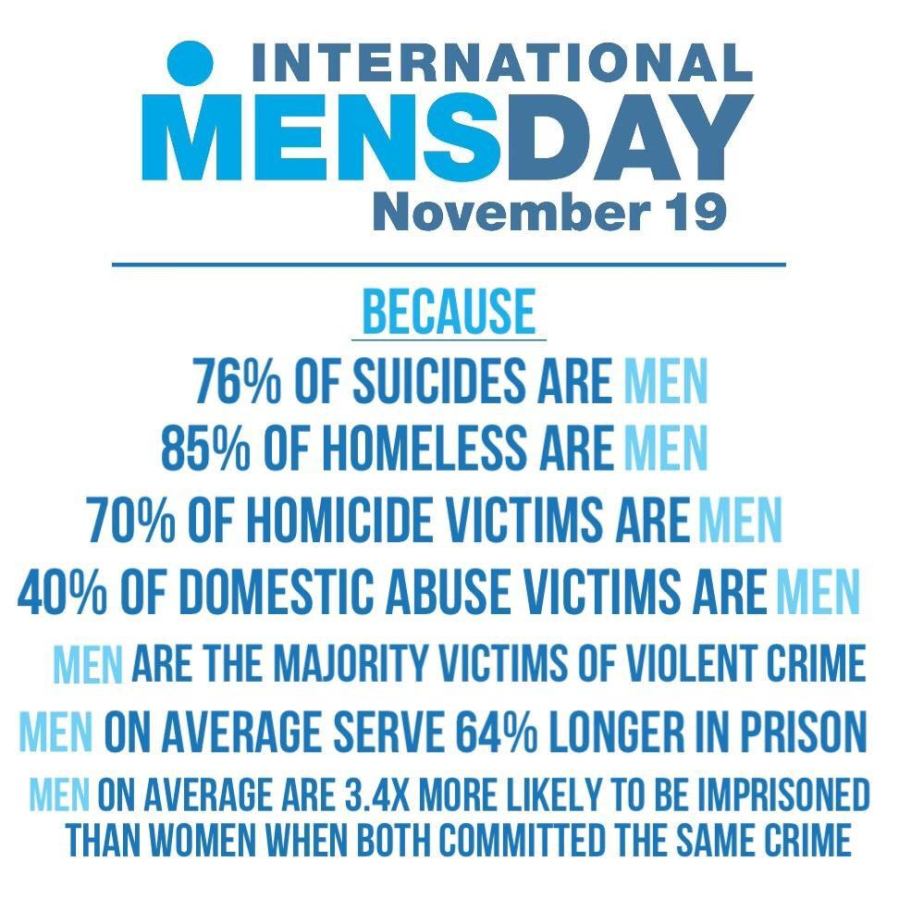
This post was inspired by International Men’s Day and a quest to find the truth on the internet. Are men in the US the majority of the victims of crimes?
This research was inspired by the above graphic. My initial research so far for the military backs these numbers so I feel that it is fair to say more men in the military are victims of crimes than women. We have more military men than women so that only makes sense. By the numbers we have roughly 85% males and 15% females. We know more military men have died by suicide or “non combat death” while in service than military women. We know male veterans make up the majority of the homeless mostly due to mental health and substance abuse issues. We don’t know the percentage of men in the military who have been murdered versus the number of female service members. But we do know that the research so far reveals more men are murdered than military women while serving. The number that may throw this off is how many military men are murdering their spouses and significant others and/or members of their family. So more research has to be done.
The Department of Defense hasn’t included the military spouses in the data thus far nor have they included civilians who have been victims of crime by military members. But we know they exist because we try to track all victims of crime perpetrated by a military member on this website in an effort to honor them. Today we featured 30 cases of domestic abuse that led to the homicide of a female spouse or soldier. We have concerns about domestic violence in general especially since we learned that upwards of 40% of males are victims of domestic violence in the United States. We believe it. Since the majority of members in the military are males, we have found multiple cases of men getting targeted by mostly female civilians and then abused and murdered for their benefits and life insurance. In some cases they reported the domestic violence but in most cases they don’t. Why are men less likely to report when they are a victim of domestic violence? Are they being threatened? For example, “I will ruin your career” comes to mind. This is something that needs to be explored further.
Our new concern is that military men are being falsely accused of sex crimes in an effort to make divorce go in the spouses favor or they have been exploited by a service member looking for a new assignment, to get out of a financial obligation, to get an early retirement, and also the Department of Veterans Affairs financial monthly benefits, about $3,000 a month for someone who is 100% disabled. Although sexual assault isn’t specifically mentioned in the above graphic, we also know that the majority of military men are victims of sexual assault and rape but are the least likely to report. We’ve also learned that about a 1/3 of female victims of crime in the military report and 60% of those females report they experienced both perceived personal and professional retaliation as a result of that report, in a lot of cases the report eventually ends the career. And this may be why so many victims of sexual harassment, sexual assault, and rape in the military do not report, specifically men. The military career is an investment that most of us don’t want meddled with.
The military career is our retirement plan, it’s a financial asset. We don’t want to risk losing our careers in the long run because we know a report of a crime or a diagnosis of Post Traumatic Stress Disorder will make us “unfit for service.”
Our number one goal was to find out if more males are victims of violent crime than females, not that it matters because all people are important. But if you try to find the statistics out there, you will find that they are buried by media reports of how many women are murdered by intimate partner violence, pregnant women are especially at risk. Whereas males are more likely to be the victim of a crime perpetrated by a stranger. Make sure and check out The Red Pill trailer below to find out why Men’s Rights Advocates are fighting for their fellow males. Women do it all the time and there’s no reason they can’t either but they are getting judged, villianized, and demonized for their very important and necessary work. It’s time to step it up for men who die by homicide and suicide; and it’s time we teach them it’s okay to reach out for help whether they have combat PTSD or were a victim of crime.
Broad studies have revealed certain trends within crime and victimization patterns. Adolescents are most likely to be victimized. Men become crime victims more often than women do, and blacks experience more crime than other racial groups. –National Institute of Justice
More men are murdered than women, mostly gun violence
Men are more likely to be murdered by a stranger than a women
Women are more likely to be murdered by an intimate partner
Pregnant women are at most risk of homicide by an intimate partner
More men than women are raped and sexually assaulted in the military
More men than women in the US are raped if you include prisons
Men make up 40% of domestic violence cases in the US
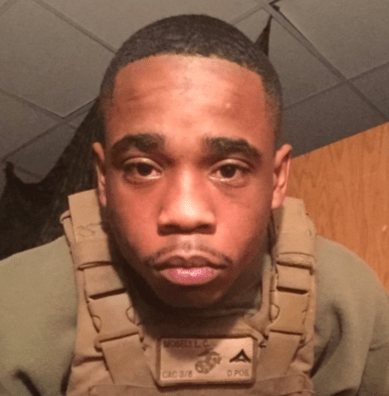
Marine Lyndon Mosley was shot in the face while home on leave in Mississippi on November 29, 2016. Mosley is stationed at Camp LeJeune in North Carolina but he was home on leave visiting a daughter who had just been born. Mosley survived and reports indicate that he is recovering slowly. Jordan Williams turned himself in, admitted to the shooting, and was arrested. Williams was charged with aggravated assault. As of 2019, there was no further information available regarding the prosecution or sentencing of Jordan Williams.
About the Film: When feminist filmmaker Cassie Jaye sets out to document the mysterious and polarizing world of the Men’s Rights Movement, she begins to question her own beliefs. Jaye had only heard about the Men’s Rights Movement as being a misogynist hate-group aiming to turn back the clock on women’s rights, but when she spends a year filming the leaders and followers within the movement, she learns the various ways men are disadvantaged and discriminated against. The Red Pill challenges the audience to pull back the veil, question societal norms, and expose themselves to an alternate perspective on gender equality, power and privilege.
Learn more about Cassie Jaye & The Red Pill Moviehere.
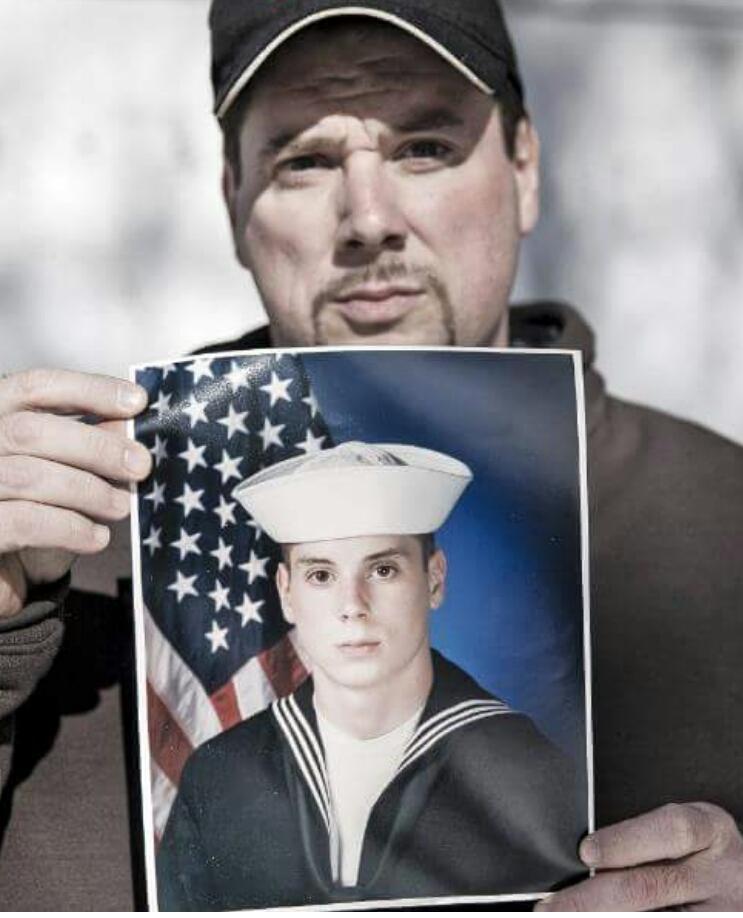
Heath Phillips is a US Navy veteran who served his country honorably up until he became a victim of sexual assault while on board the ship he was assigned to. As a result of the crimes, Heath chose not to go back to the ship in an effort to escape the hazing, retaliation, and further sexual and physical assault that awaited him. Instead he went Absent Without Leave (AWOL) and was eventually given an Other Than Honorable (OTH) discharge from the military. As a result of the discharge status, his life has been impacted greatly up to and including not having the ability to access veteran’s health care and compensation at the Department of Veterans Affairs for the injuries he sustained in the line of duty.
Since 2009, he has been an active voice for male victims of crimes in the military and has helped to educate the public about male military sexual assault issues. He has helped Representative Jackie Speier gain support for the Sexual Assault Training, Oversight, and Prevention Act (STOP Act). He has supported Senator Kirsten Gillibrand in efforts to pass the Military Justice Improvement Act (MJIA). He advocated on behalf of the Human Rights Watch organization for passage of the Fairness for Veterans Act. He continues to work closely with organizations and members of Congress to elevate support for male victims of crimes in the military and improve care for them in active duty and veteran status.
Update (June 2018): Heath Phillips appeared on the Today Show and informed the public that his military discharge status had been upgraded to HONORABLE.
In the News:
Military Rape Speech 6 by Congresswoman Jackie Speier: I’ve discussed the military culture where victims are blamed and assailants are promoted. And I’ve shared the personal stories of several women in order to shine a light on this ongoing epidemic. But it is not only our female service members being raped. Men are being victimized too. (July 20, 2011)
Heath Phillips discusses surviving military sexual trauma & respect (July 1, 2018)
Anya Parampil breaks down a report written by the RAND Corporation that shows that there is still a sexual assault crisis in the US military. Anya reviews the findings of the study, which states that sexual assault is most rampant in the Navy. Anya speaks with US Navy Veteran, Heath Phillips, who shares his own experiences with sexual assault in the Navy and offers solutions to end the epidemic. -RT America (September 24, 2018)
Documentaries:
When his commanders would not stop sexual assaults by his shipmates, Heath went AWOL and then accepted a dishonorable discharge to end his torture. Now he is speaking out to change the way military rape is handled. This is his story.
Oral history interview with Heath Phillips by Jason A. Higgins on June 12, 2018. This interview is part of the Incarcerated Veterans Oral History Project, with the support of the UMass Oral History Lab. In the interview, U.S. Navy veteran Heath Phillips discusses his early life growing up with a Vietnam veteran father; his motivations for joining the military at seventeen; recounts 10 months of sexual violence aboard the U.S.S. Butte; the impact of Military Sexual Trauma, PTSD, and an other-than-honorable discharge on his post-military life; incarceration and twenty years of alcoholism; his path toward recovery; and his advocacy for other survivors of sexual trauma. -Incarcerated Veterans Project
Virtually all media attention on a Pentagon report last week focused on an increase in service members’ claims of sexual abuse in an anonymous survey, but unmentioned were statistics showing that a significant percentage of such actually investigated cases were baseless. -Washington Times
Hearing is Gillibrand’s First As Chair Of Senate Armed Services Subcommittee On Personnel – Has Been Leading The Fight To End Sexual Violence In Military
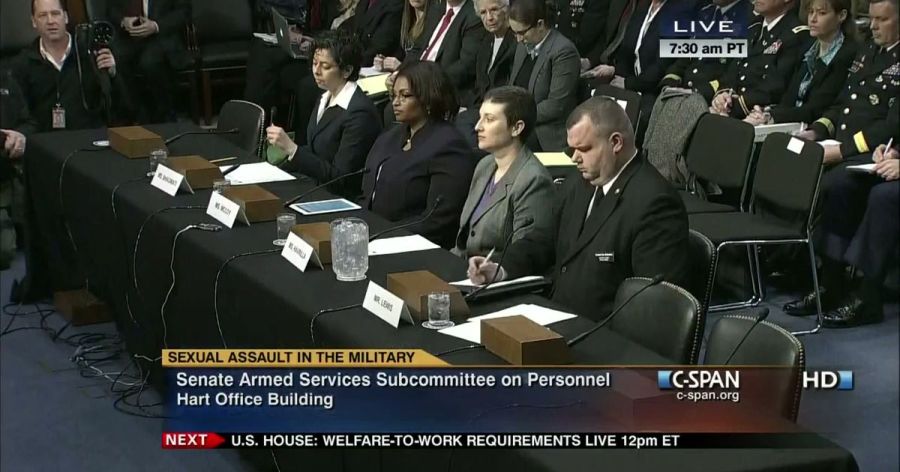
Washington, D.C. – U.S. Senator Kirsten Gillibrand released the following prepared remarks of her opening statement at today’s Senate Armed Services Subcommittee on Personnel hearing examining sexual assault in the military:
“It is an honor and privilege to Chair this hearing of the Personnel Subcommittee this morning. I want to thank the Ranking Member of this Subcommittee, Senator Lindsey Graham, for his support and working with me to move this hearing forward as quickly as possible.
“I know that all of our colleagues on the Armed Services Committee share our deep commitment to improving the quality of life of the men and women who serve in our all-volunteer force on active duty, or in the National Guard and Reserves, their families, military retirees, and Department of Defense Civilian personnel.
“And that is why this hearing today is so important to me personally…and to thousands of servicemembers…and their families across the country.
“The issue of sexual violence in the military is not new. And it has been allowed to go on in the shadows for far too long. The scourge of sexual violence in the military should be intolerable and infuriating to us all. Our best, brightest, and bravest join our armed forces for all the right reasons – to serve our country, protect our freedom, and keep America safe.
“The United States has the best military in the world and the overwhelmingly vast majority of our brave men and women serving in uniform do so honorably and bravely. But there is also no doubt that we have men and women in uniform who are committing acts of sexual violence and should no longer be allowed to serve.
“Too often, women and men have found themselves in the fight of their lives not in the theater of war – but in their own ranks, among their own brothers and sisters, and ranking officers, in an environment that enables sexual assault.
“And after an assault occurs, an estimated 19,000 sexual assaults happened in 2011 alone according to the Defense Department’s own estimates…some of these victims have to fight all over again with every ounce of their being just to have their voice heard…their assailant brought to any measure of justice… and the disability claims they deserve fulfilled. Congress would be derelict in its duty of oversight if we just shrugged our shoulders at these 19,000 sons and daughters…husbands and wives…mothers and fathers…and did nothing. We simply have to do better by them.
“When brave men and women volunteer to serve in our military they know the risks involved. But sexual assault at the hands of a fellow service member should never be one of them.
“Because not only does sexual assault cause unconscionable harm to the victim — sexual violence is reported to be the leading cause of post-traumatic stress disorder among women veterans — but it destabilizes our military, threatens unit cohesion and national security. Beyond the enormous human costs both psychologically and physically, this crisis is costing us significant assets – making us weaker both morally and militarily.
“Already, this Committee and the Pentagon took some first steps on this issue as part of last year’s National Defense Authorization bill that President Obama signed into law. While obviously our work is not done, I am hopeful that we can build on these initial changes which include:
Ensuring that all convicted sex offenders in the military are processed for discharge or dismissal from the Armed Forces regardless of which branch they serve in;
Reserving case-disposition authority for only high-ranking officers in sexual assault cases;
Pushing the Pentagon to lift the combat ban that prevents women from officially serving in many of the combat positions that can lead to significant promotion opportunities. By opening the door for more qualified women to excel in our military, we will have increased diversity in top leadership positions, improving response from leadership when it comes to preventing and responding to sexual violence;
And an amendment introduced by my colleague Senator Jeanne Shaheen and based on my legislation, the MARCH Act, means that troops who become pregnant as a result of an act of rape no longer have to pay out of pocket to have those pregnancies terminated.
“Concerning our first panel of witnesses, I want to salute each of you for your courage today in telling your very painful and personal stories. It is my hope and belief that by committing this selfless act you are encouraging others to step forward and are also helping to prevent other crimes from going unpunished.
“We have a duty to you, and the thousands of victims you represent, to examine whether the military justice system is the most effective and fairest system it can be.
“Despite some very dedicated JAG officers, I do not believe the current system adequately meets that standard. The statistics on prosecution rates for sexual assaults in the military are devastating. Of the 2,439 unrestricted reports filed in 2011 for sexual violence cases – only 240 proceeded to trial. Nearly 70 percent of these reports were for rape, aggravated sexual assault or non-consensual sodomy.
“A system where less than 1 out of 10 reported perpetrators are held accountable for their alleged crimes is not a system that is working. And that is just reported crimes. The Defense Department itself puts the real number closer to 19,000! A system where in reality less than 2 out of 100 alleged perpetrators are faced with any trial at all is clearly inadequate and unacceptable.
“My view is that emphasizing institutional accountability and the prosecution of cases is needed to create a real deterrent of criminal behavior. The system needs to encourage victims that coming forward and participating in their perpetrator’s prosecution is not detrimental to their safety or future, and will result in justice being done. Because currently, according to the DOD, 47 percent of service members are too afraid to report their assaults, because of fear of retaliation, harm or punishment. Too many victims do not feel that justice is likely or even possible.
“We need to take a close look at our military justice system, and we need to be asking the hard questions, with all options on the table, including moving this issue outside of the chain of command, so we can get closer to a true zero tolerance reality in the Armed Forces. The case we have all read about at Aviano Air Base is shocking, and the outcome should compel all of us to take the necessary action to ensure that justice is swift and certain, not rare and fleeting.
“I had the opportunityto press Secretary Hagel on the issue of sexual violence in the military during his confirmation hearing. Secretary Hagel responded by saying, ‘I agree it is not good enough just to say zero tolerance. The whole chain of command needs to be accountable for this.’
“I could not agree more. I was very pleased with the Secretary’s public statement earlier this week that he is open to considering changes to the military justice system as well as legislation to ‘ensure the effectiveness of our responses to the crime of sexual assault.’
“It is with this spirit as our guide that I look forward to hearing from our witnesses.
“After Ranking Member Graham makes his opening remarks, we will hear testimony from my colleague from California, Senator Barbara Boxer who has been a leading voice on this issue. In last year’s Defense bill she successfully included an amendment that prohibits any individual who is convicted of a felony sexual assault from being issued a waiver to join the military.
“We will then have the following witnesses who have either been the victims of sexual assault while serving in the military, or are very knowledgeable advocates for addressing the issue of sexual assaults in the military:
Anu Bhagwati is Executive Director and Co-Founder of the Service Women’s Action Network. Anu is a former Captain and Company Commander, she served as a Marine officer from 1999 to 2004. While serving, Anu faced discrimination and harassment as a woman in the military, and has borne direct witness to the military’s handling of sexual violence.
BriGette McCoy, former Specialist in the U.S. Army. BriGette served in the U.S. Army from 1987 to 1991. She was just eighteen years old when she signed up to serve her country in the first Gulf War. While stationed in Germany from 1988 to 1991, she was sexually assaulted by a non-commanding officer.
Rebekah Havrilla, former Sergeant in the U.S. Army. Rebekah served in the U.S. Army from 2004 to 2008. She was the only female member of a bomb squad in eastern Afghanistan and was attacked by a colleague at Salerno Forward Operating Base near the Pakistani border during her last week in the country in 2007.
Brian Lewis, former Petty Officer Third Class, US. Navy. Brian enlisted in the U.S. Navy in June of 1997. During his tour aboard USS Frank Cable (AS-40), he was raped by a superior non-commissioned officer and forced to go back out to sea after the assault.
“I encourage you to express your views candidly and to tell us what is working and what is not working. Help us to understand what we can do to address this unacceptable problem of sexual assaults in the military.
“Later this afternoon at 2:00 p.m., we will have a third panel of witnesses from the Department of Defense, and the military services, including the Coast Guard. I want to acknowledge that many of those witnesses are here this morning to listen to the critically important testimony from our first and second panels and I would like to thank them for their participation.”


 MILITARY JUSTICE FOR ALL