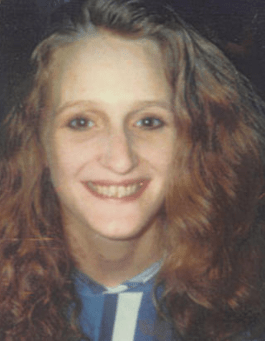
July 14, 1996: Cassandra Corum, 21, Pontiac, Illinois
Marine veteran Andrew Urdiales is accused of murdering eight women from 1986 to 1996, five in California and three in Illinois, and raping and abducting 19 year old Jennifer Asbenson who escaped and survived. Urdiales was indicted for three murders in Illinois and was sentenced to death but the death sentence was commuted after Governor Pat Quinn of Illinois abolished capital punishment in 2011. Instead he received three life sentences for the murders of Laura Uylaki, Cassandra Corum, and Lynn Huber. A gun confiscated in a separate incident linked the three murders in Illinois together and during an interrogation, Urdiales admitted in detail to five cold case murders in California too.
After years of legal wrangling, Urdiales was eventually extradited to California and indicted in 2009 on five counts of first degree murder. He was accused of killing Robbin Brandley, Julie McGhee, Mary Ann Wells, Tammie Erwin, and Denise Maney while stationed at Camp Pendleton Marine Corps base. On May 23, 2018, Andrew Urdiales was convicted of five murders by a jury that deliberated for about a day before recommending in June 2018 that he be sentenced to death for each of the five murders. On November 2, 2018, corrections officials said they found Urdiales unresponsive during a security check at San Quentin State Prison; former Marine and serial killer Andrew Urdiales died by suicide.
In the News:
The murders occurred when Andrew Urdiales was stationed at various Marine Corps facilities in Southern California. -CBS Los Angeles (October 5, 2018)
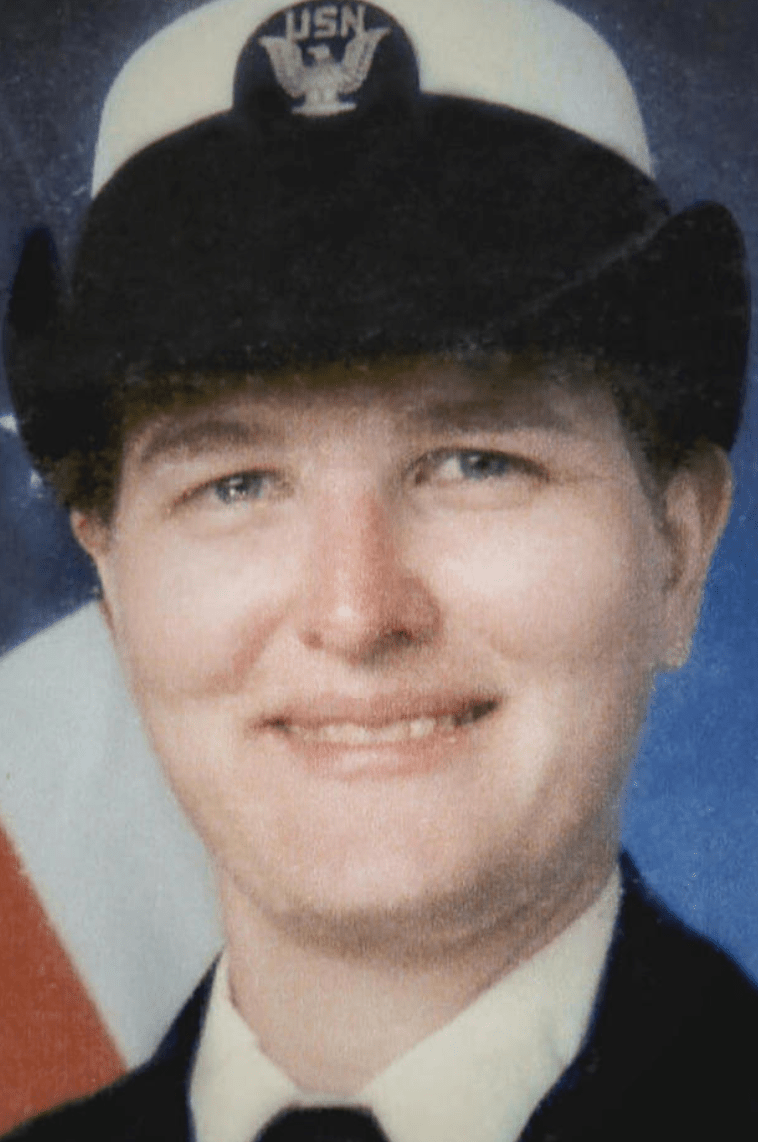
Navy Petty Officer Elise Makdessi worked as an Air Traffic Controller at Naval Air Station Oceana in Virginia. Elise was married to Eddie Makdessi for five years and they lived off base in Virginia Beach. Elise unknowingly helped plan, organize, and carry out her own murder and it is unclear if she was a willing participant in the original plot with Eddie to scam the government out of money or if she was controlled by Eddie. Eddie Makdessi murdered Elise Makdessi and Navy Petty Officer Quincy Brown on May 14, 1996 as part of an elaborate scam. The whole thing was a set up. Elise thought she was part of an arrangement where she would invite Quincy Brown to the house, have sex with him, then accuse him of rape. She also manufactured evidence to make it look like she was documenting sexual abuse in an effort to sue the Navy and make millions. She had journals and created what looked like a rehearsed video outlining what four Navy men, including Quincy Brown, did to her on the job.
Five years earlier in 1991 the Navy Tailhook scandal in Nevada made national headlines. Navy Lieutenant Paula Coughlin was one of the alleged victims who went public with her story. Two years before Elise and Quincy were murdered, Paula Coughlin won 1.7 million after suing the Las Vegas Hilton hotel where the Tailhook Association convention was held. Eddie must have convinced Elise that they too could make millions if they alleged that Elise was sexually assaulted on the job. What they didn’t realize is that you can’t sue the Navy; Coughlin won a lawsuit against the Hilton hotel. The Feres Doctrine prevents any soldier or their family from suing the Department of Defense for compensatory damages. Investigators believe that knowledge of this information gave Eddie and Elise Makdessi the motive to come up with the false accusation scheme to sue the Navy. Eddie was a scammer and always looking for new ways to make quick money. Elise didn’t know she was double crossed until Eddie was plunging the knife. A month before the murders, Eddie purchased $700,000 worth of life insurance on Elise.
Eddie and Elise Makdessi invited Petty Officer Quincy Brown over to the house under the guise of having a threesome. DNA evidence revealed that Elise and Quincy Brown had sex. Investigators would learn that Eddie shot Quincy first, then stabbed Elise. He hurt himself to make it appear that Quincy invaded the house, knocked him out, raped and killed Elise, and then he awoke from unconsciousness and shot the intruder. Eddie staged the crime scene and he almost got away with it. But investigators figured out this was a ‘set up’ based on the crime scene evidence, interviews with Elise’s co-workers, the video tape, and the large insurance policy. They were also savvy enough to recognize that this was a copycat case. Elise’s sexual harassment and sexual assault claims were in fact fabricated. All the men she accused of sex crimes in the video passed a polygraph examination and her supervisors testified that Elise never reported sexual harassment or sexual assault like she claimed in her video testimony. Unfortunately Quincy Brown was the pawn they used in their game and he never got the chance to see that the allegations were proven false.
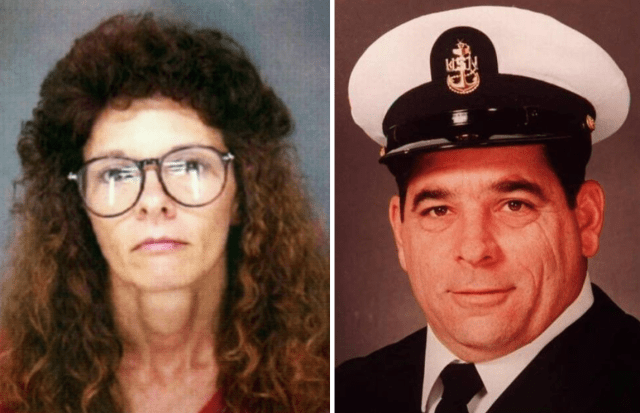
Eddie was indicted in 2001. But by the time investigators were ready to arrest Eddie Makdessi for the murder of Elise Makdessi and Quincy Brown, Eddie had fled the country. They eventually caught up with him in Russia. Unfortunately, Russia did not have an extradition treaty with the United States so police could not force Eddie to come back to the states. Mike Mather, an investigative reporter, went to Russia to interview Makdessi and learned that he was remarried with a child yet things weren’t going so well for Eddie financially in Russia. After that interview, Eddie decided to leave his wife and child in Russia and go back to America to face the charges. He was going to prove his innocence and clear his name. He was sure he would beat the charges. It would be ten years after he committed the first degree murders of Elise and Quincy Brown before he went to trial. On March 16, 2006, Eddie Makdessi was convicted of two counts of murder, sentenced to life in prison, and ordered to pay a $202,500 fine. The motive was the life insurance money. He used the $700,000 payout to travel the world before settling in Russia. Eddie continues to deny committing the crimes.
Elise Makdessi’s sister, Dawn Crosby, asked the jury to “show Eddie Makdessi that my sister’s life was worth more than $700,000.” –The Virginia-Pilot (March 17, 2006)
Forensic Files:
Full Episode: Virginia Beach police arrive at the Makdessi apartment to find Elise Makdessi and her lover, Quincy Brown, dead. Elise’s husband Eddie had reported that he killed Quincy Brown in self-defense after Brown had murdered Elise. Eddie gave the police a videotape Elise had made a week before, alleging that she had been the victim of sexual harassment. -Double Cross, Forensic Files (S13,E5)
Investigation Discovery:
Paramedics respond to a horrific crime scene – a woman is found tied to a bed with slashes across her body. Next to her on the floor, a man with three gunshot wounds. Detectives spend the next several years unraveling this bizarre mystery. -Last Man Standing, Solved (S2,E10)
When a Naval Officer is apparently raped and stabbed by a coworker, a mysterious VHS tape suggests the victim may have been silenced to prevent a scandal. Dogged investigation and cutting edge forensic science reveals a shocking murder plot. -Deadly Accusations, Unusual Suspects (S7,E4)
Editor’s note: With a cable subscription, you can download the free ID Go app and watch Investigation Discovery programming at your convenience. And for those who do not have cable, you can watch “unlocked” episodes on the ID Go app including the latest premieres. For those who prefer commercial free programming during your binge session, Prime Video has an ID channel: ‘True Crime Files by Investigation Discovery” available for $3.99 a month. It’s a compilation of older seasons but totally worth the cost if you are a true crime addict. Download the ID Go app or purchase ID True Crime Files & binge away.
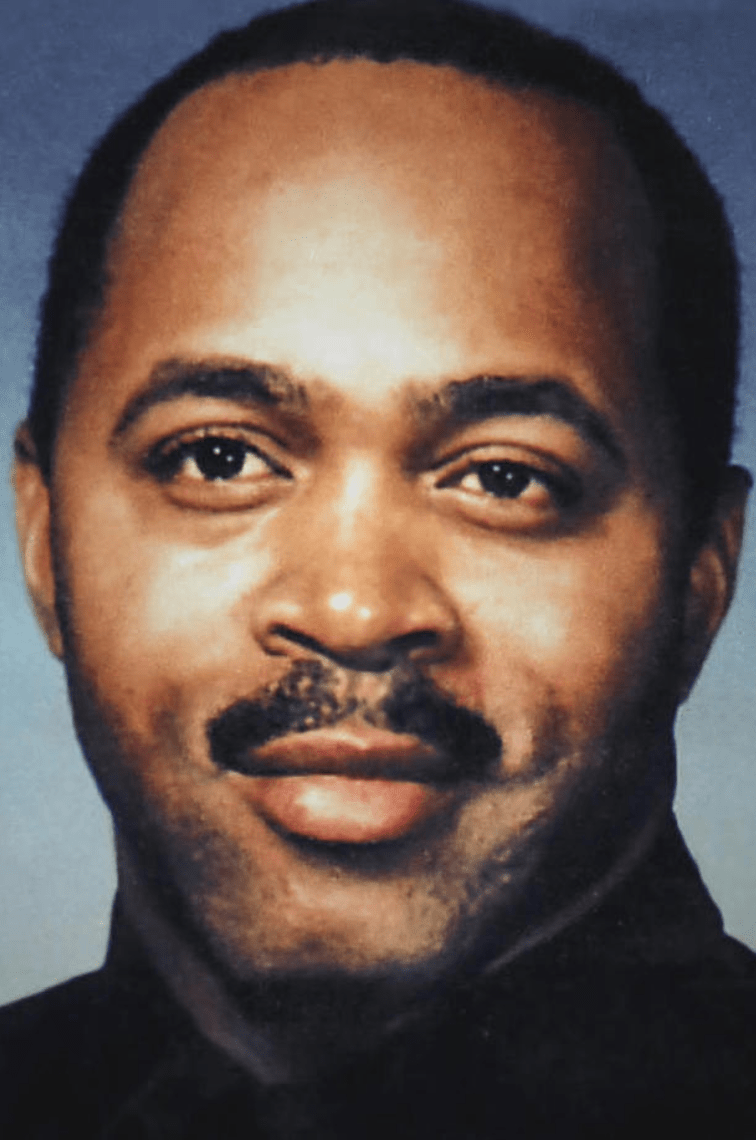
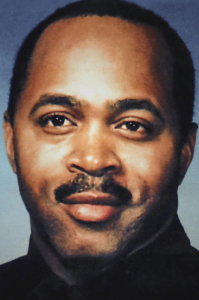
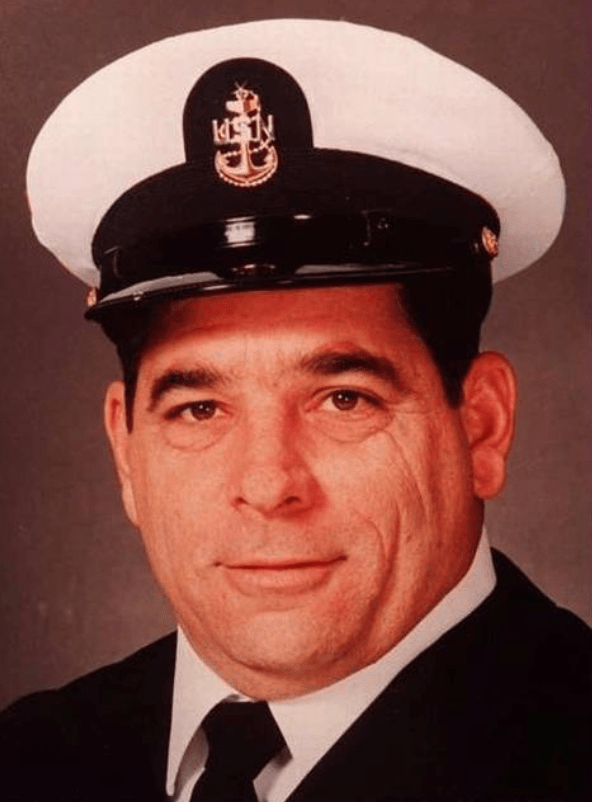
Honoring Navy Petty Officer Quincy Brown who died on May 14, 1996 in Virginia Beach, Virginia. Petty Officer Brown and Petty Officer Elise Makdessi were murdered by Elise’s husband Eddie Makdessi in the Makdessi home. Quincy Brown was lured to the residence under false pretenses, not aware that he was part of a plot that ended with murder. Eddie shot Quincy Brown and then stabbed Elise Makdessi. He told the police that Quincy Brown broke into his home, knocked him out, raped and murdered Elise, and when he awoke he shot the intruder. Forensic science proved that Eddie’s version of events were not supported by the evidence. Investigators concluded that Eddie was most likely motivated to kill by his wife’s $700,000 life insurance policy he had purchased a month earlier. Eddie Makdessi was indicted in 2001 but wouldn’t go to trial for his crimes until 2006 as he fled the country with his life insurance money. Unfortunately, the United States didn’t have an extradition treaty with Russia. After Eddie Makdessi finally returned to the US, he was charged with two counts of first degree murder, found guilty, and sentenced to life in prison. He continues to deny that he committed the crimes.
Investigation Discovery:
Paramedics respond to a horrific crime scene – a woman is found tied to a bed with slashes across her body. Next to her on the floor, a man with three gunshot wounds. Detectives spend the next several years unraveling this bizarre mystery. -Last Man Standing, Solved (S2,E10)
When a Naval Officer is apparently raped and stabbed by a coworker, a mysterious VHS tape suggests the victim may have been silenced to prevent a scandal. Dogged investigation and cutting edge forensic science reveals a shocking murder plot. -Deadly Accusations, Unusual Suspects (S7,E4)
April 14, 1996: Laura Uylaki, 25, Hammond, Indiana
Marine veteran Andrew Urdiales is accused of murdering eight women from 1986 to 1996, five in California and three in Illinois, and raping and abducting 19 year old Jennifer Asbenson who escaped and survived. Urdiales was indicted for three murders in Illinois and was sentenced to death but the death sentence was commuted after Governor Pat Quinn of Illinois abolished capital punishment in 2011. Instead he received three life sentences for the murders of Laura Uylaki, Cassandra Corum, and Lynn Huber. A gun confiscated in a separate incident linked the three murders in Illinois together and during an interrogation, Urdiales admitted in detail to five cold case murders in California too.
After years of legal wrangling, Urdiales was eventually extradited to California and indicted in 2009 on five counts of first degree murder. He was accused of killing Robbin Brandley, Julie McGhee, Mary Ann Wells, Tammie Erwin, and Denise Maney while stationed at Camp Pendleton Marine Corps base. On May 23, 2018, Andrew Urdiales was convicted of five murders by a jury that deliberated for about a day before recommending in June 2018 that he be sentenced to death for each of the five murders. On November 2, 2018, corrections officials said they found Urdiales unresponsive during a security check at San Quentin State Prison; former Marine and serial killer Andrew Urdiales died by suicide.
In the News:
The murders occurred when Andrew Urdiales was stationed at various Marine Corps facilities in Southern California. -CBS Los Angeles (October 5, 2018)
March 11, 1995: Denise Maney, 32, Palm Springs, California
Marine veteran Andrew Urdiales is accused of murdering eight women from 1986 to 1996, five in California and three in Illinois, and raping and abducting 19 year old Jennifer Asbenson who escaped and survived. Urdiales was indicted for three murders in Illinois and was sentenced to death but the death sentence was commuted after Governor Pat Quinn of Illinois abolished capital punishment in 2011. Instead he received three life sentences for the murders of Laura Uylaki, Cassandra Corum, and Lynn Huber. A gun confiscated in a separate incident linked the three murders in Illinois together and during an interrogation, Urdiales admitted in detail to five cold case murders in California too.
After years of legal wrangling, Urdiales was eventually extradited to California and indicted in 2009 on five counts of first degree murder. He was accused of killing Robbin Brandley, Julie McGhee, Mary Ann Wells, Tammie Erwin, and Denise Maney while stationed at Camp Pendleton Marine Corps base. On May 23, 2018, Andrew Urdiales was convicted of five murders by a jury that deliberated for about a day before recommending in June 2018 that he be sentenced to death for each of the five murders. On November 2, 2018, corrections officials said they found Urdiales unresponsive during a security check at San Quentin State Prison; former Marine and serial killer Andrew Urdiales died by suicide.
In the News:
The murders occurred when Andrew Urdiales was stationed at various Marine Corps facilities in Southern California. -CBS Los Angeles (October 5, 2018)
Deadly Women on Investigation Discovery featured yet another military spouse who murdered because they were motivated by greed, selfishness, and sociopathic tendencies. While Navy sailor David Russo was at work at the Lemoore Naval Air Station in California, his wife was getting high on meth with her secret lover. Susan didn’t like that David controlled the purse strings because he might find out that she was blowing their cash on drugs. Then one day a military advisor stopped by the house to advise them of their financial affairs and Susan learned that her husband David was worth more dead then he was alive. He had a grand total of 1 million dollars worth of Servicemen’s Group Life Insurance and other insurance policies on himself. Susan saw her way out of domestic boredom and hatched up a plan with two of her drug addicted buddies, Jason Andrews and Bobby Morris. She offered them $100 to kill her husband and promised them more later after she got her hands on the life insurance payout.
On July 14, 1994, the trio striked. While David lay sleeping in his bed, the two men entered the Fresno, California marital home with Susan’s assistance, walked into David’s bedroom, and shot him one time in the back of the head. They then drove the body to a remote location so they could torch David and the car in an effort to destroy evidence. This plan would never come to fruition because they ran out of gas and then didn’t have enough gas to torch the car. When military personnel stopped by David’s home to see why he hadn’t showed up to work, Susan told them she didn’t know where he was and asked if she would still get his paycheck that week. Eventually David’s car and body was discovered by a local farmer. Of course investigators looked to the spouse first to determine what may have happened to David. Susan told investigators during the interview that they would find no evidence of wrong doing which of course intrigued them to probe further.
Susan Russo was a self proclaimed clean freak and cleaner by trade and was confident she had covered her tracks. But she did not account for the microscopic blood spatter on the headboard of the bed or the spent bullet casing located in the bedroom. Police charged Susan Russo and her two friends with the murder of her husband David Russo. Jason Andrews and Bobby Morris were both convicted of first degree murder and sentenced to 25 years to life. In 1996, Susan Russo was convicted of first degree murder and sentenced to life without the possibility of parole. Investigators described Susan as an evil, psychopathic person who manipulated her two drug addicted friends with the promises of money for more drugs. She didn’t care about David whatsoever, she only saw David as a way to cash in.
Preview: Susan Russo was a Navy wife who ran a tight ship. But she had a secret life, and devised a way to profit off her husband’s substantial military life insurance. -Cash In, Deadly Women (S10, E6)
ID Go: The stakes are high and the chips are down when these Deadly Women decide to “Cash In.” -Cash In, Deadly Women (S10, E6)
Editor’s note: With a cable subscription, you can download the free ID Go app and watch Investigation Discovery programming at your convenience. And for those who do not have cable, you can watch “unlocked” episodes on the ID Go app including the latest premieres. For those who prefer commercial free programming during your binge session, Prime Video has an ID channel: ‘True Crime Files by Investigation Discovery” available for $3.99 a month. It’s a compilation of older seasons but totally worth the cost if you are a true crime addict. Download the ID Go app or purchase ID True Crime Files & binge away.
When the severed head of a wife and mother is found, Lt. Joe Kenda uses forensics and interrogation to find both her body and her killer. Then… a young man’s murder looks like a robbery gone wrong until Kenda learns the odd reason he’s living there. -The Line Goes Dead, Homicide Hunter (S6,E13)
On October 16, 1993, a mother was home with her son cooking supper. She went outside to call her dog Shadow to return home. When the dog returned, he had something large in his mouth. Danielle and her son realized that the dog had a human skull in it’s mouth. Lt. Joe Kenda of the Colorado Spring Police Department was grocery shopping when he got the call. He left his grocery shopping cart as is and headed to the scene. When Kenda arrived on the scene, the medical examiner was observing the skull. The medical examiner observed another animal got to the skull before the dog did and the time of death was within the last couple of weeks. The skull appeared to be a female with no obvious signs of bullet wounds or trauma. But they didn’t have the rest of the body to determine the official cause of death. Lt. Joe Kenda decided to start with the missing persons reports first.
Kenda also wanted to find the rest of the remains. Unfortunately, it was dark outside so they decided to resume the search the next day in during the daylight hours. The police used cadaver dogs to find the rest of the body. Cadaver dogs are trained to notify their handler when they make a hit. Kenda knew this would be a daunting task because El Paso County is the size of Rhode Island. An hour into the search, the K9 officer got a hit. They found a few more human bones; some still had flesh attached and some had teeth marks on them. Kenda theorized maybe she was a hiker out for a walk one day and got attacked by a bear. Now Joe Kenda needed to identify the dead female. They used dental records to determine if the dead woman’s teeth matched any dental records on file. On the third missing woman’s dental records, they finally found a match. Diane Pelkey, 36, was reported missing one week prior by her husband Michael Pelkey.
Michael Pelkey paid for a full page ad in the newspaper looking for Diane Pelkey. Police learned Michael was a 16 year veteran in the US Army and lived off post in Colorado Springs with his wife. Kenda now had the unfortunate task of informing Michael Pelkey of his wife’s death. He told him positive identification was made through dental records. Michael Pelkey was overcome with grief. They had been together for over 15 years. They had a son and she was four months pregnant. Michael claims the last time he saw Diane they were out at dinner and then got in an argument. He said she walked away from him and he had not seen her since. Kenda deduced she would have had to walk ten miles to get home. Kenda decided she was not killed by a bear, she was killed by a human. They didn’t know if maybe someone picked her up hitchhiking and killed her. Michael Pelkey claimed he didn’t look for his wife because he had to go home and take care of their five year old son.
As Kenda was reviewing the missing persons report for Diane Pelkey, he noticed one of the officers put JDLR (Just Doesn’t Look Right) on the bottom of the report. This is usually done when an officer feels something isn’t right or the person making the report was suspicious. Kenda spoke with the officer who took the report. They both decided the missing persons report was suspicious because Michael didn’t say anything about their child, Diane’s pregnancy, or that they got in an argument that same night. Kenda explained that usually if someone thinks something happen to a loved one, they won’t leave him alone. Kenda ran Michael Pelkey’s name through the data base and found there was a history of domestic violence, restraining orders in the past, and the couple had filed for a divorce. Kenda believed Michael Pelkey may have killed his wife but he wasn’t sure he had the authority to pursue the case.
Diane Pelkey’s remains were found in El Paso County, Colorado so the case may be out of Kenda’s jurisdiction. He pressed the sheriff’s office to put the squeeze on Michael Pelkey. They brought him into the sheriff’s department and started questioning him. They presented all the evidence they had to Pelkey and he became overwhelmed. Michael broke during the interrogation and admitted to killing his wife on October 8, 1993. He claimed they were in the car and he wanted to do some fishing. They started arguing; he accused her of being unfaithful, she accused him of being unfaithful. He said she wanted out of the vehicle to get some space from him and that didn’t sit well with him. Michael claims he snapped and started strangling Diane. Michael tried to claim that it was an accident. Kenda thought this was not an accident because it takes two to three minutes to strangle someone to death.
Michael Pelkey then told detectives he panicked after strangling Diane and decided to drive to a rural area in the Rocky Mountain foothills to dispose of her body. He put a seatbelt on her and drove as if she was simply a passenger in his car. He drove to a ravine near the highway and left her in an area where he didn’t think anyone would find her. Afterwards, he filed a missing persons report and took out an ad in the local paper to deflect suspicion from himself. Michael Pelkey probably thought he would get away with murdering her wife. But his plan unraveled and he was arrested for murder. The District Attorney allowed the Fort Carson Army leadership to court martial him despite the fact that the crime occurred in El Paso County. Michael Pelkey was convicted of second degree murder and sentenced to life. He is serving his sentence at Fort Leavenworth, a military penitentiary in Kansas.
You are held to a higher standard in the United States military. You will not behave in this way and if you do, you will be one sorry son of a bitch. Sgt. Pelkey found that out the hard way. -Lt. Joe Kenda
Editor’s note: With a cable subscription, you can download the free ID Go app and watch Investigation Discovery programming at your convenience. And for those who do not have cable, you can watch “unlocked” episodes on the ID Go app including the latest premieres. For those who prefer commercial free programming during your binge session, Prime Video has an ID channel: ‘True Crime Files by Investigation Discovery” available for $3.99 a month. It’s a compilation of older seasons but totally worth the cost if you are a true crime addict. Download the ID Go app or purchase ID True Crime Files & binge away.
September 28, 1992: Jennifer Asbenson, 19 (at the time of crime), survived a rape and abduction by former Camp Pendleton Marine Andrew Urdiales in California. She was able to escape from his trunk and run into the arms of two other Marines driving in the area. She did not know who her attacker was at the time of the crime but eventually was able to identify Andrew Urdiales in a police photo line-up. She testified on behalf of three women murdered by Urdiales in Illinois and continues to await his trial in California for five more homicides and her case.
Camp Pendleton Marine veteran Andrew Urdiales is accused of murdering eight women from 1986 to 1996, five in California and three in Illinois, and raping and abducting a 19 year old, Jennifer Asbenson, who escaped and survived. Urdiales was indicted for three murders in Illinois and was sentenced to death but the death sentence was commuted after Governor Pat Quinn of Illinois abolished capital punishment in 2011. Instead he received three life sentences for the murders of Laura Uylaki, Cassandra Corum, and Lynn Huber. A gun confiscated in a separate incident linked the three murders in Illinois together and during an interrogation, Urdiales admitted in detail to five cold case murders in California too. After years of legal wrangling, Urdiales was eventually extradited to California and indicted in 2009 on five counts of first degree murder. He was accused of killing Robbin Brandley, Julie McGhee, Mary Ann Wells, Tammie Erwin, and Denise Maney. Initially California was seeking the death penalty but Proposition 62 was repealed in November 2016. Urdiales continues to await trial in California.
A woman’s story of survival is truly inspiring after she was abducted and tortured by a notorious serial killer. Jennifer Asbenson was 19 when she was abducted by Andrew Urdiales. 24 years later, she returned to California’s Desert Hot Springs to record a video explaining her daring escape to encourage others never to give up. Asbenson was walking to a bus stop near Palm Springs, California, in September 1992 when she was offered a ride by Urdiales, who is believed to have killed eight women. –Inside Edition
ID Go: Apple Valley in California’s Mojave Desert is the perfect place to hide a secret. When the body of an unidentified Jane Doe is discovered there in 1994, it takes almost two decades to bring a twisted tale of love, jealousy, and a horrible crime to light. -A Girl Has No Name, Who Killed Jane Doe? (S2, E2)
Editor’s note: With a cable subscription, you can download the free ID Go app and watch all of the Investigation Discovery programming at your convenience. And for those who do not have cable, you can watch “unlocked” episodes on the ID Go app including the latest premieres. Download the ID Go app and binge away. For those who prefer commercial free programming during your binge session, Prime Video has an ID channel: ‘True Crime Files by Investigation Discovery” available for $2.99 a month. It’s a compilation of older seasons but totally worth the cost if you are a true crime addict.









 MILITARY JUSTICE FOR ALL