This website is for members of the military, veterans, their families and advocates. Our goal is to help you:
access benefits
find free legal help, and
better understand your legal issues
Many websites provide information for military households or veterans. Here our goal is to index the best legal information available in one easy-to-use site. We have also added our own interactive forms, videos, and legal analysis. We try to deliver answers to your questions using Plain English. More about our content and website features.
The Veterans Law Group is the creation of Mark Lippman, an attorney whose practice is dedicated to claims made on behalf of disabled veterans & their families.
The Veterans Law Group was the creation of Mark Lippman, a seasoned attorney whose practice is dedicated to claims made on behalf of disabled veterans and their dependents. We look forward to serving your needs.
The Veterans Law Group provides representation to veterans and their dependents in their appeals at the Regional Office, Board of Veterans’ Appeals, Court of Appeals for Veterans Claims, and the Federal Circuit. That is all we do. Because we concentrate only in Veterans Claims, we are completely current on the law and, most importantly, on the day-to-day practice of the VA. We specialize in the legal assistance of veterans seeking help with va disability benefits and VA disability claims. We have fought and won veterans disability cases that have established new precedents for veterans disability benefits and claims.
Hearing is Gillibrand’s First As Chair Of Senate Armed Services Subcommittee On Personnel – Has Been Leading The Fight To End Sexual Violence In Military
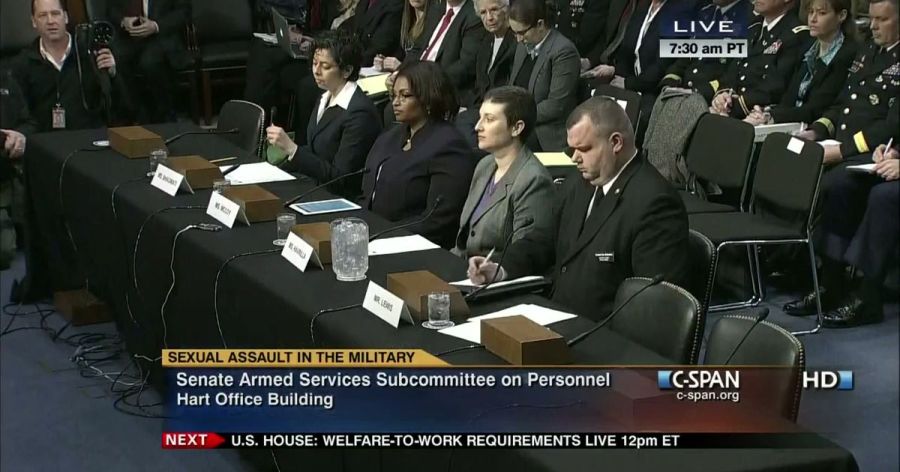
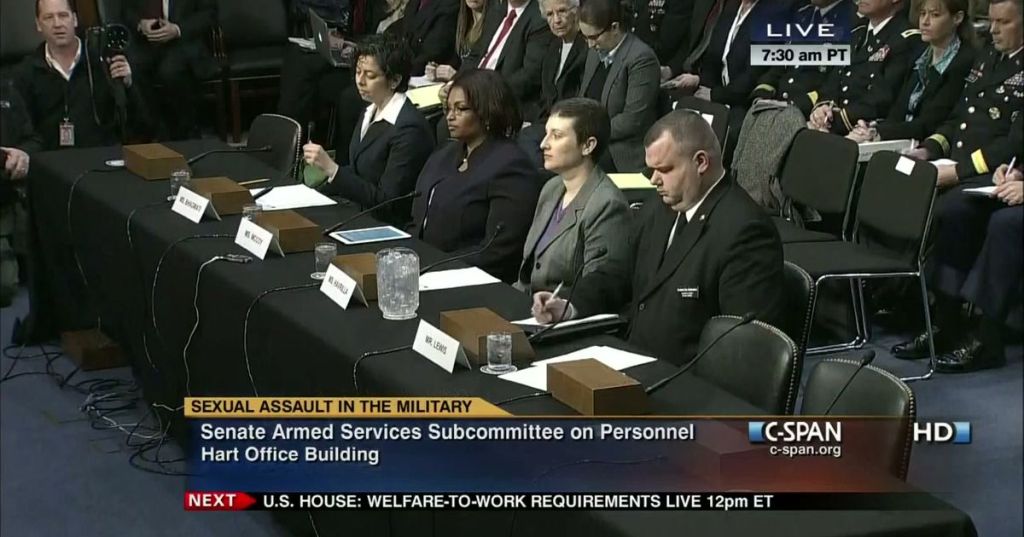
Washington, D.C. – U.S. Senator Kirsten Gillibrand released the following prepared remarks of her opening statement at today’s Senate Armed Services Subcommittee on Personnel hearing examining sexual assault in the military:
“It is an honor and privilege to Chair this hearing of the Personnel Subcommittee this morning. I want to thank the Ranking Member of this Subcommittee, Senator Lindsey Graham, for his support and working with me to move this hearing forward as quickly as possible.
“I know that all of our colleagues on the Armed Services Committee share our deep commitment to improving the quality of life of the men and women who serve in our all-volunteer force on active duty, or in the National Guard and Reserves, their families, military retirees, and Department of Defense Civilian personnel.
“And that is why this hearing today is so important to me personally…and to thousands of servicemembers…and their families across the country.
“The issue of sexual violence in the military is not new. And it has been allowed to go on in the shadows for far too long. The scourge of sexual violence in the military should be intolerable and infuriating to us all. Our best, brightest, and bravest join our armed forces for all the right reasons – to serve our country, protect our freedom, and keep America safe.
“The United States has the best military in the world and the overwhelmingly vast majority of our brave men and women serving in uniform do so honorably and bravely. But there is also no doubt that we have men and women in uniform who are committing acts of sexual violence and should no longer be allowed to serve.
“Too often, women and men have found themselves in the fight of their lives not in the theater of war – but in their own ranks, among their own brothers and sisters, and ranking officers, in an environment that enables sexual assault.
“And after an assault occurs, an estimated 19,000 sexual assaults happened in 2011 alone according to the Defense Department’s own estimates…some of these victims have to fight all over again with every ounce of their being just to have their voice heard…their assailant brought to any measure of justice… and the disability claims they deserve fulfilled. Congress would be derelict in its duty of oversight if we just shrugged our shoulders at these 19,000 sons and daughters…husbands and wives…mothers and fathers…and did nothing. We simply have to do better by them.
“When brave men and women volunteer to serve in our military they know the risks involved. But sexual assault at the hands of a fellow service member should never be one of them.
“Because not only does sexual assault cause unconscionable harm to the victim — sexual violence is reported to be the leading cause of post-traumatic stress disorder among women veterans — but it destabilizes our military, threatens unit cohesion and national security. Beyond the enormous human costs both psychologically and physically, this crisis is costing us significant assets – making us weaker both morally and militarily.
“Already, this Committee and the Pentagon took some first steps on this issue as part of last year’s National Defense Authorization bill that President Obama signed into law. While obviously our work is not done, I am hopeful that we can build on these initial changes which include:
Ensuring that all convicted sex offenders in the military are processed for discharge or dismissal from the Armed Forces regardless of which branch they serve in;
Reserving case-disposition authority for only high-ranking officers in sexual assault cases;
Pushing the Pentagon to lift the combat ban that prevents women from officially serving in many of the combat positions that can lead to significant promotion opportunities. By opening the door for more qualified women to excel in our military, we will have increased diversity in top leadership positions, improving response from leadership when it comes to preventing and responding to sexual violence;
And an amendment introduced by my colleague Senator Jeanne Shaheen and based on my legislation, the MARCH Act, means that troops who become pregnant as a result of an act of rape no longer have to pay out of pocket to have those pregnancies terminated.
“Concerning our first panel of witnesses, I want to salute each of you for your courage today in telling your very painful and personal stories. It is my hope and belief that by committing this selfless act you are encouraging others to step forward and are also helping to prevent other crimes from going unpunished.
“We have a duty to you, and the thousands of victims you represent, to examine whether the military justice system is the most effective and fairest system it can be.
“Despite some very dedicated JAG officers, I do not believe the current system adequately meets that standard. The statistics on prosecution rates for sexual assaults in the military are devastating. Of the 2,439 unrestricted reports filed in 2011 for sexual violence cases – only 240 proceeded to trial. Nearly 70 percent of these reports were for rape, aggravated sexual assault or non-consensual sodomy.
“A system where less than 1 out of 10 reported perpetrators are held accountable for their alleged crimes is not a system that is working. And that is just reported crimes. The Defense Department itself puts the real number closer to 19,000! A system where in reality less than 2 out of 100 alleged perpetrators are faced with any trial at all is clearly inadequate and unacceptable.
“My view is that emphasizing institutional accountability and the prosecution of cases is needed to create a real deterrent of criminal behavior. The system needs to encourage victims that coming forward and participating in their perpetrator’s prosecution is not detrimental to their safety or future, and will result in justice being done. Because currently, according to the DOD, 47 percent of service members are too afraid to report their assaults, because of fear of retaliation, harm or punishment. Too many victims do not feel that justice is likely or even possible.
“We need to take a close look at our military justice system, and we need to be asking the hard questions, with all options on the table, including moving this issue outside of the chain of command, so we can get closer to a true zero tolerance reality in the Armed Forces. The case we have all read about at Aviano Air Base is shocking, and the outcome should compel all of us to take the necessary action to ensure that justice is swift and certain, not rare and fleeting.
“I had the opportunityto press Secretary Hagel on the issue of sexual violence in the military during his confirmation hearing. Secretary Hagel responded by saying, ‘I agree it is not good enough just to say zero tolerance. The whole chain of command needs to be accountable for this.’
“I could not agree more. I was very pleased with the Secretary’s public statement earlier this week that he is open to considering changes to the military justice system as well as legislation to ‘ensure the effectiveness of our responses to the crime of sexual assault.’
“It is with this spirit as our guide that I look forward to hearing from our witnesses.
“After Ranking Member Graham makes his opening remarks, we will hear testimony from my colleague from California, Senator Barbara Boxer who has been a leading voice on this issue. In last year’s Defense bill she successfully included an amendment that prohibits any individual who is convicted of a felony sexual assault from being issued a waiver to join the military.
“We will then have the following witnesses who have either been the victims of sexual assault while serving in the military, or are very knowledgeable advocates for addressing the issue of sexual assaults in the military:
Anu Bhagwati is Executive Director and Co-Founder of the Service Women’s Action Network. Anu is a former Captain and Company Commander, she served as a Marine officer from 1999 to 2004. While serving, Anu faced discrimination and harassment as a woman in the military, and has borne direct witness to the military’s handling of sexual violence.
BriGette McCoy, former Specialist in the U.S. Army. BriGette served in the U.S. Army from 1987 to 1991. She was just eighteen years old when she signed up to serve her country in the first Gulf War. While stationed in Germany from 1988 to 1991, she was sexually assaulted by a non-commanding officer.
Rebekah Havrilla, former Sergeant in the U.S. Army. Rebekah served in the U.S. Army from 2004 to 2008. She was the only female member of a bomb squad in eastern Afghanistan and was attacked by a colleague at Salerno Forward Operating Base near the Pakistani border during her last week in the country in 2007.
Brian Lewis, former Petty Officer Third Class, US. Navy. Brian enlisted in the U.S. Navy in June of 1997. During his tour aboard USS Frank Cable (AS-40), he was raped by a superior non-commissioned officer and forced to go back out to sea after the assault.
“I encourage you to express your views candidly and to tell us what is working and what is not working. Help us to understand what we can do to address this unacceptable problem of sexual assaults in the military.
“Later this afternoon at 2:00 p.m., we will have a third panel of witnesses from the Department of Defense, and the military services, including the Coast Guard. I want to acknowledge that many of those witnesses are here this morning to listen to the critically important testimony from our first and second panels and I would like to thank them for their participation.”
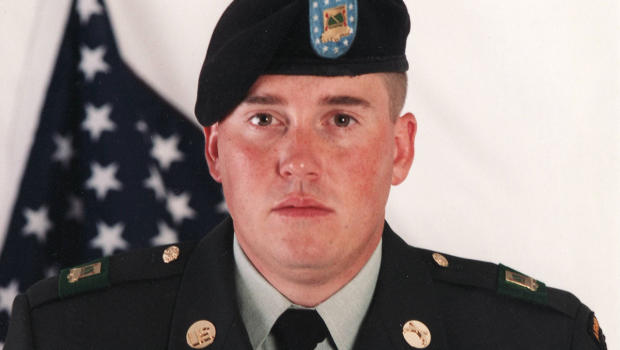
Sergeant Brent Burke earned his stripes at Fort Campbell, Kentucky — home base for his division, the legendary 101st Airborne. Once under the command of former General David Petraeus, the soldiers of the 101st have seen more action than most soldiers in the U.S. Army. It is also where Sgt. Burke will learn if he will continue to serve in the Army, or if he will serve out his life in prison, because military prosecutors in the Army’s Judge Advocate General’s Corps, known as JAG, will court martial Sgt. Brent Burke for double homicide.
“I would say that the tough part of any case like this is the fact that it was four years old … and it was mostly circumstantial evidence and when you put all that together it certainly makes for a difficult case,” JAG prosecutor Lt. Col Matthew Calarco told “48 Hours” correspondent Richard Schlesinger. Lieutenant Colonel Matt Calarco’s mission, after four civilian trials failed to get a verdict, is to finally prove Sgt. Burke shot and killed his wife, Tracy, and her ex-husband’s mother, Karen Comer, on Sept. 11, 2007.
The murder of a military wife and two of her young daughters in Fayetteville, North Carolina in 1985 was still making headlines twenty-five years later. The loss of his children and his wife Kathryn would forever haunt former Air Force Captain Gary Eastburn. Katie captivated him from the moment they met and the two got married shortly before Gary joined the United States Air Force. Eleven years later, Captain Eastburn was stationed at Pope Air Force Base in North Carolina as an Air Traffic Control supervisor. By then, the couple had three daughters: five year old Cara, three year old Erin, and Jana who was just under the age of two. They lived on Summerhill Road near the Fort Bragg Army post.
In the spring of 1985, Gary Eastburn was nearing the end of a training program at Maxwell Air Force Base in Alabama. Every Thursday night, Gary called Kathryn from the barrack’s payphone. One week, he couldn’t reached Kathryn and after frantically calling her for a couple days unable to reach her, Gary asked a neighbor to check in on his wife. The neighbors had grown concerned as well when they noticed that the newspaper had not been picked up for a couple days and they heard a child crying. They called the police who went into the Eastburn’s home and discovered Kathryn, Cara, and Erin had been murdered and the youngest toddler, Jana, was crying and severely dehydrated. They would learn that the baby was only hours from death.
The Fayetteville Police Department investigators discovered that Kathryn Eastburn had been raped and murdered. Her underwear had been cut off her, her blouse and bra were ripped opened, her throat was slit, and she had multiple stab wounds. Erin was found in her mother’s room stabbed to death and her throat slashed. And Cara was found in her own bed as if she was hiding underneath a blanket. She too had been stabbed multiple times and her throat was cut. Police believe the surviving toddler was in her crib for nearly three days before neighbors found her. Gary Eastburn received the dreadful call that there had been a death in the family while he was still at Maxwell. Investigators asked him to return home immediately because detectives wanted to give him the news in person.
Desperate police turned to the only living witness, Jana, to see if she remembered anything. The police took Jana to a child psychologist to determine what, if anything, she might know. The police deduced that the child heard the killer but could not identify him; she was just too young. An older Jana admits that she doesn’t remember anything now either. Police theorized that the baby was young and couldn’t identify the intruder which is probably why she was spared. In the meantime, a neighbor came forward claiming he saw a man leaving the Eastburn residence around 3 a.m. and was able to give a description of a suspect who drove a white Chevrolet Chevette. Kathryn also told Gary about a man who came and looked at the family dog they were trying to find a home for. His name was Timothy Hennis and the composite drawing inspired by the neighbor looked just like him.
Timothy Hennis was questioned and asked to give hair, blood, and fingerprint samples. When the detectives escorted Hennis back to his car, they discovered he drove a white Chevrolet Chevette. Later that night, Timothy Hennis was arrested. Hennis was an Army Sergeant stationed at Fort Bragg. Someone had used Kathryn’s stolen ATM card and a witness identified Hennis as the person who used the ATM right before she did at the time of the transaction. At every turn, the evidence overwhelmingly brought them back to Hennis. The prosecutors were puzzled why Hennis would commit such a heinous crime given he had no history of violence. They learned that he had approached a woman for sex that same night and theorized that when he was rejected, he decided to target Kathryn Eastburn.
A trial began roughly a year after the murders in 1986. Hennis’ attorney was quick to point out that the prosecution didn’t have any physical evidence linking Hennis to the murders to include fingerprints, hair, and foot prints. This was at a time before there was any routine DNA testing, therefore even semen found in Kathryn’s body led police nowhere. There was a significant amount of physical evidence showing that a male suspect was in the Summerhill Road house and it wasn’t Gary Eastburn or Timothy Hennis. Hennis’ attorney also pointed out that there was no possible way someone could leave that house without transferring evidence to their personal belongings. On July 4, 1986, the jury returned it’s verdict and Timothy Hennis was found guilty on all counts. Four days later, Hennis was sentenced to death.
While Timothy Hennis was sitting on death row, he received a letter from someone claiming to have committed the crimes. This person appeared to show remorse because Hennis was serving time for his crimes. In spite of the verdict, Hennis’ attorney and wife Angela continued to claim that Hennis was not the killer. As a result, Hennis’ attorney fought to have the murder conviction overturned and filed an appeal. The attorney felt he did not provide adequate representation in the first case and admitted that it was a heavy burden to carry. In a precedent setting decision, the Supreme Court overturned the guilty verdict. It found the prosecutors used information to inflame the jury, a graphic parade of disturbing images taken at the crime scene. After two years on death row, Hennis was awarded a new trial.
The second trial began in 1989, four years after the murders. The prosecution’s case was still strong and the star witness was back to swear that he saw Hennis leaving the Eastburn home on the night in question. In this new trial, the defense delivered compelling theories of their own. They produced a witness who claimed to have seen another man (not matching the description of Timothy Hennis) near the Eastburn home. The defense also reminded the jury there was no physical evidence connecting Hennis to the murders. Additionally, they opined there were others who could have committed the crimes including the person who wrote to Hennis while he was in prison. And in this case, Hennis took the witness stand and denied having anything to do with the murders. On April 19, 1989, a jury found Timothy Hennis not guilty on the triple murder charges and set him free.
Gary Eastburn wasn’t convinced of Hennis’ innocence because he never once apologized to the family for their loss. The verdict just didn’t sit right with Gary and he strongly believed that Hennis was guilty despite the jury’s decision. Gary admits he was angry after the verdict but he knew he had to let it go for his health. A month after Hennis was released from prison, ‘A Current Affair’ paid Hennis and his wife to appear on the program. Hennis suggested the prosecution wanted to pin the murder on anyone so they could get it out of the news; he also denied committing the murders. Timothy Hennis was free and for over twenty years no new suspects emerged. Whoever committed the murders in Fayetteville had gotten away with murder until one day a cold case detective took another look at the case.
After the murders, Gary Eastburn was transferred to a military base north of London, England where he met an English nurse and married her in 1991. Jana was 8 years old and now had a step-mother. Timothy Hennis returned to his family and resumed a career in the Army which often took him away from home. He served in the first Desert Storm war, he served in the war in Somalia, he got promoted multiple times, and had nothing but good marks from military leadership. Journalist Scott Whisnant wrote a book called ‘Innocent Victims’ which was later featured as a television movie. The point of view of the book was that Timothy Hennis was not guilty of these crimes. Investigators never read the book or saw the show. They claimed they were not interested in fiction; instead they were annoyed and pissed.
Twenty years later, new detectives were working on cold cases and decided to take a second look at the Eastburn murders. A cold case investigator found the one clue that could lead them to the killer, a vaginal swab from Kathryn Eastburn. In the 1980s, DNA testing was not available but now it was and they sent it to the lab. The lab testing revealed that the vaginal swab from Kathryn was a match to Timothy Hennis’ DNA. Still, Hennis’ attorney wasn’t convinced because he didn’t understand how someone could commit such a heinous crime then go twenty five years without committing another one and also lead an exemplary life. Billy Richardson believed the sample may have been contaminated and he pointed out that the lab that conducted the testing had been called into question on numerous occasions.
Author Scott Whisnant also believed that something was wrong and Hennis couldn’t have committed these crimes. He asked: “How could he be guilty of this? How could he fool everyone all these years?” Meanwhile, investigators contacted Gary Eastburn to inform him they got a match to Timothy Hennis. Eastburn admitted he had given up hope and the new information was overwhelming. But one thing stood in the way of justice: the Constitution. Hennis had been found not guilty by the State of North Carolina and they were prohibited from trying him a second time because of the double jeopardy clause. But the State found a loophole and because Timothy Hennis was a retired Army soldier, the Army could try him. They ordered Hennis out of retirement and back into uniform to stand trial in the military justice system.
Hennis retired in Washington state in a community near Seattle which was a shock to Gary Eastburn because that’s where he and his wife had settled and Jana and her boyfriend had settled. They learned that Hennis lived 30 minutes away from them. Jana was shocked he lived so closely to them because he was walking free in a community near her. But the Army would soon move Hennis; he was ordered back to Fort Bragg to face triple murder charges. After two decades of freedom, Hennis was being tried for the murders of Kathryn, Cara and Erin Eastburn, a third time for the same crime, except this time in a military court martial. If convicted, Hennis could again face the death penalty again. Hennis’ attorney was stunned that in America, Hennis could be charged for a third time for the same crime.
Billy Richardson referred to the double jeopardy clause in the US Constitution and reminded the public it doesn’t say anything about jurisdiction. He tried to get a federal court to intervene on the issue but failed. And in this third Hennis trial, there would be a new witness, Jana, the only survivor that night. She wanted the jury to know how this crime impacted her life. The trial began in the spring of 2010 and Timothy Hennis’ wife and grown daughter continued to stand by his side. They believed he was innocent. Hennis’ new attorney, Frank Spinner, argued at trial that the facts of Hennis’ life do not paint the portrait of a man who could commit such a heinous crime. He questioned how a man who led such an exemplary life could be the same person who would commit three murders in one night.
Timothy Hennis served his country with distinction, raised his family, and never committed another crime in the twenty five years after the Eastburn murders. And yet on one single night, Hennis slaughtered a family? The prosecutors said the motive didn’t matter because there was DNA linking Hennis to the murders. Spinner reminded jurors that DNA does not mean a case is open and shut. He argued that the DNA does not mean Hennis raped and murdered Kathryn Eastburn because Hennis admitted to consensual sex with her. Hennis suggested Kathryn was lonely while her husband was away at training. Gary Eastburn was angry the defense would have the audacity to suggest that Kathryn was a ‘whore’. Hennis’ old attorney Billy Richardson shared that Hennis denied having sex with Kathryn twenty years ago.
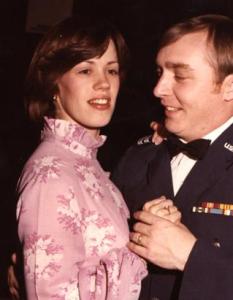
Kathryn and Gary Eastburn
The military panel didn’t believe Timothy Hennis and they found him guilty of the murders of Kathryn, Cara and Erin Eastburn. Hennis was lead away in handcuffs and for the second time in his life, he was sentenced to death. Timothy Hennis maintains his innocence, filed an appeal, and is fighting for a reversal of his conviction. Gary and his daughter Jana spoke to the press minutes after the verdict and expressed empathy for Timothy’s family despite their belief that justice was finally served. Jana Eastburn admitted she feels more at peace knowing that Hennis is behind bars. As of 2011, Timothy Hennis appealed his conviction and challenged the federal ruling regarding the double jeopardy clause. Timothy Hennis remains on military death row at Fort Leavenworth in Kansas.
Source: 20/20 on ID ‘Witness’
In 1985, a young military wife and two of her three little girls are viciously murdered in their home. In a twisted case filled with unusual suspects, the man who gets convicted goes free. But nothing is what it seems. -20/20 on ID







 MILITARY JUSTICE FOR ALL