(Could not find this Unsolved Mysteries episode anywhere!)
3. Unsolved Mysteries with Robert Stack – Season 7, Episode 19 – Full Episode (Justin Burgwinkel, U.S. Army, California)
4. Unsolved Mysteries with Robert Stack – Season 5, Episode 20 – Full Episode (Chad Langford, U.S. Army, Alabama)
5. Unsolved Mysteries with Robert Stack – Season 3, Episode 13 – Full Episode (Mark Dennis, U.S. Navy, Vietnam)
6. Unsolved Mysteries with Robert Stack – Season 8 Episode 15 – Full Episode (David Cox, U.S. Marine Corps, Massachusetts)
7. Unsolved Mysteries with Robert Stack – Season 8 Episode 1 – Full Episode (Joe O’Brien & Kuwaiti Air Force fighter pilot Mohammed “Sammy” Mubarak, Iraq)
BONUS EPISODE:
8. Unsolved Mysteries with Robert Stack – Season 4, Episode 11 – Full Episode (Jeffrey Digman, U.S. Marine Corps, California)
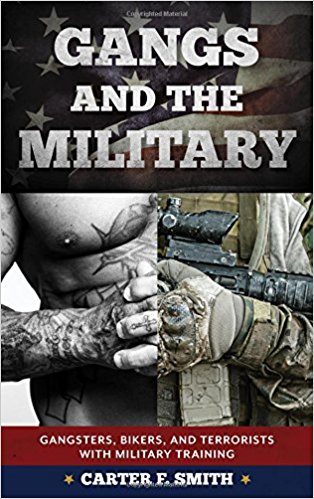
From the Author:The book documents the long history of gang members (street gangs, outlaw motorcycle gangs, and domestic terrorist – extremists) with military training in parallel with the history of the United States. Gang members have served in the military in each of the wartime eras and they continue to serve today. Some are trying to use the military to get out of the gang life – many are not. The criminals not only tarnish the reputation of the military, they increase the dangerousness of our communities.
Description:Over the past several decades, there has been a continuous and growing focus on street gangs, outlaw motorcycle gangs, and domestic terrorist and extremist groups. Many of these groups have members with military training, and some actively recruit from current and former military veterans and retirees. That military experience adds to the dangerousness of veteran gang members, as well as those groups they associate with.
In the News:
Gangs in the Military (Fort Hood). -Carter F. Smith (April 18, 2011)
“An internal report, obtained by Military.com through a Freedom of Information Act request, shows that gang members were tied to dozens of Army felony law enforcement reports and more than 100 criminal investigations in fiscal 2018, the latest year for which data is available. While these reports and investigations make up less than 1% of all Army law enforcement incidents, the new report shows that the little-discussed problem of military gang activity continues to be a headache for base commanders and other service leaders.” –Army Street Gang Activity is Increasing, Internal Report Report Shows, Military.com (August 17, 2020)
Fort Riley provides a Modern State-of-the-Art full spectrum,maneuver-friendly training environment in the Midwest, supporting the “TotalArmy.” Check out this five minute video to learn why Fort Riley finds itselfpositioned perfectly to provide for the Army’s current and future trainingneeds. -DVIDSHUB
2016 Antonio Bates, US Army: In 2016, veteran sentenced to 15 years in prison for sexual abuse of a minor in the 1990s while stationed at Fort Riley, Kansas Phillip Cruz-Medellin, US Army: Found dead in nearby Manhattan Oscar Delgado, US Army: Found dead on post after missing for a week Wayne Grigsby, US Army: Relieved of command of the 1st Infantry Division due to loss of confidence in ability to lead, suspended and fired Joseph Stifter, US Army: Died in fatal roll-over accident, Iraq
2014 James Henning, US Army: arrested for sexual exploitation of a child, rape, and aggravated sodomy; bond set at $5,000,000, sentenced to life Scott Wilhelm, US Army: Arrested for sexual exploitation of a child, sexting
2012 Michael Braden, US Army: Found unresponsive in his living quarters, Afghanistan John Hughes, US Army: Convicted in the stabbing death of another soldier, sentenced to life in prison without parole Todd Lambka, US Army: Died from wounds suffered in IED explosion, Afghanistan Thomas Lavrey, US Army: Found unresponsive in living quarters on post Jesus Lopez, US Army: Died from wounds suffered in IED explosion, Afghanistan
2005 Kyle Dennis, US Army: Sentenced to 5 years in prison for third-degree burglary, accessory to aggravated assault and attempted theft Luke Hoffman, US Army: Sentenced to 5 years for attempted grand theft and two counts of aggravated assault Seferino Reyna, US Army: Died when IED detonated near military vehicle, Iraq Christopher Wilaby, US Army: Homicide of Echo Wiles, convicted in 2011 Echo Wiles, Civilian: Homicide victim of boyfriend, Army soldier
2001 James Hawthorne, US Army: Shot in leg after someone shot 4 bullets in his vehicle Shaun Leach, US Army: Died after someone shot 4 bullets into civilian vehicle Jeremy Ware, US Army: Accused of attempted unpremeditated murder, carrying a concealed weapon, and wrongful acquisition of a firearm
1985 Francis Badame, US Army: Murdered after tricked and lured by two Army soldiers to go to a remote section of military post to hunt deer, buried in shallow grave Timothy Keenan, US Army: Faced court-martial on murder and conspiracy charges & charged by state with conspiracy to commit first degree murder; plotted crossbow and beating death of Pvt. Francis Badame Wayne Partridge Jr, US Army: Testified he shot Pvt. Francis Badame in the back with a crossbow and Timothy Keenan repeatedly beat Badame with a shovel
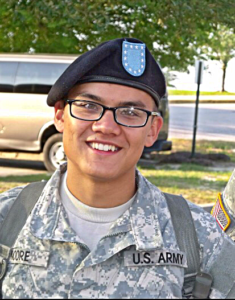
Spc. Zachary Moore, 23, of Virginia Beach, Virginia, was found unresponsive August 1, 2017 in his barracks room at Camp Hovey in South Korea. Spc. Moore was transported to St. Mary’s Hospital and pronounced deceased on August 2, 2017. Spc. Moore entered active-duty military service in March 2014 as a signal support systems specialist. He was assigned to the 9th Cavalry Regiment, 2nd Armored Brigade Combat Team, 1st Cavalry Division at Fort Hood in Texas since July 2016. The circumstances surrounding the incident were investigated by the U.S. Army Criminal Investigation Division (CID) and the cause of death was ruled a suicide.
*****************************************
Was Zachary Moore’s Death Preventable?
In May 2017, Fort Hood announced they were deploying 3,500 troops to South Korea over the summer. Twenty-three (23) year old Zachary Moore was one of the soldiers deployed to South Korea. With full knowledge of Zachary’s recent mental health issues, the Chain of Command gave him a mental health waiver against his will, and most likely against medical advice, so they could deploy him to South Korea.
In October 2016, Zachary had a mental health breakdown and went Absent without Leave (AWOL). After a successful intervention, Zachary was found and returned to the custody of his Chain of Command at Fort Hood. Zachary’s command then sent him to an emergency room where he was hospitalized and prescribed medication. After Zachary was discharged from the hospital, he continued to seek treatment for mental health issues. Six months later, Zachary was given a mental health waiver by his command to deploy to South Korea.
About a month after Zachary arrived at Camp Hovey in South Korea, his depression medication was changed. As a matter of fact, his depression medication was changed the day before he was found unresponsive in his barracks room. Zachary attempted to kill himself on August 1st, less than 24 hours after the medication change. It was Zachary who called his Command for help as there is no 911 on the base in South Korea. He was found unresponsive and finally transported to the hospital about 1 ½ to 2 hours later. He was admitted to the Intensive Care Unit, listed as critical then stable, yet passed away on August 2, 2017.
Why did Zachary Moore go AWOL?
The Chain of Command contacted Jeanette to report Zachary hadn’t been seen since October 18, 2016. They also informed her they were not actively looking for him but would file AWOL status on October 20th. When asked if they filed a missing persons report, Jeanette claims they told her they did but she says she was lead to believe Zachary trashed his room, took his things, and left willingly. She immediately flew to Texas from Florida to find him.
Jeanette contacted the Killeen Police Department as soon as she got to Fort Hood and the local law enforcement found Zachary the same day she arrived. Over the phone, the Command told Jeanette they filed a missing persons report but she learned from the Killeen Police Department that they never did. The Killeen PD noticed recent activity on Facebook so they pinged Zach’s cell phone & found that he was in a remote area of a local state park.
Zachary attempted to flee initially but after negotiations, he surrendered and was returned to the police station where his mom was waiting. Jeanette could tell Zachary was mentally broken and he admitted to her that he wanted to hurt himself. The Killeen PD found Zachary and he had a knife in his possession. Zachary was returned to the custody of his Chain of Command at Fort Hood. Shortly after Zachary informed his mom that his superiors told him to tell her to leave town and stop interfering.
Jeanette reports that Zachary never had any mental health issues prior to this and suspected that Zachary was “singled out by his command and harassed.”
Areas of Concern in Zachary Moore’s Case:
Zachary revealed he was harassed by his Chain of Command. For example, his leave papers to visit family before deploying were denied; he was denied permission to see the Fort Hood Inspector General officer; he was harassed during training exercises; he was given exhausting extra duties; and was accused of taking a radio which was later found on a military officer’s desk. Why was he denied the opportunity to speak to the IG officer?
Zachary was accused of trashing his room and taking his belongings when he went AWOL. Jeanette believes the circumstances surrounding the vandalism of his room and the theft of his property could be evidence of harassment.
During mental health treatment, Zachary was facing the consequences of going AWOL; Zachary was accused of trashing his own room; and Zachary was accused of stealing a secure radio? What are the additional mental health impacts of the way the Chain of Command uses the military justice system?
The circumstances of the mental health waiver and the justifications for sending Zachary to South Korea while he was undergoing treatment for mental health issues and medication management should be investigated.
The effects of the medication change in South Korea should be investigated. Is Command aware that some medications can cause serious negative reactions? (Some depression medication causes suicidal ideation.) Who monitors serious medication changes in deployed locations? Is it safe to deploy soldiers in the early phases of medication management for mental health issues?
Finally, the delay in the Command’s response to Zachary’s call for help in South Korea should be investigated. Why did it take so long to respond to Zachary and why did it take so long to get Zachary to the hospital? Did anyone attempt to administer help while waiting for the ambulance?
If the Command was the cause of the mental health break, where was Zachary supposed to turn? How do we hold the Chain of Command accountable? How do we prevent the Chain of Command from retaliating and using the military justice system or non judicial punishment as a weapon? What was the role of the Commander? What was the role of the Fort Hood Inspector General? How can we prevent a young soldier from feeling like the only way out of their situation is AWOL or suicide? How could we have prevented Zachary’s death?
Soldiers have come forward, given their stories to the family and have offered to testify about what Zachary was put through which may explain why he died. Were these soldiers questioned?
Army Staff Sgt. Alejandro Franquiz, 30, was found deceased inside a vehicle parked on Interstate 70 on July 31, 2017. Staff Sgt. Franquiz was a section chief with Company B, 601st Aviation Support Battalion, 1st Combat Aviation Brigade, 1st Infantry Division at Fort Riley, Kansas. Staff Sgt. Franquiz arrived at Fort Riley in October 2015 after having previously served at Fort Riley from December 2008 to August 2012. Staff Sgt. Franquiz deployed three times, twice to Iraq and once to Afghanistan. An autopsy has determined the cause of death was suicide from a self-inflicted gunshot wound.
All new: A young wife shot dead — her soldier husband pulled the trigger. Was it an accident or murder? -48 Hours
A young wife shot dead — her soldier husband pulled the trigger. Was it an accident or was it murder?
On Oct. 16, 2014, Danielle Nemetz, 19, was shot and killed by her husband Skylar Nemetz, 20, in their Lakewood, Wash., apartment. Neighbors placed two 911 calls after hearing a gunshot. Skylar was charged with murder, but his defense says it was an accident and that these 911 calls show a distraught and panicked husband, not a cold-blooded killer. -48 Hours
On Oct. 16 2014, Army soldier Skylar Nemetz was taken into custody after he shot and killed his wife, Danielle. He was recorded on camera just minutes after the shooting. Do his statements sound like the words of a distraught husband who accidentally shot his wife or do they sound like the words of a cold-blooded killer? -48 Hours
Skylar Nemetz is on trial for the shooting death of his wife, Danielle. Prosecutors accuse Skylar of killing Danielle in a jealous rage, but Skylar says it was a tragic accident. During jury deliberations, “48 Hours” correspondent Erin Moriarty talks with Skylar as he waits to hear their verdict. -48 Hours
Army soldier Skylar Nemetz is on trial for the shooting death of his wife Danielle. He says it was an accident; prosecutors say it was murder. Skylar’s mother, Danette Heller, says she spent her life savings to pay for his defense. During jury deliberations, Skylar spoke with “48 Hours”‘ Erin Moriarty about his mother’s sacrifice. -48 Hours
In the News:
When a soldier claims he shot his young wife by accident, his mother gives up everything to support him. A jury must decide whether it was an accident, or an act of rage. -CBS This Morning
A young soldier is charged with murdering his wife in cold blood. He says it was an accident and can explain how it happened. Will the jury beieve him? -CBS Evening News
48 Hours: The Soldier’s Wife -CBS Miami
Skylar Nemetz stood trial in his wife’s fatal shooting. After seven days of deliberation, a jury finds Nemetz guilty of manslaughter, putting him away for slightly over a decade. -Crime Watch Daily
Skylar Nemetz has admitted to shooting his wife to death but he claims it was all an accident. The stunning new development to his story. -Crime Watch Daily
Skylar’s actions speak louder than his words. “The strongest evidence, believe it or not, is what he does immediately after the fact.” Skylar didn’t call 911, a neighbor did. And there wasn’t a single drop of Danielle’s blood on him, a clear sign that he didn’t try to save or even comfort her says Deputy prosecuting attorney Jared Ausserer. “He doesn’t render aid. He never checks on his wife. If it was an accident, he’s going to drop the weapon immediately, run over, grab her, assess her. He doesn’t do that.” He [Skylar’s defense attorney] knows the challenge will be convincing 12 jurors that a highly skilled soldier with years of weapon’s training could make such a fatal mistake. Juror and retired Army soldier: “Never point the weapon in the direction of anybody and pull the trigger like that believing that it’s unloaded.” -48 Hours
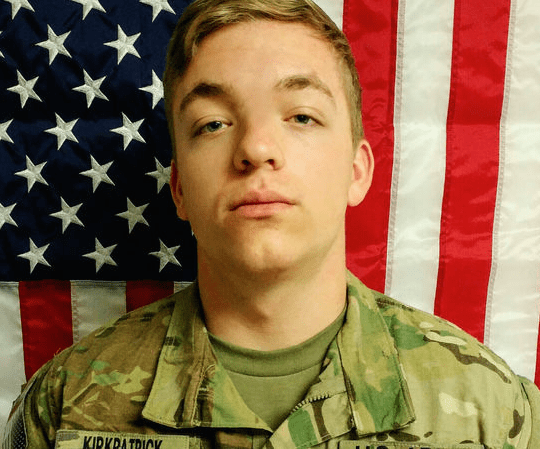
Army Pfc. Hansen Kirkpatrick, 19, died from wounds received during an indirect fire attack on July 3, 2017 in Helmand Province, Afghanistan. Pfc. Kirkpatrick was supporting Operation Freedom Sentinel on behalf of the 1st Battalion, 36th Infantry Regiment, 1st Brigade Combat Team, 1st Armored Division in Fort Bliss, Texas. According to the Department of Defense press release, the incident is under investigation.
Army Staff Sergeant Anthony Lovell, 40, died of injuries sustained in an apparent motorcycle accident along Nolan Creek in Killeen, Texas on July 3, 2017. According to witnesses, SSG Lovell’s body was found in a mysteriously different location then the motorcycle. But the Killeen Police Department determined SSG Lovell was traveling south on 8th Street and failed to make a turn into a mobile home park in the area. Investigators claim SSG Lovell left the road, hit an embankment, and went airborne. Therefore, this accounted for the separation of the body and the motorcycle. And as a result, the accident caused multiple blunt force injuries.
“The motorcycle accident was around 8 p.m. on July 3. Lovell was going southbound in the 300 block of Eighth Street. Police say he failed to negotiate a turn and left the roadway then went airborne and into Nolan Creek. The soldier suffered a fatal head injury and was pronounced dead at 8:38 p.m.” -Killeen PD
SSG Lovell was a resident of Killeen, Texas; he was stationed at Fort Hood in March 2015 as a cavalry scout assigned to the 1st Battalion, 7th Cavalry Regiment, 1st Brigade Combat Team, 1st Cavalry Division. SSG Lovell joined the Army in September 1997 and deployed twice to Iraq in support of Operation Iraqi Freedom from April 2007 to June 2008 and from September 2009 to August 2010. At the time of the Fort Hood press release, the circumstances surrounding the incident were under investigation by the Killeen Police Department.
Both the New York Times and the Washington Times are reporting that the Army’s investigation of National Guard soldiers and veterans who participated in the Guard Recruiting Assistance Program (G-RAP) has gone far and wide of the intention. Thousands of Guard troops have had their military and civilian careers destroyed over the Army’s accusations and questionable investigations.
They are questionable because of the constitutionality of the Army serving as a police force to investigate citizen soldiers. They are questionable because CID’s tactics do not conform to policy. They are questionable, because in five years of investigations and an estimated $40 million spent by CID, not even a fraction of the alleged fraud has been found. Senator Claire McCaskill took, at face value, Gen Quantock’s testimony that $100 million was lost to G-RAP fraud. Senator McCaskill set loose the largest military criminal investigation in history.
I am just a citizen volunteer: not military, not an attorney, who did background research for a friend caught in this trap. In the process I amassed thousands of pages of documentation that the investigations are unjust, and possibly illegal – That the premise of massive fraud is wrong and that the witch hunt continues only to prove the Army’s wild exaggerations.
G-RAP is a dark and complicated story and one that needs attention. Shining a spotlight on this can only happen in Congress.
I would welcome an opportunity to share what I have found.









 MILITARY JUSTICE FOR ALL