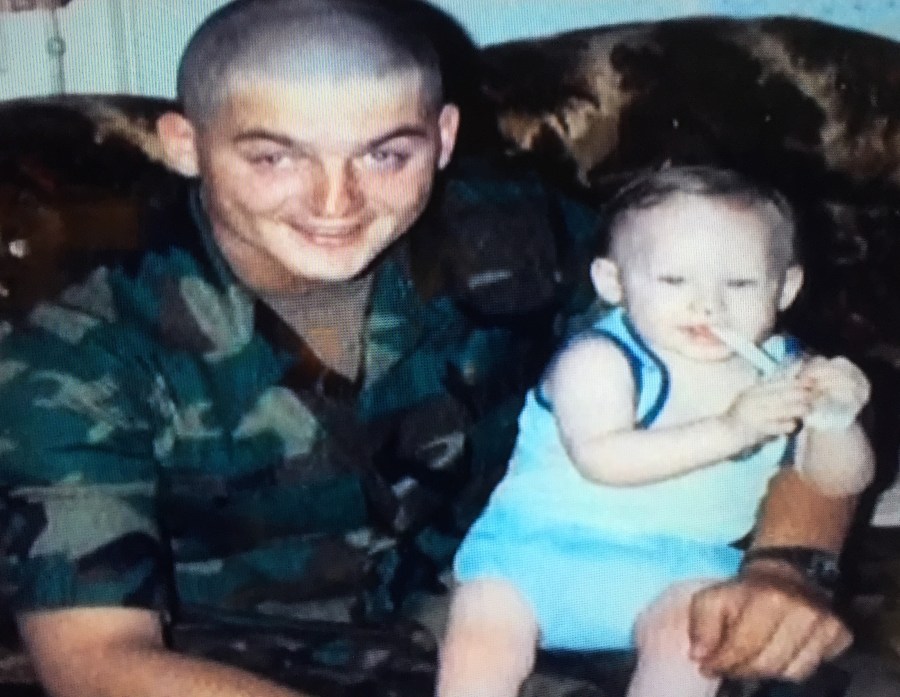
Rebecca Hart came home to what she thought was a suspected robbery in progress on June 2, 2009. She called the police and what they discovered was that her husband, retired Army recruiter Gilbert ‘Gib’ Hart was dead. He had been shot once in the head but they found no gun located near him. An no cash or other valuables had been stolen from the home. Investigators quickly learned from a couple of local teenagers that Gib’s children, Becca and Alex, were involved in the crime. They discovered that the children had been looking for someone to kill their father for a few months. And they finally found someone willing to do it for them: John Patrick ‘JP’ George. Fifteen year old JP George was easily manipulated after learning that Gilbert abused Becca and Alex. JP had a mother who was a victim of domestic violence so he didn’t want anyone to go through abuse. Unfortunately for him, there was no abuse. Gilbert may have been controlling of the finances and the way he ran his house but he was no abuser. JP admitted to committing the crime and being hired by Becca and Alex to do it. They also gave him the gun of which he threw in the Savannah Lake after killing Gib. All three kids cracked when questioned by the police and eventually they gave up the real mastermind. Apparently Rebecca Hart asked her children to find someone to kill their father. She offered to pay someone $200 to kill Gilbert Hart so she could be out from under his control and have his cash, life insurance, and military death benefits. On the night of the crime, Rebecca also gave her son the code to the safe so he could gain access to the gun that would end Gib’s life. Rebecca Hart, Becca Hart, Alex Hart, and JP George all received fifteen years in prison for conspiracy to commit murder. Gib’s children from another marriage reiterated that their father was never abusive towards them and that his new wife and children did not deserve to use the Hart name.
ID Go: A former military man, Gilbert Hart believes a strict parenting style is the best approach with his rebellious teenagers, but his wife Rebecca thinks that he’s crossed the line. It isn’t long before, this family feud escalates into an all-out war… -Hart of Darkness, I’d Kill for You (S3,E4)
Editor’s note: With a cable subscription, you can download the free ID Go app and watch all of the Investigation Discovery programming at your convenience. And for those who do not have cable, you can watch “unlocked” episodes on the ID Go app including the latest premieres. Download the ID Go app and binge away. For those who prefer commercial free programming during your binge session, Prime Video has an ID channel: ‘True Crime Files by Investigation Discovery” available for $2.99 a month. It’s a compilation of older seasons but totally worth the cost if you are a true crime addict.
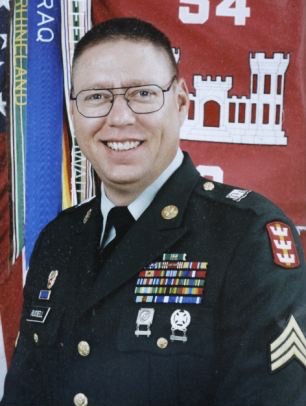
On May 11, 2009, SSG John Russell gunned down five of his fellow comrades at a mental health clinic at Camp Liberty in Iraq with his M-16. It was revealed that he had an argument with someone at the clinic, left, and came back with his gun. His crimes were determined to be premeditated. He was arrested and subsequently charged with murder and aggravated assault of another soldier that was seriously injured. Days before the killings witnesses noticed that he was distant and having suicidal thoughts. He was also scheduled to leave Iraq in a few days. He was tried for the murders of his fellow comrades and found guilty. He was sentenced to life in prison on May 16, 2013. But his family feels that the Army should also take responsibility for their actions. The family believes that John was broken and not treated for the injuries he sustained in combat, in the line of duty. SSG Russell was being treated for symptoms associated with Post Traumatic Stress with medications but it is believed that the psychotropics the military psychiatrists prescribed to him may have played a role in his actions. He was described as a kind, caring man up until the day he committed the unforeseen murders against his fellow soldiers.
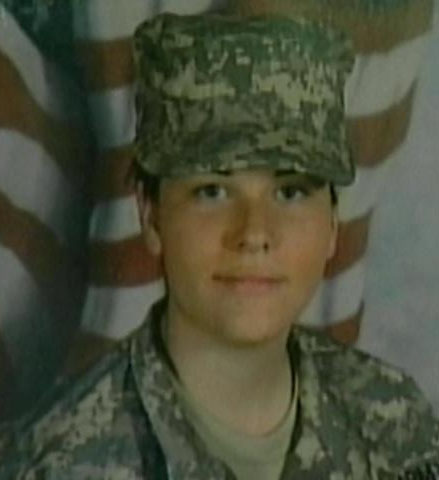
Army soldier Ashley Barnes-Lambert, 18, was murdered by her husband, Khaleefa Lambert, also an Army soldier, on March 7, 2009. Ashley was home on leave from Afghanistan and was in the process of filing for divorce. Lambert drove up from Fort Campbell, Kentucky, kidnapped Ashley at knife point from her hotel room in Clarksville, Tennessee, and stabbed her to death in the parking lot of the hotel. The State of Tennessee sought the death penalty in this case but Lambert’s attorneys filed a motion to dismiss the death penalty notice. Lambert was charged with two counts of aggravated kidnapping and two counts of first degree/felony murder. A jury found Khaleefa Lambert guilty and he was given a life sentence in prison with eligibility for parole.
My original efforts were inspired by Carri Leigh Goodwin, LaVena Johnson, and the many other servicemembers who did not survive as a result of their service to this country. In honor of these men and women, we pledge to fight for justice on their behalf, amplify their voices, and support the families who deserve to know the truth.
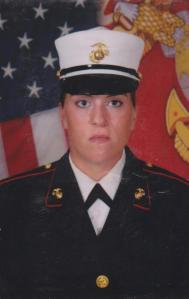
In August 2007 at the age of eighteen (18), Carri Leigh Goodwin of Alliance, Ohio enlisted in the United States Marine Corps to make her Marine Corps veteran father proud. During her short time in the Marine Corps, Carri was sexually assaulted by two different men while serving, reported the crimes, and instead of being taking seriously was discharged with a mental health diagnosis and misconduct discharge. Like most rape survivors, Carri had acute Post Traumatic Stress (PTSD) from the brutal assaults she endured. Carri Leigh Goodwin died on February 28, 2009 from alcohol poisoning only a few days after being discharged from the U.S. Marine Corps. Gary Noling wants to honor her and all the families who have lost their child to the sexual assault and violence epidemic in the U.S. military. Gary wrote about his experience with the tragic loss of his daughter in the New York Times in August 2016: What the Military Owes Rape Survivors Like My Daughter.
On February 20, 2009, US Air Force service member Jason Klinkenberg murdered his wife Crystal Louise Gray and then committed suicide in North Las Vegas after a stand-off with police. Jason was stationed at Nellis Air Force Base in Nevada. The family believes that Jason was never the same after returning home from a deployment to Iraq in 2005. Jason was plucked from his base to be a member of Detachment 2632, a unit assembled to augment the Army and provide security for cargo trucks on Iraq’s bomb laden roads. Jason witnessed a fellow soldier die after the vehicle they were driving was struck with a rocket-propelled grenade. The family shared that Jason had Post Traumatic Stress Disorder and continued to see images of his friend in his last moments. Jason’s sister shared that Jason attempted to get help for PTSD but the Air Force called him a liar. The Air Force denied this assertion. They claimed they regularly assess for mental health issues and referred Jason to counseling off base.
“Veterans advocates like Manji Varghese say nothing excuses violence. But they say military and veterans officials too often ignore a pattern of problems that has played out again and again, with deadly results.” -Salt Lake Tribune
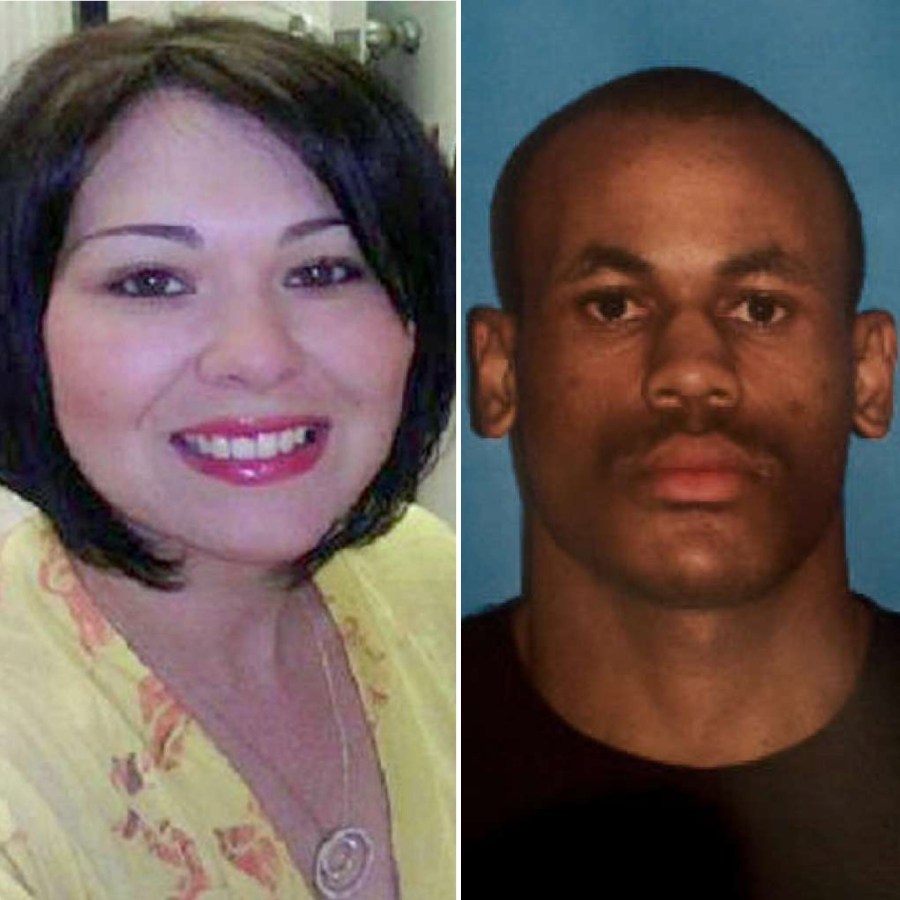
Susana De Jesus and Nicholas Michael Jean, US Army Veteran
The murder of Tina Davila was the start of a scourge of violence in Houston, Texas. On April 16, 2008, Tina Davila, a mother to five children. was out running errands with her four month old daughter. She made a quick stop at the cellphone store. After exiting her vehicle, two guys pulled up beside her and one of them jumped out and ran up behind her. A struggle ensued for Tina’s car keys because Tina immediately went into mother mode and began worrying about her baby she left in the car. The assailant was able to take the keys away from her so Tina ran after him in an attempt to get her keys back. It was at this time she was stabbed and the assailant changed plans and took off in the car he came in.
Tina stumbled to the front desk of the cellphone store and asked the employees to get her baby from the car. The employees got her baby for her and laid the baby next to her mother on the floor. The cellphone store employees called 911 and Tina was rushed to the hospital. The family was notified and arrived at the hospital only to learn that Tina had died; they also learned from media reports that she was stabbed during an attempted carjacking. Tina’s family was devastated. Fortunately, there was an eye witness who was able to provide a good description of the attacker and driver of the car. They were both described as Hispanic males and a composite sketch was created. A $10,000 reward was offered for any information leading to an arrest.
Meanwhile, the Houston police learn that there was a robbery at a beer store four hours before Tina was stabbed. Both the store and the parking lot had surveillance cameras and a witness identified two Hispanic males in the aggravated robbery. The witness also provided a license plate number and police learned the car was registered to Stacy Bailey. She reported her car stolen the day before the robbery of the store and the stabbing of Tina Davila. Stacy also described the two assailants as Hispanic males. Police were able to determine that this was the same car used in the aggravated robbery and homicide. The police fed leads to the media in an attempt to get more tips but they got no new information and the cases went unsolved.
Ten months later on February 2, 2009, as Susana De Jesus was leaving her place of employment with a co-worker, she was accosted by a masked gunman parked. He demanded that she get in her car and drive; Susana’s co-worker Karen Davis retreated in her own car where she remained until she felt safe. Karen called the police but could only provide a vague description of Susana’s car. While Susana was driving, the assailant demanded she go to a bank and was worried about her On-Star tracking system. Susana didn’t know if it was working and said she needed to call her boyfriend. He knew something was wrong because of her impersonal phone call.
Susana’s boyfriend called On-Star to find out whether or not they were able to track her but they couldn’t give out any information unless there was a missing person’s report. Susana’s boyfriend then went to her apartment and her car was not there. He was very worried now and went to the police station to file a missing person’s report. The car was tracked down in a parking lot but Susana and her abductor were gone. Police were concerned the assailant would cross state lines so the Federal Bureau of Investigation (FBI) was contacted to assist because they have more resources. These attacks were random and it illicited fear in the community.
The FBI learned that Susana’s debit card was used to purchase fuel and the gun left in Susana’s car was stolen the same day Susana was abducted. The woman who reported the gun stolen also reported the assailant tied her up, gagged her, and shoved her in a closet. She managed to get herself untied and escaped while the assailant was robbing her home. She ran to a neighbor’s home then called the police. The assailant was gone by the time the police arrived and only managed to steal the gun. These two crimes were now connected. The police wondered if Tina’s case was connected too. After three days, there was still no sign of Susana. Texas Equusearch was called in to help them find Susana. The search lasted for three weeks but came up empty.
Sabrina Piña was the third person accosted in a parking lot in the course of a couple years in Houston. In this case, she was taken but her car was left behind and there were no witnesses. Texas Equusearch was called again, this time to look for Sabrina. And then a $30,000 reward was offered for the resolution of Susana De Jesus and Sabrina Piña’s disappearances. Then two days after Sabrina’s abduction, someone found an unidentified woman’s body laying in a ditch. On February 2, 2009, Sabrina Piña was found with duct tape wrapped around her eyes and wrists, and she had been shot in the back of the head. Forensic scientists were able to extract a finger print from the duct tape that matched Theodore Schmidt. He was arrested. Police learned Schmidt knew Sabrina from college and had an unhealthy obsession with her. When she didn’t appear to recognize him in the parking lot, he got angry and kidnapped her. Schmidt was convicted of capital murder and sentenced to life without parole.
A month after Sabrina Piña was found, another man contacted police to report an attempted abduction and murder. This assailant forced him into the trunk of his own car but when the gunman has trouble starting the car, the victim was able to escape. When the assailant realized he escaped, he began chasing him down and shooting at him but he made it to safety. The police responded and an intensified attempt to find this dangerous assailant was initiated. Police asked people in the surrounding area to stay in their homes and report any suspicious activity. Ten hours later, a woman called to report a person wearing a mask in a carport. The Police responded, apprehended the suspect, and learned it was Nicholas Michael Jean.
Jean’s behavioral problems in the U.S. Army also are likely to surface during the trial. He served at Fort Sill, Okla., for three months before being discharged two weeks prior to De Jesus’ murder because his supervisors found him “unfit for military service,” according to a military separation letter. Army records show Jean was accused of fighting with and threatening other soldiers in his platoon, trying to choke another serviceman, hitting another private in the face and abusing sick leave time. He had also been discharged from the U.S. Navy in 2006 for a serious offense of misconduct, court files show. –Houston Chronicle
Nicholas Jean was an Army veteran who was recently discharged for being unfit for military duty after only three months of service. According to the Army, he did not respect authority and punched an officer. Investigators questioned Nicholas who tried to stick with the story that he was only a driver for the gang. After a few hours, Detectives began to lose their patience and demanded that Jean tell them what happened because they knew he had information. At this point, they had tons of evidence and knew all these crimes were connected. In this case, two crimes remained unsolved: one was dead; one was missing. and perpetrators were still on the loose. They needed Jean to give up the names of those who were involved. Jean eventually told the detectives that ‘the group’ took Susana in a semi trailer and killed her. Jean led the police to Susana De Jesus’ body.
On March 10, 2009, police found the badly decomposed remains of Susana De Jesus in an abandoned semi trailer. Nicholas Jean admitted to murdering Susana within two hours of her abduction. Jean also admitted to killing Susana so he could give her vehicle to the girl he wanted to marry as a wedding present; she turned him down. Jean was charged with capital murder and was facing the death penalty. But the jury spared his life and he was instead sentenced to life in prison without the possibility of parole. Wallace Ledet drove Jean to the abduction so he was apprehended too and charged with manslaughter. Ledet pleaded guilty and was sentenced to thirteen years in prison. Neither Ledet or Jean could be tied to Tina Davila’s murder.
Then one day a high school principal called the Houston police to report a student thought her boyfriend may have been involved in Tina Davila’s murder. She named seventeen year old Kennedy Escoto. As a result, Escoto was arrested and admitted to his involvement but tried to pin everything on his passenger Timoteo Rios. Escoto also admitted they stole some beer in the morning and because they were getting low on gas, they needed another car; Tina was a victim of opportunity. Kennedy Escoto was convicted of aggravated robbery with a deadly weapon and sentenced to forty years. Timoteo Rios was convicted of capital murder and sentenced to life in prison without the possibility of parole.
In April 2008, 39-year-old Houston native and mother of five, Tina Davila, runs errands with her 4 month old infant when she’s attacked in a parking lot. In the next year, a rash of similar crimes breaks out across the city. Are they related? -Investigation Discovery
Critics say the military needs to do more about domestic violence against women. A CBS News investigation found more than 25,000 women have been victimized over the past decade. Katie Couric reports. -CBS



 MILITARY JUSTICE FOR ALL