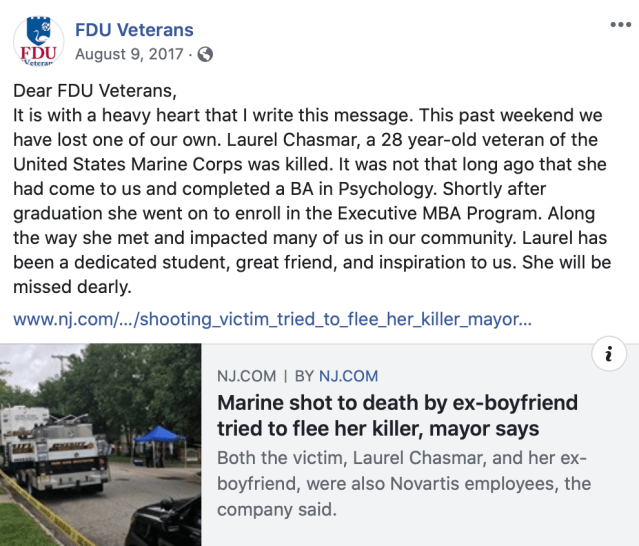
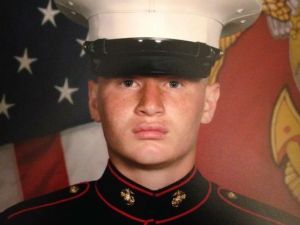
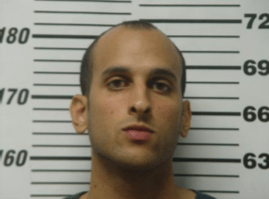
Marine Corps veteran Laurel Chasmar, 28, was gunned down outside her Morris Plains, New Jersey apartment building in the early morning hours on August 5, 2017. Hassan Shahid, 32, of Jersey City, New Jersey is accused of her murder; he was found dead with a self inflicted gunshot wound in Morris township after fleeing the scene of the crime on foot when the police arrived. According to media reports, Laurel and Hassan were co-workers at one of the Novartis facilities where Laurel worked as a senior production support technician for the past couple of years. It appears Laurel dated Shadid for a brief period of time but she ended things and had recently complained several times to the police that Shadid was harassing her.
“A Morris Plains woman and former Marine Corps veteran who was slain over the weekend had complained to police about the former boyfriend who killed her. Kevin Coughlin of Morristown Green says Laurel Chasmar made several complaints to the police that her former boyfriend was harassing her.” –Gloucester City News (August 11, 2017)
The Morris Plains Mayor confirmed that Chasmar did at one point date co-worker Hassan Shahid at the pharmaceutical company, but Laurel had ended the relationship and made several recent harassment complaints against Hassan. The Mayor said Laurel stopped short of filing for a domestic violence restraining order, which the police advised her to do. Police believe Shadid ambushed Laurel when she arrived home. Shahid borrowed a car so Chasmar would not recognize him and while lying in wait, he sprayed more than a dozen shots from a .45 caliber handgun in the parking garage of her apartment building, hitting both parked vehicles and grazing Chasmar. Chasmar ran to the common entrance of her apartment building, but could not unlock the door in time and was fatally shot. Police heard the gunfire and when they arrived, Shahid ran accross the street and shot himself. This gun violence incident has been ruled a murder-suicide.
Online, Chasmar’s grieving friends expressed shock and dismay at the tragedy.
“Laurel Chasmar you where the most amazing soul I came across… your kindness your smiles your warm heart always touch everyone. In the short time I’ve known you, you have been an amazing friend to me and everyone I know. You will always be in our hearts.”
“Chasmar, you were a smart, funny, sweet woman. All of the Marines who served with you are gonna miss you. RIP and Semper Fi.”
“Over the past few months she was in a bad relationship with a very controlling and jealous man. She left but not soon enough.”
Another solemnly played the Marines Hymn on his bagpipes in her honor.
In a touching tribute from her alma mater, a memorial service for Laurel Rae Chasmar was held at Lenfell Hall on the Florham Park campus of Fairleigh Dickinson University (FDU) in Teaneck, New Jersey. MorristownGreen.com reports Laurel served in the U.S. Marine Corps from 2007 to 2011 as an administration chief and sergeant, and as a recruiter based at Camp Pendleton in California. After leaving the Marine Corps, Laurel earned an associate’s degree from the County College of Morris, where she was a member of the Phi Theta Kappa honors society. NJ.com reports Laurel earned a bachelor of arts degree in psychology at FDU and was scheduled to complete her master’s degree in business administration from the university in 2018. Laurel Chasmar was honored on the university’s FDU Veterans Facebook page on August 9, 2017..
The 1st Marine Division announced in a news release Marine Lance Cpl. Cody Haley, 20, was doing routine physical training when he was struck and killed on August 4, 2017 by a falling tree at Camp Pendleton in San Diego, California. According to Cody Haley’s obituary, he attended school in Manly, Iowa until the 7th grade then moved to Eldora, Iowa where he finished his schooling. Cody graduated from South Hardin High School in May of 2015. The family said Cody decided that he wanted to follow in his grandpa’s footsteps and join the United States Marines Corps. Cody left for San Diego in August of 2015 to start his journey as a Marine at Camp Pendleton Marine Corps base. Cody began his career stationed at Camp Horno, a camp located within the confines of Camp Pendleton. Cody was then deployed with the 11th Marine Expeditionary Unit in October of 2016 aboard the navy ship, the U.S.S. Comstock, for a 7 month deployment. The Comstock is assigned to COMSURFPAC, Amphibious Group Three and is homeported in San Diego. He returned back to Camp Horno in May of 2017. Cody’s body was flown back to Iowa where he was laid to rest with full military honors.
And thanks to the love and generosity of many families, Cody’s entire Marine platoon was flown out to Iowa to attend his funeral. At the South Hardin H.S. football opener in 2017, Cody was honored and remembered in a loving community tribute to him and his family. One of his friends was quoted saying, “Haley was proud to be a mortar man and it’s a tight bond that we take very personally.” LCpl. Haley was one of two Marines to die in the month of August 2017 at Camp Pendleton. Cpl. Andrew West, 22, of Van Horne, Iowa was training at the San Diego base when he died in an off-site motorcycle crash on August 20th. Less than a month later on September 13th, a Camp Pendleton training accident sent fifteen (15) Marines to multiple area hospitals after their amphibious assault vehicle caught on fire. According to U.S. Marine Corps officials, eight of the Marines were taken to a burn unit at the University of California San Diego hospital. Of those eight Marines, three were in critical condition and five were in serious condition. Click here to read the 1st Marine Division press release update regarding the amphibious assault vehicle incident at Camp Pendleton.
Cody was born on October 21, 1996 in Mason City, Iowa, to his parents Jeff & Kim (Crowe) Haley. Four years later, he got the baby brother he had prayed for, his brother Colton. Cody was a mischievous little boy full of spit and vinegar, who grew up to be one of America’s finest. He loved hunting with his grandpa and with his dog Rowdy. Cody also enjoyed fishing, motorcycles and of course, his guns. He had many friends that he enjoyed hanging out with. He had a tough outer layer but was a softie on the inside. He was loved by many and will be dearly missed by all those he leaves behind. Click here for Cody Haley’s obituary.
LCpl Cody Haley (YouTube):
Marines fly out to Iowa for Cody Haley’s funeral: Sunday, August 20, 2017 (August 23, 2020)
Processional for Lance Cpl Cody Haley (August 12, 2017)
LCPL Cody Haley….A heroes journey home (August 20, 2019)
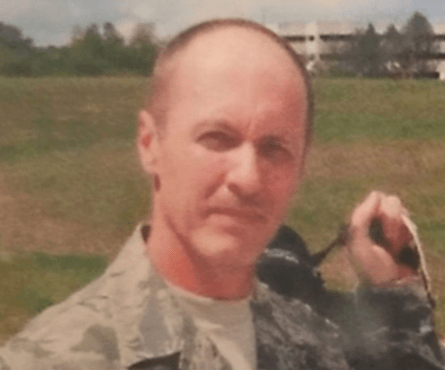
TSgt. David Board, West Virginia Air National Guard
Air Force TSgt. David Board, 49, died in a non combat related incident on August 2, 2017 in Kuwait. TSgt. Board was supporting Operation Inherent Resolve on behalf of the 130th Airlift Wing at McLaughlin Air National Guard Base in West Virginia.
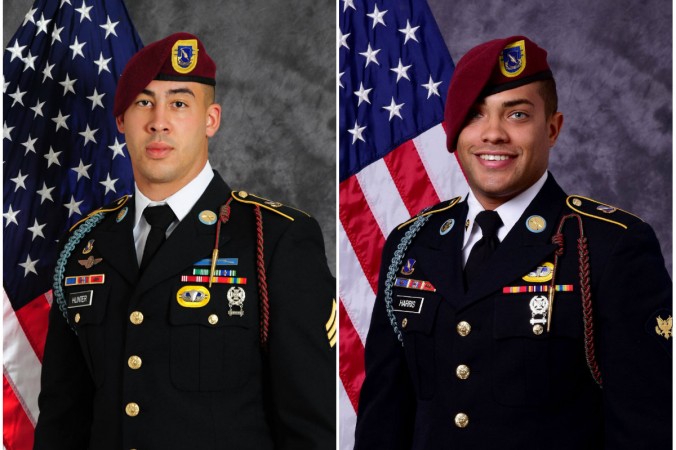
Sgt. Jonathon Hunter, US Army, and Spc. Christopher Harris, US Army
Sgt. Jonathon Hunter, 23, and Spc. Christopher Harris, 25, died as a result of injuries sustained when a vehicle-borne improved explosive device (IED) detonated near their convoy on August 2, 2017 in Kandahar, Afghanistan. Sgt. Hunter and Spc. Harris were supporting Operation Inherent Resolve on behalf of the 2nd Battalion, 504th Infantry Regiment, 1st Brigade Combat Team, 82nd Airborne Division at Fort Bragg, North Carolina. According the the Department of Defense press release the incident is under investigation.
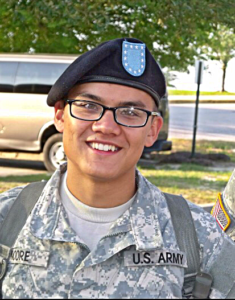
Spc. Zachary Moore, 23, of Virginia Beach, Virginia, was found unresponsive August 1, 2017 in his barracks room at Camp Hovey in South Korea. Spc. Moore was transported to St. Mary’s Hospital and pronounced deceased on August 2, 2017. Spc. Moore entered active-duty military service in March 2014 as a signal support systems specialist. He was assigned to the 9th Cavalry Regiment, 2nd Armored Brigade Combat Team, 1st Cavalry Division at Fort Hood in Texas since July 2016. The circumstances surrounding the incident were investigated by the U.S. Army Criminal Investigation Division (CID) and the cause of death was ruled a suicide.
*****************************************
Was Zachary Moore’s Death Preventable?
In May 2017, Fort Hood announced they were deploying 3,500 troops to South Korea over the summer. Twenty-three (23) year old Zachary Moore was one of the soldiers deployed to South Korea. With full knowledge of Zachary’s recent mental health issues, the Chain of Command gave him a mental health waiver against his will, and most likely against medical advice, so they could deploy him to South Korea.
In October 2016, Zachary had a mental health breakdown and went Absent without Leave (AWOL). After a successful intervention, Zachary was found and returned to the custody of his Chain of Command at Fort Hood. Zachary’s command then sent him to an emergency room where he was hospitalized and prescribed medication. After Zachary was discharged from the hospital, he continued to seek treatment for mental health issues. Six months later, Zachary was given a mental health waiver by his command to deploy to South Korea.
About a month after Zachary arrived at Camp Hovey in South Korea, his depression medication was changed. As a matter of fact, his depression medication was changed the day before he was found unresponsive in his barracks room. Zachary attempted to kill himself on August 1st, less than 24 hours after the medication change. It was Zachary who called his Command for help as there is no 911 on the base in South Korea. He was found unresponsive and finally transported to the hospital about 1 ½ to 2 hours later. He was admitted to the Intensive Care Unit, listed as critical then stable, yet passed away on August 2, 2017.
Why did Zachary Moore go AWOL?
The Chain of Command contacted Jeanette to report Zachary hadn’t been seen since October 18, 2016. They also informed her they were not actively looking for him but would file AWOL status on October 20th. When asked if they filed a missing persons report, Jeanette claims they told her they did but she says she was lead to believe Zachary trashed his room, took his things, and left willingly. She immediately flew to Texas from Florida to find him.
Jeanette contacted the Killeen Police Department as soon as she got to Fort Hood and the local law enforcement found Zachary the same day she arrived. Over the phone, the Command told Jeanette they filed a missing persons report but she learned from the Killeen Police Department that they never did. The Killeen PD noticed recent activity on Facebook so they pinged Zach’s cell phone & found that he was in a remote area of a local state park.
Zachary attempted to flee initially but after negotiations, he surrendered and was returned to the police station where his mom was waiting. Jeanette could tell Zachary was mentally broken and he admitted to her that he wanted to hurt himself. The Killeen PD found Zachary and he had a knife in his possession. Zachary was returned to the custody of his Chain of Command at Fort Hood. Shortly after Zachary informed his mom that his superiors told him to tell her to leave town and stop interfering.
Jeanette reports that Zachary never had any mental health issues prior to this and suspected that Zachary was “singled out by his command and harassed.”
Areas of Concern in Zachary Moore’s Case:
Zachary revealed he was harassed by his Chain of Command. For example, his leave papers to visit family before deploying were denied; he was denied permission to see the Fort Hood Inspector General officer; he was harassed during training exercises; he was given exhausting extra duties; and was accused of taking a radio which was later found on a military officer’s desk. Why was he denied the opportunity to speak to the IG officer?
Zachary was accused of trashing his room and taking his belongings when he went AWOL. Jeanette believes the circumstances surrounding the vandalism of his room and the theft of his property could be evidence of harassment.
During mental health treatment, Zachary was facing the consequences of going AWOL; Zachary was accused of trashing his own room; and Zachary was accused of stealing a secure radio? What are the additional mental health impacts of the way the Chain of Command uses the military justice system?
The circumstances of the mental health waiver and the justifications for sending Zachary to South Korea while he was undergoing treatment for mental health issues and medication management should be investigated.
The effects of the medication change in South Korea should be investigated. Is Command aware that some medications can cause serious negative reactions? (Some depression medication causes suicidal ideation.) Who monitors serious medication changes in deployed locations? Is it safe to deploy soldiers in the early phases of medication management for mental health issues?
Finally, the delay in the Command’s response to Zachary’s call for help in South Korea should be investigated. Why did it take so long to respond to Zachary and why did it take so long to get Zachary to the hospital? Did anyone attempt to administer help while waiting for the ambulance?
If the Command was the cause of the mental health break, where was Zachary supposed to turn? How do we hold the Chain of Command accountable? How do we prevent the Chain of Command from retaliating and using the military justice system or non judicial punishment as a weapon? What was the role of the Commander? What was the role of the Fort Hood Inspector General? How can we prevent a young soldier from feeling like the only way out of their situation is AWOL or suicide? How could we have prevented Zachary’s death?
Soldiers have come forward, given their stories to the family and have offered to testify about what Zachary was put through which may explain why he died. Were these soldiers questioned?
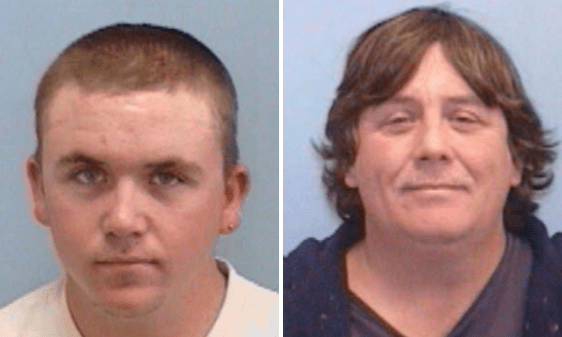
Offenders: Jhaden Davis, 21, US Navy, Camp Lejeune, NC (GUILTY, Sentenced to LWOP) Joseph Pirrotta, 24, Navy Veteran, Beaufort, NC (GUILTY, Accessory to Murder) Brandon Smallwood, 23, US Navy, Camp Lejeune, NC (GUILTY, Accessory After the Fact)
The homicides of father and son Duane and Albert Correll in Beaufort, North Carolina were featured on Investigation Discovery. Duane and Albert were both shot on June 2, 2012 in the course of a robbery. Duane was born in Michigan and his love for fishing brought him to North Carolina; shortly after arriving, he met his wife. They had Albert a couple years later and he joined Duane’s wife’s daughter Andrea. Eventually, the couple split and Andrea lived with her mom and Albert lived with his father. Duane hurt his back and was disabled so he had a hard time working. Albert got a job and went to work so his father wouldn’t have too. They were close and bonded over their love for fishing. It was especially tragic that the pair would be discovered together with gunshots. Albert wasn’t breathing and Duane was dying, yet more concerned about the health of his son.
Albert and Duane were rushed to the hospital; Albert was pronounced dead at the scene. They had both been shot in the chest. The police began their investigation and learned that they had just returned from Wal-Mart. Investigators wondered if they got in an altercation and were followed home. They didn’t find any weapons at the scene. They started interviewing the 911 callers but nobody actually saw what went down. One witness said he saw a gray vehicle and two individuals, one was confronting Albert. The confrontation lead to gunshots and the witness ran into their home to call the police. It was too dark to get a good look at the suspects before they took off. Then another witness came forward and said they were dead because of her. A woman claimed that her ex was jealous of Albert and said he was going to kill him. The police wanted to speak to him.
The day before, Kevin Connor sent Albert some threatening texts. It read “you won’t live to see the sunrise” so the police set out to find him. Albert’s girlfriend told police where he lived; he was roommates with Joseph Pirrotta. When police arrived at their home, they located three individuals inside. They cleared the apartment and Kevin wasn’t there. Joseph was home with a couple of his friends. He recently had been in the Navy and was stationed at Camp Lejeune but had been dishonorably discharged due to drug use two weeks prior. Joseph informed the police that Kevin no longer lived at the residence but he had his phone number. He was asked to call him, he answered and informed Joseph where he was at. The police immediately went to apprehend him. Kevin said he didn’t do anything but was willing to cooperate with the police.
Kevin told them he heard that Albert was shot; he used his girlfriend and other friends as his alibi for the day. He acknowledged he had problems with Albert and admitted to sending him a threatening text but denied killing him. Kevin had an airtight alibi and was absolutely cleared. Surveillance video footage at Wal-Mart did not indicate any suspicious activity and like Kevin was another dead end. That same night, Duane Correll didn’t make it and died. The police visited with Albert’s mother the next day and she had just recently learned that Albert and Duane had died; she was not doing well and in complete disbelief. The family couldn’t think of anyone who held a grudge against them and would want to murder them. The police went back to Albert’s girlfriend and learned that she had a brief fling with Jhaden Davis and he may have something to do with it.
Nicki told detectives things didn’t end well with Jhaden because he accused her of taking $300 from his bedroom and for some reason he decided to go after Albert thinking he could get the money out of him. A couple weeks before the homicides, Jhaden called Albert demanding his money. He told him to pay up or it wasn’t going to be pretty. Investigators learned Jhaden lived in the same apartment as Joseph Pirrotta and another guy named Brandon Smallwood. They were all in the Navy and stationed at Camp Lejeune together. Police went back to the residence to speak with Jhaden and learned he was on base. The roommate shared that Brandon and Jhaden stopped by over the weekend to pay rent; he also said no one had any weapons. They reached out to NCIS because they didn’t have jurisdiction on base and needed NCIS agents to assist them.
Local police interviewed Jhaden first and he claimed he was on base all weekend but there was no way to prove or disprove this but Jhaden was off-duty on the night of the murders. Brandon admitted that they did leave base for little while and went into town. Jhaden and Brandon were told not to leave the base. Police subpoenaed the phone records of Pirrotta, Davis and Smallwood. They also reinterviewed the friends hanging out at their apartment that night. During the interview, they suspected one of them was hiding something. They showed her pictures of the victims and were able to push her to the point that she decided to tell them everything. She told them Jhaden used her car prior to the murders. Jhaden left the apartment with Joseph Pirrotta. Jhaden returned a little after 10 p.m., a few minutes after the 911 calls. Jhaden & Pirrotta left the apartment and went back to Camp Lejeune. The next morning Jhaden came back and confessed.
Jhaden Davis told Victoria that he shot both Albert and Duane. It appeared that he was bragging and he implied to her that she better keep it quiet because now she knows what he was capable of. When confronted, Davis wouldn’t budge and said he was on base the whole time. Brandon said Davis and Pirrotta asked him if he wanted to go with them. Pirrotta was confronted and he spilled the beans on everything. He admitted that Davis wanted his $300 and revenge. They surprised Albert and Duane and then ambushed them; the Correll’s had no idea who was behind them. Davis first hit Albert with the butt of the gun, then shot Duane who was trying to protect Albert. Afterward, Davis shot Albert in the chest two times because Albert was the main target. Pirrotta said he thought they were going to rob them, not murder them. Davis took the money out of Albert’s wallet and Pirrotta told them where it was located.
Prosecutors moved forward with cases against Jhaden Davis, Joseph Pirrotta, and Brandon Smallwood. In July 2017, Jhaden Davis was convicted of two counts of first-degree murder and sentenced to two life sentences without the possibility of parole. In December 2017, Joseph Pirrotta pleaded guilty to robbery and accessory after the fact to murder and was sentenced to ten years in prison. In March 2018, Brandon Smallwood pleaded guilty to felony obstruction of justice and was sentenced to five to fifteen months, with credit for time served. Albert and Duane’s family feel like the whole thing was so senseless, all over a girl and $300. Albert and Duane Correll will not be forgotten. The family left behind loves and misses them and still waits for their calls.
ID Go: A dying man calls 911 saying he’s been shot in the heart, and his son has also been shot dead. The shooter escapes into the darkness, and as detectives investigate, they navigate a complex group of suspects to uncover a tangled web of rage and revenge. -Hearts of Darkness, Murder Calls (S3,E5)
Editor’s note: With a cable subscription, you can download the free ID Go app and watch all of the Investigation Discovery programming at your convenience. And for those who do not have cable, you can watch “unlocked” episodes on the ID Go app including the latest premieres. Download the ID Go app and binge away. For those who prefer commercial free programming during your binge session, Prime Video has an ID channel: ‘True Crime Files by Investigation Discovery” available for $2.99 a month. It’s a compilation of older seasons but totally worth the cost if you are a true crime addict.
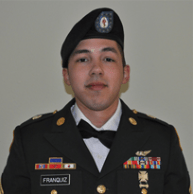
Army Staff Sgt. Alejandro Franquiz, 30, was found deceased inside a vehicle parked on Interstate 70 on July 31, 2017. Staff Sgt. Franquiz was a section chief with Company B, 601st Aviation Support Battalion, 1st Combat Aviation Brigade, 1st Infantry Division at Fort Riley, Kansas. Staff Sgt. Franquiz arrived at Fort Riley in October 2015 after having previously served at Fort Riley from December 2008 to August 2012. Staff Sgt. Franquiz deployed three times, twice to Iraq and once to Afghanistan. An autopsy has determined the cause of death was suicide from a self-inflicted gunshot wound.
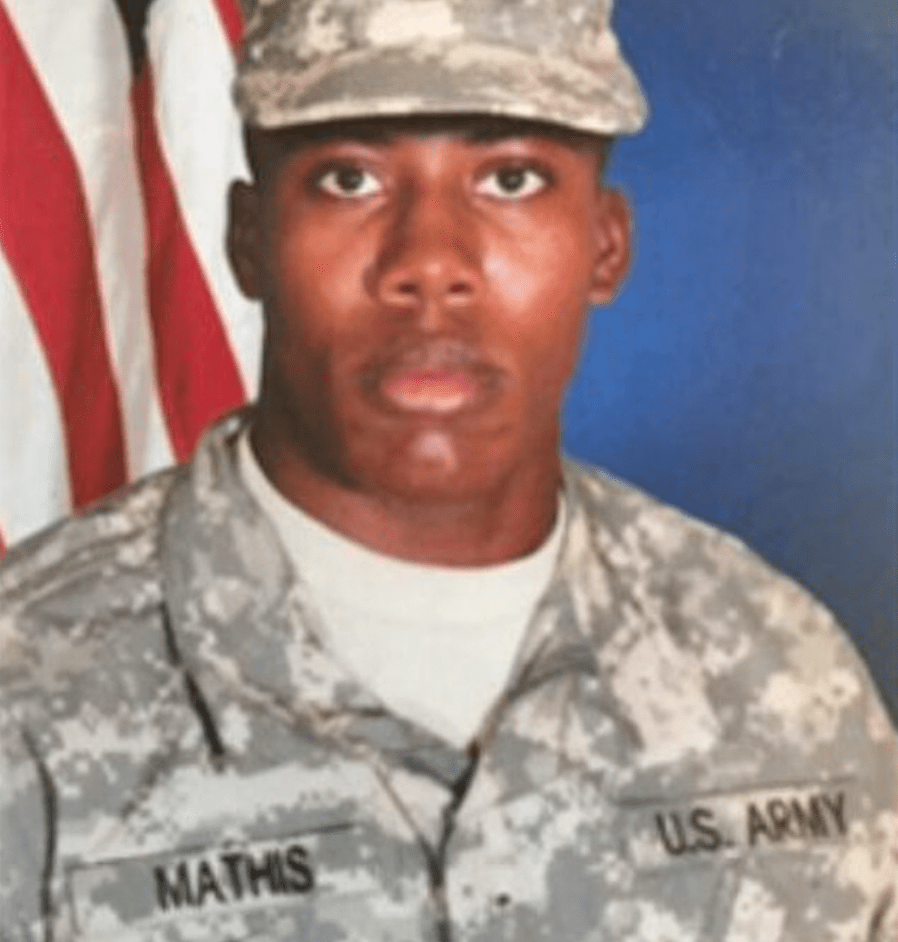
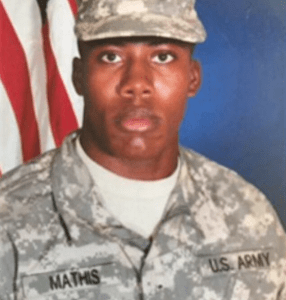
Fort Hood Army Spc. Deangelo Marquis Mathis, 22, was found unresponsive July 26, 2017 in Sly County, Georgia. Spc. Mathis’ home of record is listed as Mauk, Georgia; he entered active-duty military service in July 2012. Spc. Mathis was a Patriot missile launching station enhanced operator and was assigned to 1st Battalion, 44th Air Defense Artillery Regiment, 69th Air Defense Artillery Brigade at Fort Hood in Texas since May 2014. The circumstances surrounding the incident were under investigation by the Georgia Bureau of Investigation and U.S. Criminal Investigation Command at the time of reporting. The official cause of death is unknown. Since January 1, 2016, Spc. Mathis was one of thirty-one soldiers who died of a death ruled suicide or the official cause of death was unknown while stationed at Fort Hood. He was the twelfth soldier to die stateside by death ruled suicide or official cause of death unknown in 2017. Spc. Mathis was honored in the Military Justice for All veteran’s presentation on the current status of the Armed Forces at Fort Hood to congressional members in Washington D.D. in December 2017.
The Yates family moves to Spokane, WA only to find it besieged by a serial killer who’s targeting young women and confounding the police. Now, the family’s never-before-aired home videos provide a chilling look of one of America’s most notorious killers. -Family Snapshot, American Monster (S2,E2)
Editor’s note: With a cable subscription, you can download the free ID Go app and watch Investigation Discovery programming at your convenience. And for those who do not have cable, you can watch “unlocked” episodes on the ID Go app including the latest premieres. For those who prefer commercial free programming during your binge session, Prime Video has an ID channel: ‘True Crime Files by Investigation Discovery” available for $3.99 a month. It’s a compilation of older seasons but totally worth the cost if you are a true crime addict. Download the ID Go app or purchase ID True Crime Files & binge away.
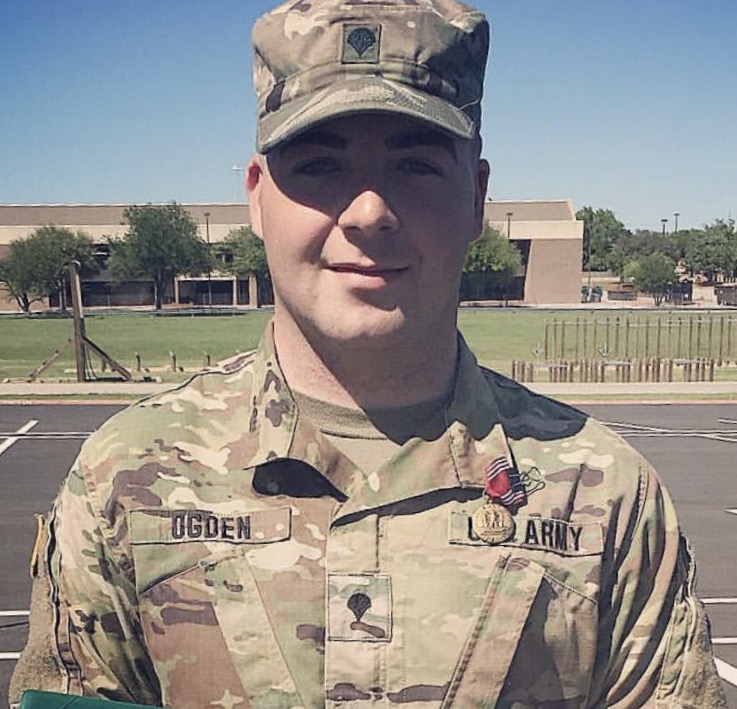
Fort Hood Army Spc. Justen Glenn Ogden, 22, was found unresponsive at his on post home on July 11, 2017. Spc. Ogden is survived by a daughter, parents, and three siblings. “Family meant alot to Justen, he didn’t let a day pass without talking to his daughter, brother and sister. He was an excellent father, brother, son and soldier. He will be greatly missed (obituary).” Spc. Ogden is from Humble, Texas and he joined the Army in March 2014 as a motor transport operator. In August 2014 he was assigned to 61st Quartermaster Battalion, 13th Expeditionary Sustainment Command at Fort Hood in Texas. At the time of his death, the Army claimed in a press release that the circumstances surrounding his death were under investigation. The official cause of death was unknown until 2020 when the family stated that the Army ruled the cause of death as a self-inflicted gunshot wound. To this day, the family continues to question the cause of death ruling and claims none of the circumstances surrounding the incident add up.
“He died of a gunshot wound that they ruled as a suicide. None of it ever added up! He put his truck in the shop that morning to have a lift kit added! Also, his time of death was around 11 am. He was supposed to be at work and had been there that morning, but he wasn’t found until 6pm when his girlfriend got home! All I ever got from anyone at Ft. Hood were lies and useless condolences!! Something really bad is going on at that base and it needs to be stopped! I have prayed everyday, since I put my son in the ground, that they would be held accountable for the horrific way they are failing our children!!! NO SOLDIER LEFT BEHIND!!” –Justen’s family
Death of a Fort Hood Soldier – Spc. Justen Ogden (Screenshot of the Fort Hood press release because they will delete the on-line version)







 MILITARY JUSTICE FOR ALL