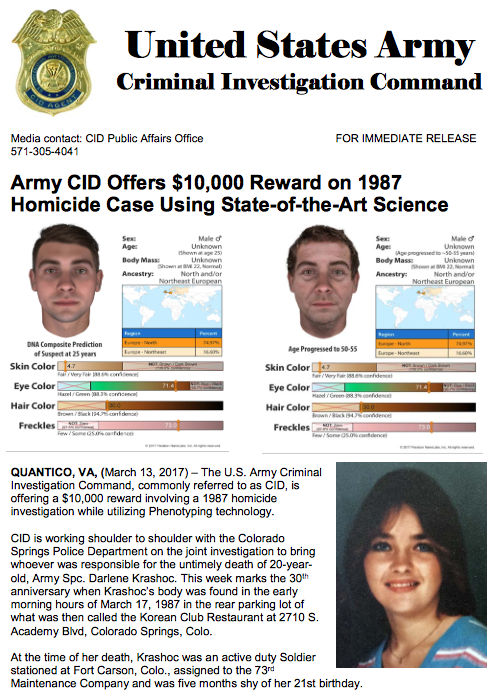
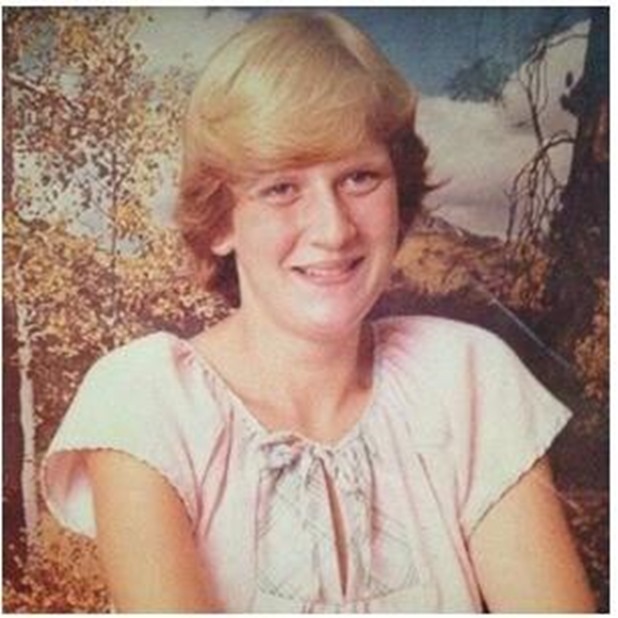
The victim: Darlene Krashoc, 20, a soldier at Fort Carson who worked as a mechanic at the Army post.
The Crime: Two Colorado Springs police officers on routine patrol spotted a partially nude woman laying in the parking lot behind the Korean Restaurant, a nightclub formerly at 2710 S. Academy Blvd., around 5:20 a.m. on March 17, 1987. An autopsy determined that Krashoc had been strangled with a coat hanger and leather thongs after being severely beaten, bitten, sexually assaulted. She may also have been thrown from a moving vehicle.
The investigation: Krashoc’s mother, Betty, last spoke with her daughter a week before her death. Krashoc had changed from a soldier ready to re-enlist to a frightened woman ready to go AWOL to get away from Fort Carson, but wouldn’t tell her mother why.
Colorado Springs Police Department considers a case to be cold if it remains unsolved for more than one year. If you have information that would be of assistance in these investigations, please contact 719-444-7613, by e-mail at CSPDColdCase@springsgov.com or you may remain anonymous and could earn a cash reward by calling Crime Stoppers at 634-STOP (7867). –The Gazette
Thirty years after Krashoc’s body was found, Army Criminal Investigation Command are offering a $10,000 reward to anyone who can lead them to the man they believe killed Darlene Krashoc. If you have any information about the investigation or if the DNA prediction results resemble someone you know or knew at the time, you’re asked to contact your local CID office or CID headquarters in Virginia at (844) Army CID or (571) 305-4375. You can also email army.CID.crime.tips@mail.mil.
On January 6, 1987, Army soldier Ronald Gray raped, sodomized, robbed, and murdered civilian Kimberly Ann Ruggles, 23, in Fayetteville, North Carolina. Kimberly, who was a taxi driver, was dispatched to pick up Ronald Gray at his residence. In the early morning hours of January 7th, Fort Bragg military police officers discovered Ruggles’ empty cab parked at the edge of the woods on post. They discovered Kimberly’s nude body a short distance away. She had been raped, sodomized, beaten, and stabbed seven times. Kimberly’s mouth was gagged with a cloth belt that matched pants found in Gray’s possession only hours earlier. Ronald Gray’s fingerprints were also on the interior door handle of Ruggles’ taxi and Ruggles’ fingerprints were found on money in Gray’s possession. In addition, Gray’s footprints were found at the scene of the crime. In 1988, Ronald Gray was found guilty by the military courts of the premeditated murders of Kimberly and Private Laura Lee Vickery-Clay, and the attempted premeditated murder of Private Mary Ann Lang Nameth. On April 12, 1988, Ronald Gray was sentenced to death, given a dishonorable discharge, total forfeitures, and a reduction to Private E-1. In 2008, President George Bush gave the final approval for the military execution of Ronald Gray. In December 2016, media reports indicated that the military is moving forward with the lethal injection execution of Ronald Gray.
According to CNN, the US military could soon execute someone for the first time since 1961. Ronald Gray, a former Army soldier, has been on military death row at Fort Leavenworth since 1988 when he was convicted of killing five women and raping several others in 1986 and 1987 while stationed at Fort Bragg in North Carolina. A civilian court gave him eight life sentences, but a military court sentenced him to death. Last week, a judge ruled Gray’s stay in prison was no longer in effect and denied any further stays. Following the ruling, an execution date for Gray could be announced as soon as next month. –Wochit News
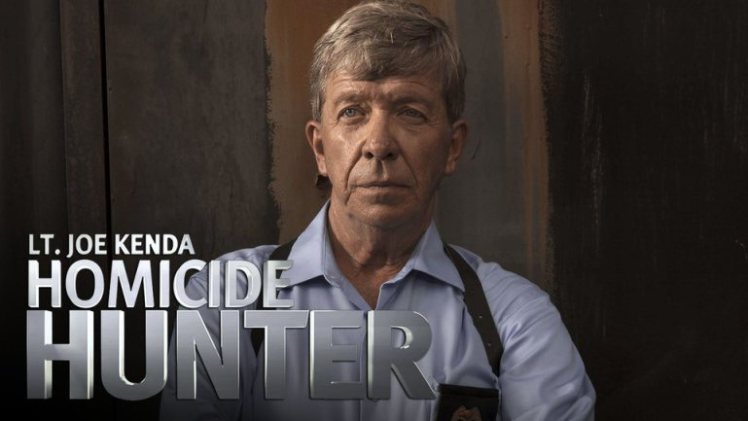
When 22 year-old Micki Filmore is found raped and murder in her apartment, detective Kenda focuses his investigation on her activities the previous night. Micki was seen dancing with a man who then paid a late night call to her door. -A Killer Always Rings Twice, Homicide Hunter (S1, E3)
Colorado Springs is the home of five military bases made up of about 40,000 personnel. A lot of them live off-base in local apartment units. On July 19, 1986, as Army Spc. Tracy Spencer was walking by, he noticed his neighbor Micki Filmore was laying lifeless on the floor in her apartment. He was alarmed and ran to his wife Lisa to seek help. She claims she went through the window of the apartment because of her own concern for Micki and discovered that she was in fact dead. They called the police. Lt. Joe Kenda of the Homicide Unit at the Colorado Springs Police Department was assigned to investigate the case. Kenda deduced from the observation of the crime scene that there did not appear to be any struggle, the victim’s wallet and cash were present, and she was naked with her legs open and bruising around her neck. He suspected Micki Filmore was raped and strangled in a quick and brutal attack.
Joe talked about the crimes of rape and murder for a bit. He talked about how rape is unfortunately a very common crime but he also noted that rape and murder is not that common. Lt. Kenda educated the public about the fact that rape and sexual assault is mostly a punishment of women. And in this particular case, the perpetrator surprised Micki Filmore while she was in bed. His only purpose was to rape and kill her. While Joe waited on the results of the autopsy, he tried to figure out the modus operandi of this particular offender because he would strike again. Joe wondered why it was so important for this person to get in and out of the apartment quickly. Was he a local and making sure that nobody saw and recognized him? Neighbors Lisa and Tracy Spencer reported they saw Micki the night before; she was happy, eating pizza, and nothing appeared out of the ordinary.
Joe canvassed the neighbors in the apartment complex and learned that Micki was having troubles: he heard from neighbors that her fiancé left her, she was pregnant, and broke but nobody knew who the father of the child was. One neighbor told Lt. Kenda that he went to a night club with her the night before. He claimed that while they were there, she saw someone she knew. She left the club with her neighbor around 2 a.m. but she did give a piece of paper to the friend she ran into at the club. The neighbor claimed they talked for a little bit and then went their separate ways. After lying down, the neighbor heard knocking on her door. He looked out briefly and saw the same man from the club standing there. Another neighbor said she was awoken by a loud scream and then a thumping noise around 3:45 a.m. She assumed whoever it was they were fighting. Joe still had little evidence to go on but the autopsy helps tell a story.
The autopsy revealed that Micki Filmore’s last moments were met with violence, anger, and rage. And she had engaged in sexual relations within the last twelve hours. Despite what her neighbors said, she was not pregnant and there were no drugs or alcohol in her system. Lt. Kenda learned Micki was twenty-two years old and originally from a rural community in North Carolina. She joined the Army straight out of high school, did a three year tour of duty, traveled the world, and her service ended in December 1985. She was looking forward to leaving to be with her fiancé in a few weeks. Lt. Kenda contacted the fiance and learned that he had not abandoned Micki. The fiance was finalizing a divorce so he could marry Micki and he could verify his whereabouts at the time of the murder. The fiance shared he asked his friend Frank Lynch to look out for Micki while he was gone; but now he had concerns that maybe he was involved. This gave Kenda a new lead and potentially a new suspect.
Kenda met with Frank Lynch who denied any involvement in the murder and could account for himself on the night in question. As a result, Kenda closed out Lynch and in the meantime got a phone call from DiCarlo Dowden. DiCarlo was the man at the club that Micki gave a piece of paper to and the same man suspected of showing up at her apartment the night of the murder. DiCarlo admitted that he ran into Micki at the club, they chatted, they danced, she told him she was not ‘with’ her neighbor (he was an escort), and then gave him her number. She also gave him her address which to him was an invitation so DiCarlo dropped by her apartment but no one answered the door so he left. DiCarlo noticed that a neighbor did see him after looking out their window, which also matched the neighbor’s story. DiCarlo denied any involvement in the crime and there was no probable cause to arrest him, he did volunteer to provide biological evidence for testing.
It takes several weeks for the comparative analysis testing to be completed at the labs. Joe reiterated that DiCarlo was not off the hook yet. On August 12, 1986, another body was discovered in the same apartment complex. Lt. Joe Kenda knew this was not a coincidence. The victim was twenty-four year old Barbara Kramer who was a nurse at Eisenhower Hospital in Colorado Springs. She didn’t show up to work so her sister and a friend went over to her apartment to check in on her. They discovered the newspaper outside her door, signs of a struggle in the apartment, and the friend found Barbara Kramer dead in her bedroom. The family was devastated because they were already worried about her safety after the first murder in that apartment complex but they reported that Barbara was cautious and playing it safe. Kenda was horrified by what he saw at the crime scene because he immediately knew it was the same guy.
The modus operandi of both crimes was exactly the same aside from one woman was black and one woman was white. Both were displayed with their legs open after they were murdered; both were attacked in the middle of the night between the hours of 4 and 7 a.m.; both were single females living alone; both were strangled; and both were living in the same apartment complex. Lt. Kenda was feeling an even more heightened sense of urgency because this guy was a serial killer and was not going to stop; he wanted to prevent a third victim. He also deduced that the killer probably lived in the area and he was carrying on as if nothing mattered. He questioned DiCarlo about his whereabouts and DiCarlo was cleared as a suspect because his girlfriend could alibi him. Kenda knew DiCarlo wasn’t his man because the person he was looking for killed Micki Filmore and Barbara Kramer.
Lt. Kenda knew these murders were similar offenses; they were the same crime, different targets. He wondered how many more had to die before the Colorado Springs Police Department could stop him. Kenda theorized that the perpetrator most likely stalked his victims before the attacks. He did not feel that these crimes were random and he believed that the perpetrator surveilled his victims. This offender simply waited for the right place and right time. Kenda noted that these guys are not as intelligent as one would think but they are cunning. He knew the guy made mistakes and he had to be the one to find them. After interviewing more neighbors about the night before, Kenda learned that one neighbor was awakened to screams around 6 a.m. and another neighbor saw Tracy Spencer banging on Barbara’s door with a piece of paper in his hand around 6:25 a.m. She saw the door open, Spencer enter the apartment, and then the door slam.
This new information intrigued Lt. Kenda because now Tracy Spencer not only found Micki Filmore’s body but a witness saw him knocking on Barbara Kramer’s door around the time that she died. Kenda looked into his criminal history and found only minor offenses, nothing to indicate a propensity for violence. But Kenda was going to apply for a warrant regardless and arrest Tracy Spencer based on the evidence he had. But first he wanted to talk to Tracy’s wife. Lisa was still claiming that Tracy was with her the night of the murders so Kenda told her that a witness saw him and she began to cry. Kenda did not understand why she would protect him and told her she could be arrested next. She told him she did lie and that Tracy was not with her all night. As a matter of a fact, she admitted that he left the apartment in the middle of the night often and went for walks. She claimed Tracy told her he kept finding Barbara’s mail on the ground and wanted to return it to her, despite locked mailboxes at the apartment complex.
Lisa Spencer also admitted to finding an empty envelope with Barbara’s name on it so she threw it away. She observed Tracy get angry when he couldn’t find it but she never told him she threw it away. She also confessed that she did not go through the Micki’s apartment window like she originally shared with the police; she went into the apartment to help Tracy cover up the crime. When Kenda asked her why, her response was that she loved him. Kenda learned that Tracy was on the move so he made a decision to arrest and take him to the station before he hurt someone else. Kenda got a search warrant for his apartment and found the letter he couldn’t find right in the trash where his wife said she put it. And it did in deed have Barbara Kramer’s name on it. Kenda questioned Tracy at the station and even after he was told there were witnesses, Spencer stuck to his story. Eventually he folded some and admitted to taking mail to Barbara but said he didn’t go inside her apartment.
Kenda realized Tracy Spencer was a prolific liar. He denied everything. Kenda confronted him with the semen he said matched him (which was a lie) and then Tracy admitted that he was lying to him because he was having an affair with Micki and did have consensual sex with her that night. He had an explanation for everything. The bottom line was that he was going to commit the crimes regardless of the consequences and then lie about it. That’s what they do. The lab results came back and showed that both Tracy’s blood and hair samples matched those at the crime scenes. Tracy Spencer was arrested for the first degree murders of Micki Filmore and Barbara Kramer. On December 31, 1986, Tracy Spencer was found guilty and sentenced to life in prison plus twenty-four years. He is eligible for parole in 2032. Lt. Kenda ended the show with the fact that Spencer overpowered, raped, and killed two girls he didn’t even know for no real reason. Two women paid the price for his crimes and there could have been more, and that scared him.
Editor’s note: With a cable subscription, you can download the free ID Go app and watch Investigation Discovery programming at your convenience. And for those who do not have cable, you can watch “unlocked” episodes on the ID Go app including the latest premieres. For those who prefer commercial free programming during your binge session, Prime Video has an ID channel: ‘True Crime Files by Investigation Discovery” available for $3.99 a month. It’s a compilation of older seasons but totally worth the cost if you are a true crime addict. Download the ID Go app or purchase ID True Crime Files & binge away.
On December 15, 1986, Army soldier Ronald Gray abducted, raped, sodomized, and murdered Private Laura Lee Vickery-Clay, 18, of Fort Bragg, North Carolina. According to reports, witnesses saw Laura at a local store with Ronald Gray the night she disappeared and Gray’s finger print evidence was found on the hood of Laura’s vehicle. About a month later on January 17, 1987, a soldier discovered Laura’s half-naked, decomposed body in the woods on Fort Bragg. She had been raped, sodomized, and shot in the neck, forehead, chest, and back of the head. She had also suffered blunt force trauma to various parts of her body. The murder weapon was found in close proximity to the victim’s body. In 1988, Ronald Gray was found guilty by the military courts of the premeditated murders of civilian Kimberly Ann Ruggles and Private Laura Lee Vickery-Clay, and the attempted premeditated murder of Private Mary Ann Lang Nameth. On April 12, 1988, Ronald Gray was sentenced to death, given a dishonorable discharge, total forfeitures, and a reduction to Private E-1. In 2008, President George Bush gave the final approval for the military execution of Ronald Gray. In December 2016, media reports indicated that the military is moving forward with the lethal injection execution of Ronald Gray.
According to CNN, the US military could soon execute someone for the first time since 1961. Ronald Gray, a former Army soldier, has been on military death row at Fort Leavenworth since 1988 when he was convicted of killing five women and raping several others in 1986 and 1987 while stationed at Fort Bragg in North Carolina. A civilian court gave him eight life sentences, but a military court sentenced him to death. Last week, a judge ruled Gray’s stay in prison was no longer in effect and denied any further stays. Following the ruling, an execution date for Gray could be announced as soon as next month. –Wochit News
Ronald Gray, US Army, was sentenced to death in 1988 by a military court for the rape and premeditated murders of Army Private Laura Lee Vickery-Clay in December 1986 and civilian Kimberly Ann Ruggles in January 1987. He was also convicted of raping Army Private Mary Ann Lang Nameth and leaving her for dead in January 1987. Ronald Gray’s scheduled execution is one of two scheduled in the military since 1961. Army Private John Bennett was the last soldier to be executed by the US military. Bennett was convicted of rape and the attempted murder of an 11 year old Austrian girl. He was hanged in 1961 at Fort Leavenworth prison in Kansas. Ronald Gray joined Timothy Hennis, another Fort Bragg soldier convicted of rape and the murders of Air Force spouse Kathryn Eastburn and two of her three daughters in 1985. In 2008, President George Bush granted the final approval necessary for the military to execute Ronald Gray. After Gray’s execution was delayed for eight years, media reports indicated in December 2016 that the Armed Forces courts will no longer grant stays of execution and the federal government made an announcement that they plan to move forward with the lethal injection execution of Ronald Gray. Gray is one of six service members on death row at Fort Leavenworth. He joins Timothy Hennis, Dwight Loving, Andrew Witt, Hasan Akbar, and Nidal Hasan.
Kathleen Lipscomb and MSgt William Lipscomb, U.S. Air Force (Photo: Forensic Files)
Air Force spouse Kathleen Lipscomb, 30, was found dead on the side of a highway in San Antonio, Texas on June 9, 1986. She was murdered and the case went unsolved for years. Kathleen was a nurse and she had two children with her husband William ‘Bill’ Lipscomb. Bill, 33, was a MSgt in the Air Force and was stationed at Lackland Air Force Base. They were married for eight years but had recently separated. Their arrangement was for Bill to spend time with the two children on the weekends. But one Sunday night, Kathleen never showed up to pick up the children. Bill went to Kathleen’s apartment but she wasn’t there. The next morning there was no sign of her. One of her co-workers contacted a family member because she didn’t show up to work and they were worried. Later that day, Kathleen Lipscomb was discovered nude and dead on the side of the highway. Based on the evidence, police deduced she had been murdered elsewhere.
Bill Lipscomb was immediately called in for questioning. The police wanted to check for any wounds that might be on his body. The children told police their father was with them the entire weekend and confirmed his alibi. An autopsy revealed Kathleen had sex 24 hours before she was found dead. During the investigation, detectives learned Kathleen was dating a married man. His name was Dr. David Pearl and Kathleen was in love with him. Dr. Pearl admitted he was with Kathleen over the weekend but insisted he had nothing to do with her murder. One week after Kathleen’s murder, her car was found in a restaurant parking lot not far from her apartment. Investigators found no useful forensic evidence in the car. Based on the food contents in her stomach, investigators determined she was most likely murdered on Sunday night and dumped in the field during the early morning hours on Monday.
For two years, investigators searched for Kathleen’s killer. Kathleen’s family suspected her estranged husband Bill had something to do with her murder. Seven months before the murder, Bill had increased Kathy’s life insurance to $300,000. Kathleen’s family hired a private investigator to look into the case. The PI learned of the name Shannon Gilbert from Kathleen’s day planner. She was in the Air Force with Bill and it was rumored she was having an affair with him. Shannon Gilbert would not speak with the PI without an attorney present. The PI also found a note about WAPS (Weighted Airman Promotion System) testing and it said Bill had all the answers to the test. Kathleen was accusing Bill of cheating. The Air Force Office of Special Investigations (AFOSI) joined the investigation because it involved allegations of cheating. Dr. Charles McDowell believed the scene had been staged to look like a rape and murder.
McDowell also suspected someone else dumped the body. Kathleen’s daughter revealed another important piece of information to the family. She told family members she thought her father killed her mom because he wasn’t home the entire weekend. One of his friends Anthony ‘Tony’ Barello took them out for dinner on Sunday and when they woke up in the middle of the night, they realized their father was gone. Investigators ordered forensic DNA testing but the biological evidence had been mislabeled then mishandled. Forensic testing was not possible. Investigators needed more than circumstantial evidence to corroborate the children’s story. During the investigation, detectives learned Bill cheated on the military promotion testing and Kathleen knew it. During the divorce proceedings, Bill wanted custody of the children and Kathleen was not going to let that happen. Was Kathleen using this information as blackmail during the custody battle?
At the crime scene, Kathleen’s clothing was neatly rolled which suggested someone with military training dumped the body. When investigators caught up with Tony Barello, he was eager to talk. Tony immediately acknowledged he dumped Kathleen’s body in the field. He told them Bill Lipscomb was the killer. Tony still had evidence directly linking Bill to the crime and investigators confirmed it was Kathleen’s blood in a small chest she was stored in after she was murdered. OSI took over the homicide investigation. Bill’s former girlfriend also admitted that Bill told her he was going to kill his wife. OSI brought Bill Lipscomb in for questioning but Bill denied everything. They believed he sought revenge for Kathleen’s threats to expose him for the military promotion scandal. They believed Bill asked his friend Tony to take the children out for dinner so he could kill Kathleen while they were out.
When Kathleen arrived and noticed the children missing, the two most likely argued. At some point, Bill strangled Kathleen and then stored her in a chest in the house. Once the children were asleep, Tony retrieved Kathleen’s body and dumped her on the side of the highway to stage it as a sex crime. MSgt Bill Lipscomb was charged with the rape and murder of Kathleen Lipscomb in July 1989. Bill Lipscomb pleaded guilty to avoid the death penalty and in 1990 a Langley Air Force Base military judge sentenced Bill Lipscomb to life in prison. Although under the terms of the plea agreement, Bill Lipscomb will spend no more than 60 years at the Disciplinary Barracks at Fort Leavenworth, Kansas, a reduction in rank and a dishonorable discharge. In return for their cooperation, Tony Barello and Shannon Gilbert were not charged. Shannon Gilbert changed her name and is now in the federal witness protection program.
“Although his wife was not killed on government property or in Virginia, the Air Force tried Lipscomb here under a law that gives the military authority to handle any criminal transgressions by an active-duty serviceman.” –Daily Press (August 22, 1990)
Full episode: Kathleen Lipscomb’s body was found on a deserted street outside of San Antonio. Months passed, then years, and the crime went cold. Then Kathleen’s family hired a private investigator who discovered a diary among her personal effects. Two of the diary entries helped police to piece together what had happened to Kathleen Lipscomb, and why. -True Lies, Forensic Files (S8,E27)
Investigation Discovery:
Preview: When a wife begins an affair behind her domineering husband’s back with a coworker, he soon finds out and begins an affair of his own. Little do they realize that the relationships they have entered into are not what they seem. -Sex, Secrets & Sergeants, Scorned: Love Kills (S5,E5)
While Kathy Lipscomb spends late nights at the hospital with the handsome Dr. Pearle, her husband’s career in the Air Force is taking off, but so is his relationship with a hot young officer. When the affairs are exposed the consequences are fatal. -Sex, Secrets & Sergeants, Scorned: Love Kills (S5,E5)
Editor’s note: With a cable subscription, you can download the free ID Go app and watch Investigation Discovery programming at your convenience. And for those who do not have cable, you can watch “unlocked” episodes on the ID Go app including the latest premieres. For those who prefer commercial free programming during your binge session, Prime Video has an ID channel: ‘True Crime Files by Investigation Discovery” available for $3.99 a month. It’s a compilation of older seasons but totally worth the cost if you are a true crime addict. Download the ID Go app or purchase ID True Crime Files & binge away.
January 18, 1986: Robbin Brandley, 23, Saddleback College, California
July 17, 1988: Julie McGhee, 30, Cathedral City, California
September 25, 1988: Mary Ann Wells, 31, San Diego, California
April 15, 1989: Tammie Erwin, 18, Palm Springs, California
March 11, 1995: Denise Maney, 32, Palm Springs, California
April 14, 1996: Laura Uylaki, 25, Wolf Lake, Illinois
July 14, 1996: Cassandra Corum, 21, Livingston County, Illinois
August 2, 1996: Lynn Huber, 22, Wolf Lake, Illinois
Jennifer Asbenson, of California, survived a rape & abduction on September 28, 1992.
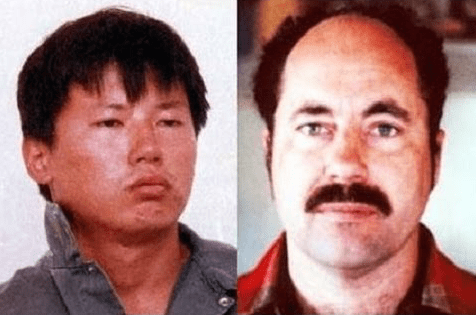
Leonard Lake is arrested near San Francisco, California, ending one of the rare cases of serial killers working together. Lake and Charles Ng were responsible for a series of particularly brutal crimes against young women in California and the Pacific Northwest during the mid-1980s. Read more from On This Day in Historyhere.
Oxygen premiered It Takes a Killer ‘Partners in Evil” and this episode highlighted the sadistic crimes committed by Marine veterans Charles Ng and Leonard Lake. In the early 1980s, the San Francisco bay area was under siege as more than twelve people vanished without a trace. Police would eventually learn that Ng and Lake were responsible for murdering them and so much more. What police uncovered during their investigation would prove invaluable in the prosecutor’s decision to pursue the death penalty. Charles Ng and Leonard Lake were psychopaths.
In December 1982, Army veteran Donald Lake, 32, was living with his mother in San Francisco, California. At their surprise, his brother Leonard Lake stopped by on a road trip up north and asked Donald to tag along. Donald was described as a very nice, gentle man but Leonard treated Donald terribly when they were growing up and even referred to him as a leech in conversations with his ex-wife Claralyn Balazs. Donald is never seen again and his mother Gloria is concerned so she reports him missing. Leonard Lake is nowhere to be found but he resurfaced on New Years Day in 1983 to rent a room in a house in Golden Gate Park.
Four months later, Lake moved in with his buddy from his green beret days, Charles Gunnar of Morgan Hill. They had a lot in common as they both valued survival skills and the weaponry world. On May 22, 1983, Lake invited Gunnar to go on a road trip to Vegas or Tahoe for some much needed rest and relaxation after his divorce. Charles Gunnar decided to go in an effort to cope with his tough times; he left his two daughter’s with a babysitter. A couple days later, Charles Lake returned alone in Gunnar’s van and told the babysitter that Charles ran off with a woman. Charles Gunnar was never seen again.
On July 11, 1984, Donald Giulietti, 36, a radio personality from San Francisco, California was spending time in his apartment expecting a visitor. Donald was an openly gay man who lived with a man named Richard Carrazza. Giulietti placed a personal ad in a low key newspaper offering to give oral sex to straight men. That night a stranger knocked on the door and Giulietti assumed it was someone taking him up on his offer. As soon as Donald opens door, the man whips out pistol and shoots him in the head at close range. Carrazza runs from the back room into the study and finds Giulietti on the floor. Carrazza is immediately shot in the chest and left for dead. The shooter fled and Carrazza survived the attack. Richard Carazza called 911 and when the police questioned him, he was able to give a description of the shooter.
Richard Carrazza described being shot by a small Chinese man wearing prescription glasses. Police searched for an Asian suspect but came up empty. What no one knows is that the killer was already searching the classifieds for his next victim. On July 24, 1984 in San Francisco, California, Harvey Dubs, 29, was home with his wife Deborah, 33, and their 16 month old son Sean. Harvey worked for a printing company but on the side, he videotaped special events and rented out his equipment. There was an individual who responded to the ad and came to his home. The family was never seen again. The following morning, a neighbor went to check on them and found keys in the door and dirty dishes in the sink but no sign of the Dubs family.
When the police did house to house canvassing and questioned the neighbors, they reported seeing a small Asian man leaving the property. The suspect was seen carrying a large duffel bag and a large flight bag both stuffed full and he tossed the bags into the trunk of a car that was waiting. The Asian man gets into the front passenger seat of the car with the burly man with a beard and they speed away. Some witnesses in the neighborhood get a good description of the Asian man. No one could give a good description of the bearded man but an eye witness was able to draw a description of the Asian man.
In San Francisco, California on October 31, 1984, entrepreneur Paul Cosner, 39, was selling his 1980 Honda Prelude which he had recently advertised in the local newspaper. A burly bearded man took the car for a test drive and a couple days later called Paul to tell him that he would like to purchase the Honda from him. On November 2, 1984, Paul drove the car to meet the potential buyer and he was never seen again. When Cosner’s sister Sharon didn’t hear from him for 24 hours, she filed a missing person’s reports and a missing vehicle report. Sharon was relentless and maintained heavy pressure on the police but they really had no clues or suspects at this point.
In San Francisco on January 18, 1985, Cliff Peranteau, 24, was at a local bar tossing back a few drinks with a co-worker. Cliff worked at a moving company and he shared with friends that he was going to work on Saturday. Cliff never showed up for the job but apparently was seen partying on Sunday after a 49er’s super bowl victory. He’s last seen by a bartender after winning a $400 bet. The bartender said he appeared to be going off to celebrate with an Asian friend. He was never seen again.
Investigators would learn that Peranteau’s Asian friend was his colleague Charles Ng who had been at the moving company for about four months. Charles was described as an odd character that Cliff Peranteau normally tried to avoid. Charles Ng wasn’t well-liked at the moving company because he had poor boundaries and said inappropriate things to others. Two weeks after Cliff’s disappearance, his boss received a short typed letter apparently from Cliff informing him that he had a new job. The writer also requested that Cliff’s last check be sent to an address in northeastern California near Wilseyville. The note wasn’t that far fetched until another moving company employee, Jeff Gerald, 25, went missing on February 23, 1985. Jeff got an offer to work with Charles Ng on a small moving job on the side. Jeff went to do the job and this was the last time he was seen.
In San Francisco on April 12, 1985, Kathleen Allen, 18, and her boyfriend Michael Carroll, 23, were spending time in a motel room where they were temporarily living. At 10 pm at night, Michael tells Kathleen that he has to do something and would be back in the morning. Michael never returned. A few days later Kathleen received a horrifying phone call at work. The caller told her that her boyfriend Michael may have been involved in a shooting. She immediately told her boss that she had to leave. She was last seen meeting a bearded man in the parking lot of the Safeway where she worked. Kathleen got into the car and was never seen again.
In April 1985, four more people vanished without a trace. Robert Scott Stapley, 26, lived in San Francisco but frequently took road trips to Wilseyville, California to spend time with friends. Scott Stapley stayed with Lonnie Bond and his live-in girlfriend Brenda O’Connor, and their 18 month old son. Lonnie and Brenda loved living in their cabin in the foothills of the Sierra-Nevada mountains. The only thing they don’t like was their neighbor. He was a burly, bearded man who they felt was extremely obnoxious, rude, and demented. This neighbor constantly fired weapons on his property and Brenda felt really uncomfortable with him because he would not stop asking her to pose naked for him. On April 19, 1985, Scott Stapley was present when Lonnie decided to confront his neighbor. Lonnie decided to deal with the problem once and for all, and none of them were ever seen again.
In San Francisco, California on June 2, 1985, two men entered a lumber yard to buy some building supplies. A burly bearded man and an Asian man with glasses decided they wanted a vice but were not going to pay for it. The Asian man swiped the $75 vice, exited the store, and placed the stolen vice into the trunk of a Honda Prelude in the parking lot. But the Asian man didn’t realize that an off duty police officer spotted him with the stolen merchandise and called in his description. The off-duty police officer approached the Asian man but he took off and disappeared. The officer searched the vehicle and found the stolen vice and a back pack, which contained a pistol with a silencer in it. Just then a stocky bearded man exited the lumber yard and approached the Honda Prelude.
The burly bearded man told the police officer that his name was Scott Stapler (the name of the man who vanished two months prior). He told the officer not to worry about the vice because he paid for it. The officer reminded him there was a gun with a silencer in the trunk of the car and placed the burly, bearded man under arrest. He was taken to the police station for questioning. Back at the station, investigators learned that everything the man was telling them was a lie. A background check on the Honda Prelude revealed that it was registered to Paul Cosner, who went missing months before. Then they learned the license plates belonged to Lonnie Bond, another person who went missing. As the officer confronted the man with this new evidence, the big burly bearded man began to cry and admitted his real name was Leonard Lake. And that his accomplice was Charles Ng.
At one point during the investigation, Lake asked the detectives for a glass of water and a pen and paper to write a letter to his ex-wife. Police uncuffed him expecting a full confession. After he got done writing the letter to his ex-wife, he reached up under his collar where he sewed a cyanide pill into the fabric and quickly shoved it down his throat. He fell onto the floor gagging and seizing. He was rushed to the hospital where he slipped into a coma and died a few days later. In June 1985, Leonard Lake suddenly killed himself with a cyanide pill taking his secrets to the grave with him. But he did leave behind a clue when he gave up the name of his sidekick Charles Ng who was now on the run. Leonard Lake had been on the run since April 1982 when the FBI raided his place on a stolen weapons tip.
Police wanted to know who Leonard Lake was. They learned he was born in San Francisco, California and was bright yet sadistic. He developed an infinity for pornography early on in his life. He apparently took nude photos of his sisters when they were young and used them to extort sexual favors. He joined the US Marine Corps in 1965 at age 19 and served two terms in Vietnam. In Da Nang in 1970, Leonard had a complete mental breakdown and was sent back to the United States. He was admitted to a psychiatric ward for two months and then discharged from the Marines upon his release. Lake spent the next eight years in a hippie commune. In the late summer of 1980, Leonard met his wife Claralyn Balazs and they married in 1981. They both had a love of making pornographic videos of themselves and enjoyed kinky sex.
After Leonard’s death in 1985, Claralyn was the critical piece to help police break the case wide open. Police investigated Leonard Lake and did a complete forensic search of the Honda Prelude in his possession. They found blood spatter in the car, bullet holes in the headliner, IDs of missing persons, and an electric bill with Claralyn’s address. On June 3, 1985, police manage to track down Claralyn. Claralyn told detectives that she and Leonard divorced in November 1982 but maintained a close relationship. She also mentioned to the police that her family owned property in Wilseyville but no one had been living there recently. Police were curious and Claralyn agreed to take them to the property on June 4, 1985. The police found what they could only describe as a compound for killing.
The police found the drivers license of Mike Carroll who disappeared with his girlfriend Kathleen Allen in 1985. They also found possessions of others who were missing including the Dubs family. Police found videotapes of women being tortured, signs of men being killed, and outside in the yard, police came across a tool shed that acted as a false front. There they found a large bunker where tortures had occurred and where Leonard Lake kept his sex slaves. Detectives unearthed Leonard Lake’s hide out and learned that he had this planned since he was a teenager. Lake read a book at age 17 called The Collector which was about a man who had a sex slave named Miranda. Lake became obsessed with a clear plan called Operation Miranda. He wanted to enslave young girls and these fantasies became a reality when Charles Ng entered his life.
The police found overwhelming evidence of Lake and Ng’s barbarism inside in the bunker. There were videotapes of Leonard Lake building the bunker. One tape labeled the M Ladies showed Ng and Lake raping, torturing, and abusing a number of women. Law enforcement didn’t know who any of the M Ladies were until weeks later when they discovered a mass grave on the Wilseyville property. Police found approximately 45 pounds of human remains scattered about the yard. They found many of the human remains of the missing people; they had been killed, burned, tortured, and dismembered. Among the remains, investigators found the IDs of Brenda O’Connor and Kathleen Allen.
Police recognized Kathleen Allen from the M Ladies videotape. Kathleen was selected by Lake as the perfect M Lady and was kept prisoner in his bunker. He treated her as a complete slave in every way. He forced her to dress up, have sex on demand, and pose for him. It took investigators weeks to go through the crime scene and as they do they discover more and more bodies. Then on July 8, 1985 they find two males stacked on top of each other in a make shift grave. They were identified as Lonnie Bond and Scott Stapley. Investigators knew Charles Ng played an integral part in all this and they wanted to find him.
In June and July 1985, investigators learned that Marine veterans Charles Ng and Leonard Lake murdered multiple people and dug them in a mass grave at the property in Wilseyville, California. At this point in the investigation, Leonard Lake had committed suicide and Charles Ng was on the run. Charles Ng was born in Hong Kong. His father was a strict disciplinarian who literally beat him with a cane. Ng didn’t really show any interest in school and was expelled from a number of them. He was described as anti-social and had a history of fire setting and stealing. Ng eventually ended up at Notre Dame University on a student visa but dropped out after getting in a hit and run accident.
Charles Ng joined the US Marine Corps in October 1979 as a means to pay restitution for his hit and run crime in Indiana. Ng told recruiters he was born in Indiana and nobody bothered to check his citizenship status. Ng was trained as a gunner in the Marine Corps and immersed himself in martial arts. Ng was obsessed with violence and boasted that he was born to fight in hand-to-hand combat. Ng said he would kill anyone that was foolish enough to fight him. In October 1981, Ng was court martialed for stealing weaponry from an armory and went Absent without Leave (AWOL).
Ng found out that Leonard Lake, another Marine, was managing a hotel in northern California. He flew to California and in December 1981 moved in with Leonard and his wife Claralyn. Lake was fourteen years his senior and acted as a father figure. They both shared a mutual love of weapons and sexual deviance. Lake realized that Ng was the perfect person to help him make his sexual fantasies become reality.
On July 6, 1985 in Calgary, Canada, Charles Ng attempted to steal food from a department store and got caught. He shot a security guard in the hand and was captured immediately. Charles Ng was charged with attempted murder and theft, and was jailed in the Canadian system. On December 18, 1985, Charles Ng went to court and was found not guilty on the attempted murder charge but guilty of assault and robbery. He was entenced to 4.5 years in an Edmonton prison. US officials petitioned to have him extradited back to America to stand trial. His deportation was held up in court until 1991.
Charles Ng is finally extradited to California to face charges for the horrific crimes he and Lake committed there. Ng didn’t actually go to trial for another seven years. In Santa Ana, California on September 14, 1988, Charles Ng’s murder trial proceeded in the Orange County Superior Court. Prosecutors argued that Ng and Lake stalked and targeted their victims, stole their money, then tortured and killed them. The trial lasts for 8 months. Some of the most compelling evidence came from dozens of cartoons drawn by Ng. The cartoons depicted women being tortured and abused and people being burnt. But the M Ladies videotapes were the prosecutions most disturbing evidence.
The M Ladies videotapes showed women who were tortured and sexually abused. Ng took the stand in his own defense and blamed everything on Lake. He denies any knowledge of the murders. He eventually admitted to being involved in the abduction of some of the women, and some of the rapes and tortures, but did not admit to killing anyone. In late February 1999, Charles Ng was convicted on 11 of 12 counts of murder. Four months later, he was sentenced to death. Investigators agree that both Leonard Lake and Charles Ng were both psychopaths but Leonard was the more dominant and goal oriented of the two. Ng went along with Lake’s plan because it allowed him to carry out his torturous and sexually deviant behaviors.
ID Go: When an off-duty police officer in San Francisco happens upon a minor theft at a lumberyard one Sunday afternoon, he unwittingly jumpstarts an investigation into one of California’s deadliest, most depraved serial killers: Leonard Lake and Charles Ng. -Dungeon of Dread, Pandora’s Box: Unleashing Evil (S1,E1)
Editor’s note: With a cable subscription, you can download the free ID Go app and watch all of the Investigation Discovery programming at your convenience. And for those who do not have cable, you can watch “unlocked” episodes on the ID Go app including the latest premieres. Download the ID Go app and binge away. For those who prefer commercial free programming during your binge session, Prime Video has an ID channel: ‘True Crime Files by Investigation Discovery” available for $2.99 a month. It’s a compilation of older seasons but totally worth the cost if you are a true crime addict.
The murder of a military wife and two of her young daughters in Fayetteville, North Carolina in 1985 was still making headlines twenty-five years later. The loss of his children and his wife Kathryn would forever haunt former Air Force Captain Gary Eastburn. Katie captivated him from the moment they met and the two got married shortly before Gary joined the United States Air Force. Eleven years later, Captain Eastburn was stationed at Pope Air Force Base in North Carolina as an Air Traffic Control supervisor. By then, the couple had three daughters: five year old Cara, three year old Erin, and Jana who was just under the age of two. They lived on Summerhill Road near the Fort Bragg Army post.
In the spring of 1985, Gary Eastburn was nearing the end of a training program at Maxwell Air Force Base in Alabama. Every Thursday night, Gary called Kathryn from the barrack’s payphone. One week, he couldn’t reached Kathryn and after frantically calling her for a couple days unable to reach her, Gary asked a neighbor to check in on his wife. The neighbors had grown concerned as well when they noticed that the newspaper had not been picked up for a couple days and they heard a child crying. They called the police who went into the Eastburn’s home and discovered Kathryn, Cara, and Erin had been murdered and the youngest toddler, Jana, was crying and severely dehydrated. They would learn that the baby was only hours from death.
The Fayetteville Police Department investigators discovered that Kathryn Eastburn had been raped and murdered. Her underwear had been cut off her, her blouse and bra were ripped opened, her throat was slit, and she had multiple stab wounds. Erin was found in her mother’s room stabbed to death and her throat slashed. And Cara was found in her own bed as if she was hiding underneath a blanket. She too had been stabbed multiple times and her throat was cut. Police believe the surviving toddler was in her crib for nearly three days before neighbors found her. Gary Eastburn received the dreadful call that there had been a death in the family while he was still at Maxwell. Investigators asked him to return home immediately because detectives wanted to give him the news in person.
Desperate police turned to the only living witness, Jana, to see if she remembered anything. The police took Jana to a child psychologist to determine what, if anything, she might know. The police deduced that the child heard the killer but could not identify him; she was just too young. An older Jana admits that she doesn’t remember anything now either. Police theorized that the baby was young and couldn’t identify the intruder which is probably why she was spared. In the meantime, a neighbor came forward claiming he saw a man leaving the Eastburn residence around 3 a.m. and was able to give a description of a suspect who drove a white Chevrolet Chevette. Kathryn also told Gary about a man who came and looked at the family dog they were trying to find a home for. His name was Timothy Hennis and the composite drawing inspired by the neighbor looked just like him.
Timothy Hennis was questioned and asked to give hair, blood, and fingerprint samples. When the detectives escorted Hennis back to his car, they discovered he drove a white Chevrolet Chevette. Later that night, Timothy Hennis was arrested. Hennis was an Army Sergeant stationed at Fort Bragg. Someone had used Kathryn’s stolen ATM card and a witness identified Hennis as the person who used the ATM right before she did at the time of the transaction. At every turn, the evidence overwhelmingly brought them back to Hennis. The prosecutors were puzzled why Hennis would commit such a heinous crime given he had no history of violence. They learned that he had approached a woman for sex that same night and theorized that when he was rejected, he decided to target Kathryn Eastburn.
A trial began roughly a year after the murders in 1986. Hennis’ attorney was quick to point out that the prosecution didn’t have any physical evidence linking Hennis to the murders to include fingerprints, hair, and foot prints. This was at a time before there was any routine DNA testing, therefore even semen found in Kathryn’s body led police nowhere. There was a significant amount of physical evidence showing that a male suspect was in the Summerhill Road house and it wasn’t Gary Eastburn or Timothy Hennis. Hennis’ attorney also pointed out that there was no possible way someone could leave that house without transferring evidence to their personal belongings. On July 4, 1986, the jury returned it’s verdict and Timothy Hennis was found guilty on all counts. Four days later, Hennis was sentenced to death.
While Timothy Hennis was sitting on death row, he received a letter from someone claiming to have committed the crimes. This person appeared to show remorse because Hennis was serving time for his crimes. In spite of the verdict, Hennis’ attorney and wife Angela continued to claim that Hennis was not the killer. As a result, Hennis’ attorney fought to have the murder conviction overturned and filed an appeal. The attorney felt he did not provide adequate representation in the first case and admitted that it was a heavy burden to carry. In a precedent setting decision, the Supreme Court overturned the guilty verdict. It found the prosecutors used information to inflame the jury, a graphic parade of disturbing images taken at the crime scene. After two years on death row, Hennis was awarded a new trial.
The second trial began in 1989, four years after the murders. The prosecution’s case was still strong and the star witness was back to swear that he saw Hennis leaving the Eastburn home on the night in question. In this new trial, the defense delivered compelling theories of their own. They produced a witness who claimed to have seen another man (not matching the description of Timothy Hennis) near the Eastburn home. The defense also reminded the jury there was no physical evidence connecting Hennis to the murders. Additionally, they opined there were others who could have committed the crimes including the person who wrote to Hennis while he was in prison. And in this case, Hennis took the witness stand and denied having anything to do with the murders. On April 19, 1989, a jury found Timothy Hennis not guilty on the triple murder charges and set him free.
Gary Eastburn wasn’t convinced of Hennis’ innocence because he never once apologized to the family for their loss. The verdict just didn’t sit right with Gary and he strongly believed that Hennis was guilty despite the jury’s decision. Gary admits he was angry after the verdict but he knew he had to let it go for his health. A month after Hennis was released from prison, ‘A Current Affair’ paid Hennis and his wife to appear on the program. Hennis suggested the prosecution wanted to pin the murder on anyone so they could get it out of the news; he also denied committing the murders. Timothy Hennis was free and for over twenty years no new suspects emerged. Whoever committed the murders in Fayetteville had gotten away with murder until one day a cold case detective took another look at the case.
After the murders, Gary Eastburn was transferred to a military base north of London, England where he met an English nurse and married her in 1991. Jana was 8 years old and now had a step-mother. Timothy Hennis returned to his family and resumed a career in the Army which often took him away from home. He served in the first Desert Storm war, he served in the war in Somalia, he got promoted multiple times, and had nothing but good marks from military leadership. Journalist Scott Whisnant wrote a book called ‘Innocent Victims’ which was later featured as a television movie. The point of view of the book was that Timothy Hennis was not guilty of these crimes. Investigators never read the book or saw the show. They claimed they were not interested in fiction; instead they were annoyed and pissed.
Twenty years later, new detectives were working on cold cases and decided to take a second look at the Eastburn murders. A cold case investigator found the one clue that could lead them to the killer, a vaginal swab from Kathryn Eastburn. In the 1980s, DNA testing was not available but now it was and they sent it to the lab. The lab testing revealed that the vaginal swab from Kathryn was a match to Timothy Hennis’ DNA. Still, Hennis’ attorney wasn’t convinced because he didn’t understand how someone could commit such a heinous crime then go twenty five years without committing another one and also lead an exemplary life. Billy Richardson believed the sample may have been contaminated and he pointed out that the lab that conducted the testing had been called into question on numerous occasions.
Author Scott Whisnant also believed that something was wrong and Hennis couldn’t have committed these crimes. He asked: “How could he be guilty of this? How could he fool everyone all these years?” Meanwhile, investigators contacted Gary Eastburn to inform him they got a match to Timothy Hennis. Eastburn admitted he had given up hope and the new information was overwhelming. But one thing stood in the way of justice: the Constitution. Hennis had been found not guilty by the State of North Carolina and they were prohibited from trying him a second time because of the double jeopardy clause. But the State found a loophole and because Timothy Hennis was a retired Army soldier, the Army could try him. They ordered Hennis out of retirement and back into uniform to stand trial in the military justice system.
Hennis retired in Washington state in a community near Seattle which was a shock to Gary Eastburn because that’s where he and his wife had settled and Jana and her boyfriend had settled. They learned that Hennis lived 30 minutes away from them. Jana was shocked he lived so closely to them because he was walking free in a community near her. But the Army would soon move Hennis; he was ordered back to Fort Bragg to face triple murder charges. After two decades of freedom, Hennis was being tried for the murders of Kathryn, Cara and Erin Eastburn, a third time for the same crime, except this time in a military court martial. If convicted, Hennis could again face the death penalty again. Hennis’ attorney was stunned that in America, Hennis could be charged for a third time for the same crime.
Billy Richardson referred to the double jeopardy clause in the US Constitution and reminded the public it doesn’t say anything about jurisdiction. He tried to get a federal court to intervene on the issue but failed. And in this third Hennis trial, there would be a new witness, Jana, the only survivor that night. She wanted the jury to know how this crime impacted her life. The trial began in the spring of 2010 and Timothy Hennis’ wife and grown daughter continued to stand by his side. They believed he was innocent. Hennis’ new attorney, Frank Spinner, argued at trial that the facts of Hennis’ life do not paint the portrait of a man who could commit such a heinous crime. He questioned how a man who led such an exemplary life could be the same person who would commit three murders in one night.
Timothy Hennis served his country with distinction, raised his family, and never committed another crime in the twenty five years after the Eastburn murders. And yet on one single night, Hennis slaughtered a family? The prosecutors said the motive didn’t matter because there was DNA linking Hennis to the murders. Spinner reminded jurors that DNA does not mean a case is open and shut. He argued that the DNA does not mean Hennis raped and murdered Kathryn Eastburn because Hennis admitted to consensual sex with her. Hennis suggested Kathryn was lonely while her husband was away at training. Gary Eastburn was angry the defense would have the audacity to suggest that Kathryn was a ‘whore’. Hennis’ old attorney Billy Richardson shared that Hennis denied having sex with Kathryn twenty years ago.
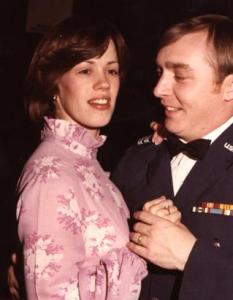
Kathryn and Gary Eastburn
The military panel didn’t believe Timothy Hennis and they found him guilty of the murders of Kathryn, Cara and Erin Eastburn. Hennis was lead away in handcuffs and for the second time in his life, he was sentenced to death. Timothy Hennis maintains his innocence, filed an appeal, and is fighting for a reversal of his conviction. Gary and his daughter Jana spoke to the press minutes after the verdict and expressed empathy for Timothy’s family despite their belief that justice was finally served. Jana Eastburn admitted she feels more at peace knowing that Hennis is behind bars. As of 2011, Timothy Hennis appealed his conviction and challenged the federal ruling regarding the double jeopardy clause. Timothy Hennis remains on military death row at Fort Leavenworth in Kansas.
Source: 20/20 on ID ‘Witness’
In 1985, a young military wife and two of her three little girls are viciously murdered in their home. In a twisted case filled with unusual suspects, the man who gets convicted goes free. But nothing is what it seems. -20/20 on ID
Robert Hansen was a mild-mannered family man with a passion for hunting. A master at his trade, Hansen sought a more challenging prey – his fellow human. Hansen kidnapped women, set them loose in the Alaskan wilderness, and hunted them down for sport. -Hunting Humans, Ice Cold Killers (S1, E1)
Serial killer and Army Reserves veteran Robert C. Hansen confessed to the murder of 17 women and the kidnapping and rape of another 30 women in Alaska. But the authorities believe there are many more victims and their cases are still open. Hansen was officially charged with the abduction and rape of Cindy Paulson and the murders of Joanna Messina, Sherry Morrow, Paula Goulding, and the unidentified body known as “Eklutna Annie.” On February 28, 1984, Robert Hansen was sentenced to 461 years plus life in prison with no parole. Hansen led the police to 17 grave sites he marked on a map but only 12 of his victims bodies were recovered. Robert Hansen’s health was declining for over a year when he died of natural causes on August 21, 2014 at the age of 75.
In 1982, two off-duty police officers were hunting for wild game. As darkness fell and they headed home, they made a gruesome discovery. They knew enough to back away and dispatched the Alaska State Troopers to the scene. The crime scene investigators unearthed the partial bones of a woman buried in a shallow grave. They also found bones scattered around the surrounding area. In Alaska, wild game won’t hesitate to drag off the evidence. They also found a 223 caliber bullet casing. The victim was bound and blind folded at the time of death, and she was shot three times. She was identified as Sherry Morrow; Sherry was drawn to Alaska for the easy money. She worked as an exotic dancer in a seedy area of Anchorage known as ‘Fourth Avenue’. Police looked to see if anyone else in that community had disappeared under similar circumstances. Before the discovery of Sherry’s body, none of the missing persons reports were linked or suggestive of murder. Morrow’s case inspired police to take a look at the cold case files.
Two years before Morrow’s body was found, construction workers found the partial remains of a woman buried in a shallow grave; her body was desecrated by wild life and her bones were scattered. Police couldn’t make an identification and dubbed their Jane Doe “Eklutna Annie”. Nobody ever came forward with information about Annie. Police were concerned they were dealing with a brutal killer so they started canvassing the area where the dancers spent their time. Sherry’s co-workers feared the worst because a number of women had gone missing and they were never heard from again. Over the next several years, five more dancers went missing. Police suspected Sherry and Annie’s cases were connected. They were all victims from the beginning because everyone preyed on these girls, including the bar owners and pimps. Several dancers reported seeing the same man and provided police with a physical description. Police learned of a third body found in a gravel pit near where Eklutna Annie’s body was found.
The victim was identified as Joanna Messina. She was a canary worker who was last seen leaving the dock with her dog and a red haired man her co-workers couldn’t identify. Messina was shot and killed with a 22, not a 223. Two more women vanished and were never seen or heard from again. The blindfolds at the crime scenes told the police a lot about the killer. He was a sexual sadist who wanted complete control. He derived pleasure from his victim’s fear and pain and disposed of their bodies in isolated areas in Alaska. Nine months later, a truck driver found a frantic hand-cuffed woman running in the road; someone with a gun ducked out of site. The trucker took her to a nearby hotel where she was safe and called the Anchorage police. The police found a 17-year-old woman still in handcuffs and in shock. She told the officers she was a topless dancer down on 4th Avenue; she said she was propositioned by a red haired man in his 40s the night before. She confessed that she accepted the stranger’s offer.
Once inside the man’s car, she said the man pulled a gun on her. He kidnapped her, handcuffed her, and told her if she cooperated and did what he wanted, she wouldn’t be harmed. He took her to a middle class house in Muldoon. He held her hostage in a basement filled with mounted heads of animals. He brutalized her for hours. He chained her to beam in the basement and repeatedly sexually assaulted her. She told the police he was going to fly her to his cabin in the woods, promising to release her if she cooperated. Once at the airport, the kidnapper shoved her in a small plane and began loading supplies. The second he turned his back, she made her escape. Hoping to corroborate her account, investigators took her to the airfield to find the plane. She identified a plane owned by Robert Hansen; he was a 50 year-old avid hunter and local business man. Hansen owned a well established bakery, had lot of friends, and went to church. By all accounts, he was an upstanding member of the community.
When questioned by police, Hansen was outraged and insisted the dancer was lying to extort money from him. He also questioned whether it was even possible to rape a prostitute. He claimed he had an alibi and told investigators his wife and children were in Europe and he spent the night playing poker with friends. When questioned, the two men substantiated his story. Hansen allowed authorities to search his home but they didn’t find evidence of what the victim described. She also refused to take a polygraph and this made the police wonder if she fabricated the story. It was a “he said, she said” case because they had no evidence. Citing a lack of evidence, the prosecutor dropped the case. Three months later, Alaska State Troopers discovered the partially decomposed remains of another woman in a shallow grave. She was identified as a missing dancer from the Fourth Avenue district. Investigators found a blindfold buried among the remains. An autopsy revealed Paula Goulding had also been shot by a 223 caliber bullet.
Initially, the police didn’t link the cases but the use of the 223 caliber bullet helped them realize they were dealing with a serial killer who was targeting exotic dancers in Anchorage. Troopers contacted the Federal Bureau of Investigation for assistance; agents created a behavioral profile of the serial killer. The killer believed he was invincible because he picked the perfect victims. He chose the dancers on Fourth Ave because he thought no one would care if they were missing. They started looking into Robert Hansen’s past. They learned he was abused as a child and had very low self-esteem. He was always considered small and had few friends; he was often ridiculed by his peers. After graduating from high school, Hansen enlisted in the Army Reserve and went to basic training at Fort Dix. He later received advanced training as a military police officer at Fort Knox. While enlisted in the Army, he was known to frequent prostitutes. He told fellow soldiers, he found them dissatisfying and yearned to take control of the situation.
Despite his strict up bringing and disciplined military structure, the profilers learned Hansen had a number of run-ins with the law. He served time for arson and theft but he appeared to have long since left that life behind. In 1967, he married and moved to Alaska. He was a functioning member of society. They believe his low self-esteem would drive him to live in a place like Alaska. His former neighbor told investigators he loved the thrill of the hunt; and he was always looking for the bigger hunt. He was an avid trophy hunter. Hansen’s weak point was women because he was unsuccessful with them. He hunted where most of the victims were found. “Perhaps Hansen tired of game and turned to more interesting prey like humans.” Humans create a much greater challenge to the hunter. Police deduced he most likely had trophies from his hunts for humans. The killer was a sexual sadist, proficient, and more successful over time. Authorities threatened the two men who alibied him with jail time if they didn’t come clean about the night the dancer was abducted.
Both friends quickly broke down and said they were covering for him because they thought he was a legitimate guy. They believed him when he said he thought the dancers were trying to extort him. The police asked Hansen to come down to the station and executed a search warrant. An officer searched the attic and in the rafters he found a bag of jewelry. And nestled with his bag of trophies, they found IDs belonging to the victims and newspaper clippings. Authorities also found a trophy map with locations of where he killed his victims. Hansen tracked his kills. The most critical find was a 223 caliber mini 14 rifle. The rifle was sent to the crime lab for further analysis. The 223 matched perfectly with the round they found in Eklutna. Robert Hansen was charged with assault and kidnapping. Despite his pleas of innocence, the evidence was mounting against him. The District Attorney agreed to charge Hansen with four murders: Sherry Morrow, Eklutna Annie, Joanna Messina, and Paula Goulding. Hansen accepted a plea deal. Police believe he chose prostitutes because they represent the evil in humans.
Robert Hansen chose prostitutes because they will go anywhere for anything and when they disappear, no one cares. He admitted he controlled the game from the point of abduction. He was the predator and they were they prey. He killed Eklutna Annie first. Then he abducted Sherry Morrow. He took most of his victims to his remote cabin and brutalized them for hours before he stripped them naked, blindfolded them and then released them in the woods. He turned them loose, gave them a head start, and hunted them down. He was a trophy hunter. He then collected things off the girls so he could re-live the events. Robert Hansen’s killing spree lasted twelve years in Alaska. Hansen confessed to 17 killings but it is believed he had many more victims. He eventually lead police to 15 gravesites unknown to investigators. Unfortunately, investigators only recovered 7 bodies likely due to the veracious animal activity in the Alaskan wilderness. Robert Hansen was sentenced to 461 years plus life in prison with no chance of parole.
A Killer Among Us: Inside the Hunt for an Alaska Serial Killer (June 11, 2017, KTUU-Channel 2, Anchorage, Alaska)
The Frozen Ground Movie (2012)
THE FROZEN GROUND Official Trailer (2013)
The Frozen Ground – Clip 3 | Lionsgate
The Frozen Ground (2012) – Chained Scene (1/10) | Movieclips
The Frozen Ground (2012) – The Lucky One Scene (2/10) | Movieclips
The Frozen Ground (2012) – Pole Dancing Scene (3/10) | Movieclips
The Frozen Ground (2012) – Hunting Her Scene (4/10) | Movieclips
The Frozen Ground (2012) – On the Run Scene (5/10) | Movieclips
The Frozen Ground (2012) – Shock at the Strip Club Scene (6/10) | Movieclips
The Frozen Ground (2012) – The Interrogation Scene (7/10) | Movieclips
The Frozen Ground (2012) – From Bad to Worse Scene (8/10) | Movieclips
The Frozen Ground (2012) – He’s Coming Scene (9/10) | Movieclips
The Frozen Ground (2012) – Truth Comes Out Scene (10/10) | Movieclips
Based on a true story. An Alaskan State Trooper (Nicholas Cage) must partner with a near victim and the only witness to escape the clutches of the serial killer in order to bring the murderer to justice. -The Frozen Ground
Frozen Ground – Examining the Frozen Ground
Editor’s note: With a cable subscription, you can download the free ID Go app and watch all of the Investigation Discovery programming at your convenience. And for those who do not have cable, you can watch “unlocked” episodes on the ID Go app including the latest premieres. Download the ID Go app and binge away. For those who prefer commercial free programming during your binge session, Prime Video has an ID channel: ‘True Crime Files by Investigation Discovery” available for $2.99 a month. It’s a compilation of older seasons but totally worth the cost if you are a true crime addict.











 MILITARY JUSTICE FOR ALL