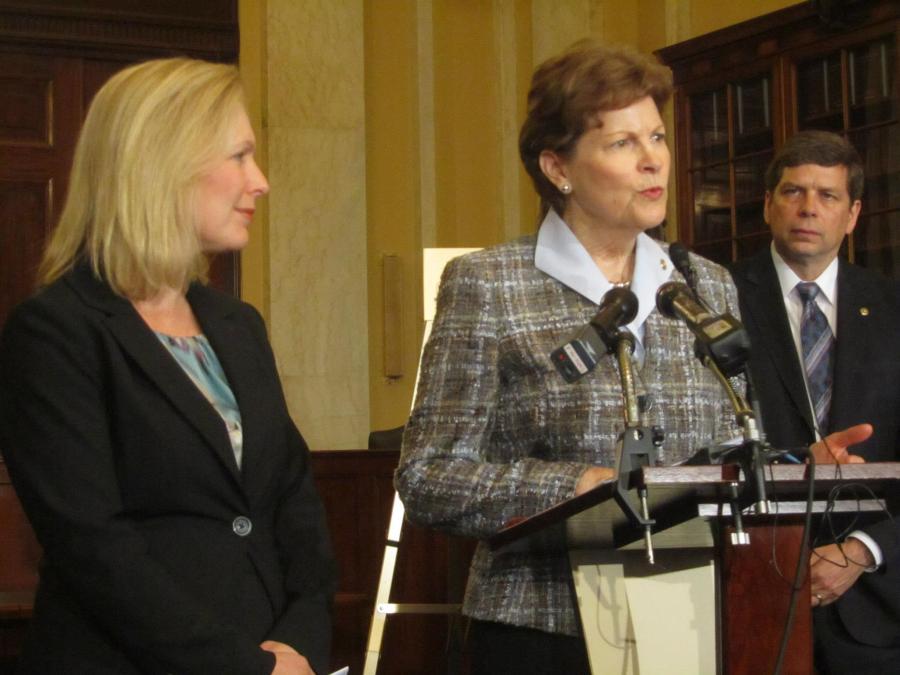
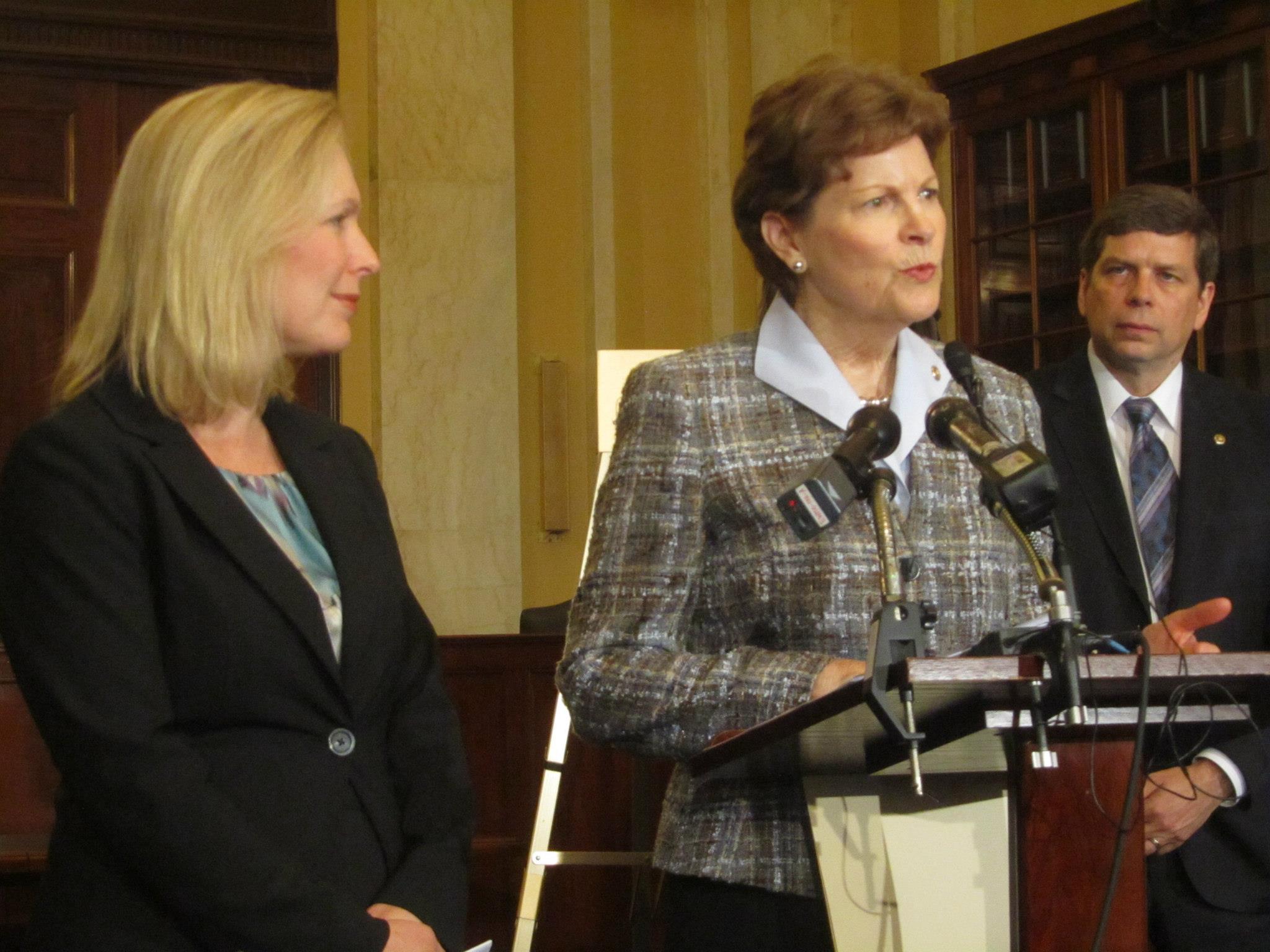
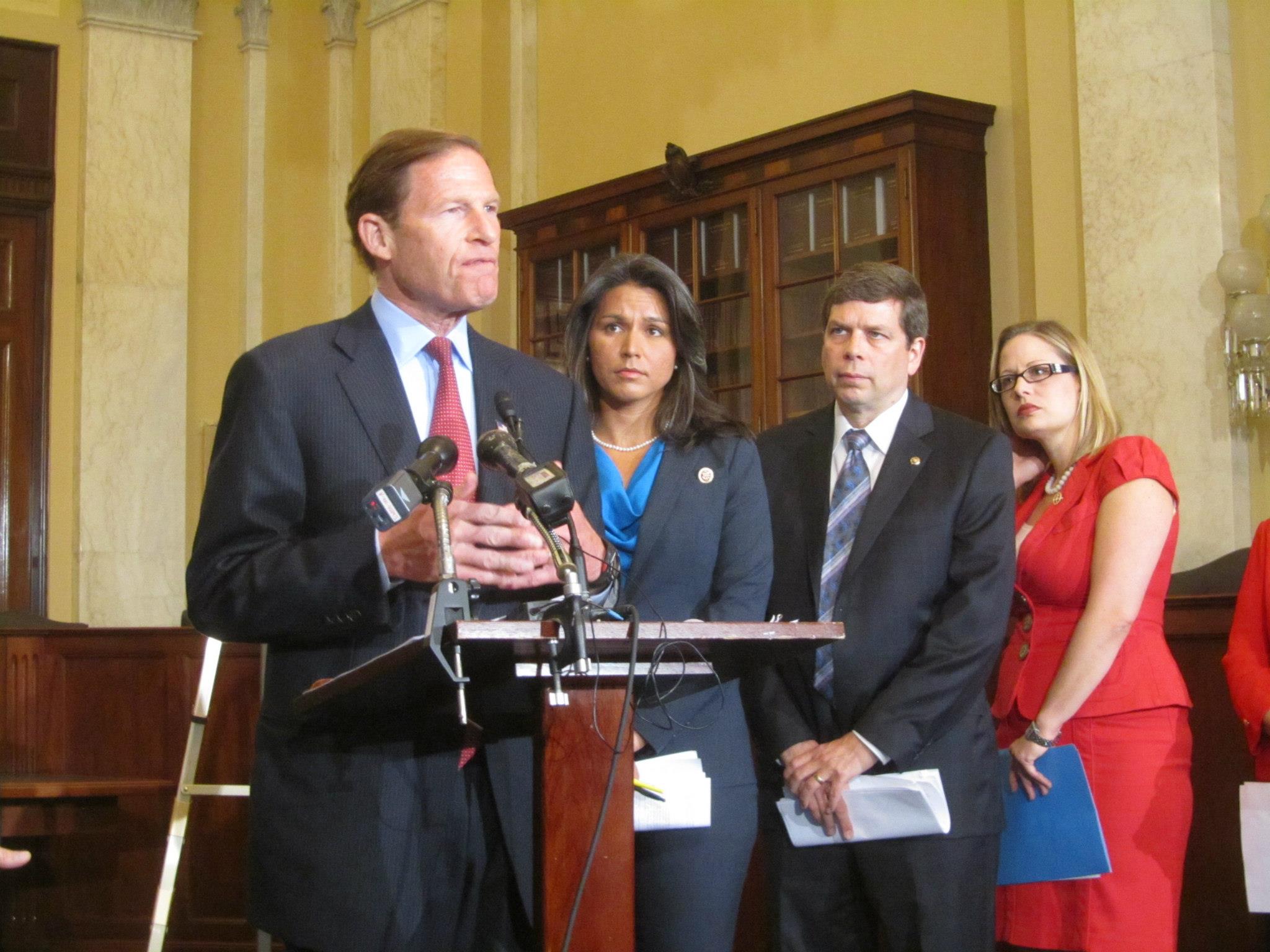
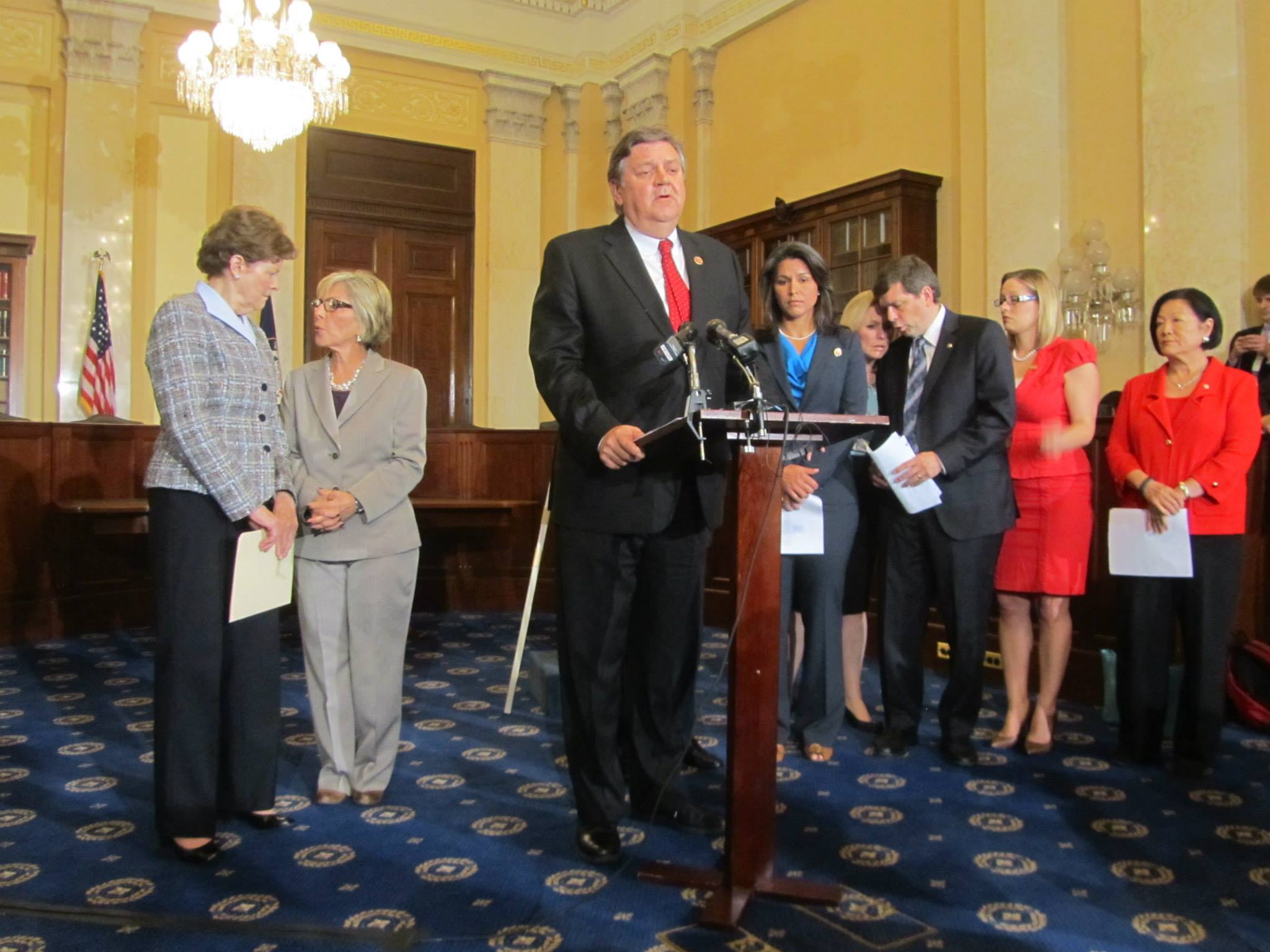
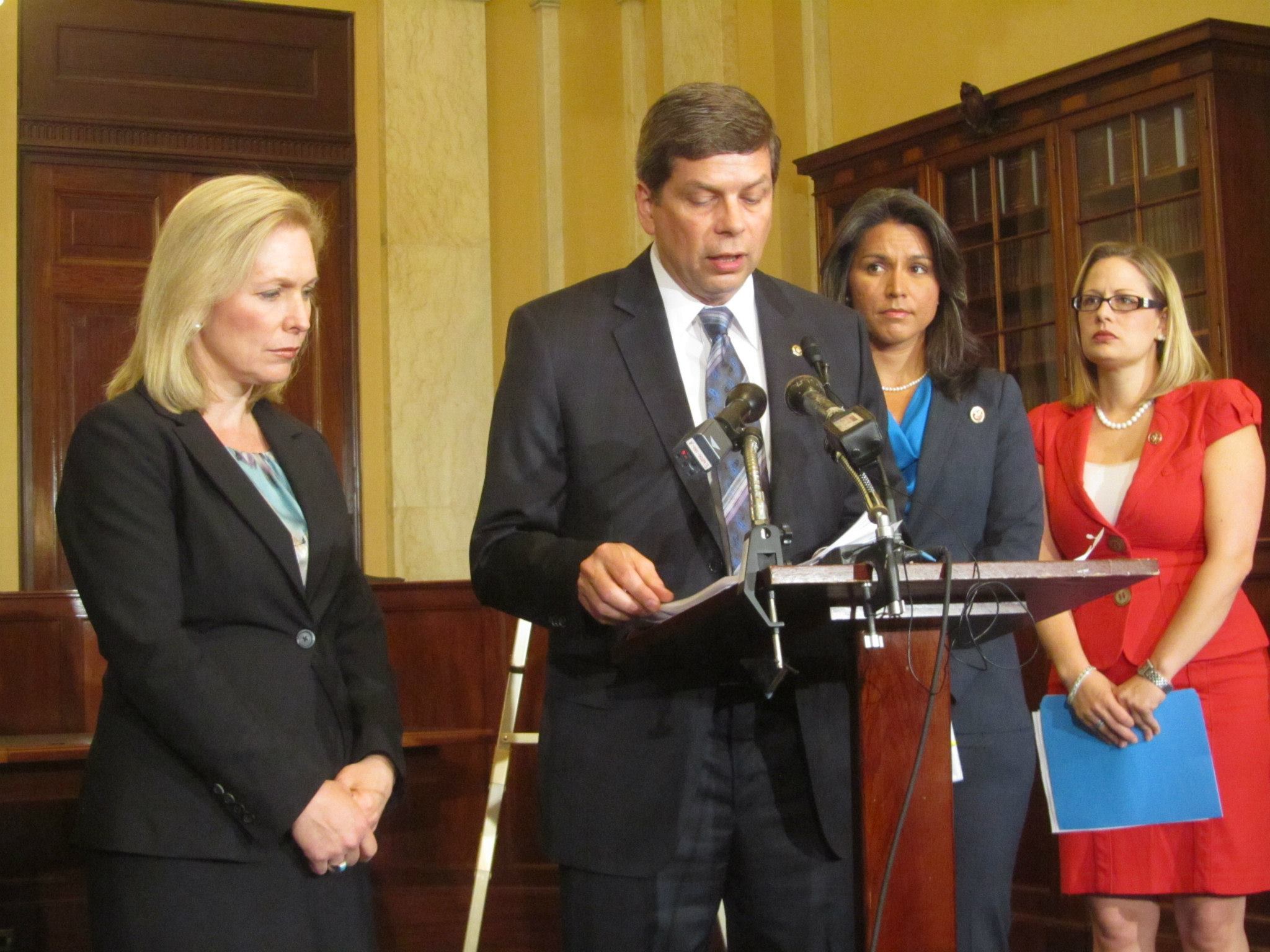
Washington D.C. – During a news conference today, U.S. Senators Susan Collins and Kirsten Gillibrand (D-NY), along with a bipartisan group of their colleagues in the Senate and House, announced new legislation that would reform the military justice system by removing the prosecution of all crimes punishable by one year or more in confinement from the chain of command, except crimes that are uniquely military in nature, such as disobeying orders or going Absent Without Leave.
Senators Collins and Gillibrand were joined by survivors of sexual assault in the military, including Jennifer Norris of Maine, and by representatives from organizations who assist victims of Military Sexual Trauma. The Military Justice Improvement Act would for the first time remove the decision whether to take a case to special or general court-martial completely out of the chain of command and give that discretion to experienced military prosecutors for all crimes punishable by one year or more in confinement, except crimes that are uniquely military in nature, such as disobeying orders or going AWOL.
“To be sure, the vast, overwhelming majority of our military personnel are honorable, conscientious, and respectful individuals, not rapists or harassers. It is for their sake that the pattern of covering up, blaming the victim, and failing to provide even the most basic protections that has been all too common for far too long must end,” said Senator Collins. “What does it say about us as a people, as the nation, as the foremost military in the world when some of our service members have more to fear from their fellow soldiers than from the enemy? This epidemic of sexual abuse cannot stand. We must ensure that justice is swift and certain to the criminals who have perpetuated these crimes.”
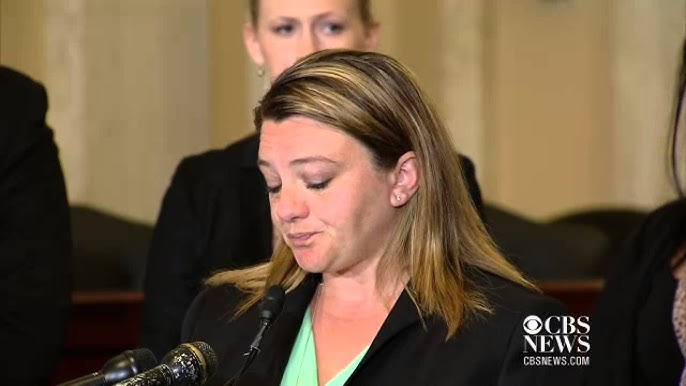
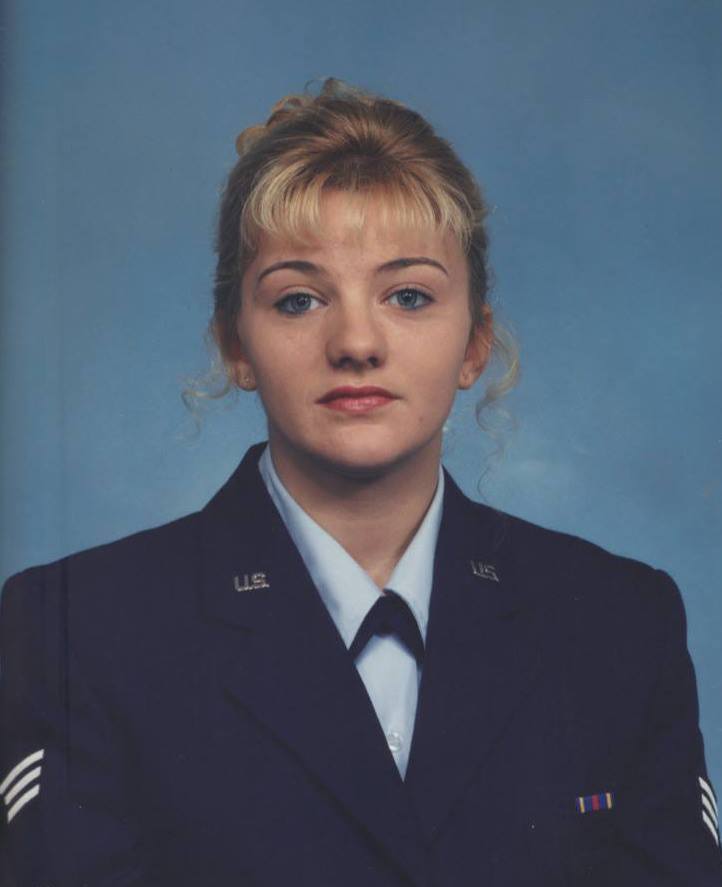
With tears streaming down her face, Jennifer Norris, a former Technical Sergeant in the Air Force, describes her harrowing experience with sexual assault and the difficulty she had in seeking justice within the military chain of command, saying, “The system is rigged against the victims” and in favor of the “often higher-ranking perpetrators.” [VIDEO]
Norris, who did not serve in Hawaii, said she’d been reluctant to report the rape because, “in the Air Force, I witnessed first hand what happens to those who stepped forward to report their assaults. I did not want to be stigmatized for reporting my assault — as I tried to move forward with my career. Instead, the best option for me was to try and endure it, to suck it up and try and make it until I could get transferred somewhere else — only to have it happen over and over again, like a recurring nightmare.”
She never did get justice, she said, even when she did come forward. “My perpetrators were allowed to resign in lieu of Administrative Hearings, which would have become a matter of public record. My command never offered the chance to proceed with a court martial.”
She said, “If the chain of command had been removed from handling sexual assault cases before I was attacked I believe justice would have been served or perhaps it would have been prevented in the first place.”
“At first I was too afraid to report my assault to my chain of command, but two years later I was forced to report due to the escalation of the behavior and the fear that I would be raped again.” -Jennifer Norris (Civil Beat, May 16, 2013)
Gillibrand: “I’m Distressed That The Victims’ Voices Aren’t Being Heard In This Debate
New legislation would make it easier for victims of sexual assaults in the military to come forward.
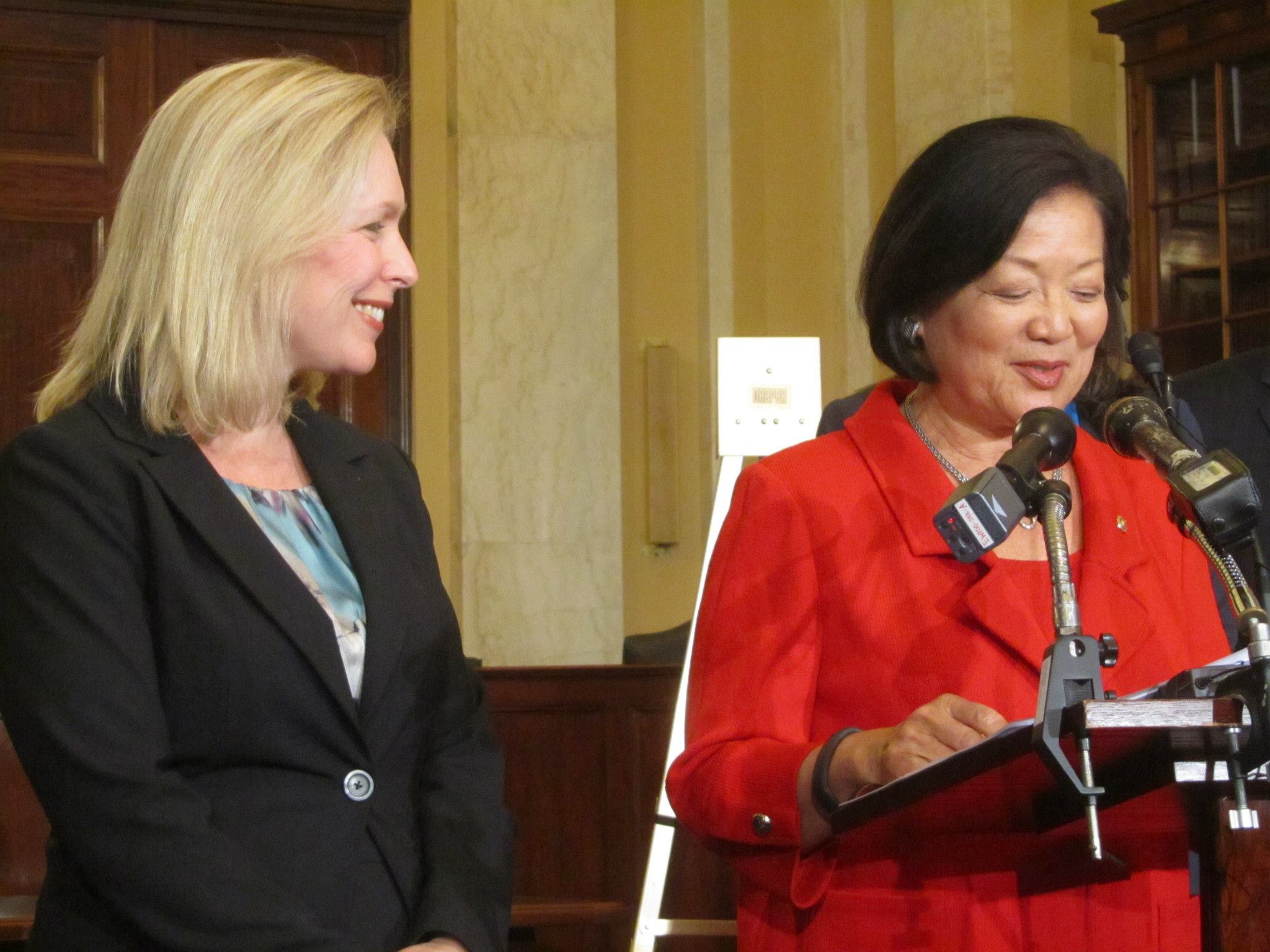
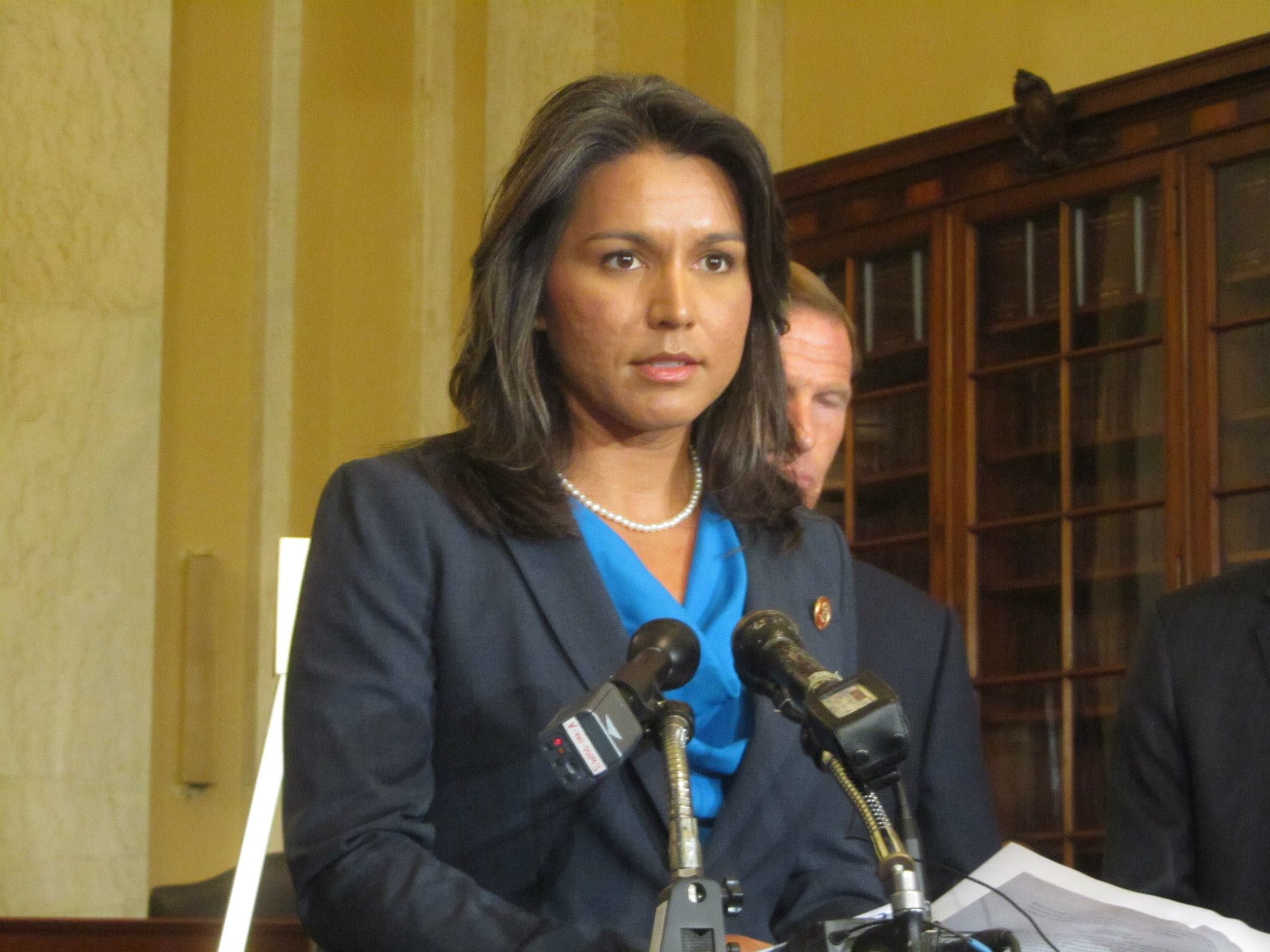
“WASHINGTON, D.C. — A burgeoning scandal over sexual assaults in the military is fueling calls from congressional lawmakers on both sides of the aisle to support a bill that gives victims greater confidence that they’ll get justice. At an emotional press conference on Thursday where former service members spoke of being sexually assaulted while in the military, Sen. Mazie Hirono and Rep. Tulsi Gabbard joined a bipartisan group in both chambers in pushing for reform. The issue was a personal one for Gabbard, who served two tours of duty in the Middle East with the National Guard. Though she was not available for comment Thursday, she told CNN earlier this month that rape culture was prevalent during her first deployment to Iraq, to the point where soldiers were trained on protecting themselves from other soldiers.”
At [the] press conference, Jennifer Norris said she was raped while serving in the U.S. Air Force. “At first I was too afraid to report my assault to my chain of command, but two years later I was forced to report due to the escalation of the behavior and the fear that I would be raped again,” she said. Norris…said she’d been reluctant to report the rape because, “in the Air Force, I witnessed first hand what happens to those who stepped forward to report their assaults. I did not want to be stigmatized for reporting my assault — as I tried to move forward with my career. Instead, the best option for me was to try and endure it, to suck it up and try and make it until I could get transferred somewhere else — only to have it happen over and over again, like a recurring nightmare.” –Honolulu Civil Beat (May 16, 2013)
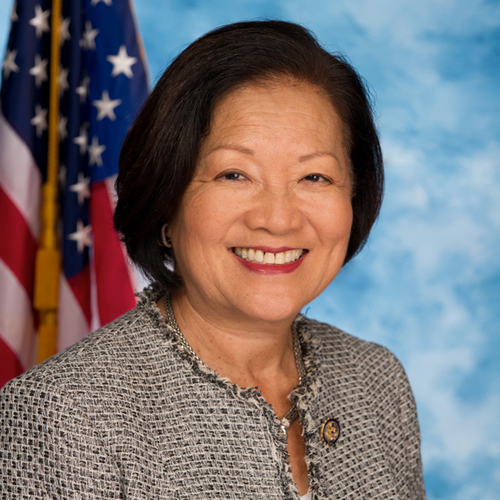
U.S. Senator Mazie K. Hirono was joined today by victims of sexual assault in the military and organizations who assist victims of Military Sexual Trauma (MST) to announce new bipartisan, bicameral legislation that would reform the military justice system by removing the prosecution of all crimes punishable by one year or more in confinement from the chain of command, except crimes that are uniquely military in nature, such as disobeying orders or going Absent Without Leave. -Mazie Hirono (September 25, 2013)
Senator Mazie K. Hirono joined a diverse coalition, led by Senator Kirsten Gillibrand (D-NY), to call for the creation of a fair military justice system to reverse the systemic obstacles that sexual assault victims face. The Military Justice Improvement Act would remove the military’s chain of command’s sole decision-making power over whether cases move forward to trial. -Mazie Hirono (November 6, 2013)
Hirono Speaks In Support Of The Military Justice Improvement Act. -Mazie Hirono (November 14, 2013)
With Vote Looming, Hirono Urges Support For Military Justice Improvement Act -Mazie Hirono (November 20, 2013)
Before Senate Vote, Hirono Urges Colleagues To Pass Military Justice Improvement Act -Mazie Hirono (March 6, 2014)
PBS NewsHour: Hirono Fights For Military Justice Improvement Act -Mazie Hirono (March 7, 2014)
Senator Hirono Calls to Address Military Sexual Assault -Mazie Hirono (May 24, 2016)
Senator Hirono Presses Marine Corps Commandant for Commitment to Address Military Sexual Assualt -Mazie Hirono (March 14, 2017)
Hearing is Gillibrand’s First As Chair Of Senate Armed Services Subcommittee On Personnel – Has Been Leading The Fight To End Sexual Violence In Military
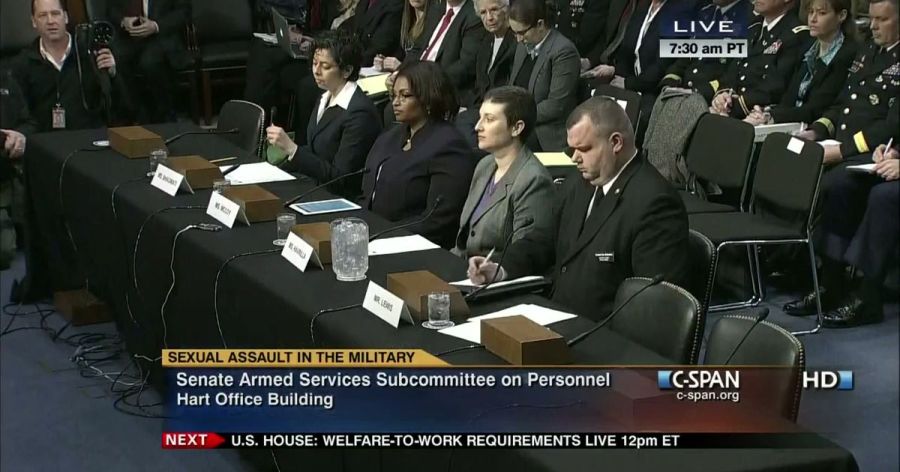
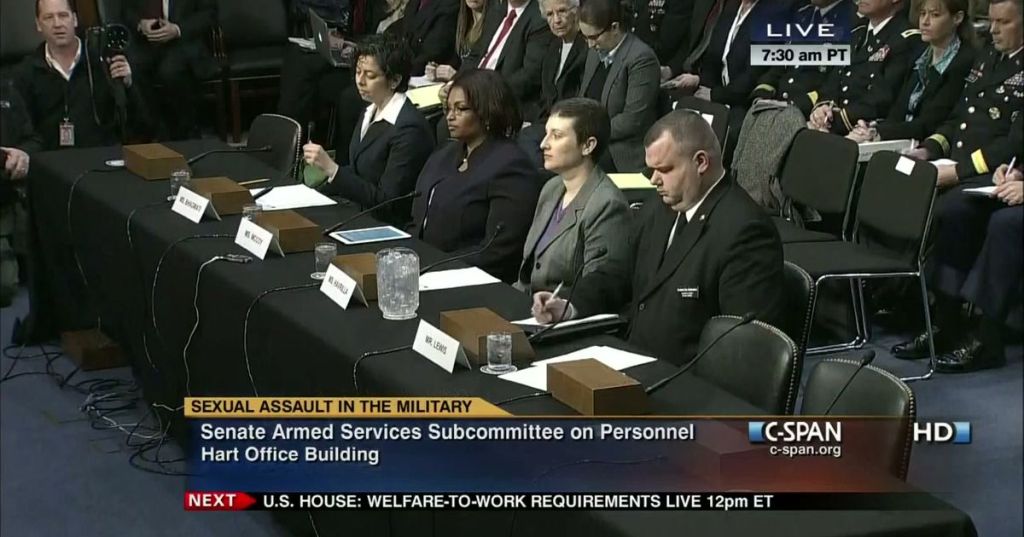
Washington, D.C. – U.S. Senator Kirsten Gillibrand released the following prepared remarks of her opening statement at today’s Senate Armed Services Subcommittee on Personnel hearing examining sexual assault in the military:
“It is an honor and privilege to Chair this hearing of the Personnel Subcommittee this morning. I want to thank the Ranking Member of this Subcommittee, Senator Lindsey Graham, for his support and working with me to move this hearing forward as quickly as possible.
“I know that all of our colleagues on the Armed Services Committee share our deep commitment to improving the quality of life of the men and women who serve in our all-volunteer force on active duty, or in the National Guard and Reserves, their families, military retirees, and Department of Defense Civilian personnel.
“And that is why this hearing today is so important to me personally…and to thousands of servicemembers…and their families across the country.
“The issue of sexual violence in the military is not new. And it has been allowed to go on in the shadows for far too long. The scourge of sexual violence in the military should be intolerable and infuriating to us all. Our best, brightest, and bravest join our armed forces for all the right reasons – to serve our country, protect our freedom, and keep America safe.
“The United States has the best military in the world and the overwhelmingly vast majority of our brave men and women serving in uniform do so honorably and bravely. But there is also no doubt that we have men and women in uniform who are committing acts of sexual violence and should no longer be allowed to serve.
“Too often, women and men have found themselves in the fight of their lives not in the theater of war – but in their own ranks, among their own brothers and sisters, and ranking officers, in an environment that enables sexual assault.
“And after an assault occurs, an estimated 19,000 sexual assaults happened in 2011 alone according to the Defense Department’s own estimates…some of these victims have to fight all over again with every ounce of their being just to have their voice heard…their assailant brought to any measure of justice… and the disability claims they deserve fulfilled. Congress would be derelict in its duty of oversight if we just shrugged our shoulders at these 19,000 sons and daughters…husbands and wives…mothers and fathers…and did nothing. We simply have to do better by them.
“When brave men and women volunteer to serve in our military they know the risks involved. But sexual assault at the hands of a fellow service member should never be one of them.
“Because not only does sexual assault cause unconscionable harm to the victim — sexual violence is reported to be the leading cause of post-traumatic stress disorder among women veterans — but it destabilizes our military, threatens unit cohesion and national security. Beyond the enormous human costs both psychologically and physically, this crisis is costing us significant assets – making us weaker both morally and militarily.
“Already, this Committee and the Pentagon took some first steps on this issue as part of last year’s National Defense Authorization bill that President Obama signed into law. While obviously our work is not done, I am hopeful that we can build on these initial changes which include:
Ensuring that all convicted sex offenders in the military are processed for discharge or dismissal from the Armed Forces regardless of which branch they serve in;
Reserving case-disposition authority for only high-ranking officers in sexual assault cases;
Pushing the Pentagon to lift the combat ban that prevents women from officially serving in many of the combat positions that can lead to significant promotion opportunities. By opening the door for more qualified women to excel in our military, we will have increased diversity in top leadership positions, improving response from leadership when it comes to preventing and responding to sexual violence;
And an amendment introduced by my colleague Senator Jeanne Shaheen and based on my legislation, the MARCH Act, means that troops who become pregnant as a result of an act of rape no longer have to pay out of pocket to have those pregnancies terminated.
“Concerning our first panel of witnesses, I want to salute each of you for your courage today in telling your very painful and personal stories. It is my hope and belief that by committing this selfless act you are encouraging others to step forward and are also helping to prevent other crimes from going unpunished.
“We have a duty to you, and the thousands of victims you represent, to examine whether the military justice system is the most effective and fairest system it can be.
“Despite some very dedicated JAG officers, I do not believe the current system adequately meets that standard. The statistics on prosecution rates for sexual assaults in the military are devastating. Of the 2,439 unrestricted reports filed in 2011 for sexual violence cases – only 240 proceeded to trial. Nearly 70 percent of these reports were for rape, aggravated sexual assault or non-consensual sodomy.
“A system where less than 1 out of 10 reported perpetrators are held accountable for their alleged crimes is not a system that is working. And that is just reported crimes. The Defense Department itself puts the real number closer to 19,000! A system where in reality less than 2 out of 100 alleged perpetrators are faced with any trial at all is clearly inadequate and unacceptable.
“My view is that emphasizing institutional accountability and the prosecution of cases is needed to create a real deterrent of criminal behavior. The system needs to encourage victims that coming forward and participating in their perpetrator’s prosecution is not detrimental to their safety or future, and will result in justice being done. Because currently, according to the DOD, 47 percent of service members are too afraid to report their assaults, because of fear of retaliation, harm or punishment. Too many victims do not feel that justice is likely or even possible.
“We need to take a close look at our military justice system, and we need to be asking the hard questions, with all options on the table, including moving this issue outside of the chain of command, so we can get closer to a true zero tolerance reality in the Armed Forces. The case we have all read about at Aviano Air Base is shocking, and the outcome should compel all of us to take the necessary action to ensure that justice is swift and certain, not rare and fleeting.
“I had the opportunityto press Secretary Hagel on the issue of sexual violence in the military during his confirmation hearing. Secretary Hagel responded by saying, ‘I agree it is not good enough just to say zero tolerance. The whole chain of command needs to be accountable for this.’
“I could not agree more. I was very pleased with the Secretary’s public statement earlier this week that he is open to considering changes to the military justice system as well as legislation to ‘ensure the effectiveness of our responses to the crime of sexual assault.’
“It is with this spirit as our guide that I look forward to hearing from our witnesses.
“After Ranking Member Graham makes his opening remarks, we will hear testimony from my colleague from California, Senator Barbara Boxer who has been a leading voice on this issue. In last year’s Defense bill she successfully included an amendment that prohibits any individual who is convicted of a felony sexual assault from being issued a waiver to join the military.
“We will then have the following witnesses who have either been the victims of sexual assault while serving in the military, or are very knowledgeable advocates for addressing the issue of sexual assaults in the military:
Anu Bhagwati is Executive Director and Co-Founder of the Service Women’s Action Network. Anu is a former Captain and Company Commander, she served as a Marine officer from 1999 to 2004. While serving, Anu faced discrimination and harassment as a woman in the military, and has borne direct witness to the military’s handling of sexual violence.
BriGette McCoy, former Specialist in the U.S. Army. BriGette served in the U.S. Army from 1987 to 1991. She was just eighteen years old when she signed up to serve her country in the first Gulf War. While stationed in Germany from 1988 to 1991, she was sexually assaulted by a non-commanding officer.
Rebekah Havrilla, former Sergeant in the U.S. Army. Rebekah served in the U.S. Army from 2004 to 2008. She was the only female member of a bomb squad in eastern Afghanistan and was attacked by a colleague at Salerno Forward Operating Base near the Pakistani border during her last week in the country in 2007.
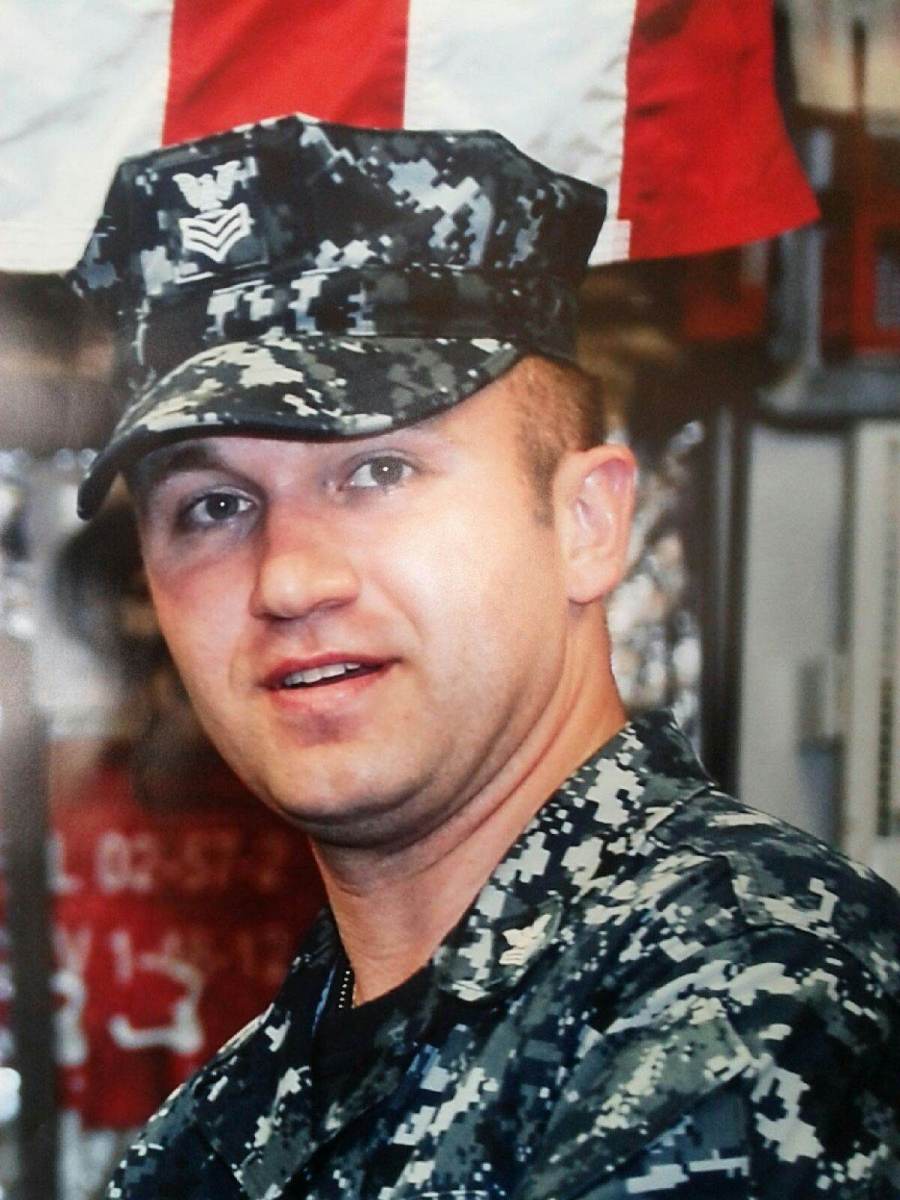
Brian Lewis, former Petty Officer Third Class, US. Navy. Brian enlisted in the U.S. Navy in June of 1997. During his tour aboard USS Frank Cable (AS-40), he was raped by a superior non-commissioned officer and forced to go back out to sea after the assault.
“I encourage you to express your views candidly and to tell us what is working and what is not working. Help us to understand what we can do to address this unacceptable problem of sexual assaults in the military.
“Later this afternoon at 2:00 p.m., we will have a third panel of witnesses from the Department of Defense, and the military services, including the Coast Guard. I want to acknowledge that many of those witnesses are here this morning to listen to the critically important testimony from our first and second panels and I would like to thank them for their participation.”
It is with a heavy heart that I sit here today. Because, I am not only speaking for myself but I am speaking for thousands and thousands of male and female survivors, both military and civilian, whose lives have been forever altered by the military’s sexual assault epidemic, a culture that punishes the victim, and a broken military justice system.
Core issues must be addressed. The military justice system elevates an individual’s discretion over the rule of law. The system is encumbered with personal bias, conflicts of interest and abuse of authority. The cycle of repeated scandals, self‐investigations, and ineffective reforms must be broken. Click here for full House Armed Services Committee testimony.
I want to recognize the service members who have not survived due to non‐combat deaths, murder, and suicide and their families who are still waiting for answers. -Jennifer Norris, USAF Retired
Please note the same day of the military sexual assault hearings before the House Armed Services Committee on January 23, 2013, Secretary of Defense Leon Panetta announced the Pentagon was lifting the women in combat ban.
Technical Sergeant Jennifer Norris Testifies Before Congress
Personal Story:
I am older now and I have had a lot of time to reflect back on what happened to me. And it is now evident to me that I am one of many who have experienced the same kind of treatment simply because I reported sexual assault by a fellow, higher-ranking soldier.
I was raised by a father who worked hard as a logger his entire life. He taught me early in my childhood that I was equal with my brothers. I was expected to help prepare the firewood every season, I was expected to help mow the fields, and I was included in any and all activities. I grew up in a small town and never once experienced someone trying to harm me in a violent way or discrimination based solely on my gender. I grew up with a sense of confidence and determination that I could do anything I wanted to with my life. That is the American dream, right?
I learned quickly after joining the USAF that I had stepped into a whole new world, one that eventually made me feel like I was dealing with an underground mob. Shortly after I enlisted, I was invited to a “new recruit” party. I was really excited to attend so that I could meet others who were also going through the excitement and fear of becoming a soldier. Instead I became the victim of a calculating predator who used the “party” as a way to set up his attack. And, as I commonly see in many of the cases in my work as a victim advocate, he used alcohol as his weapon. When he was unable to pressure me to drink, he used whatever means necessary to incapacitate his victim. When I was raped, I was chemically restrained and could not move; yet I knew what was happening to me. In my work as a victim advocate, I frequently saw this same modus operandi.
I didn’t report that crime and here is why. I could not face that it happened. I didn’t want to start out my military career like that and so I determined that I would never talk about it to anyone. From that day forward, I avoided the recruiter at all costs and soldiered on. I have never seen him since.
I had an amazing basic training experience at Lackland. My military training instructor was SSgt Knight and this professional NCO taught me how to be a good follower and he also believed in my leadership skills.
The majority of the people that I served with were amazing, inspiring individuals who truly were dedicated to the mission. But just like me, there are far too many who fall victim to manipulation and abuse of authority by perpetrators who are higher ranking and have more credibility with those who are in charge. We have no choice but to acquiesce when under the leadership of a heavy fisted Chain of Command.
I was assaulted a second time at Keesler Air Force Base after Basic Training by my instructor. I was attending Satellite and Wideband Communications technical school. I was there for 6 months. While there, I learned very quickly that if you reported sexual harassment, assault, or were offended by someone’s lewd and crude remarks that you will be quickly turned out of the Air Force. So, I planned to get through it, go back home and serve with the Maine Air National Guard, where I thought I would be safe. I just sucked it up and kept my mouth shut so I could graduate. I watched an Active Duty Air Force female, who to this day is one of my best friends, get swiftly booted from the military, after she reported that one of her instructor’s made derogatory remarks to her during class. This girl was 19 years old. The military training managers engaged in what appeared to be a witch-hunt and looked for anything and everything to kick her out. In the end, they were successful. Today she suffers severe PTSD from this experience.
A few very significant things happened while I was at Keesler. One of the female airman that I was going to school with admitted that she had sex with her recruiter. This conversation was in the presence of another Maine Air National Guardsman who shared that the same recruiter who raped me had also sexually assaulted his cousin, who as a result did not join the military. When he explained to me how it occurred, my blood began to boil with rage because I recognized the pattern immediately. The recruiter had done the same thing to me and I determined I was going to press charges against him, when I returned home, to stop him from harming anyone else.
The Post Traumatic Stress, which I didn’t realize I had, kicked in to overdrive after learning this information. I wanted to take action. I did an impulsive thing. I called up the recruiter who raped me and told him I was going to press charges against him and that I knew what he had done to another girl as well. He quickly hung up on me. My thinking was maybe just maybe he would be too scared to try this again.
About two weeks before graduation from Keesler, I was performing a maintenance loop on a mobile satellite communications van as part of the testing to move on to the next block. I had it down. I loved my job and everything stuck. For this test, we needed to step inside the enclosed satellite communications maintenance van. The instructor shut the door and stood there with his clipboard behind me while I configured the van. Shortly after starting the task, he came up from behind me, attacked me, pushed me into the wall of the van, rubbed his groin area on my body and whispered in my ear, “let me help you, let me help you.” Those words trigger me to this day.
I got angry, I flipped out and pushed him away and told him not to touch me ever again. He was surprised and didn’t say a word. My fight or flight response had kicked into overdrive and my anxiety was so high that I was shaking while I finished configuring that van and waited for him to give me permission to leave the enclosed van. But, I did it. I passed the test.
Unfortunately, it did not end there. This TSgt told me to stay behind after class. Because I could not disobey a direct order without consequences, I stayed only for him to tell me that he was going to fail me for attitude even though I passed the final test. I immediately broke down and started crying. All I could say is why are you doing this to me? Why? I begged him to reconsider. He told me to report the next morning an hour before the rest of the class and he would reconsider. I did not do as ordered.
Instead of going to school the next morning, I went to the Air National Guard liaison, who I had established a nice relationship with, and I informed her that my instructor wanted to fail me for attitude, despite passing my test. The Guard gave the TSgt. a call. He acquiesced and I was told to report to my next class. While at technical school training at Keesler, I never saw him again. I did not report this crime for a number of reasons. First I witnessed first hand what happens when you report that type of behavior. Second, I was only two weeks away from graduation, and, third, I did not want an investigation launched and risk being stuck on that base with that predator. Lastly, I did not want to be stigmatized as a female who alleges sexual assault before I had even entered the operational Air Force. These fears and attitudes exist to this very day.
When I got back to the Maine Air National Guard, the recruiter was gone. He had quit his full time AGR position, which rarely happens in the National Guard. He was a MSgt and he effectively gave up his career and his retirement. He moved to North Carolina. I was so relieved that he was gone. Again, I did not report because I knew I could potentially lose my career. I let myself become excited about starting my new career. I planned on staying in for 20 plus years and despite being raped and assaulted in the first year of my career, I loved being in the military, I loved my job, and I loved being a part of a family and a team.
I thought I would be safe at the Maine Air National Guard. The Commander put me to work as soon as I got back from Technical School to help me transition back into civilian life and I totally excelled and became a superior performer. As a result, unbeknownst to me my Commander asked my NCOIC to coordinate hiring me as temporary federal technician. My NCOIC notified me and began the hiring process. I was ecstatic beyond belief and made the most money I had ever made for doing a job I loved!
Shortly after beginning my job, I noticed that the Maintenance Superintendent, also my NCOIC, and boss began treating me differently than the guys. It made me feel uncomfortable, because I didn’t want the guys I worked with to be resentful. But, I also knew that I was a great troop, so I ate up all the extra responsibility that was assigned thinking he must recognize that I am a true leader. No, that was not the case at all. Eerily similar to the recruiter, my NCOIC was beginning to set up his attacks. He began assigning me jobs that would isolate me so that he could make his move. He would give me the assignment, then show up unexpectedly to “check in on me,” but instead forced himself on me every chance he got. I could not escape. The abuse escalated over time and he became more abusive the more I resisted and told him NO. His attitude was that I should be flattered that he wanted me. I was in pain. I was there to do a job, to serve my country, why must I deal with this?
The more I fought him off and begged him to stop, the more he would escalate. He regularly forced himself on me, but when I fought back, he called me names and belittled me. He would tell me that my breasts were too small and tell me that it would be in my best interest. I was too scared to report this behavior because he was the Commander’s right hand man. And in the military, rank does come with its privileges including the higher rank you are the more credibility you have with the Commander. After what happened with the recruiter and the technical school instructor, I was already fearful of rank and abuse of authority.
Meanwhile, while my NCOIC was sexually assaulting me and abusing me during the week, there was another National Guardsman, who was considered a weekend warrior, doing the same exact thing to me. I did my best to stay clear of both but they would sneak up on me when I was least expecting it. It was like it became a sick game for them. To this day, I cannot handle anyone coming up behind me or hovering near me. I watched both of them escalate while I felt powerless to do anything about it, if I wanted to save my career. After a while, they did it in front of people as well and nobody said or did anything. Why would bystanders put their career at risk for me? I felt totally isolated.
One night when my NCOIC attempted to rape me in a drunken rage, I started screaming and someone heard me. I escaped but I fell apart. I turned into an emotionless robot. I continued to do a good job but I was dying inside. My attitude began to suffer. I was looking for a way out. One day, one of the professional NCOs in our squadron approached me and said he was concerned about me. I had just received an award for Superior Performer during an Operational Readiness Exercise, but I wanted to get out and he wanted to know why. All it took was that one person showing genuine concern and care for the floodgates to open.
I immediately started crying and opened up to him forgetting that by military law, he was supposed to report any crimes that he became aware of. I begged him not to report because I was afraid that it would end my career. He told me if I did not report that he would. I then reported all four of the perpetrators to my Commander.
The Commander initially doubted me. It was not until after I provided him with proof that he raised from a seated position in anger and screamed with powerful emotion, “he betrayed me.” The Commander then told me he had instructed my NCOIC to hire me because of my excellent work performance. We discussed the recruiter and he admitted he was confused why the recruiter suddenly gave up his career and retirement, but it all made sense to him now. All of these predators appeared to be stellar troops. All of them had histories of sexually assaulting others.
In many ways, I am one of the lucky ones, which is sad to say. My Commander believed me. He did the best he could to handle the case against my NCOIC and the National Guardsman given the complexities involved. He strove to be fair, neutral, and impartial. I was forced to leave the Squadron if I wanted to be safe, while he conducted the investigation. Because he could only investigate on Guard weekends, the case got dragged out for months. While I was isolated at Headquarters, the two predators were able to stay and inject their version of how things went down. They had all that time to convince many in the squadron that I was the bad guy. After they admitted guilt the day prior to the administrative hearing, they were both forced to leave my squadron and I was allowed to return.
Sounds like a success story right? Wrong. My Commander deemed the crimes sexual assault. When the crimes were reported to the Adjutant General for the state, it somehow became sexual harassment. Our only recourse was to file an EEO complaint. I filed the complaints against two of the four perpetrators, because we didn’t have jurisdiction over the Active Duty Air Force Technical School Instructor and the Recruiter had skipped town. I had no one assisting me.
I was contacted by one of the perpetrator’s lawyers both on the phone and in writing. I never responded. While waiting for the investigation to conclude, I was physically attacked by a friend of one of the perpetrator’s. I pressed charges but unfortunately the civilian authorities did not pursue the case. I told my Commander and he said there was nothing he could do because it happened off base. The day before I was to go to the Administrative Hearings for the “trial” of my NCOIC and the National Guardsman both of them copped a plea. They agreed to the punishments that the Commander recommended. The Commander told me they were willing to plead guilty. He asked if I was okay with it so he could proceed with removing them from the Squadron. I was so tired and beat down by this point that I just wanted it to be over. I wanted to go back to work and resume the career that I loved. When I agreed to the terms of the punishment it caused the EEO complaint to be withdrawn. Therefore, the Maine Air National Guard either didn’t have to report the crimes at all to the Pentagon or they could report the crimes as sexual harassment.
The punishment imposed by the Commander was that both perpetrators were permitted to agree to resign in lieu of Administrative Hearings, which would have become a matter of public record. I wasn’t offered the chance to proceed with a court martial. I was glad they were gone, but the reason I pressed charges was to prevent any other woman from having to go through this. My efforts were futile. I was told that because my NCOIC had over 18 years of service that he was allowed to stay in the military until he reached his twenty years. When he reached his twenty, he would be forced out. No sex offender record, nothing. Because we didn’t have as much evidence against the other perpetrator, the National Guardsman, he was kicked out of the Maine Air National Guard and given a Letter of Reprimand (LOR). He was discharged honorably; he joined the New Hampshire Air National Guard. Ironically, the last time I saw him he was in charge of a training conference I was attending and he was a MSgt working at the Pentagon. Both of these perpetrators retired with full military benefits. Meanwhile, I was retaliated against by the enlisted Chain of Command.
In 2006, the NCO in the Maine Air National Guard, who had me physically beat, was found guilty of manslaughter and leaving the scene of an accident in another case. But because he had a top-secret security clearance he somehow got off. And as I went back to my squadron, I had to work with this man. I tried to pull myself together and continue with my career, but instead I was met with resistance from almost everyone I encountered. I was the bad guy, because I made the predators lose their jobs. As a cruel joke, men literally hugged the wall as I passed by pretending I might falsely accuse them of assault. I was treated like a leper. I was pulled from leadership positions. I was denied training I needed to become eligible for my SSgt stripe. I continually asked to complete my training and was called a spoiled brat, by the Officer in Charge. And I was assigned menial tasks that isolated me. By this time, the Commander who investigated the case had been promoted to Headquarters and a new Commander was in charge. He depended heavily on the enlisted chain of command and was willing to sell me out for the mission.
I felt like an outcast and people did not hide their disdain for me. I had no more fight left in me. I didn’t want to give up my career, so I transferred to the Massachusetts Air National Guard, which was a four-hour drive one way. It was the only way to continue my career progression and promotions. I needed to remain in the same career field, at least until I was a TSgt.
I went from one snake pit to another. My old squadron called up my new squadron and informed them that I was a “troublemaker.” A person, in my enlisted chain of command, shared this with me when I asked why everyone in my Chain of Command was treating me so badly. I was met with resistance from the get go, despite the fact that I was a super troop and worked very hard at my job. While serving at the Massachusetts Air National Guard, I experienced gender discrimination. I was held to double standards. If others came in late, it was no big deal. If I came in one minute late, I was getting hauled into an office for a big meeting with 3 or 4 people. My new Commander recognized my skills and considered me a subject matter expert. He even hired me during the week to help keep things running smoothly because of the multiple deployments the squadron endured after 9/11. I helped keep things running smoothly back home and continued to train all the new airmen that came into the squadron. We had a lot of folks leave after their first deployment and the only ones left were the ones who wanted to be there. As a result, we got a lot of new airman.
My new squadron Commander recognized that I was a superior performer and promoted me to SSgt shortly after transferring to that base. The Maine Air National Guard would not give me my SSgt stripe claiming that I lacked leadership skills, despite the fact that I was an Airman Leadership School instructor, not only met the standards but exceeded them, including going to Airman Leadership School in person, unlike a lot of National Guardsman. And, I had to fight the Massachusetts Air National Guard for my TSgt stripe despite the fact that I had not only met the standards but also far exceeded them. I had become a very effective satellite communications trainer and had a record set up time. The straw that broke the camel’s back was the day that my NCOIC told me that he was going to make one of the Airman that I trained the Team Chief. I had 8 years in the field, while this airman had only two. I demanded to see the First Shirt regarding this issue because I didn’t want to turn this into an EEO issue.
My Chain of Command eventually acquiesced and gave me my TSgt stripe and the Team Chief position. I was the most qualified to do the job. But, this job came with big consequences. Instead of supporting me in my position, I was overworked, blamed for things out of my control, and not respected. I was left with no support or direction so I had to come in during the week and teach myself. After teaching myself, I would then create standard operating procedures to help train my troops. I always trained myself out of a job because I took serving seriously. If anything was to happen to me, I needed to have people that could seamlessly pick up where I left off.
After months of setting me up to fail they threatened to pull my TSgt stripe from me as a punishment for “substandard performance.” They had been planning it for quite some time because by this time, they had the Commander on their side and I didn’t stand a chance. As a result, I filed an EEO complaint against my NCOIC for gender discrimination. I chose to report informally because I had been through a formal reporting process before. I did not have the energy.
My Commander conducted his investigation and determined that my allegations could not be substantiated, but in the same breath told me that I could have anything I wanted. All I wanted was to go to my planned NCO Academy School and be transferred out of that squadron. I also no longer wanted to work for my abusive and belittling boss and refused to return back to satellite communications. Again, not a huge victory but at least I was able to escape that horribly oppressive environment. By this time in my career, I was beginning to unravel and feel completely ready to break. I decided to transfer back to the Maine Air National Guard and this time I chose a critical career field where women might be treated a little better than in the maintenance field. My boss was promoted to SMSgt shortly after.
I met my husband at Keesler while attending another training school in 2001. We finally made the commitment to one another in 2005 even though I realized I was severely damaged by the rape, sexual harassment, sexual assault, abuse, retaliation, and gender discrimination. Love is the only thing that pulled me through this relationship, because I was literally incapable of having interpersonal relationships. I was hardened, damaged, hyper vigilant, and defensive.
Because of him, I reached out to the VA when I found out that they finally were treating Military Sexual Trauma. I have been getting counseling and treatment at the VA since 2006. As a result of getting that help, I was forced to list on my security clearance form that I was receiving counseling for military sexual trauma. The security clearance folks wanted a release of information signed so they could gain access to my medical records from the VA. I signed them, out of fear. But, then called the VA and revoked it, essentially ending my career. I did not want to jeopardize my future career opportunities because I had been labeled and diagnosed with PTSD from military sexual assault.
After being medically retired from the Air Force for PTSD due to MST, I felt like a fish out of water. I had no purpose in life. I was taking a ton of prescription medications, to help me feel less angry, depressed, and help me live without constant anxiety and fear. I felt like I had lost my life’s dream and there was no reason to live anymore. I came very close to ending my own life, because I felt broken, damaged, and unsure of myself. I literally felt like I was invisible and what I thought or felt did not matter. I wanted to die because I basically got fired for being raped.
Working with veterans and active duty personnel who are victims of military sexual assault, I came to recognize that I had been shamed into silence. My fellow veterans helped me find my voice again.
If anyone ever tells you that women are the weaker sex, don’t you believe it.
In 1982, a naval officer dies from a mysterious illness. When toxicology reports reveal he was poisoned, Naval investigators sift through a ship of thousands, and countless theories before the truth behind the victim’s painful death is revealed. -Maritime Murder, Unusual Suspects (S4,E13)
Editor’s note: With a cable subscription, you can download the free ID Go app and watch Investigation Discovery programming at your convenience. And for those who do not have cable, you can watch “unlocked” episodes on the ID Go app including the latest premieres. For those who prefer commercial free programming during your binge session, Prime Video has an ID channel: ‘True Crime Files by Investigation Discovery” available for $3.99 a month. It’s a compilation of older seasons but totally worth the cost if you are a true crime addict. Download the ID Go app or purchase ID True Crime Files & binge away.
Marine Sgt. Camella Steedley died while supporting combat operations on October 3, 2012 in Helmand province, Afghanistan. Sgt. Steedley was supporting Operation Enduring Freedom on behalf of the Combat Logistics Regiment 17, 1st Marine Logistics Group, I Marine Expeditionary Force at Camp Pendleton, California. At the time of the Department of Defense press release, the cause of death was under investigation. She is survived by her husband, also in the US Marine Corps, and four children.
Navy CPO John Keith Bemis, 30, was found fatally shot in his Spring Valley, California residence on August 7, 2012. Keith enlisted in the U.S. Navy in 2000 and was an air conditioning and refrigeration mechanic assigned to the U.S.S. Independence docked in San Diego, California. Although the exact time of death is unknown, Keith was found dead on Tuesday morning, August 7th, by Navy co-workers and the Sheriff’s Department. Keith was found in his bedroom lying on his back in full uniform wearing a motorcycle helmet with a single intraoral gunshot wound. Keith’s death was quickly ruled a suicide but Keith’s parents, Tony and Sue Bemis, who never believed Keith died by suicide, want Keith’s death to be reopened and investigated as a homicide. They have conducted their own investigation and have determined the evidence simply doesn’t add up. Keith was a happy and healthy young man with a stellar military career; he was a suicide prevention advocate for the Navy; there were no medical or mental health issues or stressors noted in Keith’s naval medical records; and he did not leave a note. The San Diego County Sheriff’s Department (Lemon Grove) were tasked with investigating and documenting the incident and the San Diego County Medical Examiner’s office conducted an autopsy. Photos were taken at the scene and at autopsy.
Tony and Sue Bemis elicited the help of the Armed Forces Medical Examiner (AFME) because they wanted a second autopsy conducted. Now both the San Diego County Medical Examiner and the AFME had ruled the cause of death suicide. After the family received a copy of the autopsy reports and photos, they began to notice upon closer examination that there were words like “gay” and “fag” written on Keith’s body. They found other oddities like numbers and words written on Keith’s body and on items in the bedroom where he was found. They found markings consistent with writing on the back of Keith’s neck. They observed two bullet holes in the ceiling; only one bullet was recovered. And were surprised by the damage caused to the motorcycle helmet where the bullet that killed their son apparently exited. They learned Keith was last seen on August 6 around 9 p.m. and suspect Keith was met with foul play shortly after returning home. Neighbors told the family he parked his truck in handicap parking (which he normally would not do) upon returning home. Neighbors also reported hearing a loud thud. After the family examined the evidence known to them (and to police), they found enough compelling evidence to warrant concern. Keith didn’t have any of the associated risk factors with suicide. But Keith did have a recent break up with a woman he had dated off and on for three years.
Keith met his ex-girlfriend in Tijuana and the relationship dynamics and reasons why they broke up are unknown. Those who interacted with Keith prior to his death did not observe any depression associated with the break-up. In the days following the break-up Keith celebrated an upcoming promotion on Sunday August 5, 2012; he spoke with family during a party at his condominium. He had recently purchased some new t-shirts and none of his electronic communications prior to the incident indicated any kind of unusual behavior. Unfortunately, Keith’s computer was of no use; the hard drive was wiped. Some mystery could have been alleviated with gun shot residue (GSR) testing of Keith’s hands but this testing was not conducted by either the San Diego County or Armed Forces medical examiners. The family tested Keith’s three guns for forensic evidence (including the gun allegedly used to take his own life) and no blood, blowback, or remains were found on any of Keith’s guns. The family wants homicide investigators to explore the various motives and theories because they know Keith didn’t die by his own hand. They can’t have peace until there is justice for their son. And none of us are safe if we turn the other way and ignore what quite possibly could be a homicide. Keith was concerned about a missing key to his place. Was a known offender able to gain access with the missing key? Nothing appeared to be stolen from Keith’s residence. Was it a personal crime?
If Keith’s death was a homicide, then a killer roams free. And because of this, we need to make death and missing persons investigations a priority. Every death investigation should be a homicide investigation initially until evidence proves otherwise. And we should always use gun shot residue testing to confirm suicide by gun. We should conduct a victimology, interview family and friends, and look at the totality of the evidence before making premature determinations that control the future of an investigation. The interviews, electronic records, and necessary forensic testing speak for the victim. We should take a look at all the possible theories. Some theories in this case include but are not limited to: ex-girlfriend angry Keith broke off with her, feels rejected, wants revenge; mistaken identity, intruder meant to target roommate; the missing house key was used to enter residence, intruder known; roommate was in Navy, maybe Keith suspected illegal activity and co-workers wanted him to remain silent; was this a national security incident or an act of terrorism? Tony and Sue Bemis created a website in Keith’s name. They are determined to find out what happened to their son because the evidence collected doesn’t support a suicide ruling. Take a look at the evidence for yourself and make your own determination. The more eyes on the case, the better. Please sign the petition, follow Death of Navy CPO John Keith Bemis on Facebook, and for tips, please contact Tony and Sue by e-mail.
CPO John “Keith” Bemis’ death was declared a suicide in August 2012, but the evidence doesn’t add up and his parents need your help. -Unsolved Mysteries (February 27, 2015)
San Diego County Sheriff’s Department Report (August 7, 2012):
San Diego County Sheriff’s Department Report (Download PDF)
Armed Forces Medical Examiner’s Report (August 17, 2012):
Armed Forces Medical Examiner’s Report (Download PDF)
San Diego County Medical Examiner’s Report (September 28, 2012):
San Diego County Medical Examiner’s Report (Download PDF)
Able Legal Investigations Summary Report (January 12, 2014):
Able Legal Investigations Summary Report (Download PDF)
Ryan Forensic DNA Consulting Report (September 2, 2014):
Ryan Forensic DNA Consulting Report (Download PDF)
DNA Diagnostics Center Forensic Report (October 27, 2017):
DNA Diagnostics Center Forensic Report (Download PDF)
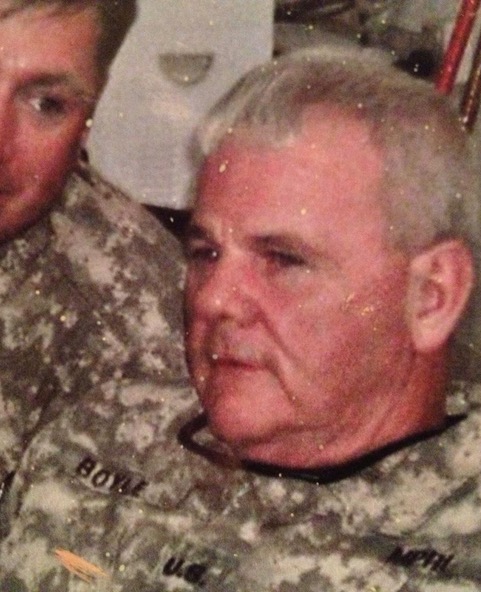
Thomas J. Boyle, Jr. died in Kandahar Province, Afghanistan on June 19, 2012.
“Obviously, suspicions are not proof of wrong doing, but Pauline Boyle has discovered enough evidence to warrant an all-out independent investigation. The problem is that asking the Army to investigate itself is asking the Fox to guard the hen house. The result will always be questionable. The Boyle family does have hard facts that clearly indicates there was an overt attempt to cover-up the circumstances of Thomas J. Boyle’s death.
Was there a military drug cartel that no one wanted to talk about, or was it a conspiracy of some of the soldiers on base to stop the change of command and keep the lieutenant colonel in command for as long as possible.”
Katherine Morris, 22, was found dead in her car near the Arundel Mills Mall in Maryland on May 6, 2012. Katherine was a University of Maryland student and married to Army spouse, Isaac Goodwin, who was stationed at Fort Bragg in North Carolina. According to a website dedicated to Katherine Morris, she died from carbon monoxide poisoning from charcoal grills lit in her car. Katherine’s family questioned the ruling of suicide by the Army and the Anne Arundel County police department immediately and were eventually successful at getting some retired civilian detectives to look into their suspicions of homicide motivated by life insurance fraud. Interestingly, Anne Arundel County police department also had jurisdiction of the homicide investigation of Army soldier Karlyn Ramirez, who was murdered in 2015. Karlyn’s husband Maliek Kearney and his new girlfriend Doris Delgado face federal murder charges. Karlyn’s homicide is similar in motive to the theories Katherine’s family has about her suspicious death. Karlyn and Katherine both appear to have been targeted and became the victims of domestic violence and/or life insurance fraud. The true motivation behind the Karlyn Ramirez and Katherine Morris deaths is unknown at this time but given how many homicides occur in the military with the common motive of domestic violence and/or life insurance, the Katherine Morris case deserves a second look.
Three families have asked for similar law changes for victims of domestic violence in the military since 2011. Representative Bruce Braley introduced the Holley Lynn James Act on behalf of Fort Bragg Lt. Holley Wimunc who was murdered by her Marine husband John Wimunc in 2008. The bill was advocating for the removal of the Commander and the Chain of Command from the investigation and adjudication of felony crimes like domestic violence because of their inexperience with the modus operandi of offenders. Unfortunately the bill was never even considered and this bill may have had the power to prevent what happened to Katherine Morris, Michelle Miller, and Karlyn Ramirez. Michelle Miller’s family believes she was targeted by an Army recruiter at her Rockville, Maryland high school and became the victim of domestic violence and homicide, despite the Army’s ruling of a double suicide. As a result, Michelle’s family is advocating for Michelle’s Law, which is an effort to encourage Congress to pass a law that would try military abuse and murder cases in civilian court. Katherine’s family is currently advocating for the Katherine Morris Military Spouse Protection Act. All of these law proposals ask that the Chain of Command be removed from the investigation and adjudication of felony crimes because of their inexperience at handling these complex cases. Similar bills have also been introduced to Congress to include the Sexual Assault Training, Oversight, and Prevention Act and the Military Justice Improvement Act. The military needs experienced investigators to get to the bottom of the truth in an effort to prevent crime and save lives.
In the News:
Family of Katherine Morris wants Dept. of Justice to investigate death. -WMAR-2 News (August 10, 2015)
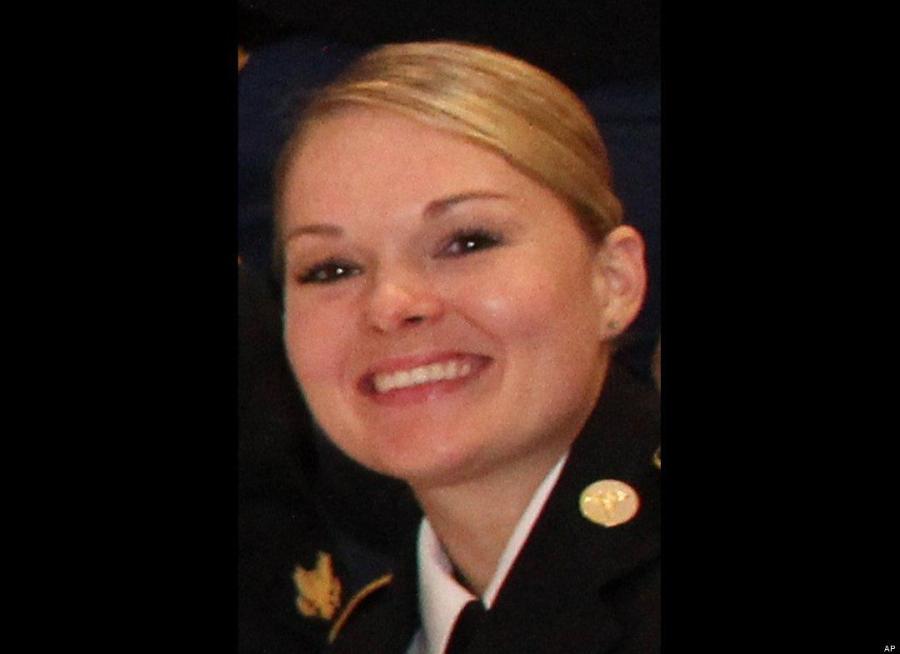
The cold case of missing US Army soldier Kelli Bordeaux was featured on Investigation Discovery‘s show Swamp Murders (“Murder of the Medic”). Kelli was stationed at Fort Bragg in North Carolina when she disappeared in 2012. The Army contacted the local Fayetteville Police Department and asked them to check on her in her off-base housing because she didn’t show up for work. She was considered Absent Without Leave (AWOL) which is an arrestable offense in the military. She was not located at her home and eventually considered a missing persons case. Her family, friends, and volunteers searched tirelessly for her around the Fayetteville area. Detectives continued their investigation while private investigator David Marshburn began conducting his own investigation. After a lengthy investigation by both the Fayetteville detectives and Marshburn, it was determined that she was murdered by Nick Holbert.
Nick was supposed to give Kelli a ride home the night she went missing and was the last person to see her alive. Holbert was also a convicted sex offender listed on the sex offender registry and out on probation. As a result Holbert was a suspect in the case from the very beginning but the case stalled because the detectives didn’t have any evidence. Although Holbert was arrested and jailed for not keeping his address up to date on the sex offender registry while detectives continued to dig for evidence. Eventually they had to let him out. A couple years later in 2014, Nick finally admitted to David Marshburn that he killed Kelli. He shared that he made a sexual advance towards her and she rejected him which made him angry. She walked away. So he then struck her from behind and beat her to death. He buried her in a shallow grave behind the Froggy Bottoms in a marshy area. Thanks to the persistence of the local Fayetteville investigators and David Marshburn, Kelli’s body was found and the case was solved. Nicholas Michael Holbert was sentenced to life in prison without parole and signed away his right to appeal the sentence.
In The News:
A new photo of Kelli Bordeaux, taken just hours before she disappeared, is released. -HLN (April 26, 2012)
The remains of a Fort Bragg soldier who had been missing for more than two years were found Wednesday. WESH 2 News (May 14, 2014)
Nicholas Holbert, the man accused of killing Fort Bragg soldier Kelli Bordeaux, pleaded guilty on Friday afternoon, bringing to a conclusion a three-year case of a missing young soldier. -CBS 17 (August 7, 2015)
When a young U.S. Army combat medic goes missing, a bounty hunter takes on his biggest case ever. -48 Hours (October 21, 2105)
Olivia Cox and Matt Henson share what they miss most about their “fearless” younger sister and how they are keeping her memory alive. -48 Hours (October 22, 2015)
David Marshburn, a bounty hunter-turned-P.I., tells “48 Hours” correspondent Troy Roberts about his mission and how he became involved in the search for Kelli Bordeaux, a missing Fort Bragg combat medic. -48 Hours (October 23, 2015)
In never-before-seen video recorded by Fayetteville Police on May 14, 2014, prime suspect Nick Holbert describes in chilling detail what happened the night Kelli Bordeaux vanished. -48 Hours (October 24, 2015)
In never-before-seen video recorded by Fayetteville,, N.C., Police on May 14, 2014, prime suspect Nick Holbert describes in chilling detail what happened the night Kelli Bordeaux vanished. -48 Hours (October 24, 2015)
Gilbert Baez was the only person to interview Nick Holbert before his arrest for the murder of the Fort Bragg soldier. Baez explains how he got the interview and what Holbert had to say. -48 Hours (October 24, 2015)
A week before she disappeared, Kelli Bordeaux and Justin Thompson went to Froggy Bottoms bar in Fayetteville, N.C. Thompson shares his first impressions of Holbert and why he was worried about Kelli the night she vanished. -48 Hours (October 24, 2015)
Matt Henson and Olivia Cox tell “48 Hours” why they immediately suspected Nick Holbert had hurt their sister and what it was like to come face to face with him. -48 Hours (October 24, 2015)
While her husband is away, a vivacious Army Medic enjoys a night out at a dive bar near Fort Bragg, NC. But she never makes it home. And though dogs pick up her scent in a nearby swamp, her fate baffles police. Until a local PI takes up the case. -Murder of the Medic, Swamp Murders (September 30, 2015)















 MILITARY JUSTICE FOR ALL