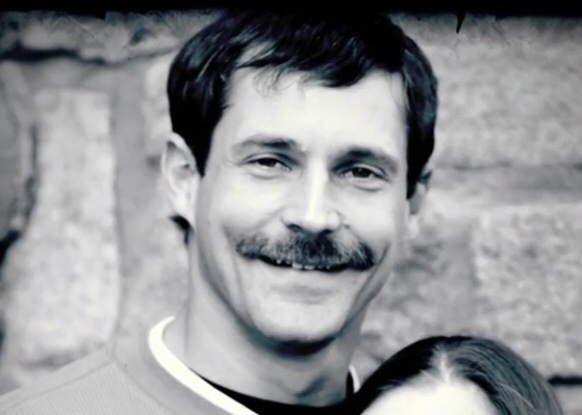
On August 2, 1988, nine year old Dolana Clark vanished from Great Falls, Montana without a trace. A year later, a hunter found Dolana’s remains in the Little Belt Mountains southeast of Great Falls. She died of a gunshot wound to the back of the head. Retired Air Force Sergeant Wilfred “Bill” Morrisey lived a couple of blocks from the Clark residence and had a close relationship with the family during the years preceding Dolana’s disappearance. Police considered Morrisey a person of interest but he repeatedly denied any involvement. A few months later, Morrisey left Great Falls and eventually settled in Colorado. Dolana Clark’s disappearance and homicide case went cold.
Four years later in 2002, the Great Falls Police Department renewed the investigation into Dolana’s death. Detectives reviewed the case file including statements Morrisey had given back in 1988 and found inconsistencies. This peaked a renewed interest in Wilfred Morrisey. After an investigation, detectives developed the theory that Dolana went to Morrisey’s house the evening of August 2, 1988 after her father refused to give her money to purchase a Siamese cat on layaway at a local pet store. Investigators deduced that Dolana went to Bill and asked for money to purchase the cat. They believe Morrisey took advantage of this opportunity. Police suspected that Morrisey most likely sexually abused Dolana in exchange for the money, hit her, and realized he went too far.
Wilfred Morrisey most likely killed young Dolana Clark in an effort to hide his crimes. Police believe he placed Dolana’s body in the trunk of his vehicle and then joined family members in searching for Dolana but refused to use either of his vehicles in the search. After the search, he drove up to the mountains where he dumped her body in a remote location. Detectives learned from a friend of Bill’s that he did in fact own a gun of the same caliber used in the death of Dolana. They also learned that Bill went to the pet store and purchased the Siamese cat that Dolana wanted and kept the cat as his own. The State of Montana charged Wilfred Morrisey on September 4, 2002 with deliberate homicide. In 2005, a jury found Morrisey guilty and sentenced him to life in prison with no eligibility for parole.
Investigation Discovery:
Preview: In 1988, a nine year-old girl goes missing in Great Falls, Montana. Years after the case goes cold, a chance bus stop encounter breathes new life into the investigation, leading detectives to the horrifying truth behind the girl’s disappearance. -Little Girl Gone, Unusual Suspects (S7,E12)
Editor’s note: With a cable subscription, you can download the free ID Go app and watch Investigation Discovery programming at your convenience. And for those who do not have cable, you can watch “unlocked” episodes on the ID Go app including the latest premieres. For those who prefer commercial free programming during your binge session, Prime Video has an ID channel: ‘True Crime Files by Investigation Discovery” available for $3.99 a month. It’s a compilation of older seasons but totally worth the cost if you are a true crime addict. Download the ID Go app or purchase ID True Crime Files & binge away.
Kathleen Lipscomb and MSgt William Lipscomb, U.S. Air Force (Photo: Forensic Files)
Air Force spouse Kathleen Lipscomb, 30, was found dead on the side of a highway in San Antonio, Texas on June 9, 1986. She was murdered and the case went unsolved for years. Kathleen was a nurse and she had two children with her husband William ‘Bill’ Lipscomb. Bill, 33, was a MSgt in the Air Force and was stationed at Lackland Air Force Base. They were married for eight years but had recently separated. Their arrangement was for Bill to spend time with the two children on the weekends. But one Sunday night, Kathleen never showed up to pick up the children. Bill went to Kathleen’s apartment but she wasn’t there. The next morning there was no sign of her. One of her co-workers contacted a family member because she didn’t show up to work and they were worried. Later that day, Kathleen Lipscomb was discovered nude and dead on the side of the highway. Based on the evidence, police deduced she had been murdered elsewhere.
Bill Lipscomb was immediately called in for questioning. The police wanted to check for any wounds that might be on his body. The children told police their father was with them the entire weekend and confirmed his alibi. An autopsy revealed Kathleen had sex 24 hours before she was found dead. During the investigation, detectives learned Kathleen was dating a married man. His name was Dr. David Pearl and Kathleen was in love with him. Dr. Pearl admitted he was with Kathleen over the weekend but insisted he had nothing to do with her murder. One week after Kathleen’s murder, her car was found in a restaurant parking lot not far from her apartment. Investigators found no useful forensic evidence in the car. Based on the food contents in her stomach, investigators determined she was most likely murdered on Sunday night and dumped in the field during the early morning hours on Monday.
For two years, investigators searched for Kathleen’s killer. Kathleen’s family suspected her estranged husband Bill had something to do with her murder. Seven months before the murder, Bill had increased Kathy’s life insurance to $300,000. Kathleen’s family hired a private investigator to look into the case. The PI learned of the name Shannon Gilbert from Kathleen’s day planner. She was in the Air Force with Bill and it was rumored she was having an affair with him. Shannon Gilbert would not speak with the PI without an attorney present. The PI also found a note about WAPS (Weighted Airman Promotion System) testing and it said Bill had all the answers to the test. Kathleen was accusing Bill of cheating. The Air Force Office of Special Investigations (AFOSI) joined the investigation because it involved allegations of cheating. Dr. Charles McDowell believed the scene had been staged to look like a rape and murder.
McDowell also suspected someone else dumped the body. Kathleen’s daughter revealed another important piece of information to the family. She told family members she thought her father killed her mom because he wasn’t home the entire weekend. One of his friends Anthony ‘Tony’ Barello took them out for dinner on Sunday and when they woke up in the middle of the night, they realized their father was gone. Investigators ordered forensic DNA testing but the biological evidence had been mislabeled then mishandled. Forensic testing was not possible. Investigators needed more than circumstantial evidence to corroborate the children’s story. During the investigation, detectives learned Bill cheated on the military promotion testing and Kathleen knew it. During the divorce proceedings, Bill wanted custody of the children and Kathleen was not going to let that happen. Was Kathleen using this information as blackmail during the custody battle?
At the crime scene, Kathleen’s clothing was neatly rolled which suggested someone with military training dumped the body. When investigators caught up with Tony Barello, he was eager to talk. Tony immediately acknowledged he dumped Kathleen’s body in the field. He told them Bill Lipscomb was the killer. Tony still had evidence directly linking Bill to the crime and investigators confirmed it was Kathleen’s blood in a small chest she was stored in after she was murdered. OSI took over the homicide investigation. Bill’s former girlfriend also admitted that Bill told her he was going to kill his wife. OSI brought Bill Lipscomb in for questioning but Bill denied everything. They believed he sought revenge for Kathleen’s threats to expose him for the military promotion scandal. They believed Bill asked his friend Tony to take the children out for dinner so he could kill Kathleen while they were out.
When Kathleen arrived and noticed the children missing, the two most likely argued. At some point, Bill strangled Kathleen and then stored her in a chest in the house. Once the children were asleep, Tony retrieved Kathleen’s body and dumped her on the side of the highway to stage it as a sex crime. MSgt Bill Lipscomb was charged with the rape and murder of Kathleen Lipscomb in July 1989. Bill Lipscomb pleaded guilty to avoid the death penalty and in 1990 a Langley Air Force Base military judge sentenced Bill Lipscomb to life in prison. Although under the terms of the plea agreement, Bill Lipscomb will spend no more than 60 years at the Disciplinary Barracks at Fort Leavenworth, Kansas, a reduction in rank and a dishonorable discharge. In return for their cooperation, Tony Barello and Shannon Gilbert were not charged. Shannon Gilbert changed her name and is now in the federal witness protection program.
“Although his wife was not killed on government property or in Virginia, the Air Force tried Lipscomb here under a law that gives the military authority to handle any criminal transgressions by an active-duty serviceman.” –Daily Press (August 22, 1990)
Full episode: Kathleen Lipscomb’s body was found on a deserted street outside of San Antonio. Months passed, then years, and the crime went cold. Then Kathleen’s family hired a private investigator who discovered a diary among her personal effects. Two of the diary entries helped police to piece together what had happened to Kathleen Lipscomb, and why. -True Lies, Forensic Files (S8,E27)
Investigation Discovery:
Preview: When a wife begins an affair behind her domineering husband’s back with a coworker, he soon finds out and begins an affair of his own. Little do they realize that the relationships they have entered into are not what they seem. -Sex, Secrets & Sergeants, Scorned: Love Kills (S5,E5)
While Kathy Lipscomb spends late nights at the hospital with the handsome Dr. Pearle, her husband’s career in the Air Force is taking off, but so is his relationship with a hot young officer. When the affairs are exposed the consequences are fatal. -Sex, Secrets & Sergeants, Scorned: Love Kills (S5,E5)
Editor’s note: With a cable subscription, you can download the free ID Go app and watch Investigation Discovery programming at your convenience. And for those who do not have cable, you can watch “unlocked” episodes on the ID Go app including the latest premieres. For those who prefer commercial free programming during your binge session, Prime Video has an ID channel: ‘True Crime Files by Investigation Discovery” available for $3.99 a month. It’s a compilation of older seasons but totally worth the cost if you are a true crime addict. Download the ID Go app or purchase ID True Crime Files & binge away.
Cassandra Goodwin, 22, Henrietta, Texas (never admitted to homicide)
On June 13, 1980, 11-year-old Doris Oehring went missing from North Pole, Alaska; they found her bike in the ditch. Luckily, a witness saw a blue vehicle near the area where the bicycle was found and helped the police create a composite sketch; but no leads were generated. To make matters worse, this was the second known abduction in less than a year. Eight months earlier, on August 29, 1979, a boy hunting in the woods found the decomposing body of 19-year-old Glinda Sodemann; she had been strangled and shot. Nine months after Doris Oehring mysteriously went missing; 16-year-old Wendy Wilson disappeared; her friend last saw her talking to a man in a white truck. Wendy’s body was found three days later; she had been strangled and shot in the head as well. Police wondered if there was more than one predator. As the police scrambled to find leads, another body of a woman turned up dead near Eielson Air Force Base. The victim was identified as 21-year-old Marlene Peters; Marlene was strangled and shot in the head too.
The police were panicking because of the number of murders in one location, and then a fifth woman vanished. Troopers teamed up with military and civilian search teams to find the missing and then one day while soldiers were out hunting, they found the body of Lori King; she too was strangled and shot in the head. Unable to calculate the next move of the serial killer, state troopers tried another tactic. They staked out the killer’s dumping grounds within a 10 mile radius of Eielson AFB. And then the killings stopped. And then in November 1982, troopers received a call from Henrietta, Texas informing them a woman had been murdered in the same fashion as their suspected serial killer. Police worked with the military to see if they couldn’t narrow down the suspects based on who owned a blue car or white pick-up truck. And finally, the police came up with a name: Thomas Richard Bunday was a TSgt in the Air Force who transferred to Sheppard AFB shortly after the murder of the fifth victim in Alaska.
Alaska investigators learned Bunday owned a blue car and a white truck, and he was on the Air Force’s radar list because there were several complaints made about his inappropriate sexual remarks to women in the workplace. Alaska investigators also learned Bunday served in the military for fifteen years and was a married, father of two. On March 7, 1983, Alaska investigators talked to Bunday for three hours about everything but the murders and they did this for several days hoping he would confess; but he refused to talk. Bunday didn’t deny the crimes; but refused to confess. After a week of interrogation, the troopers obtained a search warrant to search Bunday’s property. They found a lot of incriminating evidence that directly tied him to the crime in Alaska but had to obtain an arrest warrant from Alaska. Alaska Troopers had no power to arrest outside of Alaska. The Governor offered a private leer jet to bring Bunday back to Alaska. The arrest was the next day but he failed to show up as promised.
Unfortunately, Thomas Bunday slipped past surveillance on his motorcycle. Instead of meeting with the Alaska investigators again, Bunday instead killed himself. Police learned Bunday died by suicide after he crossed the center line and slammed into a truck at a 100 mph. Police were really hoping they would get more information from him before he died. They wanted to know where Doris’ body was so they could give the family closure. In August 1986, three years after Bunday died, Doris’ skull was found in a remote section of Eielson Air Force Base. It was later learned that Bunday’s job in the Air Force most likely allowed him to view his dump sites via surveillance cameras and relive his sadistic behavior. Bunday was most likely watching investigators at the crime scene. Alaska state investigators are convinced that Thomas Richard Bunday was responsible for the five murders in Alaska. And they believe Bunday denied the murder in Texas to avoid the death penalty before opting instead to kill himself on March 15, 1983.
“From 1979 to 1981, Thomas Richard Bunday, a technical sergeant who was stationed at the Eilson Air Force Base near Fairbanks, Alaska, murdered four women and an 11-year-old girl. With the help of a psychological profile provided by the FBI and a description from an eyewitness, the authorities were eventually able to close in on Bunday. By the time police identified Bunday as their prime suspect, however, he had already been transferred to another base near Wichita Falls, Texas.
When officials from Alaska traveled to Texas to interview Bunday, he admitted to the killings, but the officers didn’t have the jurisdiction to arrest him. The police from Alaska scrambled to get a warrant, and when they went to apprehend Bunday, his wife informed the officials that he had taken off on his motorcycle. Tragically, the officers learned that on March 16, 1983, just hours after they’d obtained an arrest warrant, Bunday drove his motorcycle into the path of an oncoming truck, ending his life.”
The tiny town of North Pole, Alaska is a quiet, safe haven best known for Santa Claus. But when the bodies of young women begin turning up one by one, investigators slowly piece together the clues and discover the unlikeliest of killers. -North Pole Slay Ride, Ice Cold Killers (S1,E4)
Editor’s note: With a cable subscription, you can download the free ID Go app and watch Investigation Discovery programming at your convenience. And for those who do not have cable, you can watch “unlocked” episodes on the ID Go app including the latest premieres. For those who prefer commercial free programming during your binge session, Prime Video has an ID channel: ‘True Crime Files by Investigation Discovery” available for $3.99 a month. It’s a compilation of older seasons but totally worth the cost if you are a true crime addict. Download the ID Go app or purchase ID True Crime Files & binge away.
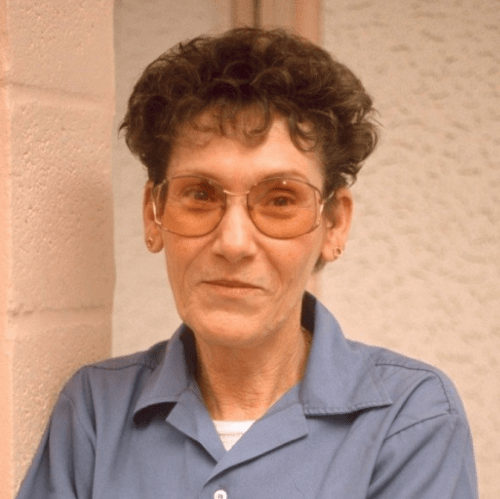
Air Force Sergeant James Goodyear, 37, died on September 16, 1971 in Orlando, Florida. Sergeant Goodyear died just three months after completing a year long tour of duty in Vietnam. He left behind his wife Judy Buenoano Goodyear and her son Michael Buenoano. Judy received $28,000 in military life insurance benefits and military death benefits to help support the family. When her son Michael turned eighteen, he joined the US Army. On his way to his post in Georgia, he stopped in to visit his mother Judy, she fed him, and afterwards he became ill. The illness led to a crippling condition that left him paralyzed in his lower extremities and he was subsequently discharged from the Army as a Private. Michael was disabled and Judy was taking care of him. On May 13, 1980 Judy took Michael for a canoe ride. Judy reported to local authorities that her canoe capsized and her son Michael had drowned. She collected $125,000 in military life insurance benefits for her son’s death.
In June 1983, Judy was suspected in the car bombing of her fiancé John Gentry of Pensacola, Florida. She stood to gain $500,000 in life insurance money for this death. Judy Buenoano was first convicted of the attempted murder of John Gentry. As a result of her involvement in the attempted murder of John, investigators looked into the ‘accidental deaths’ of her husband James Goodyear and her son Michael. They exhumed John’s body a decade later and an autopsy revealed he had been poisoned with arsenic. Testimony revealed long-term arsenic poisoning had actually caused her son Michael’s disability. And when Judy drowned him, he was wearing an extra 15 pounds of weighted braces. Judy reportedly admitted to being involved in the 1978 death of her boyfriend Bobby Joe Morris as well. She received $50,000 in life insurance benefits for his death. Judy Buenoano was found guilty of first degree murder and sentenced to death. She was executed by the electric chair in Florida on March 30, 1998. Judy Buenoano was motivated by money, profit, and greed.
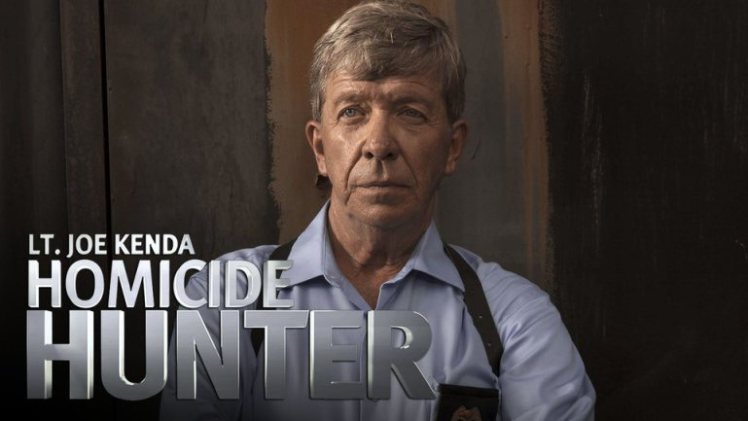
Officers find the lifeless body of furniture salesman behind the wheel. But Faast didn’t die in the wreck – he was shot point-blank in the temple. Lt. Joe Kenda must track a killer whose promising career took a dark and deadly turn. -Death Grip, Homicide Hunter (S4, E4)
On February 16, 1979, police found Michael Faast shot and killed in his vehicle in a parking lot at an apartment complex in Colorado Springs, Colorado. They also found a traumatized Lori Firth in the vehicle who was transported to the hospital for treatment. After an investigation, Lt. Joe Kenda learned from Lori Firth that Air Force Captain Ronnie Ball was the shooter. Captain Ball was an up and coming military officer stationed at the North American Aerospace Defense Command (NORAD) at Peterson Air Force Base. Lt. Kenda learned from Lori that she started dating Ronnie about three years prior and followed him out to Colorado. After realizing that Ronnie was married to his career in an attempt to make rank and not really interested in marrying her and creating a life, Lori dumped him. Apparently this is what triggered Captain Ball’s downward spiral. Ronnie was devastated by the break-up. This was the first time he had ever been rejected and he didn’t like it. Ronnie tried to propose marriage to Lori over the phone and left her a couple letters saying that his life was not worth living without her. Ronnie just didn’t get it; Lori was done with him.
On February 16, Ronnie showed up to Lori’s apartment. Lori described his behavior as erratic and he smelled of alcohol. His behavior was scaring her. Ronnie accused her of sleeping with her friend Michael and Lori told him to get out. Shortly after that encounter Michael Faast showed up to Lori’s place to pick her up. They jumped in the vehicle and were confronted by Ronnie Ball on the driver’s side of the vehicle with a gun in the apartment complex parking lot. Michael rolled down his window in an attempt to make peace. Ronnie asked Lori to get out of the vehicle, she refused. Ronnie told Michael to leave Lori, he refused. Lori asked Michael to get out of there and that’s when Ronnie Ball shot Michael Faast from about a foot away in the head. Faast died instantly. Michael’s vehicle then crashed into the side of the apartment building and rolled back into the parking lot with Lori in it. Ronnie Ball took off. Ronnie Ball was arrested after police secured a formal statement from Lori Firth.
The Colorado Spring Police Department never found the murder weapon therefore they needed a confession from Captain Ball to make the first degree murder charges stick. Right from the get go, Ronnie Ball exercised his right to remain silent and asked for an attorney. While he was waiting for his attorney, Lt. Kenda observed unusual behavior, extremely bizarre behavior; Ball was talking to himself and going on and on. Captain Ronnie Ball never admitted to committing the crime and despite exercising his right to remain silent was discharged from the US Air Force before he was even left the police station where he was being questioned and fingerprinted. Captain Ball then hired one of the best defense attorneys money could buy. He was found guilty but insane for the murder of Michael Faast by the civilian justice system. Ronald Ball was sent to a treatment program and given no prison time. He has since been released.
Captain Ronnie Ball’s case is an excellent example of the value of exercising the right to remain silent in an attempt to help protect a defense. Lt. Joe Kenda and the court systems definitely protected Ball’s due process rights. But the Air Force on the other hand ended his career before they even knew the facts of the case. They learned that he had been charged with first degree murder and made a decision to end his career without providing him with any due process rights as a military officer or a government employee. At the time of the charge, they had the testimony of an ex-girlfriend and that is it. In a fair, just, and ethical world, the Air Force should have waited until he was found guilty before they discharged him from the service. According to military leadership at NORAD, Captain Ronnie Ball was admired and his work was admired. He was bright and intelligent. It wasn’t until after Ronnie was rejected for the first time in his life that he began to downward spiral. The obsessive, erratic, and paranoid behavior is indicative of a personality disorder triggered by rejection which may be why Captain Ball was deemed insane. This is what justice looks like in the civilian courts; the injustice lies in the hasty actions of the US Air Force.
Editor’s note: With a cable subscription, you can download the free ID Go app and watch Investigation Discovery programming at your convenience. And for those who do not have cable, you can watch “unlocked” episodes on the ID Go app including the latest premieres. For those who prefer commercial free programming during your binge session, Prime Video has an ID channel: ‘True Crime Files by Investigation Discovery” available for $3.99 a month. It’s a compilation of older seasons but totally worth the cost if you are a true crime addict. Download the ID Go app or purchase ID True Crime Files & binge away.
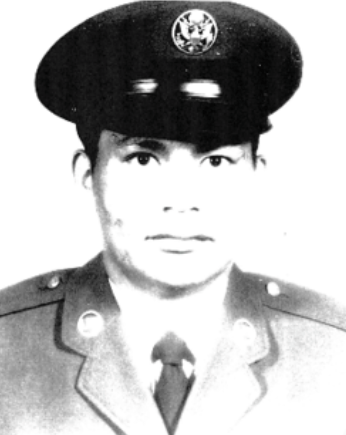
Officials with Holloman Air Force Base say that a 43-year-old cold case involving an AWOL Airman has come to a close after investigators were able to match DNA and dental records to remains found in the Montana wilderness in 1982 to the missing airman. Airman First Class Rudy Redd Victor, 20, from Shiprock, NM was assigned to Holloman Air Force Base in 1974 when he was awarded leave to visit family in Arizona and Colorado.
Witness reports indicate the last location of Victor was near the Wolf Creek Rest area in Lewis and Clark County, Montana. Shortly thereafter, Victor went missing and he was categorized as AWOL by the U.S. Air Force after he failed to return to duty in June 1974…According to the Lewis and Clark Sheriff’s Office and Lewis and Clark County Coroner, Airman Victor’s death was most likely due to suicide [on or about June 15, 1974].
Air Force Sergeant James Goodyear, 37, died on September 16, 1971 in Orlando, Florida. Sergeant Goodyear died just three months after completing a year long tour of duty in Vietnam. He left behind his wife Judy Buenoano Goodyear and her son Michael Buenoano. Judy received $28,000 in military life insurance benefits and military death benefits to help support the family. When her son Michael turned eighteen, he joined the US Army. On his way to his post in Georgia, he stopped in to visit his mother Judy, she fed him, and afterwards he became ill. The illness led to a crippling condition that left him paralyzed in his lower extremities and he was subsequently discharged from the Army as a Private. Michael was disabled and Judy was taking care of him. On May 13, 1980 Judy took Michael for a canoe ride. Judy reported to local authorities that her canoe capsized and her son Michael had drowned. She collected $125,000 in military life insurance benefits for her son’s death.
Judy Buenoano was executed in the State of Florida on March 30, 1998.
In June 1983, Judy was suspected in the car bombing of her fiancé John Gentry of Pensacola, Florida. She stood to gain $500,000 in life insurance money for this death. Judy Buenoano was first convicted of the attempted murder of John Gentry. As a result of her involvement in the attempted murder of John, investigators looked into the ‘accidental deaths’ of her husband James Goodyear and her son Michael. They exhumed John’s body a decade later and an autopsy revealed he had been poisoned with arsenic. Testimony revealed long-term arsenic poisoning had actually caused her son Michael’s disability. And when Judy drowned him, he was wearing an extra 15 pounds of weighted braces. Judy reportedly admitted to being involved in the 1978 death of her boyfriend Bobby Joe Morris as well. She received $50,000 in life insurance benefits for his death. Judy Buenoano was found guilty of first degree murder and sentenced to death. She was executed by the electric chair in Florida on March 30, 1998. Judy Buenoano was motivated by money, profit, and greed.
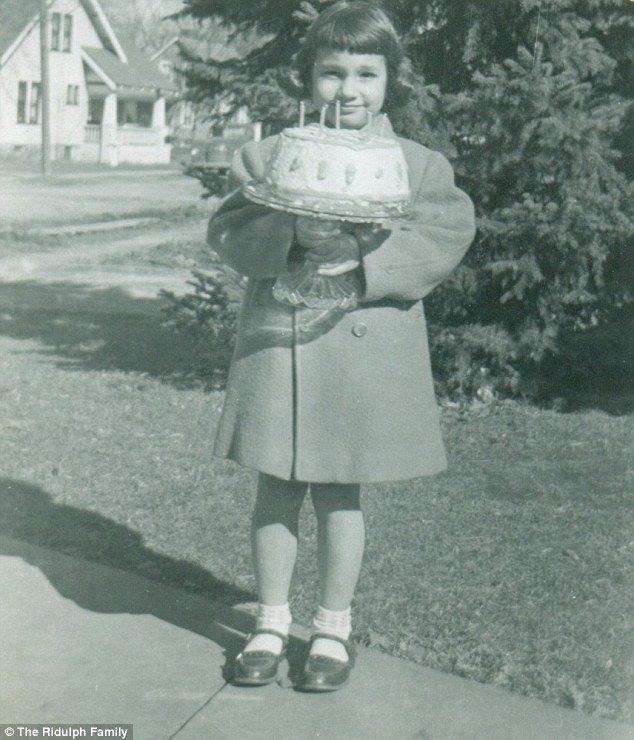
Maria Ridulph, 7, disappeared on December 3, 1957 in Sycamore, Illinois. She was found stabbed to death a few months later. Air Force veteran John Tessier (aka Jack McCullough) of Seattle, Washington, 17 at the time, was convicted in 2012 of the kidnapping and murder of Maria and sentenced to life in prison. It was the oldest cold case in the country to be solved but soon that victory would be lost and conviction overturned on appeal. A prosecutor found evidence that supported McCullough’s long-held alibi that he had been 40 miles away at the time of the disappearance. As a matter of fact, the former Captain was enlisting in the Air Force and left for active duty service a few days later. A certificate of innocence was issued and Jack McCullough was set free on April 15, 2016. Despite the past sexual abuse of minors allegations, which McCullough doesn’t deny, he wants to clear his name of the homicide. McCullough is suing the State of Illinois for wrongful conviction. The case remains unsolved to this day.











 MILITARY JUSTICE FOR ALL