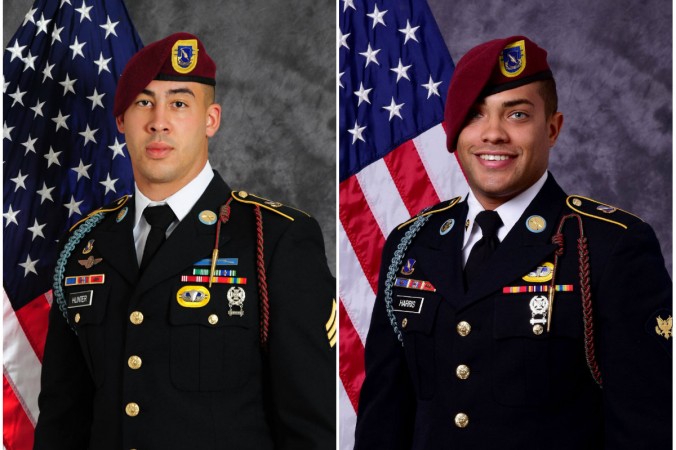
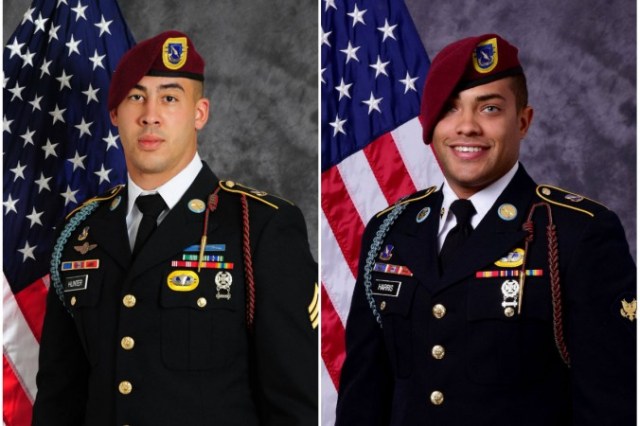
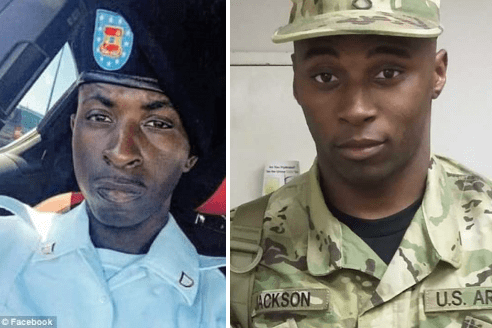
Sgt. Jonathon Hunter, US Army, and Spc. Christopher Harris, US Army
Sgt. Jonathon Hunter, 23, and Spc. Christopher Harris, 25, died as a result of injuries sustained when a vehicle-borne improved explosive device (IED) detonated near their convoy on August 2, 2017 in Kandahar, Afghanistan. Sgt. Hunter and Spc. Harris were supporting Operation Inherent Resolve on behalf of the 2nd Battalion, 504th Infantry Regiment, 1st Brigade Combat Team, 82nd Airborne Division at Fort Bragg, North Carolina. According the the Department of Defense press release the incident is under investigation.
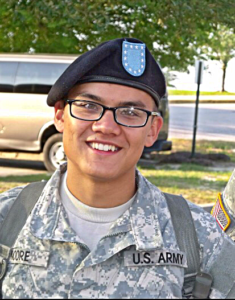
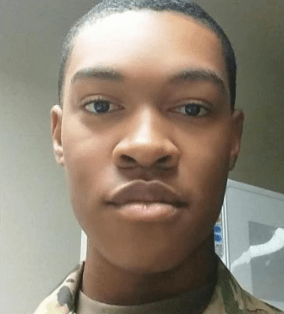
Spc. Zachary Moore, 23, of Virginia Beach, Virginia, was found unresponsive August 1, 2017 in his barracks room at Camp Hovey in South Korea. Spc. Moore was transported to St. Mary’s Hospital and pronounced deceased on August 2, 2017. Spc. Moore entered active-duty military service in March 2014 as a signal support systems specialist. He was assigned to the 9th Cavalry Regiment, 2nd Armored Brigade Combat Team, 1st Cavalry Division at Fort Hood in Texas since July 2016. The circumstances surrounding the incident were investigated by the U.S. Army Criminal Investigation Division (CID) and the cause of death was ruled a suicide.
*****************************************
Was Zachary Moore’s Death Preventable?
In May 2017, Fort Hood announced they were deploying 3,500 troops to South Korea over the summer. Twenty-three (23) year old Zachary Moore was one of the soldiers deployed to South Korea. With full knowledge of Zachary’s recent mental health issues, the Chain of Command gave him a mental health waiver against his will, and most likely against medical advice, so they could deploy him to South Korea.
In October 2016, Zachary had a mental health breakdown and went Absent without Leave (AWOL). After a successful intervention, Zachary was found and returned to the custody of his Chain of Command at Fort Hood. Zachary’s command then sent him to an emergency room where he was hospitalized and prescribed medication. After Zachary was discharged from the hospital, he continued to seek treatment for mental health issues. Six months later, Zachary was given a mental health waiver by his command to deploy to South Korea.
About a month after Zachary arrived at Camp Hovey in South Korea, his depression medication was changed. As a matter of fact, his depression medication was changed the day before he was found unresponsive in his barracks room. Zachary attempted to kill himself on August 1st, less than 24 hours after the medication change. It was Zachary who called his Command for help as there is no 911 on the base in South Korea. He was found unresponsive and finally transported to the hospital about 1 ½ to 2 hours later. He was admitted to the Intensive Care Unit, listed as critical then stable, yet passed away on August 2, 2017.
Why did Zachary Moore go AWOL?
The Chain of Command contacted Jeanette to report Zachary hadn’t been seen since October 18, 2016. They also informed her they were not actively looking for him but would file AWOL status on October 20th. When asked if they filed a missing persons report, Jeanette claims they told her they did but she says she was lead to believe Zachary trashed his room, took his things, and left willingly. She immediately flew to Texas from Florida to find him.
Jeanette contacted the Killeen Police Department as soon as she got to Fort Hood and the local law enforcement found Zachary the same day she arrived. Over the phone, the Command told Jeanette they filed a missing persons report but she learned from the Killeen Police Department that they never did. The Killeen PD noticed recent activity on Facebook so they pinged Zach’s cell phone & found that he was in a remote area of a local state park.
Zachary attempted to flee initially but after negotiations, he surrendered and was returned to the police station where his mom was waiting. Jeanette could tell Zachary was mentally broken and he admitted to her that he wanted to hurt himself. The Killeen PD found Zachary and he had a knife in his possession. Zachary was returned to the custody of his Chain of Command at Fort Hood. Shortly after Zachary informed his mom that his superiors told him to tell her to leave town and stop interfering.
Jeanette reports that Zachary never had any mental health issues prior to this and suspected that Zachary was “singled out by his command and harassed.”
Areas of Concern in Zachary Moore’s Case:
Zachary revealed he was harassed by his Chain of Command. For example, his leave papers to visit family before deploying were denied; he was denied permission to see the Fort Hood Inspector General officer; he was harassed during training exercises; he was given exhausting extra duties; and was accused of taking a radio which was later found on a military officer’s desk. Why was he denied the opportunity to speak to the IG officer?
Zachary was accused of trashing his room and taking his belongings when he went AWOL. Jeanette believes the circumstances surrounding the vandalism of his room and the theft of his property could be evidence of harassment.
During mental health treatment, Zachary was facing the consequences of going AWOL; Zachary was accused of trashing his own room; and Zachary was accused of stealing a secure radio? What are the additional mental health impacts of the way the Chain of Command uses the military justice system?
The circumstances of the mental health waiver and the justifications for sending Zachary to South Korea while he was undergoing treatment for mental health issues and medication management should be investigated.
The effects of the medication change in South Korea should be investigated. Is Command aware that some medications can cause serious negative reactions? (Some depression medication causes suicidal ideation.) Who monitors serious medication changes in deployed locations? Is it safe to deploy soldiers in the early phases of medication management for mental health issues?
Finally, the delay in the Command’s response to Zachary’s call for help in South Korea should be investigated. Why did it take so long to respond to Zachary and why did it take so long to get Zachary to the hospital? Did anyone attempt to administer help while waiting for the ambulance?
If the Command was the cause of the mental health break, where was Zachary supposed to turn? How do we hold the Chain of Command accountable? How do we prevent the Chain of Command from retaliating and using the military justice system or non judicial punishment as a weapon? What was the role of the Commander? What was the role of the Fort Hood Inspector General? How can we prevent a young soldier from feeling like the only way out of their situation is AWOL or suicide? How could we have prevented Zachary’s death?
Soldiers have come forward, given their stories to the family and have offered to testify about what Zachary was put through which may explain why he died. Were these soldiers questioned?
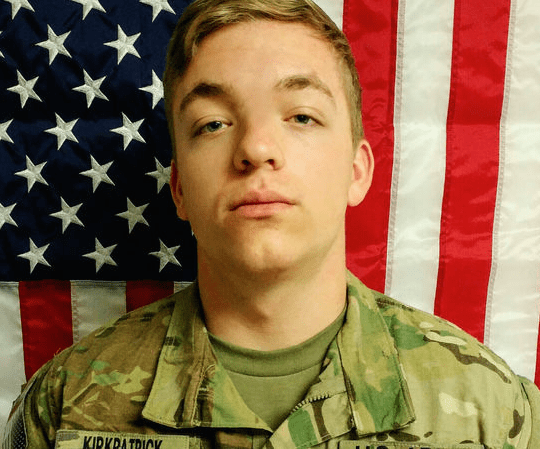
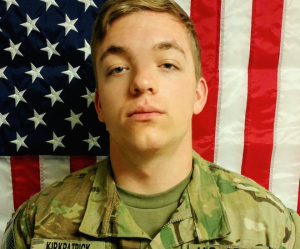
Army Pfc. Hansen Kirkpatrick, 19, died from wounds received during an indirect fire attack on July 3, 2017 in Helmand Province, Afghanistan. Pfc. Kirkpatrick was supporting Operation Freedom Sentinel on behalf of the 1st Battalion, 36th Infantry Regiment, 1st Brigade Combat Team, 1st Armored Division in Fort Bliss, Texas. According to the Department of Defense press release, the incident is under investigation.
Army Staff Sergeant Anthony Lovell, 40, died of injuries sustained in an apparent motorcycle accident along Nolan Creek in Killeen, Texas on July 3, 2017. According to witnesses, SSG Lovell’s body was found in a mysteriously different location then the motorcycle. But the Killeen Police Department determined SSG Lovell was traveling south on 8th Street and failed to make a turn into a mobile home park in the area. Investigators claim SSG Lovell left the road, hit an embankment, and went airborne. Therefore, this accounted for the separation of the body and the motorcycle. And as a result, the accident caused multiple blunt force injuries.
“The motorcycle accident was around 8 p.m. on July 3. Lovell was going southbound in the 300 block of Eighth Street. Police say he failed to negotiate a turn and left the roadway then went airborne and into Nolan Creek. The soldier suffered a fatal head injury and was pronounced dead at 8:38 p.m.” -Killeen PD
SSG Lovell was a resident of Killeen, Texas; he was stationed at Fort Hood in March 2015 as a cavalry scout assigned to the 1st Battalion, 7th Cavalry Regiment, 1st Brigade Combat Team, 1st Cavalry Division. SSG Lovell joined the Army in September 1997 and deployed twice to Iraq in support of Operation Iraqi Freedom from April 2007 to June 2008 and from September 2009 to August 2010. At the time of the Fort Hood press release, the circumstances surrounding the incident were under investigation by the Killeen Police Department.
Both the New York Times and the Washington Times are reporting that the Army’s investigation of National Guard soldiers and veterans who participated in the Guard Recruiting Assistance Program (G-RAP) has gone far and wide of the intention. Thousands of Guard troops have had their military and civilian careers destroyed over the Army’s accusations and questionable investigations.
They are questionable because of the constitutionality of the Army serving as a police force to investigate citizen soldiers. They are questionable because CID’s tactics do not conform to policy. They are questionable, because in five years of investigations and an estimated $40 million spent by CID, not even a fraction of the alleged fraud has been found. Senator Claire McCaskill took, at face value, Gen Quantock’s testimony that $100 million was lost to G-RAP fraud. Senator McCaskill set loose the largest military criminal investigation in history.
I am just a citizen volunteer: not military, not an attorney, who did background research for a friend caught in this trap. In the process I amassed thousands of pages of documentation that the investigations are unjust, and possibly illegal – That the premise of massive fraud is wrong and that the witch hunt continues only to prove the Army’s wild exaggerations.
G-RAP is a dark and complicated story and one that needs attention. Shining a spotlight on this can only happen in Congress.
I would welcome an opportunity to share what I have found.
Fort Hood Army soldier Pvt. Justin Lewis, 19, was shot and killed near a vacant lot in a neighborhood outside the post in Killeen, Texas on April 17, 2017. Justin was pronounced dead on April 18, 2017 by the coroner. Pvt. Lewis’ home of record is listed as Henderson, North Carolina and he entered active-duty service in August 2016. Pvt. Lewis was a cavalry scout assigned to 3rd Cavalry Regiment in Fort Hood, Texas. The circumstances surrounding the unsolved homicide are under investigation by the Killeen Police Department in Killeen, Texas. The point of contact for the investigation is Ofelia Miramontez, Public Information Officer, Killeen Police Department. Miramontez’s phone number is (254) 501-8941/8807 and her email is omiramontez@killeentexas.gov. Eight months later, the Killeen Police Department does not have any updates in the case according to Killeen Police spokeswoman Ofelia Miramontez. Justin’s Army buddy, Logan Duty, told the TDT news: “[Justin] was just gunned down in the middle of the night, and no one’s able to find out why. If I was there, and I was one of the detectives, I wouldn’t rest until I figured out why. … (Lewis) wanted to help others, willing to lay his life down defending someone. I haven’t met anyone who was dedicated to serving like him.”
“Pvt. Justin Lewis’ uncle, Jerry Lewis, said when you have a loved one go into the military, you deal with the fact you may lose them on the battlefield. They never imagined they would lose 19-year-old Justin on American soil, near a vacant lot in Killeen, Texas.” –11 ABC News
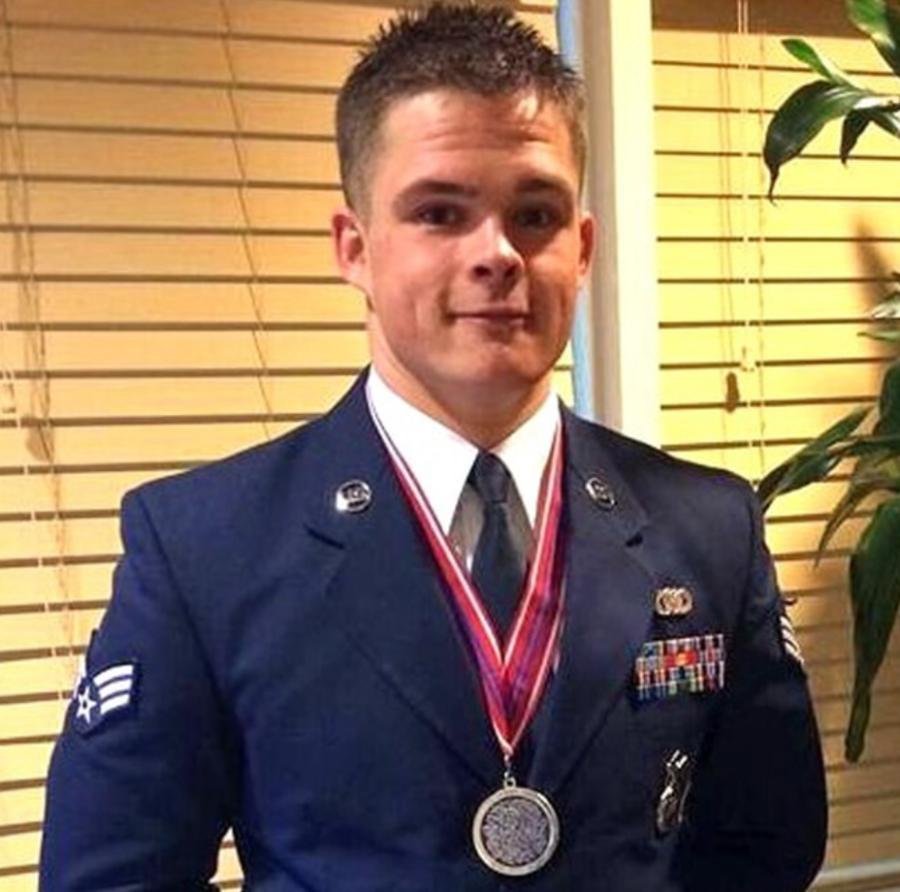
The Department of Defense announced today the death of a security forces airman who was supporting Operation Inherent Resolve. Staff Sgt. Austin Bieren, 25, of Umatilla, Oregon, died March 28 in northern Syria in a non-combat-related incident while deployed in support of combat operations. He was assigned to the 21st Space Wing at Peterson Air Force Base, Colorado. AP said in a statement from the base, Bieren died from “suspected natural causes.” Wing commander Col. Douglas Schiess says Bieren was “a beloved member of the team and will be sorely missed.” Bieren graduated from Umatilla High School in 2010 and entered the Air Force that November. He had been stationed at Peterson since June 2014.
According to the Burns Mortuary of Hermiston obituary, Austin Leo Bieren, 25, “was born on January 7, 1992 in Pendleton, Oregon to John Timothy Bieren and Tracy Ann (Gibson) Finck. Austin loved to hunt, fish, and hunt some more. He enjoyed anything and everything outdoors, the true definition of a mountain man. He avidly worked out and did everything to stay healthy and active. After basic training, he married his wife, Rachel (Kennedy) Bieren, and they both moved to Minot, North Dakota and were there for three years, and then moved to Colorado Springs where Austin worked at Peterson AFB. He was deployed three times.”
“It’s tragic that we lost that young man in kind of a strange way for a 25-year-old, but nonetheless space is embedded in everything we do. So anywhere you have American military people, you’re going to have space.” (Air Force Gen. John Hyten) –Fox News (March 31, 2017)
Col. Doug Schiess, 21st Space Wing commander mentioned Staff Sgt. Austin Bieren, a member of the 21st SW who died while serving in Syria. “We brought him home to his family, took care of his family and still are.” –21st Space Wing, USAF (June 21, 2017)
Fort Stewart Army soldiers Sgt. Shaquille Craig, 24, and Spc. Phillip Thompson, Jr., 24, were charged with murdering two fellow Army soldiers, Spc. Marquez Brown, 23, and Pvt. Malika Jackson, 21, in Hinesville, Georgia. An anonymous tip led to the discovery of their bodies on March 5, 2017. Sgt. Craig & Spc. Thompson stand accused of shooting to death both Spc. Brown and Pvt. Jackson, one of them had a large knife in their throat. Hinesville Police Department report that Sgt. Craig & Spc. Thompson have been arrested and charged with two counts of murder.
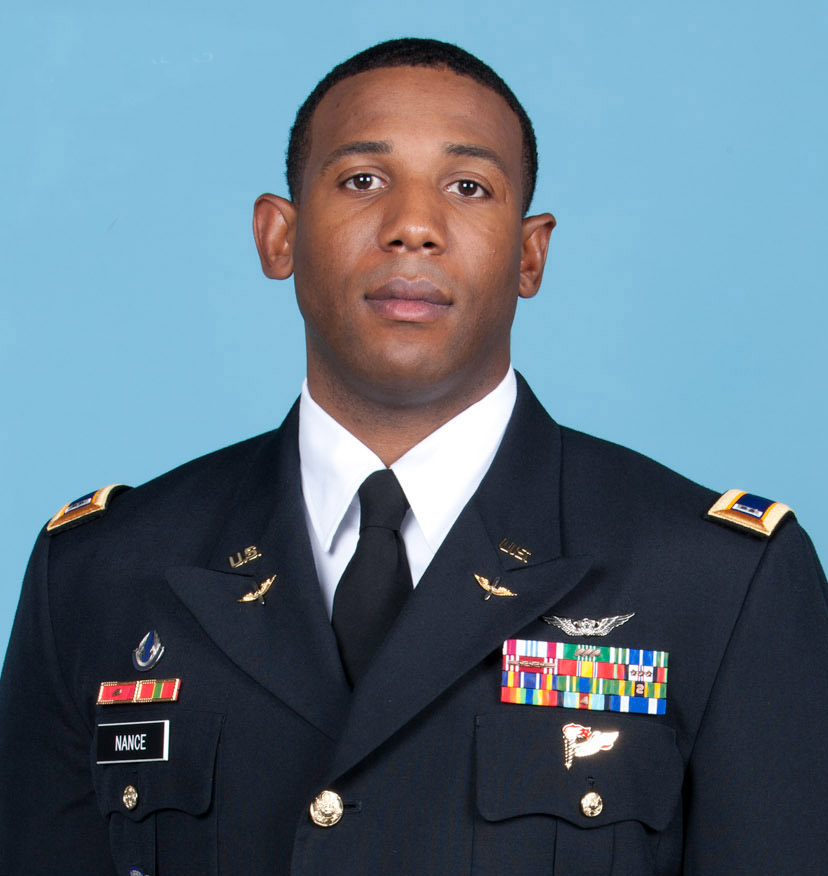
CW02 Andre Nance, 34, US Army, of Fort Hood was found unresponsive in his on-post hotel room at Fort Rucker, Alabama on February 27, 2017. CW02 Nance’s home of record is listed as Randallstown, Maryland and he entered the Army in February 2004. CW02 Nance was attending the warrant officer advance course at Fort Rucker and was assigned to Headquarters and Headquarters Battalion, III Corps at Fort Hood. Nance deployed in support of Operation Enduring Freedom from April 2009 to April 2010, January 2012 to March 2012, and June 2014 to March 2015. The circumstances surrounding the incident were under investigation by Army Criminal Investigation Division (CID). The official cause of death is unknown.
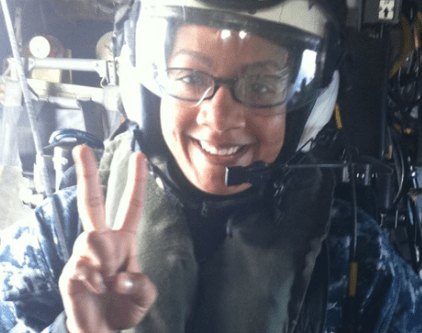
Navy sailor Andrea Daves’ deceased body was found in a charred vehicle at the end of a cul-de-sac in Lakeside, California on February 22, 2017. She was a mother of two children and on maternity leave at the time of her death. Initially the death was ruled as a homicide but in May 2017, the San Diego County Sheriff’s Homicide Unit ruled the cause of death as suicide due to thermal burns.
“Her mother, Pamela Johnson, told 10 News in February that her daughter loved serving in the Navy and was a good person. Johnson believed her daughter had been killed by someone else.” –East County Magazine




 MILITARY JUSTICE FOR ALL