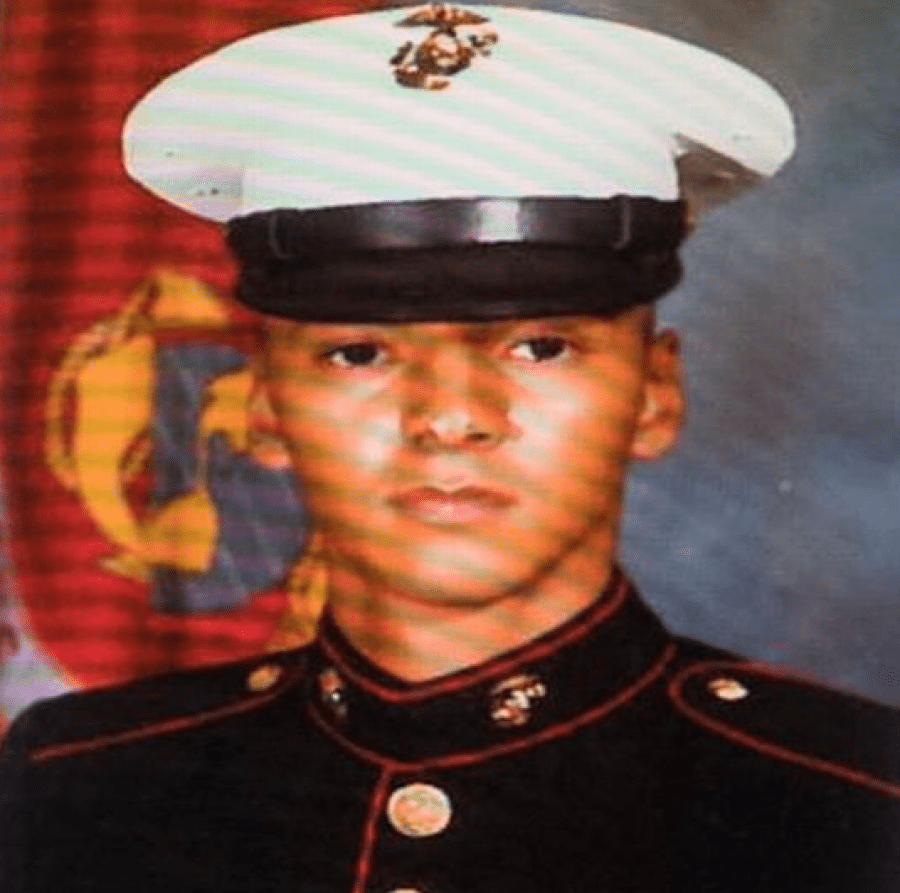
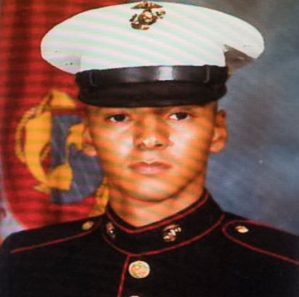
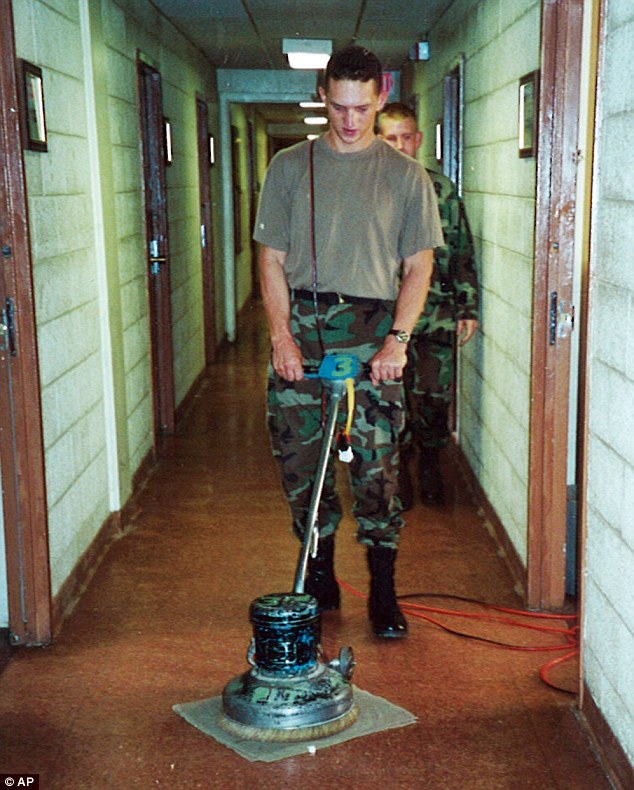
Andrew Urdiales, U.S. Marine Corps [photo: Mirror]Former Camp Pendleton Marine Andrew Urdiales died by suicide at San Quentin State Prison in California on November 2, 2018. His death came less than a month after he was sentenced to death for five murders of women in California. Urdiales also received a life sentence in Illinois for the murders of three other women. One of his victims Jennifer Asbenson got away in 1992 and was able to testify against him during his death penalty trial in California. Four of the murders were committed while he was an active duty Marine stationed at Camp Pendleton between 1986 and 1989. After Urdiales was discharged, he killed four more women in a two year span, one in California and three in Illinois, between 1995-1996.
Honoring the Victims:
This slideshow requires JavaScript.
January 18, 1986: Robbin Brandley, 23, Saddleback CC, California
July 17, 1988: Julie McGhee, 30, Cathedral City, California
September 25, 1988: Mary Ann Wells, 31, San Diego, California
April 15, 1989: Tammie Erwin, 18, Palm Springs, California
March 11, 1995: Denise Maney, 32, Palm Springs, California
April 14, 1996: Laura Uylaki, 25, Chicago, Illinois
July 14, 1996: Cassandra Corum, 21, Pontiac, Illinois
August 2, 1996: Lynn Huber, 22, Chicago, Illinois
In the News:
A jury recommended the death penalty for former Marine and convicted serial killer Andrew Urdiales on Wednesday. -ABC 7 (June 13, 2018)
An Orange County Superior Court jury Wednesday recommended the death penalty for a former Marine and Chicago triple-murderer who was convicted last month of murdering five women in Southern California from 1986 to 1995. -CBS Los Angeles (June 13, 2018)
A survivor was overcome with emotion as she came face to face with the monster who abducted and tortured her…It happened when she missed her bus in Palm Springs, California and Andrew Urdiales offered her a ride. He drove her to a remote desert location where he tied her with rope and her bra. -Inside Edition (June 13, 2018)
News conference following the penalty phase verdict in the case of the People v. Andrew Urdiales case featuring surviving victim Jennifer Asbenson, Tammie Erwin’s father Charles Erwin, Mary Ann Wells’ son Steve Wells, and OCDA Senior Deputy District Attorneys Matt Murphy and Eric Scarbrough of the Homicide Unit. -Orange County DA (June 14, 2018)
Serial killer Andrew Urdiales, who was convicted of the first-degree murders of five Southern California women between 1986 and 1995, was sentenced to death Friday. -ABC 7 (October 5, 2018)
The murders occurred when Andrew Urdiales was stationed at various Marine Corps facilities in Southern California. -CBS Los Angeles (October 5, 2018)
A woman who was kidnapped by an eight-time serial killer shares why she believes her life was spared and she was able to escape. -Dr. Phil (March 7, 2019)
Cuomo speaks with Urdiales on the day he’s being sent to death row and tries to understand why this madman chose to kill multiple women in cold blood. Was he insane? Did he hate women? Were there clues in his childhood? -Inside Evil with Chris Cuomo, HLN (June 18, 2019)
Oxygen’s two hour special event on Israel Keyes airs Sunday, October 28th. -Method of a Serial Killer, Oxygen (S1, E1)
Reporters, investigators and family friends reflect on the kidnapping of Samantha Koenig. -Israel Keyes, Method of a Serial Killer, Oxygen (S1, E1)
Israel Keyes is arrested after a minor traffic infraction. -Method of a Serial Killer, Oxygen (S1, E1)
Follow FBI special agents as they investigate the kidnapping and murder of Samantha Koenig. -Israel Keyes, Method of a Serial Killer, Oxygen (S1, E1)
Investigators say that some conversations with Israel Keyes were very “normal.” -Method of a Serial Killer, Oxygen (S1, E1)
Investigators discuss the power dynamics and the fight for Keyes to reveal information. -Israel Keyes, Method of a Serial Killer (S1, E1)
Israel Keyes admitted that he is “two different people.” -Method of a Serial Killer, Oxygen (S1, E1)
The kill kits recovered by the FBI reveal the meticulous planning of Israel Keyes. -Method of a Serial Killer, Oxygen (S1, E1)
Keyes said the randomness of his victims is what kept him “successful.” -Israel Keyes, Method of a Serial Killer, Oxygen (S1, E1)
Keyes could have many more victims than those that have been accounted for. -Israel Keyes, Method of a Serial Killer, Oxygen (S1, E1)
FBI Special Agents discuss Israel Keyes’ possible involvement in another murder case. -Method of a Serial Killer, Oxygen (S1, E1)
FBI special agents and a forensic psychologist reflect on Israel Keyes’ personality. -Method of a Serial Killer, Oxygen (S1, E1)
Israel Keyes fascination with serial killers reveals patterns in his MO. -Method of a Serial Killer, Oxygen (S1, E1)
Israel Keyes revealed he created kill kits and buried them in various locations. -Method of a Serial Killer, Oxygen (S1, E1)
FBI special agents and a forensic psychologist discuss Israel Keyes’ training and suppression of killing sprees. -Method of a Serial Killer, Oxygen (S1, E1)
Mary Wood, reflects on the time her family employed Israel Keyes for a bathroom remodel. -Method of a Serial Killer, Oxygen (S1, E1)
Former reporter, Casey Grove, describes his journey as a crime journalist. -Israel Keyes, Method of a Serial Killer, Oxygen (S1, E1)
Within a month, four men in Orange County are brutally stabbed by a mysterious man. No one makes a connection to a gruesome double murder of a mother and son two months earlier except the man sitting in prison for killing his own family. -Friend of the Devil, Murder By Numbers (S2, E4)
Classification: Serial killer Characteristics: Ex-Marine Number of victims: 6 Date of murders: October 25, 2011 – January 13, 2012 Date of arrest: January 13, 2012 Date of birth: 1988 Victims profile: Raquel Estrada (53) and Juan Herrera (34) / James McGillivray (53) / Lloyd “Jim” Middaugh (42) / Paulus Smit (57) / John Barry (64) Method of murder: Stabbing with knife Location: Orange County, California, USA Status: In prison awaiting trial [Suicide]
via Itzcoatl Ocampo | Murderpedia
Editor’s note: With a cable subscription, you can download the free ID Go app and watch Investigation Discovery programming at your convenience. And for those who do not have cable, you can watch “unlocked” episodes on the ID Go app including the latest premieres. For those who prefer commercial free programming during your binge session, Prime Video has an ID channel: ‘True Crime Files by Investigation Discovery” available for $3.99 a month. It’s a compilation of older seasons but totally worth the cost if you are a true crime addict. Download the ID Go app or purchase ID True Crime Files & binge away.
In the News:
A serial killer is terrorizing the homeless community in Orange County, California. -CNN (January 10, 2012)
OC transients warned about serial killer -TheRealHomelessOCRM (January 18, 2012)
Itzcoatl Ocampo, the 23 year old Iraq War Veteran accused of fatally stabbing four homeless men in a serial killing spree in Orange County is behind bars, and the District Attorney is now characterizing him as a brazen, vicious killer who enjoyed getting media attention. -Garden Grove TV3 (January 19, 2012)
Friends of John Berry, the alleged victim of accused serial kill Itzcoatl Ocampo, braved a steady rain to remember the homeless man. Dozens of marchers took the one-mile route along the Santa Ana River Trail where Berry often stayed. Marisol Gonzalez reports on the impact John Berry had on his community. -Garden Grove TV3 (January 21, 2012)
Investigators with a multi-agency task force announced on Thursday that accused serial killer Itzcoatl Ocampo is being investigated in the murder of Juan Herrera and his mother Raquel in their Yorba Linda home last October. The two were stabbed to death according to Lt. Julian Harvey with the Homeless Homicide Task Force. Harvey also confirmed Ocampo is “associated” with a man already in custody for the two murders. He is Eder Giovanni Herrera – brother and son to the victims. Ocampo is accused of planning, stalking and then killing four homeless men during December 2011 and Janurary 2012. -Garden Grove TV3 (February 3, 2012)
The Anaheim Police Department, the OC Rescue Mission and the Vineyard Christian Fellowship joined together for a community event in the wake of serial killings that terrorized North Orange County. With a suspect now in custody, volunteers want to mobilize the community to help the Homeless. Marisol Gonzalez has the story plus an update on new charges leveled against accused serial killer Itzcoatl Ocampo. -Garden Grove TV3 (February 4, 2012)
Itzcoatl “Izzy” Ocampo, 23, held in the deaths of four homeless men, will be arraigned March 16 in the case involving the stabbing deaths of a classmate’s brother and mother. -Orange County Register (February 6, 2012)
Itzcoatl Ocampo is heard from beyond the grave. He explains to an investigator what made him kill. -CBS Los Angeles (May 1, 2014)
Itzcoatl Ocampo, the suspect in a brutal string of slayings of four homeless men had his arraignment delayed until Feb. 17. After the court appearance, Ocampo’s attorney spoke with reporters. -Orange County Register (September 1, 2015)
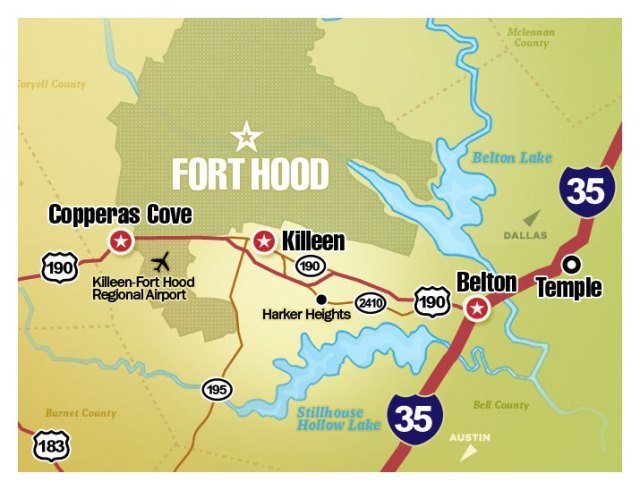
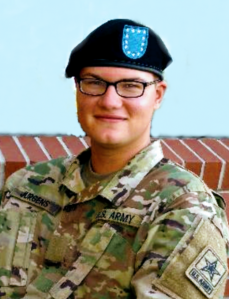
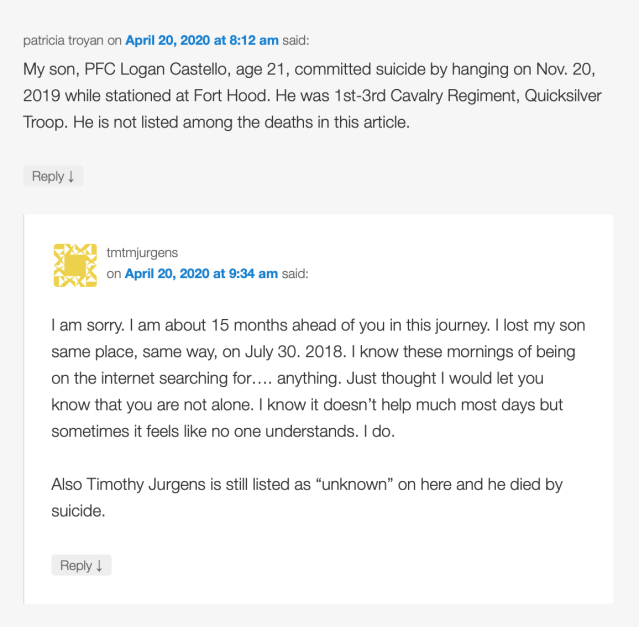
Obituary: “Timothy James “TJ” Jurgens passed away July 30, 2018 in Fort Hood, Texas.TJ was born July 5, 1999 in Effingham, Illinois. He is survived by his parents Thad and Tommi Jurgens of Golconda, IL, his brothers Hunter (Katie) Jurgens of Jasper, Indiana, Lane Jurgens of Litchfield, IL and one sister Josie Jurgens of Golconda, IL. He is also survived by his grandparents Carol and John Sheehan of Teutopolis, IL, Tom and Tammy Logsdon of St. Elmo, IL, Greg and Elaine Lilly of Mode, IL, Paul and Doris McConkey of Brownstown, IL, great-grandparents Marilyn Logsdon of St. Elmo, Lydia Hemrich of Effingham. TJ was preceded in death by his grandfather Harold “Tubby” Jurgens, his uncle Louis Jurgens, great grandfather William “Bill” Logsdon, and great grandparents Arthur and Ruth Forbes. TJ was a 2017 graduate of Pope County High School, and enlisted in the US Army before graduation. He enjoyed music and drama club in high school, as he loved to make people laugh. No one laughed harder than him, he was a joy to all he encountered. TJ loved the Lord. He loved his family and his friends. He loved his church family and kept strong relationships with every church he participated in.”
I can honestly say no one is looking in this because at this point, no one cares. I just looked at the suicide rate right now in the Navy and it is now reported 43 for the year so far. I looked at it on Wednesday of last week and it was at 37. What the heck is going on and when will someone anyone going to start caring about the men and women in our Armed Forces? We need to respect the flag AND the men and women who defend it and save their lives like they do us. We all need to write to our senators and congressional staff. We need The Brandon Act passed and quickly.
I’m going to explain what “The Brandon Act” is. It is designed to be a safe word that men and women in our Armed Forces can use if they are subjects of any kind of abuse whether it’s physical, emotional or mentally. Abuse comes in many, many forms to include bullying, hazing, threats, sexual, abusive leadership, and any kind of mental and emotional abuse. These are just a few abusive tactics that can be done to someone. “The Brandon Act” protects those who come forward asking for help. It is designed for these men and women to come forward and get the help they need and if the abuse merits it, the sailor or troop will have a right to ask to be reassigned to another command or unit without any retaliation whatsoever from anyone in their current command or their next assignment. Our hope is to bring suicides to an end and by using this “Act” will hopefully allow them the courage to get help when they need it and get them healed and back on the right path. This “Act” is in front of Congress right now and hopefully very soon, they will approve and pass it once it’s completely written. Thank you for reading. #thebrandonact
-Patrick and Teri Caserta (Brandon Caserta’s parents)
Sailor’s Death at Naval Station Norfolk Ruled Suicide:
Sailor’s death at Naval Station Norfolk ruled suicide. -WAVY TV 10 (June 26, 2018)
Peoria Family Hopes for Change in Military Culture After Son Takes His Own Life:
As Teri Caserta entered her son’s bedroom in their Peoria home, she broke down. It’s an emotion that Teri and her husband Patrick Caserta will always carry with them. Their son Brandon was in the United States Navy from 2015 to 2018. However, at just 21, Brandon would take his own life. -ABC 15 Arizona (June 14, 2019)
Parents of Norfolk-Based Sailor Who Committed Suicide Want Changes:
Brandon Caserta, 21, was a sailor. He died by suicide while stationed in Norfolk. His parents hope new legislation will protect future military men and women. -13 News Now (October 4, 2019)
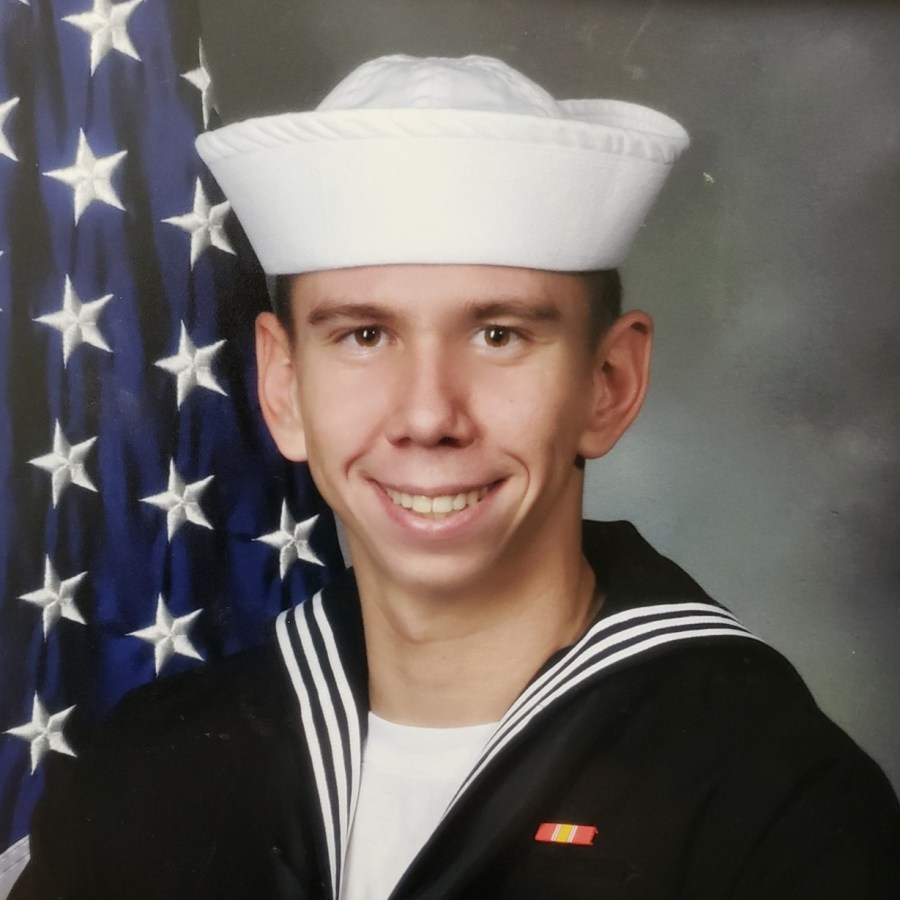
Navy AEAN Brandon Caserta was stationed with the Helicopter Combat Sea Squadron 28 (HSC-28) at Naval Station Norfolk in Virginia when he died by suicide on June 25, 2018. While Brandon’s parents were on the phone with Navy leadership at the Squadron, Brandon walked out on the flight line, apologized to the plane captain (who is in-charge of the flight line), and hurled himself into a helicopter rotor, dying instantly. AEAN Caserta had a brief career with the Navy and it didn’t turn out the way he had hoped. He had failed Special Warfare Training and was transferred into a new career field as a result. And then unexpectedly Brandon broke his collar-bone in a bicycle accident, which also negatively impacted his Navy career. At the moment Brandon Caserta made his final walk out to the flight line, his father Patrick Caserta was on the phone with the command expressing concern for his son’s welfare. Patrick was making plans to fly out to Naval Station Norfolk to explore his son’s legal options.
Desperate for answers, the Casertas reached out to Brandon’s chain of command and friends but eventually everyone stopped responding. The Casertas were told by many friends in Brandon’s command that leadership ordered a cessation of communications. Before the silence, Brandon’s friends shared that they thought he appeared to be suffering from depression, feelings of worthlessness, and anger, hence the reason he left a note asking the Navy be held accountable. As a result of the information gleaned from the note and those who knew Brandon, the HSC-28 conducted an investigation of itself; basically the fox guarding the henhouse. Although they knew months in advance of the problems, the report did note that Brandon’s supervisor had a history of berating and belittling those who worked for him. As a matter of fact, this supervisor could have been court-martialed under UCMJ Article 93, Cruelty and Maltreatment, but he wasn’t. Instead, Military.com reports he received no punishment and was transferred with a “declining evaluation” (and this was only after it was heard and reported that he made “derogatory and inflammatory comments concerning the deceased”).
“I want to see as many people fired, kicked out or, at the very least, lose rank.” -Brandon Caserta, U.S. Navy
According to Military.com, the Navy’s suicide rate in 2018 was the highest it’s ever been. And it was reported that a post-mortem analyses of suicides in the military usually showed the victim “faced major issues like financial problems, relationship problems, medical issues, and mental health conditions.” The military reporter reached out to Dave Matsuda, an anthropologist at California State University-East Bay, who researched and studied a suicide cluster among soldiers in Iraq in 2010. Matsuda’s research found some non-commissioned officers (NCOs) and officers in the chain of command made their subordinates’ lives a “living hell.” Matsuda also added that although the “bad leaders weren’t fully responsible for the suicides, they helped push the soldiers over the edge.” But in a system where the Navy is investigating the Navy, we have learned that the Chain of Command isn’t going to admit there is a problem. They have a history of blaming the victim and/or scapegoating an enlisted NCO or lower ranking military officer.
Brandon’s father, Patrick Caserta, a retired U.S. Navy sailor himself, asserts the Command was “so hostile, corruptive and unethical,” that they tormented Brandon and drove him past the brink of despair. Patrick and Teri Caserta wholeheartedly believe the command murdered their son. Patrick reminded us that the military talks about trauma, exposure to war, and mental health, but they don’t talk about harassment and bullying. He believes military leadership do not want to admit harassment, bullying, and retaliation happen or admit they are at fault. In the days and weeks that followed their son’s death, Patrick and Teri also learned from those who worked with Brandon that they were all dealing with a high operational tempo and manpower shortfalls. Brandon’s co-workers believed “personal issues were not a high priority and Brandon’s death could have been prevented.” And an anonymous message sent to the squadron commander on June 18, 2018 revealed the abuse was ongoing before Brandon died.
According to the message, Brandon’s supervisor called subordinates his “bitches,” referred to the chiefs as “douchebags” and “dumbasses” behind their backs, and “treated workers worse than garbage” and “like dogs.” –Military.com (June 8, 2019)
This slideshow requires JavaScript.
Military.com reported that Brandon Caserta’s death was one of 68 Navy suicides in 2018. They also reported the rise in military suicides appears to mirror an increase in suicides among the general U.S. population. Suicide experts are struggling to understand why so many are dying by suicide. Some factors for suicide risk, according to the Centers for Disease Control (CDC), include “spending time in prison or jail, having a mental health disorder or a substance abuse problem, experiencing family violence, a history of suicide, and having guns in the home.” Brandon’s family believes their son’s suicide was a direct result of toxic leadership, one superior who harassed and bullied Brandon, pushing him over the edge. According to Army Doctrine Publication 6-22, a toxic leader “operates with an inflated sense of self-worth and from acute self-interest,” consistently using “dysfunctional behaviors to deceive, intimidate, coerce, or unfairly punish others to get what they want for themselves.” Although it appears there are multiple variables that impact when a service member chooses to die by suicide, the experts need to find out the why so we can save our service member’s lives. What is happening in their environment that makes them feel like suicide is the only way out?
The directive states, toxic leaders exhibit a combination of “self centered attitudes, motivations, and behaviors that have adverse effects on subordinates, the organization, and mission performance.” –Military.com (June 8, 2019)
Military.com reported that one of Brandon’s co-workers helped shed some insight into the toxic climate at the Navy’s HSC-28 squadron. He accused leadership of deploying personnel in retaliation for speaking up and not doing as they are told. This particular individual requested that he remain at the squadron when his wife got sick because he needed to support her and their two girls. But his leadership was going to deploy him with a detachment anyways. So he filed an Inspector General complaint and thankfully was transferred out of the squadron in a couple weeks. He believes Navy personnel have a “fear of retribution” because the command is resentful of the service members who can’t deploy. Brandon’s family experienced a form of retaliation as well. The unit held a memorial service for Brandon four days after he died but Patrick and Teri said they were not invited by anyone in the HSC-28 command. Patrick Caserta believes the family was excluded out of sheer pettiness; leadership wanted to continue to conceal and coverup what truly happened. Regardless of the reason, it was a violation of Navy policy.
“Navy policy states that the command should provide round-trip travel and allowances to family members to attend a command memorial service.” –Military.com (June 8, 2019)
On May 31, 2019, after the command learned that Military.com had made phone calls regarding the Casertas’ allegations, Navy personnel indicated there was a “culture of fear” at the squadron. The Casertas are so angry and distraught that communications have stopped that they offered a $25,000 reward to anyone who came forward with information that “lead to successful prosecution of individuals in their son’s chain of command.” They have also met with the congressional staff of at least a dozen senators and representatives, including Senator Tim Kaine (D-VA) and Senator Kyrsten Sinema (D-AZ) to discuss “the treatment they and Brandon received, request an independent investigation, and promote efforts to prevent suicide linked to toxic leadership.” They also would like to see the Navy implement Brandon Caserta’s request in his suicide note regarding the re-rate process: “sailors who don’t complete the training for the rate they initially sought should be able to select any other training they qualify for with their Armed Services Vocational Battery (ASVAB) test results.”
Anthropologist Dave Matsuda told Military.com that to truly address the problem of suicide in the armed forces, “all the services need to consider ‘toxic leadership’ when analyzing the deaths of each individual.” If we understand the why, we can prevent suicide. Matsuda also believes operational leaders should not rely on “the boot camp strategy of breaking people down to build them back up.” Matsuda concluded with the assertion that indeed a toxic command climate can trigger suicidal behavior. One year later, Patrick and Teri Caserta are determined to get justice for their only son, because they believe this tragedy could’ve been prevented. The pair also report that Congress is drafting “The Brandon Act,” which is “federal legislation aimed at ending military suicides, holding commanders accountable, and halting the bullying and hazing that occurs within military ranks.” Please contact both the Senate Armed Services Committee (SASC) members and the House Armed Services Committee (HASC) members and your Senators and Representative to ask that they too support our troops by supporting The Brandon Act. Our service members deserve a chance at a beautiful life post military.
“The Brandon Act” is designed to be a safe word that men and women in our Armed Forces can use if they are subjects of any kind of abuse whether it’s physical, emotional or mentally. Abuse comes in many, many forms to include bullying, hazing, threats, sexual, abusive leadership, and any kind of mental and emotional abuse. These are just a few abusive tactics that can be done to someone. “The Brandon Act” protects those who come forward asking for help. It is designed for these men and women to come forward and get the help they need and if the abuse merits it, the sailor or troop will have a right to ask to be reassigned to another command or unit without any retaliation whatsoever from anyone in their current command or their next assignment. Our hope is to bring suicides to an end and by using this “Act” will hopefully allow them the courage to get help when they need it and get them healed and back on the right path. This “Act” is in front of Congress right now and hopefully very soon, they will approve and pass it once it’s completely written. Thank you for reading. –Justice for Brandon Caserta on Facebook (June 20, 2019) #TheBrandonAct
“The whole thing was hard to process. I was angry, I was pissed off, and I didn’t know how they were going to charge me,” Caroline Blaze said. “All I knew was I was being charged and I was literally done with the Army.”
Blaze said she received a local general reprimand that stayed in her records for a year around the same time she was being processed for a medical retirement. She said she was never notified or saw the recommendation for her punishment and to this day she doesn’t know what was written about her.
Blaze said she even became suicidal and had a suicide attempt several months after receiving the reprimand.
“It was a bad time and a hard time. To say that I was at fault for these soldiers lives like I caused their death.”
ID Go: A young Army recruit enlists with dreams of serving her country. What she doesn’t expect is to find love with a commanding officer in her platoon. The two battle to keep their forbidden affair secret but can they defeat the enemy within? -Love is a Battlefield, Forbidden: Dying for Love (S3, E1)
Editor’s note: With a cable subscription, you can download the free ID Go app and watch Investigation Discovery programming at your convenience. And for those who do not have cable, you can watch “unlocked” episodes on the ID Go app including the latest premieres. For those who prefer commercial free programming during your binge session, Prime Video has an ID channel: ‘True Crime Files by Investigation Discovery” available for $3.99 a month. It’s a compilation of older seasons but totally worth the cost if you are a true crime addict. Download the ID Go app or purchase ID True Crime Files & binge away.
“Killing Versace: The Hunt For A Serial Killer” re-examines the infamous manhunt for Cunanan through new and revisited expert insider interviews. Watch new episodes of Killing Versace, premiering February 11th at 7/6c, only on Oxygen.
1) Jeffrey Trail was [Andrew] Cunanan’s friend.
According to Newsweek, Cunanan told friends in April 1997 he was headed to Minneapolis “to visit an old friend with whom he had unfinished business.” The old friend was Trail, who had previously been a naval officer. Vanity Fair reports Cunanan described Trail as his best and “my brother.”
CBS News reported Trail was a Gulf War veteran and a graduate of the U.S. Naval Academy in Annapolis. Friends called him “an upbeat, fun-loving, compassionate man.” Trail’s father told The Washington Post in July 1997, “Jeff was the kind of guy who was always trying to help people out… He went out of his way to be helpful to people.”










 MILITARY JUSTICE FOR ALL