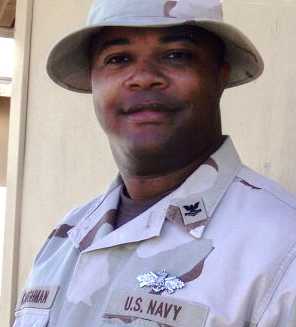
Navy Petty Officer 1st Class Sean Caughman, 43, died of a non combat related injury on February 15, 2010 in Kuwait. Petty Officer 1st Class Caughman was supporting Operation Iraqi Freedom on behalf of the Naval Mobile Construction Battalion Twenty-Two, a Seabee unit at the Fort Worth Naval Air Station in Texas.
“A Seabee supporting Operation Enduring Freedom died Tuesday in Kuwait, the Defense Department announced Thursday. His cause of death was not provided, but the Naval Safety Center Web site said an E-6 died after a PT run.” -Honor the Fallen
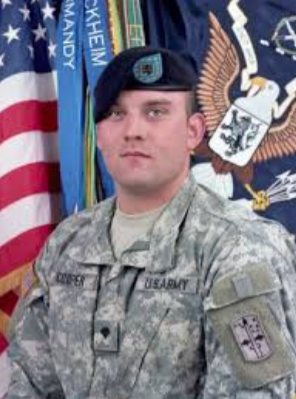
Sgt. Christopher Cooper, 28, US Army, died from a non combat related incident at Camp Scania, Iraq on October 30, 2009. Sgt. Cooper was supporting Operation Iraqi Freedom on behalf of the 2nd Battalion, 28th Infantry, 172nd Infantry Brigade in Schweinfurt, Germany. Sgt. Cooper also served in the US Marine Corps for four years and completed an Iraq tour during that time. According to the Department of Defense the incident is under investigation.
An event on the Auraria campus aimed to help community members understand mental health issues in returning veterans. -The Denver Post (November 17, 2011)
“Chad Barrett’s war on terror started in the hours after the Sept. 11, 2001, attacks, when he was called to help dig bodies out of a smoking Pentagon. It ended Feb. 2, 2008, in Mosul, Iraq, when his roommate awoke to find him gasping and gurgling, with foam coming from his mouth. Barrett had been cleared for a third combat tour in Iraq despite a recent suicide attempt, crushing headaches and a mental illness treated with medication for anxiety and depression. Two months after he arrived, he killed himself by swallowing an unknown number of pills. He was the sixth soldier from Fort Carson to commit suicide in Iraq. At least 10 others have killed themselves in the U.S., nine after returning from the war.” -David Olinger & Erin Emery, The Denver Post (August 26, 2008)
An analysis of the information showed that:
• Army suicides in Iraq tripled in three years, from 10 in 2004 to 32 in 2007.
• In 2006 and 2007, 20 of the 59 soldiers who killed themselves in Iraq were deployed from a single base — Fort Hood in Texas.
• Fourteen of the soldiers who killed themselves in Iraq were 19 years old. Nearly half were 23 or younger.
Read more ‘Waging Internal War’ from The Denver Posthere.
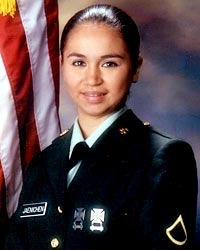
Army Spc. Mary Jaenichen, 20, died of a non-combat related injury on May 9, 2008 in Iskandariyah, Iraq. Spc. Jaenichen was supporting Operation Iraqi Freedom on behalf of the Brigade Troops Battalion, 2nd Brigade Combat Team, 3rd Infantry Division at Fort Stewart, Georgia. At the time of the Department of Defense press release, the incident was under investigation. The official cause of death is unknown.
The 2006 graduate had signed up for the Army Reserve at age 17 with the promise of a military-funded college education. She attended boot camp between her junior and senior years. At the time of her death, she was assigned to the Brigade Troops Battalion, 2nd Brigade Combat Team, 3rd Infantry Division at Ft. Stewart, Ga. Her father, Alfred Alan “Jay” Jaenichen of Santa Ana, who recently retired as a Marine master sergeant, said she was serving as a military police officer at a “detainee holding area” — a prison. ~LA Times
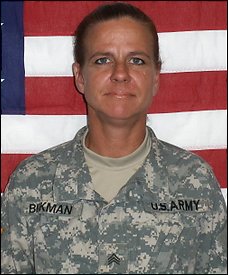
Army Sgt. Tracy Birkman, 41, died from non combat related injuries in Owesat, Iraq on January 25, 2008. Sgt. Birkman was supporting Operation Iraqi Freedom on behalf of the 626th Brigade Support Battalion, 3rd Brigade Combat Team, 101st Airborne Division (Air Assault) at Fort Campbell in Kentucky. At the time of the Department of Defense press release, the incident was under investigation which is typical of non combat death. But the official cause of death is unknown.
Birkman’s father, Jerald Griffith, a Vietnam War veteran, said he was angry with military officials for releasing information about his daughter’s death and with the news media for its portrayal of soldiers such as himself. “I didn’t want it released. I am so [furious] about all this I can just scream,” said Griffith, also of New Castle. “I hate the media with just an unmitigated passion. You . . . lied about me when I was in Vietnam.” He said his daughter was on her third deployment.” She’s over there in a war we shouldn’t even be involved in, on her third tour,” Griffith said. –The Washington Post (January 29, 2008)
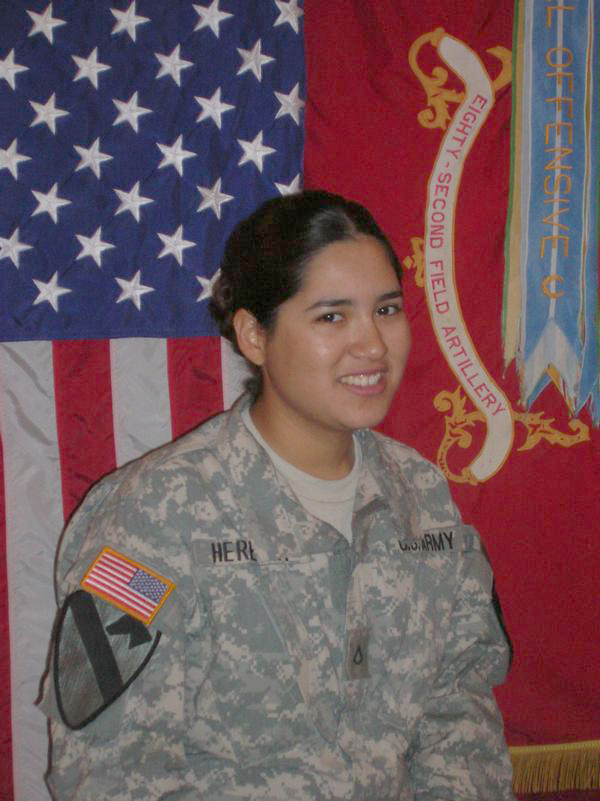
Army Spc. Marisol Heredia, 19, died September 7, 2007 at Brooke Army Medical Center in San Antonio, Texas of injuries suffered from a non-combat related injury on July 18, 2007 in Baghdad, Iraq. Spc. Heredia was a Petroleum Supply Specialist supporting Operation Iraqi Freedom on behalf of the 15th Brigade Support Battalion, 2nd Brigade Combat Team, 1st Cavalry Division at Fort Hood, Texas. At the time of the Department of Defense press release the circumstances surrounding the death were under investigation. According to media reports, Spc. Heredia was severely burned while refueling a generator in Iraq and died of an infection at the hospital stateside because her bodily defenses were seriously compromised due to the extent of her burns.
In war-torn Baghdad, Heredia, who held the rank of Specialist, was badly burned in an accident July 18. According to family members, the accident occurred while she was fueling a generator. –Los Angeles Times
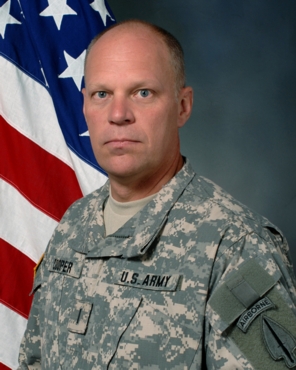
Army Sgt. 1st Class David Cooper Jr, 36, died of a non combat related injury in Baghdad, Iraq on September 5, 2007. Sgt. 1st Class Cooper was supporting Operation Iraqi Freedom on behalf of the 2nd Battalion, 23rd Infantry Regiment, 4th Brigade, 2nd Infantry Division in Fort Lewis, Washington. At the time of the Department of Defense press release, the incident was under investigation. The official cause of death is unknown.
Army SSG Jeannette T. Dunn, 44, died of a non combat related injury in Taji, Iraq on November 26, 2006. SSG Dunn was supporting Operation Iraqi Freedom on behalf of the 15th Sustainment Brigade, 1st Cavalry Division, Fort Hood, Texas. According to the Department of Defense, the incident is under investigation. The official cause of death and outcome of the investigation are unknown.
“For years I wondered what great things that she had accomplished in the Military. She was a great Soldier when I knew her. You could find no one more dedicated to accomplishing the Mission.” –Charles Baker
Editors Note: Need to get up to speed quick with the unsolved case of Fort Campbell Army Pfc. Lavena Johnson, please check out Episode 40 on the Military Murder Podcast.
Army Pfc. LaVena Johnson, 19, died of non combat related injuries in Balad, Iraq on July 19, 2005. Pfc. Johnson was supporting Operation Iraqi Freedom on behalf of the Army’s 129th Corps Support Battalion in Fort Campbell, Kentucky. Unlike most, the Department of Defense did not announce that LaVena’s death was under investigation in their press release. The Army Criminal Investigation Division later determined that Pfc. Johnson’s cause of death was suicide by self inflicted gunshot wound. The Army tried telling the family that LaVena used her own M-16 to commit the suicide. The family immediately suspected foul play and ordered an independent autopsy for LaVena. LaVena was not depressed and showed no signs of suicidal ideation. As a matter of fact, she was happy and bubbly and looking forward to going home for Christmas. After the family saw LaVena’s body and obtained investigative documents from the Army, they quickly realized that LaVena did not die by suicide, she was raped and murdered.
According to the family, the Army never investigated LaVena’s death as a homicide nor did they do a rape kit test or autopsy. The family gleaned from the paperwork that Army investigators first considered LaVena’s death a homicide and recorded that in their paperwork, but within a short window of opportunity were suddenly ordered to cease their investigation and reclassify her death as a suicide. Ten years later, LaVena’s father, Dr. John Johnson, continues to fight for justice for his daughter. And, although he has had struggles getting media coverage, he has forged out on his own to speak the truth for LaVena. Dr. Johnson is featured in a documentary called The Silent Truth which presents the heartbreaking story of his daughter LaVena. Pfc. LaVena Johnson was betrayed by the very people she depended on for her life, and the military industrial complex who would rather silence the truth then harm their reputation.
Nineteen year-old Army PFC LaVena Johnson, was found dead on a military base in Balad, Iraq in 2005. The U.S. Army ruled Lavena’s death a suicide, but an autopsy report and photographs revealed Johnson had a broken nose, black eye, loose teeth, burns from a corrosive chemical on her genitals, and a gunshot wound that seemed inconsistent with suicide. LaVena’s father, John Johnson, shares his family’s fight to get answers from the military about his daughter’s death. -Protect Our Defenders (July 14, 2012)
Pfc. LaVena Johnson died in Iraq on July 19th, 2005 and her family needs your help. -Unsolved Mysteries (September 26, 2014)
Many have heard about the efforts for justice in the case of Army PFC LaVena Johnson. In 2005 after only 6 weeks of her deployment in Iraq, PFC LaVena Johnson was found dead. The Army says suicide, but after close evaluation and discovering a plethora of discrepancies in the Army’s report, LaVena’s father Dr. John H. Johnson began the fight for justice for his daughter. On this episode of The Rock Newman Show our special guest are LaVena’s father, Dr. John H. Johnson and attorney Donald V. Watkins. We warn our viewers that this episode of The Rock Newman Show goes into deep detail concerning the evidence and death of PFC LaVena Johnson. Dr. John H. Johnson and Donald V. Watkins contend that by no means is this case a suicide, and say they even know the name of the culprit. -The Rock Newman Show (February 11, 2016)
Army Sgt. Melissa Valles, 26, died on July 9, 2003 of a non-combat injury in Balad, Iraq. Sgt. Valles was supporting Operation Iraqi Freedom (OIF) on behalf of the B Company, 64th Forward Support Battalion in Fort Carson, Colorado. At the time of the press release, the incident was under investigation. Military officials told her mother she died from a noncombat gunshot wound to her abdomen. Sgt. Valles was the first woman soldier from Texas killed in Iraq and left behind an eight-year-old son.
Sixteen months have passed since Army Sgt. Melissa Valles gave her life for her country. Still, the pain, anger and unanswered questions persist for the Eagle Pass, Texas, native’s grieving mother and siblings. “We’re still looking for some answers. We’re still trying to find out what really happened,” said Fernando Valles Jr., one of the soldier’s two older brothers. –My Plainview


 MILITARY JUSTICE FOR ALL