In 1999, the television program 60 Minutes reported on the hidden War at Home in the U.S. military. They reported that at the time of airing, Pentagon records showed that 58,000 military spouses were victims of domestic violence and that rate was three times higher than the civilian population rate. The overall concerns were that the military justice system was a system that routinely failed to punish even the most violent and abusive servicemen. As a result, it often left an abused spouse alone without protection to fight a secret war. 60 Minutes highlighted the cases of three Fort Campbell soldiers who were charged with killing their wives or girlfriends (Bill Coffin, Dane Zafari, Tracy Leonard) and one Navy spouse who was a victim of domestic violence.
One of the cases singled out was that of Fort Campbell Sergeant Bill Coffin who murdered his ex-fiance Ronnie Spence after a civilian judge granted her an emergency protection order. In December 1997, Sgt. Coffin murdered Ronnie in front of their baby daughter in a shared home near Fort Campbell, Kentucky. Sgt. Coffin shot her twice through the trailer, entered the home and then shot her in the face and through the heart. While Ronnie was lying dead on the floor, Sgt. Coffin emptied the gun into her. Several weeks before the shooting, court records showed that Sgt. Coffin had repeatedly threatened to kill Ronnie and his superior officers at Fort Campbell knew about the threats.
I think they should have confined him to that army base. They should have gotten him some help. They should have stopped him, they should have intervened. They did nothing. -Kathy Spence (mother)
60 Minutes interviewed Kentucky Judge Peter MacDonald who stated that domestic violence cases involving Fort Campbell soldiers routinely showed up in his courtroom. He said that Army commanders regularly ignored court orders issued to protect the abused spouses. Judge MacDonald issued the emergency protective order requiring Sgt. Bill Coffin to stay away from Ronnie Spence. Sgt. Coffin instead shot and killed her. According to 60 Minutes, Sgt. Coffin pleaded guilty to domestic violence and other charges, and was sentenced. Judge MacDonald felt the readiness of the troops was more important than the protection of the battered and abused spouses.
In an in depth investigation, 60 Minutes learned that the Army’s domestic violence guide for commanders listed a number of things that could have been done in Sgt. Bill Coffin’s case but were not. The guide included restricting an abuser to the barracks or assigning them to the quarters of a superior. They also learned that the military spends millions yearly on a Family Advocacy program designed to treat and prevent domestic violence. But Sherry Arnold, a licensed clinical social worker, who helped run the program for the Marines in Camp Pendleton in California, said the Commanders have preconceived notions. She often witnessed victim blaming, minimization, a hands off approach, an ‘it’s a family matter’ attitude, and indifference to the seriousness of the situation and escalating violence.
Robert Clark, the commanding general of Fort Campbell, Ky., where several particularly violent incidents have occurred, said the military does a good job handling domestic violence cases. But Peter MacDonald, chief district court judge in Kentucky with jurisdiction over Fort Campbell, said the Army routinely ignores his court orders designed to protect abused spouses. “They have no conception of what’s going on in domestic violence.” –Deseret News
After the public learned of the scandalous way the U.S. military handles felony crimes like domestic violence, rape, and stalking, the Pentagon was ordered by Congress to investigate domestic violence in the armed forces. Congress recommended stronger protections for battered spouses and stiffer penalties for the servicemen who abuse them. In 2000, Major Joanne P.T. Eldridge suggested a proposal to add anti-stalking provisions to Article 134 in the Uniform Code of Military Justice. Since 1999 and long before this, domestic violence has continued to be an on-going serious invisible issue in the military. Both military spouses and service members are victims of domestic abuse. The year 60 Minutes aired the ‘The War at Home’ programming, Fort Campbell soldier Barry Winchell was murdered because a couple soldiers suspected he might be gay. Barry’s murder prompted the lift of the controversial Don’t Ask Don’t Tell policy.
The year after 60 minutes aired, civilian spouse Michelle Theer conspired with her lover, Army Ranger John Diamond, to kill her husband Air Force Captain Frank Theer for the life insurance money. In 2002, four wives were slain in six weeks at Fort Bragg in North Carolina. They were Teresa Nieves, Jennifer Wright, Andrea Floyd, and Marilyn Griffin. In 2008, Army Lt. Holley Wimunc was abused, stalked, and murdered by her Marine husband. In 2011, Holley’s father advocated for H.R. 1517 sponsored by Representative Bruce Braley. This law was aimed at protecting both domestic violence and sexual assault victims. This law would have required the removal of Commanders from the investigation and prosecution of felony crimes. The Holley Lynn James Act and any subsequent legislation, like the Military Justice Improvement Act, suggesting the removal of the Commander from the processing of felony crimes have been unsuccessful.
Rep. Bruce Braley introduces the Holley Lynn James Act — a bill to help victims of sexual assault and domestic violence in the military get justice. The bill is named after Holley Lynn James, a constituent of Rep. Braley who was killed by her husband while both were in the service.
Offender: Michael Dean Overstreet Occupation: US Navy veteran (discharged for psychological problems after one month), construction, frequently unemployed Pathology: Stranger abduction, rape, and murder by strangulation, shot victim in forehead Dates: September 27, 1997 Location: Franklin, Indiana, moved body to Atterbury Wildlife Preserve (Brown County) Motive: Hunted prey, lured victim, stranger abduction, rape & murder Victim: Kelly Eckart (18), Franklin College student M.O.: Stalked at work, followed home after work shift, bumped her car while both driving on road, abducted after she pulled over Conviction: Sentenced to death (July 31, 2000), Indiana court ruled not competent to be executed in 2014, still on death row Status: Incarcerated, death row Appearance: Blanket of Evidence (Forensic Files); All-American Sweethearts (Murder Comes to Town); Death Row (Real Stories); First Love, Forever Evil (Evil Lives Here) Red Flags: Deprived and abusive childhood, Schizotypal Personality Disorder, mother failed to seek mental health for him, got in fights, bully in high school, went to jail for having a gun at school, isolated & controlled significant other, stalking, threatening, long history of domestic abuse, obsession with weaponry especially knives, always carried a knife, owned firearms, threatened wife with knife, grabbed wife by throat & pointed gun at her head (shot it next to her head), threatened wife with rifle, unexplained absences, secret life/two lives, hallucinations, volatile temper, unpredictable, paranoid, admitted to wife he killed people (delusional thoughts), psychological deterioration, liked killing animals, spent a lot of time alone in the woods, obsessed with media after crimes committed, wife afraid to call the police with suspicions, one misdemeanor in criminal history, loves his family & two children, model prisoner
In the News:
A northern Indiana judge is nearing a decision on whether a man convicted of abducting and killing a Franklin College student in 1997 should be put to death. -RTV6 The Indy Channel (November 13, 2014)
Overstreet ruled not competent to face death penalty. -WTHR (November 20, 2014)
Full Episode: Housing 1900 inmates, 12 of whom are on death row, Trevor spends two weeks in the dark and forbidding world of Indiana State Maximum Security Prison. He hears from men who know what it is like to live under the shadow of the death penalty and even the date and time they will die. -Indiana Death Row, Part 1, Real Stories (August 28, 2017)
Full Episode: Indiana Death Row | Part 2 | Real Stories (August 30, 2017)
Forensic Files:
Full Episode: A young woman disappeared after working the late shift in a department store. Days later, her body was found in an isolated ravine. Tiny clues told police a great deal about the killer. He would own olive-colored carpeting, a white blanket, and distinctive bullets made from wax, not lead. -Blanket of Evidence, Forensic Files (S11, E38)
Investigation Discovery:
Eighteen-year-old Kelly Eckart disappears one night after finishing up her shift at a local hardware store. Hours later her car is discovered abandoned by the side of the road, still running, but Kelly is nowhere to be found. -All-American Sweethearts, Murder Comes to Town (S1, E3)
Melissa Holland was certain that her high school boyfriend, Michael Overstreet, was the man she’d always dreamed of. But only after they were married did she begin to realize that her determination to live happily ever after had put her in mortal danger. -First Love, Forever Evil, Evil Lives Here (S3, E6)
Editor’s note: With a cable subscription, you can download the free ID Go app and watch Investigation Discovery programming at your convenience. And for those who do not have cable, you can watch “unlocked” episodes on the ID Go app including the latest premieres. For those who prefer commercial free programming during your binge session, Prime Video has an ID channel: ‘True Crime Files by Investigation Discovery” available for $3.99 a month. It’s a compilation of older seasons but totally worth the cost if you are a true crime addict. Download the ID Go app or purchase ID True Crime Files & binge away.
Army SSG Kevin Spann married Gina Lynn Pierce in 1989 and became a step-father to her son. They met in Gina’s hometown in Illinois and moved to Fort Worth, Texas in 1990. About a year after they were married, Kevin was deployed to Kuwait in support of Operation Desert Storm. Gina couldn’t handle being alone so she went back to her hometown in Illinois. After Kevin returned home from Kuwait, he went to Illinois to see if Gina would go to Fort Gordon, Georgia with him. Gina agreed and things were going well until Kevin had to start working long hours. Kevin suggested she get a job to help occupy her time. It would be at this job where Gina would meet three teenagers who quickly became her friends despite the age difference.
Gina became popular with the teenagers when they learned that she could buy them alcohol. They all started partying together at hotels after work and eventually Gina started sleeping with one of them. After awhile Gina just moved the parties to her marital home. Kevin would come home from work and find drunk, passed out kids all over his house. Gina also did not hide the fact that she was sleeping with one of the teens, Larry Kelley. She did not care how Kevin Spann felt about the arrangement. One day, Larry’s step father kicked him out of the house. Because Larry didn’t know where else to turn, he turned to Gina who agreed to let him move in with them. Not only did he move into the house but he moved into the marital bedroom with Gina and Kevin moved out. Kevin slept in another room in the same house.
In the spring of 1997, Kevin had finally had enough and asked Gina for a divorce. But Gina begged Kevin to make the marriage work and she promised him she would change. She knew that if Kevin divorced her she would end up with nothing. Kevin loved her and wanted to make the marriage work so he agreed to try again but he insisted that Larry get out of his house in one week. It would be days later that Gina found her front door open and Kevin lying on the floor in a pool of blood. SSG Kevin Spann was shot twice and killed at his doorstep on Mother’s Day, May 11, 1997. He was shot once in the head and once in the chest, torso area. When the killers left, he was still alive. Kevin bled to death.
Gina and Larry Kelley provided each other with alibis when investigators questioned their whereabouts. Although Larry also told police that he was Gina’s live in boyfriend which peaked investigators interest and made the couple prime suspects. They hauled both Gina and Kevin down to the station. Gina adamantly denied any involvement in the shooting. Larry on the other hand told investigators everything. He told them that Gina asked him to find someone to shoot her husband so he did. He found Matthew Piazzi and Gerald Horne to do the job. Investigators would learn that Gina devised a plan and told the teenagers what to do. After Gina and Larry left the residence, Matthew and Gerald were to knock on the door, wait for Kevin to answer, shoot him, and then get rid of the gun. Matthew was the gunman.
Investigators searched Gina’s car and found a $300,000 life insurance policy for Kevin Spann which gave them the evidence they needed to charge Gina with murder. Gina Spann and Larry Kelley conspired to murder Kevin and were both sentenced to life without parole. Gina finally admitted her role in the murder after learning that Larry Kelley was facing the death sentence. She agreed to tell investigators what her role was in the murder if they took the death penalty off the table for both of them. Gina Spann plead guilty to first degree murder and Larry Kelley was convicted of first degree murder. Matthew Piazzi and Gerald Horne both plead guilty to first degree murder and were sentenced to life in prison. Christopher Bargeron pled guilty to conspiracy and was sentenced to 5 years in prison.
Kevin and Gina Spann know that life in the military is anything but easy. But when Kevin goes away, Gina plays. -Special Delivery, Deadly Affairs (S2, E9)
Some women can’t resist boy toys. But fur flies when these Deadly Women reveal they’re “Killer Cougars.” -Deadly Women (S10, E1)
Editor’s note: With a cable subscription, you can download the free ID Go app and watch Investigation Discovery programming at your convenience. And for those who do not have cable, you can watch “unlocked” episodes on the ID Go app including the latest premieres. For those who prefer commercial free programming during your binge session, Prime Video has an ID channel: ‘True Crime Files by Investigation Discovery” available for $3.99 a month. It’s a compilation of older seasons but totally worth the cost if you are a true crime addict. Download the ID Go app or purchase ID True Crime Files & binge away.
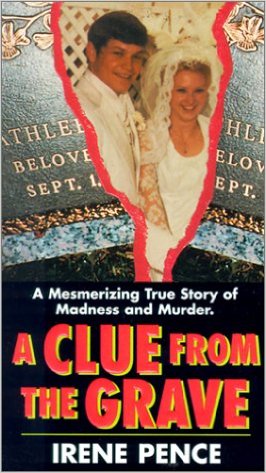
‘A Clue from the Grave’ by Irene Pence is a fascinating look into the investigation of US Air Force wife Kathleen Lipscomb’s murder in San Antonio, Texas in 1986. Her husband MSgt William Lipscomb, who was stationed at Lackland Air Force Base as a Military Training Instructor, would eventually be accused of her murder and stand trial at Langley Air Force Base in Virginia in 1989. This book shows the difficulties the detectives face when it comes to investigating crimes perpetrated by a transient military member.
If not for the persistence of Kathleen’s mom Nadine and her sister Darlene, Bill Lipscomb almost got away with murder. Kathleen’s family did not want to believe that Kathleen’s estranged husband committed this crime but nonetheless wanted to find out who killed Kathleen. Kathleen was found battered and nude on the side of the road outside the city limits of San Antonio. It appeared that she had been raped and murdered elsewhere and her body was dumped at this location. As a result, the Bexar County Sheriff’s Department had jurisdiction of the investigation of Kathleen’s murder. The book revealed that Air Force leadership was not aware that Bill Lipscomb was even considered a suspect by the local Sheriff’s Department. In the meantime, Bill Lipscomb requested a humanitarian transfer to Langley Air Force Base, Virginia so that he would be near his parents who would help him care for Kathleen and Bill’s two children.
After the investigation stalled at the Sheriff’s Department and it looked like no one would be held accountable for Kathleen’s death, Nadine and Darlene decided to hire two private investigators to find out who killed Kathleen. The private investigators carefully went through the list of suspects to rule people out but they could not rule out Bill Lipscomb after what they discovered. These investigators learned that Bill had plenty of motive to kill Kathleen including the fact that Kathleen threatened to turn Bill and his Air Force colleagues in to Air Force leadership for their role in a WAPS test promotion cheating scandal. Bill also wanted custody of the two children so Kathleen used her knowledge of this cheating scandal as leverage in the divorce proceedings so she could keep custody of the two children. In addition, Bill Lipscomb had over $300,000 worth of life insurance on Kathleen, one policy was purchased after Kathleen decided to divorce him. Coincidentally, Kathleen was murdered just days before the final divorce proceedings. Nadine and Darlene began suspecting Bill more and more as time went on because of statements made by Bill and Kathleen’s children and the controlling behavior he exhibited after Kathleen died.
It would be the private investigators that Kathleen’s family hired who convinced the Air Force Office of Special Investigations (AFOSI) to get involved. Bill was no longer in the San Antonio area so no one but the AFOSI had jurisdiction over him. The crime was committed in Texas yet Bill had been conveniently transferred to Virginia. Thanks to the thorough work by the two private investigators, the AFOSI had probable cause to investigate Bill Lipscomb. The AFOSI used both their knowledge of the WAPS test cheating scandal and what they learned from the private investigators to begin their own investigations. They would learn from others involved in the cheating scandal that Bill did in fact cheat on his promotion testing which is how he was able to achieve the rank of MSgt so soon. They would also learn from Kathleen’s date book that she was fully aware of the cheating scandal and knew that Bill was having an affair with another Air Force member he worked with. It would be this date book that gave the investigators involved in the case a reason to suspect Bill Lipscomb of her murder. In the end this information would become ‘A Clue from the Grave’ that helped Kathleen solve her own murder.
Preview: Seeking freedom from his controlling wife, Dennis Hawley begins seeing drug-addicted prostitute Brandita Taliano and supporting her financially. In 1993, when Joan receives an inheritance and makes plans to divorce, Dennis, fearing financial ruin, enlists his lover to help murder his wife. -Second Best, Deadly Women (S8, E10)
Air Force retiree Dennis Dawley, 61, with the help of prostitute and mistress, Brandita Taliano, bludgeoned to death his wife Joan Dawley of 35 years for financial gain in Van Nuys, California. Joan wanted a divorce and Dennis and Brandita wanted her inheritance money. The 1991 case went cold for years until DNA technology under Joan’s fingernails yielded a match to Brandita Taliano. Both Dennis and Brandita were charged with murder, conspiracy & solicitation and faced the death penalty. On April 15, 1997, a California jury sentenced Dawley and Taliano to life in prison without the possibility of parole. The pair were spared the death penalty because they didn’t have any prior violent felony records and the jury heard the emotional pleas from Dawley’s daughters.
Investigation Discovery:
Being the other woman’ is a lonely life. Some turn rejection into rage. A call girl craved the high life, a teen mom eradicated her rival, and a lesbian love affair ripped a family apart. These Deadly Women refused to play Second Best’. -Second Best, Deadly Women (S8, E10)
In suburban California, an intruder brutally attacks and kills Joan Dawley. As the Dawley family grieves, it’s up to LAPD detectives to crack the case. Secret home movies uncover a shocking tale of deceit, and a monster lurking behind the scenes. -Stages of Grief, American Monster (S3, E1)
Editor’s note: With a cable subscription, you can download the free ID Go app and watch Investigation Discovery programming at your convenience. And for those who do not have cable, you can watch “unlocked” episodes on the ID Go app including the latest premieres. For those who prefer commercial free programming during your binge session, Prime Video has an ID channel: ‘True Crime Files by Investigation Discovery” available for $3.99 a month. It’s a compilation of older seasons but totally worth the cost if you are a true crime addict. Download the ID Go app or purchase ID True Crime Files & binge away.
On this day, the bones of AWOL Army soldier Dannie Boy Edwards, 25, were found in a cemetery near his home in Burton, Ohio on April 13, 1997. Hunters discovered the human remains in a field next to the cemetery in Troy Township. Edward W. Edwards, 77, and his wife, Kay Edwards, took Dannie Boy into their Ohio home in the mid-1990s. Ed and Dannie were so close that he legally changed his name from Dannie Law Gloeckner to Dannie Boy Edwards. Authorities confirmed the bones belonged to Dannie Boy and deemed the case a homicide. Ed appeared to be terribly distraught after learning Dannie Boy was murdered and obsessed about solving the case for years.
It wasn’t until years later, Ed Edwards’ daughter came forward after connecting the dots between the cold case homicides dubbed the ‘Sweetheart Murders’ in Wisconsin and her father. Ed Edwards was eventually confronted by authorities and confessed to five murders in an attempt to get the death penalty: William ‘Billy’ Lovaco (1977), Judith Straub (1977), Timothy Hack (1980), Kelly Drew (1980), and Dannie Boy Edwards (1996). Ed Edwards admitted to luring Dannie Boy to a secluded cemetery near their home in June 1996 and shooting him twice in the chest with a 20-gauge shotgun. He buried the body in a shallow grave in a field nearby. His motive was the $250,000 life insurance pay-out.
Ed Edwards persuaded Dannie Boy to join the Army because it would be good for his character. Dannie Boy joined and after training was supposed to get stationed in Korea. But at some point during training, Dannie Boy was injured so the Army was going to medically discharge him instead. Ed Edwards convinced Dannie Boy to sign up for the maximum amount of coverage offered by the Servicemen’s Group Life Insurance (SGLI) benefit. Dannie Boy signed up for $250,000 dollars worth of life insurance coverage and Ed was the sole beneficiary. Ed Edwards knew if Dannie Boy was let out on a medical discharge, he would no longer be eligible for the benefit.
Ed Edwards talked Dannie Boy into going Absent Without Leave (AWOL) two days before his discharge. Ed told investigators that he killed Dannie Boy because he wore out his welcome by stealing credit cards and other belongings from his children. But the truth is he stood to make $250,000 dollars in life insurance benefits if Dannie Boy died and he wanted to collect on it. Ed Edwards set up the insurance fraud scheme and took advantage of an opportunity before it expired. In August 2010, Ed Edwards was sentenced to death. Ed Edwards was already in poor health when arrested and as a result died of natural causes in 2011, one month before his execution date.
If you have information pertaining to additional crimes related to Edward Wayne Edwards, please call 800-FBI-TIPS.
Horror strikes a small Wisconsin town in 1980 after a young couple disappears and is later discovered in a field. Dubbed the Sweetheart Murders, it’s almost 40 years before a woman comes forward saying her family holds the key to unlocking the case. -People Magazine Investigates
Army veteran Doug Gissendaner was murdered by his wife Kelly and her lover Gregory Owen in Auburn, Georgia on February 7, 1997. Doug met his wife Kelly in 1989 in Georgia. Kelly was a party girl and had already been married for six months and divorced when she met Doug. She had a child from her previous marriage and Doug welcomed the child with open arms. Within two months, they were married and then Kelly got pregnant. Doug loved being a father, husband, and family man. Then Doug joined the Army and got stationed overseas in Germany. While Doug was away, Kelly resorted to her old ways and started partying at the clubs on base. Kelly loved being on base with soldiers since the military base was a ready supply of men. It was reported that Kelly was so promiscuous on base that eventually she was asked to leave and her and the children were sent back to the United States.
In 1991, Doug returned home from his enlistment in the Army. He decided to forgive his wife and they reunited. Shortly after the reunification, Doug learned that Kelly was pregnant with someone else’s child. He was disappointed to say the least as he wanted to keep his family together. Divorce was inevitable. But after three years of being alone, Doug was desperate to be with his family again. The couple remarried and moved in together. Doug put up with Kelly so he could be a family man and provider to the children. Kelly wanted a house so Doug bought her one. What Doug didn’t realize is that Kelly was having an affair with 25 year old Gregory Owen. Kelly approached Owen about three months prior to the murder and asked him to get rid of Doug. Owen didn’t take her seriously initially and suggested she simply divorce him.
On the day of the murder, Kelly drove Owen to her residence in Auburn where he would wait for Doug with a knife and a nightstick that she provided to him. Kelly went out drinking with her friends to establish an alibi. Owen ambushed Doug when he got home and forced him into his own vehicle. He then took him to a remote wooded area where he forced him on his knees, hit him on the head from behind with the nightstick, and stabbed him in the neck ten times. Owen paged Kelly after he was done. Kelly showed up to the crime scene, demanded to see the body, and used gasoline, an accelerant, to set Doug’s car on fire. Kelly Gissendaner reported Doug missing to the police the following day. Investigators suspected Kelly immediately because they believed she was not being truthful. They found Doug’s body eleven days later.
Kelly eventually admitted to police that she was having an affair with Gregory Owen and this tip led investigators to the man who would eventually confess to the murder of Doug Gissendaner. Owen was tormented with guilt and felt manipulated and used. As a result, Owen testified at Kelly’s trial that she wanted to cash in on an insurance policy and become the outright owner of the marital home. In exchange for his testimony, Gregory Owen was sentenced to life in prison with the possibility of parole in twenty-five years. Kelly Gissendaner maintained her innocence but was found guilty of malice murder and sentenced to death in 1998. She lived her prison life in solitary confinement and was executed by the State of Georgia on September 30th, 2015. Kelly Gissendaner wanted things her way no matter the cost and conveniently had her husband killed after he bought her a house.
Investigation Discovery:
For these women, one good man wasn’t enough. A middle-aged woman used looks to prey on elderly gentleman; an army wife didn’t want a soldier but a squad; and a serial wife cooks up meals to die for. These Deadly Women married for the money, honey. -Deadly Women (S8, E11)
Editor’s note: With a cable subscription, you can download the free ID Go app and watch Investigation Discovery programming at your convenience. And for those who do not have cable, you can watch “unlocked” episodes on the ID Go app including the latest premieres. For those who prefer commercial free programming during your binge session, Prime Video has an ID channel: ‘True Crime Files by Investigation Discovery” available for $3.99 a month. It’s a compilation of older seasons but totally worth the cost if you are a true crime addict. Download the ID Go app or purchase ID True Crime Files & binge away.
Just off the coast of Spain, the U.S.S. Forrestal cruised through open waters on the Mediterranean Sea. This particular aircraft carrier had the ability to unleash total devastation on the enemy. But below deck, one Navy sailor was fighting off an enemy in his body. Lt. Lee Hartley was complaining of diarrhea and lethargy. He also experienced excessive weight loss and there was a grayness to his skin. Hartley was a career Navy sailor, having served nineteen years, and the Lt. in the ship’s disciplinary office. A month into his current deployment, Lee became violently ill with severe stomach pains and a strange tingling in his hands and feet. He was treated by the ship’s medics for gastrointestinal problems. A couple weeks went by and the symptoms reappeared, each time getting progressively worst. The onboard medics thought maybe he was exposed to something in a foreign port.
Lee Hartley also assumed it was food or water he consumed while visiting one of the foreign ports. Whatever the cause, Lee’s symptoms were spiraling out of control. He endured nearly two months of agony. When Lee wasn’t getting better, the Navy decided to ship him off to a hospital so he was medi-vaced to Jacksonville, Florida. Lee’s wife Pamela rushed to his bedside. Pam and Lee were newlyweds; they were married a year earlier. Doctors ran a battery of tests to help make a diagnosis. Some believed he might have liver disease or hepatitis or even some kind of poisoning but they couldn’t come up with a definitive diagnosis. Lee commented to multiple people that he thought he was dying because he was so gravely ill. On November 18, 1982, after nearly five months of terrible suffering, Lt. Lee Hartley succumbed to massive organ failure.
Before he set out on his final deployment, Lee Hartley was living the life he had always dreamed of. Lee loved the Navy and his family was very proud of him. He joined the Navy as an enlisted man and then became an officer. Lee was happy with Pam and was looking forward to the end of long deployments so he could spend more time with her. They didn’t have children of their own but Lee had a daughter from a previous marriage. Pam was now a devastated widow and waited for the autopsy to determine the cause of her husband’s death. When the results came back, they revealed Lee died from arsenic poisoning, nearly 1000 times the normal level. His liver, kidneys and blood was full of arsenic and Lee had enough arsenic in him to kill several people. Arsenic is a odorless, colorless, and tasteless chemical. This information led to a murder investigation.
An investigation was immediately launched to find out how that much arsenic entered Lee’s body. Investigators could not imagine how Lee came into contact with that much arsenic aboard a ship. Special Agents Jerry Whitaker and Walter O’Brien of the Naval Criminal Investigation Services (NCIS) were assigned to the case. The two actually knew Lee Hartley and served side by side on the U.S.S. Forrestal with him. They start with the simplest possibility: was this an accidental poisoning? They checked to see if there were large amounts of arsenic on the ship but that theory was instantly put to rest. The supply officer on the ship maintained records of everything that was onboard the ship and according to him, there was no substance on board the ship that contained arsenic. This meant there was no way Lee came into contact with arsenic onboard the ship, at least not by accident. Agents wondered if someone deliberately dosed Lt. Lee Hartley.
The NCIS agents broke the news to Lee’s family. When Pam found out about the arsenic poisoning, she reacted with shock. Pam’s mother-in-law was the one to break the news to Pam that someone may have killed her husband. The agents didn’t know who killed Lee but they knew how so they launched a search for suspects. They looked at who had something to gain if Lee died and one main suspect emerged, his wife Pamela Hartley. Pam had the motive because she stood to inherit a lifetime of military benefits but how did she poison her husband while he was on a ship thousands of miles away? When agents checked her travel itinerary, they discovered Pam traveled to port in Spain to spend time with Lee. Quite often, when a ship visits a foreign port, it’s common for a group of wives to visit that port. One of those wives was Pam Hartley.
Pam traveled to Spain and met with Lee and another military couple. On one of those days, Pam offered to cook breakfast for everyone and she even made drinks too. Soon after that visit, Lee got violently ill, along with his friend who had eaten breakfast with him. At the time, they both thought they got sick from drinking Spanish water, the friend recovered but Lee kept getting worse. Over the next two weeks, Lee had severe cramps, diarrhea, nausea, and vomiting so he reported to the ship’s medical department. Agents wondered if Pam laced her husband’s food and drink with arsenic during that Spanish shore leave. It was a chilling scenario but one that became more plausible as agents found out about Pam’s unique job experience. They learned that Pam worked at the Department of Energy facility in Akon, South Carolina for one year.
Pam used to be an environmental technician and one of her job duties was to analyze water samples to determine heavy metal levels. At her job site, she came in contact with a range of toxic chemicals, including arsenic. Was Pam the victim of circumstantial evidence or heartless black widow? Agents wanted to perform a polygraph because they were convinced she wouldn’t pass. She was their prime suspect because she had the opportunity to spike her husband’s food and drinks when she went to Spain at his port of call. On the surface, there was nothing suspicious about Pam so agents conducted interviews of Hartley’s neighbors. The pair appeared to have a normal family and were described as nice people. But gossip soon found its way from officer’s wives club and this information painted another picture.
With their husbands overseas, the Navy wives would get together at parties and drink. And after a few drinks, they weren’t afraid to say anything. There was talk among the wives that life was so much better when the men were at sea. Some even suggested they get rid of them. But it was a party atmosphere so nobody really took it seriously, except maybe Pam. In one interview, Pam made a comment to a friend about hiring a hitman to kill Lee but was taken as a joke by the witness because they had been drinking. As special agents dug deeper, they found out Pam and Lee were having some marital problems. Pam was a free spirit who liked to go to the officer’s club and dance with other men. Apparently, this made Lee extremely jealous. And Lee may have had reason to be jealous because Pam admitted to friends that while Lee was off at sea, she found it to be difficult to be faithful.
For NCIS agents, it all added up to a classic scenario: a bored wife feels trapped in her marriage so she poisons her husband… Under questioning, Pam insisted that she loved Lee and swore she has nothing to do with his death. And she agreed to take a polygraph test to prove her innocence. Agents were convinced she wouldn’t pass the polygraph but the results indicated that she wasn’t being deceitful. The agents concluded Pam didn’t have anything to do with Lee’s death. In addition, lab results blew a hole in their theory because the toxicology analysis on Lee’s hair pinpointed the dates he was exposed to the arsenic. His first dose was before Pam’s trip to Spain. Hair grows about a centimeter a month and testing of the hair provided a timeline of when the poison entered his body. The hair samples indicated that Lee was poisoned 5-6 months prior to his death.
The arsenic timeline showed Lee Hartley was first poisoned while Pam was thousands of miles away in Jacksonville, she had a persuasive chemical alibi. Armed with the new evidence that Lee was poisoned while on board the U.S.S. Forrestal, NCIS agents confronted a massive crime scene. The U.S.S. Forrestal was a floating city with 5000 potential suspects. And like any large city, the carrier had personnel dedicated to maintaining law and order. As the ship’s discipline officer, when sailors ran afoul with Navy regulations, it was up to Lee to administer punishment. This likely didn’t make him a lot of friends on board. Because of his work, Lee was exposed to people who might have had a grudge or an axe to grind against the Navy or the legal office or a person. As agents conducted more interviews, they learned of a disturbing rumor involving Lee.
During the investigation, there was an indication that Lee had received an anonymous death threat. The rumor about the death threat was backed up by Lee’s parents. They told agents what Lee shared with them while he was home in Mayport. Lee told them he was walking about the ship when someone angrily confronted him. Now Agents wanted to eliminate or find somebody who may help them understand what happened. A search of Lee’s cabin revealed a clue. They found a collection of letters written by Lee himself. In one of those letters, Lee described a near death confrontation with another sailor aboard the ship. He described how he came across someone who had a sword. But, if there was an altercation, Lee never reported to his superiors. Why would Lee choose to keep it secret but share it with his parents? Was Lee leaving a trail of evidence?
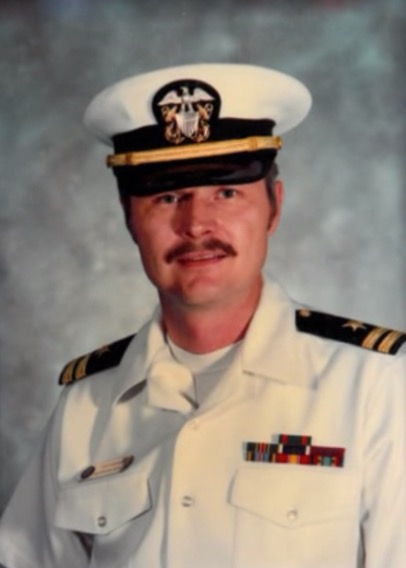
Pamela and Verle Lee Hartley, U.S. Navy (photo: CBS)
In an effort to track down subjects, agents used Lee’s toxicity reports which showed a continuous pattern of poisoning over a 5-6 month period of time. Agents shared when investigating poisoning deaths, you need to establish an opportunity of who during that time would have had access to both Lee and poison. There were spikes in Lee’s arsenic levels during his deployment at sea, at the port of call in Spain, and even when he was at the hospital in Jacksonville. One person who was at Lee’s side throughout his months of agony was his cabin mate Lt. Samuel Yates. They seemed to get along well but tension builds up month after month when living in close proximity together trapped on a ship. Lee was also in direct competition with his roommate for advancement.
Both Lee Hartley and Lt. Yates wanted desperately to be promoted to Lt. Commander. Was there a feud simmering between them, a rivalry that turned deadly? As agents developed information on the roommate, rumors began to circulate that had already been rampant on the ship. After Lee’s death, Lt. Yates allegedly waisted no time going after his roommate’s young wife who was grieving and vulnerable. At Lee’s funeral, he paid his respects by reportedly seducing the pretty widow. Agents knew they needed to take a closer look at Yates. And when they did, they found a chilling piece of evidence. Lee’s cabin mate was asked to give them a blood sample to see if it tested positive for arsenic or other heavy metals. As a result, they learned Yates had some elevated amounts of arsenic in his blood stream, the same poison that killed Lee.
Lt. Yates’ low level arsenic exposure was consistent with someone who had handled the substance. But the test results were not remarkable because Yates would have been exposed to all the same environmental factors as Lee. If someone was trying to harm Lee, Yates could have easily been exposed to the same food and drinks in foreign ports. Although a lot of circumstantial evidence pointed to the roommate, a thorough search of Yates’ belongings showed no traces of arsenic. They could only conclude that Yates was a collateral victim of whoever was poisoning Lee. As suspects were eliminated one by one, agents had to consider the possibility that the suspect they were looking for may be Lee Hartley himself. One of the NCIS agents said when they don’t have anymore theories, they have to think outside the box. The agents considered that Lee may have ingested the arsenic intentionally.
It appeared Lee Hartley had everything going for him and he loved his job on the U.S.S. Forrestal. He also had a beautiful young wife waiting for him in Florida. But NCIS agents wondered if the image of that perfect life was just a sham. The two agents knew Lee while serving with him on the carrier. When they reflected back on their time with him, they did observe some unusual behavior. After lunch, Lee regularly met up with a small group and he always appeared disgruntled. They learned Lee was drinking heavily before his deployment and thought maybe he was going through some depression. Was Lee suicidal? Did he deliberately consume the arsenic to poison himself? The pair thought the odds were high that Lee ingested the poison and brought in in a psychologist to analyze Lee’s life and letters; they found no suicidal ideation in any of his writings.
The medical evidence in this case didn’t fit the pattern of someone trying to kill themselves. Typically in a suicide case, it would be a major ingestion of poison and then it would drop off. Lee was poisoned consistently over several months. He was in horrible condition to the point that he had an ulcerated esophagus, open sores in his mouth, couldn’t talk, and could’t eat. Would Lee have voluntarily chosen to kill himself in such a slow, agonizing way? They ruled out suicide and wondered if the poisoning was an attempt to help get him off the ship. Lee made some statements to family members that he really didn’t want to go on this last deployment and his heart wasn’t in it anymore. He was upset about having more sea duty. He wanted a stateside desk job close to his wife. Did he use the arsenic to get himself off the ship? Would they send him home?
Agents considered that maybe Lee wanted to take just enough of the poison to get himself sent back home. But arsenic doesn’t leave the body and instead builds up over time. The agents theorized Lee may not have understood its cumulative effect over time. Maybe, Lee didn’t realize it made him sicker and sicker with every dosage. Did his scheme backfire by taking one dose too many? This theory didn’t hold water though because there were no tell tale signs in Lee’s belongings that led anyone to believe he had handled arsenic. And toxicology evidence showed that the poisoning continued even after he got back to Jacksonville. NCIS had no choice but to put the latest theory to rest. At this point, they ran out of theories, suspects, and direction and chose to close the case.
Thirteen years later in 1995, NCIS formed a cold case homicide unit. Lee Hartley’s poisoning case was one of the first cases brought to their attention. Lee’s death was reviewed at headquarters and a new team of special agents were assigned. They quickly learned that all of the physical evidence in the Lee Hartley case had been destroyed. The team had to work the case the old fashioned way so they started re-interviewing people involved in the initial investigation. Agents said its helpful to go back and talk to people because their stories change and some are more willing to tell the truth after 10-15 years has passed. Agents spoke with family, friends, and neighbors and the same name that kept coming back up was the original suspect in the case, Pam Hartley. But their big break came when Lee Hartley’s brother-in-law helped them uncover the truth.
Pam’s brother knew the dynamics of Pam and Lee’s relationship so agents wanted to speak with him. The fact the case had been reopened after all these years, caught Pam’s brother by surprise and he dropped a bombshell no one expected. He shared that Pam tried to hire him to kill Lee and offered him some of the insurance money if he did it. He kept this secret for years and when agents interviewed him this time, he told them the truth. NCIS was now convinced Pam was the killer but building a case against her wasn’t going to be easy. After all, she passed a polygraph test that indicated no deception. When NCIS had the results re-examined by current staff, they found the findings of ‘no deception’ were probably erroneously reached. The results should have been inconclusive. It was more evidence of Pam’s involvement in Lee’s death.
But after so many years, they had no physical proof, no eyewitnesses, and no way to tie Pam to the actual crime. She also had what seemed to be an ironclad alibi. She was on the other side of the world when her husband was poisoned. If she was the killer, how did she do it? Could they get her to confess? They only had one shot and needed to get Pam alone, because thirteen years ago her controlling mother was beside her running interference. The cold case team placed Pam under surveillance and tracked her every move. They learned the years since Lee’s death had not been good to her. Having squandered her inheritance, she lived with her mother and struggled with substance abuse. She treated her addiction at a hospital on a military base. On one of those occasions, she arrived alone for the appointment. The NCIS used the structured environment of the Army base to conduct the interview.
This approach allowed NCIS to conduct an interview without Pam’s mother being there. Pam nervously agreed to answer their questions. They told her there was no doubt in their mind that she did it and most of the problems in her life were most likely attributed to what she had done to her husband. They played on her guilt and told her to put it behind her and tell the truth. Pam Hartley broke down and told them what she did. She told them everything and filled in the missing puzzle pieces. She didn’t want to be married anymore. She said she was miserable and hated how possessive Lee was. But, she really liked the status of being an officer’s wife and didn’t want to lose that lifestyle. She wanted him gone but wanted to maintain her status. It was almost the perfect murder. The last time she saw Lee, she bid him farewell and then ran to a feed store to purchase rat poison. Pam sent Lee poisoned treats while he was deployed at sea.
Like a model wife, Pam created treats for Lee because she knew he had a sweet tooth. Agents learned that both Lee and his cabin mate sampled some whiskey cake that she sent Lee. Yates said he ate one piece, it was too strong, and didn’t like it. Pam wanted Lee to die at sea but the call never came so she upped the anti and traveled to Spain to poison him in person at breakfast. But it still didn’t do the job. When Lee was airlifted to the hospital in Jacksonville, Pam rushed to his side. This time, she poisoned his apple juice. Pam gave Lee the lethal dose the night before he died while pretending to care about him. After Lee died, Pam took the rest of the poison and dumped it in a pond behind their house. Her persistence finally paid off; she collected on a lifetime of military benefits minus the annoying husband. How could she have hatched such a diabolical plot? When asked why poison, she said “ladies have been using poison for years.”
Pam’s confession sealed her fate. On October 16, 1996, Pamela Hartley pleaded guilty to second degree murder in a Florida state court. Agents reminded us that Pam had a psychotic personality. She didn’t think about the cause and effect on other people; she only thought of herself and the effect on her. After nineteen years of service, Lee Hartley didn’t die in battle, his mortal enemy was the one person he loved most. Not long before Lee’s death, Lee and Pam’s brother had a conversation where Lee told him if anything happened to him, his sister would be well taken care of. He died thinking he still needed to take care of Pam. Pamela received $35,000 in life insurance money, $10,000 a year in veterans benefits, and free military medical benefits for life. Lee was a good man and the pain from the loss endures. Pamela Hartley was sentenced to 40 years in a state prison and served 16 years when she was paroled.
When a Navy lieutenant onboard a US aircraft carrier falls victim to a rare case of arsenic poisoning, NCIS investigators must scour both land and sea for his killer. With no crime scene and little physical evidence, agents must separate rumor from truth and use their best interrogative know-how to solve a deadly crime. Follow real NCIS agents as they hunt down suspects on one of the world’s largest ships and after a long 13 years finally uncover the bizarre truth behind the poisoning death of a Lt. Lee Hartley. -Dark Minds in Crime
Investigation Discovery:
John Prudhont as NCIS Special Agent Tom Assimos and John Bridell as NCIS Special Agent Dave Early and Mocean Melvin as the Narrator in an edited clip from Season 4, Episode 13 of the Discovery ID TV show “Unusual Suspects.”
ID Go:In 1982, a Naval Officer dies from a mysterious illness. When toxicology reports reveal he was poisoned, Naval Investigators sift through a ship of thousands, and countless theories before the truth behind the victim’s painful death is revealed. -Maritime Murder, Unusual Suspects (S4,E13)
[CANNOT LOCATE UNUSUAL SUSPECTS SEASON 4 ON-LINE ANYWHERE]
Editor’s note: With a cable subscription, you can download the free ID Go app and watch all of the Investigation Discovery programming at your convenience. And for those who do not have cable, you can watch “unlocked” episodes on the ID Go app including the latest premieres. Download the ID Go app and binge away. For those who prefer commercial free programming during your binge session, Prime Video has an ID channel: ‘True Crime Files by Investigation Discovery” available for $2.99 a month. It’s a compilation of older seasons but totally worth the cost if you are a true crime addict.
Marine veteran Andrew Urdiales is accused of murdering eight women from 1986 to 1996, five in California and three in Illinois, and raping and abducting 19 year old Jennifer Asbenson who escaped and survived. Urdiales was indicted for three murders in Illinois and was sentenced to death but the death sentence was commuted after Governor Pat Quinn of Illinois abolished capital punishment in 2011. Instead he received three life sentences for the murders of Laura Uylaki, Cassandra Corum, and Lynn Huber. A gun confiscated in a separate incident linked the three murders in Illinois together and during an interrogation, Urdiales admitted in detail to five cold case murders in California too.
After years of legal wrangling, Urdiales was eventually extradited to California and indicted in 2009 on five counts of first degree murder. He was accused of killing Robbin Brandley, Julie McGhee, Mary Ann Wells, Tammie Erwin, and Denise Maney while stationed at Camp Pendleton Marine Corps base. On May 23, 2018, Andrew Urdiales was convicted of five murders by a jury that deliberated for about a day before recommending in June 2018 that he be sentenced to death for each of the five murders. On November 2, 2018, corrections officials said they found Urdiales unresponsive during a security check at San Quentin State Prison; former Marine and serial killer Andrew Urdiales died by suicide.
In the News:
The murders occurred when Andrew Urdiales was stationed at various Marine Corps facilities in Southern California. -CBS Los Angeles (October 5, 2018)
July 14, 1996: Cassandra Corum, 21, Pontiac, Illinois
Marine veteran Andrew Urdiales is accused of murdering eight women from 1986 to 1996, five in California and three in Illinois, and raping and abducting 19 year old Jennifer Asbenson who escaped and survived. Urdiales was indicted for three murders in Illinois and was sentenced to death but the death sentence was commuted after Governor Pat Quinn of Illinois abolished capital punishment in 2011. Instead he received three life sentences for the murders of Laura Uylaki, Cassandra Corum, and Lynn Huber. A gun confiscated in a separate incident linked the three murders in Illinois together and during an interrogation, Urdiales admitted in detail to five cold case murders in California too.
After years of legal wrangling, Urdiales was eventually extradited to California and indicted in 2009 on five counts of first degree murder. He was accused of killing Robbin Brandley, Julie McGhee, Mary Ann Wells, Tammie Erwin, and Denise Maney while stationed at Camp Pendleton Marine Corps base. On May 23, 2018, Andrew Urdiales was convicted of five murders by a jury that deliberated for about a day before recommending in June 2018 that he be sentenced to death for each of the five murders. On November 2, 2018, corrections officials said they found Urdiales unresponsive during a security check at San Quentin State Prison; former Marine and serial killer Andrew Urdiales died by suicide.
In the News:
The murders occurred when Andrew Urdiales was stationed at various Marine Corps facilities in Southern California. -CBS Los Angeles (October 5, 2018)

















 MILITARY JUSTICE FOR ALL