In 1999, the television program 60 Minutes reported on the hidden War at Home in the U.S. military. They reported that at the time of airing, Pentagon records showed that 58,000 military spouses were victims of domestic violence and that rate was three times higher than the civilian population rate. The overall concerns were that the military justice system was a system that routinely failed to punish even the most violent and abusive servicemen. As a result, it often left an abused spouse alone without protection to fight a secret war. 60 Minutes highlighted the cases of three Fort Campbell soldiers who were charged with killing their wives or girlfriends (Bill Coffin, Dane Zafari, Tracy Leonard) and one Navy spouse who was a victim of domestic violence.
One of the cases singled out was that of Fort Campbell Sergeant Bill Coffin who murdered his ex-fiance Ronnie Spence after a civilian judge granted her an emergency protection order. In December 1997, Sgt. Coffin murdered Ronnie in front of their baby daughter in a shared home near Fort Campbell, Kentucky. Sgt. Coffin shot her twice through the trailer, entered the home and then shot her in the face and through the heart. While Ronnie was lying dead on the floor, Sgt. Coffin emptied the gun into her. Several weeks before the shooting, court records showed that Sgt. Coffin had repeatedly threatened to kill Ronnie and his superior officers at Fort Campbell knew about the threats.
I think they should have confined him to that army base. They should have gotten him some help. They should have stopped him, they should have intervened. They did nothing. -Kathy Spence (mother)
60 Minutes interviewed Kentucky Judge Peter MacDonald who stated that domestic violence cases involving Fort Campbell soldiers routinely showed up in his courtroom. He said that Army commanders regularly ignored court orders issued to protect the abused spouses. Judge MacDonald issued the emergency protective order requiring Sgt. Bill Coffin to stay away from Ronnie Spence. Sgt. Coffin instead shot and killed her. According to 60 Minutes, Sgt. Coffin pleaded guilty to domestic violence and other charges, and was sentenced. Judge MacDonald felt the readiness of the troops was more important than the protection of the battered and abused spouses.
In an in depth investigation, 60 Minutes learned that the Army’s domestic violence guide for commanders listed a number of things that could have been done in Sgt. Bill Coffin’s case but were not. The guide included restricting an abuser to the barracks or assigning them to the quarters of a superior. They also learned that the military spends millions yearly on a Family Advocacy program designed to treat and prevent domestic violence. But Sherry Arnold, a licensed clinical social worker, who helped run the program for the Marines in Camp Pendleton in California, said the Commanders have preconceived notions. She often witnessed victim blaming, minimization, a hands off approach, an ‘it’s a family matter’ attitude, and indifference to the seriousness of the situation and escalating violence.
Robert Clark, the commanding general of Fort Campbell, Ky., where several particularly violent incidents have occurred, said the military does a good job handling domestic violence cases. But Peter MacDonald, chief district court judge in Kentucky with jurisdiction over Fort Campbell, said the Army routinely ignores his court orders designed to protect abused spouses. “They have no conception of what’s going on in domestic violence.” –Deseret News
After the public learned of the scandalous way the U.S. military handles felony crimes like domestic violence, rape, and stalking, the Pentagon was ordered by Congress to investigate domestic violence in the armed forces. Congress recommended stronger protections for battered spouses and stiffer penalties for the servicemen who abuse them. In 2000, Major Joanne P.T. Eldridge suggested a proposal to add anti-stalking provisions to Article 134 in the Uniform Code of Military Justice. Since 1999 and long before this, domestic violence has continued to be an on-going serious invisible issue in the military. Both military spouses and service members are victims of domestic abuse. The year 60 Minutes aired the ‘The War at Home’ programming, Fort Campbell soldier Barry Winchell was murdered because a couple soldiers suspected he might be gay. Barry’s murder prompted the lift of the controversial Don’t Ask Don’t Tell policy.
The year after 60 minutes aired, civilian spouse Michelle Theer conspired with her lover, Army Ranger John Diamond, to kill her husband Air Force Captain Frank Theer for the life insurance money. In 2002, four wives were slain in six weeks at Fort Bragg in North Carolina. They were Teresa Nieves, Jennifer Wright, Andrea Floyd, and Marilyn Griffin. In 2008, Army Lt. Holley Wimunc was abused, stalked, and murdered by her Marine husband. In 2011, Holley’s father advocated for H.R. 1517 sponsored by Representative Bruce Braley. This law was aimed at protecting both domestic violence and sexual assault victims. This law would have required the removal of Commanders from the investigation and prosecution of felony crimes. The Holley Lynn James Act and any subsequent legislation, like the Military Justice Improvement Act, suggesting the removal of the Commander from the processing of felony crimes have been unsuccessful.
Rep. Bruce Braley introduces the Holley Lynn James Act — a bill to help victims of sexual assault and domestic violence in the military get justice. The bill is named after Holley Lynn James, a constituent of Rep. Braley who was killed by her husband while both were in the service.
“Timothy McVeigh, a former U.S. Army soldier, is convicted on 15 counts of murder and conspiracy for his role in the 1995 terrorist bombing of the Alfred P. Murrah Federal Building in Oklahoma City. On April 19, 1995, just after 9 a.m., a massive truck bomb exploded outside the Alfred P. Murrah Federal Building. The blast collapsed the north face of the nine-story building, instantly killing more than 100 people and trapping dozens more in the rubble. Emergency crews raced to Oklahoma City from across the country, and when the rescue effort finally ended two weeks later, the death toll stood at 168 people, including 19 young children who were in the building’s day-care center at the time of the blast.” Read more from This Day in Historyhere.
Army SSG Kevin Spann married Gina Lynn Pierce in 1989 and became a step-father to her son. They met in Gina’s hometown in Illinois and moved to Fort Worth, Texas in 1990. About a year after they were married, Kevin was deployed to Kuwait in support of Operation Desert Storm. Gina couldn’t handle being alone so she went back to her hometown in Illinois. After Kevin returned home from Kuwait, he went to Illinois to see if Gina would go to Fort Gordon, Georgia with him. Gina agreed and things were going well until Kevin had to start working long hours. Kevin suggested she get a job to help occupy her time. It would be at this job where Gina would meet three teenagers who quickly became her friends despite the age difference.
Gina became popular with the teenagers when they learned that she could buy them alcohol. They all started partying together at hotels after work and eventually Gina started sleeping with one of them. After awhile Gina just moved the parties to her marital home. Kevin would come home from work and find drunk, passed out kids all over his house. Gina also did not hide the fact that she was sleeping with one of the teens, Larry Kelley. She did not care how Kevin Spann felt about the arrangement. One day, Larry’s step father kicked him out of the house. Because Larry didn’t know where else to turn, he turned to Gina who agreed to let him move in with them. Not only did he move into the house but he moved into the marital bedroom with Gina and Kevin moved out. Kevin slept in another room in the same house.
In the spring of 1997, Kevin had finally had enough and asked Gina for a divorce. But Gina begged Kevin to make the marriage work and she promised him she would change. She knew that if Kevin divorced her she would end up with nothing. Kevin loved her and wanted to make the marriage work so he agreed to try again but he insisted that Larry get out of his house in one week. It would be days later that Gina found her front door open and Kevin lying on the floor in a pool of blood. SSG Kevin Spann was shot twice and killed at his doorstep on Mother’s Day, May 11, 1997. He was shot once in the head and once in the chest, torso area. When the killers left, he was still alive. Kevin bled to death.
Gina and Larry Kelley provided each other with alibis when investigators questioned their whereabouts. Although Larry also told police that he was Gina’s live in boyfriend which peaked investigators interest and made the couple prime suspects. They hauled both Gina and Kevin down to the station. Gina adamantly denied any involvement in the shooting. Larry on the other hand told investigators everything. He told them that Gina asked him to find someone to shoot her husband so he did. He found Matthew Piazzi and Gerald Horne to do the job. Investigators would learn that Gina devised a plan and told the teenagers what to do. After Gina and Larry left the residence, Matthew and Gerald were to knock on the door, wait for Kevin to answer, shoot him, and then get rid of the gun. Matthew was the gunman.
Investigators searched Gina’s car and found a $300,000 life insurance policy for Kevin Spann which gave them the evidence they needed to charge Gina with murder. Gina Spann and Larry Kelley conspired to murder Kevin and were both sentenced to life without parole. Gina finally admitted her role in the murder after learning that Larry Kelley was facing the death sentence. She agreed to tell investigators what her role was in the murder if they took the death penalty off the table for both of them. Gina Spann plead guilty to first degree murder and Larry Kelley was convicted of first degree murder. Matthew Piazzi and Gerald Horne both plead guilty to first degree murder and were sentenced to life in prison. Christopher Bargeron pled guilty to conspiracy and was sentenced to 5 years in prison.
Kevin and Gina Spann know that life in the military is anything but easy. But when Kevin goes away, Gina plays. -Special Delivery, Deadly Affairs (S2, E9)
Some women can’t resist boy toys. But fur flies when these Deadly Women reveal they’re “Killer Cougars.” -Deadly Women (S10, E1)
Editor’s note: With a cable subscription, you can download the free ID Go app and watch Investigation Discovery programming at your convenience. And for those who do not have cable, you can watch “unlocked” episodes on the ID Go app including the latest premieres. For those who prefer commercial free programming during your binge session, Prime Video has an ID channel: ‘True Crime Files by Investigation Discovery” available for $3.99 a month. It’s a compilation of older seasons but totally worth the cost if you are a true crime addict. Download the ID Go app or purchase ID True Crime Files & binge away.
When the severed head of a wife and mother is found, Lt. Joe Kenda uses forensics and interrogation to find both her body and her killer. Then… a young man’s murder looks like a robbery gone wrong until Kenda learns the odd reason he’s living there. -The Line Goes Dead, Homicide Hunter (S6,E13)
On October 16, 1993, a mother was home with her son cooking supper. She went outside to call her dog Shadow to return home. When the dog returned, he had something large in his mouth. Danielle and her son realized that the dog had a human skull in it’s mouth. Lt. Joe Kenda of the Colorado Spring Police Department was grocery shopping when he got the call. He left his grocery shopping cart as is and headed to the scene. When Kenda arrived on the scene, the medical examiner was observing the skull. The medical examiner observed another animal got to the skull before the dog did and the time of death was within the last couple of weeks. The skull appeared to be a female with no obvious signs of bullet wounds or trauma. But they didn’t have the rest of the body to determine the official cause of death. Lt. Joe Kenda decided to start with the missing persons reports first.
Kenda also wanted to find the rest of the remains. Unfortunately, it was dark outside so they decided to resume the search the next day in during the daylight hours. The police used cadaver dogs to find the rest of the body. Cadaver dogs are trained to notify their handler when they make a hit. Kenda knew this would be a daunting task because El Paso County is the size of Rhode Island. An hour into the search, the K9 officer got a hit. They found a few more human bones; some still had flesh attached and some had teeth marks on them. Kenda theorized maybe she was a hiker out for a walk one day and got attacked by a bear. Now Joe Kenda needed to identify the dead female. They used dental records to determine if the dead woman’s teeth matched any dental records on file. On the third missing woman’s dental records, they finally found a match. Diane Pelkey, 36, was reported missing one week prior by her husband Michael Pelkey.
Michael Pelkey paid for a full page ad in the newspaper looking for Diane Pelkey. Police learned Michael was a 16 year veteran in the US Army and lived off post in Colorado Springs with his wife. Kenda now had the unfortunate task of informing Michael Pelkey of his wife’s death. He told him positive identification was made through dental records. Michael Pelkey was overcome with grief. They had been together for over 15 years. They had a son and she was four months pregnant. Michael claims the last time he saw Diane they were out at dinner and then got in an argument. He said she walked away from him and he had not seen her since. Kenda deduced she would have had to walk ten miles to get home. Kenda decided she was not killed by a bear, she was killed by a human. They didn’t know if maybe someone picked her up hitchhiking and killed her. Michael Pelkey claimed he didn’t look for his wife because he had to go home and take care of their five year old son.
As Kenda was reviewing the missing persons report for Diane Pelkey, he noticed one of the officers put JDLR (Just Doesn’t Look Right) on the bottom of the report. This is usually done when an officer feels something isn’t right or the person making the report was suspicious. Kenda spoke with the officer who took the report. They both decided the missing persons report was suspicious because Michael didn’t say anything about their child, Diane’s pregnancy, or that they got in an argument that same night. Kenda explained that usually if someone thinks something happen to a loved one, they won’t leave him alone. Kenda ran Michael Pelkey’s name through the data base and found there was a history of domestic violence, restraining orders in the past, and the couple had filed for a divorce. Kenda believed Michael Pelkey may have killed his wife but he wasn’t sure he had the authority to pursue the case.
Diane Pelkey’s remains were found in El Paso County, Colorado so the case may be out of Kenda’s jurisdiction. He pressed the sheriff’s office to put the squeeze on Michael Pelkey. They brought him into the sheriff’s department and started questioning him. They presented all the evidence they had to Pelkey and he became overwhelmed. Michael broke during the interrogation and admitted to killing his wife on October 8, 1993. He claimed they were in the car and he wanted to do some fishing. They started arguing; he accused her of being unfaithful, she accused him of being unfaithful. He said she wanted out of the vehicle to get some space from him and that didn’t sit well with him. Michael claims he snapped and started strangling Diane. Michael tried to claim that it was an accident. Kenda thought this was not an accident because it takes two to three minutes to strangle someone to death.
Michael Pelkey then told detectives he panicked after strangling Diane and decided to drive to a rural area in the Rocky Mountain foothills to dispose of her body. He put a seatbelt on her and drove as if she was simply a passenger in his car. He drove to a ravine near the highway and left her in an area where he didn’t think anyone would find her. Afterwards, he filed a missing persons report and took out an ad in the local paper to deflect suspicion from himself. Michael Pelkey probably thought he would get away with murdering her wife. But his plan unraveled and he was arrested for murder. The District Attorney allowed the Fort Carson Army leadership to court martial him despite the fact that the crime occurred in El Paso County. Michael Pelkey was convicted of second degree murder and sentenced to life. He is serving his sentence at Fort Leavenworth, a military penitentiary in Kansas.
You are held to a higher standard in the United States military. You will not behave in this way and if you do, you will be one sorry son of a bitch. Sgt. Pelkey found that out the hard way. -Lt. Joe Kenda
Editor’s note: With a cable subscription, you can download the free ID Go app and watch Investigation Discovery programming at your convenience. And for those who do not have cable, you can watch “unlocked” episodes on the ID Go app including the latest premieres. For those who prefer commercial free programming during your binge session, Prime Video has an ID channel: ‘True Crime Files by Investigation Discovery” available for $3.99 a month. It’s a compilation of older seasons but totally worth the cost if you are a true crime addict. Download the ID Go app or purchase ID True Crime Files & binge away.
Leonard Lake is arrested near San Francisco, California, ending one of the rare cases of serial killers working together. Lake and Charles Ng were responsible for a series of particularly brutal crimes against young women in California and the Pacific Northwest during the mid-1980s. Read more from On This Day in Historyhere.
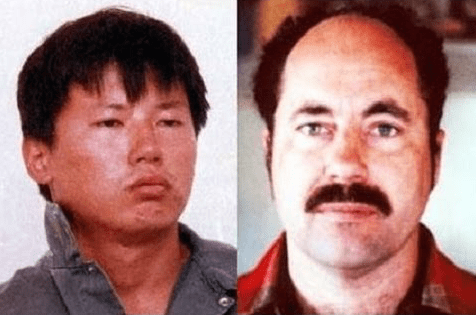
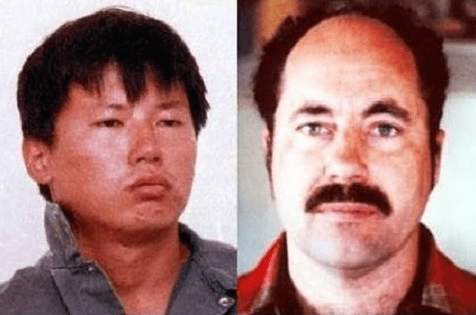
Oxygen premiered It Takes a Killer ‘Partners in Evil” and this episode highlighted the sadistic crimes committed by Marine veterans Charles Ng and Leonard Lake. In the early 1980s, the San Francisco bay area was under siege as more than twelve people vanished without a trace. Police would eventually learn that Ng and Lake were responsible for murdering them and so much more. What police uncovered during their investigation would prove invaluable in the prosecutor’s decision to pursue the death penalty. Charles Ng and Leonard Lake were psychopaths.
In December 1982, Army veteran Donald Lake, 32, was living with his mother in San Francisco, California. At their surprise, his brother Leonard Lake stopped by on a road trip up north and asked Donald to tag along. Donald was described as a very nice, gentle man but Leonard treated Donald terribly when they were growing up and even referred to him as a leech in conversations with his ex-wife Claralyn Balazs. Donald is never seen again and his mother Gloria is concerned so she reports him missing. Leonard Lake is nowhere to be found but he resurfaced on New Years Day in 1983 to rent a room in a house in Golden Gate Park.
Four months later, Lake moved in with his buddy from his green beret days, Charles Gunnar of Morgan Hill. They had a lot in common as they both valued survival skills and the weaponry world. On May 22, 1983, Lake invited Gunnar to go on a road trip to Vegas or Tahoe for some much needed rest and relaxation after his divorce. Charles Gunnar decided to go in an effort to cope with his tough times; he left his two daughter’s with a babysitter. A couple days later, Charles Lake returned alone in Gunnar’s van and told the babysitter that Charles ran off with a woman. Charles Gunnar was never seen again.
On July 11, 1984, Donald Giulietti, 36, a radio personality from San Francisco, California was spending time in his apartment expecting a visitor. Donald was an openly gay man who lived with a man named Richard Carrazza. Giulietti placed a personal ad in a low key newspaper offering to give oral sex to straight men. That night a stranger knocked on the door and Giulietti assumed it was someone taking him up on his offer. As soon as Donald opens door, the man whips out pistol and shoots him in the head at close range. Carrazza runs from the back room into the study and finds Giulietti on the floor. Carrazza is immediately shot in the chest and left for dead. The shooter fled and Carrazza survived the attack. Richard Carazza called 911 and when the police questioned him, he was able to give a description of the shooter.
Richard Carrazza described being shot by a small Chinese man wearing prescription glasses. Police searched for an Asian suspect but came up empty. What no one knows is that the killer was already searching the classifieds for his next victim. On July 24, 1984 in San Francisco, California, Harvey Dubs, 29, was home with his wife Deborah, 33, and their 16 month old son Sean. Harvey worked for a printing company but on the side, he videotaped special events and rented out his equipment. There was an individual who responded to the ad and came to his home. The family was never seen again. The following morning, a neighbor went to check on them and found keys in the door and dirty dishes in the sink but no sign of the Dubs family.
When the police did house to house canvassing and questioned the neighbors, they reported seeing a small Asian man leaving the property. The suspect was seen carrying a large duffel bag and a large flight bag both stuffed full and he tossed the bags into the trunk of a car that was waiting. The Asian man gets into the front passenger seat of the car with the burly man with a beard and they speed away. Some witnesses in the neighborhood get a good description of the Asian man. No one could give a good description of the bearded man but an eye witness was able to draw a description of the Asian man.
In San Francisco, California on October 31, 1984, entrepreneur Paul Cosner, 39, was selling his 1980 Honda Prelude which he had recently advertised in the local newspaper. A burly bearded man took the car for a test drive and a couple days later called Paul to tell him that he would like to purchase the Honda from him. On November 2, 1984, Paul drove the car to meet the potential buyer and he was never seen again. When Cosner’s sister Sharon didn’t hear from him for 24 hours, she filed a missing person’s reports and a missing vehicle report. Sharon was relentless and maintained heavy pressure on the police but they really had no clues or suspects at this point.
In San Francisco on January 18, 1985, Cliff Peranteau, 24, was at a local bar tossing back a few drinks with a co-worker. Cliff worked at a moving company and he shared with friends that he was going to work on Saturday. Cliff never showed up for the job but apparently was seen partying on Sunday after a 49er’s super bowl victory. He’s last seen by a bartender after winning a $400 bet. The bartender said he appeared to be going off to celebrate with an Asian friend. He was never seen again.
Investigators would learn that Peranteau’s Asian friend was his colleague Charles Ng who had been at the moving company for about four months. Charles was described as an odd character that Cliff Peranteau normally tried to avoid. Charles Ng wasn’t well-liked at the moving company because he had poor boundaries and said inappropriate things to others. Two weeks after Cliff’s disappearance, his boss received a short typed letter apparently from Cliff informing him that he had a new job. The writer also requested that Cliff’s last check be sent to an address in northeastern California near Wilseyville. The note wasn’t that far fetched until another moving company employee, Jeff Gerald, 25, went missing on February 23, 1985. Jeff got an offer to work with Charles Ng on a small moving job on the side. Jeff went to do the job and this was the last time he was seen.
In San Francisco on April 12, 1985, Kathleen Allen, 18, and her boyfriend Michael Carroll, 23, were spending time in a motel room where they were temporarily living. At 10 pm at night, Michael tells Kathleen that he has to do something and would be back in the morning. Michael never returned. A few days later Kathleen received a horrifying phone call at work. The caller told her that her boyfriend Michael may have been involved in a shooting. She immediately told her boss that she had to leave. She was last seen meeting a bearded man in the parking lot of the Safeway where she worked. Kathleen got into the car and was never seen again.
In April 1985, four more people vanished without a trace. Robert Scott Stapley, 26, lived in San Francisco but frequently took road trips to Wilseyville, California to spend time with friends. Scott Stapley stayed with Lonnie Bond and his live-in girlfriend Brenda O’Connor, and their 18 month old son. Lonnie and Brenda loved living in their cabin in the foothills of the Sierra-Nevada mountains. The only thing they don’t like was their neighbor. He was a burly, bearded man who they felt was extremely obnoxious, rude, and demented. This neighbor constantly fired weapons on his property and Brenda felt really uncomfortable with him because he would not stop asking her to pose naked for him. On April 19, 1985, Scott Stapley was present when Lonnie decided to confront his neighbor. Lonnie decided to deal with the problem once and for all, and none of them were ever seen again.
In San Francisco, California on June 2, 1985, two men entered a lumber yard to buy some building supplies. A burly bearded man and an Asian man with glasses decided they wanted a vice but were not going to pay for it. The Asian man swiped the $75 vice, exited the store, and placed the stolen vice into the trunk of a Honda Prelude in the parking lot. But the Asian man didn’t realize that an off duty police officer spotted him with the stolen merchandise and called in his description. The off-duty police officer approached the Asian man but he took off and disappeared. The officer searched the vehicle and found the stolen vice and a back pack, which contained a pistol with a silencer in it. Just then a stocky bearded man exited the lumber yard and approached the Honda Prelude.
The burly bearded man told the police officer that his name was Scott Stapler (the name of the man who vanished two months prior). He told the officer not to worry about the vice because he paid for it. The officer reminded him there was a gun with a silencer in the trunk of the car and placed the burly, bearded man under arrest. He was taken to the police station for questioning. Back at the station, investigators learned that everything the man was telling them was a lie. A background check on the Honda Prelude revealed that it was registered to Paul Cosner, who went missing months before. Then they learned the license plates belonged to Lonnie Bond, another person who went missing. As the officer confronted the man with this new evidence, the big burly bearded man began to cry and admitted his real name was Leonard Lake. And that his accomplice was Charles Ng.
At one point during the investigation, Lake asked the detectives for a glass of water and a pen and paper to write a letter to his ex-wife. Police uncuffed him expecting a full confession. After he got done writing the letter to his ex-wife, he reached up under his collar where he sewed a cyanide pill into the fabric and quickly shoved it down his throat. He fell onto the floor gagging and seizing. He was rushed to the hospital where he slipped into a coma and died a few days later. In June 1985, Leonard Lake suddenly killed himself with a cyanide pill taking his secrets to the grave with him. But he did leave behind a clue when he gave up the name of his sidekick Charles Ng who was now on the run. Leonard Lake had been on the run since April 1982 when the FBI raided his place on a stolen weapons tip.
Police wanted to know who Leonard Lake was. They learned he was born in San Francisco, California and was bright yet sadistic. He developed an infinity for pornography early on in his life. He apparently took nude photos of his sisters when they were young and used them to extort sexual favors. He joined the US Marine Corps in 1965 at age 19 and served two terms in Vietnam. In Da Nang in 1970, Leonard had a complete mental breakdown and was sent back to the United States. He was admitted to a psychiatric ward for two months and then discharged from the Marines upon his release. Lake spent the next eight years in a hippie commune. In the late summer of 1980, Leonard met his wife Claralyn Balazs and they married in 1981. They both had a love of making pornographic videos of themselves and enjoyed kinky sex.
After Leonard’s death in 1985, Claralyn was the critical piece to help police break the case wide open. Police investigated Leonard Lake and did a complete forensic search of the Honda Prelude in his possession. They found blood spatter in the car, bullet holes in the headliner, IDs of missing persons, and an electric bill with Claralyn’s address. On June 3, 1985, police manage to track down Claralyn. Claralyn told detectives that she and Leonard divorced in November 1982 but maintained a close relationship. She also mentioned to the police that her family owned property in Wilseyville but no one had been living there recently. Police were curious and Claralyn agreed to take them to the property on June 4, 1985. The police found what they could only describe as a compound for killing.
The police found the drivers license of Mike Carroll who disappeared with his girlfriend Kathleen Allen in 1985. They also found possessions of others who were missing including the Dubs family. Police found videotapes of women being tortured, signs of men being killed, and outside in the yard, police came across a tool shed that acted as a false front. There they found a large bunker where tortures had occurred and where Leonard Lake kept his sex slaves. Detectives unearthed Leonard Lake’s hide out and learned that he had this planned since he was a teenager. Lake read a book at age 17 called The Collector which was about a man who had a sex slave named Miranda. Lake became obsessed with a clear plan called Operation Miranda. He wanted to enslave young girls and these fantasies became a reality when Charles Ng entered his life.
The police found overwhelming evidence of Lake and Ng’s barbarism inside in the bunker. There were videotapes of Leonard Lake building the bunker. One tape labeled the M Ladies showed Ng and Lake raping, torturing, and abusing a number of women. Law enforcement didn’t know who any of the M Ladies were until weeks later when they discovered a mass grave on the Wilseyville property. Police found approximately 45 pounds of human remains scattered about the yard. They found many of the human remains of the missing people; they had been killed, burned, tortured, and dismembered. Among the remains, investigators found the IDs of Brenda O’Connor and Kathleen Allen.
Police recognized Kathleen Allen from the M Ladies videotape. Kathleen was selected by Lake as the perfect M Lady and was kept prisoner in his bunker. He treated her as a complete slave in every way. He forced her to dress up, have sex on demand, and pose for him. It took investigators weeks to go through the crime scene and as they do they discover more and more bodies. Then on July 8, 1985 they find two males stacked on top of each other in a make shift grave. They were identified as Lonnie Bond and Scott Stapley. Investigators knew Charles Ng played an integral part in all this and they wanted to find him.
In June and July 1985, investigators learned that Marine veterans Charles Ng and Leonard Lake murdered multiple people and dug them in a mass grave at the property in Wilseyville, California. At this point in the investigation, Leonard Lake had committed suicide and Charles Ng was on the run. Charles Ng was born in Hong Kong. His father was a strict disciplinarian who literally beat him with a cane. Ng didn’t really show any interest in school and was expelled from a number of them. He was described as anti-social and had a history of fire setting and stealing. Ng eventually ended up at Notre Dame University on a student visa but dropped out after getting in a hit and run accident.
Charles Ng joined the US Marine Corps in October 1979 as a means to pay restitution for his hit and run crime in Indiana. Ng told recruiters he was born in Indiana and nobody bothered to check his citizenship status. Ng was trained as a gunner in the Marine Corps and immersed himself in martial arts. Ng was obsessed with violence and boasted that he was born to fight in hand-to-hand combat. Ng said he would kill anyone that was foolish enough to fight him. In October 1981, Ng was court martialed for stealing weaponry from an armory and went Absent without Leave (AWOL).
Ng found out that Leonard Lake, another Marine, was managing a hotel in northern California. He flew to California and in December 1981 moved in with Leonard and his wife Claralyn. Lake was fourteen years his senior and acted as a father figure. They both shared a mutual love of weapons and sexual deviance. Lake realized that Ng was the perfect person to help him make his sexual fantasies become reality.
On July 6, 1985 in Calgary, Canada, Charles Ng attempted to steal food from a department store and got caught. He shot a security guard in the hand and was captured immediately. Charles Ng was charged with attempted murder and theft, and was jailed in the Canadian system. On December 18, 1985, Charles Ng went to court and was found not guilty on the attempted murder charge but guilty of assault and robbery. He was entenced to 4.5 years in an Edmonton prison. US officials petitioned to have him extradited back to America to stand trial. His deportation was held up in court until 1991.
Charles Ng is finally extradited to California to face charges for the horrific crimes he and Lake committed there. Ng didn’t actually go to trial for another seven years. In Santa Ana, California on September 14, 1988, Charles Ng’s murder trial proceeded in the Orange County Superior Court. Prosecutors argued that Ng and Lake stalked and targeted their victims, stole their money, then tortured and killed them. The trial lasts for 8 months. Some of the most compelling evidence came from dozens of cartoons drawn by Ng. The cartoons depicted women being tortured and abused and people being burnt. But the M Ladies videotapes were the prosecutions most disturbing evidence.
The M Ladies videotapes showed women who were tortured and sexually abused. Ng took the stand in his own defense and blamed everything on Lake. He denies any knowledge of the murders. He eventually admitted to being involved in the abduction of some of the women, and some of the rapes and tortures, but did not admit to killing anyone. In late February 1999, Charles Ng was convicted on 11 of 12 counts of murder. Four months later, he was sentenced to death. Investigators agree that both Leonard Lake and Charles Ng were both psychopaths but Leonard was the more dominant and goal oriented of the two. Ng went along with Lake’s plan because it allowed him to carry out his torturous and sexually deviant behaviors.
ID Go: When an off-duty police officer in San Francisco happens upon a minor theft at a lumberyard one Sunday afternoon, he unwittingly jumpstarts an investigation into one of California’s deadliest, most depraved serial killers: Leonard Lake and Charles Ng. -Dungeon of Dread, Pandora’s Box: Unleashing Evil (S1,E1)
Editor’s note: With a cable subscription, you can download the free ID Go app and watch all of the Investigation Discovery programming at your convenience. And for those who do not have cable, you can watch “unlocked” episodes on the ID Go app including the latest premieres. Download the ID Go app and binge away. For those who prefer commercial free programming during your binge session, Prime Video has an ID channel: ‘True Crime Files by Investigation Discovery” available for $2.99 a month. It’s a compilation of older seasons but totally worth the cost if you are a true crime addict.
“Capt. Howard Levy, 30, a dermatologist from Brooklyn, is convicted by a general court-martial in Fort Jackson, South Carolina, of willfully disobeying orders and making disloyal statements about U.S. policy in Vietnam. Levy had refused to provide elementary instruction in skin disease to Green Beret medics on the grounds that the Green Berets would use medicine as ‘another tool of political persuasion’ in Vietnam.” Read more from This Day in Historyhere.
“John Bennett, a black man, was hanged for rapinga white girl in Austria. During the six years between his trial and death, eight other soldiers were executed, all of them black. Six white prisoners were on death row during those years. Some had killed little girls or had killed more than once. None were executed. President Dwight Eisenhower commuted the sentences of four. Two were spared by the courts. Today, six soldiers are on military death row–four black, one Asian, one white.” (update: 4 soldiers are on death row now)
“Evidence in Bennett’s case revealed mental defects in the young man and his family, defects that today would probably spare his life. He also almost certainly suffered from epilepsy, which his defenders cited as further evidence of mental illness. Even Dr. Karl Menninger, the country’s preeminent psychiatrist, twice sought to save the life of this ‘undistinguished epileptic Negro soldier.‘ The court-martial was held in Austria. The trial lasted five days, with little defense. The jury deliberated just 25 minutes.“
Read more from Richard A. Serrano (LA Times) here or here and check out Serrano’s book ‘Summoned at Midnight: A Story of Race and the Last Military Executions at Fort Leavenworth’here.





 MILITARY JUSTICE FOR ALL