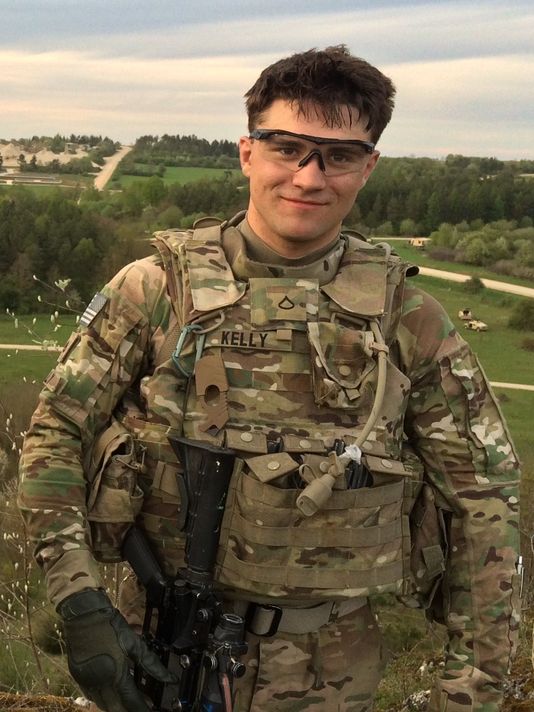
Army Spc. Hunter Kelly was found dead at another’s soldier’s home near Fort Stewart, Georgia on August 29, 2015. Peter Petri, also a US Army soldier, was charged with involuntary manslaughter and reckless conduct. Ryan Brown, another Army soldier was also arrested for obstruction of a law enforcement officer. This case is under investigation by the Georgia Bureau of Investigation and the Long County Sheriff’s Office. Military officials are cooperating.
“He had this unexplainable ability to excel at everything he did.” ~Ron Kelly (Hunter’s father)
Robert McKernan, 29, was shot ten times in his home in Massillon, Ohio by his wife Colleen on New Year’s Eve, December 31, 2014. Originally charged with murder, US Air Force veteran Colleen McKernan went to trial twice in 2016 and both times jurors were deadlocked. Colleen claimed she had been ‘hit by her husband’ of eight months for the last time and admitted shooting him ten times in self-defense. It was duly noted that Colleen was a Security Forces airman who not only had extensive fire arms training but that training included how to stay calm in stressful situations and environments. Colleen McKernan accepted a plea deal on the eve of her third trial and was given a 7-year sentence for manslaughter in 2017. Under the plea deal, Colleen could serve as little as 3 1/2 years in prison.
New Years Eve 2014 a holiday full of anger destroys a young Ohio couple when one is charged with the other’s murder. But this marriage is not a story of deceit and betrayal but rather a cautionary tale of how a volatile relationship can develop. -Bride Killa, Investigation Discovery
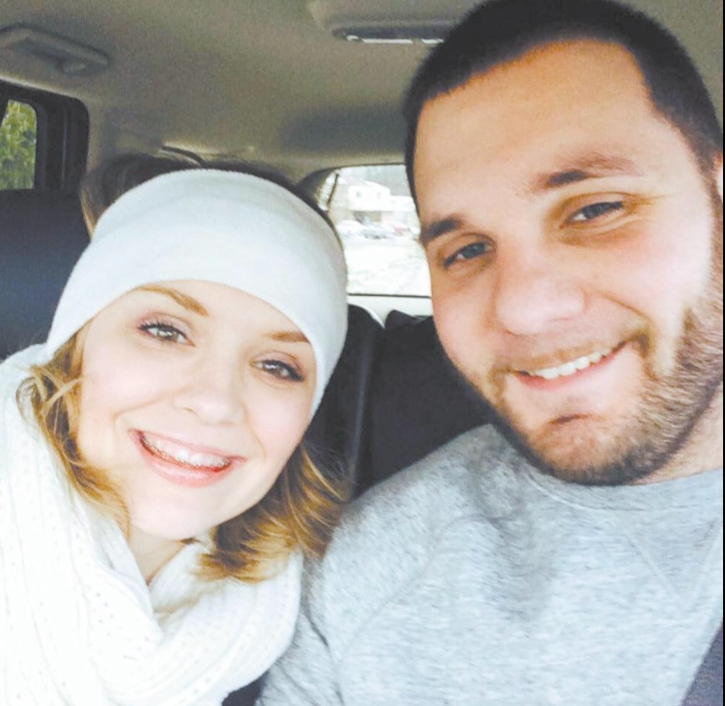
Skylar Nemetz, US Army, and his wife Danielle Nemetz
48 Hours:
All new: A young wife shot dead — her soldier husband pulled the trigger. Was it an accident or murder? -48 Hours
A young wife shot dead — her soldier husband pulled the trigger. Was it an accident or was it murder?
On Oct. 16, 2014, Danielle Nemetz, 19, was shot and killed by her husband Skylar Nemetz, 20, in their Lakewood, Wash., apartment. Neighbors placed two 911 calls after hearing a gunshot. Skylar was charged with murder, but his defense says it was an accident and that these 911 calls show a distraught and panicked husband, not a cold-blooded killer. -48 Hours
On Oct. 16 2014, Army soldier Skylar Nemetz was taken into custody after he shot and killed his wife, Danielle. He was recorded on camera just minutes after the shooting. Do his statements sound like the words of a distraught husband who accidentally shot his wife or do they sound like the words of a cold-blooded killer? -48 Hours
Skylar Nemetz is on trial for the shooting death of his wife, Danielle. Prosecutors accuse Skylar of killing Danielle in a jealous rage, but Skylar says it was a tragic accident. During jury deliberations, “48 Hours” correspondent Erin Moriarty talks with Skylar as he waits to hear their verdict. -48 Hours
Army soldier Skylar Nemetz is on trial for the shooting death of his wife Danielle. He says it was an accident; prosecutors say it was murder. Skylar’s mother, Danette Heller, says she spent her life savings to pay for his defense. During jury deliberations, Skylar spoke with “48 Hours”‘ Erin Moriarty about his mother’s sacrifice. -48 Hours
In the News:
When a soldier claims he shot his young wife by accident, his mother gives up everything to support him. A jury must decide whether it was an accident, or an act of rage. -CBS This Morning
A young soldier is charged with murdering his wife in cold blood. He says it was an accident and can explain how it happened. Will the jury beieve him? -CBS Evening News
48 Hours: The Soldier’s Wife -CBS Miami
Skylar Nemetz stood trial in his wife’s fatal shooting. After seven days of deliberation, a jury finds Nemetz guilty of manslaughter, putting him away for slightly over a decade. -Crime Watch Daily
Skylar Nemetz has admitted to shooting his wife to death but he claims it was all an accident. The stunning new development to his story. -Crime Watch Daily
Skylar’s actions speak louder than his words. “The strongest evidence, believe it or not, is what he does immediately after the fact.” Skylar didn’t call 911, a neighbor did. And there wasn’t a single drop of Danielle’s blood on him, a clear sign that he didn’t try to save or even comfort her says Deputy prosecuting attorney Jared Ausserer. “He doesn’t render aid. He never checks on his wife. If it was an accident, he’s going to drop the weapon immediately, run over, grab her, assess her. He doesn’t do that.” He [Skylar’s defense attorney] knows the challenge will be convincing 12 jurors that a highly skilled soldier with years of weapon’s training could make such a fatal mistake. Juror and retired Army soldier: “Never point the weapon in the direction of anybody and pull the trigger like that believing that it’s unloaded.” -48 Hours
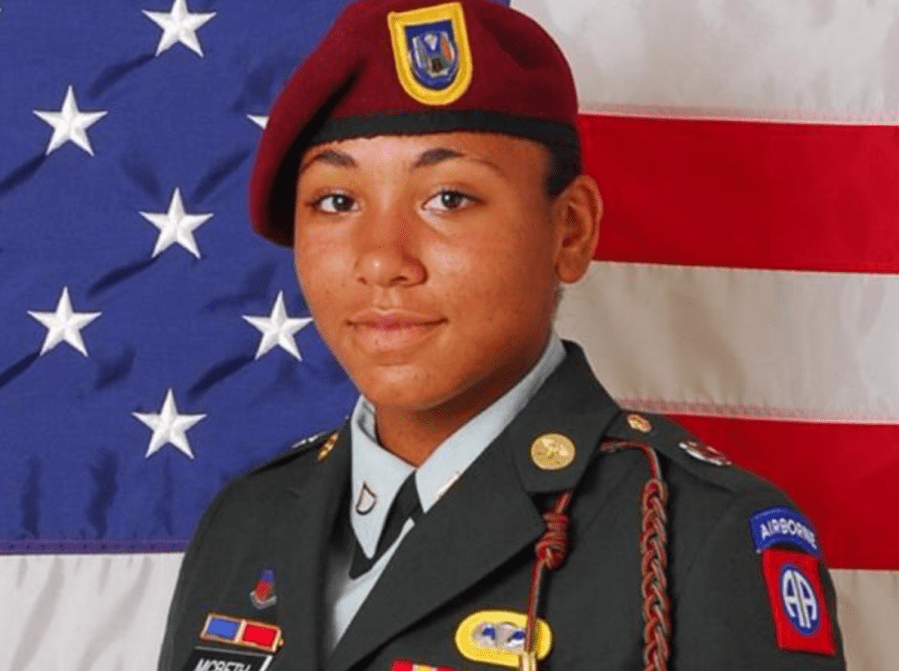
Army Spc. Morganne McBeth, 19, died July 2, 2010 of wounds sustained on July 1. This was considered a non combat death in Iraq and her death was ruled a homicide. Morganne was supporting Operation Iraqi Freedom on behalf of the 1st Special Troops Battalion, 1st Brigade Combat Team, 82nd Airborne Division at Fort Bragg in North Carolina. McBeth was stabbed by a fellow Army soldier Specialist Nicholas Bailey. According to court testimony, Bailey stabbed Morganne McBeth while ‘horsing around’ in a tent in Iraq. Nicholas Bailey was sentenced to nine months in prison, demoted to private, and given a bad conduct discharge.
“Involuntary manslaughter can be committed in one of two ways,” an 82nd Airborne official said in an e-mail. “…through culpable negligence or by causing a death while committing or attempting to commit an offense directly affecting the person, other than burglary, sodomy, rape, robbery, or aggravated arson. Note that these are the five offenses covered in the felony murder rule. As the manual for court martials points out, culpable negligence is a degree of carelessness greater than simple negligence. It is a negligent act or omission which is accompanied by a culpable disregard for the foreseeable consequences to others of that act or omission.” -Army Times
In March 2006, John Needham joined the Army making him the fifth generation in his family to serve in the Armed Forces. In the fall of 2006, John deployed with his team from Fort Carson, Colorado to fight the war in Iraq during some of the most intense combat in the war. Army private John Needham began to downward spiral about eleven months into a deployment to Iraq after surviving multiple IED and grenade attacks. He was injured both mentally and physically. John claims that when he reached out for help his Army command told him to tell the medical personnel that he was fine so he wouldn’t be sent home. John did what he was asked to do. Soon thereafter John began sending alarming e-mails to his family and learned that his deployment was going to be extended beyond the twelve months he was originally tasked with. In September 2007, John contemplated suicide and one of his fellow comrades stopped him but in the struggle the gun discharged. It was at this time that John’s leadership began to shame him and isolate him. They also assigned two soldiers to watch over him twenty-four seven. John felt that eventually his team turned on him as did his command, who recommended him for courts martial because of the incident with the gun.
John’s father became concerned about John’s health and after making numerous phone calls was able to get him sent to Walter Reed Army Medical Center. John spent one month in psychiatric treatment before the Army pulled him from Walter Reed and sent him back to Fort Carson, Colorado where he was facing punishment. John continued to abuse pills, drugs, and alcohol and as a result was getting in trouble. John’s parents were concerned about his health again and fought for him to get transferred to San Diego for help and to be closer to them. John was prescribed a myriad of drugs to help him cope with the diagnosis of Post Traumatic Stress Disorder. During this time, John sent a letter to the Army command at Fort Carson to report that he witnessed war atrocities while fighting in Iraq. An investigation was launched into the allegations yet the Army would determine that war crimes did not occur. Although John’s courts martial quietly went away and John was medically retired and discharged from the US Army. It would only be a few days later on September 1, 2008 that he would be accused of beating his girlfriend Jacqwelyn Villagomez to death with his bare hands. He was arrested for her murder, let out on bail, and awaiting trial for her murder when he learned that PTSD and Traumatic Brain Injury may be what led him to overreact and snap during the argument with Jacqwelyn.
In July 2009, ten months after Jacqwelyn’s death, John learned from the Department of Veterans Affairs that he did in fact have a Traumatic Brain Injury. John learned that the TBI can impact brain functioning including memory, speech, and hearing. He came to realize that combat changes who you are and that he may have suffered from a flashback when he attacked his girlfriend. According to witnesses Jacqwelyn became upset after she was asked to leave John’s home. As she was leaving one of John’s female friends stopped by which enraged Jacqwelyn. Jacqwelyn began beating the female friend who was able to escape and flee from the situation. While the friend was on the phone with the police reporting the incident, John was inside arguing and fighting with Jacqwelyn who herself was volatile. It was at this time that John snapped and beat Jacqwelyn to death with his own hands. He was discovered with swollen hands and bloodied after the vicious attack. The prosecution hoped to prove that John got drunk and killed Jacqwelyn in a drunken rage but John and his defense team hoped to prove that he suffered from a flashback, therefore he blamed both the Post Traumatic Stress Disorder and the Traumatic Brain Injury for the frenzied, animalistic attack. John was facing twenty-five years to life in prison for the murder.
In early 2010, as John’s trial got closer, John had another surgery to repair his back injuries from an IED explosion in Iraq. It failed and John continued to suffer with a high intensity of pain. According to his family, John could barely walk. John moved to Arizona for another surgery and to spend some time with his mom. He appeared happy to be back in the desert again. John’s brother drove from California to Arizona to spend some time with John. The next day, February 19, 2010, John’s brother discovered him clinging to life in his room. John’s brother attempted to save his life but John took his last breath in his brother’s arms and died at the age of 26. They would later learn that John died of an apparent overdose on painkillers. The autopsy was considered undetermined yet medical experts believe that the unusually high dosage of painkillers in John’s system could lead one to believe that John committed suicide. To this day it is unclear if John’s death was accidental or a suicide. John’s brother noted that it was ironic that he would make it through months of intense, deadly combat yet die once he gets home. There was no military funeral held for John but he was remembered for both the lives he saved in Iraq and the life he took when he got back home.
On this edition of DTRH Popeye covers the eleven year anniversary of the illegal, and immoral invasion of Iraq. He starts off by getting into the story of PFC John Needham, who witnessed war crimes being committed, and was locked up and tortured by his own command for not partaking in them himself. His story is an example of what happens when we “embrace the dark-side” as Dick Cheney put it in the push for the invasion. -DTHR
Full Episode: Emergency Dispatch in Durham, North Carolina received a frantic call from a man who said his wife had fallen down the stairs; she was unconscious but still breathing. When paramedics arrived, they could do little more than pronounce the woman dead. The number and volume of bloodstains at the scene was greater than usual. It was up to forensic scientists to find out why. -A Novel Idea, Forensic Files (S11,E22)
Editor’s Note: Full episodes of Forensic Files are available on a variety of media platforms. FilmRise Channel and Forensic Files Channel both feature full episodes of Forensic Files on YouTube. You can also find full episodes of Forensic Files on both Netflix and Amazon Prime Video. On Netflix, the seasons are grouped as collection 1-9. On Amazon Prime Video, you can find Season 1-10 here; Season 11; Season 12; Season 13; Season 14; Season 15; Season 16; Season 17; Season 18; Season 19; Season 20; and Season 21. Start bingeing and see for yourself why Forensic Files is such a hit!
In August 2004, hard working Walter Smith was managing a photoshop at a local department store in a town outside Salt Lake City, Utah. Walter met the future mother of his children Nicole Speirs on a social media site. Nicole was a tomboy, she was into skateboarding, adventure, and the two appeared to get along really well. They went out on a couple dates and spent the night together. But Walter was not sure how close he wanted to get because he had other things on his mind. He only recently returned home after a tour of duty in the Marine Corps. He joined the Marine Corps after high school and in early 2000, he was at boot camp in California. One of his Marine friends spoke highly of him and shared that one wanted to spend time with Walter because he was very interesting. Then September 11, 2001… Of course the Marines were deployed to Iraq and in February of 2003, Walter and and his team were some of the first on the ground during Operation Iraqi Freedom. This was war and the possibility of dying was something they had to accept after witnessing many of their own die around them.
In the summer of 2003 after six months in Iraq, Walter returned to Utah for a visit and then was sent to a marksman training course in Virginia. While on a rifle range, the sounds of munitions were giving Walter flashbacks and he thought he was shooting at people in Iraq. According to a comrade, something was triggered inside him and he just lost it. The was the beginning of his medical discharge. He was diagnosed with Post Traumatic Stress Disorder (PTSD) and medically discharged from the USMC. One of Walter’s Marine friends shared that most begin to experience the PTSD after they get out but they don’t push the subject with one another. But everyone recognized that Walter was depressed; he wasn’t the same person he was when they met him. Walter met Nicole Speirs shortly after his military discharge. Although after a few dates and intense nights spent together, Walter retreated. In the meantime, Nicole called Walter to let him know that she was pregnant. He went to the first doctor visit with her and they found out together they were having twins.
Walter wasn’t sure he was ready to have a family. He also learned that his parents were getting a divorce after 25 years of marriage. It rocked the foundations of all of the siblings. Walter retreated completely after the doctor visit with Nicole and requested a DNA test to prove they were his children. Nicole had to accept Walter’s decision; she didn’t know that he was struggling with PTSD. Walter became quiet and withdrawn. Once harmless, the civilian world now had several threats everywhere after his return. Walter’s family couldn’t understand what he had been through. Walter’s comrades shared that he engaged in one of the most violent fights during the deployment in Iraq. They were hit with an RPG and three guys were hurt. The enemy was packing families in cars and driving right at them. Walter had no choice but to use the gun to stop the existing threat. They had a hard time witnessing the innocent children die. The Marines in Walter’s company were never the same.
Now that Walter was back in Utah, his depression was getting worse. He was downward spiraling. By September 2004, Walter’s dad moved in with him. The family was concerned for them because they both were feeling extremely depressed. Walter’s dad shared that his own father committed suicide when he was young because he felt that he was a burden to the family. On June 30, 2004, Walter reached a breaking point. His thoughts were more distorted. Walter Sr. didn’t know it but Walter was experiencing violent tendencies. He feared for his own father’s life. He left their home before he harmed his father and made a decision to kill himself with a shotgun. He called some family to say goodbye but before he could pull the trigger, a friend contacted the local police to intervene. As a result, Walter was admitted into a psychiatric ward. He was diagnosed with PTSD, severe depression with psychosis, and alcohol dependency. Meanwhile, Nicole was on bedrest with a difficult labor and gave birth a month earlier then expected.
Nicole’s babies were both underdeveloped and needed to remain in the NICU for over a month but they finally got the green light to take them home. Nicole had a girl and a boy. Walter never went to visit Nicole at the hospital. By the time the children were five years old, Nicole filed for child support. Meanwhile, Walter looked at Nicole’s pictures on social media and could tell that the children were his right away and wanted to see them. This time, he told her the truth about the PTSD. Walter met the children and things seemed really good. Nicole was a phenomenal mom and this appeared to help Walter cope better too because she was calm and caring. Nicole was really excited that Walter came back. But Walter still doesn’t feel the same way as Nicole and wasn’t sure that he ever would; he had his own demons to contend with. But, they were both trying to strengthen their relationship for the sake of the children.
On March 9, 2006, Nicole was feeling dizzy so she left work and went home to rest. Two weeks later on March 24, 2006, Nicole and Walter were up late after a relaxing evening together at home. They made love and got in the bathtub to get cleaned up. Nicole asked Walter what she thought about their future; she wanted to get married. Walter said he needed more time and wasn’t ready to make that decision. He knew that he wasn’t ready for that kind of commitment. She was upset about this but decided to play it out and see where things went. The next morning Walter and the children left at 5 am to visit his family. The rest of the grandchildren were going to be there for a group photo. Shortly after Walter arrived, he began arguing with a relative and acting erratically. The family eventually called the police on Walter because they were concerned about his behavior. Walter called Nicole and told her he was returning instead of spending the night with his family.
Walter entered through the garage around 1 a.m. like he usually did and put the children to bed. He went to the bathroom where he heard water running and found Nicole face down in the bathtub. She appeared to be dead. He called 911. He was rattled, couldn’t remember the address, he realized that she was dead and this appeared to deflate him. Walter was hesitant to do the CPR when asked by the 911 dispatcher but he did it and unfortunately it was too late. Nicole was gone. Police arrived to find Walter and Nicole’s dead body. The body had been in a cold tub which made the time of death difficult to determine. There was no clear sign of foul play. Walter was questioned and claimed that Nicole was taking an anti-depressant for depression. His demeanor striked investigators as guarded and numb. Walter was with his family so could corroborate his whereabouts. Walter made the dreadful phone calls to family members and loved ones but Nicole’s death didn’t make sense to any of them.
In the days after Nicole’s death, the police kept their eye on Walter Smith. They questioned neighbors who denied any knowledge of abuse or volatility in the relationship; as a matter of fact, neighbors observed that both appeared happy together. The Speirs family was concerned about when Nicole got sick and wondered if that had anything to do with it. And suicide was a theory that Walter planted until Nicole’s autopsy put an end to that. There were no drugs in her system but the manner of death was drowning; the cause of death was unknown. The big question was why and how did this happen? Walter and the Speirs family worked together to take care of the children over the next few months. But nothing could hold back the depression that Walter was fighting off. Sometimes he felt like the PTSD was going to break him.
On December 4, 2006, Walter drove himself to the Veterans Affairs hospital emergency room because he was feeling suicidal and homicidal. He called his Uncle Craig and told him he couldn’t live another day. After questioned by his uncle, Walter admitted that he had something to do with Nicole’s death. His Uncle Craig recommended he remain silent until he got there but Walter Smith already told the VA that he felt guilty about what happened to Nicole. The VA called the police department who showed up around the time that his uncle showed up. He was quiet initially but then told them he was responsible for Nicole’s death. It was not an accident; it was something more. He was arrested for suspicion of homicide and taken in custody. Walter Sr.’s heart was shattered and he was in absolute disbelief that his son could do something like this. Walter Sr. and Craig let Nicole Speir’s family know right away that Walter admitted to being responsible for Nicole’s death.
Two days later, detectives got a second crack at Walter. Walter explained that he was in the bathtub with Nicole. She was sitting towards the faucet with him behind her. She washed her hair and she had to bend forward to rinse it. He then pushed her head down in the water from the back until she drowned to death. He was emotionless, matter of fact, and flat when he talked about the crime. He admitted that they had not been arguing prior to the act. When asked, Walter said that Nicole did fight back to the best of her ability. The detectives did not believe PTSD was an excuse because he took advantage of her in the most vulnerable position. Investigators exclaimed that this was an intimate domestic violence encounter that could only be accomplished in that position of trust. Walter didn’t know why he did it; he couldn’t explain it to those who were questioning him. His reasoning for coming forward was because he wanted help; the crime had in fact eaten away at him. After his confession, Walter was charged with murder in the first degree. But the legal teams validated that PTSD is a legitimate mitigating factor to reduce a charge from murder to manslaughter.
The prosecution recognized and believed this murder probably would not have happened if not for PTSD. The Speirs family learned from the prosecution that there was a lack of physical evidence, that most likely a jury would be sympathetic to a war vet with PTSD, and that these factors could lead to a not guilty verdict. As a result, the family agreed to a plea deal and a sentence was negotiated; Walter Smith received 1 to 15 years in prison. The sentence automatically gave the Speir family custody of the two children. The family felt the sentence was weak but ultimately they wanted to protect the children. Detectives wanted the public to remember that this was still a homicide and the PTSD didn’t cause this. Walter began serving his sentence in the fall of 2007. Four years later, his family and the Speirs family attended his parole hearing; Walter wasn’t allowed to look at any of them. As he sat hunched and humbled, he was asked if there was anything he wanted to say. He was silent at first but then he finally said that he didn’t disagree with what the family wanted including spending all 15 years in prison because he deserved it. He also said he was truly sorry for what he did. Walter Smith’s parole was turned down and he will spend the entire fifteen years in prison.
Did the status as a Marine with PTSD shape the way this crime was handled?
“Walter Smith is a Marine Corps soldier just back from Iraq. Diagnosed with Post-Traumatic Stress Disorder, Walter finds comfort in the arms of young artist Nicole Speirs. But in the darkest recesses of the mind, their cruel fate is already decided.” -Discovery ID
Initially Jessica Bart Meyers was reported missing to the police but five days later her dead body was discovered in an abandoned car near the harbor on July 20, 2003 in Tacoma, Washington. Jessica had been strangled to death. Fort Lewis Army soldiers Jeremy Meyers & Christopher Baber were charged with her murder. Jeremy and Christopher tried to make the murder look like a robbery gone wrong. Investigators discovered that Jeremy took out a life insurance policy on Jessica without her knowledge. And these two soldiers conspired to kill Jessica for the $100,000 life insurance policy. Jeremy offered to pay $10,000 to anyone who would help him with his plan to kill his wife. The murder would also allow Jeremy to move forward in a new relationship with 15 year old Sarah Benton, who he made travel plans with shortly before the murder. Christopher Baber was found guilty of manslaughter and sentenced to 8 years in prison. Jeremy Meyers was found guilty of first degree murder and sentenced to 41 years in prison.
Investigation Discovery:
ID Go: A young army private with delusions of greatness has a lusty affair A young army private with delusions of greatness has a lusty affair with an underage tart. Nothing will get in the way of his illicit affair- including his loving wife and infant son. -Head Games, Deadly Sins (S4,E7)
Editor’s note: With a cable subscription, you can download the free ID Go app and watch all of the Investigation Discovery programming at your convenience. And for those who do not have cable, you can watch “unlocked” episodes on the ID Go app including the latest premieres. Download the ID Go app and binge away. For those who prefer commercial free programming during your binge session, Prime Video has an ID channel: ‘True Crime Files by Investigation Discovery” available for $2.99 a month. It’s a compilation of older seasons but totally worth the cost if you are a true crime addict.
Keana Barnes murdered Air Force Sgt. Perry ‘P.J.’ Jennings on March 27, 2003 in New Orleans, Louisiana. Keana had been staying with her friend PJ temporarily while she got back on her feet. After PJ’s parents couldn’t get in touch with him for a couple days, they went to his apartment to see if they could find him. The building manager let them in the house and they found PJ with a single gunshot wound to the head, a pillow had been used as a silencer for the gun. It appeared that he had been killed in his sleep and did not suffer. He family reports that he actually looked peaceful.
Family had learned that Keana Barnes was also accused of murdering Jimmy Shepherd a year earlier. But Keana told PJ and others that she killed Jimmy in self defense because he tried to rape her. Actually, Keana brutally stabbed Jimmy 27 times in her rage attack. Keana Barnes was jailed for the offense but let out of the prison because the District Attorney didn’t file charges within 60 days. As soon as they realized their mistake, they put out a warrant for Keana who at this point couldn’t be found because she was bouncing from place to place including PJs.
After Keana Barnes murdered PJ Jennings, she fled the scene with his wallet, cash, and credit cards. She used the credit cards and it became obvious to police that she was heading for the Mexico border. Keana successfully entered Mexico but at this time the US Marshals were looking for her and were able to track her down based on her credit card usage. She was arrested and extradited back to New Orleans, Louisiana where she would face a first degree murder charge for PJ and a second degree murder charge for Jimmy Shepherd.
After Keana’s affluent family found out she was charged with two homicides, they backed her and paid for the best attorney money could buy. The attorney recommended a plea deal that was initially secret until the judge and the families of PJ Jennings and Jimmy Shepherd found out. Keana’s attorney wanted to reduce the charges to manslaughter and give her a sentence of 7 to 25 years in prison, eligible for parole in three years. The judge refused to accept the terms of the plea agreement and changed the sentence on the spot to 25 years in prison, no parole.
In a stunning twist, less than half way through her sentence, Keana Barnes successfully escaped from the St. Gabriel’s Prison in New Orleans, Louisiana. She headed out west to California and about three months after the successful escape, she was stopped by some L.A. police officers who asked for her identification. Keana didn’t have any identification so she was placed in the back of the police cruiser where she admitted to who she was. She was again extradited back to New Orleans, Louisiana to face additional time for the prison escape. Keana will be released in 2027 and she will be 44 years old when she is released.
Oxygen:
Two deceased men both helped out a damsel in distress. Did playing the good samaritan cost them their lives, and should authorities be worried that she could put someone else at risk? -Snapped on Oxygen
ID Go: Friends discover the lifeless body of good-natured Vietnam vet Drexelle McBride in the driver’s seat of his white van. Leads are scarce, until Detective Rod Demery charts the victim’s final hours, and learns of a chance meeting gone terribly awry. -Looking for Love, Murder Chose Me (S1, E4)
Editor’s note: With a cable subscription, you can download the free ID Go app and watch all of the Investigation Discovery programming at your convenience. And for those who do not have cable, you can watch “unlocked” episodes on the ID Go app including the latest premieres. Download the ID Go app and binge away. For those who prefer commercial free programming during your binge session, Prime Video has an ID channel: ‘True Crime Files by Investigation Discovery” available for $2.99 a month. It’s a compilation of older seasons but totally worth the cost if you are a true crime addict.











 MILITARY JUSTICE FOR ALL