Attorney Doug O’Connell has represented former Recruiting Assistants for the past two years in both criminal and civil matters. A former state and federal prosecutor, Doug is also a Special Forces Colonel in the Texas Army National Guard. In addition to his own practice, Doug is Of Counsel to Fluet, Huber + Hoang law firm.
The G-RAP accusations and investigations have now lingered for over five years. At least 90,430 (1) National Guard Soldiers (88% of all G-RAP participants) have been subjected to investigations as part of a massive dragnet to recover bonuses (2). 125 Soldiers have been prosecuted in Federal or State Courts; at least 2633 Soldiers remain under investigation (3). While a handful of unscrupulous participants took advantage of the ever-changing rules of this contractor-run program, those cases were adjudicated years ago. What the Army CID is now doing is nothing more than pursuing anyone whose G-RAP tenure spanned the years with the most rules’ changes in an effort to prove up the Army’s exaggerated fraud estimate.
It’s hard to pick the Top 10 issues with G-RAP. The items below represent issues apparent in almost every case. This list omits, but hardly overlooks, such things as inappropriate command pressure to participate in G-RAP, forcing accused Soldiers to undergo DNA collection (4), active surveillance of National Guard Soldiers by Army CID (5), coercion to make reimbursements to the Army (6) in lieu of punishment and other notable violations of Soldier’s rights.
1 Letter to Representative Mike Coffman from Daniel M. Quinn, Chief of Staff, USACIC. 2 The U.S. Army and U.S. Department of Justice consistently refers to G-RAP payments as bonuses in sworn testimony, official documents and court filings. The payments were paid by a contractor directly to the Soldier and IRS form 1099 was issued to every participant. Payments were not processed by DFAS and did not appear on a LES. Finally, Congress did not authorize a bonus related to this program. Nevertheless, Government officials consistently refer to G-RAP payments as bonuses, perhaps wishing it were true so that legal recoupment would be possible. 3 Per letter to Rep Coffman. 4 Collected by a cheek swab without a warrant in violation of the 4th Amendment. 5 Related to an allegation of fraud which if true occurred years prior. 6 Possibly an illegal augmentation of appropriations in violation of the Miscellaneous Receipts statute, 31 USC §3302.
1. GUILT BY ALGORITHM.
Auditors, instead of seasoned law enforcement professionals, launched the G-RAP investigations. Rather than using any type of proper legal standard like probable cause, the Army Audit Agency assembled lists of Soldiers branded “high risk” by the auditors. The definition for “High Risk” was listed as “an inability to follow the rules.” Because the rules changed 60 times in seven years, almost everyone who successfully participated in G-RAP became a target. Soldiers connected to the “high risk” Soldiers were in turn investigated. This self-perpetuating, system of guilt by association crushes any notion of justice and the rule of law. Years later, many of these Soldiers still are under the cloud of a CID investigation and are being forced to defend (at great financial and emotional cost) their names and careers.
2. COMPULSORY INTERROGATIONS.
Federal CID agents lack any authority to compel National Guard Soldiers (or veterans) to submit to interrogations. Unfortunately, neither CID nor most Guard Soldiers and veterans understand that they cannot be forced to appear or answer questions from Army-dispatched agents. CID agents repeatedly violate this bright line legal standard. Worse yet, some Guard Commanders aren’t sufficiently knowledgeable about the law to protect their Soldiers. Once confronted with apparent military authority, many individuals, honestly believing they did nothing wrong, provide answers, later cherry picked and twisted to supposedly show guilt. The unfortunate individual is left having to prove he or she didn’t say something or that the statement was taken out of context.
3. INVESTIGATORS WITH A PERSONAL FINANCIAL INCENTIVE.
The CID Investigators pursuing G-RAP allegations include Army Reserve CID Agents voluntarily on active duty orders. At a minimum, the perception exists that the Reserve Agents have a financial incentive to perpetuate the investigations. The longer the investigations continue, the longer these agents remain employed. Further compounding this problem is the very logical assumption that few agents would volunteer for active duty if it meant a pay cut from their civilian employment.
4. VIOLATIONS OF THE POSSE COMITATUS ACT.
National Guard Soldiers not mobilized into federal service, are like any other civilian citizen under the law. The Posse Comitatus Act prohibits federal military personnel from investigating and enforcing the law. Yet, that is exactly what is happening. The PCA is a federal criminal offense punishable by a term in prison. In the G-RAP investigations, federal military agents are investigating allegations of criminal violations by Guard Soldiers, who are the same as civilians under the law (7). This is a clear violation of the PCA. Unfortunately, this flawed law requires the same prosecutors who are prosecuting Soldiers to levy charges against the same agents investigating the cases they prosecute.
7 See Perprich vs. Department of Defense, 496 U.S. 334 (1990).
5. TRAMPLING THE STATUTE OF LIMITATIONS.
In our system of justice, a statue of limitations exists to limit the Government’s ability to bring charges so remote that the defendant can’t reasonably mount an effective defense. In G-RAP cases, the Government is circumventing the statue of limitations with a World War II era tolling statute. Most applicable criminal offenses have a 5 year statute of limitations. Since G-RAP ended in 2012 the statute of limitations has long expired in most cases. However, in G-RAP investigations and prosecutions the Government is relying on the Wartime Suspension of Limitations Act (8) to continue to bring criminal cases. First enacted in 1948, the WSLA is designed to protect the Country from fraud during times of war. This law likely made sense during World War II, the Korea and Vietnam conflicts. However, the nature of warfare has changed. The current war against terrorism and global extremist groups will continue indefinitely. Relying on the outdated WSLA during today’s conflicts effectively terminates the deeply rooted equitable concept of a statue of limitations.
Our Government has spent at least an estimated $40 million dollars (9) to investigate Soldiers. The ensuing recoupment actions and prosecutions have recovered, at most $3 million dollars (10). Army CID agents have repeatedly conducted full field investigations to determine if a Soldier’s single $2,000.00 bonus was righteous (11). In an era of constrained defense spending with persistent and emerging global terrorist threats, this massive boondoggle sets a new record for fraud, waste and abuse. The CID agents’ limited time and resources would be much better spent working to prevent the next Fort Hood terrorist attack.
9 This is a conservative estimate which includes the personnel cost associated with bringing the USAR agents onto duty status. 10 This figure is also an estimate based on all federal cases reported in the Pacer.gov system and media reports from around the country. 11 At least one National Guard officer is currently under indictment for a single G-RAP recruitment.
7. INACCURATE TESTIMONY TO CONGRESS & POLITICAL PRESSURE
The entire G-RAP controversy is based on inaccurate and irresponsible testimony to Congress. During Senate hearings chaired by Senator Claire McCaskill (12), Army General Officers testified that the total G-RAP fraud could be as high as $99 million (13). This estimate was wildly inaccurate (14). To date, the Government has only collected $3 million in fraudulent payments. Senator McCaskill immediately branded these Soldiers as criminals despite their Constitutional right to be presumed innocent (15). Many have speculated that the hearings and estimates of widespread fraud were designed to embarrass the National Guard during budget battles. Others suggest that it was an attempt to appease this powerful member of the Senate Armed Services Committee and self styled “accountability advocate.” Still others contend that the hearings were an attempt to shift focus from sexual assaults in the military. Whatever the reason, the McCaskill hearing set off a chain of events abrogating the presumption of innocence justice toward service members and veterans.
12 United States Senate Hearing: Fraud and Abuse in Army Recruiting Contracts, February 4, 2014. 13 Id. 14 It appears that this testimony has never been revised, amended or updated to correct the record. 15 Id.
 8. AT LEAST 60 CHANGES TO THE “RULES.”
In the eyes of CID, violations of the program “rules,” indicates intentional fraud worthy of criminal investigation. However, the G-RAP “rules” changed at least 60 times during the life of the program (16). Understanding the “rules” of G-RAP at any given point in time requires a detailed analysis based on a significant review of multiple documents (17). In the vast majority of cases, if the Soldier violated the “rules,” it is more likely due to confusion rather than a deliberate desire to cheat the system. With unrelenting intensity, CID doesn’t investigate an alleged crime; they gather slanted “evidence” to prove that a crime was committed. CID, in fact, has been responsible for elevating an inability to follow the rules of a program run by a private contractor to the level of a crime. One example: at various times full time members of the National Guard were authorized to participate in G-RAP, at other times they were ineligible. If a Soldier entered G-RAP when full time members were allowed, but submitted data for payment months later when full time members were not allowed, that Soldier is investigated for fraud.
16 See Agent’s Investigation Report, CID Special Agent Julie Thurlow, November 22, 2013. 17 National Guard Bureau changed the rules via a contract change order sent to Docupak.
9. “SPHERE OF INFLUENCE” AND OTHER VAGUE GUIDANCE.
Soldiers participating in G-RAP received instruction to recruit from their “sphere of influence.” This term was never defined. It’s unclear if the intent of this language was to limit recruitment to pre-existing relationships. Regardless of NGB’s intent, the Soldiers received a very different message. For example, once hired by Docupak, Soldiers were provided marketing items such as t-shirts with the message “ask me about the National Guard.” None of the marketing items provided would have been necessary to recruit people already known to the Soldier. Now, these same Soldiers are investigated and some prosecuted for recruiting outside their sphere of influence. Likewise, Soldiers were told that they “shouldn’t” wear their uniform when conducting recruiting activities. If this were truly a prohibited action worthy of investigation, the “rule” would have been written as “you are prohibited from wearing your uniform.”
10. “I DON’T REMEMBER = GUILTY.”
When CID agents track down and contact recruits many years after their enlistment into the National Guard, most don’t remember the details of their interaction with the recruiting assistant. To the CID agents, this means the RA committed misconduct. The alternative explanation is unfathomable to the agents: the recruit, 7 years later, just doesn’t remember. This is especially problematic since Government prosecutors use this lack of memory to charge the Soldier with Aggravated Identity Theft (18), a charge that carries a mandatory minimum term of prison sentence of two years.
18 18 USC § 1028A.
 “EXTRA CREDIT:” CID KNEW ABOUT ALLEGED FRAUD FOR FIVE YEARS BEFORE TAKING ACTION.
On May 22, 2007, five years before G-RAP was shut down, Agents from Army CID, Air Force OSI, and Defense Criminal Investigative Service (DCIS) met with Docupak to discuss potential fraud in the program (19). A representative of the United States Department of Justice (20) was also in attendance. The agents specifically instructed Docupak not to notify the State Adjutant Generals, National Guard Bureau, or the contracting officer regarding alleged fraud. This effectively cut off any ability to clarify confusing rules and or enhance fraud prevention measures. Importantly, it also prevented Governors and Adjutants General to execute their Constitutional duty of regulating their National Guard force and apply appropriate discipline (21). Likewise, notification the responsible contracting officer at NGB would have triggered remedial action. Instead, the CID sat on this information for five years, causing a relatively minor amount of confusion to escalate into what we have now – another major bonus scandal ensnaring thousands of junior Soldiers facing accusations.
19 2014 Inspector General Report, page 40, paragraph g, and footnote 142. 20 Presumably a licensed attorney. 21 The Governor’s and TAG’s Constitutional authority to regulate and discipline Guard members included the full time recruiting force in each state, some of whom were suspected of misconduct. These Soldiers operate under the exclusive military jurisdiction of the relevant State Military Code of Justice.
CONCLUSION
Few Soldiers have the financial resources to mount a proper defense to federal criminal charges. Faced with the possibility of prison time, many take a plea bargain to avoid the risk of prison, financial ruin or deepening emotional trauma to themselves and their families. Even if the accused Soldiers are not prosecuted, the collateral consequences seem never ending. The investigation will continue to haunt them for years to come. Security clearances will be revoked or suspended, and the Government will initiate proceedings to “debar” the Soldier from future employment as a government contractor. Eventually, the case file will be forwarded to the State National Guard headquarters for military justice or administrative action. The range of administrative sanctions includes separation boards, official reprimands and being required to rebut CID’s flawed conclusions to a promotion review board. The administrative flag on their personnel file will continue until all military administrative actions are complete (22). Finally, many of these same Soldiers, never prosecuted in a court of law will have a federal criminal history created as a result of being investigated, “titled” and “founded” by CID.
22 A “flag” prevents any favorable action including re-enlisting, awards, and promotions. The flag does not prevent orders to deploy overseas (again). Flags as a result of G-RAP investigations have been in place for four or more years at this point.
Crime Watch Daily spoke with the parents of missing Army soldier Shadow McClaine. Shadow disappeared from Fort Campbell, Kentucky on September 2, 2016. Shadow’s parents were concerned her life may be in danger prior to her disappearance. They shared that someone cut her vehicle break lines on base and Shadow posted a picture of it on social media. They also said she reported the incident to her Chain of Command but felt dismissed. The Army Criminal Investigation Division (CID) conducted an investigation and reported two soldiers were being held as person of interests and the case was under investigation.
On November 29, 2016, Sgt. Jamal Williams-McCray and Spc. Charles Robinson were charged with conspiracy, premeditated murder, and kidnapping under the Uniform Code of Military Justice (UCMJ). On January 23, 2017, the remains of Pfc. Shadow McClaine were discovered off the I-24 highway near Exit 19 in Kentucky. It was confirmed that Shadow was in fact a victim of kidnapping and homicide. A year after Shadow went missing in September 2017, Spc. Charles Robinson pleaded guilty to murder. He claimed he helped Shadow’s estranged husband Williams-McCray kidnap and murder her. On March 1, 2019, Sgt. Jamal Williams-McCray was sentenced to life in prison after pleading guilty to premeditated murder.
Private First Class Soldier Shadow McClaine has mysteriously gone missing and theories are swirling on what happened to her and why. Now, new details could help them. -True Crime Daily (October 24, 2016)
Shadow McClaine, a young soldier, mysteriously disappears — some say she left, while others say someone was out to get her. -True Crime Daily (October 24, 2016)
Two soldiers were taken into custody in connection to the case of missing female soldier, Shadow Branice McClaine. -News Channel 5 (October 25, 2015)
Shadow McClaine, 25, has been missing for nearly two months after disappearing from Fort Campbell. -CBS Sacramento (October 26, 2016)
Some thought Shadow McClaine was running away from her problems. But it now appears she was the victim of something sinister. -True Crime Daily (December 6, 2016)
Missing Yuba City soldier’s body found in Tennessee. -KCRA News (January 25, 2017)
First Class Private Shadow McClaine’s body was discovered earlier this week and investigators arrested two fellow soldiers. -CBS Sacramento (January 28, 2017)
The body of Shadow McClaine, a soldier who was murdered near Fort Campbell in Tennessee, was returned to her family in Yuba City Friday evening. -KCRA News (February 3, 2017)
Shadow McClaine’s remains touched down at the Sacramento International Airport Friday night greeted by dozens of local service men and women along with her grieving family. -CBS Sacramento (February 3, 2017)
A look at the scene as Shadow McClaine came home on Friday. -CBS Sacramento (February 4, 2017)
Missing soldier Shadow McClaine’s body has been found. Crime Watch Daily talks to McClaine’s mother London Wegrzyn, who says that her daughter had a fraught relationship with ex-husband Sgt. Jamal Williams-McCray. Specialist Charles Robinson and Williams-McCray were charged with her murder. Crime Watch Daily also speaks to McClaine’s friend Trystan Harding about what happened to McClaine. -True Crime Daily (March 9, 2017)
Family and friends came together for a vigil to honor a murdered Fort Campbell soldier. -News Channel 5 (April 11, 2017)
Private First Class Shadow McClaine was found dead 2,000 miles away from her home, allegedly at the hands of two men who will face premeditated murder, kidnapping and conspiracy charges. -CBS Sacramento (April 11, 2017)
Army specialist Charles Robinson says he slashed Shadow McClain’s throat, then broke her neck to make sure she was dead. He says McClaine’s ex-husband, Jamal Williams-McCray hired him to murder her. -True Crime Daily (October 3, 2017)
Two years ago this week, the body of Shadow McClaine was discovered in Robertson County along Interstate 24. -News Channel 5 (January 23, 2019)
Army Sgt. Jacqueline Anderson, 26, was found dead in her apartment in Seoul, South Korea on July 31, 2016. Sgt. Anderson’s husband, Sgt. Carl Anderson, found her unresponsive and asked neighbors to contact the police but she was dead upon their arrival. Sgt. Anderson was from Leesville, Louisiana and she joined the Army in January 2011. She was assigned to Headquarters and Headquarters Battery, 1st Battalion, 38th Field Artillery Regiment, 210th Field Artillery Brigade at Camp Casey, South Korea. She was stationed in Dongducheon with her husband who is also with the 210th Field Artillery Brigade. At the time of reporting, Jacqueline’s cause of death was under investigation by the Army Criminal Investigation Division. The outcome of the investigation and official cause of death is unknown.
“We are looking at spending over $600,000 of tax payer dollars for $2,000 that was allegedly stolen, most likely over 3-6 years ago, under a program that was deemed to be flawed, mismanaged and inherently opaque by the US Army’s own leadership.”
It is true, that our forefathers set out to create a judicial system that blindly judged the accused in a manner that afforded them the opportunity to receive a fair trial, regardless of race, sex, beliefs, political stature or societal standings. However, as shown in the Guard Recruiting Assistance Program (G-RAP) scandal, it appears today’s judicial system is more about your ability to secure good lawyers and your civil status than it is about determining guilt versus innocence.
Most soldiers charged for their participation in G-RAP cannot afford an attorney. They are bullied by Army Criminal Investigative Command (CID) Agents to take polygraphs, provide incomplete statements (which are then used as evidence against them) and to accept a plea for criminal acts they did not commit. Without adequate counsel these service members are given ultimatums or forced to accept deals that leave them powerless. At best they are issued overworked public defenders who place them in a pool of other criminals including rapist, murderers and thieves. Soldiers are pushed to take plea bargains by the prosecution in an effort to give CID a quick victory and take the case off the public defender’s plate. However, this system puts a hefty burden on the soldier regardless of what road they take.
In a complicated, twisted tale of alleged corruption and betrayal over budgetary wars, a presumed cover-up simmers at a colossal scale between the Army and the National Guard. Soldiers are the exploited pawns in the largest politically motivated fraud investigation ever conducted by a military component against its own forces. This may sound like suspenseful fiction, but as many National Guardsmen and women can attest, this is all too real. An estimated 24,000 National Guard soldiers have been caught in the dragnet, which all stems from a successful military-enlistment recruiting program that financially compensated citizen-soldiers who aided in efforts to boost military strength. Documents and public records obtained through the Freedom of Information Act along with credible sources points to a disturbing persecution of soldiers and veterans as well as the batch processing of mass indictments.
At a time when US forces were scattered among Iraq, Kuwait and Afghanistan, the overall end strength numbers were low. Army National Guard Director, Lt. General Clyde A. Vaughn (ret), and his staff had an idea to resupply the branches with fresh bodies—make anyone a potential recruiter by offering a financial incentive of $2,000.00 for each successful enlistment. Vaughn deeply felt that a peer-enlistment program might ease the hemorrhaging of a nationwide manpower shortage. And he was correct. The program, dubbed G-RAP (Guard Recruiting Assistance Program), ran from 2005-2012 and was an enormous success, as it replenished the ranks. Other branches of the military ultimately mirrored that recruiting program, but none to the magnitude of the NGB (National Guard Bureau). And none of them received the amount of government money that the Guard received to achieve this success.
Though G-RAP stood as a great achievement in strengthening the reserve forces, by 2012, all RAPs (Recruiting Assistance Programs) were suspended indefinitely, primarily due to media publicity of widespread fraud. NGB took the most heat, consistently projected as having lost upwards of $100 million. The truth, however, has been largely obscured. After four years of costly investigations, only $2 to 3 million “has been successfully prosecuted in civil courts.” But what is more disconcerting is that NGB, routinely criticized for its lack of oversight, no longer had the supervision in their control. Based on a previously unpublished Army Inspector General Report, a closed door meeting took place in May 2007 where it was decided by an ad hoc committee comprised of representatives from Army Criminal Investigation Division (CID), Defense Criminal Investigation Service (DCIS) and the Air Force Office of Special Bureau (AFSOI) “that Docupak would turn over any suspected occurrences of fraud directly to CID,” and that NGB, specifically the State Adjutants General (TAG), would be deliberately left out of the information loop. The rationale given at the time was that the DCIS did not want interference from high-ranking Guard officials.
There is evidence, however, that some TAGs were successfully handling all reported incidents of fraud internally in their own states up until that point with detection and prevention controls. It was not until these controls were halted in the May 2007 meeting that the Guard lost the ability to monitor, discipline and correct such incidents of fraud. Perplexingly, all of this was done without the Guard’s knowledge. In a recent interview in the Washington Times, General Vaughn reported that “he was kept in the dark” about the occurrence of fraud in the field and that CID purposely did not inform him about fraud cases. “No one can correct a problem if you do not know it exists,” stated Vaughn.
The CID did not have any prerogative to make such changes to regulation, as it would require a Congressional act; yet, in 2009 (and again in 2014), changes were made to the CID Manual that removed the language to report crimes through the TAG. But simply changing the manual did not mean it was constitutional to do so under the sovereign rights of each state and US territories. What’s more, there has been discussion in legal circles as to whether or not CID is operating outside its jurisdiction in the investigation of National Guard members. According to the Constitution as well as Department of Defense Directives (DoDD) 5105.77, the NGB is under the direct command of the state TAG and ultimately the governor unless a battalion has been mobilized for federal duty, at which point they then fall under Title 10 (active duty status) and the command of the President. The majority of those indicted are known as “M-day soldiers.” In other words, they are “weekend warriors” working for the Guard once a month and two weeks a year in official drill status (aka, Title 32). If an individual under Title 32 were to come under some criminal deed, it is the role of the TAG to take action. In fact, the TAGs have guidance on enforcing discipline and protecting soldier’s rights as it is articulated in the 2015 Commander’s Legal Handbook. The CID, as a faction of the big Army, only has command over Title 10 soldiers; it does not, to this day, have any authority over most members of the National Guard in these investigations, save a select few individuals who were deployed on active duty while participating in G-RAP.
This then raises the question, why is the regular Army harassing National Guard soldiers and violating their constitutional rights in the first place? Most of the soldiers under suspicion for theft of government property are not subject to regular Army discipline. Before that question can be answered, there is another piece of the puzzle to be scrutinized—the alarming results of CID’s investigations.
The U.S. Army Audit Agency had concern regarding the potential of individual fraud within RAPs. After reviewing over 150,000 enlistments ($339 million in payments), the June 2012 Audit identified 3,200 soldiers in the fraud-risk assessment. They found 1,256 recruiters suspicious of medium to high risk for fraud. Additionally, there were 2,022 RAs that “potentially violated program rules.” Of those RAs, only a quarter of them were found to be intentional acts. The remaining 1,400 recruiting assistants appeared to have unknowingly and unintentionally violated the rules of G-RAP, which is entirely plausible considering there were 60 changes to G-RAP rules during its seven years in existence .
This report fueled an investigation of another style from the Senate Subcommittee on Financial and Contracting Oversight. Despite the Audit’s fraud findings, the Army CID quickly dispatched approximately 200 field investigators under “Task Force Raptor” to scrutinize all 106,364 individuals who participated in G-RAP for any possibility of fraud. Senator Claire M. McCaskill (D, MO) set a directive that CID should flood the nation’s landscape and courageously return ill-gotten dollars to the American taxpayers. CID agents were encouraged to flash badges, obtain DNA swabs, issue polygraph tests and secure fingerprints in an effort to scare soldiers into revealing any useful material that could be later used against them. One former CID agent admitted that they were urged to lie to potential witnesses and persons-of-interest if usable information could be extracted. They were then instructed to report the numbers of potential indictments back to Senator McCaskill’s office on a quarterly basis, ostensibly to ensure they were meeting her demands of accountability. But a federal indictment of fraud is a crime requiring specific intent. In other words, conviction relies on the government’s ability prove the individual knew of the specific rules and guidelines and intentionally broke them for monetary enrichment.
Nevertheless, CID’s report prepared for the February 2014 Senate Subcommittee hearing led by Senator McCaskill found over 22,000 soldiers associated with payments that were at risk for fraud. This number is over seven times greater than the original Army Audit estimation at a rate of 1.7-3%. The FBI estimates that insurance fraud—one of the highest areas of civilian fraud—is at a rate of 3-10% of all insurance cases. Conversely, CID is now suggesting that those who proudly wear the uniform are felons at a rate of over 20%. Put differently, 1 in 5 soldiers are alleged criminals, 2 to 7 times more likely to commit fraud than the civilian population. This is clear evidence that these claims are audacious.
How is it possible that so many service members are accused of fraud? How is it that the CID investigations found an additional 18,000-20,000 offenders from the Audit’s estimation? Is it possible that this is a witch-hunt? This fishing expedition turned into a conspiracy theory as Sen. McCaskill stated, “I mean, it is almost like word got out and nobody was paying attention, and all of a sudden everybody was, okay, the bank is open. Let us go for it.” The moderate democrat further opined, “I mean there is no way that there was not a culture of people saying, hey, here is the deal. There is a bounty and we know these people are signing up.” But rather than a vast number of soldiers intentionally scamming the government they swore to protect, a much more plausible answer would be that most all were following a set of murky rules as they understood them.
Senator McCaskill’s supposed effort directed to bring about justice for the American people instead turned into a catastrophe where the wrath eventually rolled downhill to the most vulnerable of peoples, our service members. Let off the hook were Docupak and military Brass who were responsible for the proper administration and oversight of G-RAP. One possible explanation for the morass is a skirmish over federal defense dollars when the Guard received the lion share of contract monies to operate G-RAP. Or perhaps it is something as simple as an attempt to justify the military drawdown of troops currently underway. This time, the scapegoat would be the American soldier, more specifically National Guardsman, as McCaskill’s goons sought to manufacture felons. Unfortunately, those are the casualties of politics, but these service members deserve more. They deserve answers and accountability from our leaders.
[1] Unpublished U.S. Army Inspector General Agency Report of Investigation (ROI) (Recruiting Assistance Program) 2014. [2] Memorandum from U.S. Army Audit Agency to Recruiting Assistance Program Task Force Regarding Audit of Recruiting Assistance Programs – Reserve Components (June 4, 2012) (Report A 2012 0115 IEF), Enclosure 1. [3] CID Investigators report (G-RAP Training) Nov, 2013.
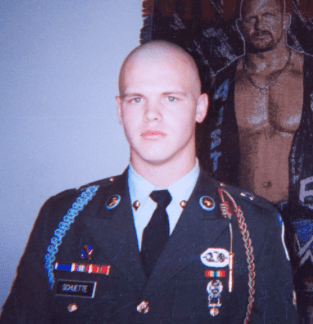
SSG Devin Schuette, 35, U.S. Army, originally of Clovis, New Mexico, was found dead inside a car near the recreation area at Fort Hood on January 3, 2016. According to his family, he had been missing since New Year’s Day. SSG Schuette’s service with the Army began in April 1999 as an infantryman and he was serving as an Intelligence Analyst with the 1st Brigade Combat Team, 1st Cavalry Division at Fort Hood at the time of his death. He also served three overseas tours as part of Operation Iraqi Freedom; his deployments were from March 2003 to March 2004, November 2005 to October 2006 and June 2008 to June 2009. As of January 6, 2016, the Criminal Investigation Division was investigating the circumstances surrounding the incident. At the time of reporting, they did not suspect any foul play but were not ruling anything out as they moved forward with the investigation.
Three weeks prior to his disappearance, Devin Schuette was diagnosed with Post Traumatic Stress Disorder (PTSD). On January 3, 2016, Devin was found dead on Liberty Hill road close to the paintball course at Belton Lake Outdoor Recreation Area (BLORA) near Fort Hood. The Army Criminal Investigation Division (CID) ruled the death a suicide.
Moments Leading Up to Disappearance
Tannie was asleep at her on post home at Fort Hood when she woke up to Devin yelling at their daughter. Devin was asking her if she wanted to go to a friend’s house but she didn’t want to leave the house. Tannie asked him what his problem was and why he was insistent on their daughter going to a friend’s house. At the same time, she realized their oldest daughter and youngest son were already at a friend’s house after Devin urged them to go. Devin went outside to cool down after the encounter and started loading some pallets in the back of his truck.
After Devin completed the task, he drove around to the back of the house and began unloading the pallets. Tannie was concerned that the pallets would leave rusty nails in the backyard where the kids played so she asked Devin to take them back to the carport area. Tannie helped Devin load the pallets back up and in the process threw a piece of wood that broke the front windshield on the passenger’s side of Devin’s truck. Devin returned to the carport and asked their daughter if she wanted to help him build a doghouse. She agreed to help him after her and Tannie got back from getting some coffee nearby on post.
When Tannie returned to the house, Devin was gone but her son was home. Her son told her that as he was walking home, he saw Devin pass by in his truck. He waved at him but said that it appeared Devin didn’t see him because he didn’t wave back. The family assumed he was looking for more wood to build the doghouse with. But after he was gone for awhile, the family started getting concerned. Tannie’s phone had broke so she asked the neighbor if she could use their phone to call Devin. Devin answered the phone and said he was driving around Copperas Cove…and then the line went dead.
Tannie asked to use her friend’s phone and then jumped in her car to go looking for Devin. After awhile, her friend asked Tannie if she would bring her phone back so she did and asked her friend to get in touch with her if Devin calls. But first, Tannie called the Fort Hood military police and they sent an officer out to her home. Tannie tried to convey to them that this is not typical of Devin because he always says he loves her before they hang up. And Devin hates ending calls abruptly. The Fort Hood military police told her she has to wait 24 hours before she could make an official missing person’s report.
Reported Missing to Fort Hood After 24 Hour Waiting Period
Tannie wasn’t going to waste anytime looking for Devin when she knew in her gut that something was wrong with the way their phone call ended. She quickly got on social media to ask her local community and Devin’s co-workers for help looking for him. Tannie’s mom and sister drove great distances to help search for him. Tannie drove to where their camper was stored at the Belton Lake Outdoor Recreation Area. She didn’t have a key because Devin had the only key but she knocked and looked for his truck. After the twenty-four hour waiting requirement, Tannie filed a formal missing person’s report with the Fort Hood military police. They pinged his phone and found the location of where the phone was last active rather quickly but nobody contacted Tannie until the following day.
Tannie received an e-mail from Devin’s NCO (boss) with the general location of where the phone was located on Sunday, January 3rd. The phone pinged in a fifteen mile radius located in the Belton Lake Outdoor Recreation Area. Devin went missing on Friday night, January 1st, Tannie made a formal missing person’s report to the Fort Hood military police on Saturday, January 2nd, and didn’t hear from anyone at Fort Hood until Sunday. Meanwhile, she and many other’s were frantically driving all over the place looking for Devin. U.S. Army W.T.F! moments shared the missing information and that’s when they saw a real social media response including search teams. As soon as they got the general location of where the phone pinged, the search teams began focusing on that area.
Initially everyone focused on searching the left side of the road within that 15 mile radius in BLORA. At 4 pm that same day, Tannie headed back to the Hobby Lobby where she met up with others and they headed to the K-Mart parking lot where there was a huge tent set up as a command post. There were a lot of people there when she arrived and she wasn’t sure if they were all civilians or if some of them were soldiers too. At the tent there was a map with grids. Each pair of searchers was assigned a grid. After they got done searching the left side, they searched the right side of the road. As Tannie was searching, she passed Liberty Hill road, a road that goes to the paintball course at BLORA. Tannie thought about going down Liberty Hill road but something stopped her and she decided not to. Then about five miles outside of the post, Tannie pulled over and parked her car when they saw a man with a flashlight walking down the road.
The man approached them while Tannie was talking to an embedded reporter who wanted to do a story about her missing husband. So Tannie’s mom and sister went to go talk to him. They returned to Tannie and reported the man was very drunk and he said he was looking for a friend’s truck. The pair also observed blood on his clothing and blood spatter on his face. They informed Tannie while she was giving the reporter a brief so she stopped what she was doing and called 911. They wanted to go after him and confront him but were scared and freaked out. Tannie and her family observed him walking away towards a truck with a flat bed trailer on it. When they took off, they were hauling ass.
Eventually the game warden and military police showed up. Tannie and her family shared their observations about the drunk man with blood on him. The police started looking in the area and eventually a game warden did in fact find this mysterious man. The game warden told Tannie the man was a cattle rancher and the blood on his face was from a cut above his eye. The blood had dripped down on his face. Fort Hood uses land for training owned by the Texas Cattle Rancher’s Association therefore this provided the man with an excuse for why he was near the post. Tannie felt like they missed an opportunity to investigate by giving him a reason to be there (negated a means) and made an excuse for the blood spatter (ignored important forensic evidence). They could have at the very least taken a picture as evidence given the fact they were searching for a missing soldier.
Devin Schuette Found Near Paintball Course at BLORA
Tannie reports that she found out Devin was deceased after a man from her church called her while she was on her way to the location with his Commander. This man from church and another male volunteer she didn’t know found Devin deceased in his truck on Liberty Hill road off a little dirt road to the left. It was the first dirt road on the left. He was found about 100 yards from Liberty Hill road which is where the BLORA paintball course is located. Tannie immediately began to wonder what Devin was doing there. Why was he down that road to begin with? Was he by himself?
The Commander may have found out about Devin when she did because he wasn’t the one to tell her. When they arrived at the location, the military police started directing each other to silence their radios as the Commander was approaching them. Tannie wanted to go see Devin but the military police wouldn’t let her see him or go near the truck. Instead, the military police detained Tannie and began questioning her. They asked her, her mom, and sister if they saw anything, did they see him in the truck, did they touch the crime scene? Tannie felt like the investigators were treating them like criminals.
After the interrogation, Tannie started walking towards Liberty Hill road where Devin’s Commander was waiting for her. Her vehicle was parked on the side of the dirt road where Devin was found. She was held at gun point and asked to stop as an ambulance was arriving with their lights and sirens on. They were arriving on the scene and driving towards Devin. Tannie was startled and traumatized, and if seeing her husband wasn’t allowed, she wanted to get back home to comfort her children. They unfortunately learned their dad was found deceased on social media. Tannie observed that the Army CID and coroner didn’t show up until after she left the scene.
Tannie was sleeping with her children when she heard a knock at the door at 1 a.m. on Monday, January 4th. She answered the door and it was Devin’s First Sergeant and an Army Chaplain there to inform her that Devin was officially ruled deceased by the coroner. Tannie admits that she went off on Devin’s First Sergeant because while everyone was on leave, Devin talked to him about his medical issues including Post Traumatic Stress. Not long after they left, two military police showed up to get an official statement from Tannie and Tannie said no because she just found out her husband died. She told them they could come back tomorrow.
The Fort Hood Investigation of Devin Schuette
The next day, a Casualty Assistance Officer (CAO) came to her home as did the Army CID investigators. CID questioned her and she gave them the same story she gave the military police the night before. During the questioning, they accused Tannie of being hostile because Tannie told them they didn’t do everything they could to find Devin and they weren’t doing their job. A couple days later, CID called Tannie into their office to read Devin’s suicide note. Tannie questioned the note in the presence of military personnel and observed that it did not look like Devin’s handwriting. The lettering on this note was enlarged but Devin didn’t write big like that.
Eight months later, Tannie would receive the Army CID investigation package and find a different letter that was on different paper (green military issued notebook paper) and did contain handwriting similar to Devin, unlike the first one she read. The investigation report revealed even more inconsistencies and things that didn’t add up. For example, the investigation package said there were beer cans located in Devin’s truck but the Army did not include the beer cans when they returned Devin’s truck (these beer cans could have valuable evidence on them). Where are they? The investigation package did not include the autopsy report. Where is the autopsy report? It is unknown if a toxicology report was done to confirm if there was a blood alcohol level in Devin’s system.
Devin was taking medication at the time of his disappearance. He was taking effexor, gabapentin, and hydrocodone for the pain from a spinal infusion surgery. Tannie observed another discrepancy when she read in the investigation package that Devin’s medication levels were appropriate given the dosage, but Devin missed a couple days before he died. Tannie believes Devin died on Sunday, January 3rd, shortly before the volunteers found him. One of the volunteers tested Devin for a pulse and observed that he was still warm to the touch. This meant to Tannie that rigor mortis most likely hadn’t set in yet because it takes upwards of twelve hours. Tannie also shared that she learned a stiff body will begin to relax after about 48-72 hours of rigor mortis. Was an official time of death ever determined?
Tannie Schuette Feeling Betrayed by the System
Tannie reflected on her experience with Fort Hood. What concerned her the most is that Devin’s command was never planning on searching for him. Their plan was to consider him Absent without Leave (AWOL) if he didn’t show up to work on Monday, January 4th. The volunteers who found Devin gave her a description of what they witnessed at the scene. One was prior military and he too was questioned by the Army CID about what he witnessed. Tannie spoke to him after his interview with CID and he shared that Devin had blood coming from both legs and blood coming from his left forearm. Tannie also learned that Devin looked out of it.
Tannie was told that Devin died from asphyxiation so why was there blood everywhere? There was blood on Devin. There was blood on a blanket. And there was blood in the seat of the driver’s side of his truck. She also learned that the truck was still running and the heat was on full blast. Tannie theorizes that the blood on Devin’s forearm could be defensive wounds from protecting himself from an attacker. Tannie also thinks that a laceration on the back of his hand is consistent with defensive wounds. The blood droplets on Devin’s face could be consistent with head trauma from a knife. Tannie read in the investigation report that Devin had nine ‘self-inflicted’ stab wounds but none of them were life-threatening.
Devin’s truck was eventually returned to Tannie. She observed knife cuts on the door panel on the driver’s side and on the left shoulder area of the passenger seat. Of course Army CID denies her theories because they apparently investigated the scene as a suicide, not a homicide. This is evidenced by the fact that the Army left the truck sitting out in the elements until they returned it to Tannie. Therefore, what is considered valuable evidence to Tannie wasn’t safeguarded while in their custody. Tannie also noted that before Devin began working with the pallets, he had chopped up vegetables for a new beer can chicken recipe he wanted to try on Friday night. All the prep work was done but they were out of propane. Maybe Devin went to the camper to get propane. A propane tank was found in the cab of the truck so Tannie thought maybe he went to their camper to get the propane tank.
Tannie learned that a bloody blanket and a sewage pipe hose from the camper was also in Devin’s truck. Tannie knew about the sewage pipe hose in the bed of Devin’s truck. Tannie would also learn that in addition to the stab wounds on Devin, he allegedly hooked the sewage pipe hose from the tailpipe of his truck to the opening in the back window of the truck. The opening around the pipe in the back window was sealed with the bloody blanket. In addition to the hose running from the tailpipe to the back window, they found the propane tank sitting in the cab of the truck with the nozzle wide open. The emergency line had been cut allowing the propane gas to escape. Devin knew the propane tanks at the camper were low on fuel.
Tannie’s head has been spinning with theories since the death of her husband. The crime scene description given to her by the volunteers, the CID investigative report, and the evidence she has personally witnessed and still has in her possession do not add up. The Army CID wants Tannie to believe that Devin committed suicide. Tannie is to believe that her husband who left the house to maybe get propane for dinner and was planning on building a doghouse, took off for a couple days and then killed himself. In the end, according to the investigative report, Devin stabbed himself nine times, ran a hose from his tailpipe through the back window of his truck, and put the propane tank he needed for his meal on wide open in an attempt to blow the truck up? If the blanket was bloody, does that mean it was used to seal the window after the self-inflicted stabbing was unsuccessful?
Why would Devin change his mind about dying by self inflicted stabbing and then hook up the sewage pipe so that he could die by carbon monoxide? Was there a blood trail outside the truck? How common is it to stab yourself while dying by carbon dioxide and propane fuel? Is it possible that he was wrapped up in the blanket during the course of a stabbing frenzy by a known or unknown attacker? Tannie believes all these discrepancies alone warrant an independent investigation and ultimately she wants her husband’s death investigated as a murder. It doesn’t add up with his plans for that evening with dinner and the doghouse. It doesn’t add up when you read through the reports and compare the narrative to the witnesses first hand testimony and the evidence found on Devin’s belongings and his vehicle.
Tannie Schuette Wants Truth & Justice for Her Husband Devin
Tannie believes her husband was murdered and she wants justice for Devin. She feels that he was most likely stabbed and knocked out with a head injury. She believes the attacker was most likely known to Devin because the nine stab wounds were overkill. In other stabbing cases, the attacker quickly realizes that sometimes it can take multiple stabs to kill someone. It is up close and personal. And in this case, if Devin was knocked out, this person could have easily set up the scene to look like a suicide to cover up a murder. As soon as Devin lost conscienceness yet still wasn’t dead after nine stab wounds, the attacker was most likely tired. If the attacker was someone on the post, they were most likely motivated by the fact that the Army wants to rule deaths on post as suicides. This is evidenced by the multiple suspicious deaths at Fort Hood over the last couple years starting with Devin Schuette.
If you do the research, you will learn that it is very rare for those who are suicidal to stab themselves let alone use carbon monoxide and propane fuel. You will find that if they do die by stabbing, there are multiple hesitation cuts and maybe even some cutting prior to the act itself. It takes great strength to stab yourself through the bones, muscle, and cartilage in the chest area in order to kill yourself. Multiple stab wounds are more likely to come from an attacker than inflicted on yourself. Defensive wounds help tell the story. Lastly, Devin was affected by an attempted suicide in the family. The whole family was affected by it and are thankful this family member is alive today. Devin knew the devastation it caused the family and that alone made him mindful of the aftermath of suicide.
A propane tank was recovered at the scene. Tannie doesn’t know if Devon fetched this propane tank from their camper. And if he did, he knew all their propane tanks were low on fuel so why use it as an alternative way to kill himself? What was the point of the propane tank in the suicide equation? Was the vehicle running, the heat on full blast and the propane tank on wide open an attempt to create an explosion? The Army CID said they finger printed the truck but found no good prints. None? Really, not even Devin and his family members as if the vehicle was wiped clean inside and out? How is that possible? Why would Devin wipe prints clean from the truck? What’s the motivation to wipe prints in a suicide? The Army CID told Tannie they didn’t fingerprint Devin’s phone. They said it was located under the passenger’s seat but in pictures it was on the passenger seat. The knife was also in the passenger seat in photos but Tannie says the Army CID told her the knife was in Devin’s hands. Tannie’s thinking “these people are supposed to be professionals?”
If Tannie can find this many holes and discrepancies in the investigation report and her conversations with Army CID versus what witnesses observed and physical evidence reveals, how good was this investigation to begin with? Was it simply investigated as a suicide and homicide was never even considered? Tannie believes the system is a vocabulary manipulation from the beginning to end. Tannie learned after connecting with other family members that she’s not the only one questioning suicide as the cause of death at Fort Hood but the investigators tell everyone the same thing. And to add insult to injury, some family members were not allowed to view the body at the funeral home. As a matter of fact, Devin’s body was guarded by Army personnel as well to prevent anyone from looking at the body. Tannie shared that the funeral director opened Devin’s casket for her late one night in what felt like a secretive mission. This is when she observed Devin was wrapped up like a mummy. No foul play suspected?
The Army’s Response is Always the Same
Tannie considered going to the media with her concerns but is afraid that again, the news agencies will create a narrative based on the Army’s version of events and not tell the whole story. She knows they only have so much space and in order for the reader to understand the totality of the circumstances, they need all the information, not a sixteenth of it wrapped up with canned responses from the public affairs office at Fort Hood. This is about finding the truth and justice for Devin not creating a narrative that continues to make the institution look like the authority on these issues. The families deserve a space to tell their truth.
Tannie lives with the memories of Devin hanging up pictures and settling into their home on post, Devin chopping up vegetables so he could make them a new recipe the night he disappeared, Devin wanting to build a doghouse with his kids, and Devin taking care of his health in an effort to get better and continue his career in the Army. Tannie has known Devin since she was twelve years old. They grew up together and were friends long before they started a relationship. As a matter of fact, Devin was best friend’s with Tannie’s oldest brother. Devin and Tannie were in a committed relationship for twelve years when he died. Tannie probably knows Devin better than anyone and ultimately she is the authority.
Tannie thinks Devin may have left the house to get propane at the camper. He was probably taking a ride to get some peace which may be why he wanted the kids to go play and visit with their friends. Devin went through an attempted suicide with Tannie’s family. The family member almost died but someone found him just in time. This family member was in the ICU for a month and Devin comforted his best friend and his wife through the ordeal. Tannie shared that Devin reached out to his command with his medical concerns right before Christmas leave. He talked to his First Sergeant for about an hour. What if he told him something that was a red flag? Did the First Sergeant now see him as a problem and no longer useful to the team?
So Many Unanswered Questions & Things That Don’t Add Up
Why did the Army CID clear out Devin’s phone so Tannie couldn’t see what happened in the days leading up to his death? Tannie knew Devin didn’t wipe his phone or delete things because he wasn’t very good with computers or the phone. They joked about how he referred to himself as a ‘dumb grunt’ who let the soldiers who are geniuses do that stuff. Devin didn’t even know how to erase history but the history was cleared. Tannie reports the Army CID has no desire to get a warrant to obtain the cell phone records that could tell a digital story. Did he chat with others? Did he make any phone calls? Was his phone active the entire time? Did at some point the battery die? Did he do any google searches?
All of these things are relevant to the investigation. As a matter of a fact, any conversations prior to his death could lead one to persons of interests and witnesses. Was he lured to Liberty Hill road? Was he supposed to meet someone? Where was he for two days? These are all logical questions when trying to figure out the victimology; their own words, thoughts, and behaviors tie into the investigation. Tannie feels defeated after realizing it appeared the Army didn’t want to do the work to find Devin or find out what happened to him. Most of the Army personnel involved in this case can’t even look at her and appear to get defensive when she questions them.
Tannie feels like the Army gives families just enough momentary satisfaction and then does something else to distract them. Tannie believes Army investigators create a narrative. She feels like Army personnel give them answers that will suppress any further questions. Some families want all the details to know how it fits together. It’s normal to want to know what happened to your loved one. It’s normal to want to see the body of your loved one. It’s inhumane to keep a family from seeing the body of their loved one even if they can’t have an open casket. Currently, the Army decides whether it is open casket or not, whether the family can see the body or not, and if questioned, will make sure there are Army personnel at the funeral home to ensure families don’t see the body. Why wasn’t a family member asked to identify the body?
Why Does the US Army Control the Funeral Arrangements?
Army CID told Tannie Devin’s body was too far gone therefore no open casket. But Tannie knew that wasn’t true given how quickly they found Devin after he died. Decomposition was not an issue at this time. She wondered “what are they hiding?” Who goes to those kinds of lengths to keep you from seeing the body of your loved one? Everyone was denied access to see Devin’s body. And anyone that did see his body was hauled into Army CID. Tannie wanted to see that her husband was in that casket. Even the funeral director questioned the Army’s decision to have a closed casket and no viewing of the body. He told Tannie there was nothing wrong with the body. They learned the request came from the Department of the Army in Washington DC.
Department of Army told the Army CID and the CAO it was to be a closed casket and that was that. Some families may not want the details and that’s okay. Both ways are okay but for a family that gets inconsistencies throughout the process, wanting to know the truth and getting justice for their loved one is paramount. Soldiers may have learned not to question the institution but by no means does a family member or a veteran have to accept their canned responses and narratives. Tannie wants Devin’s death investigated and the case solved if in fact this is a homicide. And after what she has learned from other families it appears suspicious that when a soldier admits to medical issues they then become a problem and die?
Tannie has every right to be concerned that anyone who admits to issues like Post Traumatic Stress may be picked on, isolated, can’t do anything right, hazed, belittled, and more. After awhile, the soldier may even start believing they are a piece of shit. What kind of response did Devin get when he told his Command about his medical issues? Tannie says none of the programs at Fort Hood are working and it’s all a big waste of money. She admits that she too sought the assistance of counselors at Fort Hood but they didn’t appear to deal well with her candidness and openness. She was processing the confusing death of her beloved husband, they sat there in silence not acknowledging the toxic environment they are a part of.
Areas of Concern:
Waiting to report that a soldier is missing, yet lists them AWOL
Family knows when there is a cause for concern
If piece of equipment goes missing, then lockdown
When child or elder goes missing, it’s taken seriously
If a soldier goes missing, consider serious especially if there if previously noted mental health diagnosis or concerns
If a soldier visits mental health, are they treated differently because of the visit and/or the diagnosis?
How many cases have we witnessed where a soldier has gone missing, but is considered AWOL, yet later show up dead?
Has anyone considered that it’s hurts a man’s pride to go AWOL because they are suffering from some kind of mental health breakdown?
Men, especially military men, are trained to think “I’m not supposed to be weak”
Spouse felt like CID investigation report did not reflect her account of what happened, report had lots of discrepancies, and she felt dismissed as if they were not even listening to her; they said photos in report blacked out Devin’s body to protect her
Do the Texas Rangers have jurisdiction of the land owned by the Cattle Rancher’s Association? If so, will they conduct an investigation alongside, not with, Fort Hood investigators?
Did the Commander coordinate with the military police located at the scene? If so, is it protocol to point a gun at a military spouse who just found out her husband was dead?
Why did Tannie’s children learn about their dad’s death on social media? How did this happen? How can we prevent it from happening again?
Why was the bloody handprint on Devin’s clothing not significant to investigators? Why was it not tested?
It appears they did no forensic testing at all. If so, why did they rule a suicide?
Tannie observed that the first note she was allowed to read in the presence of military personnel was not the same note found in official investigative report
Tannie observed the handwriting on the first suicide note did not look like Devin’s handwriting; the handwriting on the second suicide note did look like Devin’s but was ruled inconclusive
Tannie questioned the Army CID about the note found in the official investigative report because this one did look like Devin’s handwriting, unlike the first note she read a couple days after he died; she also observed the second note was on different paper and wanted to know how they could account for the discrepancies; Where is the original note? How do we get it released for forensic examination?
Tannie received pictures of the crime scene that were blacked out to protect her; she wants copies of the original pictures to help make an assessment between what the volunteers witnessed at the scene versus what the Army CID is telling her; again, why the inconsistencies?
Is it possible the truck’s heater was on full blast to affect decomposition rate?
Is it possible to create an explosion with a propane tank leak, carbon monoxide leak, a heater blasting on high, and a vehicle running? An explosion would destroy evidence?
Some families may benefit from doing a FOIA for medical records and all families should FOIA the investigation report for the cause of death ruling
Where is the autopsy report? The autopsy report should be included with every investigation package. Does the family have to make a separate FOIA request?
Why does the Army get to decide whether or not the family views the body of their loved one? Why does the Army get to decide if open casket or not?
Source: Tannie Schuette (Devin Schuette’s wife)
“One of the most difficult situations I have ever faced in my life. Please share this video with everyone and anyone you can.” -Devin Schuette
If you have any information that could help this family find answers, please contact us at militaryjusticeforall@gmail.com. Thank you.
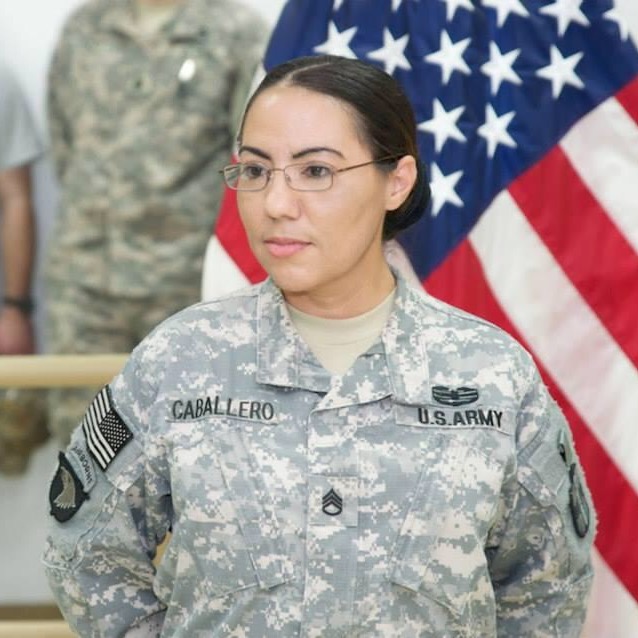
SSG Virginia Caballero, US Army Reserves (2014)
Honoring SSG Virginia Caballero, US Army Reserves, who became ill while en-route from Kuwait and then died unexpectedly shortly thereafter at a hospital in Rockford, Illinois on September 13, 2014. Apparently the commercial plane needed fuel and/or had to do an emergency landing for Virginia in Rockford, Illinois. It appears that they were on their way to Fort McCoy in Wisconsin. According to reports, Caballero was a Reservist stationed with the 452nd Combat Support Hospital, 330th Medical Brigade out of Milwaukee, Wisconsin but trained at Fort McCoy prior to her deployment to Kuwait. She served in Kuwait for roughly eight months and for some reason was coming home a month early with a high ranking travel companion. Media reports claim she wanted to surprise her family in Texas. It is believed Caballero suffered from a blood clot which was exacerbated with the altitude on the flight. She was not listed as a non-combat death by the Department of Defense but this would in fact be considered a non-combat death due to medical. The family admits in newspaper articles that a lot of the details are sketchy.
Here are the questions we have after combing through the below articles. Why was she coming home a month early accompanied by a high ranking travel companion if she was going to surprise her family? Did something happen in country prior to her boarding that plane? Was this an early surprise for family in Texas or an expedited transfer from Kuwait back to the states? The military isn’t in the business of assigning high ranking travel companions unless there is an issue. Were there any concerns about medical health prior to boarding the plane? Where were they flying to? Rockford, Illinois is only a couple hour drive from Fort McCoy. Why did they not land the plane sooner at a larger airport like Chicago when the medical issues began to develop or the fuel began to get low? Why did the DoD not send out an official notification of non-combat death considering she was on active duty orders in support of war efforts in Kuwait? Criminal Investigation Division (CID) was assigned to investigate the cause of death of Virginia. The family was asked to submit a FOIA request for the results of the investigation.
Sgt. Okan Cetinbag, 24, of Morton Grove, Illinois died on February 11, 2014 from gunshot injuries sustained on February 7th at his home on Joint Base Elmendorf-Richardson in Alaska. Sgt. Cetinbag was an infantryman with Company B, 1st Battalion, 501st Infantry Regiment. He joined the Army in January 2013, attended basic and airborne training at Fort Benning, Georgia and arrived in Alaska in June 2013. He served with the U.S. Marine Corps, including a combat tour in Afghanistan in 2010, before joining the Army. The Army reported they were investigating the case but did not appear to be cooperating with the mother of Sgt. Cetinbag who has been questioning what happened to her son. Media reports indicate that Sgt. Cetinbag was one of four servicemen from JBER found dead this month: SrA Katrina Jackson on February 15; and SSgt. Darian Miller on February 18; and SSgt. Samuel Davis on February 23.
Sgt. Okan Cetinbag was shot in the face at his home on an Alaska Army base. There were six colleagues in the house that day, plus Okan’s wife and young daughter. His mother believes they know what happened and are not telling authorities. -WGN News
Army Criminal Investigation Division (CID) Special Agent/Sgt. Joseph Peters, 24, died on October 6, 2013 of injuries sustained when enemy forces attacked his unit with an improvised explosive device (IED) in the Zhari District in Afghanistan. Sgt. Peters of Springfield, Missouri, was supporting Operation Enduring Freedom (OEF) on behalf of the 5th Military Police Battalion in Vicenza, Italy. Also lost in the blast were 1st Lt. Jennifer M. Moreno, Sgt. Patrick C. Hawkins, and Pfc. Cody J. Patterson. According to the DoD press release, for more information on Sgt. Peters, media should contact the U.S. Army Criminal Investigation Command public affairs office at 703-409-3168 or 571-305-4041.
Special Agent/Sgt Joseph Peters, US Army Criminal Investigation Command was killed in Afghanistan, October 6, 2013. He leaves behind a wife, and 20 month old son. -Fundrazr
Georgia Army National Guard Spc. Miranda Nichols, 28, was shot and killed outside of her mother’s home in Vidalia, Georgia two days after Thanksgiving on November 24, 2012. It is believed that her boyfriend of six months Army Spc. Samuel Tellu shot Miranda in an apparent domestic dispute. After Tellu shot Miranda, he jumped in his vehicle and took off. Tellu was later found in his vehicle with a fatal gunshot wound to his head. Tellu was assigned to the 3rd Combat Aviation Brigade, 3rd ID, as a petroleum specialist. Nichols served in the 3rd ID and the Georgia Army National Guard. They had both deployed overseas. The Fort Stewart Criminal Investigation Division (CID) informed the public they were assisting local authorities with the apparent murder-suicide investigation.
72% of all murder-suicides involve an intimate partner
94% of the victims of these murder suicides are female




 It is true, that our forefathers set out to create a judicial system that blindly judged the accused in a manner that afforded them the opportunity to receive a fair trial, regardless of race, sex, beliefs, political stature or societal standings. However, as shown in the Guard Recruiting Assistance Program (G-RAP) scandal, it appears today’s judicial system is more about your ability to secure good lawyers and your civil status than it is about determining guilt versus innocence.

 MILITARY JUSTICE FOR ALL