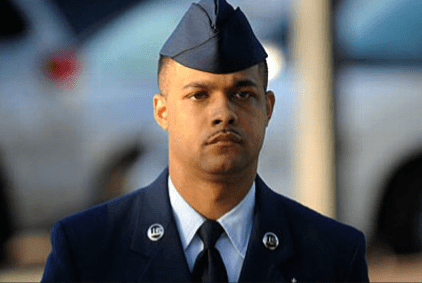
SSgt Luis Walker, U.S. Air Force (Photo: Billy Calzada/San Antonio Express-News via AP)
Air Force SSgt. Luis Walker was a basic training instructor at Lackland Air Force Base in Texas. After an investigation into allegations of improper relationships and abuse of power at the training facility in 2011, SSgt Walker was charged with sexual assault. One of his victims stated under sworn testimony that he had raped her. As a result of the court martial, he was found guilty and sentenced to 20 years in prison as opposed to the original life sentence he was faced with. Shortly after the conviction, his wife spoke out publicly claiming that her husband was innocent and that he did not get a fair trial. SSgt Walker also echoed those sentiments when asked for a statement from the Air Force Times (see quote below). A few months later, one of the victims in the trial went public with her story. Virginia Messick shared that she was raped by SSgt Walker and that it was a harrowing experience. She also later reported that she was facing battles trying to get disability benefits for Post Traumatic Stress Disorder (PTSD) from the Department of Veterans Affairs. SSgt Walker’s attempt to overturn the sexual assault conviction on appeal were eventually denied. It was only a few months later that he would be found dead in his cell at Fort Leavenworth from an apparent suicide.
“These setbacks have discouraged me and at times I have wanted to give up, but because of my family, I can not. I am a human being and an American, I deserve the right to a fair trial. There has been a lot of focus on the number of alleged victims in my case, instead of the charges against me, when in fact each charge should stand on its own.” -SSgt Luis Walker (USA Today, September 3, 2014)
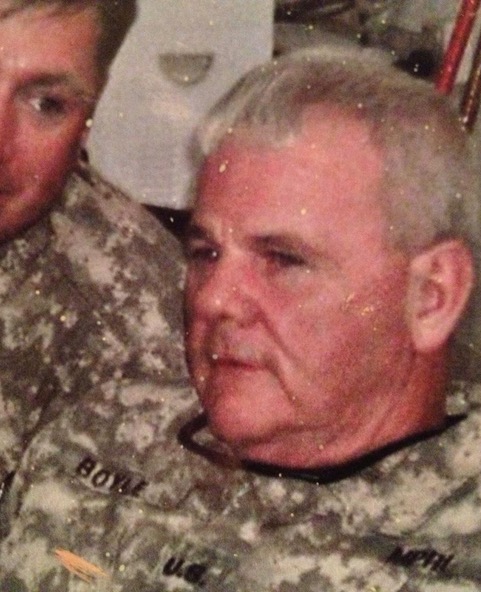
Thomas J. Boyle, Jr. died in Kandahar Province, Afghanistan on June 19, 2012.
“Obviously, suspicions are not proof of wrong doing, but Pauline Boyle has discovered enough evidence to warrant an all-out independent investigation. The problem is that asking the Army to investigate itself is asking the Fox to guard the hen house. The result will always be questionable. The Boyle family does have hard facts that clearly indicates there was an overt attempt to cover-up the circumstances of Thomas J. Boyle’s death.
Was there a military drug cartel that no one wanted to talk about, or was it a conspiracy of some of the soldiers on base to stop the change of command and keep the lieutenant colonel in command for as long as possible.”
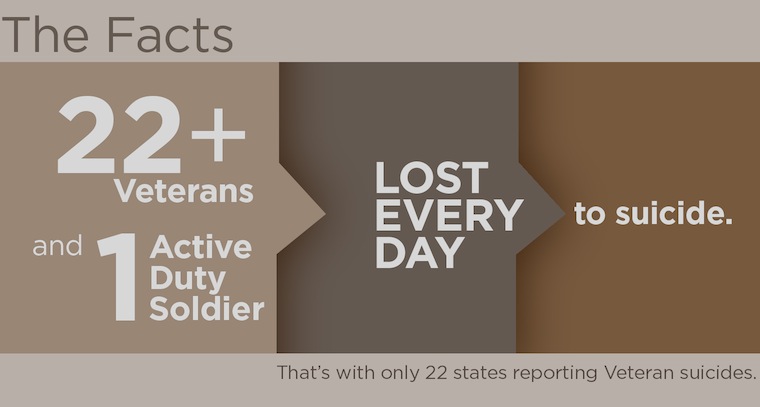
The U.S. military is grappling with a disturbing trend—soldiers are killing themselves at an alarming rate. So far this year, an average of one soldier a day is committing suicide. The suicide rate is outpacing the number of soldiers killed in Afghanistan this year by some 50-percent. -Fox 31 Denver
DENVER – The U.S. military is grappling with a disturbing trend—soldiers are killing themselves at an alarming rate. So far this year, an average of one soldier a day is committing suicide.
The suicide rate is outpacing the number of soldiers killed in Afghanistan this year by some 50-percent. And there have been high-profile cases here in Colorado.
It’s gotten so bad, that the defense department has even set up a suicide prevention office. Soldiers we talk to say the reasons for their life-threatening depression are many.
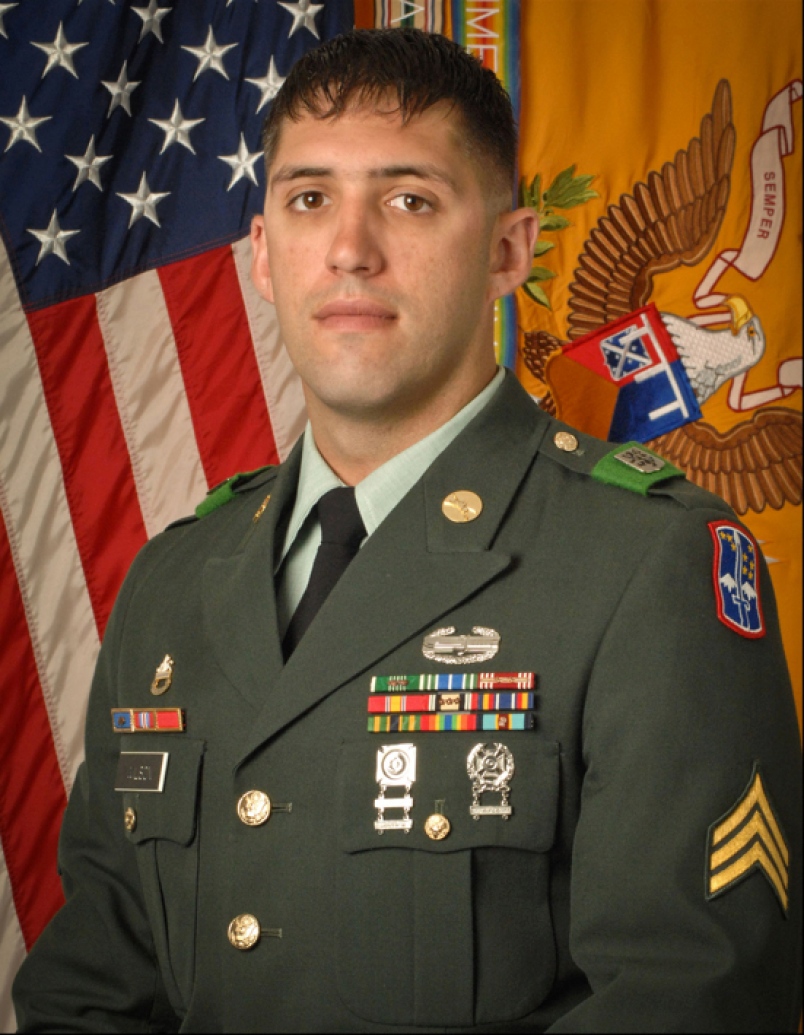
Army Staff Sgt. William Wilson III, 27, was the victim of an insider attack perpetrated by a local Afghanistan policeman in Paktika province, Afghanistan on March 26, 2012. Staff Sgt. Wilson was supporting Operation Enduring Freedom on behalf of the 2nd Battalion, 28th Infantry Regiment, 172nd Infantry Brigade in Grafenwoehr, Germany. According to Department of Defense, “His death was originally reported by the International Security Assistance Force, which characterized it as the result of gunshot wounds inflicted by an alleged member of the Afghan Local Police. ”
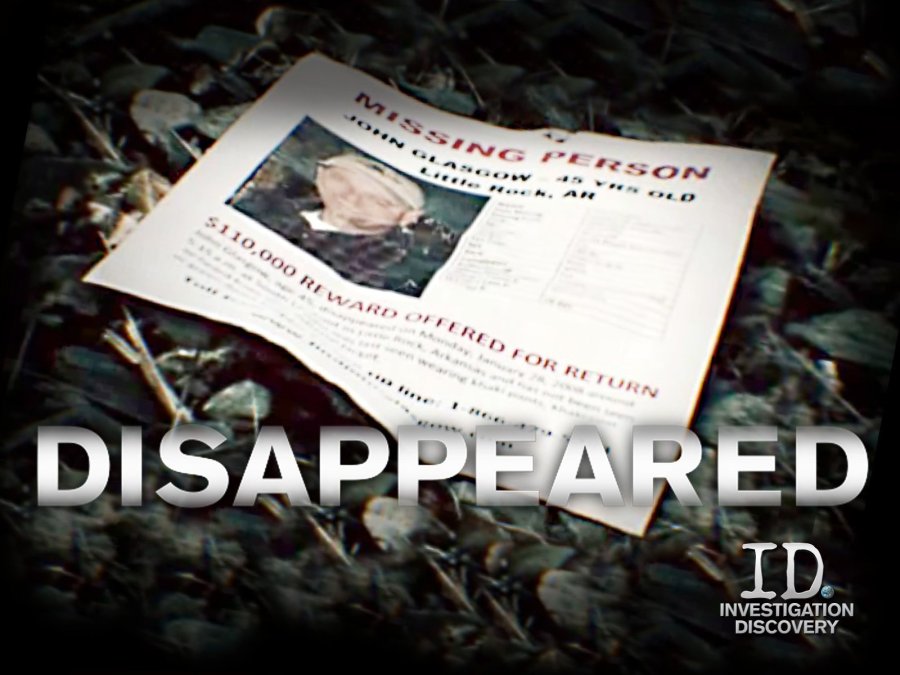
Former Marine Noah Pippin is reported missing after failing to appear at drill. -A Soldier’s Story, Disappeared (November 21, 2011)
ID Go: In August 2010, 31-year-old ex-marine Noah Pippin left Michigan to report to the California National Guard. But Noah never shows up. Police trace his path to the forests of Montana, leaving Noah’s parents to wonder why he is venturing into the wild. -A Soldier’s Story, Disappeared (S5,E8)
Editor’s note: With a cable subscription, you can download the free ID Go app and watch all of the Investigation Discovery programming at your convenience. And for those who do not have cable, you can watch “unlocked” episodes on the ID Go app including the latest premieres. Download the ID Go app and binge away. For those who prefer commercial free programming during your binge session, Prime Video has an ID channel: ‘True Crime Files by Investigation Discovery” available for $2.99 a month. It’s a compilation of older seasons but totally worth the cost if you are a true crime addict.
Court documents show triple murder suspect, Roy Murry, an Iraq war veteran, suffered from post traumatic stress disorder, and now local veterans coping with PTSD are speaking out, wanting to clear the air that, just because you have it, it does not make you a threat to the community. -KXLY 4
“A man opens fire in a national park, killing a ranger who was attempting to stop him after he blew through a vehicle checkpoint. A second man is suspected in the stabbing deaths of four homeless men in Southern California.
Both men, U.S. military veterans, served in Iraq — and both, according to authorities and those who knew them, returned home changed men after their combat service.”
The U.S. military is grappling with a disturbing trend—soldiers are killing themselves at an alarming rate. So far this year, an average of one soldier a day is committing suicide. The suicide rate is outpacing the number of soldiers killed in Afghanistan this year by some 50-percent. -Fox 31 Denver
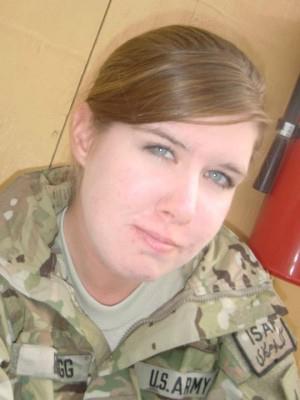
Army Specialist Mikayla Bragg died of a non combat death in Khowst province, Afghanistan on December 21, 2011. Spc. Bragg was supporting Operation Enduring Freedom on behalf of the 201st Brigade Support Battalion, 3rd Brigade Combat Team, 1st Infantry Division in Fort Knox, Kentucky. The Army ruled that Spc. Bragg’s cause of death was suicide. After an investigation it was revealed that commanders at Fort Knox failed to properly track Spc. Bragg as a “high-risk” soldier who could potentially hurt herself or others before she was cleared to deploy to Afghanistan. The Army investigators also made three recommendations in the report.
Mental-health providers stateside should share more information about high-risk soldiers with mental-health providers in war zones. Camp Salerno’s behavioral-health officer said she had been unable to get mental-health records for Bragg because of privacy laws.
Commanders should develop better procedures to ensure personnel data is not lost while transferring soldiers between units.
No soldier, regardless of gender, should be stationed in a guard tower alone.
U.S. Army Ranger John Needham, who was awarded two purple hearts and three medals for heroism, wrote to military authorities in 2007 reporting war crimes that he witnessed being committed by his own command and fellow soldiers in Al Doura, Iraq. His charges were supported by atrocity photos which, in the public interest, are now released in this video. John paid a terrible price for his opposition to these acts. His story is tragic. –On the Dark Side in Al Doura (December 17, 2011)
After watching the 2011 documentary ‘On the Dark Side in Al Doura’ which profiles the case of Army Private John Needham, one can clearly observe the similarities to ‘The Kill Team’ PBS documentary released in 2014. On the Dark Side in Al Doura interviewed Michael Needham, the father of John Needham, who was an Army whistleblower from Fort Carson, Colorado and reported witnessing war crimes and atrocities in Iraq; The Kill Team profiled Adam Winfield, an Army whistleblower from Fort Lewis, Washington who witnessed and tried to report the same war crimes and atrocities in Afghanistan. For the sake of preservation, both John Needham and Adam Winfield admitted feeling pressured to conform or risk their own lives if they didn’t. They both felt like they were being set up to die or participate in the war crimes. Both soldiers at times felt like suicide was their only way out because there was no safe place for them to report overseas nor could they escape the situation. If they made it out of the war zone alive, the return home didn’t fair well for them. The PBS documentary ‘The Wounded Platoon’ released in 2010 reveals the impacts the wars overseas had on Fort Carson soldiers. After watching these three documentaries, it’s clear why our soldier’s combat experiences traumatized and changed some of them. They not only had to fight a credible threat on the battlefields but some were betrayed by the very team they depended on for their lives.
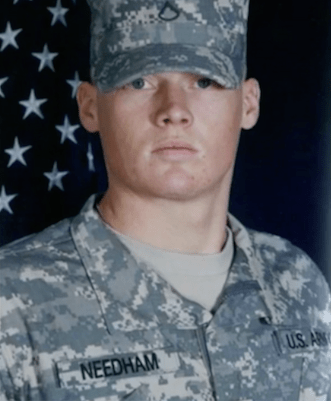
Michael Needham takes us through the series of events that occurred in the course of John’s short Army career. He shared how John was the fifth generation in the family to fight in a war. John volunteered to join the Army in the spring of 2006, went to Fort Benning, Georgia for training, and then got stationed at Fort Carson. John was an Army Ranger assigned to the 212th, 2nd Combat Team, 12th Regiment, 2nd Infantry Division. He was part of the infamous team known as the ‘Lethal Warriors’ which now appears to be disbanded. Part of his initiation into his new band of brothers was fighting other soldiers to determine where one fell in the pecking order. John held his own in the fights and was respected for his wins. According to John, the soldiers that didn’t fair so well in the fights were ‘smoked’ by leadership and peers, which ultimately forced them to leave, quit, or commit suicide. In October of 2006 John was deployed with his Fort Carson team to Al Doura, Iraq. His team was assigned to the Quarter Cav which was known for having some of the deadliest fights in the Iraq war.
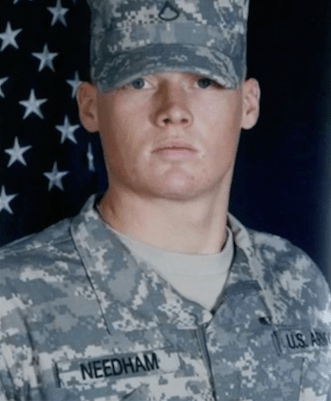
Private John Needham, U.S. Army
John was a good soldier. He worked hard, saved lives in Iraq, and was awarded three medals for heroism and two Purple Hearts. John excelled as part of team, was brave, and his resilience was admirable. But during the course of John’s deployment, he witnessed war crimes and other atrocities committed by leadership and his fellow soldiers that affected his morale. John would also admit that initially he wasn’t quiet about it and when he did question superiors, he was told he didn’t have the right to question leadership. He didn’t dare report the war crimes via e-mail or telephone because he knew leadership could monitor everything. So for the sake of preservation and life’s sake, he did what he had to do to get by and stay alive. John would share that the Army was short of personnel so most of the soldiers got driven into the ground and deprived of sleep. After awhile John felt that he was forced into committing war atrocities that were illegal but feared if he didn’t do it, he would become a liability to the team and ultimately a casualty of his own people.
One night John was sent out on a mission with a Lieutenant (who did not commit war crimes yet remained silent). John thought this was unusual because they didn’t usually get sent out in pairs. They were ambushed by three shooters in the middle of the night who were determined to see them dead. When the shooting began, John pushed the Lieutenant to safety and kept the shooters at bay. He shot every round he had and when he was almost out of ammunition, he called the 212th for back-up on the radio but nobody answered him. Luckily another team was nearby who did answer him and was able to extract the soldiers from the situation and save their lives. It would be this incident that would break John’s spirit. He immediately suspected that he and the other soldier were sent on this mission to be killed. When he got back to the base, he began yelling “Why did you set us up?” And “If you want to kill me, kill me to my face!” But nobody acknowledged him so he went back to his tent where he decided that he would commit suicide. John was exhausted, irate, and he saw no way out. He didn’t want to live anymore. He felt that committing suicide was his only way out. John put a handgun to his head but just as he got ready to pull the trigger, his roommate dove and pushed the gun away from his head. The gun discharged and put a hole in the wall. Soldiers immediately began ascending upon the area. According to John, once leadership learned what happened, they held him down and beat him then locked him in captivity in a small room. The Battalion Commander was the one who kept John captive yet he didn’t press any formal charges.
John’s father Michael learned through John’s friends in Afghanistan that John was being held captive by the Battalion Commander. They were concerned about him. John’s family was already concerned about John’s earlier e-mails and posts on MySpace because it sounded like he had given up, which was not like him. With this information Michael Needham contacted Army commands, Fort Carson, Congressional leaders and the Army Inspector General (IG). He reports that the only office that took him seriously at the time was the IG. Michael was trying to save his son’s life. He told the IG that he didn’t want him to die. The IG’s office shared a list of rights for both John and Michael. And it was at this time Michael learned that he had third party rights and could intervene and act on John’s behalf. Michael was finally able to get in touch with the Battalion Commander only to learn that John was being treated like a criminal. The Battalion Commander informed Michael that John committed crimes and was being sent to prison in Kuwait. But Michael was able to intervene and get the Command to send him to medical instead. Medical determined that John was severely injured both physically and mentally. He had significant back injuries from the multiple explosions and blasts, shrapnel in his body, Traumatic Brain Injury, and Post Traumatic Stress Disorder. Army medical in Iraq referred John to medical in Germany and from there he would be sent to Walter Reed Army Medical Center in the states. But not before the Battalion Commander would put up one more roadblock. Instead, Michael Needham won this battle and John was flown to Germany.
Eventually, John was sent to Ward 54 which is the psychiatric ward at Walter Reed. Michael shared that John appeared to like the psychiatric help he was getting. A month into John’s stay at Walter Reed, he was informed that the Iraq Battalion Commander contacted the 212th Command in Colorado and requested that John be sent back to Fort Carson where he was facing criminal charges including unlawful discharge of a weapon. They were making him go and sent armed guards to accompany him back to Fort Carson. Michael Needham tried to intervene with the 212th at Fort Carson but they said they couldn’t do anything because they had orders from the Battalion Commander. John was sent back to Fort Carson and the harassment he endured in Iraq continued with the 212th in Colorado. John shared that they mentally tortured him, banged on his barracks door, stole his things, and isolated him. It was at this time Michael elicited the help of a veteran advocate Andrew Pogany who went to the command in Colorado and held these people personally accountable. Andrew helps soldiers in John’s situation because he understands how important it is to intervene. John could not get the kind of help that he needed at Fort Carson. Michael shared that the soldiers could see a professional once a week if they were suicidal and once a month if they were not. John’s father wanted him transferred to a Naval Medical Center in San Diego for intensive treatment and so he could be closer to home. Andrew helped make that happen.
Michael began to understand the impacts the war had on his son after John got back to California. John couldn’t handle driving above 35 mph, was suspicious of trash on the side of the road, and was easily startled by loud noises. He could not function in public and suffered with what is known as flashbacks. The Naval Medical Center in San Diego recommended that John get surgery on his back right away. They warned him that he could become paralyzed if he didn’t get the surgery. In the meantime Johns father spoke candidly with one of the Navy doctors about the treatment John received both in Iraq and at Fort Carson. He reiterated that he was concerned about his well being and asked him to help him find a way to prevent John from being sent back to Fort Carson, Colorado. Michael Needham feared that if John got sent back to Fort Carson that he would not return. This doctor agreed to help John. And Andrew Pogany recommended that John report the war crimes to the Army in an effort to protect John from being complicit and implicated in the future. John reported to the Army that he witnessed both leadership and peers killing innocent Iraqi civilians during the October 2006 to October 2007 timeframe in and around Al Doura. It wasn’t long after John made the report that all the charges against him were dropped and Fort Carson gave the necessary approval to transfer him to Balboa Naval Command. John went in front of the medical board and was medically retired for Post Traumatic Stress Disorder, Traumatic Brain Injury, and back injuries. He was discharged honorably from the Army. The Army investigated John’s claims but concluded that no war crimes were committed.
Michael and John won a lot of battles with the US Army but soon they would lose the war. Just days after John was discharged from the Army, he would be accused of beating his new girlfriend to death with his bare hands. John Needham was charged with the murder of Jacqwelyn Villagomez and jailed for ten months until his family raised enough money to get him out on bail. John was not given treatment while jailed so the family was motivated to get him out so he could get the treatment he needed. John did in fact follow through with getting treatment and he learned a lot about himself in the process. He spent some time on camera talking about how the combat stress and the betrayal from his team impacted him. He talked about how he didn’t realize the significant impacts from Post Traumatic Stress Disorder and Traumatic Brain Injury. John recognized how PTSD and TBI did in fact play a role in his fight or flight response mechanisms and that it may be because these conditions went untreated that he disocciated, snapped and beat his girlfriend to death. The two were in a heated argument after Jacqwelyn attacked one of John’s female friends. Both of them were volatile but unfortunately there were no witnesses to the event as John’s friend was outside the home calling the police to report Jacqwelyn. While John was awaiting trial, he went to Arizona to get another surgery and visit with his mom. On February 19, 2010 following treatment at the Department of Veterans Affairs, John would be found dead in his room from an overdose on painkillers. The cause of death at autopsy was considered undetermined and it is unclear if John accidentally overdosed or committed suicide.
Brig. Gen. Stephen Xenakis, M.D. (Ret.), a former top military psychiatrist who until recently was a consultant to the Joint Chiefs of Staff, told us: “[TBI ]most sensitively affects executive functioning, that part of the brain that we use for judgment and we use for decision making … when we are in situations of intense emotion. So if a person is affected neurologically … they don’t have the controls that they had before. … They can’t think as clearly. …They are really vulnerable to just reacting, overreacting, particularly maybe doing something that they had done when they’d been in combat.” –The Wounded Platoon
As a parent, Michael Needham has questions for the Army. Why don’t they even recognize the problem? Why don’t they take care of the soldiers? And why did they leave his son John Needham behind? The documentary ‘On the Dark Side in Al Doura’ concludes with the reminder that since the Patriot Act was passed and Dick Cheney declared that we needed to go into the shadows, the definition of torture has been blurred. The Abu Ghraib prisoner torture and abuse scandal erupted under the Bush administration in 2003 but no war crimes have been investigated under President Barack Obama’s administration. If the rule of law has been lost, what do we have? Our military personnel have a responsibility to abide by the rules established by the Geneva Conventions. John Needham and Adam Winfield both reported witnessing innocent civilians murdered by their fellow leadership and peers in Iraq and Afghanistan. They both also shared the impact the crimes had on their mental health and morale. They wished they could have reported the crimes to someone who would have listened and understood that their lives were in danger. We can learn a lot from John Needham and Adam Winfield; they have experienced what it’s like to be a whistleblower in the US Army. They have clearly illustrated what toxic leadership in the Army looks like and how whistleblowers in the US military have nowhere to turn.


 MILITARY JUSTICE FOR ALL