If you have any information that could help this family find answers, please contact us at militaryjusticeforall@gmail.com. Thank you.
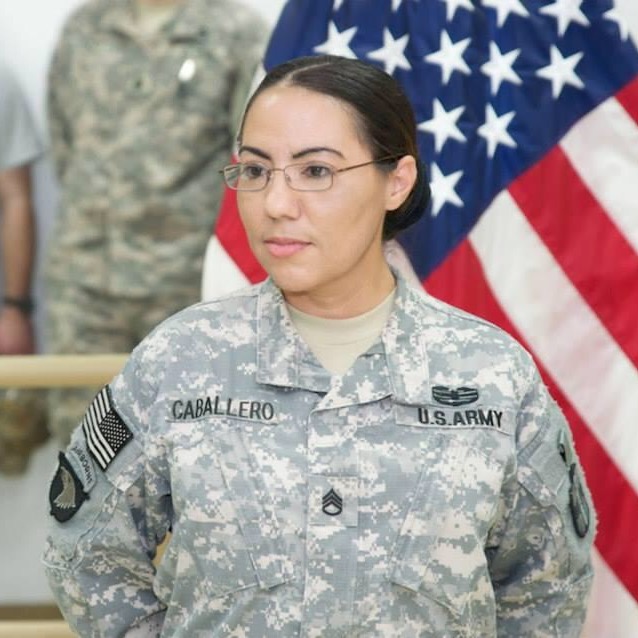
SSG Virginia Caballero, US Army Reserves (2014)
Honoring SSG Virginia Caballero, US Army Reserves, who became ill while en-route from Kuwait and then died unexpectedly shortly thereafter at a hospital in Rockford, Illinois on September 13, 2014. Apparently the commercial plane needed fuel and/or had to do an emergency landing for Virginia in Rockford, Illinois. It appears that they were on their way to Fort McCoy in Wisconsin. According to reports, Caballero was a Reservist stationed with the 452nd Combat Support Hospital, 330th Medical Brigade out of Milwaukee, Wisconsin but trained at Fort McCoy prior to her deployment to Kuwait. She served in Kuwait for roughly eight months and for some reason was coming home a month early with a high ranking travel companion. Media reports claim she wanted to surprise her family in Texas. It is believed Caballero suffered from a blood clot which was exacerbated with the altitude on the flight. She was not listed as a non-combat death by the Department of Defense but this would in fact be considered a non-combat death due to medical. The family admits in newspaper articles that a lot of the details are sketchy.
Here are the questions we have after combing through the below articles. Why was she coming home a month early accompanied by a high ranking travel companion if she was going to surprise her family? Did something happen in country prior to her boarding that plane? Was this an early surprise for family in Texas or an expedited transfer from Kuwait back to the states? The military isn’t in the business of assigning high ranking travel companions unless there is an issue. Were there any concerns about medical health prior to boarding the plane? Where were they flying to? Rockford, Illinois is only a couple hour drive from Fort McCoy. Why did they not land the plane sooner at a larger airport like Chicago when the medical issues began to develop or the fuel began to get low? Why did the DoD not send out an official notification of non-combat death considering she was on active duty orders in support of war efforts in Kuwait? Criminal Investigation Division (CID) was assigned to investigate the cause of death of Virginia. The family was asked to submit a FOIA request for the results of the investigation.
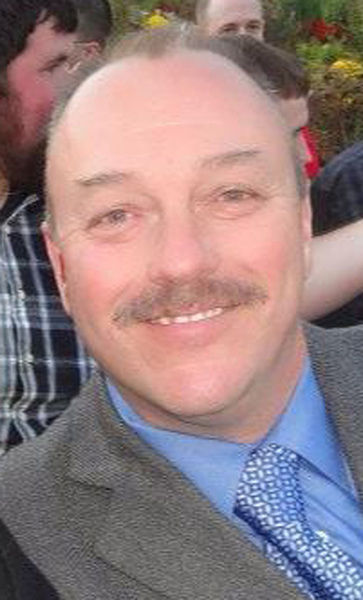
Air National Guard Master Sgt. David Poirier, 52, died from a non-combat related incident on February 28, 2014. There was no location noted in the DoD press release but MSgt. Poirier was assigned to the Al Udeid Air Base in Qatar at the time of his passing. According to Sea Coast Online, MSgt. Poirier was deployed to Southwest Asia when his death occurred but the Air National Guard was not able to release the country due to host nation sensitivities. MSgt. Poirier was a post master from North Smithfield, Rhode Island. MSgt. Poirier was supporting Operation Enduring Freedom on behalf of the 157th Operations Support Squadron at Pease Air National Guard Base in New Hampshire. On March 5, 2014, news reports indicated that MSgt. Poirier died of a heart attack while serving overseas.
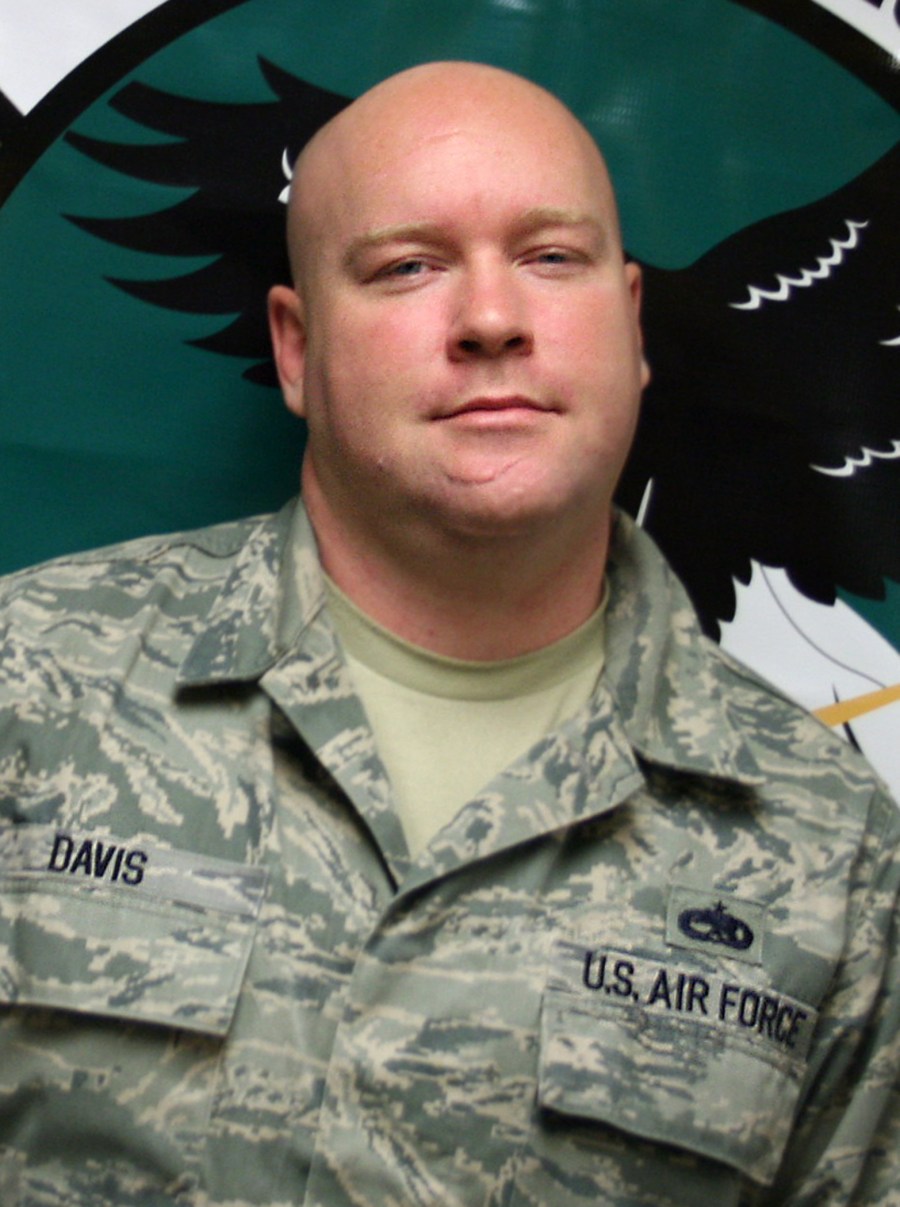
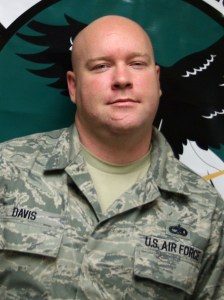
Air Force SSgt. Samuel Davis, 33, died at his off base home in Alaska on February 23, 2014. According to his family, he died from complications after a back surgery. SSgt. Davis was assigned to Joint Base Elmendorf-Richardson (JBER) in 2011 where he worked as an aerospace maintenance craftsman with the 703rd Aircraft Maintenance Squadron. Media reports indicate that SSgt. Davis was the fourth serviceman from JBER found dead this month: Army Sgt. Okan Cetinbag, February 11; SrA Katrina Jackson on February 15; and SSgt. Darian Miller on February 18.
Hearing is Gillibrand’s First As Chair Of Senate Armed Services Subcommittee On Personnel – Has Been Leading The Fight To End Sexual Violence In Military
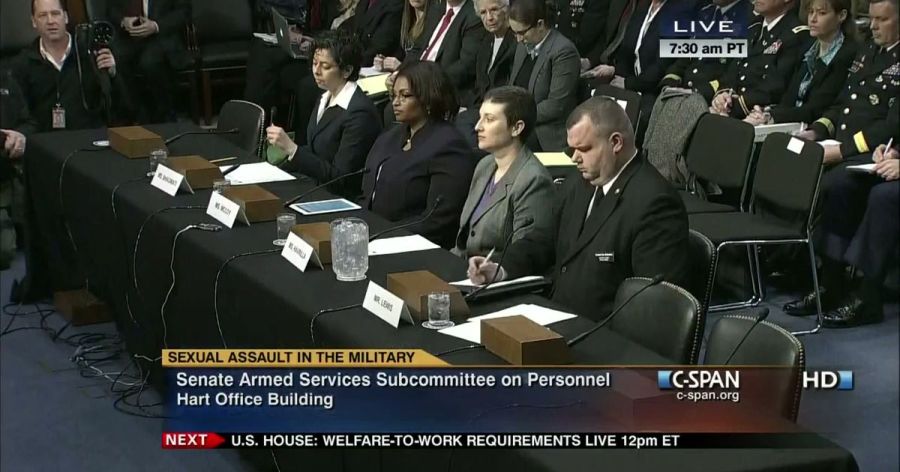
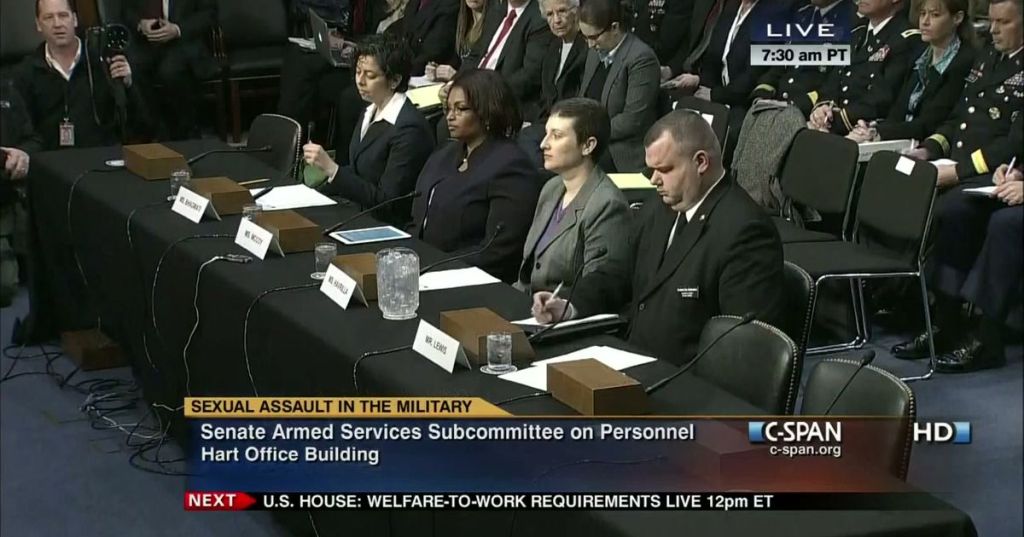
Washington, D.C. – U.S. Senator Kirsten Gillibrand released the following prepared remarks of her opening statement at today’s Senate Armed Services Subcommittee on Personnel hearing examining sexual assault in the military:
“It is an honor and privilege to Chair this hearing of the Personnel Subcommittee this morning. I want to thank the Ranking Member of this Subcommittee, Senator Lindsey Graham, for his support and working with me to move this hearing forward as quickly as possible.
“I know that all of our colleagues on the Armed Services Committee share our deep commitment to improving the quality of life of the men and women who serve in our all-volunteer force on active duty, or in the National Guard and Reserves, their families, military retirees, and Department of Defense Civilian personnel.
“And that is why this hearing today is so important to me personally…and to thousands of servicemembers…and their families across the country.
“The issue of sexual violence in the military is not new. And it has been allowed to go on in the shadows for far too long. The scourge of sexual violence in the military should be intolerable and infuriating to us all. Our best, brightest, and bravest join our armed forces for all the right reasons – to serve our country, protect our freedom, and keep America safe.
“The United States has the best military in the world and the overwhelmingly vast majority of our brave men and women serving in uniform do so honorably and bravely. But there is also no doubt that we have men and women in uniform who are committing acts of sexual violence and should no longer be allowed to serve.
“Too often, women and men have found themselves in the fight of their lives not in the theater of war – but in their own ranks, among their own brothers and sisters, and ranking officers, in an environment that enables sexual assault.
“And after an assault occurs, an estimated 19,000 sexual assaults happened in 2011 alone according to the Defense Department’s own estimates…some of these victims have to fight all over again with every ounce of their being just to have their voice heard…their assailant brought to any measure of justice… and the disability claims they deserve fulfilled. Congress would be derelict in its duty of oversight if we just shrugged our shoulders at these 19,000 sons and daughters…husbands and wives…mothers and fathers…and did nothing. We simply have to do better by them.
“When brave men and women volunteer to serve in our military they know the risks involved. But sexual assault at the hands of a fellow service member should never be one of them.
“Because not only does sexual assault cause unconscionable harm to the victim — sexual violence is reported to be the leading cause of post-traumatic stress disorder among women veterans — but it destabilizes our military, threatens unit cohesion and national security. Beyond the enormous human costs both psychologically and physically, this crisis is costing us significant assets – making us weaker both morally and militarily.
“Already, this Committee and the Pentagon took some first steps on this issue as part of last year’s National Defense Authorization bill that President Obama signed into law. While obviously our work is not done, I am hopeful that we can build on these initial changes which include:
Ensuring that all convicted sex offenders in the military are processed for discharge or dismissal from the Armed Forces regardless of which branch they serve in;
Reserving case-disposition authority for only high-ranking officers in sexual assault cases;
Pushing the Pentagon to lift the combat ban that prevents women from officially serving in many of the combat positions that can lead to significant promotion opportunities. By opening the door for more qualified women to excel in our military, we will have increased diversity in top leadership positions, improving response from leadership when it comes to preventing and responding to sexual violence;
And an amendment introduced by my colleague Senator Jeanne Shaheen and based on my legislation, the MARCH Act, means that troops who become pregnant as a result of an act of rape no longer have to pay out of pocket to have those pregnancies terminated.
“Concerning our first panel of witnesses, I want to salute each of you for your courage today in telling your very painful and personal stories. It is my hope and belief that by committing this selfless act you are encouraging others to step forward and are also helping to prevent other crimes from going unpunished.
“We have a duty to you, and the thousands of victims you represent, to examine whether the military justice system is the most effective and fairest system it can be.
“Despite some very dedicated JAG officers, I do not believe the current system adequately meets that standard. The statistics on prosecution rates for sexual assaults in the military are devastating. Of the 2,439 unrestricted reports filed in 2011 for sexual violence cases – only 240 proceeded to trial. Nearly 70 percent of these reports were for rape, aggravated sexual assault or non-consensual sodomy.
“A system where less than 1 out of 10 reported perpetrators are held accountable for their alleged crimes is not a system that is working. And that is just reported crimes. The Defense Department itself puts the real number closer to 19,000! A system where in reality less than 2 out of 100 alleged perpetrators are faced with any trial at all is clearly inadequate and unacceptable.
“My view is that emphasizing institutional accountability and the prosecution of cases is needed to create a real deterrent of criminal behavior. The system needs to encourage victims that coming forward and participating in their perpetrator’s prosecution is not detrimental to their safety or future, and will result in justice being done. Because currently, according to the DOD, 47 percent of service members are too afraid to report their assaults, because of fear of retaliation, harm or punishment. Too many victims do not feel that justice is likely or even possible.
“We need to take a close look at our military justice system, and we need to be asking the hard questions, with all options on the table, including moving this issue outside of the chain of command, so we can get closer to a true zero tolerance reality in the Armed Forces. The case we have all read about at Aviano Air Base is shocking, and the outcome should compel all of us to take the necessary action to ensure that justice is swift and certain, not rare and fleeting.
“I had the opportunityto press Secretary Hagel on the issue of sexual violence in the military during his confirmation hearing. Secretary Hagel responded by saying, ‘I agree it is not good enough just to say zero tolerance. The whole chain of command needs to be accountable for this.’
“I could not agree more. I was very pleased with the Secretary’s public statement earlier this week that he is open to considering changes to the military justice system as well as legislation to ‘ensure the effectiveness of our responses to the crime of sexual assault.’
“It is with this spirit as our guide that I look forward to hearing from our witnesses.
“After Ranking Member Graham makes his opening remarks, we will hear testimony from my colleague from California, Senator Barbara Boxer who has been a leading voice on this issue. In last year’s Defense bill she successfully included an amendment that prohibits any individual who is convicted of a felony sexual assault from being issued a waiver to join the military.
“We will then have the following witnesses who have either been the victims of sexual assault while serving in the military, or are very knowledgeable advocates for addressing the issue of sexual assaults in the military:
Anu Bhagwati is Executive Director and Co-Founder of the Service Women’s Action Network. Anu is a former Captain and Company Commander, she served as a Marine officer from 1999 to 2004. While serving, Anu faced discrimination and harassment as a woman in the military, and has borne direct witness to the military’s handling of sexual violence.
BriGette McCoy, former Specialist in the U.S. Army. BriGette served in the U.S. Army from 1987 to 1991. She was just eighteen years old when she signed up to serve her country in the first Gulf War. While stationed in Germany from 1988 to 1991, she was sexually assaulted by a non-commanding officer.
Rebekah Havrilla, former Sergeant in the U.S. Army. Rebekah served in the U.S. Army from 2004 to 2008. She was the only female member of a bomb squad in eastern Afghanistan and was attacked by a colleague at Salerno Forward Operating Base near the Pakistani border during her last week in the country in 2007.
Brian Lewis, former Petty Officer Third Class, US. Navy. Brian enlisted in the U.S. Navy in June of 1997. During his tour aboard USS Frank Cable (AS-40), he was raped by a superior non-commissioned officer and forced to go back out to sea after the assault.
“I encourage you to express your views candidly and to tell us what is working and what is not working. Help us to understand what we can do to address this unacceptable problem of sexual assaults in the military.
“Later this afternoon at 2:00 p.m., we will have a third panel of witnesses from the Department of Defense, and the military services, including the Coast Guard. I want to acknowledge that many of those witnesses are here this morning to listen to the critically important testimony from our first and second panels and I would like to thank them for their participation.”
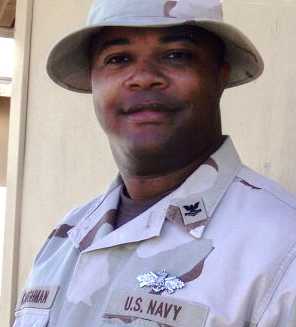
Navy Petty Officer 1st Class Sean Caughman, 43, died of a non combat related injury on February 15, 2010 in Kuwait. Petty Officer 1st Class Caughman was supporting Operation Iraqi Freedom on behalf of the Naval Mobile Construction Battalion Twenty-Two, a Seabee unit at the Fort Worth Naval Air Station in Texas.
“A Seabee supporting Operation Enduring Freedom died Tuesday in Kuwait, the Defense Department announced Thursday. His cause of death was not provided, but the Naval Safety Center Web site said an E-6 died after a PT run.” -Honor the Fallen
Sgt Carlos Gill, 25, US Army, died of a non combat related illness at Walter Reed Army Medical Center on January 26, 2010 after being evacuated from Kandahar Air Field, Afghanistan. Sgt. Gill was supporting Operation Enduring Freedom on behalf of the 2nd Battalion, 1st Infantry Regiment, 5th Stryker Brigade Combat Team, 2nd Infantry Division in Fort Lewis, Washington.
Sgt. 1st Class Michael Shannon, 52, US Army, died of a non combat related incident on January 17, 2010 in Kabul, Afghanistan. Sgt. 1st Class Shannon was supporting Operation Enduring Freedom on behalf of the Army Reserve assigned to the International Security Assistance Force Joint Command in Kabul, Afghanistan. According to the Department of Defense, the circumstances surrounding the incident are under investigation.
“Shannon, 52, of Canadensis, suffered a heart attack Jan. 17 while serving in Operation Enduring Freedom in Afghanistan. He was the first known soldier from Monroe County to die in Afghanistan.” -Pocono Record


 MILITARY JUSTICE FOR ALL