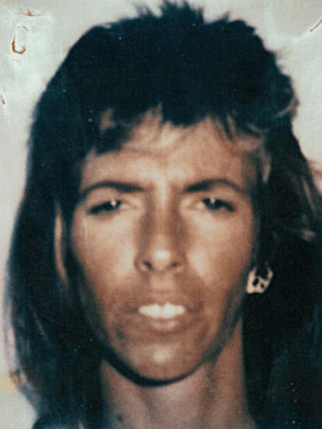
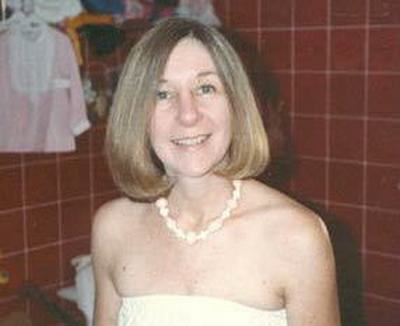
September 25, 1988: Mary Ann Wells, 31, San Diego, California
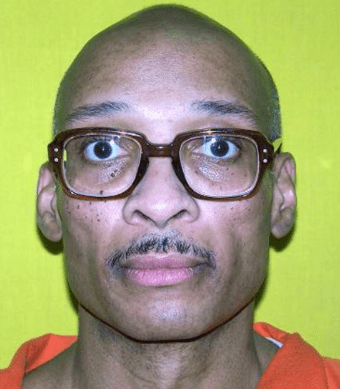
Marine veteran Andrew Urdiales is accused of murdering eight women from 1986 to 1996, five in California and three in Illinois, and raping and abducting 19 year old Jennifer Asbenson who escaped and survived. Urdiales was indicted for three murders in Illinois and was sentenced to death but the death sentence was commuted after Governor Pat Quinn of Illinois abolished capital punishment in 2011. Instead he received three life sentences for the murders of Laura Uylaki, Cassandra Corum, and Lynn Huber. A gun confiscated in a separate incident linked the three murders in Illinois together and during an interrogation, Urdiales admitted in detail to five cold case murders in California too.
After years of legal wrangling, Urdiales was eventually extradited to California and indicted in 2009 on five counts of first degree murder. He was accused of killing Robbin Brandley, Julie McGhee, Mary Ann Wells, Tammie Erwin, and Denise Maney while stationed at Camp Pendleton Marine Corps base. On May 23, 2018, Andrew Urdiales was convicted of five murders by a jury that deliberated for about a day before recommending in June 2018 that he be sentenced to death for each of the five murders. On November 2, 2018, corrections officials said they found Urdiales unresponsive during a security check at San Quentin State Prison; former Marine and serial killer Andrew Urdiales died by suicide.
In the News:
The murders occurred when Andrew Urdiales was stationed at various Marine Corps facilities in Southern California. -CBS Los Angeles (October 5, 2018)
On January 6, 1987, Army soldier Ronald Gray raped, sodomized, robbed, and murdered civilian Kimberly Ann Ruggles, 23, in Fayetteville, North Carolina. Kimberly, who was a taxi driver, was dispatched to pick up Ronald Gray at his residence. In the early morning hours of January 7th, Fort Bragg military police officers discovered Ruggles’ empty cab parked at the edge of the woods on post. They discovered Kimberly’s nude body a short distance away. She had been raped, sodomized, beaten, and stabbed seven times. Kimberly’s mouth was gagged with a cloth belt that matched pants found in Gray’s possession only hours earlier. Ronald Gray’s fingerprints were also on the interior door handle of Ruggles’ taxi and Ruggles’ fingerprints were found on money in Gray’s possession. In addition, Gray’s footprints were found at the scene of the crime. In 1988, Ronald Gray was found guilty by the military courts of the premeditated murders of Kimberly and Private Laura Lee Vickery-Clay, and the attempted premeditated murder of Private Mary Ann Lang Nameth. On April 12, 1988, Ronald Gray was sentenced to death, given a dishonorable discharge, total forfeitures, and a reduction to Private E-1. In 2008, President George Bush gave the final approval for the military execution of Ronald Gray. In December 2016, media reports indicated that the military is moving forward with the lethal injection execution of Ronald Gray.
According to CNN, the US military could soon execute someone for the first time since 1961. Ronald Gray, a former Army soldier, has been on military death row at Fort Leavenworth since 1988 when he was convicted of killing five women and raping several others in 1986 and 1987 while stationed at Fort Bragg in North Carolina. A civilian court gave him eight life sentences, but a military court sentenced him to death. Last week, a judge ruled Gray’s stay in prison was no longer in effect and denied any further stays. Following the ruling, an execution date for Gray could be announced as soon as next month. –Wochit News
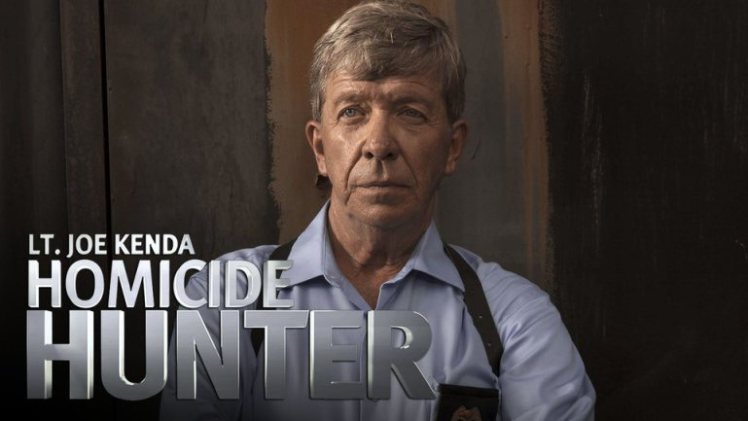
When 22 year-old Micki Filmore is found raped and murder in her apartment, detective Kenda focuses his investigation on her activities the previous night. Micki was seen dancing with a man who then paid a late night call to her door. -A Killer Always Rings Twice, Homicide Hunter (S1, E3)
Colorado Springs is the home of five military bases made up of about 40,000 personnel. A lot of them live off-base in local apartment units. On July 19, 1986, as Army Spc. Tracy Spencer was walking by, he noticed his neighbor Micki Filmore was laying lifeless on the floor in her apartment. He was alarmed and ran to his wife Lisa to seek help. She claims she went through the window of the apartment because of her own concern for Micki and discovered that she was in fact dead. They called the police. Lt. Joe Kenda of the Homicide Unit at the Colorado Springs Police Department was assigned to investigate the case. Kenda deduced from the observation of the crime scene that there did not appear to be any struggle, the victim’s wallet and cash were present, and she was naked with her legs open and bruising around her neck. He suspected Micki Filmore was raped and strangled in a quick and brutal attack.
Joe talked about the crimes of rape and murder for a bit. He talked about how rape is unfortunately a very common crime but he also noted that rape and murder is not that common. Lt. Kenda educated the public about the fact that rape and sexual assault is mostly a punishment of women. And in this particular case, the perpetrator surprised Micki Filmore while she was in bed. His only purpose was to rape and kill her. While Joe waited on the results of the autopsy, he tried to figure out the modus operandi of this particular offender because he would strike again. Joe wondered why it was so important for this person to get in and out of the apartment quickly. Was he a local and making sure that nobody saw and recognized him? Neighbors Lisa and Tracy Spencer reported they saw Micki the night before; she was happy, eating pizza, and nothing appeared out of the ordinary.
Joe canvassed the neighbors in the apartment complex and learned that Micki was having troubles: he heard from neighbors that her fiancé left her, she was pregnant, and broke but nobody knew who the father of the child was. One neighbor told Lt. Kenda that he went to a night club with her the night before. He claimed that while they were there, she saw someone she knew. She left the club with her neighbor around 2 a.m. but she did give a piece of paper to the friend she ran into at the club. The neighbor claimed they talked for a little bit and then went their separate ways. After lying down, the neighbor heard knocking on her door. He looked out briefly and saw the same man from the club standing there. Another neighbor said she was awoken by a loud scream and then a thumping noise around 3:45 a.m. She assumed whoever it was they were fighting. Joe still had little evidence to go on but the autopsy helps tell a story.
The autopsy revealed that Micki Filmore’s last moments were met with violence, anger, and rage. And she had engaged in sexual relations within the last twelve hours. Despite what her neighbors said, she was not pregnant and there were no drugs or alcohol in her system. Lt. Kenda learned Micki was twenty-two years old and originally from a rural community in North Carolina. She joined the Army straight out of high school, did a three year tour of duty, traveled the world, and her service ended in December 1985. She was looking forward to leaving to be with her fiancé in a few weeks. Lt. Kenda contacted the fiance and learned that he had not abandoned Micki. The fiance was finalizing a divorce so he could marry Micki and he could verify his whereabouts at the time of the murder. The fiance shared he asked his friend Frank Lynch to look out for Micki while he was gone; but now he had concerns that maybe he was involved. This gave Kenda a new lead and potentially a new suspect.
Kenda met with Frank Lynch who denied any involvement in the murder and could account for himself on the night in question. As a result, Kenda closed out Lynch and in the meantime got a phone call from DiCarlo Dowden. DiCarlo was the man at the club that Micki gave a piece of paper to and the same man suspected of showing up at her apartment the night of the murder. DiCarlo admitted that he ran into Micki at the club, they chatted, they danced, she told him she was not ‘with’ her neighbor (he was an escort), and then gave him her number. She also gave him her address which to him was an invitation so DiCarlo dropped by her apartment but no one answered the door so he left. DiCarlo noticed that a neighbor did see him after looking out their window, which also matched the neighbor’s story. DiCarlo denied any involvement in the crime and there was no probable cause to arrest him, he did volunteer to provide biological evidence for testing.
It takes several weeks for the comparative analysis testing to be completed at the labs. Joe reiterated that DiCarlo was not off the hook yet. On August 12, 1986, another body was discovered in the same apartment complex. Lt. Joe Kenda knew this was not a coincidence. The victim was twenty-four year old Barbara Kramer who was a nurse at Eisenhower Hospital in Colorado Springs. She didn’t show up to work so her sister and a friend went over to her apartment to check in on her. They discovered the newspaper outside her door, signs of a struggle in the apartment, and the friend found Barbara Kramer dead in her bedroom. The family was devastated because they were already worried about her safety after the first murder in that apartment complex but they reported that Barbara was cautious and playing it safe. Kenda was horrified by what he saw at the crime scene because he immediately knew it was the same guy.
The modus operandi of both crimes was exactly the same aside from one woman was black and one woman was white. Both were displayed with their legs open after they were murdered; both were attacked in the middle of the night between the hours of 4 and 7 a.m.; both were single females living alone; both were strangled; and both were living in the same apartment complex. Lt. Kenda was feeling an even more heightened sense of urgency because this guy was a serial killer and was not going to stop; he wanted to prevent a third victim. He also deduced that the killer probably lived in the area and he was carrying on as if nothing mattered. He questioned DiCarlo about his whereabouts and DiCarlo was cleared as a suspect because his girlfriend could alibi him. Kenda knew DiCarlo wasn’t his man because the person he was looking for killed Micki Filmore and Barbara Kramer.
Lt. Kenda knew these murders were similar offenses; they were the same crime, different targets. He wondered how many more had to die before the Colorado Springs Police Department could stop him. Kenda theorized that the perpetrator most likely stalked his victims before the attacks. He did not feel that these crimes were random and he believed that the perpetrator surveilled his victims. This offender simply waited for the right place and right time. Kenda noted that these guys are not as intelligent as one would think but they are cunning. He knew the guy made mistakes and he had to be the one to find them. After interviewing more neighbors about the night before, Kenda learned that one neighbor was awakened to screams around 6 a.m. and another neighbor saw Tracy Spencer banging on Barbara’s door with a piece of paper in his hand around 6:25 a.m. She saw the door open, Spencer enter the apartment, and then the door slam.
This new information intrigued Lt. Kenda because now Tracy Spencer not only found Micki Filmore’s body but a witness saw him knocking on Barbara Kramer’s door around the time that she died. Kenda looked into his criminal history and found only minor offenses, nothing to indicate a propensity for violence. But Kenda was going to apply for a warrant regardless and arrest Tracy Spencer based on the evidence he had. But first he wanted to talk to Tracy’s wife. Lisa was still claiming that Tracy was with her the night of the murders so Kenda told her that a witness saw him and she began to cry. Kenda did not understand why she would protect him and told her she could be arrested next. She told him she did lie and that Tracy was not with her all night. As a matter of a fact, she admitted that he left the apartment in the middle of the night often and went for walks. She claimed Tracy told her he kept finding Barbara’s mail on the ground and wanted to return it to her, despite locked mailboxes at the apartment complex.
Lisa Spencer also admitted to finding an empty envelope with Barbara’s name on it so she threw it away. She observed Tracy get angry when he couldn’t find it but she never told him she threw it away. She also confessed that she did not go through the Micki’s apartment window like she originally shared with the police; she went into the apartment to help Tracy cover up the crime. When Kenda asked her why, her response was that she loved him. Kenda learned that Tracy was on the move so he made a decision to arrest and take him to the station before he hurt someone else. Kenda got a search warrant for his apartment and found the letter he couldn’t find right in the trash where his wife said she put it. And it did in deed have Barbara Kramer’s name on it. Kenda questioned Tracy at the station and even after he was told there were witnesses, Spencer stuck to his story. Eventually he folded some and admitted to taking mail to Barbara but said he didn’t go inside her apartment.
Kenda realized Tracy Spencer was a prolific liar. He denied everything. Kenda confronted him with the semen he said matched him (which was a lie) and then Tracy admitted that he was lying to him because he was having an affair with Micki and did have consensual sex with her that night. He had an explanation for everything. The bottom line was that he was going to commit the crimes regardless of the consequences and then lie about it. That’s what they do. The lab results came back and showed that both Tracy’s blood and hair samples matched those at the crime scenes. Tracy Spencer was arrested for the first degree murders of Micki Filmore and Barbara Kramer. On December 31, 1986, Tracy Spencer was found guilty and sentenced to life in prison plus twenty-four years. He is eligible for parole in 2032. Lt. Kenda ended the show with the fact that Spencer overpowered, raped, and killed two girls he didn’t even know for no real reason. Two women paid the price for his crimes and there could have been more, and that scared him.
Editor’s note: With a cable subscription, you can download the free ID Go app and watch Investigation Discovery programming at your convenience. And for those who do not have cable, you can watch “unlocked” episodes on the ID Go app including the latest premieres. For those who prefer commercial free programming during your binge session, Prime Video has an ID channel: ‘True Crime Files by Investigation Discovery” available for $3.99 a month. It’s a compilation of older seasons but totally worth the cost if you are a true crime addict. Download the ID Go app or purchase ID True Crime Files & binge away.
On December 15, 1986, Army soldier Ronald Gray abducted, raped, sodomized, and murdered Private Laura Lee Vickery-Clay, 18, of Fort Bragg, North Carolina. According to reports, witnesses saw Laura at a local store with Ronald Gray the night she disappeared and Gray’s finger print evidence was found on the hood of Laura’s vehicle. About a month later on January 17, 1987, a soldier discovered Laura’s half-naked, decomposed body in the woods on Fort Bragg. She had been raped, sodomized, and shot in the neck, forehead, chest, and back of the head. She had also suffered blunt force trauma to various parts of her body. The murder weapon was found in close proximity to the victim’s body. In 1988, Ronald Gray was found guilty by the military courts of the premeditated murders of civilian Kimberly Ann Ruggles and Private Laura Lee Vickery-Clay, and the attempted premeditated murder of Private Mary Ann Lang Nameth. On April 12, 1988, Ronald Gray was sentenced to death, given a dishonorable discharge, total forfeitures, and a reduction to Private E-1. In 2008, President George Bush gave the final approval for the military execution of Ronald Gray. In December 2016, media reports indicated that the military is moving forward with the lethal injection execution of Ronald Gray.
According to CNN, the US military could soon execute someone for the first time since 1961. Ronald Gray, a former Army soldier, has been on military death row at Fort Leavenworth since 1988 when he was convicted of killing five women and raping several others in 1986 and 1987 while stationed at Fort Bragg in North Carolina. A civilian court gave him eight life sentences, but a military court sentenced him to death. Last week, a judge ruled Gray’s stay in prison was no longer in effect and denied any further stays. Following the ruling, an execution date for Gray could be announced as soon as next month. –Wochit News
Ronald Gray, US Army, was sentenced to death in 1988 by a military court for the rape and premeditated murders of Army Private Laura Lee Vickery-Clay in December 1986 and civilian Kimberly Ann Ruggles in January 1987. He was also convicted of raping Army Private Mary Ann Lang Nameth and leaving her for dead in January 1987. Ronald Gray’s scheduled execution is one of two scheduled in the military since 1961. Army Private John Bennett was the last soldier to be executed by the US military. Bennett was convicted of rape and the attempted murder of an 11 year old Austrian girl. He was hanged in 1961 at Fort Leavenworth prison in Kansas. Ronald Gray joined Timothy Hennis, another Fort Bragg soldier convicted of rape and the murders of Air Force spouse Kathryn Eastburn and two of her three daughters in 1985. In 2008, President George Bush granted the final approval necessary for the military to execute Ronald Gray. After Gray’s execution was delayed for eight years, media reports indicated in December 2016 that the Armed Forces courts will no longer grant stays of execution and the federal government made an announcement that they plan to move forward with the lethal injection execution of Ronald Gray. Gray is one of six service members on death row at Fort Leavenworth. He joins Timothy Hennis, Dwight Loving, Andrew Witt, Hasan Akbar, and Nidal Hasan.
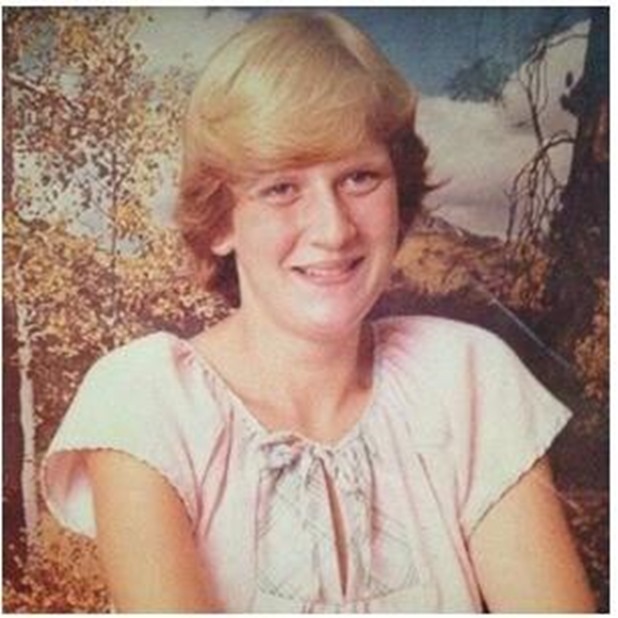
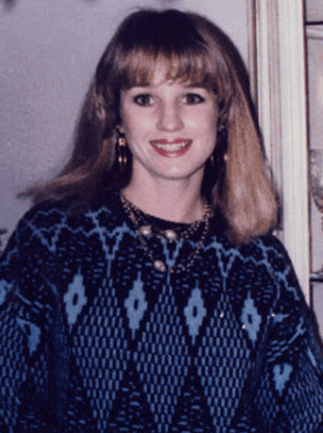
January 18, 1986: Robbin Brandley, 23, Saddleback College, California
July 17, 1988: Julie McGhee, 30, Cathedral City, California
September 25, 1988: Mary Ann Wells, 31, San Diego, California
April 15, 1989: Tammie Erwin, 18, Palm Springs, California
March 11, 1995: Denise Maney, 32, Palm Springs, California
April 14, 1996: Laura Uylaki, 25, Wolf Lake, Illinois
July 14, 1996: Cassandra Corum, 21, Livingston County, Illinois
August 2, 1996: Lynn Huber, 22, Wolf Lake, Illinois
Jennifer Asbenson, of California, survived a rape & abduction on September 28, 1992.
January 18, 1986: Robbin Brandley, 23, Saddleback Community College, California
Marine veteran Andrew Urdiales is accused of murdering eight women from 1986 to 1996, five in California and three in Illinois, and raping and abducting 19 year old Jennifer Asbenson who escaped and survived. Urdiales was indicted for three murders in Illinois and was sentenced to death but the death sentence was commuted after Governor Pat Quinn of Illinois abolished capital punishment in 2011. Instead he received three life sentences for the murders of Laura Uylaki, Cassandra Corum, and Lynn Huber. A gun confiscated in a separate incident linked the three murders in Illinois together and during an interrogation, Urdiales admitted in detail to five cold case murders in California too.
After years of legal wrangling, Urdiales was eventually extradited to California and indicted in 2009 on five counts of first degree murder. He was accused of killing Robbin Brandley, Julie McGhee, Mary Ann Wells, Tammie Erwin, and Denise Maney while stationed at Camp Pendleton Marine Corps base. On May 23, 2018, Andrew Urdiales was convicted of five murders by a jury that deliberated for about a day before recommending in June 2018 that he be sentenced to death for each of the five murders. On November 2, 2018, corrections officials said they found Urdiales unresponsive during a security check at San Quentin State Prison; former Marine and serial killer Andrew Urdiales died by suicide.
Robbin was murdered in a dark, dangerous, poorly guarded and unlighted parking lot at Saddleback Community College in Mission Viejo. She was viciously stabbed over 40 times. She was not robbed or sexually molested. –Who Murdered Robbin Brandley
In the News:
The murders occurred when Andrew Urdiales was stationed at various Marine Corps facilities in Southern California. -CBS Los Angeles (October 5, 2018)
Elizabeth Ratliff was found deceased at the bottom of the stairs in her home in Germany on November 25, 1985 in an apparent accident. Elizabeth was a military widow who was raising two daughters on her own after her husband, an Army soldier, died in a training accident. Elizabeth was a teacher at an Air Force base in Germany where she met Marine veteran Michael Peterson‘s wife, also a teacher. They all quickly formed a friendship and Elizabeth and her two daughters spent a lot of time with the Petersons. It is believed that Peterson was the last person to see Elizabeth alive and after Elizabeth died, Michael Peterson and his wife adopted her two daughters. Initially Elizabeth’s death was deemed an accidental death but when Michael Peterson’s new wife Kathleen Hunt Peterson was found dead at the bottom of her stairs in their home in Durham, North Carolina, investigators gave Elizabeth’s death a second look. The district attorney ordered the exhumation of Elizabeth Ratliff in Texas in an effort to re-examine her body to determine cause of death. The medical examiner conducted an investigation in North Carolina and ruled that the cause of death was a homicidal assault despite the initial finding of cerebral hemorrhage due to an accident. Michael Peterson was never charged with the homicide of Elizabeth Ratliff. As a side note, the two deceased women not only died in a similar fashion but they looked eerily alike.
With the knowledge of the criminal evidence against him, Aphrodite Jones speaks with convicted murderer, Michael Peterson, about the murder of his wife and his bisexual affair. -True Crime with Aphrodite Jones
Investigators are stunned to discover that sixteen years ago, Michael Peterson’s good friend Liz Ratliff also died at the bottom of a staircase, lying in a pool of blood. The trial begins and experts battle over the interpretation of blood spatter. -An American Murder Mystery: The Staircase
On October 30, 1985, Sylvia Seegrist, 25, dressed in Army fatigues and black boots, parked her car in front of the Springfield Mall in a suburb of Philadelphia, Pennsylvania, stepped out, and started shooting. She killed three people and injured seven more in the mass shooting before she was stopped by an on-looker in the mall who didn’t realize she was not in a Halloween costume. Killed in the incident was a young child and two men: Recife Cosmen, 2, Dr. Ernest Trout, 67, and Augusto Ferrara, 64. As a result, Seegrist was arrested and indicted for three first degree murders. Investigators would learn that Sylvia Seegrist was discharged from the military after a year of serving because she wasn’t “right in the head” according to Army officials. Sylvia’s mother shared that she tried to get help for her daughter and tried to get her to take medication, but no one would hear her pleas for help. Prior to and after her trial in 1986, Seegrist was held at a Pennsylvania State Hospital.
Sylvia downward spiraled after her discharge from the Army and used the military training she learned to kill innocent civilians. After Sylvia was found guilty of three first degree murders and given three life sentences, she was transferred to the women’s Pennsylvania State Correctional Institution where she still resides. The 1985 incident highlighted the fine line between an individual’s rights and the state’s authority to commit potentially dangerous people. Seegrist interviewed in 1991 said, “daily doses of anti-psychotic medication had curtailed her delusions, paranoia and explosive anger.” Why wasn’t the mental illness picked up by recruiting and instead only recognized after she joined the military? Sylvia Seegrist had paranoid schizophrenia which is a serious mental illness that requires the use of medication to manage symptomology. Sylvia Seegrist needed follow on treatment after her discharge from the Army in an effort to prevent a predictable downward spiral.
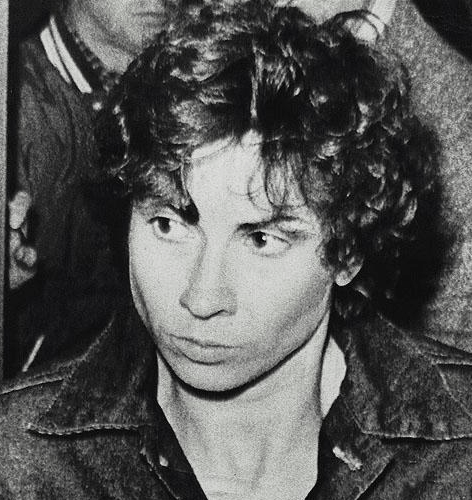
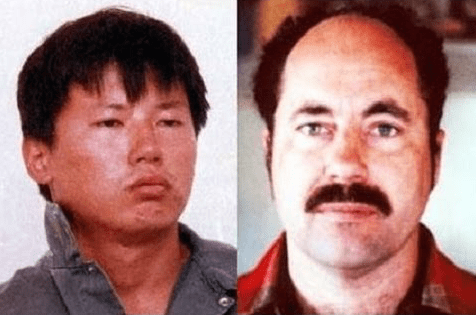
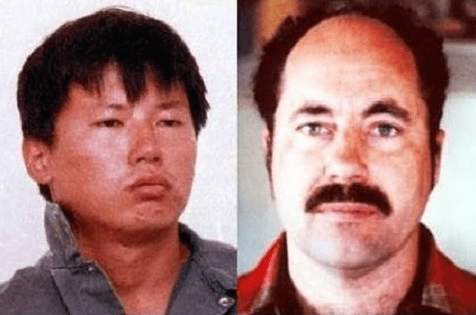
Leonard Lake is arrested near San Francisco, California, ending one of the rare cases of serial killers working together. Lake and Charles Ng were responsible for a series of particularly brutal crimes against young women in California and the Pacific Northwest during the mid-1980s. Read more from On This Day in Historyhere.
Oxygen premiered It Takes a Killer ‘Partners in Evil” and this episode highlighted the sadistic crimes committed by Marine veterans Charles Ng and Leonard Lake. In the early 1980s, the San Francisco bay area was under siege as more than twelve people vanished without a trace. Police would eventually learn that Ng and Lake were responsible for murdering them and so much more. What police uncovered during their investigation would prove invaluable in the prosecutor’s decision to pursue the death penalty. Charles Ng and Leonard Lake were psychopaths.
In December 1982, Army veteran Donald Lake, 32, was living with his mother in San Francisco, California. At their surprise, his brother Leonard Lake stopped by on a road trip up north and asked Donald to tag along. Donald was described as a very nice, gentle man but Leonard treated Donald terribly when they were growing up and even referred to him as a leech in conversations with his ex-wife Claralyn Balazs. Donald is never seen again and his mother Gloria is concerned so she reports him missing. Leonard Lake is nowhere to be found but he resurfaced on New Years Day in 1983 to rent a room in a house in Golden Gate Park.
Four months later, Lake moved in with his buddy from his green beret days, Charles Gunnar of Morgan Hill. They had a lot in common as they both valued survival skills and the weaponry world. On May 22, 1983, Lake invited Gunnar to go on a road trip to Vegas or Tahoe for some much needed rest and relaxation after his divorce. Charles Gunnar decided to go in an effort to cope with his tough times; he left his two daughter’s with a babysitter. A couple days later, Charles Lake returned alone in Gunnar’s van and told the babysitter that Charles ran off with a woman. Charles Gunnar was never seen again.
On July 11, 1984, Donald Giulietti, 36, a radio personality from San Francisco, California was spending time in his apartment expecting a visitor. Donald was an openly gay man who lived with a man named Richard Carrazza. Giulietti placed a personal ad in a low key newspaper offering to give oral sex to straight men. That night a stranger knocked on the door and Giulietti assumed it was someone taking him up on his offer. As soon as Donald opens door, the man whips out pistol and shoots him in the head at close range. Carrazza runs from the back room into the study and finds Giulietti on the floor. Carrazza is immediately shot in the chest and left for dead. The shooter fled and Carrazza survived the attack. Richard Carazza called 911 and when the police questioned him, he was able to give a description of the shooter.
Richard Carrazza described being shot by a small Chinese man wearing prescription glasses. Police searched for an Asian suspect but came up empty. What no one knows is that the killer was already searching the classifieds for his next victim. On July 24, 1984 in San Francisco, California, Harvey Dubs, 29, was home with his wife Deborah, 33, and their 16 month old son Sean. Harvey worked for a printing company but on the side, he videotaped special events and rented out his equipment. There was an individual who responded to the ad and came to his home. The family was never seen again. The following morning, a neighbor went to check on them and found keys in the door and dirty dishes in the sink but no sign of the Dubs family.
When the police did house to house canvassing and questioned the neighbors, they reported seeing a small Asian man leaving the property. The suspect was seen carrying a large duffel bag and a large flight bag both stuffed full and he tossed the bags into the trunk of a car that was waiting. The Asian man gets into the front passenger seat of the car with the burly man with a beard and they speed away. Some witnesses in the neighborhood get a good description of the Asian man. No one could give a good description of the bearded man but an eye witness was able to draw a description of the Asian man.
In San Francisco, California on October 31, 1984, entrepreneur Paul Cosner, 39, was selling his 1980 Honda Prelude which he had recently advertised in the local newspaper. A burly bearded man took the car for a test drive and a couple days later called Paul to tell him that he would like to purchase the Honda from him. On November 2, 1984, Paul drove the car to meet the potential buyer and he was never seen again. When Cosner’s sister Sharon didn’t hear from him for 24 hours, she filed a missing person’s reports and a missing vehicle report. Sharon was relentless and maintained heavy pressure on the police but they really had no clues or suspects at this point.
In San Francisco on January 18, 1985, Cliff Peranteau, 24, was at a local bar tossing back a few drinks with a co-worker. Cliff worked at a moving company and he shared with friends that he was going to work on Saturday. Cliff never showed up for the job but apparently was seen partying on Sunday after a 49er’s super bowl victory. He’s last seen by a bartender after winning a $400 bet. The bartender said he appeared to be going off to celebrate with an Asian friend. He was never seen again.
Investigators would learn that Peranteau’s Asian friend was his colleague Charles Ng who had been at the moving company for about four months. Charles was described as an odd character that Cliff Peranteau normally tried to avoid. Charles Ng wasn’t well-liked at the moving company because he had poor boundaries and said inappropriate things to others. Two weeks after Cliff’s disappearance, his boss received a short typed letter apparently from Cliff informing him that he had a new job. The writer also requested that Cliff’s last check be sent to an address in northeastern California near Wilseyville. The note wasn’t that far fetched until another moving company employee, Jeff Gerald, 25, went missing on February 23, 1985. Jeff got an offer to work with Charles Ng on a small moving job on the side. Jeff went to do the job and this was the last time he was seen.
In San Francisco on April 12, 1985, Kathleen Allen, 18, and her boyfriend Michael Carroll, 23, were spending time in a motel room where they were temporarily living. At 10 pm at night, Michael tells Kathleen that he has to do something and would be back in the morning. Michael never returned. A few days later Kathleen received a horrifying phone call at work. The caller told her that her boyfriend Michael may have been involved in a shooting. She immediately told her boss that she had to leave. She was last seen meeting a bearded man in the parking lot of the Safeway where she worked. Kathleen got into the car and was never seen again.
In April 1985, four more people vanished without a trace. Robert Scott Stapley, 26, lived in San Francisco but frequently took road trips to Wilseyville, California to spend time with friends. Scott Stapley stayed with Lonnie Bond and his live-in girlfriend Brenda O’Connor, and their 18 month old son. Lonnie and Brenda loved living in their cabin in the foothills of the Sierra-Nevada mountains. The only thing they don’t like was their neighbor. He was a burly, bearded man who they felt was extremely obnoxious, rude, and demented. This neighbor constantly fired weapons on his property and Brenda felt really uncomfortable with him because he would not stop asking her to pose naked for him. On April 19, 1985, Scott Stapley was present when Lonnie decided to confront his neighbor. Lonnie decided to deal with the problem once and for all, and none of them were ever seen again.
In San Francisco, California on June 2, 1985, two men entered a lumber yard to buy some building supplies. A burly bearded man and an Asian man with glasses decided they wanted a vice but were not going to pay for it. The Asian man swiped the $75 vice, exited the store, and placed the stolen vice into the trunk of a Honda Prelude in the parking lot. But the Asian man didn’t realize that an off duty police officer spotted him with the stolen merchandise and called in his description. The off-duty police officer approached the Asian man but he took off and disappeared. The officer searched the vehicle and found the stolen vice and a back pack, which contained a pistol with a silencer in it. Just then a stocky bearded man exited the lumber yard and approached the Honda Prelude.
The burly bearded man told the police officer that his name was Scott Stapler (the name of the man who vanished two months prior). He told the officer not to worry about the vice because he paid for it. The officer reminded him there was a gun with a silencer in the trunk of the car and placed the burly, bearded man under arrest. He was taken to the police station for questioning. Back at the station, investigators learned that everything the man was telling them was a lie. A background check on the Honda Prelude revealed that it was registered to Paul Cosner, who went missing months before. Then they learned the license plates belonged to Lonnie Bond, another person who went missing. As the officer confronted the man with this new evidence, the big burly bearded man began to cry and admitted his real name was Leonard Lake. And that his accomplice was Charles Ng.
At one point during the investigation, Lake asked the detectives for a glass of water and a pen and paper to write a letter to his ex-wife. Police uncuffed him expecting a full confession. After he got done writing the letter to his ex-wife, he reached up under his collar where he sewed a cyanide pill into the fabric and quickly shoved it down his throat. He fell onto the floor gagging and seizing. He was rushed to the hospital where he slipped into a coma and died a few days later. In June 1985, Leonard Lake suddenly killed himself with a cyanide pill taking his secrets to the grave with him. But he did leave behind a clue when he gave up the name of his sidekick Charles Ng who was now on the run. Leonard Lake had been on the run since April 1982 when the FBI raided his place on a stolen weapons tip.
Police wanted to know who Leonard Lake was. They learned he was born in San Francisco, California and was bright yet sadistic. He developed an infinity for pornography early on in his life. He apparently took nude photos of his sisters when they were young and used them to extort sexual favors. He joined the US Marine Corps in 1965 at age 19 and served two terms in Vietnam. In Da Nang in 1970, Leonard had a complete mental breakdown and was sent back to the United States. He was admitted to a psychiatric ward for two months and then discharged from the Marines upon his release. Lake spent the next eight years in a hippie commune. In the late summer of 1980, Leonard met his wife Claralyn Balazs and they married in 1981. They both had a love of making pornographic videos of themselves and enjoyed kinky sex.
After Leonard’s death in 1985, Claralyn was the critical piece to help police break the case wide open. Police investigated Leonard Lake and did a complete forensic search of the Honda Prelude in his possession. They found blood spatter in the car, bullet holes in the headliner, IDs of missing persons, and an electric bill with Claralyn’s address. On June 3, 1985, police manage to track down Claralyn. Claralyn told detectives that she and Leonard divorced in November 1982 but maintained a close relationship. She also mentioned to the police that her family owned property in Wilseyville but no one had been living there recently. Police were curious and Claralyn agreed to take them to the property on June 4, 1985. The police found what they could only describe as a compound for killing.
The police found the drivers license of Mike Carroll who disappeared with his girlfriend Kathleen Allen in 1985. They also found possessions of others who were missing including the Dubs family. Police found videotapes of women being tortured, signs of men being killed, and outside in the yard, police came across a tool shed that acted as a false front. There they found a large bunker where tortures had occurred and where Leonard Lake kept his sex slaves. Detectives unearthed Leonard Lake’s hide out and learned that he had this planned since he was a teenager. Lake read a book at age 17 called The Collector which was about a man who had a sex slave named Miranda. Lake became obsessed with a clear plan called Operation Miranda. He wanted to enslave young girls and these fantasies became a reality when Charles Ng entered his life.
The police found overwhelming evidence of Lake and Ng’s barbarism inside in the bunker. There were videotapes of Leonard Lake building the bunker. One tape labeled the M Ladies showed Ng and Lake raping, torturing, and abusing a number of women. Law enforcement didn’t know who any of the M Ladies were until weeks later when they discovered a mass grave on the Wilseyville property. Police found approximately 45 pounds of human remains scattered about the yard. They found many of the human remains of the missing people; they had been killed, burned, tortured, and dismembered. Among the remains, investigators found the IDs of Brenda O’Connor and Kathleen Allen.
Police recognized Kathleen Allen from the M Ladies videotape. Kathleen was selected by Lake as the perfect M Lady and was kept prisoner in his bunker. He treated her as a complete slave in every way. He forced her to dress up, have sex on demand, and pose for him. It took investigators weeks to go through the crime scene and as they do they discover more and more bodies. Then on July 8, 1985 they find two males stacked on top of each other in a make shift grave. They were identified as Lonnie Bond and Scott Stapley. Investigators knew Charles Ng played an integral part in all this and they wanted to find him.
In June and July 1985, investigators learned that Marine veterans Charles Ng and Leonard Lake murdered multiple people and dug them in a mass grave at the property in Wilseyville, California. At this point in the investigation, Leonard Lake had committed suicide and Charles Ng was on the run. Charles Ng was born in Hong Kong. His father was a strict disciplinarian who literally beat him with a cane. Ng didn’t really show any interest in school and was expelled from a number of them. He was described as anti-social and had a history of fire setting and stealing. Ng eventually ended up at Notre Dame University on a student visa but dropped out after getting in a hit and run accident.
Charles Ng joined the US Marine Corps in October 1979 as a means to pay restitution for his hit and run crime in Indiana. Ng told recruiters he was born in Indiana and nobody bothered to check his citizenship status. Ng was trained as a gunner in the Marine Corps and immersed himself in martial arts. Ng was obsessed with violence and boasted that he was born to fight in hand-to-hand combat. Ng said he would kill anyone that was foolish enough to fight him. In October 1981, Ng was court martialed for stealing weaponry from an armory and went Absent without Leave (AWOL).
Ng found out that Leonard Lake, another Marine, was managing a hotel in northern California. He flew to California and in December 1981 moved in with Leonard and his wife Claralyn. Lake was fourteen years his senior and acted as a father figure. They both shared a mutual love of weapons and sexual deviance. Lake realized that Ng was the perfect person to help him make his sexual fantasies become reality.
On July 6, 1985 in Calgary, Canada, Charles Ng attempted to steal food from a department store and got caught. He shot a security guard in the hand and was captured immediately. Charles Ng was charged with attempted murder and theft, and was jailed in the Canadian system. On December 18, 1985, Charles Ng went to court and was found not guilty on the attempted murder charge but guilty of assault and robbery. He was entenced to 4.5 years in an Edmonton prison. US officials petitioned to have him extradited back to America to stand trial. His deportation was held up in court until 1991.
Charles Ng is finally extradited to California to face charges for the horrific crimes he and Lake committed there. Ng didn’t actually go to trial for another seven years. In Santa Ana, California on September 14, 1988, Charles Ng’s murder trial proceeded in the Orange County Superior Court. Prosecutors argued that Ng and Lake stalked and targeted their victims, stole their money, then tortured and killed them. The trial lasts for 8 months. Some of the most compelling evidence came from dozens of cartoons drawn by Ng. The cartoons depicted women being tortured and abused and people being burnt. But the M Ladies videotapes were the prosecutions most disturbing evidence.
The M Ladies videotapes showed women who were tortured and sexually abused. Ng took the stand in his own defense and blamed everything on Lake. He denies any knowledge of the murders. He eventually admitted to being involved in the abduction of some of the women, and some of the rapes and tortures, but did not admit to killing anyone. In late February 1999, Charles Ng was convicted on 11 of 12 counts of murder. Four months later, he was sentenced to death. Investigators agree that both Leonard Lake and Charles Ng were both psychopaths but Leonard was the more dominant and goal oriented of the two. Ng went along with Lake’s plan because it allowed him to carry out his torturous and sexually deviant behaviors.
ID Go: When an off-duty police officer in San Francisco happens upon a minor theft at a lumberyard one Sunday afternoon, he unwittingly jumpstarts an investigation into one of California’s deadliest, most depraved serial killers: Leonard Lake and Charles Ng. -Dungeon of Dread, Pandora’s Box: Unleashing Evil (S1,E1)
Editor’s note: With a cable subscription, you can download the free ID Go app and watch all of the Investigation Discovery programming at your convenience. And for those who do not have cable, you can watch “unlocked” episodes on the ID Go app including the latest premieres. Download the ID Go app and binge away. For those who prefer commercial free programming during your binge session, Prime Video has an ID channel: ‘True Crime Files by Investigation Discovery” available for $2.99 a month. It’s a compilation of older seasons but totally worth the cost if you are a true crime addict.




 MILITARY JUSTICE FOR ALL