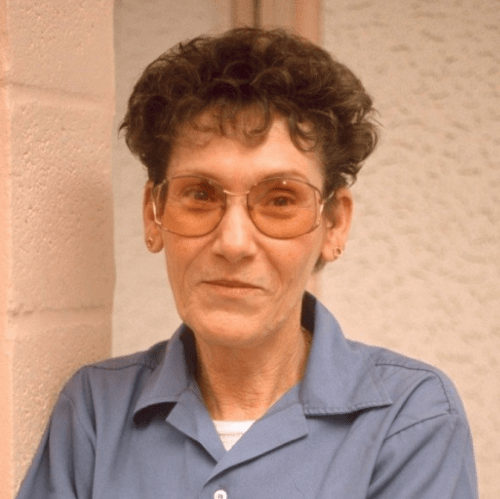
Judy Buenoano was executed by the State of Florida on March 30, 1998.
Air Force Sergeant James Goodyear, 37, died on September 16, 1971 in Orlando, Florida. Sergeant Goodyear died just three months after completing a year long tour of duty in Vietnam. He left behind his wife Judy Buenoano Goodyear and her son Michael Buenoano. Judy received $28,000 in military life insurance benefits and military death benefits to help support the family. When her son Michael turned eighteen, he joined the US Army. On his way to his post in Georgia, he stopped in to visit his mother Judy, she fed him, and afterwards he became ill. The illness led to a crippling condition that left him paralyzed in his lower extremities and he was subsequently discharged from the Army as a Private. Michael was disabled and Judy was taking care of him. On May 13, 1980 Judy took Michael for a canoe ride. Judy reported to local authorities that her canoe capsized and her son Michael had drowned. She collected $125,000 in military life insurance benefits for her son’s death.
In June 1983, Judy was suspected in the car bombing of her fiancé John Gentry of Pensacola, Florida. She stood to gain $500,000 in life insurance money for this death. Judy Buenoano was first convicted of the attempted murder of John Gentry. As a result of her involvement in the attempted murder of John, investigators looked into the ‘accidental deaths’ of her husband James Goodyear and her son Michael. They exhumed John’s body a decade later and an autopsy revealed he had been poisoned with arsenic. Testimony revealed long-term arsenic poisoning had actually caused her son Michael’s disability. And when Judy drowned him, he was wearing an extra 15 pounds of weighted braces. Judy reportedly admitted to being involved in the 1978 death of her boyfriend Bobby Joe Morris as well. She received $50,000 in life insurance benefits for his death. Judy Buenoano was found guilty of first degree murder and sentenced to death. She was executed by the electric chair in Florida on March 30, 1998. Judy Buenoano was motivated by money, profit, and greed.
Marine veteran Andrew Urdiales is accused of murdering eight women from 1986 to 1996, five in California and three in Illinois, and raping and abducting 19 year old Jennifer Asbenson who escaped and survived. Urdiales was indicted for three murders in Illinois and was sentenced to death but the death sentence was commuted after Governor Pat Quinn of Illinois abolished capital punishment in 2011. Instead he received three life sentences for the murders of Laura Uylaki, Cassandra Corum, and Lynn Huber. A gun confiscated in a separate incident linked the three murders in Illinois together and during an interrogation, Urdiales admitted in detail to five cold case murders in California too.
After years of legal wrangling, Urdiales was eventually extradited to California and indicted in 2009 on five counts of first degree murder. He was accused of killing Robbin Brandley, Julie McGhee, Mary Ann Wells, Tammie Erwin, and Denise Maney while stationed at Camp Pendleton Marine Corps base. On May 23, 2018, Andrew Urdiales was convicted of five murders by a jury that deliberated for about a day before recommending in June 2018 that he be sentenced to death for each of the five murders. On November 2, 2018, corrections officials said they found Urdiales unresponsive during a security check at San Quentin State Prison; former Marine and serial killer Andrew Urdiales died by suicide.
In the News:
The murders occurred when Andrew Urdiales was stationed at various Marine Corps facilities in Southern California. -CBS Los Angeles (October 5, 2018)
July 14, 1996: Cassandra Corum, 21, Pontiac, Illinois
Marine veteran Andrew Urdiales is accused of murdering eight women from 1986 to 1996, five in California and three in Illinois, and raping and abducting 19 year old Jennifer Asbenson who escaped and survived. Urdiales was indicted for three murders in Illinois and was sentenced to death but the death sentence was commuted after Governor Pat Quinn of Illinois abolished capital punishment in 2011. Instead he received three life sentences for the murders of Laura Uylaki, Cassandra Corum, and Lynn Huber. A gun confiscated in a separate incident linked the three murders in Illinois together and during an interrogation, Urdiales admitted in detail to five cold case murders in California too.
After years of legal wrangling, Urdiales was eventually extradited to California and indicted in 2009 on five counts of first degree murder. He was accused of killing Robbin Brandley, Julie McGhee, Mary Ann Wells, Tammie Erwin, and Denise Maney while stationed at Camp Pendleton Marine Corps base. On May 23, 2018, Andrew Urdiales was convicted of five murders by a jury that deliberated for about a day before recommending in June 2018 that he be sentenced to death for each of the five murders. On November 2, 2018, corrections officials said they found Urdiales unresponsive during a security check at San Quentin State Prison; former Marine and serial killer Andrew Urdiales died by suicide.
In the News:
The murders occurred when Andrew Urdiales was stationed at various Marine Corps facilities in Southern California. -CBS Los Angeles (October 5, 2018)
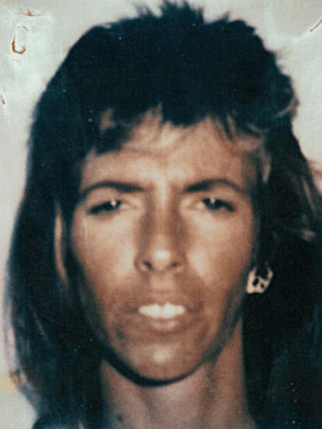
March 11, 1995: Denise Maney, 32, Palm Springs, California
Marine veteran Andrew Urdiales is accused of murdering eight women from 1986 to 1996, five in California and three in Illinois, and raping and abducting 19 year old Jennifer Asbenson who escaped and survived. Urdiales was indicted for three murders in Illinois and was sentenced to death but the death sentence was commuted after Governor Pat Quinn of Illinois abolished capital punishment in 2011. Instead he received three life sentences for the murders of Laura Uylaki, Cassandra Corum, and Lynn Huber. A gun confiscated in a separate incident linked the three murders in Illinois together and during an interrogation, Urdiales admitted in detail to five cold case murders in California too.
After years of legal wrangling, Urdiales was eventually extradited to California and indicted in 2009 on five counts of first degree murder. He was accused of killing Robbin Brandley, Julie McGhee, Mary Ann Wells, Tammie Erwin, and Denise Maney while stationed at Camp Pendleton Marine Corps base. On May 23, 2018, Andrew Urdiales was convicted of five murders by a jury that deliberated for about a day before recommending in June 2018 that he be sentenced to death for each of the five murders. On November 2, 2018, corrections officials said they found Urdiales unresponsive during a security check at San Quentin State Prison; former Marine and serial killer Andrew Urdiales died by suicide.
In the News:
The murders occurred when Andrew Urdiales was stationed at various Marine Corps facilities in Southern California. -CBS Los Angeles (October 5, 2018)
September 28, 1992: Jennifer Asbenson, 19 (at the time of crime), survived a rape and abduction by former Camp Pendleton Marine Andrew Urdiales in California. She was able to escape from his trunk and run into the arms of two other Marines driving in the area. She did not know who her attacker was at the time of the crime but eventually was able to identify Andrew Urdiales in a police photo line-up. She testified on behalf of three women murdered by Urdiales in Illinois and continues to await his trial in California for five more homicides and her case.
Camp Pendleton Marine veteran Andrew Urdiales is accused of murdering eight women from 1986 to 1996, five in California and three in Illinois, and raping and abducting a 19 year old, Jennifer Asbenson, who escaped and survived. Urdiales was indicted for three murders in Illinois and was sentenced to death but the death sentence was commuted after Governor Pat Quinn of Illinois abolished capital punishment in 2011. Instead he received three life sentences for the murders of Laura Uylaki, Cassandra Corum, and Lynn Huber. A gun confiscated in a separate incident linked the three murders in Illinois together and during an interrogation, Urdiales admitted in detail to five cold case murders in California too. After years of legal wrangling, Urdiales was eventually extradited to California and indicted in 2009 on five counts of first degree murder. He was accused of killing Robbin Brandley, Julie McGhee, Mary Ann Wells, Tammie Erwin, and Denise Maney. Initially California was seeking the death penalty but Proposition 62 was repealed in November 2016. Urdiales continues to await trial in California.
A woman’s story of survival is truly inspiring after she was abducted and tortured by a notorious serial killer. Jennifer Asbenson was 19 when she was abducted by Andrew Urdiales. 24 years later, she returned to California’s Desert Hot Springs to record a video explaining her daring escape to encourage others never to give up. Asbenson was walking to a bus stop near Palm Springs, California, in September 1992 when she was offered a ride by Urdiales, who is believed to have killed eight women. –Inside Edition
Navy spouse Dina Kichler was beat, raped and murdered by civilian John Brewer in Mayport, Florida on December 3, 1990. Brewer targeted Dina Kichler months before by befriending her and offering to help her out while her husband was away. The night after her husband Pat Kichler shipped out for six months with the US Navy on the USS Forestall, John Brewer made his move. He stopped by Dina’s residence uninvited and because she knew him she opened the door. John immediately hit her in the face and dragged her upstairs to her bedroom where he beat, raped, and strangled her to death. Her co-workers called the police because they were concerned when Dina didn’t show up for work and they couldn’t get ahold of her. It would be a few years and significant advancements in forensic technology before authorities could prove that John Brewer committed the rape and murder of Dina Kichler. John Brewer was considered a suspect in the murder of Dina Kichler but the prosecutor lacked evidence beyond a reasonable doubt to prove that Brewer committed the crime.
In the meantime, detectives attended a national conference where they discussed unsolved cases with other investigators. After the Florida detectives discussed the Dina Kichler case, New Hampshire detectives recognized the modus operandi of the killer. The methodology of the death was identical to that of Michelle Lafond who was raped and murdered in 1987. Florida police combed through the New Hampshire case file and discovered that John Brewer applied for a job with Michelle’s husband. Meanwhile, the DNA evidence collected from the bodies of both Dina and Michelle were compared to the DNA of known suspects. As a result, John Brewer’s DNA sample was a match to Dina Kichler in Florida and Michelle Lafond in New Hampshire. At this time, Florida prosecutors were able to prove their case beyond a reasonable doubt and John Brewer plead guilty to the rape and first degree murder of Dina Kichler in June 1999 to avoid the death penalty. He also plead guilty to the rape and murder of Michelle Lafond in New Hampshire. John Brewer was given two life sentences.
Investigation Discovery:
In December of 1990, young Navy wife and mother Dina Kichler is found brutalized and strangled in her Mayport, Florida apartment. Investigators work through a list of the victim’s admirers before closing in on the killer. -An Eye for Murder, Unusual Suspects (S7,E7)
Editor’s note: With a cable subscription, you can download the free ID Go app and watch Investigation Discovery programming at your convenience. And for those who do not have cable, you can watch “unlocked” episodes on the ID Go app including the latest premieres. For those who prefer commercial free programming during your binge session, Prime Video has an ID channel: ‘True Crime Files by Investigation Discovery” available for $3.99 a month. It’s a compilation of older seasons but totally worth the cost if you are a true crime addict. Download the ID Go app or purchase ID True Crime Files & binge away.
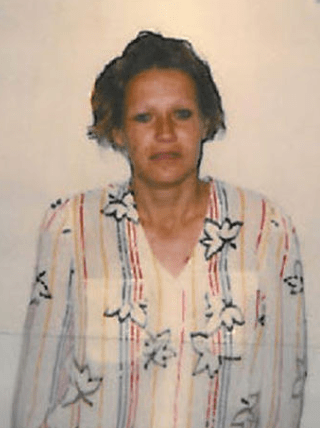
September 25, 1988: Mary Ann Wells, 31, San Diego, California
Marine veteran Andrew Urdiales is accused of murdering eight women from 1986 to 1996, five in California and three in Illinois, and raping and abducting 19 year old Jennifer Asbenson who escaped and survived. Urdiales was indicted for three murders in Illinois and was sentenced to death but the death sentence was commuted after Governor Pat Quinn of Illinois abolished capital punishment in 2011. Instead he received three life sentences for the murders of Laura Uylaki, Cassandra Corum, and Lynn Huber. A gun confiscated in a separate incident linked the three murders in Illinois together and during an interrogation, Urdiales admitted in detail to five cold case murders in California too.
After years of legal wrangling, Urdiales was eventually extradited to California and indicted in 2009 on five counts of first degree murder. He was accused of killing Robbin Brandley, Julie McGhee, Mary Ann Wells, Tammie Erwin, and Denise Maney while stationed at Camp Pendleton Marine Corps base. On May 23, 2018, Andrew Urdiales was convicted of five murders by a jury that deliberated for about a day before recommending in June 2018 that he be sentenced to death for each of the five murders. On November 2, 2018, corrections officials said they found Urdiales unresponsive during a security check at San Quentin State Prison; former Marine and serial killer Andrew Urdiales died by suicide.
In the News:
The murders occurred when Andrew Urdiales was stationed at various Marine Corps facilities in Southern California. -CBS Los Angeles (October 5, 2018)
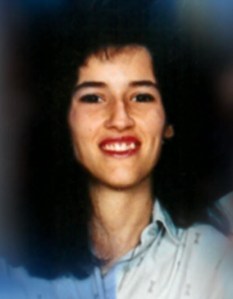
July 17, 1988: Julie McGhee, 30, Cathedral City, California
Marine veteran Andrew Urdiales is accused of murdering eight women from 1986 to 1996, five in California and three in Illinois, and raping and abducting 19 year old Jennifer Asbenson who escaped and survived. Urdiales was indicted for three murders in Illinois and was sentenced to death but the death sentence was commuted after Governor Pat Quinn of Illinois abolished capital punishment in 2011. Instead he received three life sentences for the murders of Laura Uylaki, Cassandra Corum, and Lynn Huber. A gun confiscated in a separate incident linked the three murders in Illinois together and during an interrogation, Urdiales admitted in detail to five cold case murders in California too.
After years of legal wrangling, Urdiales was eventually extradited to California and indicted in 2009 on five counts of first degree murder. He was accused of killing Robbin Brandley, Julie McGhee, Mary Ann Wells, Tammie Erwin, and Denise Maney while stationed at Camp Pendleton Marine Corps base. On May 23, 2018, Andrew Urdiales was convicted of five murders by a jury that deliberated for about a day before recommending in June 2018 that he be sentenced to death for each of the five murders. On November 2, 2018, corrections officials said they found Urdiales unresponsive during a security check at San Quentin State Prison; former Marine and serial killer Andrew Urdiales died by suicide.
In the News:
The murders occurred when Andrew Urdiales was stationed at various Marine Corps facilities in Southern California. -CBS Los Angeles (October 5, 2018)
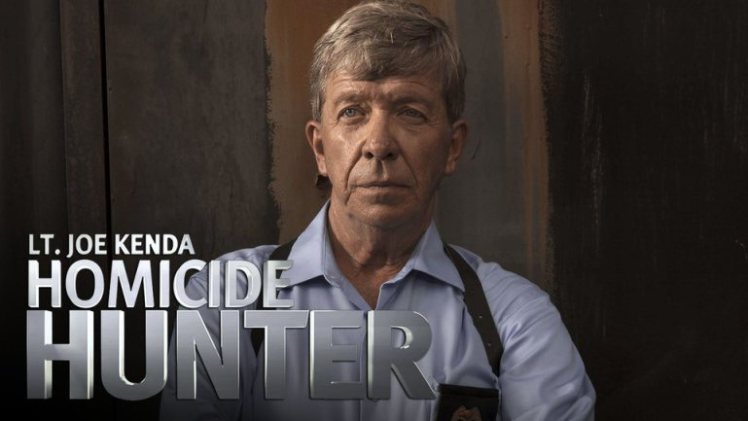
When 22 year-old Micki Filmore is found raped and murder in her apartment, detective Kenda focuses his investigation on her activities the previous night. Micki was seen dancing with a man who then paid a late night call to her door. -A Killer Always Rings Twice, Homicide Hunter (S1, E3)
Colorado Springs is the home of five military bases made up of about 40,000 personnel. A lot of them live off-base in local apartment units. On July 19, 1986, as Army Spc. Tracy Spencer was walking by, he noticed his neighbor Micki Filmore was laying lifeless on the floor in her apartment. He was alarmed and ran to his wife Lisa to seek help. She claims she went through the window of the apartment because of her own concern for Micki and discovered that she was in fact dead. They called the police. Lt. Joe Kenda of the Homicide Unit at the Colorado Springs Police Department was assigned to investigate the case. Kenda deduced from the observation of the crime scene that there did not appear to be any struggle, the victim’s wallet and cash were present, and she was naked with her legs open and bruising around her neck. He suspected Micki Filmore was raped and strangled in a quick and brutal attack.
Joe talked about the crimes of rape and murder for a bit. He talked about how rape is unfortunately a very common crime but he also noted that rape and murder is not that common. Lt. Kenda educated the public about the fact that rape and sexual assault is mostly a punishment of women. And in this particular case, the perpetrator surprised Micki Filmore while she was in bed. His only purpose was to rape and kill her. While Joe waited on the results of the autopsy, he tried to figure out the modus operandi of this particular offender because he would strike again. Joe wondered why it was so important for this person to get in and out of the apartment quickly. Was he a local and making sure that nobody saw and recognized him? Neighbors Lisa and Tracy Spencer reported they saw Micki the night before; she was happy, eating pizza, and nothing appeared out of the ordinary.
Joe canvassed the neighbors in the apartment complex and learned that Micki was having troubles: he heard from neighbors that her fiancé left her, she was pregnant, and broke but nobody knew who the father of the child was. One neighbor told Lt. Kenda that he went to a night club with her the night before. He claimed that while they were there, she saw someone she knew. She left the club with her neighbor around 2 a.m. but she did give a piece of paper to the friend she ran into at the club. The neighbor claimed they talked for a little bit and then went their separate ways. After lying down, the neighbor heard knocking on her door. He looked out briefly and saw the same man from the club standing there. Another neighbor said she was awoken by a loud scream and then a thumping noise around 3:45 a.m. She assumed whoever it was they were fighting. Joe still had little evidence to go on but the autopsy helps tell a story.
The autopsy revealed that Micki Filmore’s last moments were met with violence, anger, and rage. And she had engaged in sexual relations within the last twelve hours. Despite what her neighbors said, she was not pregnant and there were no drugs or alcohol in her system. Lt. Kenda learned Micki was twenty-two years old and originally from a rural community in North Carolina. She joined the Army straight out of high school, did a three year tour of duty, traveled the world, and her service ended in December 1985. She was looking forward to leaving to be with her fiancé in a few weeks. Lt. Kenda contacted the fiance and learned that he had not abandoned Micki. The fiance was finalizing a divorce so he could marry Micki and he could verify his whereabouts at the time of the murder. The fiance shared he asked his friend Frank Lynch to look out for Micki while he was gone; but now he had concerns that maybe he was involved. This gave Kenda a new lead and potentially a new suspect.
Kenda met with Frank Lynch who denied any involvement in the murder and could account for himself on the night in question. As a result, Kenda closed out Lynch and in the meantime got a phone call from DiCarlo Dowden. DiCarlo was the man at the club that Micki gave a piece of paper to and the same man suspected of showing up at her apartment the night of the murder. DiCarlo admitted that he ran into Micki at the club, they chatted, they danced, she told him she was not ‘with’ her neighbor (he was an escort), and then gave him her number. She also gave him her address which to him was an invitation so DiCarlo dropped by her apartment but no one answered the door so he left. DiCarlo noticed that a neighbor did see him after looking out their window, which also matched the neighbor’s story. DiCarlo denied any involvement in the crime and there was no probable cause to arrest him, he did volunteer to provide biological evidence for testing.
It takes several weeks for the comparative analysis testing to be completed at the labs. Joe reiterated that DiCarlo was not off the hook yet. On August 12, 1986, another body was discovered in the same apartment complex. Lt. Joe Kenda knew this was not a coincidence. The victim was twenty-four year old Barbara Kramer who was a nurse at Eisenhower Hospital in Colorado Springs. She didn’t show up to work so her sister and a friend went over to her apartment to check in on her. They discovered the newspaper outside her door, signs of a struggle in the apartment, and the friend found Barbara Kramer dead in her bedroom. The family was devastated because they were already worried about her safety after the first murder in that apartment complex but they reported that Barbara was cautious and playing it safe. Kenda was horrified by what he saw at the crime scene because he immediately knew it was the same guy.
The modus operandi of both crimes was exactly the same aside from one woman was black and one woman was white. Both were displayed with their legs open after they were murdered; both were attacked in the middle of the night between the hours of 4 and 7 a.m.; both were single females living alone; both were strangled; and both were living in the same apartment complex. Lt. Kenda was feeling an even more heightened sense of urgency because this guy was a serial killer and was not going to stop; he wanted to prevent a third victim. He also deduced that the killer probably lived in the area and he was carrying on as if nothing mattered. He questioned DiCarlo about his whereabouts and DiCarlo was cleared as a suspect because his girlfriend could alibi him. Kenda knew DiCarlo wasn’t his man because the person he was looking for killed Micki Filmore and Barbara Kramer.
Lt. Kenda knew these murders were similar offenses; they were the same crime, different targets. He wondered how many more had to die before the Colorado Springs Police Department could stop him. Kenda theorized that the perpetrator most likely stalked his victims before the attacks. He did not feel that these crimes were random and he believed that the perpetrator surveilled his victims. This offender simply waited for the right place and right time. Kenda noted that these guys are not as intelligent as one would think but they are cunning. He knew the guy made mistakes and he had to be the one to find them. After interviewing more neighbors about the night before, Kenda learned that one neighbor was awakened to screams around 6 a.m. and another neighbor saw Tracy Spencer banging on Barbara’s door with a piece of paper in his hand around 6:25 a.m. She saw the door open, Spencer enter the apartment, and then the door slam.
This new information intrigued Lt. Kenda because now Tracy Spencer not only found Micki Filmore’s body but a witness saw him knocking on Barbara Kramer’s door around the time that she died. Kenda looked into his criminal history and found only minor offenses, nothing to indicate a propensity for violence. But Kenda was going to apply for a warrant regardless and arrest Tracy Spencer based on the evidence he had. But first he wanted to talk to Tracy’s wife. Lisa was still claiming that Tracy was with her the night of the murders so Kenda told her that a witness saw him and she began to cry. Kenda did not understand why she would protect him and told her she could be arrested next. She told him she did lie and that Tracy was not with her all night. As a matter of a fact, she admitted that he left the apartment in the middle of the night often and went for walks. She claimed Tracy told her he kept finding Barbara’s mail on the ground and wanted to return it to her, despite locked mailboxes at the apartment complex.
Lisa Spencer also admitted to finding an empty envelope with Barbara’s name on it so she threw it away. She observed Tracy get angry when he couldn’t find it but she never told him she threw it away. She also confessed that she did not go through the Micki’s apartment window like she originally shared with the police; she went into the apartment to help Tracy cover up the crime. When Kenda asked her why, her response was that she loved him. Kenda learned that Tracy was on the move so he made a decision to arrest and take him to the station before he hurt someone else. Kenda got a search warrant for his apartment and found the letter he couldn’t find right in the trash where his wife said she put it. And it did in deed have Barbara Kramer’s name on it. Kenda questioned Tracy at the station and even after he was told there were witnesses, Spencer stuck to his story. Eventually he folded some and admitted to taking mail to Barbara but said he didn’t go inside her apartment.
Kenda realized Tracy Spencer was a prolific liar. He denied everything. Kenda confronted him with the semen he said matched him (which was a lie) and then Tracy admitted that he was lying to him because he was having an affair with Micki and did have consensual sex with her that night. He had an explanation for everything. The bottom line was that he was going to commit the crimes regardless of the consequences and then lie about it. That’s what they do. The lab results came back and showed that both Tracy’s blood and hair samples matched those at the crime scenes. Tracy Spencer was arrested for the first degree murders of Micki Filmore and Barbara Kramer. On December 31, 1986, Tracy Spencer was found guilty and sentenced to life in prison plus twenty-four years. He is eligible for parole in 2032. Lt. Kenda ended the show with the fact that Spencer overpowered, raped, and killed two girls he didn’t even know for no real reason. Two women paid the price for his crimes and there could have been more, and that scared him.
Editor’s note: With a cable subscription, you can download the free ID Go app and watch Investigation Discovery programming at your convenience. And for those who do not have cable, you can watch “unlocked” episodes on the ID Go app including the latest premieres. For those who prefer commercial free programming during your binge session, Prime Video has an ID channel: ‘True Crime Files by Investigation Discovery” available for $3.99 a month. It’s a compilation of older seasons but totally worth the cost if you are a true crime addict. Download the ID Go app or purchase ID True Crime Files & binge away.
January 18, 1986: Robbin Brandley, 23, Saddleback College, California
July 17, 1988: Julie McGhee, 30, Cathedral City, California
September 25, 1988: Mary Ann Wells, 31, San Diego, California
April 15, 1989: Tammie Erwin, 18, Palm Springs, California
March 11, 1995: Denise Maney, 32, Palm Springs, California
April 14, 1996: Laura Uylaki, 25, Wolf Lake, Illinois
July 14, 1996: Cassandra Corum, 21, Livingston County, Illinois
August 2, 1996: Lynn Huber, 22, Wolf Lake, Illinois
Jennifer Asbenson, of California, survived a rape & abduction on September 28, 1992.




 MILITARY JUSTICE FOR ALL