Army veteran Steven Russell, Jr. was convicted of the capital murder of his girlfriend Joy Owen on January 27, 2012. Russell was sentenced to life in prison without the possibility of parole. Prosecutors say Russell killed Joy because she tried to leave him. In the middle of the night on November 3, 2009, Russell cocked his gun and fired it four times at Owen with no apparent provocation. The North Little Rock Police Department found Joy Owen’s body around 4:30 a.m. In the course of the homicide investigation, police learned that Russell had received 5-years probation in Clark County, Arkansas for the second-degree domestic battery of another girlfriend in 2008. According to reports, the U.S. Army said Russell was a mechanic stationed at Fort Sill, Oklahoma and he enlisted in the Army in 2001; the year he left the Army was not available.
Steven Russell’s defense team admitted he killed Owen but blamed the shooting on post-traumatic stress disorder brought on by his war service in Iraq in 2003. The attorneys appealed the decision claiming he “had the dubious task of recovering bodies and equipment after they had come in contact with improvised explosive devices.” But the state Supreme Court disagreed with the defense saying the judge was confronted with conflicting forensic evaluations. While two mental health professionals “found that Russell lacked capacity as a result of mental disease or defect to conform his conduct to the requirements of the law or to appreciate the criminality of his conduct, the court also had before it (another doctor’s) opinion to the contrary.” The Supreme Court upheld a Pulaski County jury’s 2012 conviction of capital murder.
“You would have to believe [Owen] did something that reminded him of his Iraqi war experience … and I can’t make that jump. To me, it was too convenient, and there was too much purposeful action.” –Dr. Brad Diner, psychologist
Preview: In the rolling hills of Lenoir, North Carolina, retired Vietnam veteran Roland Younce sells off a patch of his land to Tony Moore and his young family to build their forever home on. Unfortunately, things turn ugly. -Lies, Lawns & Murder, Fear Thy Neighbor (S1, E1)
“Roland Younce, 63, of Caldwell County, North Carolina, allowed his pit bull to roam free in the small rural neighborhood. This decision would prove to have deadly consequences. In January 2008, Younce’s pit bull bit the two young daughters of his 44-year-old neighbor, Tony Moore. As a result, Moore sued Younce for the cost of the medical bills. The judge ruled in Younce’s favor and dismissed the lawsuit. This caused an 18-month feud between the two men. They called the police on each other over frivolous actions and filed several lawsuits against each other.”
Tony and Amy Moore and their two daughters moved into a new home in Lenoir, North Carolina in 2007. Tony and Amy bought their home from Roland Younce, a Vietnam veteran in his 60s, and also their neighbor. Roland was a single man with a dog he considered family and his daughter and her husband lived with him. Tony survived a tragedy and lost one of his legs in a vehicle accident. As a result, Tony stayed home with the girls and Amy worked full-time to support the family. Tony depended on his 4-wheeler to get around the property. Tony and Amy loved their new home and appreciated all their kind neighbors. They all depended on one another to make it work. At first the Moores were friendly with Roland Younce. The neighbors would occasionally BBQ together but they noticed Roland didn’t leave his home very much. Roland’s daughter Alicia on the other hand was a breath of fresh air. She played with the girls and they had a lot of fun. One day, Alicia invited the two girls over to her home to check out her movie collection. The girls stayed on the porch while Alicia went inside Roland’s home to retrieve the movies. One of the girls admitted to opening the door and Roland’s dog Harley lunged towards them and began biting both of them. They were seriously hurt with puncture wounds and had to be taken to the hospital. Roland agreed to pay the hospital bills.
As the hospital bills started rolling in, Tony brought them over to Roland and Roland paid for the first bill he received. Meanwhile, the kids got back to playing and having fun in their backyard. According to Alicia, Tony brought Roland another hospital bill that was for the exact amount as the first one. Roland thought Tony was trying to get him to pay the same bill twice so he refused to pay it. Tony and Amy didn’t feel they should have to pay for any of the bills so Tony filed a judgement against Roland in civil court. Things only got worse when the court sided with Roland on the matter. Nevertheless, Roland asked his son-in-law to tell Tony he would pay $20 a month until it was paid off. Apparently, Tony said no to the offer and demanded all of it. This was when everything went to hell and the tension continued to simmer between the once friendly neighbors. At this point, the friendship was dead so Tony built a property border using some trees to help create more privacy. Roland didn’t like it because he felt they were getting too close to his property line. One day, Tony discovered his disability checks stopped showing up in the mail. He immediately suspected Roland of taking them from the mailbox but he couldn’t prove it. So in retaliation, he would get on his ATV, drive around the property, and make a bunch of noise.
The ATV noise annoyed Roland because he wanted peace and quiet at his home. Tony was on his ATV almost everyday and the blaring engine was getting on Roland’s last nerves. Alicia said Roland was triggered by the noise and he would have flashbacks from his time in the Vietnam war. His dog Harley helped comfort him but both sides were gearing up for combat and no one was backing down. Tony’s disability checks still hadn’t shown up so he asked Roland about it. Of course, Roland denied having any information about the missing checks. Then Roland started bringing his dog outside in what felt like an intimidation tactic to scare the Moore family. And not only was the Moore’s mail disappearing but some trees they planted on their property were missing too. The Moores put up a surveillance camera to see if they could catch the person who was removing the trees from their property. The video captured what looked like Roland Younce’s figure so they took it to the police. But the video wasn’t clear enough for the police to take action. They needed concrete evidence before they could do anything about it. Then one day, Roland went to his mailbox to get the mail only to discover it had been glued shut. He was not able to get the key in the keyhole to open the mailbox. Roland called the police department but they told him the same thing. If he didn’t see Tony do it then their hands were tied.
The police were frustrated by now because they were unable to get these two neighbors to settle down. It appeared both of them wanted to keep things going. Then in another act of intimidation, Roland would take his dog out when Tony’s two daughters came home from school. They were scared to get off the bus knowing the dog had hurt them in the past. Roland would allow the dog to lunge at them and then pull him back. They literally felt terrorized by Roland and the dog. In response, Tony threatened to kill the dog if the intimidation continued. Roland loved his dog and was deeply attached. Roland’s daughter Alicia felt like Tony was the one pushing buttons. Roland expressed concerned to Alicia and her husband that he was going to explode one day. Just months after Tony and Amy Moore bought their new home, they were locked in a war with their neighbor Roland Younce. In another act of aggression, Tony was out on his ATV one day with his daughters and ran over a board with nails in it. It flew up and hit the back of the ATV. Tony was furious because the nails could have seriously injured one of the girls. Tony reported the incident and once again because Tony didn’t see Roland put it there, there was nothing they could do. The Moore family felt isolated and alone in their battle with Roland because no one could help them. They thought Roland could do whatever he liked with no consequences.
Most thought Tony would back down for the sake of his kids but that’s not how things went down. Tony didn’t like feeling like a prisoner in his own home. The police tried to give them advice but neither side would budge. Then one day, the kids went outside and noticed someone had thrown logs in their yard. They alerted their father and all three of them threw the logs back on Roland’s property. Tony and the girls were caught red handed so Roland and his family started throwing the logs back on Tony’s property. Then Roland’s son-in-law Ricky threw a log that almost hit one of the girls. As a result, Tony pulled out a gun and threatened Ricky. He said if he hurt his daughters, he would shoot him. Ricky didn’t back down and told Tony to shoot him because he wasn’t scared. Tony indeed shot near them so Ricky threw a log at him and it hit and injured Tony. The police were called and Roland and Ricky got arrested for assault on a handicap person and a child. Ricky understood why the police arrested him but he didn’t understand why they arrested Roland. Roland didn’t have anything to do with this incident. It also seemed strange that Roland went to jail but Tony didn’t. Apparently, Tony didn’t get arrested because he was in a wheelchair. The two were jailed with no bond and couldn’t get anyone to help them. It took two weeks for Roland and Ricky to get out of jail and both came home with a new level of anger.
Ricky admitted he wanted to hurt people and eliminate the threat. And each time Roland was arrested, it just made him madder and madder. One day Roland threatened to kill Tony so Tony called 911 and the police suggested he leave the home. Roland blocked him in his driveway with his truck and Tony felt trapped. So he made the decision to back up anyways in an attempt to get out of the driveway and wrecked Roland’s truck. After this, Alicia and Ricky moved out of Roland’s home because the whole thing got to be too much and the situation was escalating. Alicia said Roland felt abandoned and the neighborhood feud with Tony continued. Both men were armed and dangerous. Tony felt like Roland was waiting for a confrontation and as a result Tony was always armed. Roland was pushing Tony’s limits too. The two just didn’t like one another. One day Amy left for an overnight trip with work. She said she hated leaving her family because she couldn’t make sure everything was okay at home. On May 27, 2009, Tony heard something on the back porch and when he looked to see what was going on, he was facing Roland’s angry dog at his door. In response, Tony shot the dog. Roland heard the shot and immediately went looking for his dog. Roland threatened Tony and told him if he shot his dog, he was going to kill him. Amy was in Springfield, Missouri (over 1000+ miles away) when she received a phone call from Tony who told her he shot the dog.
Amy knew right away this was not good because Tony took Roland’s best friend away from him. She knew things were fixing to get really bad. Roland called the police to report that Tony shot his dog and he begged the police to get to the scene as quickly as possible because he was going to kill Tony. Tony had called the police as well. When the police arrived at the scene, they didn’t observe anything unusual initially. When the Moores realized the police were there, they started coming out of the home and immediately they all heard gunfire. Roland was shooting at them with a rifle and Tony and one of the girls had been shot. They ran back into their home. Unbeknownst to them, one of the police officers had been shot as well. Roland continued shooting through the windows of Tony’s home. More police were dispatched to the scene. The unharmed daughter contacted her mom and told her what happened. Amy Moore told her to call the police because Roland was still at large. Once the additional officers arrived at the scene, they immediately started treating the officer who had been shot. Dispatch informed the police that Tony and one of the girls had been shot as well and needed their help. The police decided to chance it so they could get to Tony and Ashley. They did not know where Roland was but time was ticking because Tony and his daughter were losing blood. The police decided to use the car as a shield so they could get to them.
The police went towards the home and Tony’s daughter summoned them from the garage. Roland started shooting at them again and this time he hit another police officer. The police shot back in the dark until all of a sudden the shooting stopped. The Police rescued Tony and his girls and took them to the hospital. Amy Moore got emergency flights back to North Carolina so she could get home to her family. Alicia headed to her father’s place after she heard about the chaos only to learn that her dad had been killed in an officer involved shooting. The police didn’t want to kill Roland but had no choice. The next day, Alicia and Ricky went to Roland’s home to see if they could figure out what happened. They found the dog certificate torn up and could see where he cried on those pieces of paper. Roland was devastated by the loss of his dog and he decided to take justice into his own hands. All those injured on the scene lived but they were seriously harmed with lasting impacts. One of the police officers lost his career because of the injuries. And after about a year on the job, the other injured police officer realized he just couldn’t do the work anymore. This one night of violence impacted all involved. It was traumatizing, preventable, and tragic that anyone had to lose their life because they couldn’t work out their differences.
Source: ‘Lies, Lawns & Murder’ Fear Thy Neighbor
ID Go: In North Carolina, a retired Vietnam veteran sells off a piece of his land to a young family. No one can predict the modern day Hatfield McCoy neighbor feud that will ensue and the midnight shootout that will end it. -Lies, Lawns & Murder, Fear Thy Neighbor (S1, E1)
Editor’s note: With a cable subscription, you can download the free ID Go app and watch all of the Investigation Discovery programming at your convenience. And for those who do not have cable, you can watch “unlocked” episodes on the ID Go app including the latest premieres. Download the ID Go app and binge away. For those who prefer commercial free programming during your binge session, Prime Video has an ID channel: ‘True Crime Files by Investigation Discovery” available for $2.99 a month. It’s a compilation of older seasons but totally worth the cost if you are a true crime addict.
My original efforts were inspired by Carri Leigh Goodwin, LaVena Johnson, and the many other servicemembers who did not survive as a result of their service to this country. In honor of these men and women, we pledge to fight for justice on their behalf, amplify their voices, and support the families who deserve to know the truth.
In August 2007 at the age of eighteen (18), Carri Leigh Goodwin of Alliance, Ohio enlisted in the United States Marine Corps to make her Marine Corps veteran father proud. During her short time in the Marine Corps, Carri was sexually assaulted by two different men while serving, reported the crimes, and instead of being taking seriously was discharged with a mental health diagnosis and misconduct discharge. Like most rape survivors, Carri had acute Post Traumatic Stress (PTSD) from the brutal assaults she endured. Carri Leigh Goodwin died on February 28, 2009 from alcohol poisoning only a few days after being discharged from the U.S. Marine Corps. Gary Noling wants to honor her and all the families who have lost their child to the sexual assault and violence epidemic in the U.S. military. Gary wrote about his experience with the tragic loss of his daughter in the New York Times in August 2016: What the Military Owes Rape Survivors Like My Daughter.
On February 20, 2009, US Air Force service member Jason Klinkenberg murdered his wife Crystal Louise Gray and then committed suicide in North Las Vegas after a stand-off with police. Jason was stationed at Nellis Air Force Base in Nevada. The family believes that Jason was never the same after returning home from a deployment to Iraq in 2005. Jason was plucked from his base to be a member of Detachment 2632, a unit assembled to augment the Army and provide security for cargo trucks on Iraq’s bomb laden roads. Jason witnessed a fellow soldier die after the vehicle they were driving was struck with a rocket-propelled grenade. The family shared that Jason had Post Traumatic Stress Disorder and continued to see images of his friend in his last moments. Jason’s sister shared that Jason attempted to get help for PTSD but the Air Force called him a liar. The Air Force denied this assertion. They claimed they regularly assess for mental health issues and referred Jason to counseling off base.
“Veterans advocates like Manji Varghese say nothing excuses violence. But they say military and veterans officials too often ignore a pattern of problems that has played out again and again, with deadly results.” -Salt Lake Tribune
Critics say the military needs to do more about domestic violence against women. A CBS News investigation found more than 25,000 women have been victimized over the past decade. Katie Couric reports. -CBS
An event on the Auraria campus aimed to help community members understand mental health issues in returning veterans. -The Denver Post (November 17, 2011)
“Chad Barrett’s war on terror started in the hours after the Sept. 11, 2001, attacks, when he was called to help dig bodies out of a smoking Pentagon. It ended Feb. 2, 2008, in Mosul, Iraq, when his roommate awoke to find him gasping and gurgling, with foam coming from his mouth. Barrett had been cleared for a third combat tour in Iraq despite a recent suicide attempt, crushing headaches and a mental illness treated with medication for anxiety and depression. Two months after he arrived, he killed himself by swallowing an unknown number of pills. He was the sixth soldier from Fort Carson to commit suicide in Iraq. At least 10 others have killed themselves in the U.S., nine after returning from the war.” -David Olinger & Erin Emery, The Denver Post (August 26, 2008)
An analysis of the information showed that:
• Army suicides in Iraq tripled in three years, from 10 in 2004 to 32 in 2007.
• In 2006 and 2007, 20 of the 59 soldiers who killed themselves in Iraq were deployed from a single base — Fort Hood in Texas.
• Fourteen of the soldiers who killed themselves in Iraq were 19 years old. Nearly half were 23 or younger.
Read more ‘Waging Internal War’ from The Denver Posthere.
The Oversight Subcommittee on National Security and Foreign Affairs holds a hearing, “Sexual Assault in the Military.” Here Subcommittee Chairman John Tierney gives opening remarks. -Nancy Pelosi
The Oversight Subcommittee on National Security and Foreign Affairs holds a hearing, “Sexual Assault in the Military.” Panel one is Reps. Louise Slaughter (NY-28) and Jane Harman (CA-36). -Nancy Pelosi
The Oversight Subcommittee on National Security and Foreign Affairs holds a hearing, “Sexual Assault in the Military.” Panel one is Reps. Louise Slaughter (NY-28) and Jane Harman (CA-36). -Nancy Pelosi
The Oversight Subcommittee on National Security and Foreign Affairs holds a hearing, “Sexual Assault in the Military.” Panel two is Ingrid Torres, MSW, CSW and Mary Lauterbach, Mother of Lance Cpl. Maria Lauterbach. -Nancy Pelosi
The Oversight Subcommittee on National Security and Foreign Affairs holds a hearing, “Sexual Assault in the Military.” Panel two is Ingrid Torres, MSW, CSW and Mary Lauterbach, Mother of Lance Cpl. Maria Lauterbach. -Nancy Pelosi
The Oversight Subcommittee on National Security and Foreign Affairs holds a hearing, “Sexual Assault in the Military.” Panel three includes representatives of the Defense Department, the Army, and the GAO. -Nancy Pelosi
The Other PTSD – Sexual Abuse of Women in the Military -NBC Nightly News with Brian Williams (May 4, 2007)
Congress takes on the Department of Defense in the first oversight hearing held this year by the subcommittee on National Security and Foreign Affairs on sexual assault in the military. Some House members are accusing the DOD of a cover up. -American News Project (August 2, 2008)
According to recent GAO survey, a female soldier is more likely to be raped by a fellow soldier than die by enemy fire in Iraq. David Martin reports on this startling increase. -CBS Evening News (October 28, 2008)
MST: Military Sexual Trauma -CBS Evening News (October 28, 2008)
Katie Couric investigates an alarming trend in the U.S. military, as more and more female soldiers have come forward with tales of sexual abuse at the hands of male soldiers and superior officers. -CBS News (March 17, 2009)
Women and men from all branches of the US military spoke out in Washington Tuesday about sexual assault in the ranks. They were all military sexual assault survivors — appearing at a summit held to call attention to the issue. The US military has announced new efforts to combat these crimes. VOA’s Carolyn Presutti brings us the issue through the eyes of two women, both survivors of alleged sexual attacks. -VOA News (May 8, 2012)
DAYTON – The military is fighting another battle, an “invisible war” on sexual assault. Today, Congressman Mike Turner talked about an award-winning documentary that sheds light on that very topic. -WKEF/WRGT (September 5, 2012)
New provisions handed down from the Department of Defense are giving sexual assault victims in the military rights they never had before.It’s all thanks to the fight from Congressman Mike Turner and a local mother. -WKEF/WRGT (August 15, 2013)
A major hurdle cleared for sexual assault victims in the military.Congress passed a bill that would give victims rights and protection they never had before.The push came after the tragic murder of local marine Maria Lauterbach and her unborn son.Maria’s mother, Mary, was thrilled when she heard the news that the bill had passed the Senate. -WKEFandWRGT (December 20, 2013)
Sexual assault in the military is being reported more and more everyday.But our military is now learning how to protect themselves and teaching civilians the same thing. -WKEF/WRGT (March 10, 2014)
DAYTON — Today, Congressman Michael Turner (R-OH), Chairman of the House Armed Services Subcommittee on Tactical Air and Land Forces, hosted Congresswoman Niki Tsongas (D-MA), at Wright-Patterson Air Force Base. Turner says he and Tsongas have worked together since 2007 to eliminate sexual assault from the U.S. military. Bother co-chair the Military Sexual Assault Prevention Caucus. -WKEF/WRGT (September 9, 2014)
It is Sexual Assault Awareness Month and Congressman Mike Turner was in town to talk about ways to cut down on sex assault in the military. Turner led a meeting with top brass from Wright-Patterson Air Force Base and Wright State University in hopes of continuing open conversations about the issue. The objective is to educate everyone on how to prevent sexual assaults from happening in the first place. -WKEF/WRGT (April 21, 2015)
Law protecting military victims of sexual assault discussed -WDTN TV (May 1, 2018)
Congressman Mike Turner changed the laws to make women serving in the military safer. -Mike Turner (August 20, 2018)
Despite recent efforts by the Veterans Administration to prevent veteran suicide, seven have committed suicide in the Inland Northwest in the last four months and US Senator Patty Murray is calling the situation unacceptable. -4 News Now (May 1, 2008)
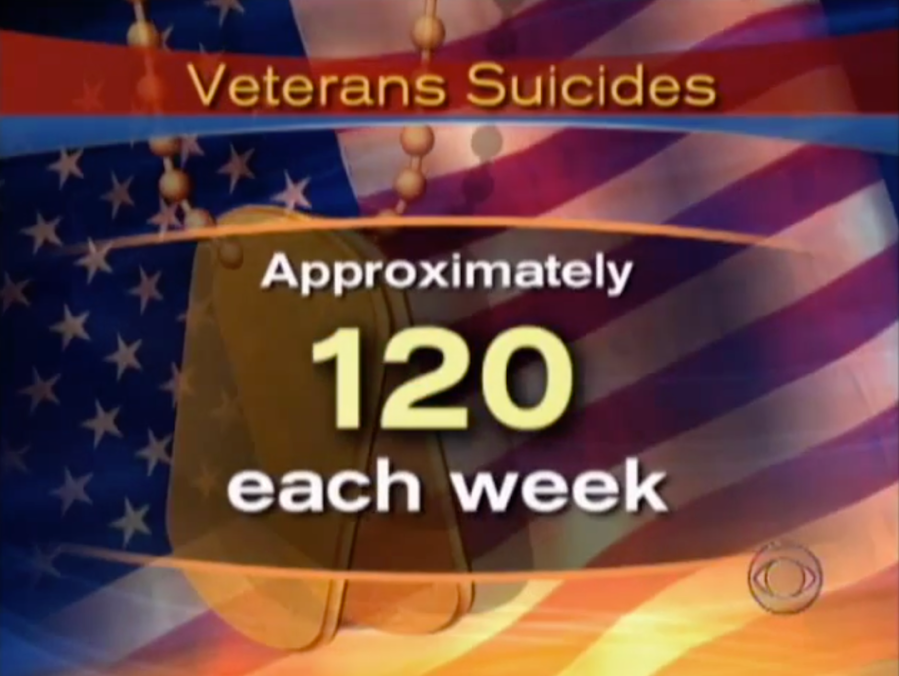
CBS News first reported on the staggering number of veteran suicides in a report last year. Now, newly-released data shows that vets who get help from the VA are still at risk. Armen Keteyian reports. -CBS News (March 20, 2008)
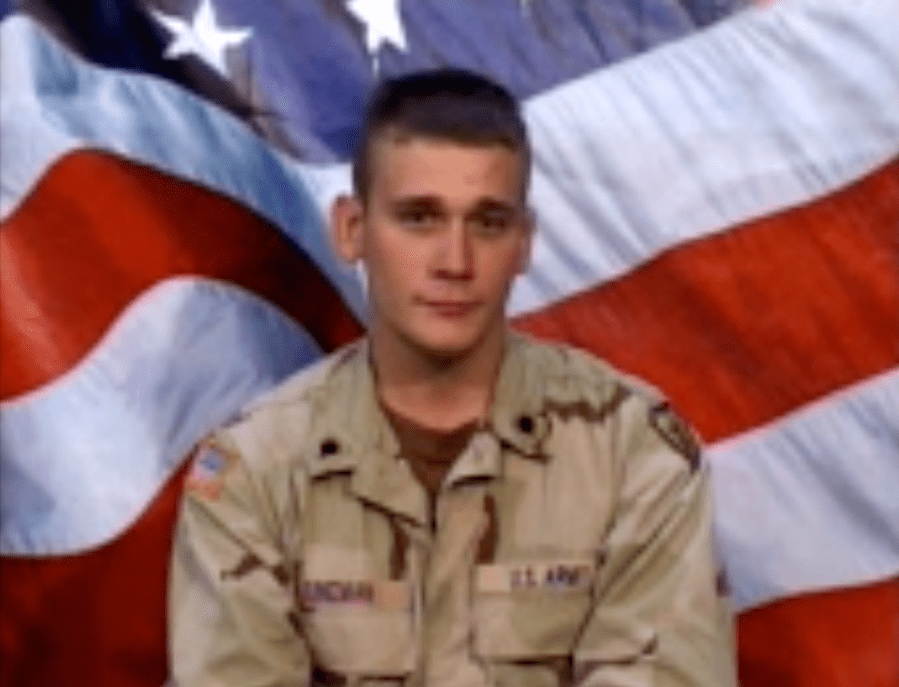
Spc. Timothy Juneman, Washington Army National Guard (Screenshot from DVIDS)
“The identity of one other veteran who killed himself this year became public when his family wrote U.S. Sen. Patty Murray in April about concerns with VA mental health care. Spc. Timothy Juneman, 25, a National Guardsman and former [Fort Lewis] Stryker Brigade soldier who was injured in a roadside explosion in Iraq, died March 5, 2008…Juneman’s body was found in his Pullman home March 25, nearly three weeks after he had hanged himself. He had missed several appointments at the Spokane VA. In records obtained by Juneman before his death, Brown wrote that imminent redeployment to Iraq with the National Guard was a ‘major stressor’ contributing to Juneman’s condition, his mother said.” Read more from The Spokesmanhere.
In the News:
CBS News first reported on the staggering number of veteran suicides in a report last year. Now, newly-released data shows that vets who get help from the VA are still at risk. -CBS News (March 20, 2008)
They served their country honorably but after risking their life in combat abroad, coping with coming home was too much. In the last three months seven servicemen being treated by Spokane’s VA Hospital have committed suicide. -4 News Now (April 29, 2008)
Despite recent efforts by the Veterans Administration to prevent veteran suicide, seven have committed suicide in the Inland Northwest in the last four months and US Senator Patty Murray is calling the situation unacceptable. -4 News Now (May 1, 2008)







 MILITARY JUSTICE FOR ALL