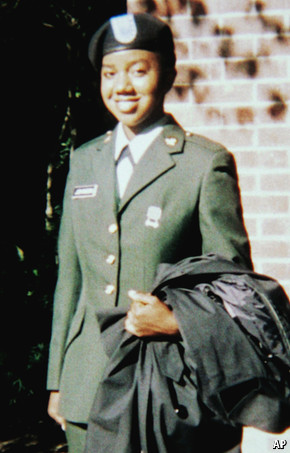
We are not exactly sure when Army Pfc. LaVena Johnson’s CID Report was dumped on-line by the government but it appears to have shown up after the death of Vanessa Guillen. (Source: US Army CID)
Dr. John Johnson clarified in an interview on the Donny Walker Morning Show that wound statin was found on LaVena’s genitals. Listen to the full interview here.
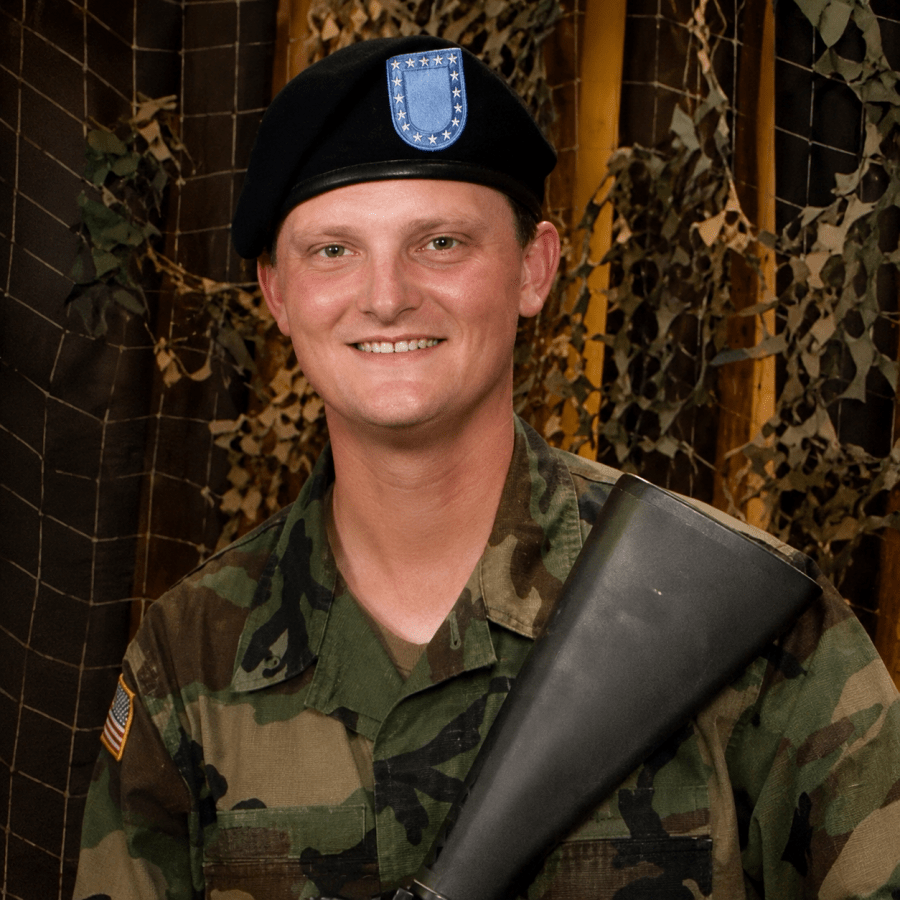
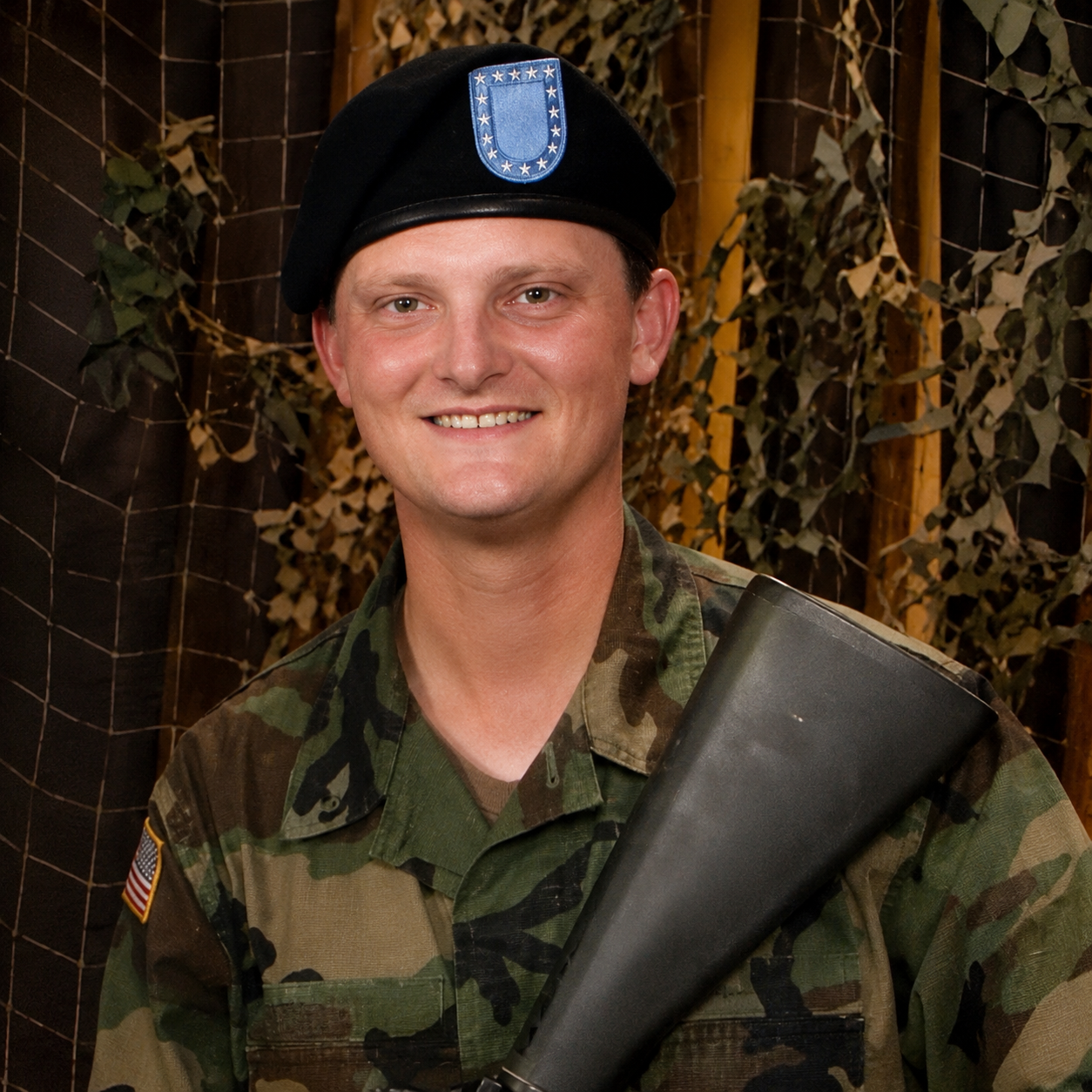
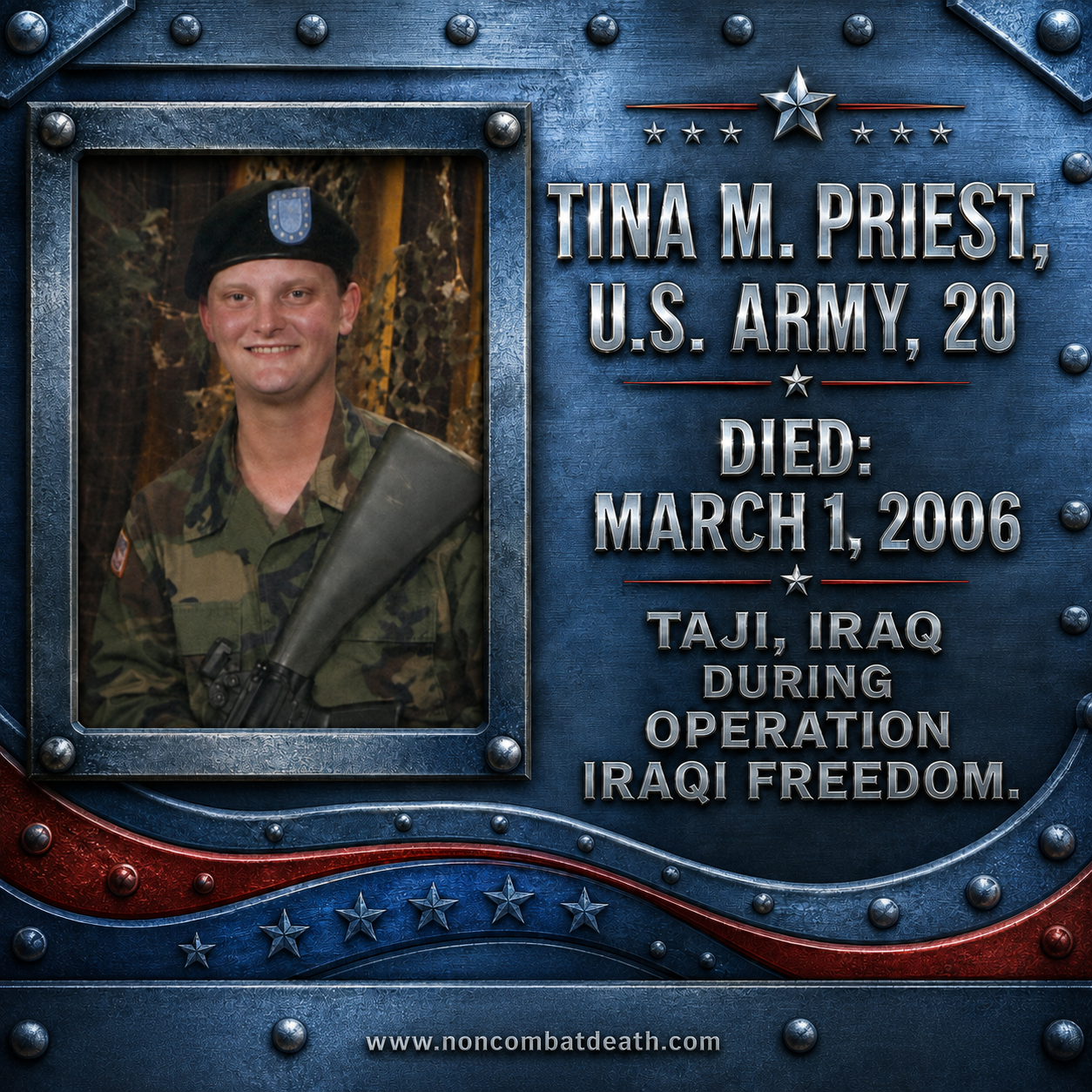
Army Pfc. Tina Priest, 20, died from a non-combat related injury in Taji, Iraq on March 1st, 2006. She was supporting Operation Iraqi Freedom on behalf of the 4th Support Battalion, 1st Brigade Combat Team, 4th Infantry Divison at Fort Hood, Texas. The Army ruled the death an apparent suicide but Tina’s parents dispute that finding based on the evidence and believe that she was raped and murdered; Tina reported a rape two weeks prior to her death.
This case is no longer under investigation by the Army but considered an unsolved cold case because of the concerns the family has with the death investigation and cause of death ruling by the Army. Forty-one (41) female service members died of non combat related injuries while serving in Iraq; and twenty-three (23) were labeled homicide, suicide, or the cause of death is unknown.
Please see the MJFA Investigative Dossier for Tina Priest at the end of the article.
The Silent Truth Documentary:
Ninety-four US military women in the military have died in Iraq or during Operation Iraqi Freedom (OIF). ‘The Silent Truth’ tells the story of one of these women, PFC LaVena Lynn Johnson, who was found dead on Balad Air Force Base in Iraq. The army claimed she shot herself with her own M16 rifle, but forensic evidence, obtained by the Johnson family through the Freedom of Information Act, brings the army’s findings into question. The Army refuses to re-open LaVena Johnson’s case, leaving the family in limbo. ‘The Silent Truth’ follows the Johnson’s pursuit of justice and truth for their daughter. -The Silent Truth Documentary (July 1, 2014)
Update: The Silent Truth is no longer available on YouTube but can be accessed at Fandango at Home.
The Silent Truth Documentary aka The LaVena Johnson Murder Cover-Up (Truthout, November 18, 2010):
“What happened to LaVena Lynn Johnson and so many others speaks to a Pentagon culture which more closely resembles a rogue government–than a legitimate branch serving under civilian control. It is highly telling that this family, along with the Tillman family each had to have a documentary film made JUST TO ALERT THE PUBLIC TO THE TRUTH OF PENTAGON COVER-UPS. I urge everyone to view this important documentary – before the local military recruiter mandated under No Child Left Behind –‘friends’ their child at school. God forbid, they could wind up coming home in a body bag – like LaVena.”
PFC Tina M. Priest, U.S. Army • Operation Iraqi Freedom
Executive Summary
On March 1, 2006, 20-year-old Army PFC Tina M. Priest was found dead in her quarters at Camp Taji, Iraq, from a gunshot wound involving her assigned M16 rifle. She served with the 4th Support Battalion, 1st Brigade Combat Team, 4th Infantry Division, based at Fort Hood, Texas.
Approximately two weeks earlier, Priest had reported that she had been sexually assaulted by another soldier. Following an investigation, the Army concluded there was insufficient evidence to prosecute the allegation. After her death, the Army ruled the manner of death was suicide.
Her mother, Joy Priest, has consistently challenged both the sexual assault investigation and the suicide determination, arguing that important evidence and investigative questions were not adequately addressed. Tina’s case later became part of broader reporting on disputed non-combat deaths of women serving during the Iraq War and contributed to public debate about military sexual assault investigations and institutional accountability.
Personal Information
Name: Tina Marie Priest Age: 20 Branch: United States Army Units
4th Support Battalion
1st Brigade Combat Team
4th Infantry Division
Home Station: Fort Hood, Texas Deployment: Camp Taji, Iraq Date of Death: March 1, 2006 Official Classification: Non-combat death
Chronological Timeline
Late 2005
Priest deploys to Iraq with the 4th Infantry Division.
February 15, 2006
According to Army records discussed in subsequent reporting:
Priest reports that she was sexually assaulted by another soldier.
She undergoes a forensic medical examination.
DNA evidence reportedly confirms sexual contact occurred.
The central investigative question becomes whether the encounter was consensual.
Mid-February 2006
Army Criminal Investigation Division (CID):
interviews witnesses,
investigates the assault allegation,
gathers forensic evidence.
Behavioral health providers evaluate Priest.
Army records later cited in media reports indicate she did not meet criteria for immediate suicide intervention despite emotional distress related to the reported assault.
February 27–28
According to Army records discussed publicly:
Priest reportedly returns to duty.
The sexual assault investigation remains open.
March 1, 2006
Priest is discovered dead in her room at Camp Taji.
The death scene includes:
assigned M16 rifle
single gunshot wound
Initial casualty reports classify the death as a non-combat injury pending investigation.
Spring 2006
CID completes the death investigation.
Official conclusion: Suicide
The sexual assault case is closed without criminal charges.
2007–2009
Joy Priest publicly challenges:
the suicide ruling,
the sexual assault investigation,
Army transparency.
National media revisit the case as part of broader reporting on disputed military deaths involving women serving in Iraq.
Official Army Findings
According to the Army investigation:
Cause of Death: Gunshot wound
Manner of Death: Suicide
Sexual Assault Investigation
Army investigators concluded:
sexual intercourse occurred;
however, they determined there was insufficient evidence to establish beyond the applicable legal standard that the encounter was non-consensual.
No rape charges were filed.
Behavioral Health
Army records referenced in reporting indicate:
Priest experienced emotional distress after reporting the alleged assault.
Evaluators did not classify her as presenting an immediate suicide risk shortly before her death.
Family Concerns
Joy Priest has consistently disputed the Army’s conclusions.
Among the concerns she has publicly raised:
1. Timing
The death occurred roughly two weeks after the reported sexual assault.
The family questioned whether sufficient protection and support had been provided.
2. Suicide Determination
The family has stated they did not believe Tina intended to end her life.
They cited:
future plans,
conversations with family,
and what they viewed as inconsistencies with suicide.
3. Firearm Questions
Joy Priest questioned whether the mechanics of firing an M16 were consistent with Tina’s physical stature and the circumstances documented at the scene.
The Army maintained that its reconstruction supported a self-inflicted gunshot.
4. Investigation Transparency
The family has described delays obtaining:
investigative files,
autopsy information,
photographs,
and other records.
These concerns became part of later media reporting.
5. Sexual Assault Investigation
Joy Priest questioned why no charges resulted despite forensic evidence confirming sexual contact, arguing investigators did not adequately resolve whether the encounter was consensual.
Evidence Known Publicly
Public reporting identifies:
✓ Sexual assault report
✓ Medical forensic examination
✓ DNA evidence confirming sexual contact
✓ CID investigation
✓ Behavioral health evaluations
✓ Death scene investigation
The complete investigative file has not been fully released publicly.
Unanswered Questions
Among the questions raised publicly by family members and journalists:
Was every potential witness interviewed?
Were all forensic findings independently reviewed?
Were suicide-risk assessments sufficient following the reported assault?
Could additional victim advocacy or protective measures have altered the outcome?
Should the assault investigation have remained open longer?
These questions remain subjects of public debate; the Army has not changed its official conclusions.
Broader Context
Tina Priest’s death became part of a wider conversation concerning:
military sexual assault,
behavioral health,
non-combat deaths,
investigative transparency,
institutional accountability.
Her case has frequently been discussed alongside other disputed deaths of women who served during the Iraq War, particularly where families challenged official findings.
Congressional hearings on military sexual assault and investigative practices (110th Congress), which referenced broader concerns about military handling of sexual assault cases.
Public statements by Joy Priest in interviews and media coverage.
Recommended Additional Records to Obtain:
Army Criminal Investigation Division (CID) Report of Investigation.
Army Line of Duty (LOD) investigation.
Armed Forces Medical Examiner autopsy report.
Death scene photographs and evidence inventory (where releasable).
Sexual Assault Forensic Examination (SAFE) documentation, subject to privacy restrictions.
Behavioral health evaluations created before March 1, 2006.
Casualty Assistance Office records.
FOIA responses from the Army, CID, and the Department of Defense.
Any Inspector General correspondence related to the case.
Editors Note: Need to get up to speed quick with the unsolved case of Fort Campbell Army Pfc. Lavena Johnson, please check out Episode 40 on the Military Murder Podcast.
Army Pfc. LaVena Johnson, 19, died of non combat related injuries in Balad, Iraq on July 19, 2005. Pfc. Johnson was supporting Operation Iraqi Freedom on behalf of the Army’s 129th Corps Support Battalion in Fort Campbell, Kentucky. Unlike most, the Department of Defense did not announce that LaVena’s death was under investigation in their press release. The Army Criminal Investigation Division later determined that Pfc. Johnson’s cause of death was suicide by self inflicted gunshot wound. The Army tried telling the family that LaVena used her own M-16 to commit the suicide. The family immediately suspected foul play and ordered an independent autopsy for LaVena. LaVena was not depressed and showed no signs of suicidal ideation. As a matter of fact, she was happy and bubbly and looking forward to going home for Christmas. After the family saw LaVena’s body and obtained investigative documents from the Army, they quickly realized that LaVena did not die by suicide, she was raped and murdered.
According to the family, the Army never investigated LaVena’s death as a homicide nor did they do a rape kit test or autopsy. The family gleaned from the paperwork that Army investigators first considered LaVena’s death a homicide and recorded that in their paperwork, but within a short window of opportunity were suddenly ordered to cease their investigation and reclassify her death as a suicide. Ten years later, LaVena’s father, Dr. John Johnson, continues to fight for justice for his daughter. And, although he has had struggles getting media coverage, he has forged out on his own to speak the truth for LaVena. Dr. Johnson is featured in a documentary called The Silent Truth which presents the heartbreaking story of his daughter LaVena. Pfc. LaVena Johnson was betrayed by the very people she depended on for her life, and the military industrial complex who would rather silence the truth then harm their reputation.
Nineteen year-old Army PFC LaVena Johnson, was found dead on a military base in Balad, Iraq in 2005. The U.S. Army ruled Lavena’s death a suicide, but an autopsy report and photographs revealed Johnson had a broken nose, black eye, loose teeth, burns from a corrosive chemical on her genitals, and a gunshot wound that seemed inconsistent with suicide. LaVena’s father, John Johnson, shares his family’s fight to get answers from the military about his daughter’s death. -Protect Our Defenders (July 14, 2012)
Pfc. LaVena Johnson died in Iraq on July 19th, 2005 and her family needs your help. -Unsolved Mysteries (September 26, 2014)
Many have heard about the efforts for justice in the case of Army PFC LaVena Johnson. In 2005 after only 6 weeks of her deployment in Iraq, PFC LaVena Johnson was found dead. The Army says suicide, but after close evaluation and discovering a plethora of discrepancies in the Army’s report, LaVena’s father Dr. John H. Johnson began the fight for justice for his daughter. On this episode of The Rock Newman Show our special guest are LaVena’s father, Dr. John H. Johnson and attorney Donald V. Watkins. We warn our viewers that this episode of The Rock Newman Show goes into deep detail concerning the evidence and death of PFC LaVena Johnson. Dr. John H. Johnson and Donald V. Watkins contend that by no means is this case a suicide, and say they even know the name of the culprit. -The Rock Newman Show (February 11, 2016)
Army Pfc. Melissa Hobart, 22, died after collapsing on guard duty in Baghdad, Iraq on June 6, 2004. Pfc. Hobart was supporting Operation Iraqi Freedom (OIF) on behalf of the Company E, 215th Forward Support Battalion, 1st Cavalry Division in Fort Hood, Texas. At the time of the Department of Defense press release, the incident was under investigation. Pfc. Hobart left behind a three-year-old daughter. According to Melissa’s memorial site, military officials believe Melissa suffered from a heart attack. Melissa’s mom Connie Hobart told the Hartford Courant that she was put on an anti-depressant shortly before deploying to Iraq and was still feeling depressed. Connie reported in 2006 that the official word from the military, two years later, was that she died of an undetermined cause.
Connie Hobart’s 22-year-old daughter, Army Pfc. Melissa Hobart, was put on an anti-depressant shortly before deploying and had told her mother that she remained depressed while in Baghdad. Three months into her tour, in June 2004, the East Haven native collapsed and died of a still-undetermined cause. Told of the policy changes Monday, Connie Hobart said, “I’m happy to hear about it. That’s good news.” Sobbing, she said her daughter might be alive today if the policy had been different at the time. –Hartford Courant
Xatavia Hughes, an Iraqi war vet is looking for a safer neighborhood for herself and two sons. She is in her current home in the Englewood neighborhood on Nov. 6, 2013. -Chicago Tribune (December 2, 2013)
“One woman saw the military as a stop along the path of higher education. The other saw service as a road out of poverty. They enlisted in what’s typically thought of as a man’s world, and they both died in it. When Pfc. Nichole Frye’s convoy was attacked with a roadside bomb in Baqouba, Iraq, in February, she became the 15th servicewoman to die in the Iraq war, equaling the official number of female soldiers killed in the 1991 Persian Gulf war. When Capt. Gussie Jones, 41, died Sunday of a heart attack in the Baghdad hospital where she served as an Army surgical nurse, that gulf war total was officially surpassed. The conflict in Iraq now has the designation of claiming the lives of more U.S. servicewomen than any hostile theater since World War II, according to Department of Defense statistics. The stories of women like Frye and Jones–what drew them to the military and how they died in that service–reveal much about the role of American military women in Iraq.” -Chicago Tribune (March 11, 2004)
Read more ‘In War Without Front Lines, Women GIs Caught in Chaos’ from the Chicago Tribunehere.
Army Sgt. Keicia Hines, 27, died when she was struck by a vehicle on Mosul Airfield on January 14, 2004 in Mosul, Iraq. Sgt. Hines’ home of record is listed as Citrus Heights, California. She was supporting Operation Iraqi Freedom on behalf of the 108th Military Police, Combat Support Company, Fort Bragg, North Carolina. According to her husband, Sean Hines, she also served in Bosnia and Israel. At the time of the Department of Defense press release, the incident was under investigation. There is no further information available on the outcome of the investigation.
“The Army has provided few details of the accident that killed Hines. Her mother, a civilian analyst for the Sacramento police department, said she did not know what kind of vehicle struck her daughter, who was driving or how it happened. The Army said the accident remains under investigation.” –SF Gate
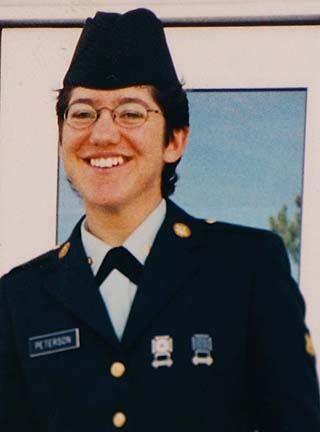
Army Spc. Alyssa Peterson, 27, died from a non-combat weapons discharge in Telafar, Iraq on September 15, 2003. Spc. Peterson was supporting Operation Iraqi Freedom on behalf of the C Company, 311th Military Intelligence Battalion, 101st Airborne Division (Air Assault) at Fort Campbell, Kentucky. At the time of the Department of Defense press release, the incident was under investigation. Media reports indicate that Spc. Peterson’s death was ruled a suicide.
“Appalled when ordered to take part in interrogations that, no doubt, involved what most would call torture — another wrong turn by the United States following 9/11 — Alyssa Peterson refused, then killed herself a few days later, on September 15, 2003…Spc. Alyssa Peterson was one of the first female soldiers who died in Iraq. Her death under these circumstances should have drawn wide attention. It’s not exactly the Tillman case, but a cover-up, naturally, followed.” –Greg Mitchell Huffpost (October 12, 2014)
Navy Reservist Lt. Kylan Jones-Huffman, 31, was killed by an unidentified gunman on August 21, 2003 in Al Hillah, Iraq. Lt. Jones-Huffman was on temporary duty with the I Marine Expeditionary Force supporting Operation Iraqi Freedom.