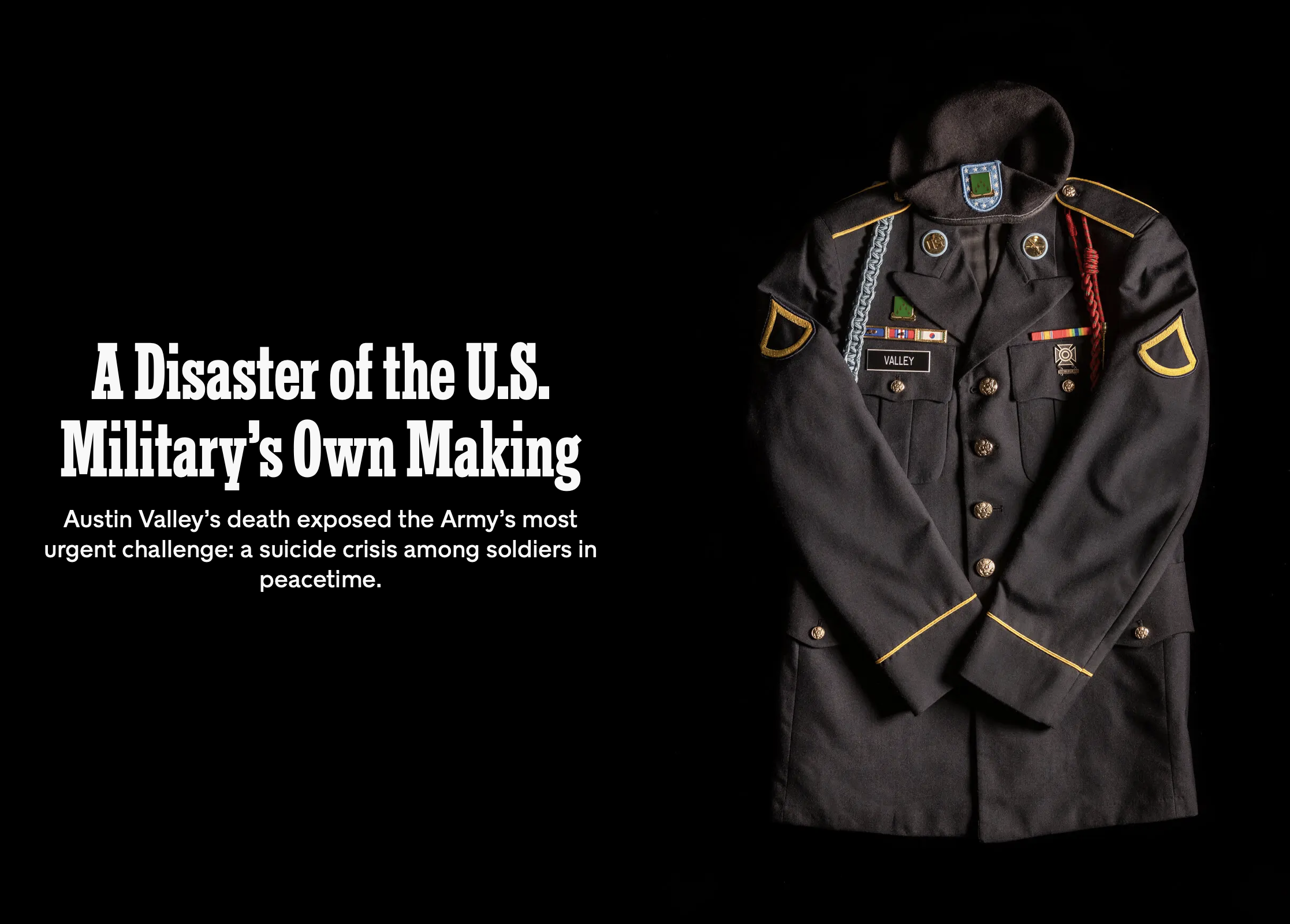
A Disaster of the U.S. Military’s Own Making – Austin Valley’s Death Exposed the Army’s Most Urgent Challenge: A Suicide Crisis Among Soldiers in Peacetime

“Austin Valley had just arrived at his Army base in Poland, last March, when he knocked on his buddy Adrian Sly’s door to borrow a knife. The base plate of his helmet was loose and needed fixing, he told Sly. The soldiers had spent most of their day on a bus, traveling from their former base to this new outpost in Nowa Deba, near the border with Ukraine. It had been a monotonous 12-hour journey with no stops and nothing to eat but military rations. Sly thought his friend looked exhausted, but then so did everyone else. He handed Valley an old hunting knife, and Valley offered an earnest smile. “Really appreciate it, man,” he said. Then he disappeared.”

“Word of a soldier’s disappearance spread quickly across the Polish base. Sly recalled sergeants pounding on doors and shining their flashlights. “Where’s Valley?” one asked him. Sly and several others from Valley’s unit took off into the woods. Seeing fresh tracks in the snow, one soldier followed them until he heard a faint gurgling sound. Drawing closer, he saw Valley, hanging from a tree. He was alive, but barely conscious. The soldier cut Valley down, while another called for the medics, who sped off with him into the night. His friends would never see him again. The following morning, Valley was taken to the U.S. Army hospital in Landstuhl, Germany, and then returned to Fort Riley. Four weeks later, he was dead.”

Read more here.
What to Know About Suicides in the U.S. Army

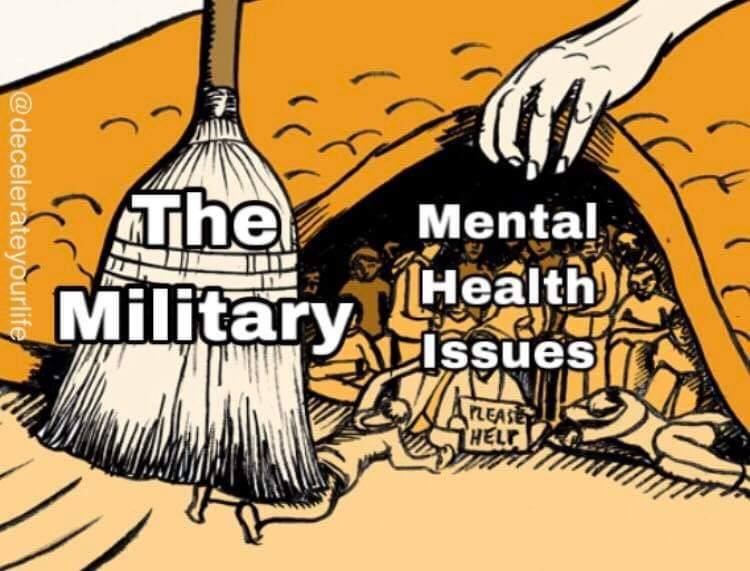
“Soldiers are more likely than their civilian peers to die by suicide. Many people wrongly believe this is because of combat trauma, but in fact the most vulnerable group are soldiers who have never deployed. The Army’s suicide rate has risen steadily even in peacetime, and the numbers now exceed total combat deaths in the Iraq and Afghanistan wars. A Times investigation into the death of Specialist Austin Valley, stationed at Fort Riley in Kansas, found that mental-health care providers in the Army are beholden to brigade leadership and often fail to act in the best interest of soldiers.”

Read more here.
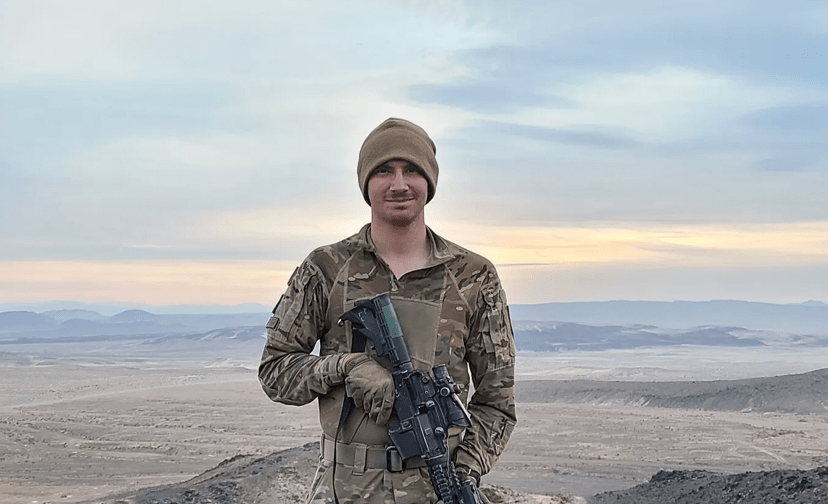
Austin Valley, U.S. Army (2001-2023)

RELATED LINKS:
What to Know About Suicides in the U.S. Army
A Disaster of the U.S. Military’s Own Making – Austin Valley’s Death Exposed the Army’s Most Urgent Challenge: A Suicide Crisis Among Soldiers in Peacetime
A Soldier Attempted Suicide in Poland. Left to Roam at Fort Riley, He Killed Himself.
Another Avoidable Army Suicide – National Review
The Vast Majority of Active-Duty Military Deaths Happen in the U.S.—What Is Going Wrong?
Military Policy and Legislation Considerations for the Investigations of Non Combat Death, Homicide, and Suicide of US Service Members
Trends in Active-Duty Military Deaths Since 2006 | Congressional Research Service (July 1, 2020)
Army Soldiers at Fort Hood in Texas Are Dying at Alarming Rates Stateside (January 1, 2016 to 2020)
Research Reveals Pattern of Violence, Suspicious Deaths, Problematic Death Investigations, and Cover-up at Fort Hood in Texas (September 11, 2020)
Fort Hood’s Toxic Culture? Red Flags Raised Over Mysterious Disappearances, Sexual Assaults | Hollie McKay (January 6, 2021)
15 Active Duty Cases That Beg for Prevention Efforts, Military Justice Reform, and the End of the Feres Doctrine
Fort Hood Army Sgt. Elder Fernandes Found Deceased in Temple, Texas; Death Ruled Suicide by Dallas Medical Examiner (August 25, 2020)
Kansas Army National Guard Veteran Zachary Schaffer Found Unresponsive in Kansas City Home; Death Ruled Fatal Drug Overdose (January 23, 2019)
Army Pvt. Nicole Burnham Found Unresponsive in Fort Carson Barracks; Death Ruled Suicide After Sexual Assault, Retaliation & a Three Month Expedited Transfer Delay (January 26, 2018)
Navy Sailor Brandon Caserta Died by Suicide at Naval Station Norfolk; Family Pushing for Suicide Prevention Legislation ‘The Brandon Act’ Focusing on Hazing & Bullying (June 25, 2018)
Army explores predicting suicides as a way to prevent them (2013)
Fort Carson Army Pvt. Jordan DuBois Wrote Facebook Suicide Note Shortly Before Dying in Single Vehicle Crash in Colorado (2012)
Army Sgt. Kimberly Agar Died by Suicide in Germany; Death Prompts Family to Raise Awareness of Active-Duty Military Suicide Rates (October 3, 2011)
Non Combat Deaths of Female Service Members in the U.S. Military (Iraq)
Non Combat Deaths of Female Service Members in the U.S. Military (Afghanistan)
Non Combat Deaths of Female Service Members in the U.S. Military (Other Areas)
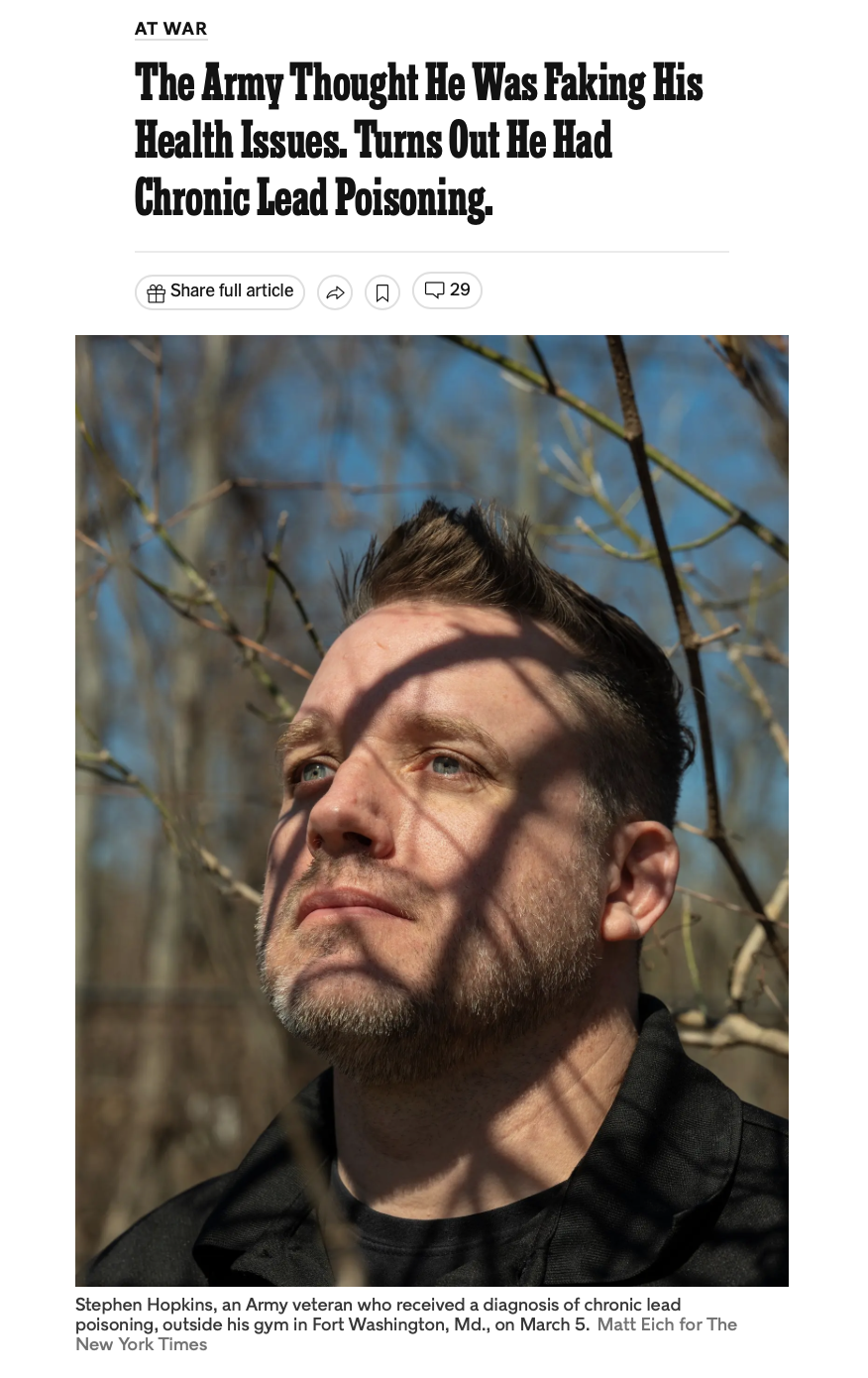
New York Times: The Army Thought He Was Faking His Health Issues. Turns Out He Had Chronic Lead Poisoning. (April 3, 2019)

By Patricia Kime (April 3, 2019)

“…In 2005, Hopkins began experiencing wild swings in blood pressure. And he had other symptoms: crippling nausea, constant dizziness, a skyrocketing heart rate. He was given a diagnosis of common high blood pressure, and for a while he felt better by keeping himself on a high dose of a medication for that condition. He was on deployment in Afghanistan when the nausea returned, with migraine symptoms, abnormal thirst and muddled thinking. Medical tests were inconclusive, leading military doctors and commanders to suspect depression, post-traumatic stress disorder or, worse, “malingering” — the medical term for soldiers who feign sickness to shirk duty.”

“While the number of affected soldiers is small, the diagnosis can be life-changing to these troops, who for years have wrestled with unexplained symptoms that mimic traumatic brain injury or PTSD, including impaired concentration, anger, anxiety and impulsivity, as well as physical manifestations like tremors, high blood pressure, low sperm count and peripheral neuropathy.”

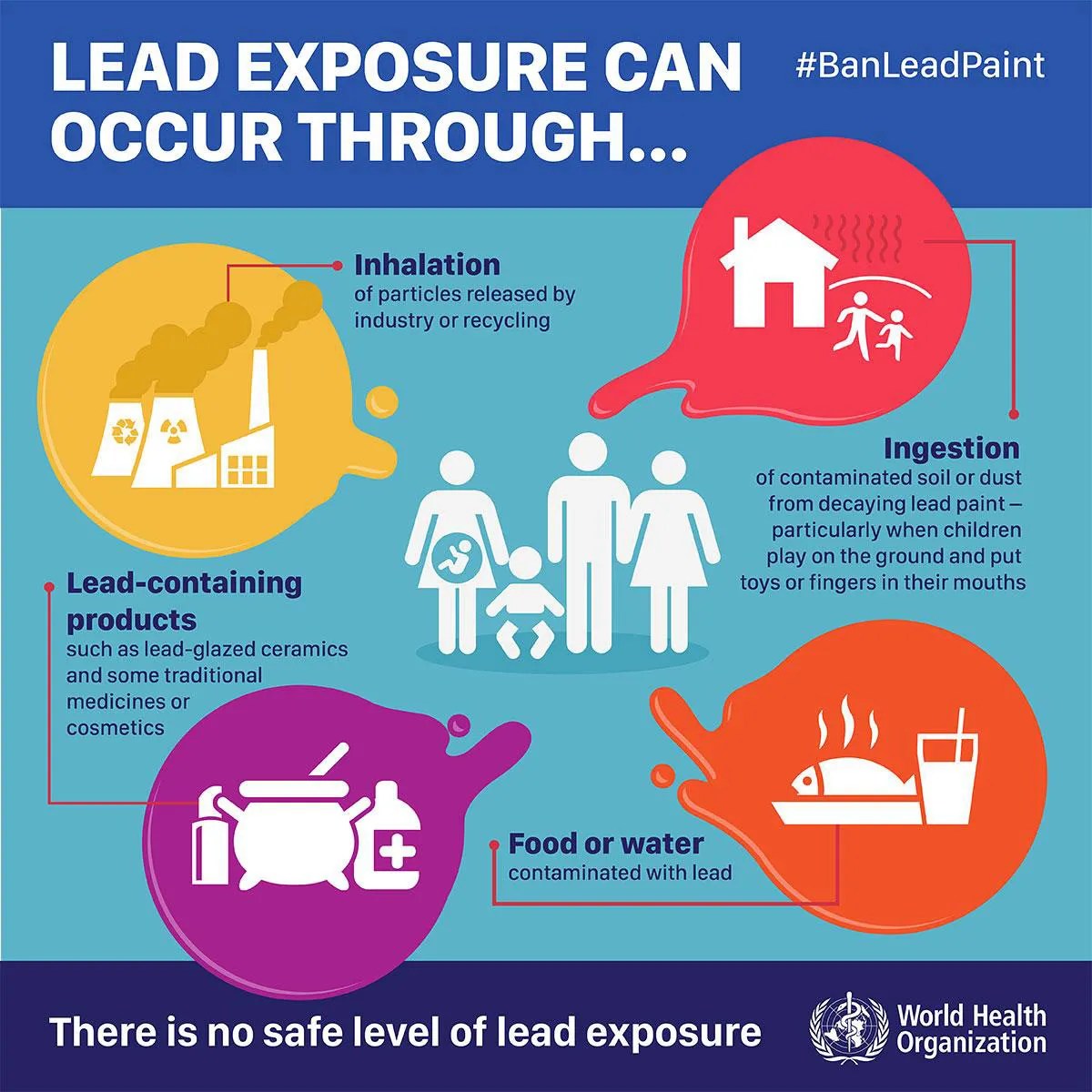
“Lead exposure is a known hazard of military service: The United States armed forces have fired billions of rounds of ammunition containing the toxic material since entering Afghanistan in October 2001. Troops are exposed to the metal while shooting indoors and outside; gathering shell casings; smoking, chewing tobacco or eating on ranges; cleaning their weapons; and living and fighting in polluted environments. But lead monitoring and testing programs at the Defense Department have focused primarily on service members who work on firing ranges and on the civilian staff at ranges, who are regulated by Occupational Safety and Health Administration guidelines. Defense Department policy requires service members who may be exposed to high levels of airborne lead for 30 or more days a year to get a blood test for lead, with follow-up tests at least annually.”

“After he diagnosed Hopkins and another service member with chronic lead poisoning, Dorrance contacted the office of the surgeon at Special Operations Command, the Environmental Health unit at Fort Bragg and officials at Navy and Marine Corps Public Health Command to request that more troops be tested and the problem be researched. But six years after the issue was first raised, little progress has been made. The Department of Defense, which until last year annually tested blood lead levels in just 1,200 out of almost three million troops and civilian employees, has found very few cases of lead poisoning, leading Army officials to believe that there isn’t a widespread problem.”

“Dorrance and Dr. Mark Hyman, director of the Center for Functional Medicine at the Cleveland Clinic, argue that this theory is wrong — and that they have the patients to prove it. Pointing to a growing body of research that suggests that lead in the bones may be more toxic than once thought, they say physicians should be considering lead poisoning as a possible cause for many unexplained symptoms in service members, especially uncontrolled hypertension, fatigue and brain fog. ‘These soldiers are breaking down, and they go to doctor after doctor after doctor, and every single one of them misses what is going on,’ Hyman said. ‘These soldiers aren’t getting the proper care. It’s a huge blind spot.'”

Read more from the NY Times here: The Army Thought He Was Faking His Health Issues. Turns Out He Had Chronic Lead Poisoning.

Lead Poisoning Symptoms:

1. Decreased cognitive abilities, especially reduced ability to focus on, learn, and remember new things
2. Fatigue
3. Irritability
4. Abdominal pain or “stomach aches” 
5. Headache
6. Constipation 
7. Loss of appetite
8. Tingling in the hands or feet

Learn more here: Symptoms of Lead Poisoning

Related Stories:
After Lead Poisoning Symptoms Dismissed by PTSD Diagnosis, It Results in Brain Inflammation, Fatigue, Muscle Weakness, Digestion Issues & Chronic Pain
I Watched My Father Die From a Brutal & Painful Battle with Terminal Bone Cancer… And My Toxic Military Leadership Kicked Me While I Was Down
NBC News: Veterans Wait 30 Years on Average for the U.S. to Acknowledge Toxic Exposures (September 18, 2024)
How Lead Poisoning Is Treated And How to Reduce Your Risk

Military Sexual Assault: Photojournalist Mary Calvert Documented Some of Their Stories | Cosmopolitan (August 26, 2014)

Mary Calvert
Mary Calvert

In Photos: The Epidemic of Military Sexual Assault

Some 26,000 women [and men] are sexually assaulted in the military every year. Photojournalist Mary Calvert documented some of their stories.

“Why is this happening? To answer that question, Mary Calvert met with survivors and went to congressional hearings on military sexual assault. The women she met connected her with more women, and she photographed them in their homes and communities. Through her work, she learned that just 1 in 7 victims of sexual assault in the military reported the attack; of those assaults that were reported, just 1 in 10 ever saw a trial.”

Read more from  Cosmopolitan here.

“I get emails, and comments from people saying, ‘I was sexually assaulted in the military and I’ve never told anybody and when I saw these pictures and read these stories I felt more courage to go out and get some help.'” -World Press Photo Foundation (May 18, 2017)

Related Links:
Mary F. Calvert Official Website
The Battle Within: Sexual Assault in America’s Military Part 1: The Hearings
The Battle Within: Sexual Assault in America’s Military Part 1: The Survivors
Missing in Action: Homeless Women Veterans
The Battle Within: Sexual Assault in America’s Military
Mary F. Calvert | John Simon Guggenheim Foundation
Surviving Rape in the Military – The New York Times
The New York Times Discusses Mary F. Calvert’s Photography on Sexual Assault in the Military
Thousands Are Sexually Assaulted In The U.S. Military Every Year. These Are Some Of Their Stories.
Photos: Women Who Risked Everything to Expose Sexual Assault in the Military
Haunting Photo Essay Illustrates the Real-Life Toll of Military Sexual Assault in America
Sexual Assault in America’s Military | Photographer: Mary F. Calvert
World Press Photo Winners: Mary F. Calvert and Military Sexual Assault
“It’s sad to think that this could become my life’s work”
Mary F. Calvert on Photographing Military Sexual Assault Without Adding to Her Subjects’ Suffering
The Battle Within: Sexual violence in America’s military laid bare as record numbers of women are raped
‘I just pulled up my pants and went back to work’: Women veterans reveal the shocking sexual and physical abuse they suffered in the US armed forces
The Battle Within: Sexual Assault in America’s Military | Visa pour l’image
Mary F. Calvert on ‘Sexual Assault in America’s Military’