“Timothy Hennis was sentenced to death for the murders of Katie Eastburn and her two daughters, Erin and Kara Eastburn. Katie was a military wife who lived on the Fort Bragg base with her husband and three daughters. This case takes a look at how important it is to follow investigatory protocol and how double jeopardy is actually interpreted in the legal system in a case that spans over two decades. Tune in to find out how this case unfolds, and where it stands today.” –The Case of Timothy Hennis, Death’s Door Podcast (September 14, 2017)
Fort Riley provides a Modern State-of-the-Art full spectrum,maneuver-friendly training environment in the Midwest, supporting the “TotalArmy.” Check out this five minute video to learn why Fort Riley finds itselfpositioned perfectly to provide for the Army’s current and future trainingneeds. -DVIDSHUB
2016 Antonio Bates, US Army: In 2016, veteran sentenced to 15 years in prison for sexual abuse of a minor in the 1990s while stationed at Fort Riley, Kansas Phillip Cruz-Medellin, US Army: Found dead in nearby Manhattan Oscar Delgado, US Army: Found dead on post after missing for a week Wayne Grigsby, US Army: Relieved of command of the 1st Infantry Division due to loss of confidence in ability to lead, suspended and fired Joseph Stifter, US Army: Died in fatal roll-over accident, Iraq
2014 James Henning, US Army: arrested for sexual exploitation of a child, rape, and aggravated sodomy; bond set at $5,000,000, sentenced to life Scott Wilhelm, US Army: Arrested for sexual exploitation of a child, sexting
2012 Michael Braden, US Army: Found unresponsive in his living quarters, Afghanistan John Hughes, US Army: Convicted in the stabbing death of another soldier, sentenced to life in prison without parole Todd Lambka, US Army: Died from wounds suffered in IED explosion, Afghanistan Thomas Lavrey, US Army: Found unresponsive in living quarters on post Jesus Lopez, US Army: Died from wounds suffered in IED explosion, Afghanistan
2005 Kyle Dennis, US Army: Sentenced to 5 years in prison for third-degree burglary, accessory to aggravated assault and attempted theft Luke Hoffman, US Army: Sentenced to 5 years for attempted grand theft and two counts of aggravated assault Seferino Reyna, US Army: Died when IED detonated near military vehicle, Iraq Christopher Wilaby, US Army: Homicide of Echo Wiles, convicted in 2011 Echo Wiles, Civilian: Homicide victim of boyfriend, Army soldier
2001 James Hawthorne, US Army: Shot in leg after someone shot 4 bullets in his vehicle Shaun Leach, US Army: Died after someone shot 4 bullets into civilian vehicle Jeremy Ware, US Army: Accused of attempted unpremeditated murder, carrying a concealed weapon, and wrongful acquisition of a firearm
1985 Francis Badame, US Army: Murdered after tricked and lured by two Army soldiers to go to a remote section of military post to hunt deer, buried in shallow grave Timothy Keenan, US Army: Faced court-martial on murder and conspiracy charges & charged by state with conspiracy to commit first degree murder; plotted crossbow and beating death of Pvt. Francis Badame Wayne Partridge Jr, US Army: Testified he shot Pvt. Francis Badame in the back with a crossbow and Timothy Keenan repeatedly beat Badame with a shovel
Army paratrooper Pfc. Andrew Young, 21, was found dead in his barracks at Caserma Ederle in Vicenza, Italy on August 19, 2017. Pfc. Young joined the Army in 2015 and was assigned to the A Company, 1st Battalion, 503rd Infantry Regiment (Airborne), 173rd Airborne Brigade in Vicenza, Italy since January 2016. The incident is under investigation.
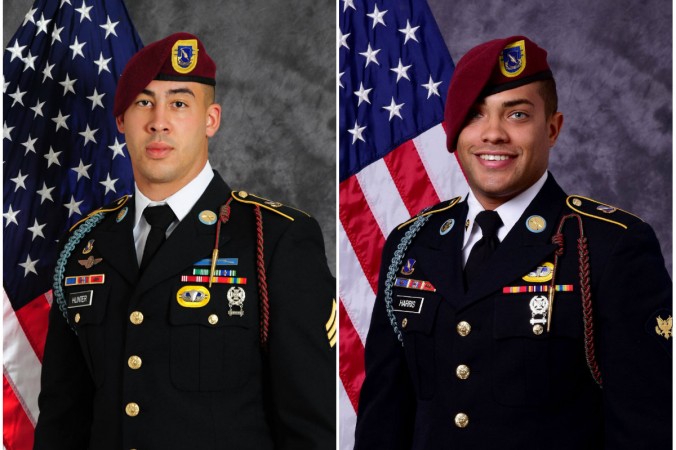
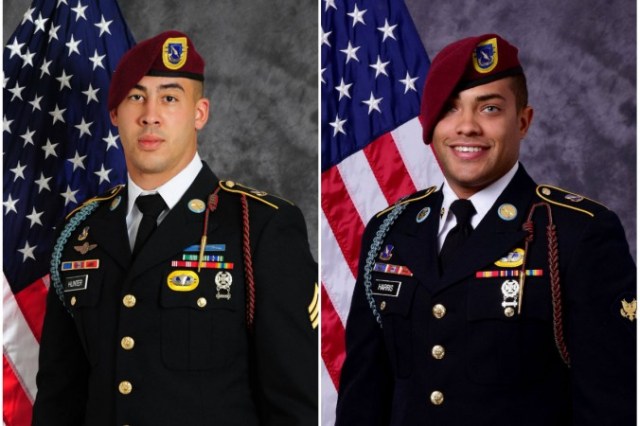
Sgt. Jonathon Hunter, US Army, and Spc. Christopher Harris, US Army
Sgt. Jonathon Hunter, 23, and Spc. Christopher Harris, 25, died as a result of injuries sustained when a vehicle-borne improved explosive device (IED) detonated near their convoy on August 2, 2017 in Kandahar, Afghanistan. Sgt. Hunter and Spc. Harris were supporting Operation Inherent Resolve on behalf of the 2nd Battalion, 504th Infantry Regiment, 1st Brigade Combat Team, 82nd Airborne Division at Fort Bragg, North Carolina. According the the Department of Defense press release the incident is under investigation.
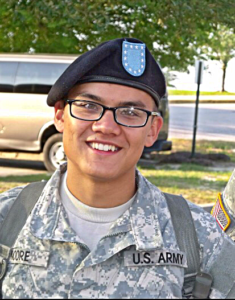
Spc. Zachary Moore, 23, of Virginia Beach, Virginia, was found unresponsive August 1, 2017 in his barracks room at Camp Hovey in South Korea. Spc. Moore was transported to St. Mary’s Hospital and pronounced deceased on August 2, 2017. Spc. Moore entered active-duty military service in March 2014 as a signal support systems specialist. He was assigned to the 9th Cavalry Regiment, 2nd Armored Brigade Combat Team, 1st Cavalry Division at Fort Hood in Texas since July 2016. The circumstances surrounding the incident were investigated by the U.S. Army Criminal Investigation Division (CID) and the cause of death was ruled a suicide.
*****************************************
Was Zachary Moore’s Death Preventable?
In May 2017, Fort Hood announced they were deploying 3,500 troops to South Korea over the summer. Twenty-three (23) year old Zachary Moore was one of the soldiers deployed to South Korea. With full knowledge of Zachary’s recent mental health issues, the Chain of Command gave him a mental health waiver against his will, and most likely against medical advice, so they could deploy him to South Korea.
In October 2016, Zachary had a mental health breakdown and went Absent without Leave (AWOL). After a successful intervention, Zachary was found and returned to the custody of his Chain of Command at Fort Hood. Zachary’s command then sent him to an emergency room where he was hospitalized and prescribed medication. After Zachary was discharged from the hospital, he continued to seek treatment for mental health issues. Six months later, Zachary was given a mental health waiver by his command to deploy to South Korea.
About a month after Zachary arrived at Camp Hovey in South Korea, his depression medication was changed. As a matter of fact, his depression medication was changed the day before he was found unresponsive in his barracks room. Zachary attempted to kill himself on August 1st, less than 24 hours after the medication change. It was Zachary who called his Command for help as there is no 911 on the base in South Korea. He was found unresponsive and finally transported to the hospital about 1 ½ to 2 hours later. He was admitted to the Intensive Care Unit, listed as critical then stable, yet passed away on August 2, 2017.
Why did Zachary Moore go AWOL?
The Chain of Command contacted Jeanette to report Zachary hadn’t been seen since October 18, 2016. They also informed her they were not actively looking for him but would file AWOL status on October 20th. When asked if they filed a missing persons report, Jeanette claims they told her they did but she says she was lead to believe Zachary trashed his room, took his things, and left willingly. She immediately flew to Texas from Florida to find him.
Jeanette contacted the Killeen Police Department as soon as she got to Fort Hood and the local law enforcement found Zachary the same day she arrived. Over the phone, the Command told Jeanette they filed a missing persons report but she learned from the Killeen Police Department that they never did. The Killeen PD noticed recent activity on Facebook so they pinged Zach’s cell phone & found that he was in a remote area of a local state park.
Zachary attempted to flee initially but after negotiations, he surrendered and was returned to the police station where his mom was waiting. Jeanette could tell Zachary was mentally broken and he admitted to her that he wanted to hurt himself. The Killeen PD found Zachary and he had a knife in his possession. Zachary was returned to the custody of his Chain of Command at Fort Hood. Shortly after Zachary informed his mom that his superiors told him to tell her to leave town and stop interfering.
Jeanette reports that Zachary never had any mental health issues prior to this and suspected that Zachary was “singled out by his command and harassed.”
Areas of Concern in Zachary Moore’s Case:
Zachary revealed he was harassed by his Chain of Command. For example, his leave papers to visit family before deploying were denied; he was denied permission to see the Fort Hood Inspector General officer; he was harassed during training exercises; he was given exhausting extra duties; and was accused of taking a radio which was later found on a military officer’s desk. Why was he denied the opportunity to speak to the IG officer?
Zachary was accused of trashing his room and taking his belongings when he went AWOL. Jeanette believes the circumstances surrounding the vandalism of his room and the theft of his property could be evidence of harassment.
During mental health treatment, Zachary was facing the consequences of going AWOL; Zachary was accused of trashing his own room; and Zachary was accused of stealing a secure radio? What are the additional mental health impacts of the way the Chain of Command uses the military justice system?
The circumstances of the mental health waiver and the justifications for sending Zachary to South Korea while he was undergoing treatment for mental health issues and medication management should be investigated.
The effects of the medication change in South Korea should be investigated. Is Command aware that some medications can cause serious negative reactions? (Some depression medication causes suicidal ideation.) Who monitors serious medication changes in deployed locations? Is it safe to deploy soldiers in the early phases of medication management for mental health issues?
Finally, the delay in the Command’s response to Zachary’s call for help in South Korea should be investigated. Why did it take so long to respond to Zachary and why did it take so long to get Zachary to the hospital? Did anyone attempt to administer help while waiting for the ambulance?
If the Command was the cause of the mental health break, where was Zachary supposed to turn? How do we hold the Chain of Command accountable? How do we prevent the Chain of Command from retaliating and using the military justice system or non judicial punishment as a weapon? What was the role of the Commander? What was the role of the Fort Hood Inspector General? How can we prevent a young soldier from feeling like the only way out of their situation is AWOL or suicide? How could we have prevented Zachary’s death?
Soldiers have come forward, given their stories to the family and have offered to testify about what Zachary was put through which may explain why he died. Were these soldiers questioned?
The Yates family moves to Spokane, WA only to find it besieged by a serial killer who’s targeting young women and confounding the police. Now, the family’s never-before-aired home videos provide a chilling look of one of America’s most notorious killers. -Family Snapshot, American Monster (S2,E2)
Editor’s note: With a cable subscription, you can download the free ID Go app and watch Investigation Discovery programming at your convenience. And for those who do not have cable, you can watch “unlocked” episodes on the ID Go app including the latest premieres. For those who prefer commercial free programming during your binge session, Prime Video has an ID channel: ‘True Crime Files by Investigation Discovery” available for $3.99 a month. It’s a compilation of older seasons but totally worth the cost if you are a true crime addict. Download the ID Go app or purchase ID True Crime Files & binge away.
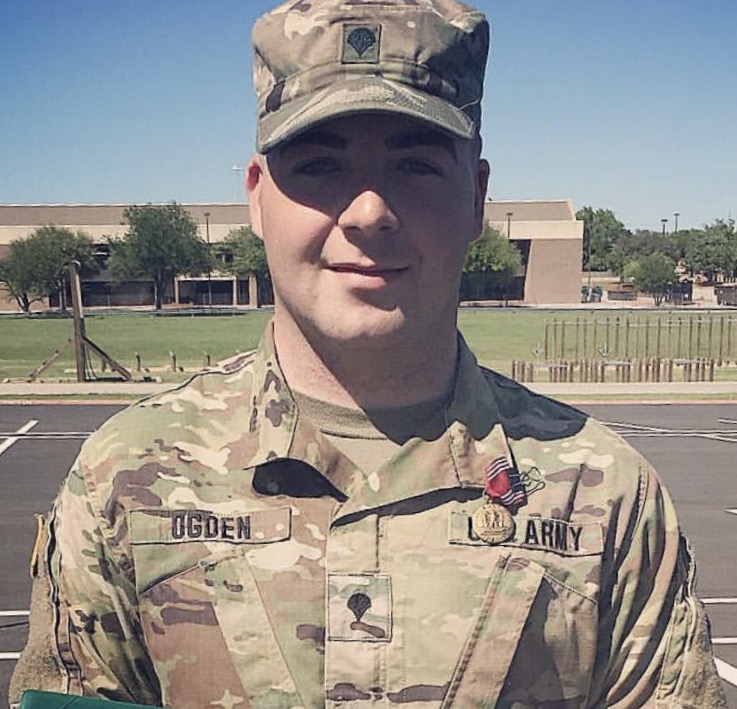
Fort Hood Army Spc. Justen Glenn Ogden, 22, was found unresponsive at his on post home on July 11, 2017. Spc. Ogden is survived by a daughter, parents, and three siblings. “Family meant alot to Justen, he didn’t let a day pass without talking to his daughter, brother and sister. He was an excellent father, brother, son and soldier. He will be greatly missed (obituary).” Spc. Ogden is from Humble, Texas and he joined the Army in March 2014 as a motor transport operator. In August 2014 he was assigned to 61st Quartermaster Battalion, 13th Expeditionary Sustainment Command at Fort Hood in Texas. At the time of his death, the Army claimed in a press release that the circumstances surrounding his death were under investigation. The official cause of death was unknown until 2020 when the family stated that the Army ruled the cause of death as a self-inflicted gunshot wound. To this day, the family continues to question the cause of death ruling and claims none of the circumstances surrounding the incident add up.
“He died of a gunshot wound that they ruled as a suicide. None of it ever added up! He put his truck in the shop that morning to have a lift kit added! Also, his time of death was around 11 am. He was supposed to be at work and had been there that morning, but he wasn’t found until 6pm when his girlfriend got home! All I ever got from anyone at Ft. Hood were lies and useless condolences!! Something really bad is going on at that base and it needs to be stopped! I have prayed everyday, since I put my son in the ground, that they would be held accountable for the horrific way they are failing our children!!! NO SOLDIER LEFT BEHIND!!” –Justen’s family
Death of a Fort Hood Soldier – Spc. Justen Ogden (Screenshot of the Fort Hood press release because they will delete the on-line version)
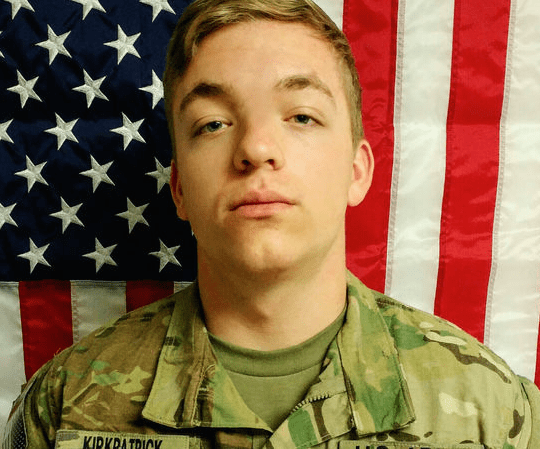
Army Pfc. Hansen Kirkpatrick, 19, died from wounds received during an indirect fire attack on July 3, 2017 in Helmand Province, Afghanistan. Pfc. Kirkpatrick was supporting Operation Freedom Sentinel on behalf of the 1st Battalion, 36th Infantry Regiment, 1st Brigade Combat Team, 1st Armored Division in Fort Bliss, Texas. According to the Department of Defense press release, the incident is under investigation.









 MILITARY JUSTICE FOR ALL