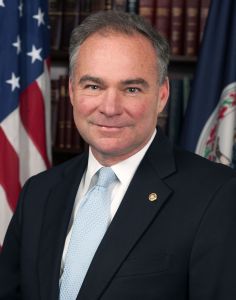
Hillary Clinton picked Senator Tim Kaine of Virginia as her Vice Presidential running mate. What is interesting about this pick is at one point in a Time magazine article in 2014, Clinton showed public support of the Military Justice Improvement Act, yet she chooses Senator Tim Kaine (D-VA) as her vice presidential running mate who has been blocking the bill since 2013. Of course Senator Angus King (I-ME) endorses this choice since he too has been blocking the due process bill sponsored by Senator Kirsten Gillibrand, Senator Susan Collins, Senator Rand Paul, Senator Ted Cruz, and many other bi-partisan Senators advocating for constitutional rights for military personnel and veterans.
“The move was surprising in that it means that if she becomes President, the normally hawkish Clinton would go against the advice of military brass and remove the cases from the chain of command. It also must have had a little bit of a silver lining dig at McCaskill, who endorsed Barack Obama over Clinton in 2008.” ~Time (2014)
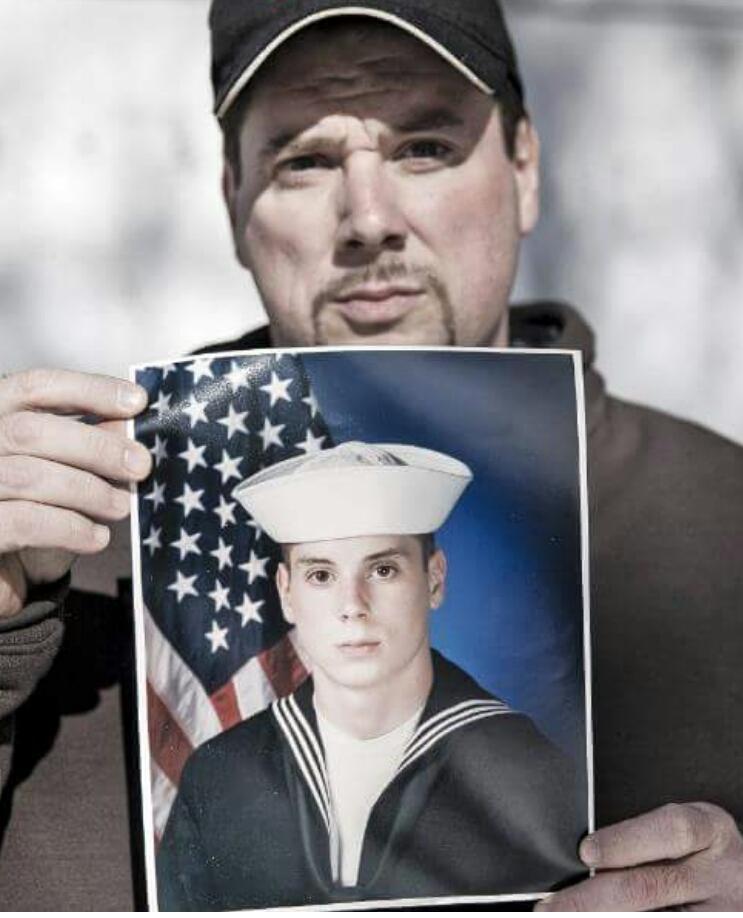
Heath Phillips is a US Navy veteran who served his country honorably up until he became a victim of sexual assault while on board the ship he was assigned to. As a result of the crimes, Heath chose not to go back to the ship in an effort to escape the hazing, retaliation, and further sexual and physical assault that awaited him. Instead he went Absent Without Leave (AWOL) and was eventually given an Other Than Honorable (OTH) discharge from the military. As a result of the discharge status, his life has been impacted greatly up to and including not having the ability to access veteran’s health care and compensation at the Department of Veterans Affairs for the injuries he sustained in the line of duty.
Since 2009, he has been an active voice for male victims of crimes in the military and has helped to educate the public about male military sexual assault issues. He has helped Representative Jackie Speier gain support for the Sexual Assault Training, Oversight, and Prevention Act (STOP Act). He has supported Senator Kirsten Gillibrand in efforts to pass the Military Justice Improvement Act (MJIA). He advocated on behalf of the Human Rights Watch organization for passage of the Fairness for Veterans Act. He continues to work closely with organizations and members of Congress to elevate support for male victims of crimes in the military and improve care for them in active duty and veteran status.
Update (June 2018): Heath Phillips appeared on the Today Show and informed the public that his military discharge status had been upgraded to HONORABLE.
In the News:
Military Rape Speech 6 by Congresswoman Jackie Speier: I’ve discussed the military culture where victims are blamed and assailants are promoted. And I’ve shared the personal stories of several women in order to shine a light on this ongoing epidemic. But it is not only our female service members being raped. Men are being victimized too. (July 20, 2011)
Heath Phillips discusses surviving military sexual trauma & respect (July 1, 2018)
Anya Parampil breaks down a report written by the RAND Corporation that shows that there is still a sexual assault crisis in the US military. Anya reviews the findings of the study, which states that sexual assault is most rampant in the Navy. Anya speaks with US Navy Veteran, Heath Phillips, who shares his own experiences with sexual assault in the Navy and offers solutions to end the epidemic. -RT America (September 24, 2018)
Documentaries:
When his commanders would not stop sexual assaults by his shipmates, Heath went AWOL and then accepted a dishonorable discharge to end his torture. Now he is speaking out to change the way military rape is handled. This is his story.
Oral history interview with Heath Phillips by Jason A. Higgins on June 12, 2018. This interview is part of the Incarcerated Veterans Oral History Project, with the support of the UMass Oral History Lab. In the interview, U.S. Navy veteran Heath Phillips discusses his early life growing up with a Vietnam veteran father; his motivations for joining the military at seventeen; recounts 10 months of sexual violence aboard the U.S.S. Butte; the impact of Military Sexual Trauma, PTSD, and an other-than-honorable discharge on his post-military life; incarceration and twenty years of alcoholism; his path toward recovery; and his advocacy for other survivors of sexual trauma. -Incarcerated Veterans Project
“Sexual assault is a huge problem in the US military. And for many victims, the process of reporting their crime and seeking justice can be as traumatic as their assault.
Most members of Congress and military officials agree that these basic facts are true, and that more reforms to the military justice system could help. But there’s a profound disagreement on how, and how much, the system needs to change.
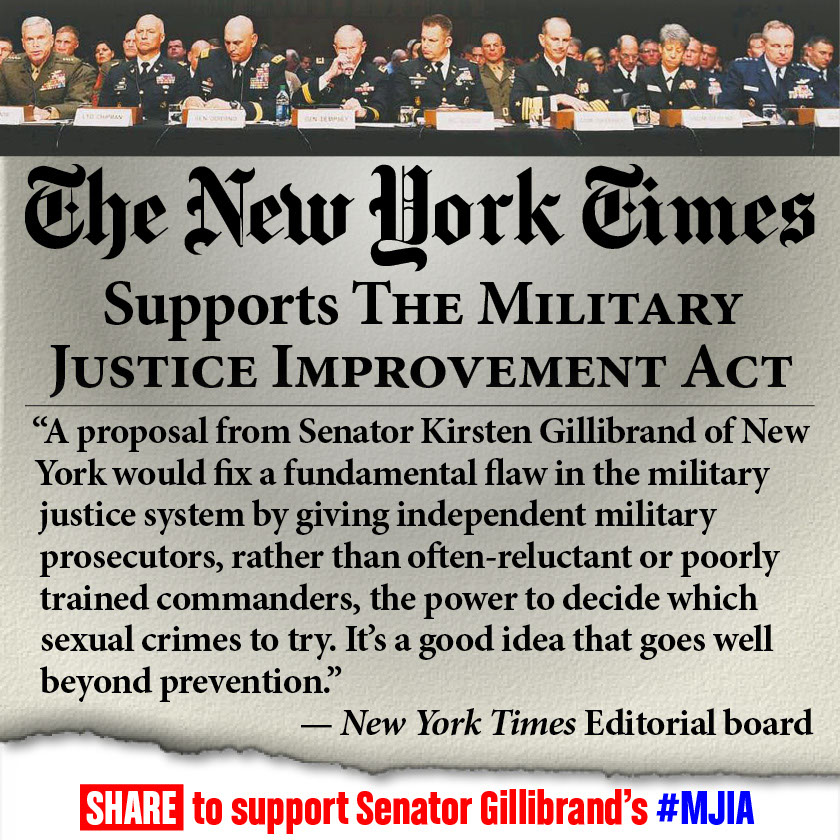
The US Senate is expected to vote this week on the Military Justice Improvement Act (MJIA). Advocates, who have been pushing for the MJIA since 2013, say the reform would make the process of prosecuting sex crimes a lot easier and smoother for victims and help victims feel more empowered to come forward and report the crimes against them.
An unusual bipartisan cadre of senators support the MJIA, from Elizabeth Warren to Ted Cruz. But the Pentagon adamantly opposes it, and many senators listen to the Pentagon when it says the MJIA would undermine “good order and discipline.” So there’s still no filibuster-proof, 60-vote majority for the measure, and it’s been defeated every year it’s come up.”
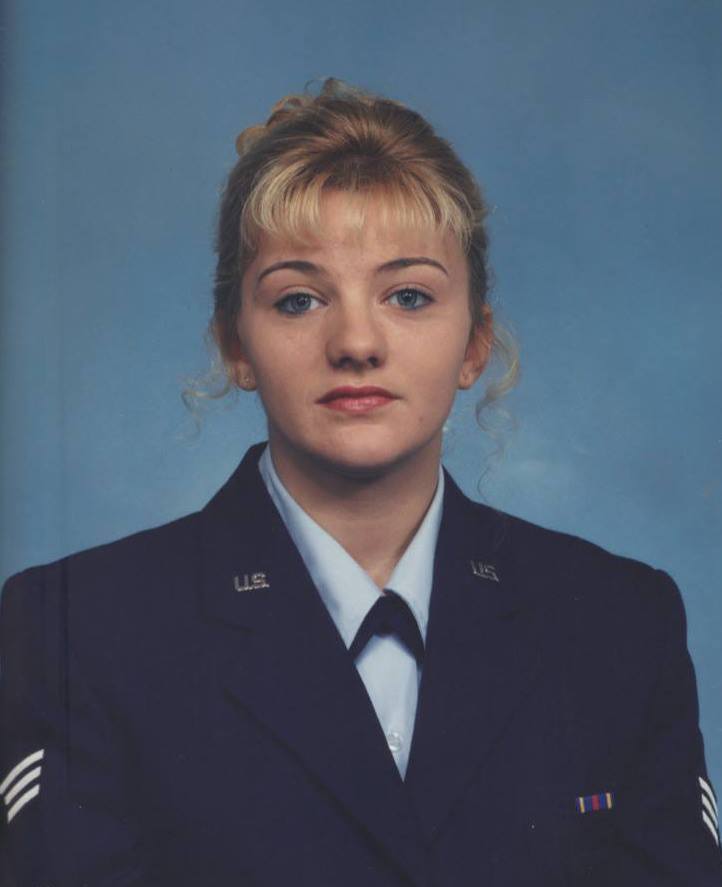
On March 10, 2016 the United States Air Force Court of Criminal Appeals upheld United States v. Jane Neubauer, United States Air Force. Is this another case of federal government overreach and denial of due process rights? I think John Q Public‘s assessment of this case speaks volumes of the real issues behind the Command directed prosecution of an airman who blew the whistle after being recruited as an Office of Special Investigations (OSI) confidential informant. The same OSI office she exposed ended up investigating and assisting with her prosecution. This is yet another example of the importance of letting an impartial law enforcement official and prosecutor make decisions about whether to investigate, who should investigate, who to investigate, and whether or not they have the evidence to move forward with a case. The moment a military member asks for an attorney, all criminal justice communications with Commanders and their investigators must cease. Every accused military member should be represented by counsel and afforded their due process rights throughout the entire investigation including collection of evidence. Learn more about your due process rights here.
“There have been many sexual assault accusations far less credible than the accusation made by this Airman. Many that were enthusiastically pursued by prosecutors despite their frailty … many that did not result in disciplinary actions when they were revealed to have been false.
So, what was so special about this accusation?
Well, she was an OSI informant, and the situation cast OSI in an extremely negative light at a time when the OSI informant program was already under fire. The same organization that recruited her right out of BMT to help investigate drug activity at Keesler AFB conducted the investigation that eventually resulted in her prosecution.
If she’s wrong … if she’s bad … if she’s a liar … then obviously she’s the problem. She’ll absorb the negative attention and culpability … leaving OSI and its shady actions in this debacle comfortably out of the limelight.
Another example of prosecutorial inconsistency and arbitrariness in the USAF … demonstrating that it’s not operating an impartial justice system, but a score-settling control device on behalf of the chain of command.” ~John Q Public
“One of the women interviewed was Lt. Col. Teresa James, the highest ranking officer to come forward with a rape claim in the National Guard, according to a recent report by the Guard. The News4 I-Team first brought you her story when she said she believes her 34-year military career with the West Virginia National Guard was destroyed after she reported her rape. Lt. Col. James attended the news conference and told the I-Team, ‘There’s nothing else they can do to hurt me. They did everything they could possibly do. It’s effecting change. That’s why I’m out today. It’s effecting change, and if I have to speak it, shout it from the rooftops, that’s what I’m going to do.’ Read more from NBC Washingtonhere.
Amy discovers that her boyfriend’s war game unfolds very differently when the player chooses a female character. -Inside Amy Schumer, Comedy Central (August 26, 2014)
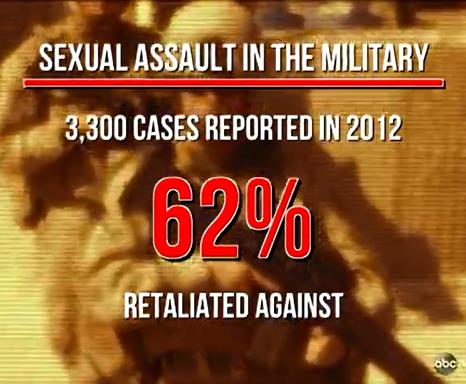
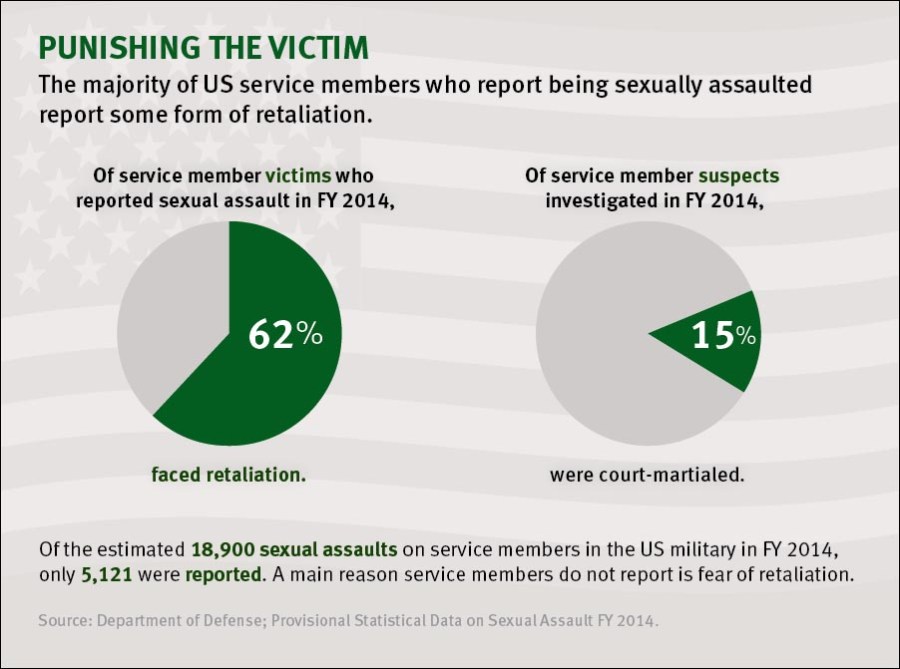
The sketch says it all… there’s a reason the majority of service members don’t report crime. Character assassination and retaliation is real for both male and female victims of crime in the military. Their lives, reputations, careers, and futures are dependent on the actions of the convening authority who has the power to do nothing. In the civilian world, after reporting a crime to the local police department and evidence is gathered, a prosecutor determines whether or not a case moves forward in the judicial system. The Military Justice Improvement Act (MJIA) attempts to mirror this process and was reintroduced in June 2019, yet again was not allowed on the Senate floor for a vote. The last cloture vote on the way the military should handle felony crimes was on March 6, 2014. Invoking cloture means 60 Senators or two-thirds is required for passage of a bill as opposed to the majority of Senators. The biggest opponents of the MJIA were former Senator Claire McCaskill (D-MO) and former Senator Kelly Ayotte (R-NH), both since voted out of the Senate and replaced by Senator Joni Ernst (R-IA) and Senator Martha McSally (R-AZ). This pair of military officers are proponents of keeping the Chain of Command involved in the decision making process of adjudicating felony crime despite what the majority of military sexual assault survivors have asked for because the fear and retaliation continues. Meanwhile, the fight for military justice reform rages on. #PassMJIA
Amy Schumer, a comedian, has depicted the unexpected turn your career takes when you become the victim of sexual assault in the military. We are not only harmed by the perpetrator but we are again harmed by the system. And currently we have two proposals in Congress that begin to address the issue. One is the Stop Act sponsored by Representative Jackie Speier. The other is the Military Justice Improvement Act sponsored by Senator Kirsten Gillibrand. Please watch the Amy Schumer video here before reading further.
If you keep up with Congressional efforts to address sexual assault in the military, you will find that the media discusses Senator Gillibrand’s Military Justice Improvement Act the most. But what most people do not know is that the MJIA was a compromise to our original efforts. I supported any efforts made by the Senate at the time considering we did not get the support we needed for the Stop Act from either the House of Representatives or military and women organizations. At the time, it was better then nothing and at least Senator Gillibrand addressed an option for our military members who do not report due to fear of retaliation from their Chain of Command. But it is only one element of the big picture.
Jennifer Norris: Senate bill will still keep military sexual abuse cases within the chain of command of the military, leaving victims vulnerable to retaliation
The MJIA fell short of the votes it needed to pass in Congress. But it’s really nothing to get upset about because the bill falls short of substance.
The MJIA had good intentions. It gave the victim a different place to report other then an immediate supervisor or the Commander. It would have allowed victims to report to a military prosecutor instead. The bill also included all violent crimes, ie sexual assault, domestic violence, and murder.
But in reality, how is that going to work? There aren’t enough military prosecutors to report to. There was one, maybe two in the State of Maine JAG office and they were located hours if not days away from some of the places we trained and deployed.
NOTE: INVOKING CLOTURE REQUIRES A 3/5 MAJORITY OF THE SENATE. IT IS NOT A VOTE ON THE PASSAGE OF THE PIECE OF LEGISLATION, BUT LIMITS FURTHER DEBATE TO 30 HOURS. CLOTURE IS TYPICALLY USED TO END A FILIBUSTER. A FAILED CLOTURE VOTE OFTEN PREVENTS THE LEGISLATION FROM EVER COMING TO A VOTE.
NOTE: THIS LEGISLATION NEEDED A THREE-FIFTHS MAJORITY VOTE TO PASS.
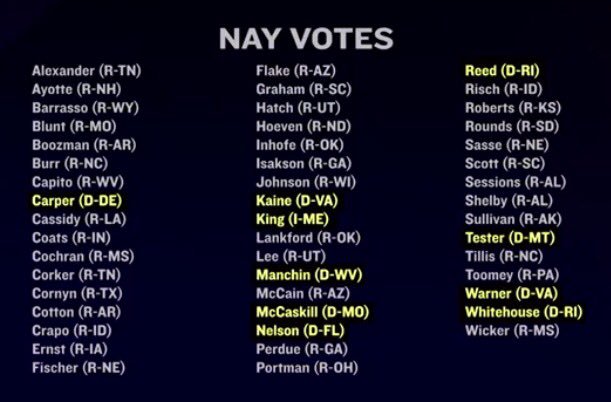
Date: March 6, 2014 Issues: Crime, Military Personnel, Women Bill:Military Justice Improvement Act of 2013 Roll Number: 59 Yea: 55 Nay: 45 Cloture Not Invoked (Senate)
Gillibrand brings victims’ voices to Senate floor in fight for military justice -U.S.Senator Kirsten Gillibrand (March 6, 2014)
Before Senate Vote, Hirono Urges Colleagues To Pass Military Justice Improvement Act -Mazie Hirono (March 6, 2014)
Sen. Paul joined Senate colleagues to urge passage of the Military Justice Improvement Act. This piece of bipartisan legislation will combat sexual assault and other violent crimes in the military by restructuring the way in which they are reported and prosecuted. -Senator Rand Paul (March 6, 2014)
Floor Statement on the Military Justice Improvement Act -Senator Chuck Grassley (March 6, 2014)
U.S. Senator Jeanne Shaheen (D-NH) went to the Senate floor to reiterate her support for the Military Justice Improvement Act of which she is an original co-sponsor and call for its immediate passage. -Senator Jeanne Shaheen (March 6, 2014)
U.S. Senator Susan Collins spoke on the Senate floor today in strong support of legislation coming before the Senate that would address the crisis of sexual assault in the military. -Senator Susan Collins (March 6, 2014)
(Washington, D.C.) — Yesterday on the Senate floor, U.S. Senator Dean Heller (R-NV) spoke in support of Senator Kirsten Gillibrand’s (D-NY) bipartisan Military Justice Improvement Act (S. 1752). -[Former] Senator Dean Heller (March 6, 2014)
The Senate came within five votes of passing a major change to the military’s command structure. An amendment by Sen. Kirsten Gillibrand, D-N.Y., would have stripped commanders of authority over sexual assault cases and put everything in the hands of seasoned military trial lawyers. -CBS Evening News (March 6, 2014)
Senator Ted Cruz speaks out in support of a military sexual assault bill that was blocked in the Senate. -CNN (March 6, 2014)
PBS NewsHour: Hirono Fights For Military Justice Improvement Act -Mazie Hirono (March 7, 2014)
Senator Brian Schatz’s remarks on failure of Military Justice Improvement Act passage -Hawaii247.com (March 7, 2014)
Editors Note: The Senator’s name with a link is a Senator still serving in the U.S. Senate (as of June 24, 2019). You can click on the link and it will take you to their official Senate page. The Senators without a link have been voted out, left, retired, or died. If you click on the Vote link Yea or Nay, it will take you to the Senator’s twitter page. You can thank them for supporting the MJIA or remind those who voted Nay why the MJIA is so important.





 The MJIA fell short of the votes it needed to pass in Congress. But it’s really nothing to get upset about because the bill falls short of substance.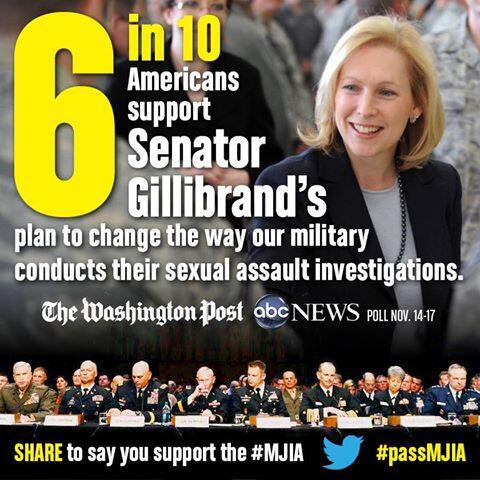
 MILITARY JUSTICE FOR ALL