Paul Sullivan of Veterans for Common Sense tells Armen Keteyian that the No. 1 problem facing vets of Afghanistan and Iraq will be mental health. -CBS News (November 13, 2007)
House of Representatives Veterans Suicide Prevention Act Debate:
The House debates the Joshua Omvig Veterans Suicide Prevention Act, which directs the Department of Veterans Affairs (VA) to develop and implement a comprehensive program to reduce the incidence of suicide among veterans. The bill is named for an Iraq veteran who took his own life, and recognizes the special needs of veterans suffering from Post Traumatic Stress Disorder and elderly veterans who are at high risk for depression and experience high rates of suicide. The bill follows hearings in the Oversight and Veterans Affairs committees seeking to address the tragic mental anguish experienced by many veterans, and is part of ongoing, comprehensive efforts by the new Congress to make veterans a top priority. Rep. Tim Walz speaks in favor. -Nancy Pelosi (October 23, 2007)
Rep. Bruce Braley speaks in favor. -Nancy Pelosi (October 23, 2007)
Rep. Tim Walz speaks in favor. -Nancy Pelosi (October 23, 2007)
Congressman Boswell’s floor statement before the final passage of the Joshua Omvig Veterans Suicide Prevention Act. (October 23, 2007)
Joshua Omvig Veterans Suicide Prevention Act Signed Into Law:
Iowa Gov. Chet Culver, Congressman Leonard Boswell, Sen. Tom Harkin and Sen. Charles Grassley present Randy and Ellen Omvig with the red line copy of the bill signed by President George W. Bush at a Jan. 25 ceremony at the Iowa Statehouse. Joshua Omvig was an Iowa soldier who committed suicide upon returning home from Iraq. The Joshua Omvig Veterans Suicide Prevention Act, authored by Boswell, is now national law. –
IowaPoliticsDotCom (January 25, 2008)
Part 1 -IowaPoliticsDotCom (January 25, 2008)
Part 2 -IowaPoliticsDotCom (January 25, 2008)
Part 3 -IowaPoliticsDotCom (January 25, 2008)
Rep. Boswell Asks for Increased Funding for Soldier Suicide Prevention:
In 2007, Boswell’s legislation, the Joshua Omvig Veterans Suicide Prevention Act, was the first major legislation passed and signed into law to address and prevent veteran suicide. Since enactment, the Veterans Crisis Hotline and VA Suicide Prevention Coordinators have made more than 21,000 life-saving rescues. -Rep. Leonard Boswell (July 9, 2012)
A young woman disappeared after working the late shift in a department store. Days later, her body was found in an isolated ravine. Tiny clues told police a great deal about the killer. He would own olive-colored carpeting, a white blanket, and distinctive bullets made from wax, not lead. -Blacket of Evidence, Forensic Files (S11,E38)
Editor’s Note: Full episodes of Forensic Files are available on a variety of media platforms. FilmRise Channel and Forensic Files Channel both feature full episodes of Forensic Files on YouTube. You can also find full episodes of Forensic Files on both Netflix and Amazon Prime Video. On Netflix, the seasons are grouped as collection 1-9. On Amazon Prime Video, you can find Season 1-10 here; Season 11; Season 12; Season 13; Season 14; Season 15; Season 16; Season 17; Season 18; Season 19; Season 20; and Season 21. Start bingeing and see for yourself why Forensic Files is such a hit!
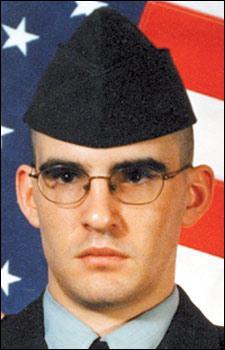
Joshua Omvig, U.S. Army Reserve Veteran (Photo: The Courier)
“On December 22, 2005, Joshua Omvig, a 22-year-old reservist from Davenport, Iowa, committed suicide with a gun in his pickup truck, after returning from a tour of duty in Iraq a year earlier. He suffered [from] post traumatic stress disorder, a common problem with soldiers returning from Iraq and Afghanistan. Omvig’s parents, Randy and Ellen, began lobbying for comprehensive PTSD care for all veterans.” Read more from The American Prospecthere.
Joshua Omvig Veterans Suicide Prevention Act Signed Into Law:
[Former] Rep. Bruce Braley speaks in favor. -Nancy Pelosi (October 23, 2007)
Congressman Boswell’s floor statement before the final passage of the Joshua Omvig Veterans Suicide Prevention Act. (October 23, 2007)
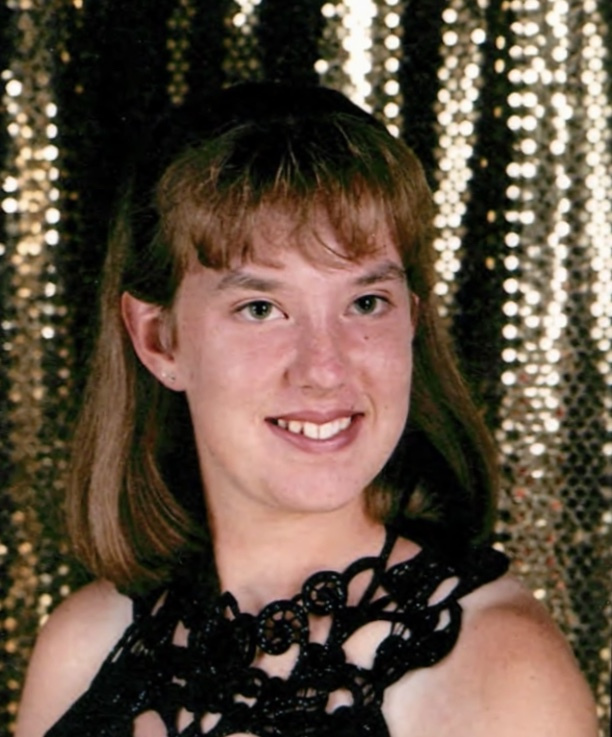
Shana Parkinson Whitmore, 38, was convicted and sentenced to 27 years in prison in 2005 for the the stabbing deaths of her ex-husband Gregg Whitmore, 38, and his girlfriend, Karen Cummings, 29, while they slept at Gregg’s home in Rigby, Idaho on February 1, 2004. Shana Parkinson is not eligible for parole until 2031.
Pvt. John Bennett is the Only U.S. Soldier Executed for Rape in Peacetime. He Was Mentally Troubled and Black. Six White Murderers Were Also on Military Death Row. They Were Spared.
Richard A. Serrano is a Staff Writer in The Times’ Washington, bureau. He last wrote for the magazine about the bombing of the Oklahoma, City federal building, which was also the subject of his book, “One of, Ours,” published in 1998 by W.W. Norton
“Rain always frightened him, and on the night he was hanged in a military prison in Kansas, a rolling prairie thunderstorm was kicking up outside. That was four decades ago. Pvt. John Bennett had just turned 26. He went to his death perhaps more terrified of the thunder and lightning than of the gaunt hangman waiting upon the gallows.
News of the hanging scarcely made the papers. Executions then, like today, were commonplace, so much so that his story has never been told. But he is the last member of the U.S. Armed Forces to be executed. And he is the only serviceman hanged for rape during peacetime.
America is once again examining the death penalty, spurred by the most damning evidence in history that innocents have been sentenced to die. Advances in DNA testing and other revelations have overturned scores of death sentences in recent years, raising fresh doubts about American criminal justice, especially for minorities, who make up the majority of death row prisoners.
As a result, the death penalty issue looms larger in presidential politics than it has for a generation. Both major party candidates favor death sentencing, and Republican nominee George W. Bush has given it special emphasis. He expresses confidence in his state’s handling of capital cases and says that not one innocent man has been executed on his watch as governor of Texas.
The issue also has landed in the Oval Office, where President Clinton delayed by four months the federal government’s first scheduled execution since 1963. Juan Raul Garza will now have until Dec. 12–a date notably after the presidential election–to seek clemency. Garza’s attorneys say they will argue that the criminal justice system discriminates against minorities.
Amid the chatter, national opinion polls have found that while most Americans still favor death sentencing, the support is diminishing. Even its proponents question the role that race, mental illness, poverty, politics and the quality of legal representation play in death penalty cases. All those factors were present on that stormy night in April 1961 inside the U.S. Disciplinary Barracks at Ft. Leavenworth. Was the system broken back then? Has it been fixed since?“
Read more from Richard A. Serrano (LA Times) here or here and check out Serrano’s book ‘Summoned at Midnight: A Story of Race and the Last Military Executions at Fort Leavenworth’here.
Offender: Michael Dean Overstreet Occupation: US Navy veteran (discharged for psychological problems after one month), construction, frequently unemployed Pathology: Stranger abduction, rape, and murder by strangulation, shot victim in forehead Dates: September 27, 1997 Location: Franklin, Indiana, moved body to Atterbury Wildlife Preserve (Brown County) Motive: Hunted prey, lured victim, stranger abduction, rape & murder Victim: Kelly Eckart (18), Franklin College student M.O.: Stalked at work, followed home after work shift, bumped her car while both driving on road, abducted after she pulled over Conviction: Sentenced to death (July 31, 2000), Indiana court ruled not competent to be executed in 2014, still on death row Status: Incarcerated, death row Appearance: Blanket of Evidence (Forensic Files); All-American Sweethearts (Murder Comes to Town); Death Row (Real Stories); First Love, Forever Evil (Evil Lives Here) Red Flags: Deprived and abusive childhood, Schizotypal Personality Disorder, mother failed to seek mental health for him, got in fights, bully in high school, went to jail for having a gun at school, isolated & controlled significant other, stalking, threatening, long history of domestic abuse, obsession with weaponry especially knives, always carried a knife, owned firearms, threatened wife with knife, grabbed wife by throat & pointed gun at her head (shot it next to her head), threatened wife with rifle, unexplained absences, secret life/two lives, hallucinations, volatile temper, unpredictable, paranoid, admitted to wife he killed people (delusional thoughts), psychological deterioration, liked killing animals, spent a lot of time alone in the woods, obsessed with media after crimes committed, wife afraid to call the police with suspicions, one misdemeanor in criminal history, loves his family & two children, model prisoner
In the News:
A northern Indiana judge is nearing a decision on whether a man convicted of abducting and killing a Franklin College student in 1997 should be put to death. -RTV6 The Indy Channel (November 13, 2014)
Overstreet ruled not competent to face death penalty. -WTHR (November 20, 2014)
Full Episode: Housing 1900 inmates, 12 of whom are on death row, Trevor spends two weeks in the dark and forbidding world of Indiana State Maximum Security Prison. He hears from men who know what it is like to live under the shadow of the death penalty and even the date and time they will die. -Indiana Death Row, Part 1, Real Stories (August 28, 2017)
Full Episode: Indiana Death Row | Part 2 | Real Stories (August 30, 2017)
Forensic Files:
Full Episode: A young woman disappeared after working the late shift in a department store. Days later, her body was found in an isolated ravine. Tiny clues told police a great deal about the killer. He would own olive-colored carpeting, a white blanket, and distinctive bullets made from wax, not lead. -Blanket of Evidence, Forensic Files (S11, E38)
Investigation Discovery:
Eighteen-year-old Kelly Eckart disappears one night after finishing up her shift at a local hardware store. Hours later her car is discovered abandoned by the side of the road, still running, but Kelly is nowhere to be found. -All-American Sweethearts, Murder Comes to Town (S1, E3)
Melissa Holland was certain that her high school boyfriend, Michael Overstreet, was the man she’d always dreamed of. But only after they were married did she begin to realize that her determination to live happily ever after had put her in mortal danger. -First Love, Forever Evil, Evil Lives Here (S3, E6)
Editor’s note: With a cable subscription, you can download the free ID Go app and watch Investigation Discovery programming at your convenience. And for those who do not have cable, you can watch “unlocked” episodes on the ID Go app including the latest premieres. For those who prefer commercial free programming during your binge session, Prime Video has an ID channel: ‘True Crime Files by Investigation Discovery” available for $3.99 a month. It’s a compilation of older seasons but totally worth the cost if you are a true crime addict. Download the ID Go app or purchase ID True Crime Files & binge away.
Sgt Sandra Jones, US Army, Fort Dix, New Jersey was murdered by her son Joel Jones on October 6, 1986. She was stabbed multiple times. Joel was held for a psychiatric evaluation by the courts.
“Sgt. Sandra Jones, 37 years old, was murdered and her 19-year-old son, Joel E. Jones, was charged in the slaying.” -Bill Libby (April 14, 1987)
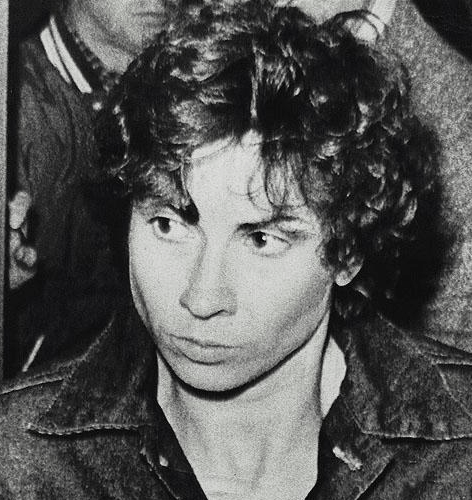
On October 30, 1985, Sylvia Seegrist, 25, dressed in Army fatigues and black boots, parked her car in front of the Springfield Mall in a suburb of Philadelphia, Pennsylvania, stepped out, and started shooting. She killed three people and injured seven more in the mass shooting before she was stopped by an on-looker in the mall who didn’t realize she was not in a Halloween costume. Killed in the incident was a young child and two men: Recife Cosmen, 2, Dr. Ernest Trout, 67, and Augusto Ferrara, 64. As a result, Seegrist was arrested and indicted for three first degree murders. Investigators would learn that Sylvia Seegrist was discharged from the military after a year of serving because she wasn’t “right in the head” according to Army officials. Sylvia’s mother shared that she tried to get help for her daughter and tried to get her to take medication, but no one would hear her pleas for help. Prior to and after her trial in 1986, Seegrist was held at a Pennsylvania State Hospital.
Sylvia downward spiraled after her discharge from the Army and used the military training she learned to kill innocent civilians. After Sylvia was found guilty of three first degree murders and given three life sentences, she was transferred to the women’s Pennsylvania State Correctional Institution where she still resides. The 1985 incident highlighted the fine line between an individual’s rights and the state’s authority to commit potentially dangerous people. Seegrist interviewed in 1991 said, “daily doses of anti-psychotic medication had curtailed her delusions, paranoia and explosive anger.” Why wasn’t the mental illness picked up by recruiting and instead only recognized after she joined the military? Sylvia Seegrist had paranoid schizophrenia which is a serious mental illness that requires the use of medication to manage symptomology. Sylvia Seegrist needed follow on treatment after her discharge from the Army in an effort to prevent a predictable downward spiral.











 MILITARY JUSTICE FOR ALL