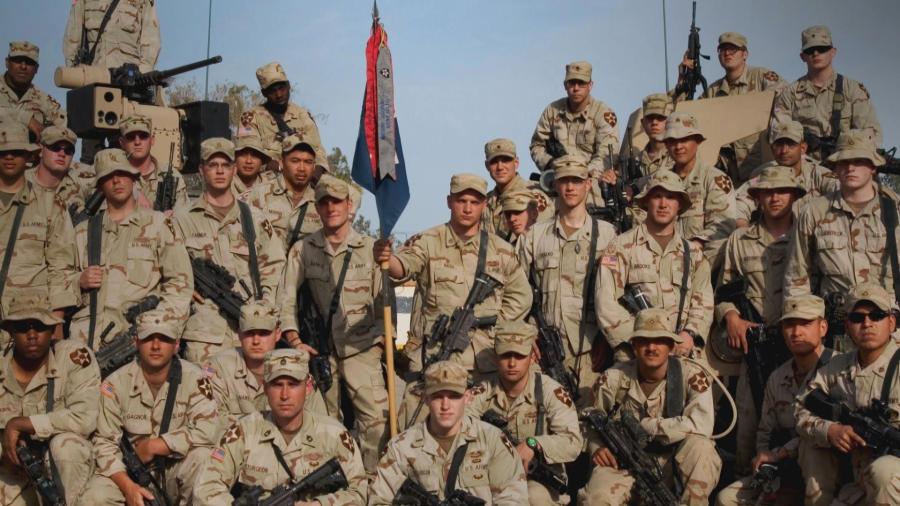
“Since the Iraq War began, soldier arrests in the city of Colorado Springs have tripled. FRONTLINE tells the dark tale of the men of 3rd Platoon, Charlie Company, 1st battalion of the 506th infantry, and how the war followed them home. It is a story of heroism, grief, vicious combat, depression, drugs, alcohol and brutal murder; an investigation into the Army’s mental health services; and a powerful portrait of what multiple tours and post-traumatic stress are doing to a generation of young American soldiers. [Explore more stories on the original website for The Wounded Platoon.]” -PBS (May 18, 2010)
This Is An Open Investigation That Has Gotten No Major Publicity And Your Help Is Needed
The day before Maj. Nidal Malik Hasan went on a rampage at Ft. Hood and allegedly shot 43 military personnel, wounding 31 and killing 12, there was another “shooting” at an American military base in Iraq which has been treated far differently by the military: the “execution-style” murder of Staff Sgt. Amy C. Tirador, 29, of Albany, N.Y. at the U.S. military base near Kirkush.
On November 6, 2009 the Department of Defense issued a press release on the death of Staff Sgt. Amy C. Tirador, 29, of Albany, N.Y., who, according to the DOD, “died Nov. 4 in Kirkush, Iraq, of injuries sustained from a “non-combat related incident”: Staff Sgt. Amy C. Tirador, 29, of Albany, N.Y., died Nov. 4 in Kirkush, Iraq, of injuries sustained from a non-combat related incident. She was assigned to the 209th Military Intelligence Company, 1st Squadron, 14th Cavalry Regiment, 3rd Stryker Brigade Combat Team, 2nd Infantry Division, Fort Lewis, Wash.
The circumstances surrounding the incident are under investigation. For more information media may contact the Fort Lewis public affairs office at (253)-967-0152, (253)-967-0147.
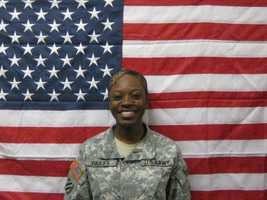
Army SSG Lakeshia Bailey died of injuries sustained during a vehicle roll-over on March 8, 2010 north of Al Kut, Iraq. She was one of two soldiers who lost their lives in the vehicle accident; Army Sgt. Aaron Arthur was also listed as a casualty. They were both supporting Operation Iraqi Freedom on behalf of the 203rd Brigade Support Battalion, attached to the 1st Battalion, 10th Field Artillery Regiment, 3rd Brigade Combat Team, 3rd Infantry Division at Fort Benning in Georgia.
“She always wanted to go into the military because my husband was in the military,” said her mother, Phyllis Bailey. “He was in for 24 years and retired so she wanted to follow dad. She was a military brat.” ~Ledger-Enquirer
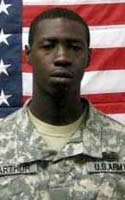
Army Sgt. Aaron Arthur, 25, died of injuries sustained during a vehicle roll-over on March 8th, 2010 north of Al Kut, Iraq. He was one of two soldiers who lost their lives in the vehicle accident; Army SSG Lakeshia Bailey was also listed as a casualty. They were both supporting Operation Iraqi Freedom on behalf of the 203rd Brigade Support Battalion, attached to the 1st Battalion, 10th Field Artillery Regiment, 3rd Brigade Combat Team, 3rd Infantry Division at Fort Benning in Georgia.
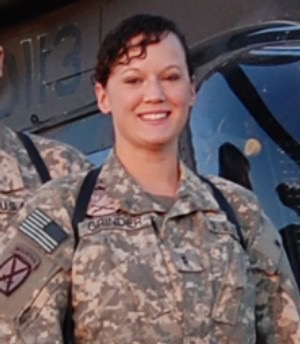
Army CW02 Billie J. Grinder, 25, died of a non combat related accident on February 21, 2010 in Qayyarah, Iraq. CW02 Grinder was supporting Operation Iraqi Freedom on behalf of the 1st Squadron, 230th Cavalry Regiment, Tennessee Army National Guard in Louisville, Tennessee. CW02 Grinder died from wounds suffered when her OH-58D Kiowa Warrior helicopter had a hard landing as a result of a helicopter systems failure. Her family sued the makers of the helicopter and settled.
“One of the U.S. Army’s most advanced helicopters is unsafe and responsible for the deaths of two Tennessee troops, a lawsuit filed in Knox County Circuit Court claims. The suit alleges the failure of the Full Authority Digital Electronic Control (FADEC) system in a Kiowa OH-58D Warrior helicopter was a direct and proximate cause in the deaths of troops Marcus R. Alford Sr. and Billie Jean Grinder.” -Knoxville News Sentinel
Army Captain Marcus Alford, 28, died of a non combat related accident on February 21, 2010 in Qayyarah, Iraq. Captain Alford was supporting Operation Iraqi Freedom on behalf of the 1st Squadron, 230th Cavalry Regiment, Tennessee Army National Guard in Louisville, Tennessee. Captain Alford died from wounds suffered when his OH-58D Kiowa Warrior helicopter had a hard landing as a result of a helicopter systems failure. His family sued the makers of the helicopter and settled.
“One of the U.S. Army’s most advanced helicopters is unsafe and responsible for the deaths of two Tennessee troops, a lawsuit filed in Knox County Circuit Court claims. The suit alleges the failure of the Full Authority Digital Electronic Control (FADEC) system in a Kiowa OH-58D Warrior helicopter was a direct and proximate cause in the deaths of troops Marcus R. Alford Sr. and Billie Jean Grinder.” -Knoxville News Sentinel
In March 2006, John Needham joined the Army making him the fifth generation in his family to serve in the Armed Forces. In the fall of 2006, John deployed with his team from Fort Carson, Colorado to fight the war in Iraq during some of the most intense combat in the war. Army private John Needham began to downward spiral about eleven months into a deployment to Iraq after surviving multiple IED and grenade attacks. He was injured both mentally and physically. John claims that when he reached out for help his Army command told him to tell the medical personnel that he was fine so he wouldn’t be sent home. John did what he was asked to do. Soon thereafter John began sending alarming e-mails to his family and learned that his deployment was going to be extended beyond the twelve months he was originally tasked with. In September 2007, John contemplated suicide and one of his fellow comrades stopped him but in the struggle the gun discharged. It was at this time that John’s leadership began to shame him and isolate him. They also assigned two soldiers to watch over him twenty-four seven. John felt that eventually his team turned on him as did his command, who recommended him for courts martial because of the incident with the gun.
John’s father became concerned about John’s health and after making numerous phone calls was able to get him sent to Walter Reed Army Medical Center. John spent one month in psychiatric treatment before the Army pulled him from Walter Reed and sent him back to Fort Carson, Colorado where he was facing punishment. John continued to abuse pills, drugs, and alcohol and as a result was getting in trouble. John’s parents were concerned about his health again and fought for him to get transferred to San Diego for help and to be closer to them. John was prescribed a myriad of drugs to help him cope with the diagnosis of Post Traumatic Stress Disorder. During this time, John sent a letter to the Army command at Fort Carson to report that he witnessed war atrocities while fighting in Iraq. An investigation was launched into the allegations yet the Army would determine that war crimes did not occur. Although John’s courts martial quietly went away and John was medically retired and discharged from the US Army. It would only be a few days later on September 1, 2008 that he would be accused of beating his girlfriend Jacqwelyn Villagomez to death with his bare hands. He was arrested for her murder, let out on bail, and awaiting trial for her murder when he learned that PTSD and Traumatic Brain Injury may be what led him to overreact and snap during the argument with Jacqwelyn.
In July 2009, ten months after Jacqwelyn’s death, John learned from the Department of Veterans Affairs that he did in fact have a Traumatic Brain Injury. John learned that the TBI can impact brain functioning including memory, speech, and hearing. He came to realize that combat changes who you are and that he may have suffered from a flashback when he attacked his girlfriend. According to witnesses Jacqwelyn became upset after she was asked to leave John’s home. As she was leaving one of John’s female friends stopped by which enraged Jacqwelyn. Jacqwelyn began beating the female friend who was able to escape and flee from the situation. While the friend was on the phone with the police reporting the incident, John was inside arguing and fighting with Jacqwelyn who herself was volatile. It was at this time that John snapped and beat Jacqwelyn to death with his own hands. He was discovered with swollen hands and bloodied after the vicious attack. The prosecution hoped to prove that John got drunk and killed Jacqwelyn in a drunken rage but John and his defense team hoped to prove that he suffered from a flashback, therefore he blamed both the Post Traumatic Stress Disorder and the Traumatic Brain Injury for the frenzied, animalistic attack. John was facing twenty-five years to life in prison for the murder.
In early 2010, as John’s trial got closer, John had another surgery to repair his back injuries from an IED explosion in Iraq. It failed and John continued to suffer with a high intensity of pain. According to his family, John could barely walk. John moved to Arizona for another surgery and to spend some time with his mom. He appeared happy to be back in the desert again. John’s brother drove from California to Arizona to spend some time with John. The next day, February 19, 2010, John’s brother discovered him clinging to life in his room. John’s brother attempted to save his life but John took his last breath in his brother’s arms and died at the age of 26. They would later learn that John died of an apparent overdose on painkillers. The autopsy was considered undetermined yet medical experts believe that the unusually high dosage of painkillers in John’s system could lead one to believe that John committed suicide. To this day it is unclear if John’s death was accidental or a suicide. John’s brother noted that it was ironic that he would make it through months of intense, deadly combat yet die once he gets home. There was no military funeral held for John but he was remembered for both the lives he saved in Iraq and the life he took when he got back home.
On this edition of DTRH Popeye covers the eleven year anniversary of the illegal, and immoral invasion of Iraq. He starts off by getting into the story of PFC John Needham, who witnessed war crimes being committed, and was locked up and tortured by his own command for not partaking in them himself. His story is an example of what happens when we “embrace the dark-side” as Dick Cheney put it in the push for the invasion. -DTHR
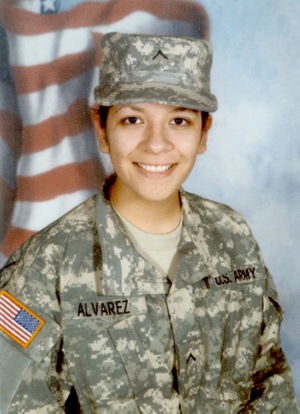
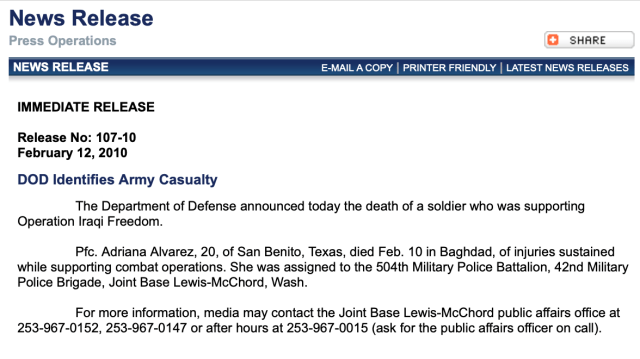
Army Pfc. Adriana Alvarez, 20, died of injuries sustained while supporting combat operations on February 10, 2010 in Baghdad, Iraq. Pfc. Alvarez was supporting Operation Iraqi Freedom on behalf of the 504th Military Police Battalion, 42nd Military Police Brigade at Joint Base Lewis-McChord, Washington. According to the Department of Defense press release, the incident was under investigation yet the outcome of the investigation is unknown. According to the Brownsville Herald, Pfc. Alvarez’s sister indicated that she was found with a gunshot wound. An official cause of death could not be determined based on any official statements from the Army or media reports. Although, the Olympian reported“Pfc. Adriana Alvarez, 20, belonged to a military police company at Lewis-McChord and died from injuries of an unexplained nature…in Baghdad, according to a separate report.”
“The U.S. Army policewoman was found Wednesday in Baghdad with a gunshot wound. Military officials were investigating Alvarez’s death, her sister said.” –Brownsville Herald (February 12, 2010)
“Army PFC Alvarez was assigned to the 504th Military Police Battalion, 42nd Military Police Brigade, Joint Base Lewis-McChord, Washington. She was found dead of a gunshot wound – under investigation. Adriana always had dreams of becoming a police officer so after she graduated in 2008 from San Benito High School in San Benito, Texas, she joined the Army. She knew the best way to pursue a career in law enforcement would be through the military. In August she deployed to Iraq and kept in touch with her family thru e-mails and phone calls. Two days before her death, she spoke to her sister and said everything was fine. Adriana loved photography, classic rock music and proudly served her country.” (Adriana Alvarez, Find A Grave)
Pfc. Gifford E. Hurt, Jr., 19, US Army, died of a non combat related accident on January 20, 2010 in Mosul, Iraq. Pfc. Hurt was supporting Operation Iraqi Freedom on behalf of the 1st Battalion, 14th Field Artillery Regiment, 214th Fires Brigade, 4th Infantry Division in Fort Sill, Oklahoma. According to the Department of Defense, the circumstances surrounding the incident are under investigation.
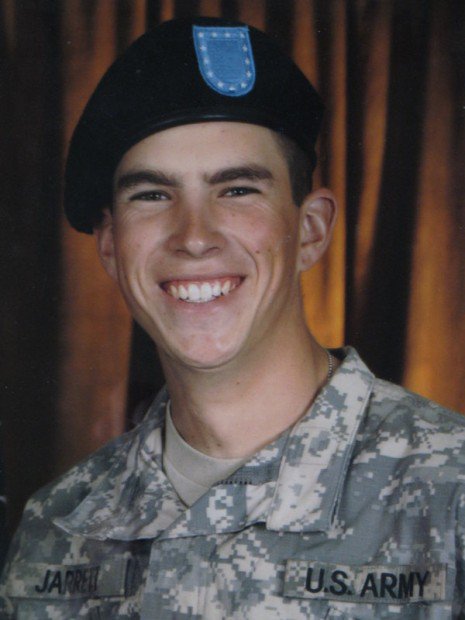
Pfc. Michael Jarrett, 20, US Army, died of a non combat-related incident on January 6, 2010 in Balad, Iraq. Pfc. Jarrett was supporting Operation Iraqi Freedom on behalf of the 2nd Battalion, 159th Aviation Regiment, 12th Combat Aviation Brigade in Illesheim, Germany. According to the Department of Defense, the circumstances surrounding the incident are under investigation.
“The incident is under investigation. Brenda Jarrett said she does not know how her son died, but she said she does not think anyone harmed him intentionally.” ~The San Diego Union-Tribune


 MILITARY JUSTICE FOR ALL