Editors Note: Need to get up to speed quick with the unsolved case of Fort Campbell Army Pfc. Lavena Johnson, please check out Episode 40 on the Military Murder Podcast.
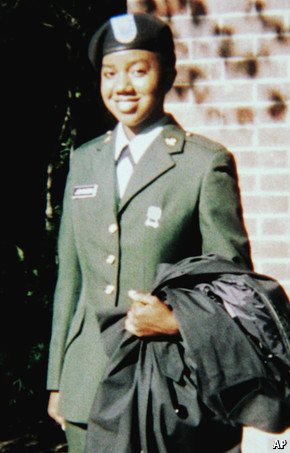
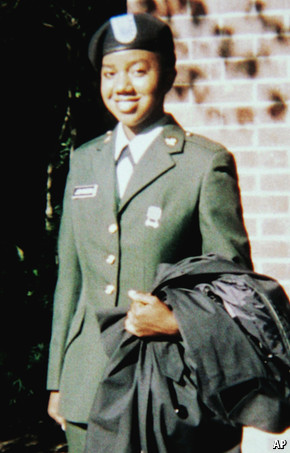
Army Pfc. LaVena Johnson, 19, died of non combat related injuries in Balad, Iraq on July 19, 2005. Pfc. Johnson was supporting Operation Iraqi Freedom on behalf of the Army’s 129th Corps Support Battalion in Fort Campbell, Kentucky. Unlike most, the Department of Defense did not announce that LaVena’s death was under investigation in their press release. The Army Criminal Investigation Division later determined that Pfc. Johnson’s cause of death was suicide by self inflicted gunshot wound. The Army tried telling the family that LaVena used her own M-16 to commit the suicide. The family immediately suspected foul play and ordered an independent autopsy for LaVena. LaVena was not depressed and showed no signs of suicidal ideation. As a matter of fact, she was happy and bubbly and looking forward to going home for Christmas. After the family saw LaVena’s body and obtained investigative documents from the Army, they quickly realized that LaVena did not die by suicide, she was raped and murdered.
According to the family, the Army never investigated LaVena’s death as a homicide nor did they do a rape kit test or autopsy. The family gleaned from the paperwork that Army investigators first considered LaVena’s death a homicide and recorded that in their paperwork, but within a short window of opportunity were suddenly ordered to cease their investigation and reclassify her death as a suicide. Ten years later, LaVena’s father, Dr. John Johnson, continues to fight for justice for his daughter. And, although he has had struggles getting media coverage, he has forged out on his own to speak the truth for LaVena. Dr. Johnson is featured in a documentary called The Silent Truth which presents the heartbreaking story of his daughter LaVena. Pfc. LaVena Johnson was betrayed by the very people she depended on for her life, and the military industrial complex who would rather silence the truth then harm their reputation.
Nineteen year-old Army PFC LaVena Johnson, was found dead on a military base in Balad, Iraq in 2005. The U.S. Army ruled Lavena’s death a suicide, but an autopsy report and photographs revealed Johnson had a broken nose, black eye, loose teeth, burns from a corrosive chemical on her genitals, and a gunshot wound that seemed inconsistent with suicide. LaVena’s father, John Johnson, shares his family’s fight to get answers from the military about his daughter’s death. -Protect Our Defenders (July 14, 2012)
Pfc. LaVena Johnson died in Iraq on July 19th, 2005 and her family needs your help. -Unsolved Mysteries (September 26, 2014)
Many have heard about the efforts for justice in the case of Army PFC LaVena Johnson. In 2005 after only 6 weeks of her deployment in Iraq, PFC LaVena Johnson was found dead. The Army says suicide, but after close evaluation and discovering a plethora of discrepancies in the Army’s report, LaVena’s father Dr. John H. Johnson began the fight for justice for his daughter. On this episode of The Rock Newman Show our special guest are LaVena’s father, Dr. John H. Johnson and attorney Donald V. Watkins. We warn our viewers that this episode of The Rock Newman Show goes into deep detail concerning the evidence and death of PFC LaVena Johnson. Dr. John H. Johnson and Donald V. Watkins contend that by no means is this case a suicide, and say they even know the name of the culprit. -The Rock Newman Show (February 11, 2016)
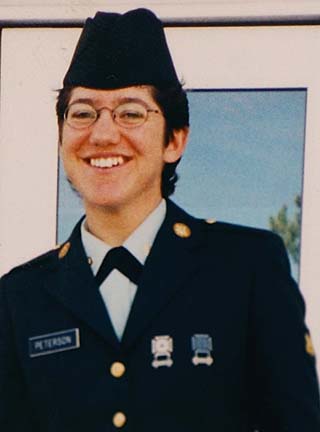
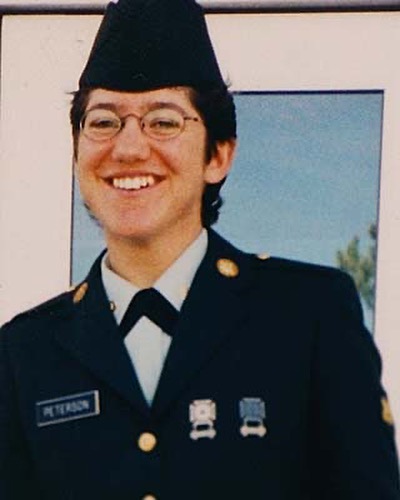
Army Spc. Alyssa Peterson, 27, died from a non-combat weapons discharge in Telafar, Iraq on September 15, 2003. Spc. Peterson was supporting Operation Iraqi Freedom on behalf of the C Company, 311th Military Intelligence Battalion, 101st Airborne Division (Air Assault) at Fort Campbell, Kentucky. At the time of the Department of Defense press release, the incident was under investigation. Media reports indicate that Spc. Peterson’s death was ruled a suicide.
“Appalled when ordered to take part in interrogations that, no doubt, involved what most would call torture — another wrong turn by the United States following 9/11 — Alyssa Peterson refused, then killed herself a few days later, on September 15, 2003…Spc. Alyssa Peterson was one of the first female soldiers who died in Iraq. Her death under these circumstances should have drawn wide attention. It’s not exactly the Tillman case, but a cover-up, naturally, followed.” –Greg Mitchell Huffpost (October 12, 2014)
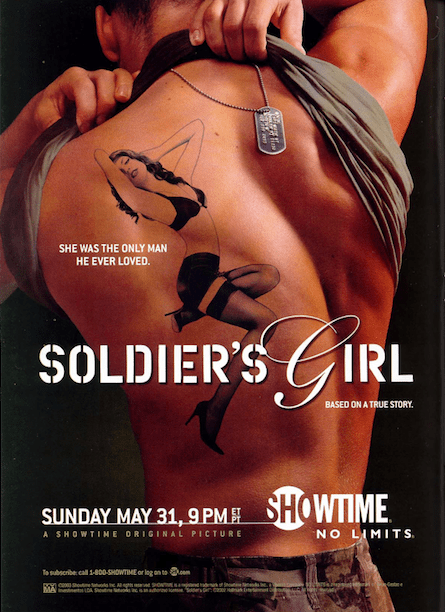
Movie Description: In 1997, new Army recruit Barry Winchell (Troy Garity) is assigned to a base in Tennessee. He quickly befriends the quick-tempered Justin Fisher (Shawn Hatosy), who struggles with drug problems. One night, they venture out to a local bar hosting a drag show. Calpernia Addams (Lee Pace), a transsexual drag queen, fascinates Barry, and they strike up a relationship. As Barry and Calpernia grow closer, Justin becomes bitter and recruits another soldier (Philip Eddolls) to help get revenge. (112 minutes)
Soldier’s Girl Trailer | Showtime Entertainment
The story behind the movie Soldier’s Girl.
Celebrating the 15th year anniversary of the release of cable network Showtime’s “Soldier’s Girl.” New Army recruit Barry Winchell is assigned to a base in Tennessee. One night out to a local bar hosting a drag show. Calpernia Addams an in-transition transsexual drag queen, fascinates Barry, and they strike up a relationship. Troy Garity plays Winchell and in his film debut, Lee Pace exquisitely plays the role of Calpernia.
Vanity Fair Confidential featured an episode called Don’t Ask Don’t Kill on Investigation Discovery highlighting the case of Army Pfc Barry Winchell at Fort Campbell, Kentucky in 1999. Winchell was bludgeoned to death by a fellow soldier while he lay asleep in his cot on July 5 in the barracks. Winchell was described by his friends as someone who would give the shirt off his back for you. He was a model soldier and had dreams of becoming a Warrant Officer. He was a member of the elite Screaming Eagles, 101st Airborne and was considered a perfect fit for the military. He was described by fellow soldiers as a 50 caliber expert.
After Barry Winchell died, the military immediately began downplaying what had occurred on base at Fort Campbell. They initially claimed it was a fight that had gone too far. They told the family that Barry Winchell had been kicked in the head with a boot but his injuries did not match that theory. As a result, the family and media outlets were convinced the military was hiding the real story and believed they were trying to cover up the crime. Why? The military concluded that this was a rare soldier on soldier attack in their barracks but the claim that he was kicked in the head did not match the crime scene either. Although the military was tasked with the investigation of the murder, they declined to speculate on a motive.
The Army was not cooperating with anyone. -Vanity Fair Confidential
When Barry’s girlfriend Calpernia Addams learned about what happened to Barry, he was on life support and considered brain dead. He died twelve hours after the attack and she didn’t get an opportunity to see him. Calpernia learned that he had been murdered on base and believed that there was more to this story then what the Army was sharing. As a result, she set out to make sure both Barry’s parents and the media knew what she knew and suspected had happened. Calpernia was born a boy. She served in the US Navy as a transsexual and then once she got out of the military, she began her transition from man to woman. When Calpernia and Barry met, they hit it off immediately and started dating. When she met Barry, she was halfway to becoming a woman. She lovingly shared that Barry accepted her for who she was and supported her in her transition from man to woman.
Calpernia strongly believed that people were blurring the lines between whether Barry was gay or straight. She wanted people to know that he was straight and he liked women. Calpernia believed that Barry’s troubles began with an anonymous accusation that Barry was gay. She claimed that a fellow soldier said he saw Barry giving oral sex to a man in a Nashville gay bar. But no one believed it and his military comrades didn’t think he was gay. Calpernia believed that it was Barry’s roommate, Justin Fisher, who started spreading the rumors in an effort to cause harm to Barry. In 1999 the Don’t Ask Don’t Tell policy was in effect and a soldier could in fact lose their career if they were found out. Justin Fisher didn’t have the best reputation. He was described as someone who thought he was a gangster even though he was from Nebraska. And some believed that Justin never should have been allowed to join the military.
According to Calpernia, Justin Fisher and Barry Winchell had a love/hate relationship. Fisher tormented him, joked about his sexuality, about him being a homosexual, and kept calling him a faggot. He told others that he didn’t trust him and eventually openly spread rumors that Barry was gay. Fisher also blackmailed Barry with his alleged homosexuality. He told their Non Commissioned Officers (NCOs) about him being gay knowing that Barry could lose his career under the Don’t Ask Don’t Tell (DADT) policy. Back in those days, once accused of being gay, you were dead in the water in a military setting. Some believe this case reveals that if gone unchecked the military can become an incubator for hate. At the time of DADT, it was virtually impossible to report anti-gay harassment and Barry’s family and friends were not quite sure how he dealt with the regular doses of harassment. As evidenced in this case and many others, he had nowhere to turn without fear of losing his cherished career.
At the time of DADT, it was virtually impossible to report anti-gay harassment without fear of losing your career. ~Vanity Fair Confidential
The military was in charge of the investigation because the crime occurred on a federal base. As with many cases, family, friends, and the media forced the Army to be accountable for what happened on their base on their watch. So as the investigation into Barry’s Winchell’s death continued, we learned what actually happened. Calvin Glover, an eighteen year old new recruit, was ultimately charged with the murder of Barry Winchell. Observers felt that he did it because of a combination of too many men, too much alcohol, and too little to do. The day before the murder, Calvin and Winchell got into a fight. Apparently Winchell dealt him one punch in the face and he went down. Calvin who was highly intoxicated swore he would get him back but Winchell apologized to him the next day and it appeared that everything was fine. Unfortunately, Justin Fisher (Winchell’s roommate) was provoking Calvin all day long asking him if he was going to take Winchell’s abuse.
That same night after Calvin Glover had consumed seventeen beers, he decided he was going to bed. Fisher went to his room and told him that Barry was telling everyone that he beat him up and they were all laughing about it. Fisher handed Calvin a wooden bat, suggested he hit Barry with it, and Calvin said he felt compelled to use it. In a drunken, peer pressured stupor, Calvin hit Barry Winchell multiple times in the head with the wooden bat. Barry Winchell was asleep and couldn’t defend himself. After Calvin was done hitting Barry, Fisher was laughing, jumping up and down, and told Calvin that they would keep it in the family. Then Calvin immediately began to destroy evidence. Fisher acted like he stumbled upon Winchell on the cot and was trying to help him. The soldiers tried calling 911 but they were not able to get through to emergency services on a base phone. Barry was taken to the hospital and twelve hours later, he was dead. Everyone in the barracks was wondering who would come in the barracks and kill them.
The soldiers tried calling 911 but they were not able to get through to emergency services on a base phone. -Vanity Fair Confidential
In the course of the investigation, Justin Fisher eventually identified Calvin Glover as the culprit. As a result of Calpernia Addams and others that stepped forward, we learned that there was more to the story underneath the surface. We learned that Justin Fisher had a much larger role in the crime then he was willing to admit. Justin Fisher introduced Calpernia Addams to Barry Winchell. Apparently Justin Fisher was interested in Calpernia Addams and after she chose Barry, he asked her if she would hook him up with one of her drag queen friends. Justin ended up hooking up with Kimmie Mayfield, who was a man. Everyone suspected that Justin was interested in guys because of his relationship with Kimmie. They hooked up several times in the course of a few months. We also learned this wasn’t Justin’s first walk on the wild side. He had a history of experimentation. Barry shared with Calpernia that one time he woke up to Justin playing with his feet. Calpernia deduced that Justin may have been jealous of Calpernia being with Barry or vice versa. It was noted that people tend to hate those who remind them of something they don’t want to face.
In the end about 90% of the soldiers who served with Barry Winchell, Calvin Glover, and Justin Fisher didn’t think this was a hate crime but instead a crime of passion. They did not witness any anti-gay rage; but they did witness too much alcohol. One of the soldiers believed that Justin Fisher also hit Barry Winchell with the bat because of the blood spatter evidence left at the crime scene. It matched someone who was left handed and Fisher was left handed. One of the soldiers mentioned this to Fisher and Fisher told him he was in the wrong career and should be a detective instead. The soldiers who served with them believed that Justin Fisher was the murderer and Calvin Glover was the murder weapon. Calvin felt pressured by Justin Fisher to hit Winchell while he was intoxicated. It is suspected that Fisher hit Winchell with the bat as well and may have been the one that dealt the fatal blows. Calvin participated in the Vanity Fair programming by phone from prison and did in fact express remorse for his role in Barry Winchell’s death.
Both Calvin Glover and Justin Fisher were court martialed. In the end, Calvin Glover was convicted of pre-meditated murder and was sentenced to life in prison with an opportunity for parole. Justin Fisher was charged as an accessory and restricted to his barracks while he was going through trial. Observers felt that it was ridiculous that Fisher was restricted to his barracks when in fact he was the mastermind of the murder. He too was convicted and sentenced to twelve and half years but was released early in 2006 after only serving seven years. Observers felt that Justin Fisher’s sentence was a miscarriage of justice considering it never would have happened if it wasn’t for him pushing Calvin Glover to hit Barry Winchell with the baseball bat that night. Justin Fisher now lives in the Mid-West and declined to comment on this Vanity Fair episode. He walks as a free man. In retrospect, Calvin Glover shared that he feels like this was a love triangle gone wrong and he wishes that he could take it all back.
At the end of the programming, Pat and Wally Kutteles (Barry’s parents) shared that they sent their son off to serve in the military, they did not send him off to be beaten to death with a bat while he was sleeping. Dixon Osborn from the Servicemen’s Legal Defense Network (SLDN) believed that the military simply wanted to sweep it under the rug with no connection to the gay reference. The military hoped the general public, the media, and Barry’s parents would just accept that it was a drunken brawl. All those involved felt like the military investigation was a joke. Calpernia Addams, Barry’s parents and friends, and the SLDN wanted to honor Barry’s memory by exposing the truth about Barry’s untimely death. They used Barry Winchell’s case as a catalyst to lift the dangerous Don’t Ask Don’t Tell policy. According to those involved, President Bill Clinton’s DADT policy was the biggest mistake ever for the military because it taught people to lie. At the peak of DADT, there were 3-4 soldiers discharged per day for their sexual orientation. DADT was a failure of the Clinton administration.
All those involved felt like the military investigation was a joke. -Vanity Fair Confidential
In an interesting twist, the Commander who was in charge at the time of the death of Barry Winchell sparked protest in Washington DC in 2000 when he was reassigned to the Joint Chiefs of Staff at the Pentagon. In response, Eric Shinseki, the Army’s Chief of Staff, stated that General Clark’s command at Fort Campbell had been “distinguished by great competence and compassionate leadership. The Army has placed its trust and confidence in Major General Clark and I am confident he will continue to excel in service to our nation.” The military concluded in a public statement that this was the first gay bashing murder in over ten years and that soldier on soldier violence was rare. In October 1999, President Clinton signed an executive order increasing penalties for hate crimes in the military justice code and allowed a sentencing authority to hear evidence that a violent crime was based on race, color or sexual orientation. However, the order only applied to crimes committed after Nov. 30, 1999.
Barry Winchell’s parents lobbied with the SLDN to help change the DADT policy after losing their son. Even though their son was not gay, he was accused of being gay which eventually led to his death. Roughly ten years later in 2010, President Barack Obama signed a historic bill ending the DADT policy, a policy that compelled gay and lesbian service members to hide their sexual orientation. The ending of the policy made it official for gays and lesbians to serve openly in the Armed Forces. President Obama said he “hopes all those who left the service because of the policy will seek to re-enlist. And he encouraged all gays to consider service.” Although, gays and lesbians were cautioned to keep their identity to themselves until the law was official in 2011. This comes as one of the first major actions by Secretary Defense Leon Panetta, who had been on the job for three weeks. SecDef Panetta also lifted the ban on women in combat in 2013. Our military is now officially equal in all respects.
American Justice:
A Fort Campbell private in the US army is bludgeoned to death by fellow soldiers. -A Soldier’s Secret, American Justice
Investigation Discovery:
It was a crime that rocked the army, and when questions about a soldier’s sexuality revealed a cover-up, Vanity Fair uncovered the chilling truth. -Vanity Fair
ID Go: An all-American soldier is found bludgeoned to death. The Army calls it a fight that went too far. But investigators discover a shocking story that starts with a nightclub showgirl and ends with two men behind bars. -Don’t Ask Don’t Kill, Vanity Fair Confidential (S1, E7)
Vanity Fair Confidential featured an episode called Don’t Ask Don’t Kill on Investigation Discovery highlighting the case of Army Pfc. Barry Winchell at Fort Campbell, Kentucky in 1999. Winchell was bludgeoned to death by a fellow soldier while he lay asleep in his cot on July 5 in the barracks. Winchell was described by his friends as someone who would give the shirt off his back for you. He was a model soldier and had dreams of becoming a Warrant Officer. He was a member of the elite Screaming Eagles, 101st Airborne and was considered a perfect fit for the military. He was described by fellow soldiers as a 50 caliber expert.
After Barry Winchell died, the military immediately began downplaying what had occurred on base at Fort Campbell. They initially claimed it was a fight that had gone too far. They told the family that Barry Winchell had been kicked in the head with a boot but his injuries did not match that theory. As a result, the family and media outlets were convinced the military was hiding the real story and believed they were trying to cover up the crime. Why? The military concluded that this was a rare soldier on soldier attack in their barracks but the claim that he was kicked in the head did not match the crime scene either. Although the military was tasked with the investigation of the murder, they declined to speculate on a motive.
The Army was not cooperating with anyone. ~Vanity Fair Confidential
When Barry’s girlfriend Calpernia Addams learned about what happened to Barry, he was on life support and considered brain dead. He died twelve hours after the attack and she didn’t get an opportunity to see him. Calpernia learned that he had been murdered on base and believed that there was more to this story then what the Army was sharing. As a result, she set out to make sure both Barry’s parents and the media knew what she knew and suspected had happened. Calpernia was born a boy. She served in the US Navy as a transsexual and then once she got out of the military, she began her transition from man to woman. When Calpernia and Barry met, they hit it off immediately and started dating. When she met Barry, she was halfway to becoming a woman. She lovingly shared that Barry accepted her for who she was and supported her in her transition from man to woman.
Calpernia strongly believed that people were blurring the lines between whether Barry was gay or straight. She wanted people to know that he was straight and he liked women. Calpernia believed that Barry’s troubles began with an anonymous accusation that Barry was gay. She claimed that a fellow soldier said he saw Barry giving oral sex to a man in a Nashville gay bar. But no one believed it and his military comrades didn’t think he was gay. Calpernia believed that it was Barry’s roommate, Justin Fisher, who started spreading the rumors in an effort to cause harm to Barry. In 1999 the Don’t Ask Don’t Tell policy was in effect and a soldier could in fact lose their career if they were found out. Justin Fisher didn’t have the best reputation. He was described as someone who thought he was a gangster even though he was from Nebraska. And some believed that Justin never should have been allowed to join the military.
According to Calpernia, Justin Fisher and Barry Winchell had a love/hate relationship. Fisher tormented him, joked about his sexuality, about him being a homosexual, and kept calling him a faggot. He told others that he didn’t trust him and eventually openly spread rumors that Barry was gay. Fisher also blackmailed Barry with his alleged homosexuality. He told their Non Commissioned Officers (NCOs) about him being gay knowing that Barry could lose his career under the Don’t Ask Don’t Tell (DADT) policy. Back in those days, once accused of being gay, you were dead in the water in a military setting. Some believe this case reveals that if gone unchecked the military can become an incubator for hate. At the time of DADT, it was virtually impossible to report anti-gay harassment and Barry’s family and friends were not quite sure how he dealt with the regular doses of harassment. As evidenced in this case and many others, he had nowhere to turn without fear of losing his cherished career.
At the time of DADT, it was virtually impossible to report anti-gay harassment without fear of losing your career. ~Vanity Fair Confidential
The military was in charge of the investigation because the crime occurred on a federal base. As with many cases, family, friends, and the media forced the Army to be accountable for what happened on their base on their watch. So as the investigation into Barry’s Winchell’s death continued, we learned what actually happened. Calvin Glover, an eighteen year old new recruit, was ultimately charged with the murder of Barry Winchell. Observers felt that he did it because of a combination of too many men, too much alcohol, and too little to do. The day before the murder, Calvin and Winchell got into a fight. Apparently Winchell dealt him one punch in the face and he went down. Calvin who was highly intoxicated swore he would get him back but Winchell apologized to him the next day and it appeared that everything was fine. Unfortunately, Justin Fisher (Winchell’s roommate) was provoking Calvin all day long asking him if he was going to take Winchell’s abuse.
That same night after Calvin Glover had consumed seventeen beers, he decided he was going to bed. Fisher went to his room and told him that Barry was telling everyone that he beat him up and they were all laughing about it. Fisher handed Calvin a wooden bat, suggested he hit Barry with it, and Calvin said he felt compelled to use it. In a drunken, peer pressured stupor, Calvin hit Barry Winchell multiple times in the head with the wooden bat. Barry Winchell was asleep and couldn’t defend himself. After Calvin was done hitting Barry, Fisher was laughing, jumping up and down, and told Calvin that they would keep it in the family. Then Calvin immediately began to destroy evidence. Fisher acted like he stumbled upon Winchell on the cot and was trying to help him. The soldiers tried calling 911 but they were not able to get through to emergency services on a base phone. Barry was taken to the hospital and twelve hours later, he was dead. Everyone in the barracks was wondering who would come in the barracks and kill them.
The soldiers tried calling 911 but they were not able to get through to emergency services on a base phone. ~Vanity Fair Confidential
In the course of the investigation, Justin Fisher eventually identified Calvin Glover as the culprit. As a result of Calpernia Addams and others that stepped forward, we learned that there was more to the story underneath the surface. We learned that Justin Fisher had a much larger role in the crime then he was willing to admit. Justin Fisher introduced Calpernia Addams to Barry Winchell. Apparently Justin Fisher was interested in Calpernia Addams and after she chose Barry, he asked her if she would hook him up with one of her drag queen friends. Justin ended up hooking up with Kimmie Mayfield, who was a man. Everyone suspected that Justin was interested in guys because of his relationship with Kimmie. They hooked up several times in the course of a few months. We also learned this wasn’t Justin’s first walk on the wild side. He had a history of experimentation. Barry shared with Calpernia that one time he woke up to Justin playing with his feet. Calpernia deduced that Justin may have been jealous of Calpernia being with Barry or vice versa. It was noted that people tend to hate those who remind them of something they don’t want to face.
In the end about 90% of the soldiers who served with Barry Winchell, Calvin Glover, and Justin Fisher didn’t think this was a hate crime but instead a crime of passion. They did not witness any anti-gay rage; but they did witness too much alcohol. One of the soldiers believed that Justin Fisher also hit Barry Winchell with the bat because of the blood spatter evidence left at the crime scene. It matched someone who was left handed and Fisher was left handed. One of the soldiers mentioned this to Fisher and Fisher told him he was in the wrong career and should be a detective instead. The soldiers who served with them believed that Justin Fisher was the murderer and Calvin Glover was the murder weapon. Calvin felt pressured by Justin Fisher to hit Winchell while he was intoxicated. It is suspected that Fisher hit Winchell with the bat as well and may have been the one that dealt the fatal blows. Calvin participated in the Vanity Fair programming by phone from prison and did in fact express remorse for his role in Barry Winchell’s death.
Both Calvin Glover and Justin Fisher were court martialed. In the end, Calvin Glover was convicted of pre-meditated murder and was sentenced to life in prison with an opportunity for parole. Justin Fisher was charged as an accessory and restricted to his barracks while he was going through trial. Observers felt that it was ridiculous that Fisher was restricted to his barracks when in fact he was the mastermind of the murder. He too was convicted and sentenced to twelve and half years but was released early in 2006 after only serving seven years. Observers felt that Justin Fisher’s sentence was a miscarriage of justice considering it never would have happened if it wasn’t for him pushing Calvin Glover to hit Barry Winchell with the baseball bat that night. Justin Fisher now lives in the Mid-West and declined to comment on this Vanity Fair episode. He walks as a free man. In retrospect, Calvin Glover shared that he feels like this was a love triangle gone wrong and he wishes that he could take it all back.
At the end of the programming, Pat and Wally Kutteles (Barry’s parents) shared that they sent their son off to serve in the military, they did not send him off to be beaten to death with a bat while he was sleeping. Dixon Osborn from the Servicemen’s Legal Defense Network (SLDN) believed that the military simply wanted to sweep it under the rug with no connection to the gay reference. The military hoped the general public, the media, and Barry’s parents would just accept that it was a drunken brawl. All those involved felt like the military investigation was a joke. Calpernia Addams, Barry’s parents and friends, and the SLDN wanted to honor Barry’s memory by exposing the truth about Barry’s untimely death. They used Barry Winchell’s case as a catalyst to lift the dangerous Don’t Ask Don’t Tell policy. According to those involved, President Bill Clinton’s DADT policy was the biggest mistake ever for the military because it taught people to lie. At the peak of DADT, there were 3-4 soldiers discharged per day for their sexual orientation. DADT was a failure of the Clinton administration.
All those involved felt like the military investigation was a joke. ~Vanity Fair Confidential
In an interesting twist, the Commander who was in charge at the time of the death of Barry Winchell sparked protest in Washington DC in 2000 when he was reassigned to the Joint Chiefs of Staff at the Pentagon. In response, Eric Shinseki, the Army’s Chief of Staff, stated that General Clark’s command at Fort Campbell had been “distinguished by great competence and compassionate leadership. The Army has placed its trust and confidence in Major General Clark and I am confident he will continue to excel in service to our nation.” The military concluded in a public statement that this was the first gay bashing murder in over ten years and that soldier on soldier violence was rare. In October 1999, President Clinton signed an executive order increasing penalties for hate crimes in the military justice code and allowed a sentencing authority to hear evidence that a violent crime was based on race, color or sexual orientation. However, the order only applied to crimes committed after Nov. 30, 1999.
Barry Winchell’s parents lobbied with the SLDN to help change the DADT policy after losing their son. Even though their son was not gay, he was accused of being gay which eventually led to his death. Roughly ten years later in 2010, President Barack Obama signed a historic bill ending the DADT policy, a policy that compelled gay and lesbian service members to hide their sexual orientation. The ending of the policy made it official for gays and lesbians to serve openly in the Armed Forces. President Obama said he “hopes all those who left the service because of the policy will seek to re-enlist. And he encouraged all gays to consider service.” Although, gays and lesbians were cautioned to keep their identity to themselves until the law was official in 2011. This comes as one of the first major actions by Secretary Defense Leon Panetta, who had been on the job for three weeks. SecDef Panetta also lifted the ban on women in combat in 2013. Our military is now officially equal in all respects.
In 1999, the television program 60 Minutes reported on the hidden War at Home in the U.S. military. They reported that at the time of airing, Pentagon records showed that 58,000 military spouses were victims of domestic violence and that rate was three times higher than the civilian population rate. The overall concerns were that the military justice system was a system that routinely failed to punish even the most violent and abusive servicemen. As a result, it often left an abused spouse alone without protection to fight a secret war. 60 Minutes highlighted the cases of three Fort Campbell soldiers who were charged with killing their wives or girlfriends (Bill Coffin, Dane Zafari, Tracy Leonard) and one Navy spouse who was a victim of domestic violence.
One of the cases singled out was that of Fort Campbell Sergeant Bill Coffin who murdered his ex-fiance Ronnie Spence after a civilian judge granted her an emergency protection order. In December 1997, Sgt. Coffin murdered Ronnie in front of their baby daughter in a shared home near Fort Campbell, Kentucky. Sgt. Coffin shot her twice through the trailer, entered the home and then shot her in the face and through the heart. While Ronnie was lying dead on the floor, Sgt. Coffin emptied the gun into her. Several weeks before the shooting, court records showed that Sgt. Coffin had repeatedly threatened to kill Ronnie and his superior officers at Fort Campbell knew about the threats.
I think they should have confined him to that army base. They should have gotten him some help. They should have stopped him, they should have intervened. They did nothing. -Kathy Spence (mother)
60 Minutes interviewed Kentucky Judge Peter MacDonald who stated that domestic violence cases involving Fort Campbell soldiers routinely showed up in his courtroom. He said that Army commanders regularly ignored court orders issued to protect the abused spouses. Judge MacDonald issued the emergency protective order requiring Sgt. Bill Coffin to stay away from Ronnie Spence. Sgt. Coffin instead shot and killed her. According to 60 Minutes, Sgt. Coffin pleaded guilty to domestic violence and other charges, and was sentenced. Judge MacDonald felt the readiness of the troops was more important than the protection of the battered and abused spouses.
In an in depth investigation, 60 Minutes learned that the Army’s domestic violence guide for commanders listed a number of things that could have been done in Sgt. Bill Coffin’s case but were not. The guide included restricting an abuser to the barracks or assigning them to the quarters of a superior. They also learned that the military spends millions yearly on a Family Advocacy program designed to treat and prevent domestic violence. But Sherry Arnold, a licensed clinical social worker, who helped run the program for the Marines in Camp Pendleton in California, said the Commanders have preconceived notions. She often witnessed victim blaming, minimization, a hands off approach, an ‘it’s a family matter’ attitude, and indifference to the seriousness of the situation and escalating violence.
Robert Clark, the commanding general of Fort Campbell, Ky., where several particularly violent incidents have occurred, said the military does a good job handling domestic violence cases. But Peter MacDonald, chief district court judge in Kentucky with jurisdiction over Fort Campbell, said the Army routinely ignores his court orders designed to protect abused spouses. “They have no conception of what’s going on in domestic violence.” –Deseret News
After the public learned of the scandalous way the U.S. military handles felony crimes like domestic violence, rape, and stalking, the Pentagon was ordered by Congress to investigate domestic violence in the armed forces. Congress recommended stronger protections for battered spouses and stiffer penalties for the servicemen who abuse them. In 2000, Major Joanne P.T. Eldridge suggested a proposal to add anti-stalking provisions to Article 134 in the Uniform Code of Military Justice. Since 1999 and long before this, domestic violence has continued to be an on-going serious invisible issue in the military. Both military spouses and service members are victims of domestic abuse. The year 60 Minutes aired the ‘The War at Home’ programming, Fort Campbell soldier Barry Winchell was murdered because a couple soldiers suspected he might be gay. Barry’s murder prompted the lift of the controversial Don’t Ask Don’t Tell policy.
The year after 60 minutes aired, civilian spouse Michelle Theer conspired with her lover, Army Ranger John Diamond, to kill her husband Air Force Captain Frank Theer for the life insurance money. In 2002, four wives were slain in six weeks at Fort Bragg in North Carolina. They were Teresa Nieves, Jennifer Wright, Andrea Floyd, and Marilyn Griffin. In 2008, Army Lt. Holley Wimunc was abused, stalked, and murdered by her Marine husband. In 2011, Holley’s father advocated for H.R. 1517 sponsored by Representative Bruce Braley. This law was aimed at protecting both domestic violence and sexual assault victims. This law would have required the removal of Commanders from the investigation and prosecution of felony crimes. The Holley Lynn James Act and any subsequent legislation, like the Military Justice Improvement Act, suggesting the removal of the Commander from the processing of felony crimes have been unsuccessful.
Rep. Bruce Braley introduces the Holley Lynn James Act — a bill to help victims of sexual assault and domestic violence in the military get justice. The bill is named after Holley Lynn James, a constituent of Rep. Braley who was killed by her husband while both were in the service.






 MILITARY JUSTICE FOR ALL